DD
MM
YYYY

PAGES

DD
MM
YYYY

spot_img

PAGES

Home Blog Page 3

AI Spending Boom Faces Growing Scrutiny with Investors Predicting Weakening Capital Investment

0

The artificial intelligence investment boom that has powered global equity markets over the past two years is facing increasing scrutiny, with some strategists warning that signs of slowing corporate capital spending could undermine one of the market’s strongest growth narratives.

While technology giants continue to commit hundreds of billions of dollars to AI infrastructure, investors are becoming more focused on whether those investments can continue expanding at the pace that has fueled the sector’s extraordinary valuation gains.

Jim Paulsen, former chief investment strategist at the Leuthold Group, believes two recent market developments suggest investors are beginning to prepare for slower AI spending growth.

The first is the underperformance of AI-related stocks, which have struggled even after reporting strong earnings and maintaining aggressive capital expenditure plans. The second is a sharp decline in U.S. core capital goods orders, a closely watched measure of business investment that excludes defense and aircraft purchases and serves as a leading indicator of future corporate spending.

According to Paulsen, the combination suggests financial markets are increasingly questioning whether the AI investment cycle can maintain its current momentum.

“As oil prices, bond yields and the U.S. dollar have surged, investors have already been pricing in a core capital spending slowdown,” Paulsen wrote.

“Should U.S. core capital spending decline in the coming six months or even simply trend sideways, this would force a major readjustment in the mindsets of many investors who have embraced the AI spending story.”

The warning comes as second-quarter earnings from major technology companies reveal an increasingly demanding environment for AI leaders. Rather than rewarding companies simply for increasing AI investments, investors are now seeking evidence that those enormous expenditures are translating into faster revenue growth, stronger profitability and sustainable competitive advantages.

That shift in sentiment has been evident across recent earnings releases.

Several technology companies have reported robust revenue growth and reaffirmed aggressive AI investment plans, yet their shares have come under pressure as investors questioned whether returns on those investments will justify the unprecedented level of spending.

The reaction suggests markets are entering a new phase of the AI cycle, where execution matters more than announcements.

The world’s largest technology companies have committed record sums to AI infrastructure over the past year. Cloud providers including Microsoft, Amazon and Alphabet have significantly increased spending on data centers, advanced semiconductors and networking equipment to meet surging demand for AI services.

Chipmakers such as Nvidia, AMD and memory manufacturers have benefited directly from this spending wave, while equipment suppliers and infrastructure providers have experienced a parallel boom. Collectively, hyperscale technology companies are expected to invest hundreds of billions of dollars this year, making AI infrastructure one of the largest corporate investment cycles in modern technology history.

Macroeconomic Headwinds Emerging

Paulsen believes that broader macroeconomic conditions could begin challenging that investment trajectory. Higher oil prices raise operating costs, elevated Treasury yields increase financing costs, and a stronger U.S. dollar tightens financial conditions globally.

Together, those factors could prompt businesses to become more selective about future capital expenditures, even if they remain committed to AI over the long term.

The recent weakness in core capital goods orders may therefore indicate that corporate investment appetite is beginning to moderate after an extended period of rapid expansion. While one month’s data does not establish a trend, sustained weakness could have broader implications for sectors that have benefited from AI-driven investment.

Importantly, a slowdown in capital spending would not necessarily signal the end of the AI boom. Instead, it could indicate that the market is transitioning from an explosive build-out phase to a more measured period focused on improving utilization, generating returns and optimizing existing infrastructure.

Many analysts continue to hold the belief that AI adoption remains in its early stages and that long-term demand for computing power, cloud services and AI software will continue expanding.

However, after years of accelerating investment, even a moderation in spending growth could pressure richly valued AI-related stocks, whose valuations often assume sustained double-digit growth in infrastructure spending for years to come.

The market’s recent reaction highlights an important shift in investor priorities. During the early stages of the AI boom, announcements of larger capital expenditure budgets were typically viewed as positive signals of future growth.

Now, investors are increasingly asking a different question: when will those investments generate meaningful financial returns?

That evolving narrative suggests future market leadership within the AI sector may depend less on which companies spend the most and more on which companies demonstrate the strongest monetization, productivity gains, and earnings growth from their AI investments.

Fehmarn Belt Tunnel Reaches Another Milestone with 220-Metre Concrete Section Placed on Baltic Sea Bed

0

The construction of the Fehmarn Belt Tunnel has achieved another significant milestone with the successful placement of a 220-metre-long concrete tunnel element onto the floor of the Baltic Sea.

The latest installation marks continued progress on one of Europe’s most ambitious infrastructure projects, designed to create a permanent fixed link between Denmark and Germany. Once completed, the tunnel will transform transportation across northern Europe by providing a faster, more reliable connection for both road and rail traffic.

The Fehmarn Belt Tunnel stretches beneath the Baltic Sea, linking the Danish island of Lolland with the German island of Fehmarn.

Unlike many underwater tunnels that are drilled through rock, this project uses the immersed tunnel method. Massive prefabricated concrete sections are constructed on land, carefully sealed, floated to their designated location, and then slowly lowered into a prepared trench on the seabed.

Engineers then connect each new section to the previously installed element with remarkable precision before sealing the joints to create a continuous underwater passage.

The recently submerged 220-metre concrete section represents another major engineering achievement.

Lowering such a large structure requires months of planning, advanced navigation systems, specialized vessels, and favorable weather conditions. During the operation, engineers closely monitor every movement to ensure the element settles accurately on the seabed.

Even the slightest deviation could affect the alignment of the entire tunnel, making precision a critical aspect of the construction process. The completed Fehmarn Belt Tunnel will become the world’s longest immersed road and rail tunnel.

It will significantly reduce travel times between Scandinavia and Central Europe. A journey that currently involves a ferry crossing of approximately 45 minutes will instead take just about 10 minutes by car and around seven minutes by train.

This dramatic reduction in travel time is expected to strengthen economic ties, encourage tourism, and improve the movement of goods across European markets. The tunnel is expected to deliver substantial environmental benefits. By replacing ferry services with an electrified rail and road connection.

The project aims to reduce carbon emissions associated with cross-border transportation. Faster rail links could encourage more passengers and freight operators to choose trains over road transport, supporting Europe’s broader climate goals and sustainable mobility initiatives.

The project has become a showcase for modern engineering and international cooperation. Thousands of workers, engineers, architects, and construction specialists from multiple countries are contributing their expertise to deliver a project of unprecedented scale.

Advanced digital technologies, innovative construction techniques, and rigorous safety standards have played an essential role in ensuring steady progress despite the technical challenges involved.

Although the tunnel has faced delays, environmental reviews, and logistical complexities since construction began, each successfully installed tunnel element demonstrates that the project continues to move steadily toward completion.

Every new section brings Denmark and Germany one step closer to establishing a permanent transportation corridor that will serve millions of travelers and businesses for decades. The sinking of another 220-metre concrete section is more than just another construction milestone.

As additional tunnel elements are installed over the coming years, the Fehmarn Belt Tunnel is steadily taking shape beneath the Baltic Sea, promising to redefine connectivity between Northern and Central Europe while standing as one of the greatest engineering accomplishments of the 21st century.

Hedera At $0.069, Cronos Behind Citadel’s $400M, and BlockDAG Launching A Self-Owned Exchange

0

Where a coin’s trading demand comes from shapes its future, and three crypto coins to watch answer that question in sharply different ways. Hedera positions around institutional tokenization, with HBAR near $0.068 to $0.070 and fresh developer tooling aimed at regulated players. Cronos is tied directly to a major exchange, Crypto.com, which just drew a $400M investment from Citadel Securities at a $20 billion valuation, though CRO sits around $0.054.

BlockDAG is launching its own exchange in August 2026 rather than depending on outside listings, keeping the user relationship, product design and trading revenue in-house. Three coins, three sources of demand: enterprise adoption, a partner exchange and a self-owned venue.

For anyone ranking the best cryptocurrencies to invest in, controlling the venue where your token trades is a meaningful edge, and it is the lever that separates these best cryptos to buy candidates this month.

Hedera (HBAR): Institutional Positioning, Cautious Price

Hedera’s demand case is built around enterprises and tokenized assets rather than exchange volume. Changelly and CoinGabbar data put HBAR near $0.068 to $0.070 in early August, caught in a descending channel after a late-July high around $0.074.

The fundamentals point to institutions. Hedera released its Agent Lab system to simplify development for AI tools tied to blockchains, timed ahead of new European rules starting August 2026 that require traceable outputs. The network’s Chief Policy Officer has pushed publicly on tokenization standards, framing Hedera as a governance-ready option for regulated players. The chart stays cautious, but that enterprise positioning keeps HBAR among crypto coins to watch for those betting on institutional adoption over retail trading flow.

Cronos (CRO): Demand Tied to an Exchange

Cronos shows what exchange linkage can do, since it is the native token of the Crypto.com ecosystem. CoinMarketCap and Crypto.com data placed CRO near $0.054 to $0.055 in early August, down about 5% on the week.

The backing is significant. Citadel Securities invested $400M in Crypto.com at a $20 billion valuation, a strong signal from traditional finance. Crypto.com holds a UAE license allowing residents to pay Dubai government fees in crypto, and a Cronos-focused ETF filing sits with the SEC. CRO’s demand flows through the exchange it is attached to, with utility across gas, staking, and DeFi on the Cronos chain. That direct exchange relationship keeps CRO among the best cryptocurrencies to invest in for exchange-linked exposure.

BlockDAG (BDAG): Owning the Venue, Not Renting It

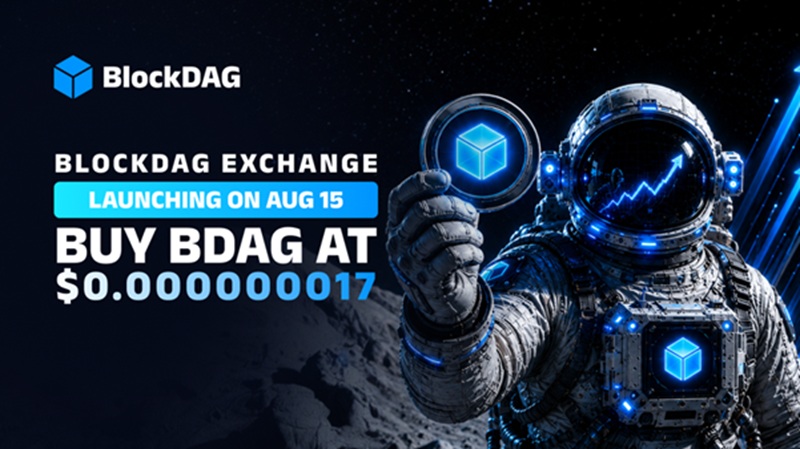
BlockDAG’s approach flips the usual model. Instead of waiting to be listed on someone else’s platform, BlockDAG is launching BlockDAG Exchange, a BlockDAG-owned trading venue for BDAG and major assets, in August 2026. Owning the exchange means keeping the user relationship, the product design, and the trading revenue in-house rather than handing them to a third party.

That ownership creates direct token utility. The exchange can offer fee discounts paid in BDAG, VIP tiers based on BDAG balances or staking, and exclusive access to campaigns and launches. Each of those gives holders a concrete reason to acquire and keep the token, generating demand that the project itself controls. The launch is set to be unveiled at the project’s keynote, positioned as the formal reveal to the community.

The strategic logic runs deeper than one product. Independent listings still matter for global access, but a native exchange broadens BlockDAG from a blockchain audience to the entire crypto trading market, and the resulting fee revenue can fund security, liquidity, and development. Cronos shows the value of exchange linkage; BlockDAG is building that linkage itself rather than depending on an outside partner. For readers weighing crypto coins to watch, a project that owns its own trading venue holds a lever most tokens never touch.

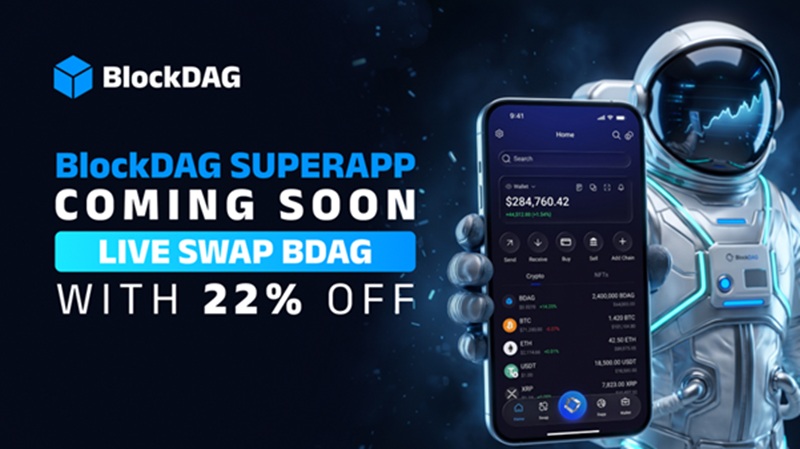
BDAG can be bought directly from the website at an entry rate of $0.000000017 alongside a $0.025 BuyBack price, with a project buyback event scheduled for October 1. Alternatively, participants using Live Swap can secure tokens at a 22% discount below the current CoinMarketCap rate.

Last Call

Hedera builds demand through enterprise and tokenization, with HBAR near $0.069 and Agent Lab tooling timed to Europe’s August 2026 rules. Cronos draws demand from its ties to Crypto.com, backed by Citadel’s $400M investment, a UAE license, and a pending Cronos ETF filing, though CRO trades around $0.054.

BlockDAG is launching its own exchange in August 2026 to control demand at the source, offering fee discounts paid in BDAG, VIP tiers on balances and exclusive launches, with the reveal set for the project’s keynote. Among crypto coins to watch, the split is between borrowed venues and an owned one: Hedera and Cronos plug into demand others help create, while BlockDAG is building the venue itself.

Owning the exchange broadens BlockDAG from a blockchain audience to the whole trading market, and August brings that venue to the front of the best cryptocurrencies to invest in debate.

Presale: https://purchase.blockdag.network

Website: https://blockdag.network

Telegram: https://t.me/blockDAGnetworkOfficial

Discord: https://discord.gg/Q7BxghMVyu

Emirates NBD Expands Egypt Footprint With HSBC Retail Banking Acquisition As Gulf Lenders Deepen Regional Push

0

Emirates NBD has agreed to acquire the retail banking business of HSBC Egypt, strengthening the Dubai-based lender’s presence in one of the Middle East and North Africa’s largest banking markets while advancing HSBC’s global strategy of streamlining its operations and focusing on higher-return businesses.

The United Arab Emirates’ largest bank by assets announced on Sunday that its wholly owned subsidiary, Emirates NBD Egypt, had signed a definitive agreement to purchase HSBC Egypt’s retail banking franchise.

Under the transaction, Emirates NBD Egypt will acquire HSBC Egypt’s retail banking portfolio, including its branch and automated teller machine (ATM) network, customer relationships and relevant employees.

Financial terms of the deal were not disclosed by Emirates NBD.

HSBC Group, however, said separately that the transaction is expected to generate a pre-tax gain of approximately $300 million, highlighting the value of the business being divested. The acquisition is expected to close during the second half of 2027, subject to regulatory approvals and customary closing conditions.

The acquisition bolsters Emirates NBD’s long-term strategy of expanding across high-growth markets in the Middle East, North Africa and Türkiye, where rising populations, increasing financial inclusion and expanding digital banking adoption continue to create growth opportunities.

Egypt, with a population exceeding 110 million people, remains one of the region’s largest banking markets, supported by ongoing economic reforms, increasing digital payments and relatively low banking penetration compared with more mature Gulf economies.

By acquiring HSBC Egypt’s retail operations, Emirates NBD gains immediate access to an established customer base and physical distribution network, avoiding the time and capital required to build those capabilities organically.

The transaction is expected to strengthen the bank’s position in retail banking, consumer lending, deposits, credit cards and digital financial services in Egypt. The acquisition also complements Emirates NBD’s broader regional expansion strategy, which has seen the lender steadily increase its presence outside the UAE through subsidiaries and representative offices across the Middle East, North Africa, Asia and Europe.

HSBC Continues Global Restructuring

For HSBC, the sale forms part of a broader effort to simplify its global operations and concentrate resources on businesses that generate stronger returns.

The banking group has spent the past several years reshaping its international footprint by exiting selected retail banking operations while increasing investment in wealth management, corporate banking and transaction banking, particularly in Asia and the Middle East.

HSBC said the review of its Egyptian operations, first announced in October 2025, did not affect its wholesale banking activities.

The bank emphasized that Egypt remains an important market with significant long-term growth potential and confirmed it will continue serving multinational corporations, large domestic businesses, financial institutions and institutional clients through its wholesale banking franchise.

That approach reflects HSBC’s wider strategy of focusing on businesses where it has greater competitive advantages and stronger cross-border banking capabilities.

The transaction comes as Egypt’s banking sector continues to attract regional investors despite ongoing macroeconomic challenges. Recent economic reforms, exchange-rate liberalization and support from international financial institutions have encouraged foreign investment while accelerating modernization of the country’s financial system.

Retail banking has become an attractive segment as rising smartphone adoption, digital banking platforms and financial inclusion initiatives expand access to banking services. Banks operating in Egypt are also benefiting from growing demand for consumer finance, mortgages, small business lending and digital payment solutions as the country’s economy gradually diversifies.

For Gulf lenders such as Emirates NBD, Egypt offers one of the largest opportunities for long-term customer growth outside the Gulf Cooperation Council (GCC), supported by its sizeable population and expanding middle class.

Regional Consolidation Gathers Pace

The acquisition is also part of growing consolidation within the Middle East’s banking industry. Well-capitalized Gulf banks are now pursuing acquisitions across the region to diversify earnings, expand customer bases and capitalize on faster-growing emerging markets. At the same time, several international banks have streamlined overseas operations to improve capital efficiency and focus on markets where they hold stronger competitive positions.

This divergence has created opportunities for regional lenders to acquire established banking franchises and accelerate expansion through acquisitions rather than greenfield investments.

In addition, the transaction underscores two important trends shaping the regional banking landscape.

First, the acquisition represents another step in Emirates NBD’s efforts in building a larger regional banking franchise capable of generating diversified earnings beyond its home market. The addition of HSBC Egypt’s retail operations strengthens its competitive position in one of the region’s most strategically important economies and enhances its long-term growth prospects.

For HSBC, the sale aligns with its ongoing global restructuring strategy, allowing the bank to unlock value from its retail business while maintaining its corporate and institutional banking presence in Egypt. More broadly, the deal highlights the growing role of Gulf financial institutions as regional consolidators, using strong balance sheets to expand into high-growth markets.

Minnesota’s AI ‘Nudify’ App Ban Takes Effect After Judge Rejects xAI’s Emergency Request

0

A U.S. federal judge has allowed Minnesota’s landmark ban on artificial intelligence-powered “nudify” applications to take effect, rejecting xAI’s bid to temporarily block the law while its constitutional challenge proceeds.

The ruling marks an early legal setback for xAI, the artificial intelligence company owned by SpaceX, as regulators across the United States intensify efforts to curb AI tools capable of generating non-consensual intimate images.

U.S. District Judge Donovan Frank denied xAI’s request for a temporary restraining order, allowing the legislation to come into force on August 1 as scheduled.

In his ruling, Frank placed significant emphasis on the timing of the company’s legal challenge. He noted that xAI waited nearly three months after Minnesota’s governor signed the legislation before seeking emergency relief.

“xAI filed its request for a temporary restraining order on July 29, 2026, nearly three months after the law was signed, and only three days before the law is set to take effect,” Frank wrote.

“Such a delay in bringing the action and the motion suggests that harm is not immediate.”

The decision does not resolve the broader constitutional challenge. Instead, it means Minnesota can begin enforcing the law while the lawsuit continues through the courts.

Minnesota’s legislation is widely regarded as the first U.S. law specifically targeting AI applications designed to digitally remove clothing from photographs or generate sexually explicit images of individuals without their consent.

The legislation is part of a broader wave of AI regulation emerging across U.S. states as policymakers seek to address harms created by increasingly powerful generative AI systems before comprehensive federal legislation is enacted. Unlike broader AI governance proposals that regulate developers or foundation models, Minnesota’s law directly targets a specific category of applications that have become increasingly accessible through consumer AI tools.

In its lawsuit, xAI argues the legislation sweeps too broadly and unlawfully restricts protected speech. The company contends the law is “overinclusive” and maintains that policymakers could achieve the same public safety objectives through narrower measures that place fewer restrictions on AI technologies.

The lawsuit argues there are “far less restrictive alternatives that function to achieve the same ends,” signaling that the legal battle is likely to center on constitutional questions surrounding free speech, innovation, and the appropriate scope of state regulation.

The case could become an important test of how courts balance First Amendment protections with growing concerns over AI-generated abuse.

The lawsuit comes after mounting concerns about the rapid spread of AI-generated non-consensual sexual imagery.

Earlier this year, users of X, the social media platform owned by SpaceX, used xAI’s Grok chatbot to generate and circulate sexually explicit images of individuals without their consent. The incident prompted investigations and enforcement actions, intensifying scrutiny of safeguards implemented by AI developers and social media platforms.

The controversy also added momentum to legislative efforts aimed at restricting technologies capable of producing deepfake pornography, one of the fastest-growing forms of AI abuse globally.

However, Minnesota’s action underpins a wider shift in AI regulation toward addressing specific high-risk applications rather than attempting to regulate artificial intelligence as a whole. In recent months, lawmakers and regulators in multiple jurisdictions have introduced measures targeting deepfakes, election misinformation, AI-generated fraud and synthetic intimate imagery.

The approach mirrors a broader regulatory trend in which governments are prioritizing the most immediate public safety risks posed by generative AI while more comprehensive AI governance frameworks continue to evolve.

The case, however, represents another legal and regulatory challenge as xAI expands Grok’s capabilities. Although the immediate bid to halt the law has failed, the underlying lawsuit remains active, meaning the courts could still ultimately determine whether Minnesota’s pioneering restrictions are consistent with the U.S. Constitution.