DD
MM
YYYY

PAGES

DD
MM
YYYY

spot_img

PAGES

Home Blog Page 3

U.S. Inflation Set to Hit 18-Month High as Tariffs Bite, Data Gaps Cloud Outlook

0

U.S. consumer prices are expected to have risen at their fastest pace in a year and a half in November, a development that would reinforce growing concerns about affordability pressures facing American households and keep the Federal Reserve cautious on further interest rate cuts.

Economists polled by Reuters estimate that the Consumer Price Index (CPI) climbed 3.1% year-on-year in November, up from 3.0% in September and the strongest increase since May 2024. If confirmed, the data would signal that the slowdown in inflation seen earlier in the year has lost momentum, even as policymakers had hoped price pressures were easing sustainably.

The November figures, however, come with unusual complications. The Labor Department’s Bureau of Labor Statistics (BLS) will publish only year-on-year inflation rates when it releases the delayed CPI report on Tuesday, after a 43-day government shutdown disrupted data collection. Month-to-month price changes will not be available, and the October CPI report was canceled entirely because prices could not be collected retroactively.

The shutdown has already made history, with the government failing to publish an unemployment rate for October for the first time ever. While the BLS said it will release some additional price indexes that do not rely on in-person data collection, it cautioned that “the number of publishable indexes will be small,” and acknowledged it “cannot provide specific guidance to data users for navigating the missing October observations.”

As a result, economists are urging caution in interpreting the data, advising analysts and investors to focus on year-on-year trends or two-month changes rather than short-term movements.

“Downward inflation progress has stalled,” said Andy Schneider, senior U.S. economist at BNP Paribas. “This largely reflects companies in goods-producing sectors passing tariff costs through into prices.”

Tariffs imposed under President Donald Trump’s trade policy have increasingly become a central factor in the inflation narrative. While the impact was initially muted as businesses ran down inventories accumulated before the duties took effect or absorbed some of the costs themselves, economists say that strategy is nearing its limits.

“Retailers are in the middle of the process of pushing tariffs onto consumers, and had passed on about 40% of the total by September,” said Samuel Tombs, chief U.S. economist at Pantheon Macroeconomics. “We expect that proportion to climb gradually to 70% by March and then stabilize.”

That shift is expected to weigh most heavily on lower-income households, who typically have little savings to cushion higher prices and have seen slower wage growth compared with higher earners. Economists say this dynamic is amplifying the political sensitivity of inflation, which remains one of the most visible economic issues for voters.

Trump, who won the 2024 presidential election after campaigning on promises to rein in inflation, has in recent weeks offered mixed messaging, alternately dismissing affordability concerns, blaming his predecessor Joe Biden, and pledging that Americans will begin to see the benefits of his policies next year.

The November CPI could still come in below expectations, some economists caution, because the delayed data collection may have captured a period later in the month when retailers rolled out holiday discounts. That effect could show up in categories such as furniture and recreational goods.

“November CPI this year could capture a period that more heavily reflects holiday season discounts than a usual November,” said Veronica Clark, an economist at Citigroup. “If there is some abnormal weakness in November goods prices, there could be a larger rebound in these components in December.”

Core inflation, which strips out volatile food and energy prices, is expected to rise 3.0% year-on-year in November, matching September’s pace. Higher rents and goods prices are likely to keep core inflation elevated, though declines in airfares and hotel and motel rates could provide some offset.

Federal Reserve officials remain focused on inflation measures tied to the Personal Consumption Expenditures (PCE) index, which underpins the central bank’s 2% target. Those figures are also facing delays. October’s Producer Price Index report was canceled, November’s PPI is now due in mid-January, and the government has yet to announce a new release date for November’s PCE data. Both headline and core PCE inflation were well above target in September.

Against this backdrop, the Fed last week cut its benchmark interest rate by 25 basis points to a range of 3.50% to 3.75%, but signaled that further reductions are unlikely in the near term. Policymakers say they need clearer evidence that inflation is moving decisively lower and that the labor market remains on solid footing.

Fed Chair Jerome Powell was blunt about the source of recent price pressures, telling reporters that “it’s really tariffs that are causing most of the inflation overshoot.”

Some relief could eventually come from the White House’s decision to roll back duties on a limited number of goods, including beef, bananas, and coffee. Economists warn, however, that price reductions tend to lag policy changes and may not be immediately visible to consumers.

“With the tendency for firms to revisit pricing decisions at the start of the calendar year, we see the potential for another burst of goods inflation in the first quarter,” said Sara House, senior economist at Wells Fargo.

Currently, the November inflation report is expected to confirm what many households already feel: price pressures remain stubborn, policy uncertainty is high, and the path back to stable, broadly affordable prices is proving slower and more uneven than hoped.


AI Giants Go All-In on India With Free Plans as Race for Users and Data Intensifies

0

OpenAI, Google, and Perplexity are escalating an aggressive push into India, rolling out free and heavily discounted artificial intelligence services as competition for users, data, and long-term dominance intensifies.

What began as a race for scale is now also shaped by geopolitics, with executives and analysts pointing to the renewed tariff war between Washington and Beijing as a key factor accelerating the pivot toward India.

India has become the most strategically important consumer market for AI deployment. It is the world’s most populous country, the second-largest smartphone market with about 730 million devices, and one of the cheapest places to consume mobile data.

According to Reuters, Indians use an average of 21 gigabytes per month, paying about 9.2 cents per gigabyte, among the lowest rates globally. That combination of scale, affordability, and constant connectivity has made India a natural testing ground for mass-market AI adoption.

In recent months, however, India’s appeal has grown beyond demographics. Executives and analysts say American technology companies are moving faster into the country following the latest escalation in trade tensions between the United States and China, triggered earlier this year by new tariffs imposed by President Donald Trump’s administration. The renewed standoff has deepened uncertainty for U.S. firms operating in or selling to China, particularly in sensitive areas such as artificial intelligence, data, and advanced computing.

Against that backdrop, India is increasingly viewed as a safer, more open alternative for growth. It offers a vast consumer base, fewer restrictions on foreign digital services, and a government that has signaled openness to becoming a global technology hub, even as it tightens oversight in select areas.

The shift is visible in how aggressively AI companies are subsidizing access.

In November, Google began offering its Gemini AI Pro subscription — normally priced at around $400 — free for 18 months to roughly 500 million subscribers of Reliance Jio, India’s largest telecom operator. The move instantly put one of Google’s most advanced consumer AI models into the hands of a massive audience. Last week, Google expanded the push by including India among the countries eligible for its heavily discounted “AI Plus” package.

OpenAI has matched that strategy. The company made its ChatGPT Go plan free for a year in India, even though the same plan carries fees in more than 100 other countries and previously cost about $54 locally. The Go plan offers extended usage above the basic tier, and the free offer is available only in India.

Perplexity, the AI-powered search and research startup, has also joined the scramble. It made its Pro plan — priced globally at $200 a year — free for a year for users of Indian telecom operator Airtel, giving them unlimited access to its most advanced tools.

Early data shows a sharp surge in adoption. According to figures from market intelligence firm Sensor Tower compiled for Reuters, daily active users of ChatGPT in India jumped 607% year on year to 73 million as of last week, more than double the number in the United States. Gemini’s daily users in India rose 15% after the Reliance Jio offer to reach about 17 million, compared with roughly 3 million in the U.S.

India is now the largest market globally by daily users for both ChatGPT and Gemini, Sensor Tower said. Perplexity’s growth has been even more pronounced: India now accounts for more than a third of its global daily active users, up from just 7% last year.

Analysts say the immediate goal is scale, but the longer-term objective is data. India’s linguistic complexity — dozens of major languages, hundreds of dialects, and widespread code-switching — offers training material that remains underrepresented in existing AI datasets. Models trained largely on Western and Chinese data often struggle with such patterns.

Five AI analysts told Reuters that large-scale Indian usage provides a rare opportunity to refine AI systems on real-world multilingual behavior, informal speech, and region-specific context. That training is seen as vital for building models that can operate globally, especially as access to Chinese data becomes more constrained for U.S. firms amid the trade conflict.

“India helps fill structural gaps in AI training data,” said Sagar Vishnoi, co-founder of AI think tank Future Shift Labs. “The way users mix languages and interact with technology here gives models exposure they simply don’t get elsewhere.”

OpenAI’s India executive, Pragya Misra, has framed the free rollout as part of an “India-first commitment,” saying the aim is to make AI tools more accessible. Analysts note that the timing also aligns with a broader recalibration by U.S. tech firms as China becomes a more complex and politically sensitive market.

The strategy echoes earlier successes in India’s digital economy. Reliance Industries, led by billionaire Mukesh Ambani, transformed the telecom sector in 2016 by offering months of free data and voice services, rapidly building a user base that now exceeds 500 million. Similar tactics were later used in digital media, including free cricket streaming, to lock in audiences before monetization.

Usage patterns suggest Indian users are engaging deeply with AI tools. Sensor Tower data shows that 46% of ChatGPT’s monthly users in India opened the app daily in November, compared with 20% for Perplexity and 14% for Gemini.

At the same time, concerns about data use are growing, with some users reportedly opting out of sharing their data for AI training where possible, aware that free services often come with trade-offs.

BOJ Set for Historic Rate Hike as Inflation, Yen Pressure, and Fiscal Risks Converge

0

Japan’s central bank is preparing to cap the year with one of its most consequential policy decisions in a generation, as investors brace for a rate hike that would take borrowing costs to levels not seen since the mid-1990s and accelerate the country’s long-delayed exit from ultra-loose monetary policy.

The Bank of Japan began its final policy meeting of the year on Thursday, with a decision due on Friday. Markets have largely priced in a hike, with LSEG data showing an 86.4% probability that the benchmark rate will be raised to 0.75%, the highest since 1995. The move would reinforce the normalization path the BOJ laid out last year after scrapping its negative interest rate regime, which had been in place since 2016.

The case for tightening has been built on stubborn inflation. Consumer prices have remained above the BOJ’s 2% target for 43 consecutive months, eroding purchasing power and keeping pressure on policymakers to act. A rate increase would also be expected to support the yen, which has been under sustained pressure against the dollar, and help contain imported inflation.

Yet the decision comes at a delicate moment for the broader economy. Revised GDP figures showed that Japan’s economy contracted more sharply than initially thought in the third quarter, shrinking 0.6% quarter on quarter and 2.3% on an annualized basis in the three months through September. That weakness has raised concerns that higher borrowing costs could further slow growth just as the government rolls out fresh stimulus to revive demand.

With a hike widely anticipated, attention has shifted to the BOJ’s messaging. Investors are expected to parse Governor Kazuo Ueda’s comments for clues on how far rates could ultimately rise and how quickly future moves might come. The so-called neutral or terminal rate — the level that neither stimulates nor restrains the economy — remains a key unknown.

Ueda has previously acknowledged the uncertainty. Earlier this month, he told Japan’s parliament that the central bank estimates the neutral rate to lie somewhere between 1% and 2.5%, a wide range that underscores the difficulty of guiding policy with precision.

“Unfortunately, the neutral rate of interest is a concept for which we can only produce an estimate with quite a wide range,” Ueda said, adding that policymakers must continue to operate without full clarity on that benchmark.

Carl Ang, fixed income research analyst at MFS Investment Management, said markets may gain further insight after Friday’s meeting, possibly through updated projections or more detailed guidance on the BOJ’s longer-term thinking.

The pace of future hikes remains a point of debate. ING said this week that while markets are leaning toward another increase in June 2026, it sees October as a more likely timing. Bank of America, by contrast, expects a June hike and does not rule out an earlier move in April if the yen weakens rapidly, projecting the terminal rate to reach about 1.5% by the end of 2027.

Political dynamics are also in focus. Prime Minister Sanae Takaichi, who took office in October, had during her leadership contest staunchly opposed BOJ rate hikes, arguing that premature tightening could derail the recovery. Since assuming office, however, she has softened that stance, signaling a more pragmatic approach as inflation proves more persistent and currency pressures intensify.

The shift has eased some concerns about friction between the government and the central bank as normalization proceeds.

Higher rates carry clear fiscal implications. Rising borrowing costs will push up bond yields and increase debt-servicing expenses for the Japanese government, which has already unveiled its largest stimulus package since the Covid-19 pandemic in an effort to shore up the economy. Japan’s debt burden remains among the highest in the developed world, making the trajectory of yields a sensitive issue.

Nikkei reported earlier this month that Japan’s borrowing costs could double if benchmark yields climb to 2.5% from around 2% currently. Yields on 10-year Japanese government bonds are already hovering near 18-year highs, last trading at about 1.971%. Should yields reach 2.5%, interest payments by the government would rise sharply, jumping to an estimated 16.1 trillion yen in fiscal 2028 from 7.9 trillion yen in fiscal 2024, according to the report.

Currency markets remain another source of uncertainty. The yen has traded in a weak range of roughly 154 to 157 per dollar since November, and has fallen more than 2.5% since Takaichi took office. While the BOJ has largely avoided direct commentary on the exchange rate, any explicit remarks from Ueda could be interpreted by markets as a signal of discomfort with further yen weakness.

Ang noted that fiscal concerns and the possibility of intervention by the finance ministry — something Finance Minister Satsuki Katayama has not ruled out — could temper the currency’s response to higher rates. Taking those factors into account, he expects the yen to trade in a range of 150 to 160 against the dollar next year, even as policy tightening continues.

FTC Launches Probe into Instacart’s AI Pricing Practices Amid Consumer and Political Concerns

0

The U.S. Federal Trade Commission has launched an investigation into Instacart as the grocery delivery platform faces scrutiny over its artificial intelligence-driven pricing software, according to sources familiar with the matter who spoke to Reuters.

The probe comes amid growing concerns over digital pricing practices, consumer protection, and the broader role of AI in commerce, sending Instacart shares down about 10% in after-hours trading.

The FTC has issued a civil investigative demand to Instacart seeking documents and information related to its Eversight pricing tool, which allows grocery retailers to experiment with prices using AI. Eversight’s algorithmic testing adjusts prices across categories to gauge shopper responsiveness and optimize revenue, a practice that has drawn criticism after a recent study revealed inconsistent pricing across identical items.

The nonprofit-led study, conducted by Groundwork Collaborative, Consumer Reports, and More Perfect Union, tracked 437 shoppers across four U.S. cities. It found that the total cost of the same grocery list at the same store differed by an average of 7% between shoppers, with some users seeing prices as much as 23% higher than others for identical items purchased at the same time.

“The FTC has a longstanding policy of not commenting on potential or ongoing investigations,” the agency said. “But, like so many Americans, we are disturbed by what we have read in the press about Instacart’s alleged pricing practices.”

While the opening of a probe does not imply wrongdoing, it highlights the growing political and regulatory pressure around digital pricing. Rising grocery costs have become a major economic concern in the U.S., shaping state and local elections last November and creating challenges for the Republican Party and President Donald Trump. Regulators are increasingly sensitive to technology-driven practices that may exacerbate affordability issues.

Instacart has defended its pricing practices, emphasizing that Eversight tests are randomized and not based on individual shopper behavior, purchase history, or location. The company also stressed that, except for Target, retailers themselves set prices on the platform. Target prices displayed on Instacart are scraped from publicly available data and marked up to cover costs, according to a Target spokesperson.

Lawmakers have voiced concern about transparency. Senate Majority Leader Chuck Schumer wrote to the FTC, calling for prominent on-screen labels whenever shoppers are included in pricing experiments.

“Consumers deserve to know when they are being placed into pricing tests,” Schumer said.

The Instacart probe is part of a broader crackdown by the FTC under Chair Lina Khan on AI and data-driven pricing tools. Last year, the agency requested information from Mastercard, JPMorgan Chase, Accenture, and McKinsey & Co. regarding software used to analyze consumer data, set prices, or tailor discounts. In January, the FTC staff released a preliminary report warning that some AI pricing tools could leverage individual consumer data to estimate willingness to pay, raising questions about fairness and transparency.

The investigation comes as digital platforms and AI tools increasingly reshape commerce, raising regulatory, ethical, and consumer-protection issues. Instacart now faces the challenge of proving that its AI-driven price experimentation enhances retailer revenue without unfairly disadvantaging consumers already grappling with rising grocery bills.

Analysts believe the outcome of the investigation could have far-reaching implications for other retailers using AI-driven pricing, potentially prompting industry-wide reforms and increased oversight.

Nigeria’s Revenue Mirage: Inside a Budget Built on Hope, Borrowing, and a Growing Credibility Crisis

0

When Nigeria’s finance minister appeared before lawmakers this week, the numbers he presented cut sharply through months of official optimism about an economy supposedly turning the corner.

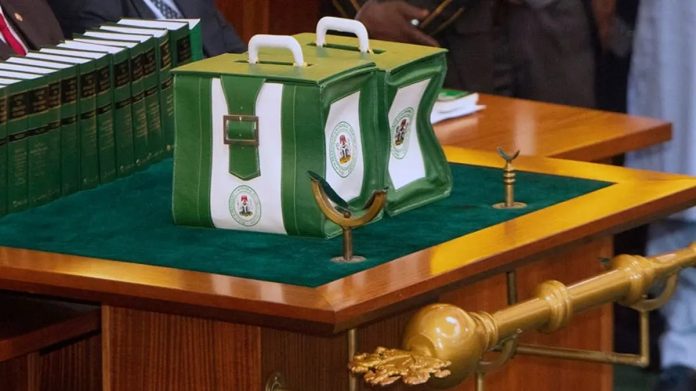
Wale Edun told members of the House of Representatives Committees on Finance and National Planning that the federal government is on course to close 2025 with total revenue of about N10.7 trillion — barely a quarter of the N40.8 trillion projected to fund the N54.9 trillion “budget of restoration.” The admission landed like a fiscal shockwave, exposing a gap so wide that it has reignited accusations that the Tinubu administration is running a government of headlines and talking points rather than hard numbers.

The interactive session was convened to examine the 2026–2028 Medium Term Expenditure Framework and Fiscal Strategy Paper, documents already transmitted to the National Assembly by President Bola Tinubu. What lawmakers instead encountered was a stark account of how far reality has drifted from projections in just one fiscal year.

Edun attributed the revenue collapse largely to weak oil and gas inflows, with Petroleum Profit Tax and Company Income Tax from energy firms falling well below expectations. Non-oil revenues, often touted as the backbone of the administration’s reform story, also underperformed across multiple subheads, compounding the pressure on public finances.

To keep the budget afloat, the government borrowed about N14.1 trillion in 2025. Even that, the minister acknowledged, has not been enough to bridge the gap. Combined revenues and borrowings still fall short of what is required to fully fund the budget, forcing what officials describe as “creative” treasury management.

Edun told lawmakers that salaries, statutory transfers to states and local governments, and domestic and external debt service obligations have been met. According to him, this has been achieved through tight cash management and prioritization of essential payments. What this careful phrasing leaves unsaid is that many capital projects and social commitments remain stuck in slow motion.

The Tinubu administration has yet to publish any report on federal incomes and expenses for 2025

The situation has sharpened public frustration with the government’s broader economic narrative. Over the past year, senior officials, including the president himself, have repeatedly said reforms are delivering results, pointing to fuel subsidy removal, exchange rate liberalization, and rising non-oil revenues. Tinubu recently claimed that the 2025 revenue target had already been achieved by August, driven mainly by the non-oil sector, and said the economy had become predictable again.

Yet Edun’s figures suggest something very different. If the government is ending the year at N10.7 trillion, questions arise about how revenue targets were measured, communicated, and celebrated. This contradiction has fueled claims that the administration is more focused on selling a reform success story than confronting its fiscal reality.

The credibility gap has also put the National Assembly under scrutiny. Lawmakers routinely approve ambitious budgets and medium-term frameworks built on optimistic oil production and price assumptions, only to watch implementation unravel. Many analysts and civic groups now describe the legislature as a rubber stamp, unwilling or unable to hold the executive to account for repeated revenue failures and ballooning deficits.

That perception is reinforced by the latest disclosure that parts of the 2024 budget are being carried over into 2026. For a country struggling with infrastructure decay, unemployment, and rising poverty, the idea that a budget is still being implemented two years later has become a symbol of dysfunction. It signals not only weak execution but also a disconnect between planning cycles and economic reality.

On capital spending, Edun said releases to ministries, departments, and agencies in 2024 reached N5.2 trillion out of a N7.1 trillion allocation, a performance rate of about 73 percent. When multilateral and bilateral-funded projects were included, total capital expenditure rose to N11.1 trillion out of N13.7 trillion. While the figures suggest some progress, they also underline how dependent capital delivery has become on external funding rather than domestic revenue strength.

The minister warned lawmakers against tying spending rigidly to oil income, arguing that optimistic projections have repeatedly undermined budgets. He urged a shift toward spending based on actual inflows rather than expectations, an admission that the administration’s budgeting culture remains aspirational rather than empirical.

Budget and National Planning Minister Atiku Bagudu echoed that concern, describing internal debates within the Economic Management Team over revenue assumptions. He said officials were torn between conservative projections grounded in history and ambitious targets designed to force revenue agencies to perform better. For the N54 trillion 2026 budget, oil production is still pegged at 2.06 million barrels per day, but revenue calculations will be based on a lower assumption of 1.84 million barrels per day in an effort to reduce forecast errors.

Lawmakers, for their part, acknowledged the fragility of the economy. House Finance Committee chairman James Faleke said inflated budgets detached from economic realities only deepen Nigeria’s fiscal troubles and promised closer scrutiny of the MTEF and FSP.

All of this sits uneasily alongside the administration’s reform narrative. Edun has said the removal of fuel subsidies and the move to a market-based exchange rate saved the government about $20 billion, roughly five per cent of GDP, money that could now be redirected to infrastructure, health, and education. He described the last 18 months as a painful gestation period with gains beginning to show.

The problem is that those gains are difficult to reconcile with a revenue shortfall of nearly N30 trillion in a single year. For many Nigerians, the lived reality remains one of higher prices, weaker purchasing power, and delayed public projects. In that context, claims of stabilization and restored confidence ring hollow.

As Tinubu prepares to present the 2026 budget to the National Assembly on Friday, concerns remain whether it is going to be different from the 2024 and 2025 budgets, or an addition to the over-bloated annual budgets that will require years to be fully implemented.