DD
MM
YYYY

PAGES

DD
MM
YYYY

spot_img

PAGES

Home Blog Page 3011

FTX and Alameda Research’s Settlement with the CFTC

0

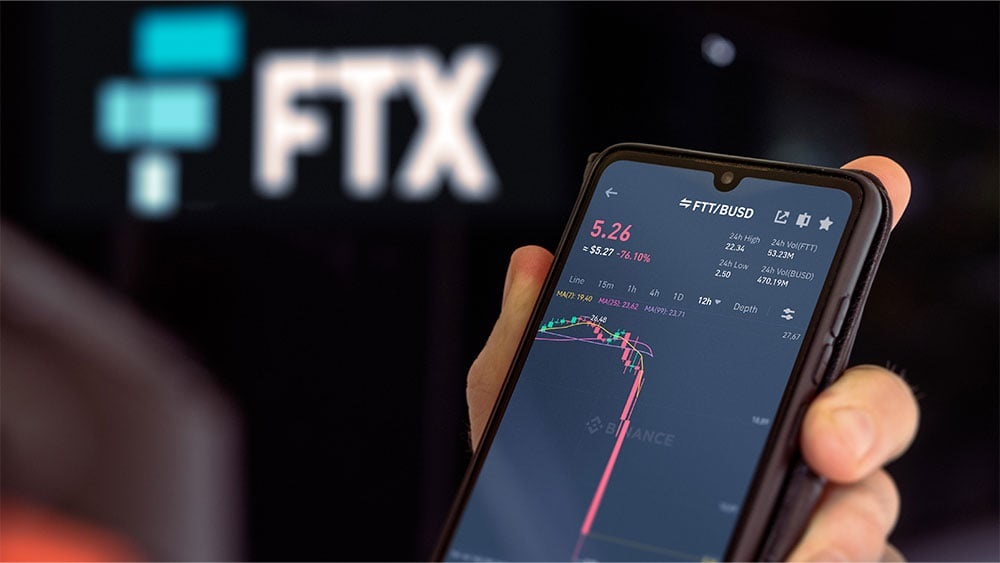
The cryptocurrency world has been closely watching the developments surrounding the FTX exchange and Alameda Research, and a significant chapter seems to be coming to a close. The Commodity Futures Trading Commission (CFTC) has reached a settlement with the two entities, requiring them to pay a staggering $12.7 billion. This settlement marks one of the most substantial enforcement actions in the history of financial regulatory measures concerning cryptocurrency operations.

FTX, once a prominent player in the cryptocurrency exchange market, faced a tumultuous downfall after risky investments with customer deposits led to bankruptcy and subsequent legal battles with U.S. authorities. The collapse of FTX not only shook investor confidence but also highlighted the need for more stringent regulatory oversight in the crypto space.

The disclosure of Alameda Research’s balance sheet by CoinDesk was the catalyst that triggered a crisis of confidence among FTX’s customers and investors. The balance sheet suggested that Alameda’s financial health was heavily dependent on the value of FTT, which was itself subject to FTX’s fortunes.

As customers rushed to withdraw their funds, FTX faced a liquidity shortfall. The exchange’s inability to honor these withdrawal requests further eroded trust and led to a downward spiral. Competitors and the broader market took note, and FTX’s fate was sealed.

According to the settlement, FTX is ordered to pay $8.7 billion in restitution and an additional $4 billion to customers whose deposits were locked following the collapse. This resolution is not just about the monetary compensation; it’s a statement on the importance of corporate governance, customer protection, and the adherence to regulations that are in place to prevent such catastrophic failures.

Implications for the Future

This settlement could serve as a precedent for future regulatory actions in the cryptocurrency industry. It underscores the necessity for exchanges and other crypto entities to operate with transparency and within the bounds of established financial regulations. The CFTC’s action sends a clear message that the misuse of customer funds and deceptive practices will not be tolerated.

The Role of Governance and Regulation

The case of FTX and Alameda Research has brought to light the critical role that governance and regulatory compliance play in the stability and integrity of financial markets. The CFTC’s Chairman, Rostin Behnam, emphasized that basic regulatory tools are essential to identify misconduct and prevent collapses like that of FTX.

As the cryptocurrency market continues to mature, the FTX and Alameda settlement with the CFTC may well be looked back upon as a pivotal moment when the industry began to align more closely with traditional financial market standards. This could lead to a more stable and trustworthy environment for investors and users alike.

The settlement is a reminder of the responsibilities that financial entities have towards their customers and the broader market. It also serves as a cautionary tale for investors, stressing the importance of due diligence and the awareness of the risks involved in the crypto market.

The FTX and Alameda settlement is a landmark in the ongoing effort to bring accountability and stability to 1the cryptocurrency industry. It is a step towards ensuring that the innovative potential of cryptocurrencies can be realized in a secure and regulated framework, benefiting all stakeholders involved.


Is a Global Recession Nearby?

0

The global economy is a complex and interconnected system, which makes it susceptible to a variety of factors that can lead to a recession. A recession is typically defined as a significant decline in economic activity spread across the economy, lasting more than a few months, normally visible in real GDP, real income, employment, industrial production, and wholesale-retail sales. As of late, there has been growing concern about the potential for a global recession.

Persistent high inflation can erode purchasing power and lead to increased costs for businesses and consumers. Central banks may respond with higher interest rates to curb inflation, which can slow economic growth and potentially lead to a recession. When central banks raise interest rates to manage inflation, it can increase borrowing costs, reduce consumer spending, and lower investment. If not managed carefully, these rate hikes can push economies into a recession.

Recent trends and economic indicators have provided mixed signals about the health of the global economy. On one hand, there are signs of recovery and growth in certain sectors and regions. On the other hand, there are also warning signs that suggest a downturn could be on the horizon.

One of the primary concerns is the state of the world’s largest economies, which have a significant impact on global economic health. The United States, for instance, has experienced reduced household purchasing power and a tightening monetary policy, which could drive growth down significantly.

Similarly, China’s growth has been slower than anticipated due to COVID-19 outbreaks, lockdowns, and a deepening real estate crisis, marking its slowest growth in over four decades, excluding the pandemic period. The Eurozone is not exempt from these challenges, with growth rates revised down and inflation remaining stubbornly high.

Inflation has been another major concern, with rising food and energy prices contributing to higher costs of living worldwide. This has led to tighter financial conditions and upward revisions in inflation forecasts for both advanced and emerging market economies.

The International Monetary Fund (IMF) has highlighted the significant consequences of the stalling of the world’s three main economic powerhouses – the United States, China, and the major European economies. The IMF’s World Economic Outlook Update indicates that the global economy is facing an increasingly murky and uncertain outlook, with the possibility of teetering on the edge of a global recession.

Moreover, the structural challenges facing Europe, such as an aging population and high energy prices, present meaningful headwinds with no clear resolution in sight. Central banks across the US, UK, and Eurozone have paused rate hikes for now, given declines in their respective consumer price indices from their 2022 peaks. However, they remain wary and may keep interest rates high for some time, which continues to impact the global economy.

The World Economic Forum’s Chief Economists Outlook has also expressed a gloomy view, with almost 20% of respondents seeing an extremely likely chance of a global recession, double the number from the previous survey.

While there is cautious optimism in some quarters, significant uncertainties linger. The global economy is at a crossroads, with various indicators pointing towards a potential recession. It is a time of vigilance for policymakers, businesses, and consumers alike, as the world navigates through these turbulent economic waters. The coming months will be crucial in determining whether a global recession can be averted or if the world will need to brace for a more challenging economic climate.

Nigeria Should Honour Rena Wakama, D’Tigress’ coach, And Invest More In Sports

1

Now that the Olympic game is over, I want to use this opportunity to commend all the athletes and their coaches. It is a great honour to represent your nation, and a bigger one to do that in the Olympics. Sure, it is a disappointment that we did not bring any medal home, but that does not diminish the fact that these young people served the nation.

As a citizen of the Nigerian nation, I want to recommend to Mr. President to bestow a national honour on Rena Wakama, D’Tigress’ coach. Already, she has been recognized as the best coach of women’s basketball at the Paris 2024 Olympics, and Nigeria must cement her role. This woman demonstrated the power of leadership, coaching, mentoring, and inspiring the girls to over-achieve. Losing to the US women basketball does not diminish that accomplishment.

For all of us, you do not win the Olympics in a day. Those who will participate for China and USA in 2036 in certain games are already in the camp. It requires planning which for years now we have struggled with.  Except Edo, Delta and Lagos, do we still have a working sports council in Nigeria? The days of Chioma Ajunwa, David Izonritei, Mary Onyali, Olabisi Afolabi, Fatima Yusuf, and many others happened, not because we recruited them from American colleges, but because Nigeria had a functioning sports council system in our state capitals.

But over time, these athletes were left to fund themselves with no support, and the results are here.  This must change; sports is a career and even though they do not have Nigeria Labour Congress (NLC), Academic Staff Union of Universities (ASUU), etc to do strikes for better facilities and support, Nigerians must call these politicians to lead.

Bitcoin Price Drops Below $59k Amid Liquidations Across The Crypto Market

0

The price of Bitcoin has dropped below the $59k price amid $155.25 million in liquidations across the crypto market.

According to on-chain analytics platform, the price decline is reported to be spurred after institutional investors halted their accumulation of stablecoins over the past two days.

Onchain wrote,

“Institutions seem to have temporarily stopped buying, and the price of $BTC dropped 4.5% today! We noticed that institutions stopped receiving $USDT from #TetherTreasury and transferring it to exchanges 2 days ago”.

Data from CoinGecko revealed that the broader crypto market declined by 4.32% over the past 24 hours, reducing its total value to $2.05 trillion. After holding above the $60,000 level for four consecutive days, Bitcoin fell below this threshold on Aug. 11, 2024, dipping to $58,234 as of the time of writing this report. Ethereum (ETH) also saw a decline, dropping to $2,527 after peaking at $2,711 earlier. At the time of writing, ETH was trading at $2,583.

Bitcoin price decline is coming after the crypto asset last week resumed its upward rally after experiencing a massive decline due to a global market sell-off. Bitcoin led the liquidations with $41.31 million, followed closely by Ethereum, which saw $39.53 million in liquidations.

As the crypto market conditions remain volatile, with the U.S. presidential elections in the corner, and a looming threat of recession, the BTC price will be shaken to the limit. However, the bottom formation at $50K promises solid support with a trendline confluence. 

Despite recent fluctuations in the cryptocurrency market, several analysts have maintained their bullish stance on the price of crypto assets. Michael Saylor, executive chairman of MicroStrategy, has expressed optimism about Bitcoin’s future.

At the Bitcoin 2024 conference, he projected that Bitcoin would continue to surge, with the price reaching $13 million by 2045. Saylor believes that Bitcoin has “economic immortality” because it doesn’t degrade like physical assets and can address economic challenges due to its permanent and unchangeable nature. His optimistic projections have positively impacted BTC’s price, fueling investors’ enthusiasm.

Also, analysts from Grayscale Research predict potential price increases in the coming months. They believe that broader crypto assets valuations could recover if the U.S. economy manages to achieve a “soft landing” and avert a recession, with Bitcoin possibly approaching its all-time high later in the year.

Notably, this year, institutional investors have increased their appetite in the market driving up sentiments. The launch of Bitcoin ETFs by the United States Securities and Exchange Commission (SEC) has led to major investments within the industry.

Is MicroStrategy Stock Beating Bitcoin?

0

In the dynamic world of finance, MicroStrategy Incorporated has made headlines with its unconventional strategy of heavily investing in Bitcoin. This approach has sparked a debate among investors and analysts alike, as the company’s stock performance seems to be closely tied to the volatile cryptocurrency market.

MicroStrategy, a company that provides business intelligence, mobile software, and cloud-based services, has taken a bold step by integrating Bitcoin into its treasury reserves. The decision to convert a significant portion of its cash reserves into Bitcoin has been a game-changer for the company’s stock performance. Despite the inherent risks associated with cryptocurrency investments, MicroStrategy’s stock has shown resilience and even outperformed Bitcoin at times.

The company’s CEO, Michael Saylor, is a well-known proponent of Bitcoin, advocating for its potential as a store of value and an inflation hedge. Under his leadership, MicroStrategy has amassed a substantial Bitcoin portfolio, making it one of the largest corporate holders of the cryptocurrency. This strategic move has not only increased the company’s visibility in the crypto space but also attracted investors who are bullish on Bitcoin.

MicroStrategy’s stock performance has been a rollercoaster ride, with significant fluctuations that mirror the volatility of Bitcoin’s price. The company’s shares have experienced sharp increases during Bitcoin’s bull runs and faced declines during market downturns. However, the overall trend suggests that MicroStrategy’s Bitcoin investment has positively influenced its market valuation.

As of the latest data, MicroStrategy’s stock price has seen fluctuations, with a recent price recorded at $135.37. On the other hand, Bitcoin, the pioneering cryptocurrency, has been performing with its own volatility, with a current value of 1 BTC to USD 60,215.00.

When it comes to “beating” in the financial sense, it often refers to the returns on investment over a specific period. MicroStrategy’s approach to integrating Bitcoin into its treasury reserve strategy has been a notable factor in its stock performance. The company’s stock has experienced various changes in value, reflecting the volatile nature of the cryptocurrency market it is tied to. Meanwhile, Bitcoin’s performance also sees ups and downs, influenced by market sentiments, global economic factors, and regulatory news.

The company’s financial results reflect the impact of its Bitcoin holdings. MicroStrategy’s revenue and net income have been affected by the fluctuating value of its digital asset portfolio. The company’s approach to Bitcoin as an investment and its commitment to acquiring more of the cryptocurrency with excess cash or through capital raising transactions has been a clear statement of its belief in Bitcoin’s long-term value.

MicroStrategy’s stock split, a strategic move to make its shares more accessible to a broader range of investors, has also played a role in its stock performance. The split-adjusted basis trading has provided an opportunity for more investors to participate in the company’s growth, potentially leading to increased demand and higher stock prices.

The relationship between MicroStrategy’s stock and Bitcoin is a testament to the growing acceptance of cryptocurrencies as a legitimate asset class. As Bitcoin continues to gain mainstream adoption, companies like MicroStrategy that have embraced it may benefit from the increased interest and investment in the crypto market.

MicroStrategy’s decision to invest heavily in Bitcoin has been a significant factor in its stock performance. While this strategy carries risks due to the volatility of the cryptocurrency market, it has also provided opportunities for growth and has positioned the company as a pioneer in corporate cryptocurrency adoption. As the financial landscape evolves, MicroStrategy’s Bitcoin play will continue to be a topic of interest and analysis for investors and industry observers alike.