DD
MM
YYYY

PAGES

DD
MM
YYYY

spot_img

PAGES

Home Blog Page 3012

Atlanta Fed’s GDPNow Projects US GDP growing 2.9% in Q3

0

The Atlanta Federal Reserve’s GDPNow model projects a 2.9% growth in the US gross domestic product (GDP) for the third quarter of 2024. This forecast, updated on August 6, reflects an increase from the 2.5% prediction made on August 1. The GDPNow model is a valuable tool for providing real-time “nowcasts” of the US’s economic growth, utilizing a methodology akin to that of the US Bureau of Economic Analysis (BEA).

Gross Domestic Product (GDP) growth is a crucial indicator of economic health, reflecting the total value of goods and services produced over a specific time period within a country. The rate of GDP growth is a measure of economic dynamism and an essential gauge for policymakers, investors, and economists. Several factors contribute to GDP growth, which can be broadly categorized into demand-side and supply-side elements.

The model’s estimates are based solely on objective mathematical results, without any subjective adjustments, ensuring a data-driven outlook on the economy’s performance. It’s important to note that the GDPNow forecast is not an official forecast of the Atlanta Fed but rather a running estimate based on available economic data for the current measured quarter.

The primary engine of economic growth, consumer spending, accounts for a significant portion of GDP. When consumers are confident and have disposable income, they tend to spend more, stimulating production and services. Investment: Business investments in capital goods, technology, and infrastructure fuel economic growth by enhancing productive capacity and efficiency.

Government Spending: Public sector expenditures on infrastructure, education, and defense can stimulate economic activity and drive growth. Net Exports: A positive balance of trade, where exports exceed imports, contributes to GDP growth as it signifies a higher demand for a country’s goods and services globally.

It’s important to note that these factors are interrelated and often influence each other. For instance, technological advancements can lead to new product development, which can boost consumer spending and investment. Similarly, a skilled labor force can attract business investments, leading to job creation and increased consumer spending.

Economic growth is a complex phenomenon influenced by a myriad of factors, both domestic and international. Understanding these drivers is essential for formulating effective economic policies and strategies for sustainable development.

The recent uptick in the GDPNow forecast can be attributed to the latest data releases from the US Bureau of Labor Statistics, the US Census Bureau, the US Bureau of Economic Analysis, and the Institute for Supply Management. These releases have led to an increase in the nowcasts for third quarter real personal consumption expenditures growth—from 2.6% to 3.0%—and for third quarter real gross private domestic investment growth—from 1.6% to 2.8%.

The recent adjustment in the GDP growth estimate by the Atlanta Fed’s GDPNow model underscores the dynamic nature of economic forecasting. It highlights the importance of staying informed with the most current data to understand the trajectory of the economy. The increase to 2.9% is a modest yet encouraging indicator that the US economy is on a path of growth amidst the global economic landscape of 2024.

The GDPNow model’s utility lies in its timeliness, offering an early estimate of economic growth that can inform policymakers, investors, and the public ahead of official GDP figures. As we await further updates, which are scheduled for release on August 8, stakeholders will be keenly observing any shifts in the economic indicators that could influence the trajectory of the US economy in the latter half of 2024.


MBA Application Tips From Professionals

0

Getting to business school is not easy, and there are often many question marks along the way. This year, the MBA application process could be even more daunting as the programs continue to reposition themselves in the wake of global events such as the pandemic. If you need assistance, work with a reliable essay writing service. As you prepare for your MBA application process, here are the top tips and tricks to guide you.

  • Take Your Academics Seriously

Remember, the MBA is an academic process. This is why you should pay particular attention to academic performance, for the admissions committees most definitely will. If your undergraduate GPA or grades in individual quantitative classes are not good, then it is advisable to do the course again. Search for accounting, statistics, or any introductory finance course in a nearby community college or from reliable sources on the internet. Ensure that the class provides you with a grade so that you can attach the transcript to your application.

While some schools have adopted ‘test optional’ policies today, it is not well known how long the policy will remain in practice. In addition, many companies hire post-MBA recruits, including consulting and finance firms, which require test scores from their candidates. Ideally, one should come prepared with not only a score but the highest possible score to demonstrate one’s analytical skills.

  • Don’t Wait and Apply Now

If you are fully committed or you are still hesitating to earn your MBA, apply for admission now. Applying earlier will be less constricting and, depending on the round you are applying in, will also give you a better chance of getting into your dream school. Suppose you’re admitted to your program of choice. In that case, you may not be required to enroll in classes immediately. For instance, in most MBA Programs, admitted students can start their programs the next year after they have organized their career, financial, and personal issues.

  • Meet the Early Deadline Where Possible

If you are applying for the Top 15 MBA programs, then it is in your best interest to apply early. Because of the stiff competition witnessed in the MBA admission process, most of the leading business schools receive a lot of strong applications, and as such, the acceptance rate for the later rounds is considerably low.

If your selected MBA program has more than one round for application, try as much as possible to submit your application before the first or second round deadline. Since more students enroll in school, merit-based scholarship funds are reduced. The longer you wait for the application, the lesser your opportunity of being awarded the scholarship. All MBA Program applicants are considered for academic scholarships, but the money is disbursed as the funds are available.

  • Be Authentic

When you write your personal statement and answer in the video component of the application, there is no need to be a novelist or a comedian – simply be yourself. Respond to the stated questions in the simplest way possible and tell the truth. Your statement and the video essay, if necessary, should be unique for each of the schools that you are applying to. MBA admissions decide, based on both the requirements, whether or not the program will be beneficial for your career plan and whether or not you will be able to contribute positively to fellow MBA students. If you are not sure how to write your application, buy essay papers from professionals.

  • Choose Recommenders Wisely

If an MBA program needs two letters, attempt to have both from professional organizations. At least one should be from the current immediate supervisor or manager of the employee. If this is impossible, then the best option is the former supervisor in the organization. Other options are an indirect manager or another employee of the organization.

Recommendations should be professional and, if possible, from current and/or former managers, which is why business schools require them. Ensure that you get recommendations from people who know you well instead of going for “autographs” from executive officers who may have only met you occasionally. Letters of recommendation from former professors, family friends, and relatives are generally not recommended for an MBA.

  • Know Your “Why”

This is a point where applying for an MBA differs from most other master’s degrees. Aside from proving that you are academically and professionally qualified, you also have to convince the adcom that you have clear career goals in the long term and how an MBA would be useful in achieving these goals.

  • Be Fluid on Your ‘How’

It can be quite a delicate proposition, but take all of what I said immediately above this and introduce a measure of elasticity into the equation. Be prepared for the fact that your career might change its course more than once. For instance, it is possible that the school that you have always wanted to attend since your childhood does not have the recruiting connections, teaching methods, or scholarship programs that are suitable for your current situation. Do not reject other chances that may be suitable for you just because they are not what you had in mind in the first place.

  • Seek Reliable Advice

People’s opinions are one thing; professional knowledge is quite another. While seeking admissions in the best MBA schools, seek advice from those with experience with the admission process. Current MBA students or alumni are always the best sources of information about the business school and its relevance in career advancement. If you do not know any of the other schools, request the schools to introduce you to the other schools. In the admission process, believe those who have sat around the decision-making table. Only they know what it takes to create the best applications for you as the end user.

An MBA is one of the few things in life that can enrich the mind, fast-track your career, and help you find your soul. As this information shows, getting there requires effort and planning. However, with the right information and the right community around you, you can get your ‘how’ and your ‘why’ on the way to your admission ‘YES’.

It is not enough that you have good scores on the GMAT and a good GPA —admissions committees in business schools also need to know who you are and why you should be admitted to a school. Your MBA essays are thus your last opportunity to market the person beyond the résumé. They should sum up all the components of your business school application and paint a clear picture of yourself, your achievements, and your potential.

Exploring the New Apple Features Coming with iOS 18

0

Apple have announced that several changes are going to be made with their iOS 18 update. Apple has been experimenting with some changes and they are finally bringing some of them to the Messages app. Apple has put a focus on new formatting along with some updated effects. You also have satellite support, along with better texting.

Apple Hope to Compete with WhatsApp

Apple knows that it needs to compete with popular messaging apps, including WhatsApp. WhatsApp is currently ranked as being the eighth most downloaded app in America, due to the innovative features that it has to offer. In first, second and third place, you have X, YouTube and Netflix, respectively. Although these aren’t necessarily competitive to Apple, they do help to indicate user demand.

In an attempt to stay competitive, Apple has added a Send Later message feature to their platform. With this, you can schedule a message to be sent at a specific time. If you know that it’s someone’s birthday coming up, and you don’t want to forget about it, then you can schedule it so it is good to go. Scheduling a message, however, can only be done if you are messaging someone else who uses the Apple platform. It’s a great move for businesses who want to keep in touch with staff or send reminders about upcoming deadlines or events, but the fact that it’s not compatible with Android users is a bit of a drawback. According to Apple, you can send messages up to 14 days in advance. You can send them even when you are offline, so it works even if you don’t have a cellular or WiFi connection.

Updated Designs for Tapbacks

Another feature that Apple has been working hard to try and implement is tapbacks. A tapback is a feature that allows you to react to a particular message by long-pressing it. You don’t need to type out a huge response, but you can still acknowledge the message that the other person sent. When you take a look at the tapback reactions, you will notice that they now have way more color and that there is also a higher level of detail. You can also see who sent what in terms of a tapback reaction, a feature that WhatsApp is known for. This is especially useful when you are part of a group chat, or if you run a business group and want to see which employees are engaging in the conversation.

Along with the six responses that traditionally came with the platform, you also have the option of being able to choose any emoji from the tapback reaction. All you have to do is long hold and then swipe left. When you do this, you can then see the emoji picker. This helps to give people way more control over the responses they give, and it also helps people to communicate in a way that suits their style or the formality of the conversation. Features like this are more than welcome and could boost the popularity of the messaging app.

Is Staking Cryptocurrencies Worth It?

0

One of the most popular ways to earn passive income in today’s digital asset space is through cryptocurrency staking. The idea of being able to reap rewards by simply holding onto an asset and validating transactions on a blockchain undoubtedly attracts many people to try their luck. But is it really worth it? Let’s take a closer look at this question and explore just how one does this easily and effectively on platforms like StakingBonus.

What is Cryptocurrency Staking?

Crypto staking refers to locking your cryptocurrencies in a wallet to support blockchain network operations. In return, one receives interest, often as additional cryptocurrencies. Staking is associated with Proof of Stake (PoS) blockchains, in which validators are decided on according to the number of coins one has and is willing to stake.

Increasing your digital assets without making active trades makes staking popular. Your asset gain value while it is locked for a given period. While users participate in network security and earn rewards, the real question is, is it worth the commitment?

Is Staking with StakingBonus Worth it

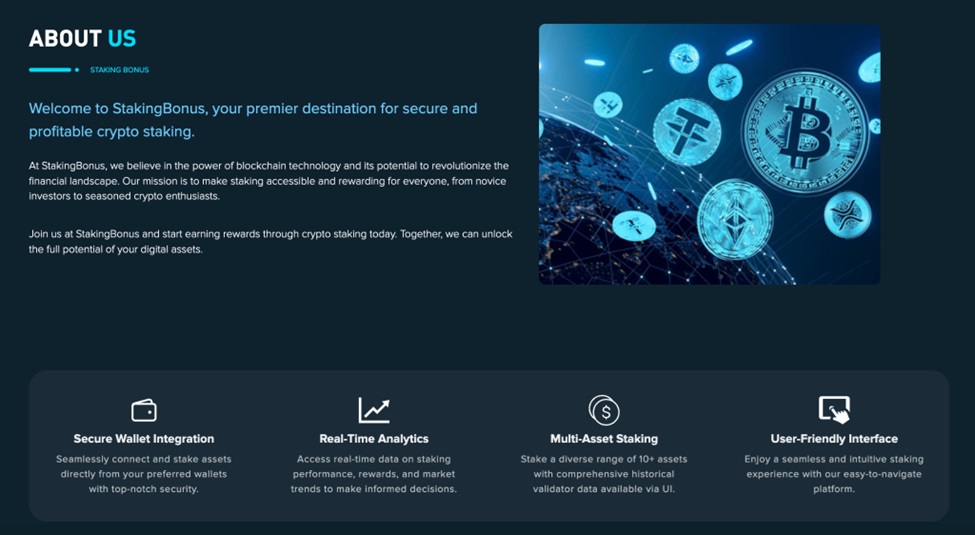
At StakingBonus, we strive to make crypto staking more than just accessible and profitable. This is a place where one can easily stake a wide range of assets with the least effort, from Bitcoin to Ethereum. Integrations using reliable wallets and real-time analytics make your experience in staking secure and highly rewarding.

But most importantly, before you jump into staking, you should weigh the pros and cons.

Pros of Staking

Staking offers a steady income stream, more so in a bull market.

Staking is also less resource-intensive, meaning it is more environmentally friendly compared to mining.

Through Staking, you contribute to the network for security and efficiency.

Cons of Staking

Even with all the advantages, staking comes with its fair share of risks.

The cryptocurrency whose value or price one could argue usually goes up or down faces similar risks.

In some cases, assets end up locked for a set period, thus reducing your liquidity.

If anything goes amiss with that network, including a fork or hack, then your staked assets might be at risk.

Staking With Security and Transparency on StakingBonus

With StakingBonus, you know you’re staking confidently. The support team is always at your service, ensuring a safe platform with clear processes to help you manage related risks. Real-time analytics keeps you updated on your staking rewards and guides you toward crucial information that can help mitigate the risks linked to staking.

Is Staking Worth it?

One can consider the potential returns when weighing if it is worth it to stake. Staking rewards can make quite a difference based on the cryptocurrency, network inflation rate, and the duration you would be willing to stake your assets.

However, potential returns need to be calculated by considering pesky fees, inflation, and risk, such as the risk of volatility when it comes to the price of an asset. Staking can be profitable, but it does need deep thought and a long-term view.

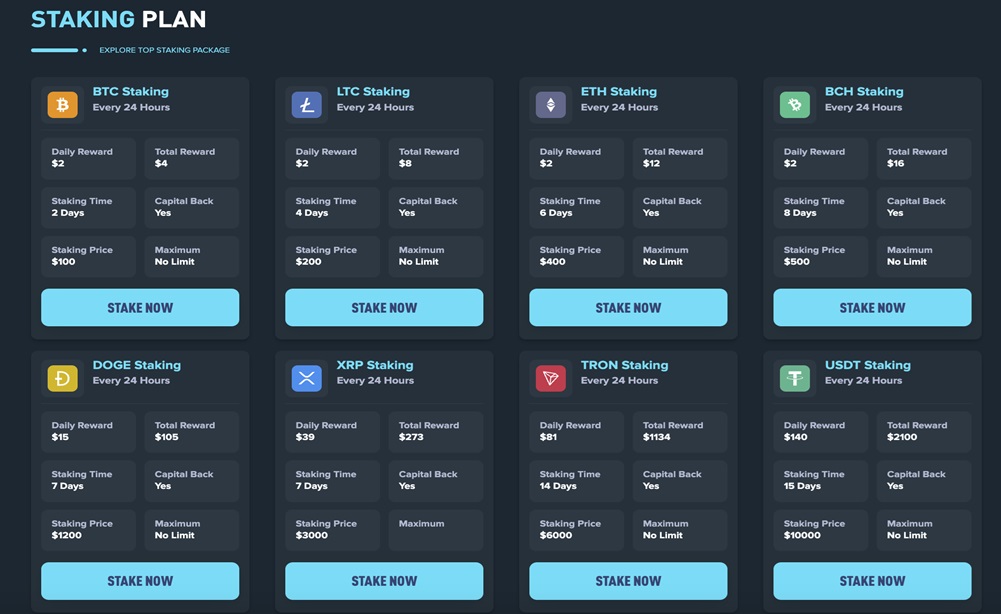
StakingBonus provides some of the most competitive staking plans. Whether you want to stake Bitcoin, Ethereum, or any of the multiple assets we support, our platform will help you maximize your returns. We have staking plans that allow you to choose one, depending on your investment goal and risk tolerance.

How to Starting Staking On StakingBonus

For beginners, staking can be a horrifying activity to get into. However, StakingBonus can be the easiest and the most user-friendly platform for beginners. So here is a simple guide to get you started.

Register with StakingBonus: Sign up on our website with your email, payment details, and username. It’s an easy and quick process that takes just a few minutes.

Choose a Staking Plan: We have different staking plans that work best for various investment levels and time frames. Whether you are into Bitcoin, Ethereum, or any other supported asset, you will find a plan that is considered in your case.

Fund Your Account: Deposit the amount your profile requires to start staking. Our platform supports multiple cryptocurrencies, so you can easily stake the assets you already hold.

Track your earnings: Now you are already staking and you can do it in real time, thanks to our analytics tools.

Withdraw your profits: You can withdraw your staking rewards instantly. No minimum or maximum amount for withdrawal. However, to do it efficiently ensure the amount is above $50. But the good part is that you have full control over your rewards.

Conclusion: Is Crypto Staking Worth It?

Whether crypto-staking is worth it would depend on your investment goal, risk tolerance, and investment strategy. For the ones looking to generate passive income and ensure the growth of blockchain networks, staking will be an excellent strategy. Just like any other investment, staking comes with certain risks which of course can be managed.

At StakingBonus, we believe in the potential of crypto staking, which has great opportunities to offer to investors. We want everybody to be able to join, stake, and be rewarded, and we are committed to creating a secure platform with a user-friendly interface, along with complete options for staking. Join StakingBonus now and earn rewards with crypto staking today!

Innovations in Microsoft and Walmart – And Evolutions in AI Utilities

0

In recent developments, the tech giant Microsoft and retail powerhouse Walmart have made significant strides in their respective industries, showcasing a blend of technological innovation and strategic business transformations. Microsoft’s foray into AI integration with its Copilot+ PCs, powered by the Qualcomm Snapdragon X Elite ARM processor, marks a pivotal moment in hardware differentiation and user experience enhancement.

This move underscores the company’s shift from its historical focus on Windows-centric products towards cutting-edge AI-driven solutions under the leadership of CEO Satya Nadella. Concurrently, Walmart has been excelling in e-commerce through an omnichannel retail strategy that emphasizes grocery offerings. This success highlights Walmart’s evolution from a traditional store-centric model to a digitally savvy player adept at meeting modern consumer demands.

The overarching themes at play here encompass not only technological advancements like AI integration and hardware differentiation but also strategic shifts towards omnichannel retail strategies in response to evolving consumer preferences. These recent events reflect broader trends where companies are leveraging AI and innovative hardware capabilities to enhance user experiences while adapting to the digital landscape.

Looking ahead, the future outlook suggests continued innovation in AI integration and hardware capabilities across industries, further convergence of online and offline retail experiences through omnichannel approaches, and ongoing strategic business transformations driven by changing market dynamics. As traditional businesses navigate this digital age, considerations around ethical implications of widespread AI adoption, competitive landscapes within tech and retail sectors, as well as implications for employees and stakeholders remain critical focal points for analysis amidst this era of rapid technological evolution.

  • Microsoft’s recent events have showcased a convergence of various long-term projects, leading to a revitalized Windows experience and hardware differentiation.
  • The introduction of Copilot+ PCs sets a new standard, requiring specific hardware capabilities and offering features like Recall and Cocreator, enhancing user experiences with AI integration.
  • Microsoft’s focus on AI capabilities extends to partnerships with third-party developers, aiming to leverage the potential of Copilot+ PCs for diverse applications.
  • The hardware showcased at the event is based on Qualcomm’s Snapdragon X Elite ARM processor, promising performance comparable to MacBook Air and improved compatibility for x86-compiled apps.
  • Walmart’s e-commerce success story highlights a strategic shift towards an omnichannel approach, leveraging stores for delivery, pick-up, and in-person shopping, with a strong emphasis on grocery offerings.
  • Walmart’s journey to e-commerce dominance involved overcoming challenges rooted in a store-centric model, eventually leading to the integration of online operations with retail for a seamless customer experience.
  • Microsoft’s transformation under CEO Satya Nadella involved shifting focus from Windows-centricity to a services-oriented approach, with AI and compute investments driving the company’s evolution.
  • The strategic decisions made by Nadella, such as demoting Windows and emphasizing services like Azure and Office, have positioned Microsoft as a services company with Windows playing a supporting role.
  • The evolution of Windows under Nadella’s leadership signifies a departure from Windows-centricity towards a more diversified services business, with AI and compute capabilities driving future innovation and differentiation.

Integration

Vertical integration involves companies controlling multiple stages of production or distribution processes to gain a competitive edge. On the other hand, modularization breaks down systems into interchangeable modules for independent development. This dichotomy influences business strategies in fostering innovation and maintaining competitiveness. These companies are playing the games in many ways.

AI and ICT Utilities

The tech industry, dominated by giants like Apple, Google, Facebook, Amazon, and Netflix, is a dynamic landscape where power dynamics and innovation intersect. Recent events such as the controversy surrounding Apple’s iPad ad have brought to light the concept of Aggregation Theory. This theory underscores how the internet has transformed traditional supplier relationships by prioritizing user experience above all else. As technology continues to evolve rapidly, themes of commoditization of services and the impact on creativity and empowerment come to the forefront.

In this context, discussions around AI’s implications on society and human initiative gain significance. AI refers to machines simulating human intelligence processes. The ongoing debate over balancing empowerment with control in a digitally connected world is crucial for understanding the future trajectory of technology.

As we navigate through issues like data privacy regulations impacting tech companies and ethical considerations in product marketing, it becomes evident that collaborative efforts are essential for addressing societal challenges through technology. Looking ahead, advancements in AI and user experience design will shape technological progress while debates around Aggregation Theory’s evolution will continue to influence competition and innovation within the tech industry.