DD
MM
YYYY

PAGES

DD
MM
YYYY

spot_img

PAGES

Home Blog Page 3017

Crypto Staking on OkayCoin: What You Need to Know

0

This has become one of the most sought-after ways to earn passive income for investors by simply participating in the proof-of-stake consensus mechanism of a network. One of the largest exchanges in cryptocurrency, OkayCoin, gives its users a user-friendly and secure platform for staking various digital coins.

Further in this article, we are going to explain a general overview of crypto-staking on OkayCoin, its specificity, advantages, available staking options, and ways on how to maximize earning rewards, including the OkayCoin referral program. 

Why Staking on Okcoin?

Of the myriad cryptocurrency staking platforms existing, Okcoin occupies a niche in the market, full of some unique features and advantages of its own.

User-friendly interface: The intuitive design at Okcoin assures the easiest navigation and management of staking activities for every type of trader, both newbies and seasoned veterans.

Security: OkayCoin has advanced security measures in place, such as multi-signature wallets and cold storage, to ensure that your assets are fully protected. 

Multi-Staking Options: Many staking options exist within OkayCoin to ensure that users get to have a number of options in order to diversify their investment portfolio, thereby increasing returns.

Referral Program: With the referral program, users will earn bonuses for inviting friends to the platform, hence providing an added flow of income.

Staking Options on OkayCoin

 OkayCoin offers the staking options for the leading ones and brings its special perks associated with its official.
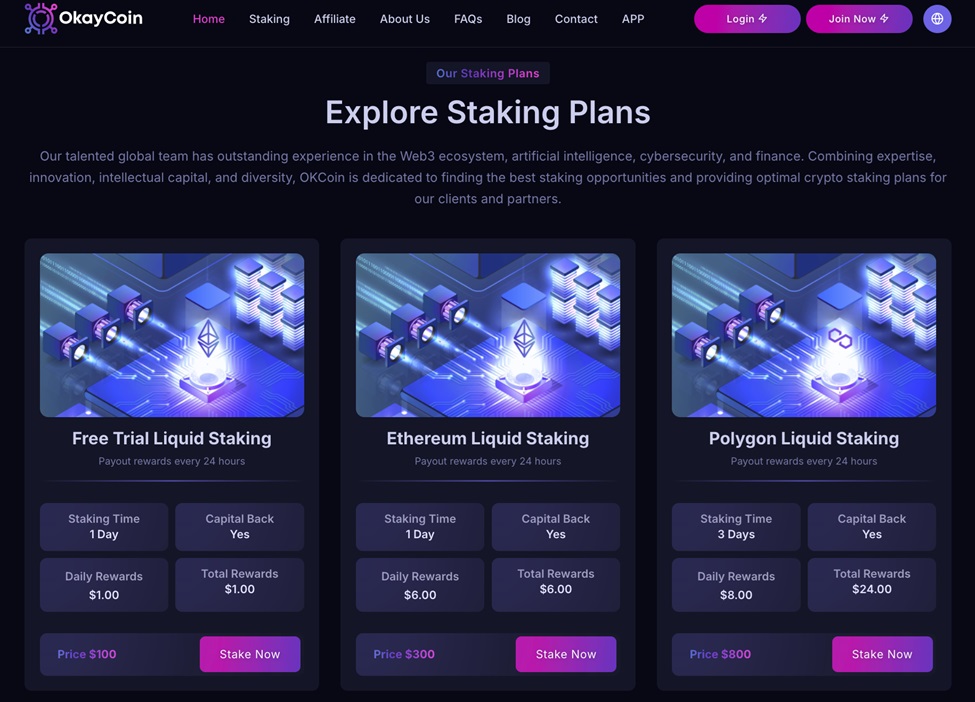
Ethereum is one of the biggest blockchains for smart contract functionality. With the eventual transition to Ethereum 2.0, staking ETH at Okcoin will yield generous rewards. Polygon allows the extension in the scalability of Ethereum and the speeding up of its transactions.

The returns for staking MATIC on OkayCoin are significant, thus making it a very popular investment instrument.

Tron (TRX) aims to decentralize the internet, promoting high throughput and scalability. Their TRX staking option provides continuous and healthier rewards. Polkadot enables cross-blockchain transfers, thus maintaining cross-chain inter??erability. In polkadot there are relatively easy staking and high returns from staking DOT in OkayCoin.

Celestia (CEL) is a modular blockchain network created with high scalability and robustness in mind. As for staking rewards, it is Quite attractive, as it has its unique technology, CEL staking rewards are excellent on OkayCoin.

Aptos (APT) is a layer-1 blockchain specifically made for speed and efficiency. APT has aggressive staking rewards on OkayCoin, which makes it an excellent investment.

SUI (SUI) is a decentralized platform designed to be user-friendly and scalable for dApps. Staking SUI on OkayCoin comes with high rewards, aided by advanced features of the platform.

Avalanche (AVAX) is a scalable blockchain platform for dApps and enterprise deployments. AVAX staking on OkayCoin offers substantial rewards, with an efficient staking process.

When considering Cardano (ADA), it is designed for being secure, sustainable, and scalable with strong features. Staking ADA at OkayCoin is associated with enormous returns based on the strong network of Cardano.

Solana is known for its really fast transactions and low fees. Staking Rewards: Staking SOL in OkayCoin ensures great rewards, driven by high performance on the network.

 How to Earn on OkayCoin

OkayCoin really makes staking super easy to get rewards. Here is how to maximize staking rewards on OkayCoin.

Get registered on OkayCoin.com official site and make your own account.

Select the right cryptocurrency: Go for cryptocurrencies that provide both high staking rewards and strong growth potential. Good examples include Ethereum, Polygon, and Solana.

Diversify: This would mean the spreading of investments across several cryptocurrencies to minimize risk while maximizing returns.

Stay informed about current trends: Stay informed about the market’s trends for making appropriate investment decisions.

Leverage OkayCoin’s Resource: There are other tools and resources within OkayCoin that help in tracking staking rewards and improving chances of investments.

Leverage the Referral Program: Invite friends to use OkayCoin by copying your referral link. Upon each successful finalization of an invitee, you and your friend shall be taking bonuses which will increase your overall reward.

The OkayCoin Referral Program
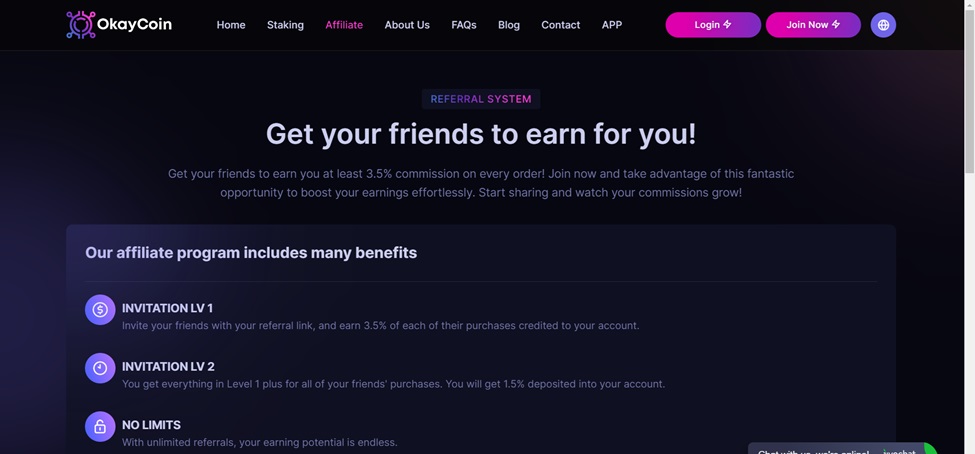
OkayCoin also offers an exciting referral program that gives you the incentive to earn more. Here is exactly how the referral program works:

Invite your Friends: Get your unique referral link and share it with friends to invite them to OkayCoin.

Earn Bonuses: From the point at which friends start staking coins and tokens at OkayCoin, you can both earn the bonus.

Increase Rewards: The more friends you invite, the more rewards you can accumulate, giving them an excellent opportunity to increase bonuses.

Conclusion

Crypto Staking with OkayCoin is an unique opportunity for passive income with a safe, user-friendly platform. With a wide range of staking choices, from Ethereum and Polygon to Tron and many others, OkayCoin helps investors to diversify their portfolios and get the highest yield possible.

Use OkayCoin’s advanced tools to follow the updates on the market and the referral program, where you gain the lion’s share on the much-enhanced staking rewards. Whether you are just getting into the fight or are an experienced investor, OkayCoin will back you up and prepare you with the features that will lead to success.
UQUID integrates TRON for Public Transport Payment in Argentina, as MoonPay Reports Highest Volume since April

0

In a groundbreaking move that signals the increasing acceptance of cryptocurrency in everyday transactions, UQUID has integrated USDT on the TRON blockchain to facilitate public transport payments in Argentina. This innovative step not only simplifies the process of topping up SUBE cards, which are used across various modes of transport including buses, subways, and trains, but also represents a significant leap towards the integration of digital currency into daily life.

The SUBE card system is an integral part of Argentina’s public transportation network, especially in major urban areas like Buenos Aires. Traditionally, users would need to visit physical kiosks or utilize online banking platforms to top up their cards—a process that could be time-consuming and inconvenient. With the integration of USDT on TRON, commuters can now enjoy almost instantaneous transactions, bypassing long queues and simplifying their travel experience.

This move by UQUID is particularly noteworthy in the context of Argentina’s economy, where high inflation rates pose a challenge to maintaining the value of money. By using USDT, a stablecoin pegged to the US dollar, commuters can protect their funds from inflationary pressures, ensuring that the value of their travel credits remains stable.

The choice of the TRON blockchain for this integration is strategic, given its reputation for low transaction fees and high-speed processing. This makes it an ideal platform for microtransactions like public transport payments, where efficiency and cost-effectiveness are paramount.

The CEO of UQUID, Tran Hung, emphasized the company’s mission to embed blockchain technology into everyday transactions, making financial activities more accessible and convenient for users, especially in the LATAM region. Similarly, Dave Uhryniak, Leader of Ecosystem Development at TRON DAO, expressed excitement over this practical application of cryptocurrency, highlighting its potential to enhance convenience for users in Latin America.

The integration of USDT on TRON for SUBE card top-ups is a clear indication of the growing trend towards the democratization of financial tools. It opens up access to transportation for individuals who may have been excluded from traditional banking systems, thereby promoting inclusivity.

As digital currencies continue to gain traction, the collaboration between UQUID and TRON could serve as a model for other regions and industries looking to harness the benefits of blockchain technology. This initiative not only enhances the daily commute for millions of Argentinians but also paves the way for broader adoption of cryptocurrencies in everyday life.

The integration of USDT on the TRON blockchain for public transport payments in Argentina has revolutionized the way commuters handle their daily travel expenses. This innovative solution allows for a seamless top-up of SUBE cards, which are essential for accessing buses, trains, and ferries across major Argentine cities.

With your SUBE card topped up, you can use it to pay for public transportation across Argentina, enjoying the benefits of a digital, inflation-resistant currency. This process not only provides a convenient and efficient way to manage travel expenses but also offers a safeguard against the high inflation rates in Argentina, ensuring that the value of your travel credits remains stable.

MoonPay Reports Highest Volume since April

MoonPay, the renowned cryptocurrency payment processing platform, has reported its highest transaction volume since April this year, amidst a period marked by significant volatility in the crypto markets. This surge in activity is particularly notable as it comes with an overwhelming majority of 92% of the volume coming from buyers, indicating a strong buying sentiment among users despite the market’s fluctuations.

This development is a testament to the robustness and appeal of MoonPay’s services, which have been designed to streamline the process of converting fiat currencies into cryptocurrencies and vice versa. The platform’s user-friendly interface, coupled with its ability to support a wide array of payment methods, has made it a go-to choose for both novice and experienced cryptocurrency enthusiasts.

The increase in transaction volume also reflects a broader trend in the cryptocurrency space, where despite periods of uncertainty, there is a consistent interest and confidence from investors looking to capitalize on the potential of digital assets. MoonPay’s recent performance underscores the company’s significant role in facilitating this engagement by providing a secure and accessible gateway into the world of cryptocurrencies.

Moreover, the data suggests that the crypto market is attracting a substantial number of new entrants, as evidenced by the high percentage of buying transactions. This influx of buyers could be driven by various factors, including the perception of cryptocurrencies as a hedge against inflation, the potential for high returns, and the increasing mainstream acceptance of digital currencies.

MoonPay offers a variety of payment methods to accommodate users worldwide, ensuring that the process of buying and selling cryptocurrencies is as accessible and convenient as possible.

Here is a comprehensive list of payment methods supported by MoonPay:

Credit/debit cards (including MasterCard, Visa, and Maestro), Apple Pay, PayPal (available only in the US, UK, and EUR regions, excluding Croatia, Hungary, and Iceland)
Google Pay (supported only on Android devices). SEPA and SEPA Instant (for EUR-denominated transactions in SEPA countries). UK Faster Payments (for GBP-denominated transactions in the UK), PIX (for BRL-denominated transactions in Brazil), P2P bank transfers (for NGN – Naira transfers in Nigeria)

For off-ramp transactions, MoonPay supports:
Visa direct to cards, ACH payments (in the US), SEPA and SEPA Instant (for EUR-denominated transactions in SEPA countries), UK Faster Payments (for GBP-denominated transactions in the UK) and PayPal (instant transactions)

Additionally, for the purchase of digital items or NFTs, MoonPay accepts only credit or debit cards. It’s important to note that while MoonPay strives to provide a wide range of payment options, the availability of these methods can vary based on the user’s location and the specific transaction requirements.

MoonPay also prioritizes security in transactions by utilizing 3D Secure to verify card payments, adding an extra layer of security to online transactions and helping to reduce the risk of fraud or disputes.

MoonPay’s success in attracting such a high volume of buyers also speaks to the effectiveness of its security measures, customer support, and regulatory compliance, which have been critical in building trust with its user base. As the crypto market continues to evolve, platforms like MoonPay that prioritize user experience and safety are likely to play a pivotal role in shaping the future landscape of digital finance.

City of Santa Monica, California, is hosting a Bitcoin open-source festival in October

0

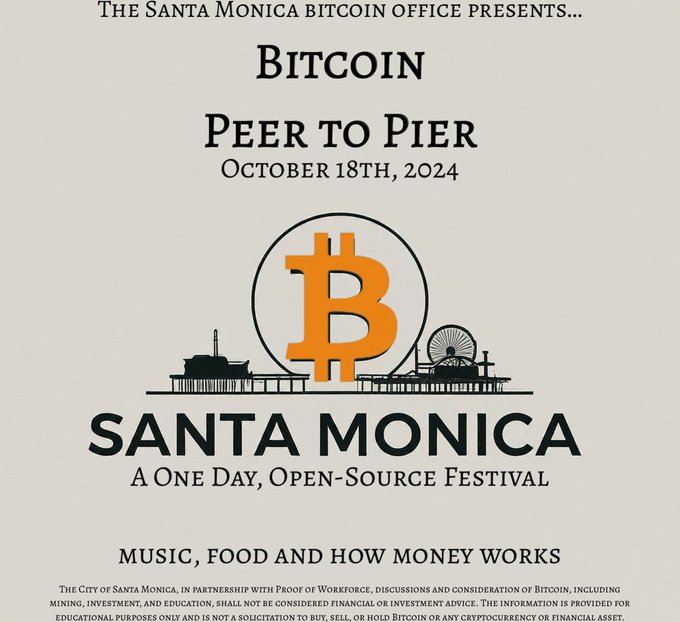
The City of Santa Monica, a picturesque beachfront city in California, is gearing up for an exciting event this October that is sure to attract Bitcoin enthusiasts from around the globe. The Pacific Bitcoin Festival, set to take place on October 18-19, 2024, promises to be a vibrant celebration of all things Bitcoin, with a focus on open-source development and the Bitcoin lifestyle.

This festival is not just another conference; it’s a unique blend of education, community, and entertainment. Attendees can expect to dive into a variety of topics related to Bitcoin, from the technical aspects of lightning and nodes to the broader implications of cryptocurrency on society. The event is designed to cater to all levels of Bitcoin users, from novices to seasoned experts, ensuring a rich experience for everyone.

The narrative surrounding Bitcoin in the United States is evolving, reflecting a broader shift in the perception and utilization of cryptocurrency. Once seen primarily as a speculative investment or a means to transact outside of traditional banking systems, Bitcoin is now being woven into the fabric of the US financial landscape in more complex and varied ways.

One of the most significant changes in the Bitcoin narrative is its growing acceptance on Wall Street. The approval of the first Bitcoin exchange-traded funds (ETFs) marks a milestone in the cryptocurrency’s journey towards mainstream financial recognition. This move, however, has not been without controversy. It has sparked debate among crypto purists who fear that Bitcoin’s original libertarian ethos is being undermined as it becomes more entrenched in the very system it was meant to disrupt.

Another aspect of the narrative is the discussion around Bitcoin’s role in the ‘de-dollarization’ process. The idea that Bitcoin could challenge the US dollar’s dominance as the global reserve currency has been a topic of interest for years. However, recent market dynamics suggest that this narrative may be losing ground as the dollar continues to assert its influence on international transactions.

In 2024, new narratives are emerging that explore the capabilities and applications of blockchain technology beyond mere currency. Concepts like Decentralized Physical Infrastructure Networks (DePIN) and Decentralized Science (DeSci) are gaining traction, highlighting the potential for blockchain to revolutionize various sectors.

These evolving narratives are not just stories; they have real-world implications. They influence investor sentiment, guide market trends, and can even shape legislative and regulatory approaches to cryptocurrency. As such, it is crucial for investors, entrepreneurs, and policymakers to critically evaluate these narratives,

One of the most compelling aspects of the Pacific Bitcoin Festival is its commitment to being a Bitcoin-only event. This means that all discussions, workshops, and presentations will center exclusively on Bitcoin, providing a focused environment for learning and sharing. Moreover, the festival offers personalized support for those looking to purchase Bitcoin, secure their assets, or explore Bitcoin IRAs and employee benefits.

As narratives continue to unfold, they not only influence investor sentiment and market trends but also shape the regulatory and technological advancements within the crypto space. It’s a dynamic story, one that requires critical evaluation and a nuanced understanding of the interplay between technology, economics, and human behavior.

The Bitcoin narrative in the USA is indeed taking a new dimension, one that reflects a maturing market and a technology that’s becoming increasingly integrated into the fabric of society. As we watch these narratives evolve, it’s clear that Bitcoin’s story is far from over—it’s just entering a new chapter.

Potential Implications if WhatsApp Should Exit Nigeria

1

The recent news about WhatsApp potentially exiting the Nigerian market has sparked a flurry of discussions and debates across the nation. WhatsApp, a subsidiary of Meta Platforms, has become an integral part of daily communication in Nigeria, making the possibility of its departure a significant concern for its millions of users.

The situation arose following a hefty $220 million fine imposed on Meta Platforms for alleged breaches of data privacy laws. The Federal Competition and Consumer Protection Commission (FCCPC) of Nigeria has taken a firm stance on the matter, emphasizing the importance of adhering to national regulations designed to protect consumer rights and data privacy.

WhatsApp’s potential exit raises several critical questions about the future of digital communication and the regulatory environment in Nigeria. It underscores the delicate balance between regulatory enforcement and the operational viability of tech companies within the country. The implications of such a move could be far-reaching, affecting not just individual users but also businesses that rely on WhatsApp for marketing, customer engagement, and day-to-day operations.

From a consumer perspective, the loss of WhatsApp could lead to a shift towards alternative messaging platforms, which may not offer the same level of functionality or user experience. This could disrupt communication patterns and pose challenges for users who have become accustomed to the app’s features.

The specific data privacy concerns raised against WhatsApp in Nigeria revolve around the updated privacy policy that the messaging app introduced, which would allow it to share users’ data with its parent company, Facebook, and other affiliated apps like Instagram. This policy shift has sparked widespread criticism and concern among users, regulators, and industry experts for several reasons.

Firstly, the sharing of user data without explicit authorization is a primary concern. Users fear that their personal information could be exploited without their consent, leading to privacy violations. The policy update was perceived as giving WhatsApp the right to collect, store, and share personal data with Facebook and its other entities, which could include sensitive information like phone numbers, contacts, and chat logs.

Secondly, there is a worry that consumers are not being given the right to self-determine the use of their data. This means that users would have little control over how their information is used once it is collected by WhatsApp.

Thirdly, the policy has been criticized for potentially discriminatory practices. The updated privacy policy does not apply to users in the European Union due to the stringent General Data Protection Regulation (GDPR), which protects data privacy. This has raised questions about why different standards are applied to users in Nigeria and other parts of the world.

Lastly, there is a concern about the abuse of market dominance. WhatsApp, being one of the most popular messaging platforms globally, holds a significant amount of power over users’ data. The policy update could potentially leverage this dominance to the detriment of users’ privacy rights.

These concerns have led to the Federal Competition and Consumer Protection Commission (FCCPC) in Nigeria imposing a hefty fine on WhatsApp for multiple and repeated violations of the country’s data protection and consumer rights laws. The situation underscores the importance of data privacy and the need for tech companies to adhere to local regulations that protect consumers’ personal information.

For the Nigerian economy, the exit of a major player like WhatsApp could signal to other foreign investors and tech companies that the business environment is challenging, potentially affecting future investments. It also raises concerns about the country’s digital ecosystem’s ability to support innovation and growth if major international players withdraw.

On the other hand, this situation could also present an opportunity for local tech startups to fill the void left by WhatsApp, potentially leading to the growth of indigenous platforms and solutions tailored to the Nigerian market.

The FCCPC’s actions reflect a broader global trend where regulators are increasingly scrutinizing the practices of tech giants to ensure compliance with local laws. The outcome of this situation could set a precedent for how similar cases are handled in the future, not just in Nigeria but across other jurisdictions as well.

As the story unfolds, it will be crucial for all stakeholders, including the government, regulatory bodies, tech companies, and consumers, to engage in constructive dialogue. The goal should be to find a resolution that balances regulatory compliance with the sustainability of digital services that have become essential to modern life.

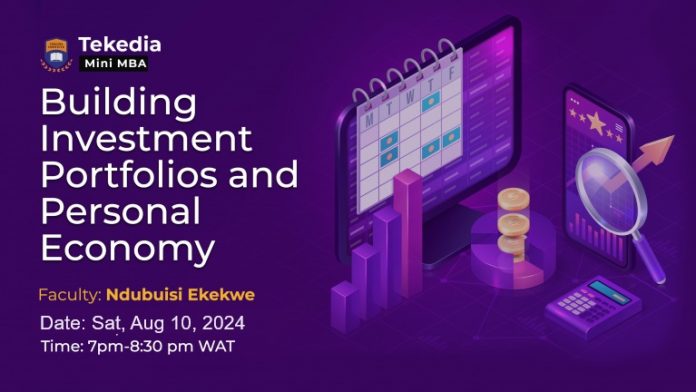
Building Investment Portfolios And Personal Economy – Tekedia Mini-MBA

0

You spent at least 4 years in the university or polytechnic, did they ever teach you anything about your personal economy? Yes, did they prepare you for yourself? Most times, schools are designed to prepare us for WORK, as factors of production (Labour), in companies, organizations or governments.

Simply, one of the greatest surprises when I started work as a banker was this: the university system prepared me on how to manage resources for companies, but did a very poor job on how I could manage my own personal resources.

In FUT Owerri, we studied great topics in Engineering Management like Engineer Turns Manager, Managerial Accounting, etc. In all those domains, everything was on how to optimize resources for the employer (yes, the company). But none for the village boy’s Personal Economy. That is why at Tekedia Institute, we have courses on Personal Economy Management.

Tomorrow, I will be looking at “Building Investment Portfolios And Personal Economy “. To register for the Sept edition of our program, go here . More SMEs attend our program than any university in Africa.