DD
MM
YYYY

PAGES

DD
MM
YYYY

spot_img

PAGES

Home Blog Page 302

Is XRP still struggling to break through $3? CryptoMiningFirm users could consistently earning over $10,000 a day using cloud mining contracts

0

No more missing out, no more betting on ups and downs! ——CryptoMiningFirm cloud mining contracts lead crypto investment into a more stable era with stable returns and intelligent management.

In today’s volatile cryptocurrency market, many investors are hesitant due to price fluctuations, missing out on numerous profitable opportunities. This is especially true for popular cryptocurrencies like XRP, whose price once soared to $3.66. Many investors, hesitant to take a gamble or missing out on the opportunity, have regretfully exited the market. However, one group of investors has chosen a different path—they avoid frequent cryptocurrency trading and gambling on price fluctuations, yet they still achieve stable daily deposits, sometimes earning over $10,000 daily. What’s their secret? The answer is – CryptoMiningFirm cloud mining platform.

Why choose CryptoMiningFirm instead of continuing to speculate in cryptocurrencies?

Is the platform safe? Are returns guaranteed?

CryptoMiningFirm has been operating for over four years, with transparent contracts and top-tier cryptographic security. It’s not about luck, but about compliance, intelligence, and a trustworthy system.

I don’t understand technology and don’t have the time to monitor it?

No need to buy mining machines, set up programs, or even turn on a computer. Download the app, register in three steps, and the system automatically allocates computing power. Daily profits are automatically deposited into your account. It’s as easy as watching a YouTube video.

Eco-friendly and profitable? It really works!

Our cloud mining farms, with locations in Europe, America, and Southeast Asia, are both highly efficient and low-carbon, truly achieving “sustainable profitability.”

The platform boasts numerous advantages: cross-chain mining, daily settlements, no technical skills required, and easy smartphone operation. New users receive free mining rewards ranging from $10 to $100. One user from San Francisco reportedly made around $14,790 in the first week, while a user from Norway earned nearly $83,508 in five days.

Start your crypto passive income in three steps

1: Visit the official website or download the official app to complete the registration process in 30 seconds

2: Claim your reward: New users can receive a $10–$100 cloud computing power trial bonus. Try it before choosing a contract.

3: Start your computing power: Select the contract type, and the system will automatically deploy your computing power. Profits will be settled daily, and

you can view or reinvest them at any time.

How high are the returns?

Contract Type    Cost ($) Duration (days) Daily Rate ($) Total ($)
Antminer T21 100$ 2 4$ 108$
 

Iceriver KAS KS7

500$ 5 6.5$ 532.5$
ETCMiner E11 2700$ 10 37.8$ 3078$
MicroBTWhatsMiner M66S++ 5000$ 15 75$ 6125$
Antminer S21 XPHYD 10000$ 25 175$ 14375$
ANTSPACE HW5 49000$ 35 980$ 83300$
ANTSPACE MD5 71000$ 40 1536.5$ 132060$


For more information on high-yield contracts, visit https://cryptominingfirm.com

The platform’s average daily return is 1.3%-3.5%, which is much higher than traditional financial products and “holding coins and waiting”.

The CEO of CryptoMiningFirm emphasized that its goal is not only to provide mining channels, but also to build a global cloud computing ecosystem where “everyone can participate, data is transparent, and returns are stable.” The company will continue to invest in technology research and development to promote the deep integration of cloud computing and blockchain applications, allowing users to steadily manage digital assets in a safe, compliant, and intelligent environment.

Don’t miss out on the XRP $3.66 craze! Join CryptoMiningFirm now and start earning stable daily income. Steadily manage your asset growth with secure, simple, and efficient cloud mining technology. Sign up now to claim exclusive rewards, sign public contracts, and begin a new chapter of easy money!

Official Website: https://cryptominingfirm.com

Official Email: info@cryptominingfirm.com


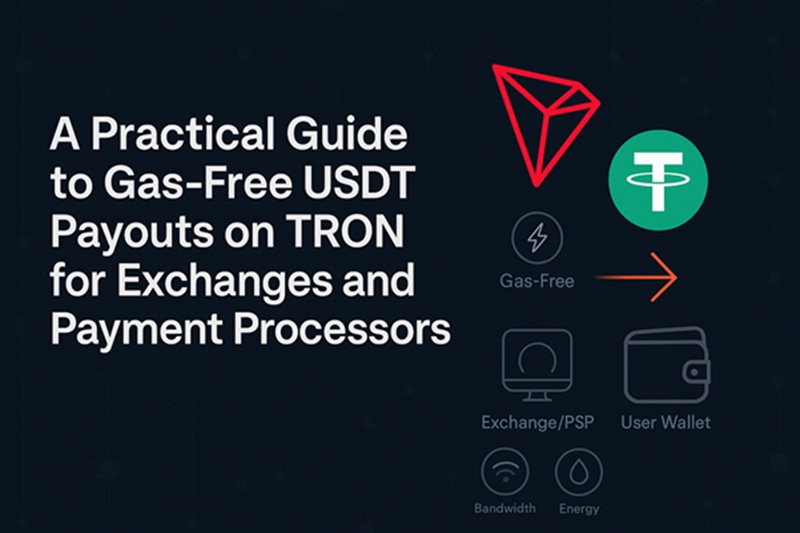
A Practical Guide to Gas-Free USDT Payouts on TRON for Exchanges and Payment Processors

0
Gas-free USDT on TRON

For exchanges, PSPs, and marketplaces, “gas-free” means your customers receive USDT without needing TRX in their wallets or worrying about fees. On TRON, you can make that happen by managing Energy and Bandwidth on the sender side, so end users pay nothing and transfers just work.

Early note: if you plan to supplement staked resources with rentals, you can buy energy tron to smooth out fee spikes.

How TRON fees really work (in 60 seconds)

Before building your payout flow, it helps to know how fees are actually paid on TRON. TRON uses two resources: Bandwidth for basic transactions and Energy for smart-contract calls. USDT on TRON is a TRC-20 token, so transfers consume Energy. If your sending account lacks enough Energy/Bandwidth, the network burns TRX from that account to cover the gap. In short: the sender pays, not the recipient—perfect for gas-free payouts.

Recipient experience: make sure addresses are “activated”

To keep support tickets low, plan for first-time recipients. A new TRON address may need a tiny TRX deposit before many wallets will display incoming TRC-20 balances like USDT. If you’re paying newcomers, pre-activate their address (send a small TRX amount once) or have them add TRX themselves. This avoids “I don’t see my USDT” confusion even when the transfer succeeded on-chain.

Your options to cover fees (and when to use each)

Here’s a quick, at-a-glance comparison of the main ways to cover fees so recipients never deal with TRX.

Option What it is Pros Cons Best for
Stake TRX for Energy Freeze TRX to generate ongoing Energy/Bandwidth. Lowest unit cost at steady volumes; earns staking yield; on-chain and simple. Ties up capital; planning needed during volume spikes. Predictable, high-throughput payers.
Rent Energy Rent additional Energy from a provider when you need it. Opex, not capex; flexible; great for bursts and seasonality. Variable market rates; provider risk—choose reputable vendors. Spiky or growing volumes; pilots and rollouts.
Pay-as-you-go (burn TRX) Keep TRX on the hot wallet and let fees burn when Energy runs out. Zero setup; works immediately. Highest cost at scale; prone to “OUT_OF_ENERGY” errors if under-funded. Low volume or emergency fallback.

Most teams mix strategies: stake TRX to cover the baseline, then rent Energy during peaks or campaigns. This keeps costs predictable without over-locking capital.

Step-by-step rollout for gas-free USDT payouts

Use this simple plan to launch gas-free payouts with confidence and minimal surprises.

  1. Map your flows. Estimate daily transfers, typical sizes, and peak hours. This gives you a baseline Energy target per day.
  2. Pre-activate new payout addresses. For first-time recipients, send a tiny TRX amount once so their wallets reflect USDT immediately.
  3. Choose your Energy mix. Stake TRX to cover your baseline, and rent Energy to handle surges or seasonal spikes. Review costs weekly and rebalance.
  4. Set sane feeLimits on transactions. Use a feeLimit that comfortably covers worst-case Energy draw so you don’t bounce transactions during short spikes.
  5. Monitor in real time. Track Energy/Bandwidth on hot wallets; alert when thresholds are hit. If you see “OUT_OF_ENERGY,” auto-trigger a top-up or retry.
  6. Batch smartly when possible. If your payout logic allows, bundle scheduled transfers into windows to use Energy efficiently while meeting your SLA.
  7. Keep a safety float. Maintain a TRX reserve on the sender to guarantee completion if Energy is briefly exhausted.

Practical tips to lower your unit cost

These ideas help you trim fees without adding complexity to the user experience.

  • Right-size your baseline stake. Too little and you burn TRX; too much and capital sits idle. Review weekly against actual throughput.
  • Use rentals during promos or end-of-month spikes. Renting converts surprises into predictable operating expense.
  • Instrument everything. Expose EnergyLeft/BandwidthLeft and last-hour burn in your ops dashboard to catch issues before they hit users.
  • Test new wallets and flows on a canary. Some wallets hide TRC-20 balances on inactive addresses; find that early in staging.

Minimal technical checklist

Before you go live, confirm the following items so your flow is reliable from day one.

  • Sender wallet(s): Custodial infrastructure or MPC wallet with programmatic access to set feeLimit and read resource balances.
  • Node access: TronGrid or your own full node to broadcast and monitor transactions.
  • Pre-flight checks: Before each payout, ensure the sender has Energy/Bandwidth above thresholds; if not, stake/rent/transfer TRX.
  • Error handling: Catch “OUT_OF_ENERGY” and retry after topping up Energy or raising feeLimit.
  • Address activation flow: If a payout target is new, run a one-time activation step (tiny TRX send) before the first USDT transfer.

Security and operations notes

Strong safety and good hygiene keep fees stable and downtime low as volumes grow.

  • Provider due diligence. If you rent Energy, use reputable providers with transparent pricing, uptime guarantees, and API access controls.
  • Key separation. Keep staking wallets and hot payout wallets separate; limit hot wallet permissions.
  • Log tx hashes, Energy consumed, and fee outcomes per payout for audits and cost reporting.
  • Customer support macros. Prepare clear instructions for users who don’t see tokens due to inactive addresses; point them to the activation step.

The bottom line

Gas-free USDT payouts on TRON are straightforward once you control Energy on the sender side. Pre-activate recipient addresses, size your baseline stake, rent Energy for peaks, and monitor resources as closely as balances. Done right, your users never touch TRX, transfers clear reliably, and your fee curve stays predictable even as volumes grow.

The Hidden Cost of Staying Put: Why Relocating Could Save Your Business

0

I. The Comfort Trap

Most business owners do not give any thought to their location after they have established their business. The building becomes familiar to you, and your commute becomes predictable, and your rent seems affordable until it no longer does. The stability that seemed secure at first will transform into a business disadvantage without your knowledge.

The security of maintaining your current location provides no immediate financial benefits, but it restricts your business operations in ways that do not appear on financial statements. The convenience of staying in one area leads to higher expenses and reduced employee availability, which results in unexpected financial losses.

The article identifies the concealed expenses that businesses face when staying in one location and explains how strategic relocation can create lasting financial benefits and expansion opportunities.

II. The Hidden Costs of Staying Put

A. Rising Overhead Expenses

Business owners typically do not consider their location after they have established their operations. The building becomes familiar to you, and your commute stays regular while your rent payments seem affordable until they become unaffordable. The stability that seemed secure at first will transform into a business disadvantage over time.

The practice of maintaining your business at a single location provides security, but it restricts your company’s development through expenses that do not appear in financial reports. The convenience of staying at your current location might be generating expenses that exceed your actual knowledge.

The article explains the concealed expenses that businesses face when staying in one location and demonstrates how strategic relocation can create lasting financial benefits and expansion opportunities.

B. Talent Limitations

Your business location determines which candidates you can recruit for open positions. Your business location within a restricted talent area forces you to compete with other companies for the same limited number of qualified candidates, which results in higher wages and faster employee turnover.

Moving your business to an area with abundant talent access near universities, tech centers, and growing cities enables you to find better candidates while spending less on recruitment. The location of your business determines both the pool of applicants and the level of interest from job seekers who want to advance in their careers.

C. Operational Inefficiency

The facilities in a building will naturally deteriorate with time. The infrastructure faces difficulties because people modify their travel behavior. The operations of your business will experience delays when you maintain outdated facilities that lack proper connectivity.

The delivery process becomes longer because of restricted customer entry points and extended travel times for your team members. The accumulation of minor operational inefficiencies leads to substantial monetary losses. The implementation of new facilities with modern digital systems and better logistics will bring immediate efficiency improvements.

D. Brand Stagnation

Your environment determines the culture that your company will develop. A business that has not moved its operations or updated its interior design since 2010 will likely experience this stagnation in its workplace environment and employee mindset.

Your business environment sends signals to both your customers and clients. A building that appears outdated, together with an unappealing location, can create negative impressions about your company’s level of professionalism and its current state of development. A relocation serves as an organic rebranding opportunity that demonstrates business expansion, dynamic energy, and future-oriented development.

III. The Strategic Benefits of Relocating

A. Financial Optimization

The process of business relocation requires more than just discovering a new building location because it demands a complete assessment of your financial impact. Various cities and states provide financial incentives through tax breaks, relocation grants, and business attraction programs to employers.

The establishment of new commercial areas includes tax benefits, together with decreased property and maintenance expenses. The combination of an energy-efficient modern facility with reduced property taxes and maintenance expenses leads to significant long-term financial benefits.

B. Workforce Expansion

The process of relocation enables businesses to discover qualified candidates from broader and more varied talent groups. Your organization faces difficulties in recruiting skilled technicians, creative professionals, and logistics experts. Your recruitment process will experience a total transformation when you relocate to areas where your desired professionals reside and operate.

Your organization can establish future hiring pipelines through partnerships with educational institutions and industry centers located in your new area.

C. Fresh Market Access

The position of a business determines how far its operations can extend. Moving operations to areas near suppliers and target markets enables companies to simplify their logistics operations and decrease delivery times. The strategic relocation enables businesses to access new markets that were unattainable because of distance or high operational costs.

A central logistics hub relocation enables businesses to reduce their delivery expenses by more than 10 percent. Your business will benefit from faster delivery options and improved infrastructure when you establish operations near major transportation routes, including highways, airports, and ports.

D. Enhanced Brand Image

Relocation reveals our growth story because we are expanding, changing, and preparing for what comes next.

The establishment of a new headquarters along with contemporary facilities and strategic location positions your business as ambitious and stable to both clients and financial backers. The move demonstrates your organization’s positive outlook for tomorrow while confirming to employees that expansion follows a deliberate strategy.

IV. How to Plan and Execute a Smart Move

A. Conduct a Relocation Feasibility Study

Start by evaluating your numbers before beginning the box-packing process. Review your present financial situation, together with tax requirements, employee requirements, and operational management needs. Multiple target areas should be used for comparison purposes.

A relocation feasibility study provides you with concrete information about investment returns, new risks, and actual timeframes for achieving those returns. The analysis transforms relocation from an uncertain process into a well-planned strategy.

B. Involve Key Stakeholders Early

The relocation process impacts all stakeholders, including staff members, their suppliers, and the customer base. The process of relocation becomes more efficient when organizations start sharing information with stakeholders at an early stage.

The planning process for relocation should include participation from managers, HR professionals, and operations leaders. The process requires open discussion about available choices followed by feedback collection. People tend to back relocation decisions when they receive clear explanations about the underlying reasons.

C. Partner with Professional Movers

The process of commercial relocation differs completely from residential relocation because equipment, IT systems, and sensitive documents need specific handling methods. Your assets will receive proper protection during transit while experienced cross-country moving companies minimize operational interruptions. A professional moving company will schedule operations to achieve the shortest possible period of business interruption. The company functions as your operational partner instead of providing basic service.

D. Post-Move Optimization

The relocation process extends past the point of unpacking all boxes. Establish specific performance indicators to monitor post-move results, which should include cost reduction, productivity growth, and enhanced client reach.

The collected data will help you prove your relocation choice while enabling better planning for upcoming operations. Your team needs recognition for their achievements because relocation work drains them, while recognition strengthens their commitment to the company.

V. When Moving Makes Sense (and When It Doesn’t)

Every business should not relocate. Your company should stay in its current location if you need to serve a particular local market or if your lease agreement provides exceptional benefits.

Business relocation becomes essential when overhead costs increase, talent acquisition becomes challenging, and growth potential reaches its limits. Moving your business requires an investment mindset instead of treating it as a disruptive process. Strategic relocation leads businesses toward sustainable growth and profitability in the long run.

VI. Conclusion: Don’t Let Comfort Cost You

Businesses that remain in one place face expenses beyond monetary costs, as they lose access to better opportunities. The comfort of familiar surroundings and established routines hides the fact that your business operates less efficiently while costs rise and untapped potential remains unused.

Moving your business forward may seem complicated at first, but it is the most logical choice for many organizations. Relocation isn’t a gamble. A strategic relocation provides your business with cost reduction and market expansion opportunities while securing its future success through the following ten years.

Your business needs to evaluate whether its current location provides value to your operations or if the location controls your operations.

Market Rotation Alert: Chainlink’s Calm Meets Blazpay’s $735K AI Crypto Presale Explosion

0
Blazpay- ai crypto presales 2025

The AI crypto coins narrative is rapidly becoming the defining trend of 2025, reshaping how investors view innovation and functionality in the DeFi market. As traditional tokens like Chainlink (LINK) continue to reinforce blockchain stability and institutional trust, new contenders such as Blazpay ($BLAZ) are using artificial intelligence to unlock a new class of intelligent finance.

Blazpay’s AI-powered ecosystem, paired with its Perpetual Trading capabilities, has drawn growing attention across the crypto community. Its Phase 2 presale has already raised $735,000, selling over 105 million tokens — representing 67% completion at a live price of $0.0075 per token. The next phase will increase prices by 25%, marking a critical turning point for investors seeking early entry into one of the best crypto presales this year.

While Chainlink continues to dominate oracle infrastructure, Blazpay is introducing a dynamic, AI-integrated model that merges automation with scalability — signaling what could be the next big crypto coin leading the intelligent DeFi revolution in 2025.

Blazpay’s AI and Perpetual Trading Utilities: Redefining Smart Finance

Blazpay is not just another addition to the growing list of AI crypto coins — it’s an operational ecosystem designed for the next era of intelligent finance.

At the core of its infrastructure lies a self-learning AI execution engine, capable of processing commands and executing financial decisions autonomously. From automated trading to cross-chain liquidity optimization, Blazpay’s AI is built to reduce friction, eliminate manual steps, and increase precision across DeFi operations.

One of its most anticipated features, Perpetual Trading, allows users to open leveraged long or short positions directly within its decentralized platform — without giving up self-custody. These trades are enhanced by AI-backed risk management, ensuring positions are rebalanced automatically during market volatility.

This integration of artificial intelligence with perpetual markets gives Blazpay a unique edge — it’s not just building a new token; it’s architecting a new category of AI-integrated DeFi, earning it recognition as one of the best crypto presales and a frontrunner for 2025’s next major market breakout.

Blazpay Price Prediction 2025: The Next Big AI Crypto Coin

Blazpay’s performance in Phase 2 already indicates substantial early demand — and the market narrative around AI crypto coins is just beginning. Priced at $0.0075, the token provides one of the most accessible entry points in the high-growth AI sector.

A $3,000 investment secures roughly 400,000 BLAZ tokens. If the token rises to its projected presale closing price of $0.16, that position would be worth $64,000 (21× ROI). A listing range of $0.40–$0.50 would increase that to $200,000, signaling a potential 65× return.

In a broader bull cycle, if Blazpay’s adoption matches that of early DeFi disruptors like Uniswap or Aave, analysts estimate long-term valuations could climb beyond $1.00 — or even reach $6.00, a 1,000× ROI that would redefine what early-stage presale success looks like.

Unlike most speculative projects, Blazpay’s real-world utility gives it staying power. With a live AI execution engine, perpetual trading, and a multi-chain backbone, it’s uniquely positioned to become the best crypto coin to buy now among 2025’s presales.

Blazpay- ai crypto coins presales

Chainlink (LINK) Price Prediction 2025: Utility Strength Meets Market Stability

While Blazpay rises in the AI-driven DeFi frontier, Chainlink continues to serve as the data backbone of blockchain infrastructure. Its oracle network powers smart contracts across thousands of decentralized applications, delivering secure, real-world data to the blockchain — a foundation that remains critical for institutional adoption.

Trading near $18.50, Chainlink has demonstrated resilience amid fluctuating market conditions. Its expanding partnerships with enterprise networks like SWIFT, Google Cloud, and Avalanche signal a deepening role in cross-chain data security.

Chainlink Price Forecast (2025–2026):

  • Short-Term (Q1 2026): $22–$26
  • Mid-Term (Mid-2026): $30–$35
  • Bullish Scenario: $40+ as institutional integration scales

Analysts emphasize that while LINK offers sustainable, mid-range returns, its mature market cap means slower compounding compared to early-phase projects like Blazpay. As DeFi shifts toward intelligent, user-driven systems, AI-integrated platforms are expected to outperform traditional utility networks in terms of ROI potential.

Analysts’ Take: Chainlink Represents Strength — Blazpay Represents Ascent

In the current cycle, market experts are advising diversified exposure between reliable market leaders and innovation-driven newcomers. Chainlink embodies structural trust, forming the data core of decentralized infrastructure. Blazpay, on the other hand, symbolizes the next leap forward — where intelligence replaces manual interaction and users trade, stake, and transact under AI guidance.

While LINK may see stable 2× to 3× returns, Blazpay’s potential upside could exceed 50× or more, especially as crypto presales 2025 attract institutional and retail attention. This duality — stability versus scalability — highlights why analysts are calling Blazpay the next big crypto coin, bridging today’s proven systems with tomorrow’s automation-led DeFi revolution.

How to Buy Blazpay ($BLAZ)

  1. Visit the official website — www.blazpay.com
  2. Click “Join Presale”
  3. Connect your preferred wallet (MetaMask, WalletConnect, or Coinbase Wallet)
  4. Select your payment method — BNB, ETH, SOL, MATIC, or USDT
  5. Approve your transaction and monitor your tokens in the presale dashboard

Conclusion: From Chainlink’s Infrastructure to Blazpay’s Intelligence — The Future Is Automated

The market is moving beyond data and into decision-making — and Blazpay represents that shift. While Chainlink anchors the Web3 data economy with unmatched reliability, Blazpay is pioneering the next era of decentralized automation through AI execution and Perpetual Trading.

With $735K raised, 67% of Phase 2 completed, and a price increase on the horizon, Blazpay’s presale embodies the momentum driving AI crypto coins into the mainstream. As 2025 unfolds, it’s becoming increasingly clear — the projects that automate will outperform those that merely inform, and Blazpay may very well be the next big crypto coin leading that evolution.

Blazpay- ai crypto coins

Join the Blazpay Community:


 www.blazpay.com
@blazpaylabs
 t.me/blazpay

FAQs

  1. What makes Blazpay stand out among AI crypto coins?
    Its combination of AI-driven execution and Perpetual Trading makes it one of the first fully intelligent DeFi ecosystems of its kind.
  2. How much has Blazpay raised so far?
    Blazpay has raised $735,000 in its ongoing Phase 2, selling 105.3M BLAZ tokens (67% complete).
  3. What is Chainlink’s price prediction for 2025?
    Analysts project LINK could reach $30–$35 by mid-2026, with potential to hit $40+ if enterprise adoption continues accelerating.
  4. What’s Blazpay’s current presale price?
    Blazpay’s token price is $0.0075, with a 25% increase scheduled in Phase 3.
  5. Why is Blazpay considered one of the best crypto coins to buy now?
    Because it offers real AI functionality, perpetual trading, and scalable architecture — all within an early-stage presale entry point.
  6. How do I participate in the presale?
    Visit www.blazpay.com, connect your wallet, choose your payment token, and secure your allocation before Phase 3.

Anthropic Launches Web Version of Claude Code as AI Coding Assistants Go Mainstream

0

Anthropic has launched a web app for its viral AI coding assistant, Claude Code, allowing developers to create and manage autonomous coding agents directly from their browsers.

The launch, announced Monday, expands access to one of the industry’s fastest-growing AI developer tools, marking a new phase in Anthropic’s push to make AI agents an integral part of software engineering workflows.

Claude Code for web is now available to subscribers of Anthropic’s paid plans — including the $20-per-month Pro plan and the $100 and $200-per-month Max plans. Users can access it at claude.ai by clicking the “Code” tab or through the Claude iOS app. The expansion brings the company’s coding platform beyond its original command-line interface (CLI), which developers previously had to run from a terminal.

Anthropic’s Product Manager, Cat Wu, told TechCrunch that the goal is to make Claude Code more accessible. “As we look forward, one of our key focuses is making sure the CLI product is the most intelligent and customizable way for you to use coding agents,” Wu said. “But we’re continuing to put Claude Code everywhere, helping it meet developers wherever they are. Web and mobile are a big step in this direction.”

The company says that 90 percent of the Claude Code product itself is written by its own AI models — a sign of how far autonomous development tools have come. Wu, who was previously a software engineer, said she now spends most of her time reviewing AI-generated outputs rather than manually writing code.

Since its wider launch in May, Claude Code has seen a tenfold increase in users, and the product now generates more than $500 million in annualized revenue for Anthropic. Wu attributes the growth to the company’s large language models, which she says have become a favorite among developers because of their reasoning ability and reliability.

The web version arrives amid intensifying competition in the AI developer tools space. Microsoft’s GitHub Copilot, once the dominant player, now faces strong rivals in OpenAI’s GPT-powered assistants, Google’s Gemini Code Assist, and Cursor, another AI coding agent that has gained traction among startups. Anthropic joins competitors that already offer web-based environments by moving beyond the command line, further blurring the line between developer tools and AI collaboration platforms.

Unlike early AI coding tools, which worked primarily as autocompletion engines that filled in lines of code, the latest generation — known as agentic coding tools — can perform complex, multi-step tasks independently. Developers can assign goals to these AI agents, which then plan, write, debug, and document code autonomously. This has turned many software engineers into managers of AI systems rather than direct code writers.

Anthropic CEO Dario Amodei predicted earlier this year that AI will soon write “90 percent of all software code,” describing the shift as inevitable. Inside Anthropic, that prediction has already materialized: Claude Code’s own development pipeline is largely automated by the company’s AI models.

However, not all developers are convinced that AI agents improve productivity. A recent study found that engineers using tools like Cursor were sometimes slower than those coding manually. Researchers suggested that users spent significant time crafting prompts or correcting AI-generated code, which offset the time saved in writing. Large, complex codebases also remain challenging for most AI systems to navigate accurately, meaning engineers often have to double-check or rewrite sections of the output.

Against the backdrop of limitations, companies across the industry are racing to refine their tools. Microsoft, Google, OpenAI, and Anthropic have all been repositioning their AI products as collaborative partners rather than passive assistants. In that context, Anthropic’s move to bring Claude Code to the web represents both a technological and strategic step: an effort to anchor AI coding assistants in the daily workflow of developers everywhere.

Wu confirmed that the company is not abandoning the command-line interface, calling it “the home base” for power users. But she said the new web interface will make Claude Code more approachable for developers experimenting with AI-driven coding for the first time.

As developers adjust to a new era of software creation, Anthropic’s experiment with autonomous AI coders could serve as an early signal of how deeply automation will reshape the profession.