
DD
MM
YYYY

PAGES

DD
MM
YYYY

spot_img

PAGES

Home Blog Page 3020

3 Altcoins That Could Flip Dogecoin in Market Cap by 2025

0

This cycle’s bull season is estimated to run between this quarter and the first half of next year. With huge gains to be made, not forgetting surprises, the three altcoins that could flip Dogecoin (DOGE) in market size come 2025 are Shiba Inu (SHIB), Toncoin (TON) and IntelMarkets (INTL).

Their growth prospects are staggering, not to mention their rapidly growing ecosystem. Moreover, as a blend of AI, blockchain and DeFi, INTL is on track to flip top crypto coins after its debut.

IntelMarkets (INTL): A New DeFi Project to Keep on the Radar

IntelMarkets (INTL) is a new altcoin teeming with potential. As an emerging cryptocurrency with no bull market history, its upside potential is staggering and largely unmatched. Equally important is its AI-DeFi narrative and the future transformation of the crypto trading scene.

As an AI-powered trading platform—the first modern-generation protocol to integrate artificial intelligence across all levels—it will provide users with unprecedented computing power. Further, it will host advanced trading features and tools like copy trading, Intelli-M trading systems and self-learning trading robots.

The above is expected to put it at the forefront of the $347 billion crypto trading market, driving huge demand. Over $1.5 million has been raised by the fourth stage of the ICO, with a token priced at $0.036. On track for a 100x upswing by 2025, it is set to overtake Dogecoin, competing against Shiba Inu (SHIB) and Toncoin (TON).

Shiba Inu (SHIB): Flipping Dogecoin to Become the Top Meme

If any memecoin could flip Dogecoin in market size, it would likely be Shiba Inu (SHIB). The dog-themed cryptocurrency is the second-largest memecoin, behind DOGE. Its intersection with utility, as evident in the ecosystem featuring tangible projects like Shibarium (a Layer-2 scaling solution) and ShibaSwap (a top DEX), adds to its appeal.

Moreover, its community is one of the most vibrant—a catalyst for price growth. Following the recent market upswing, SHIB leads in gains. The Shiba Inu price leaped over 30% in the past 30 days, changing hands above $0.000018.

Another layer of appeal is its budget-friendliness. With investors having no need to break the bank before positioning for significant gains, Shiba Inu (SHIB) is a retail favorite, which might contribute to it becoming the top meme—one of the best cryptos to invest in.

Toncoin (TON): Mass User Onboarding to Propel Price

Toncoin (TON), the Telegram-based cryptocurrency, is one of the best altcoins to invest in. Its affiliation with one of the world’s largest messaging apps sets it apart. Telegram’s almost 1 billion global users and the TON Foundation’s vision to empower 500 million users to own their digital identity, assets and data by 2028 meant more TON adoption.

A key strategy for onboarding users to Telegram and the TON ecosystem is Telegram mini-apps. Successful ones include Notcoin (NOT), DOGS, Hamster Kombat and Catizen, among others. These tap-to-earn and play-to-earn games introduced normies to crypto and Toncoin (TON) for the first time, pushing it to an all-time high.

Given future explosive growth, Toncoin (TON) is among the altcoins to watch out for. It is on course to flip top altcoins and at the current Toncoin price of $5.3, it is a low entry to what might be huge gains. As it gears up to surpass the current ATH of $8.24, it is a top crypto to invest in.

Conclusion

The three altcoins with the potential to flip Dogecoin in market size by 2025 are Shiba Inu (SHIB), Toncoin (TON) and IntelMarkets (INTL). Their growth prospects, not forgetting rapidly expanding ecosystems and communities, set the stage for huge gains.

Buy Presale

Website

Telegram

Netizens React to Naira’s Fluctuation

0

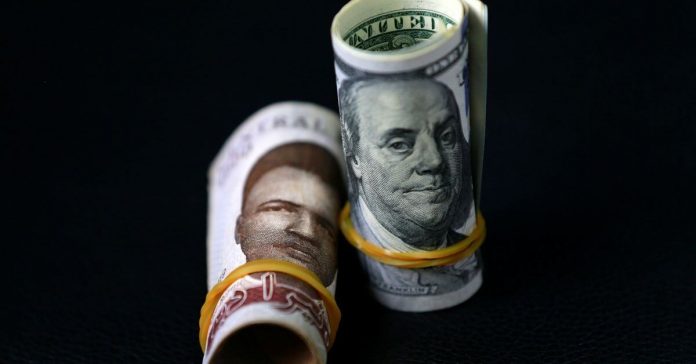
In June 2023, the Federal Government of Nigeria announced the unification of the country’s currency to reduce the gap between the CBN’s official exchange rate and the black-market rates, bolster Nigeria’s foreign exchange reserves, and encourage economic expansion. To understand how the current economic policy has affected everyday Nigerians and understand their perspectives on the policy, our analyst looks into social media data, specifically YouTube, to understand the direction of the commenters’ sentiment and perception of the prevailing economic condition.

Having collected a total number of 274 comments from a video titled “N820 Naira to $1? Exchange Rate Policy Explained” and posted on Fisayo Fosudo’s YouTube Channel, the sentiment revealed in the comments demonstrated that Nigerians perceive the country’s exchange rate policy differently.

A step toward economic growth and expansion

Many of the commenters expressed views that demonstrate that the policy is a good one and expressed their conviction in its ability to help the country’s struggling economy significantly. For instance, some commenters believe the policy will help attract foreign investors. They opined that a more stable exchange rate could create a favorable economic atmosphere for international investors, thereby fostering increased capital inflow. According to one of the commenters, “The unification is good. It will attract investors.”

Another commenter named @jonesh6204 observed that the policy will help the country’s economy if the refineries start functioning. According to him, “I think it will have a positive effect if our petroleum refineries start working again and we start selling to other African countries accepting only naira as means of payment.” Others noted that it will help address and eradicate the country’s multiple exchange rates, which they believe will culminate in greater transparency and fairness in the market. “Multiple exchange rate is evil, it is [exploitative] and creates room for double-standard sharp practices. Thanks for its abolishment, it makes no sense having multiple exchange rates,” one commenter who goes by the name @ufotekere9391 asserted.

Some commenters highlighted that the policy will encourage self-sufficiency, which is a prerequisite for bolstering a country’s economy. According to these people, a concentration of effort on production capabilities can enhance economic resilience and reduce dependency on foreign currencies. A user stated, “Being self-sufficient is what grows the economy and makes the Naira strong.” 

Concerns over its negative economic implications

However, contrary to the idea of the commenters who believe the policy will turbocharge economic growth, others highlight and express concerns over the influence of foreign institutions, stating that Nigerian political leaders always want to pander to the whims of the World Bank and the IMF, at the expense of the general well-being of the people who entrusted them with the power to govern the state on their behalf.

A commenter with the name @darkev said, “Let’s be clear about one thing: as long as we continue to pursue neoliberal economic ideas promoted and enunciated by [the] IMF and [the] World Bank, that limits government in the commanding heights of the economy, the exchange rate will continue to fluctuate and depreciate.”

Other commenters also warned that letting the demand and supply of the market determine the direction of the naira will affect many households, stating that allowing the adoption of such an economic policy in a country where most of the inputs of local manufacturing are imported will erode the purchasing power of ordinary Nigerians. One commenter named @MichaelO2 wrote, “At this point, the unification is ill-timed, senseless, and doing things backward because it will cause more foreign exchange flight out of Nigeria.”

Another commenter also echoed the view that the economic policy is poorly timed and can exacerbate the living conditions of ordinary citizens, as their purchasing power consistently weakens. “While the idea of unification is positive, the unfortunate reality is that the timing is unfavorable. It is clear to anyone in their right mind that implementing a floating rate without building up reserves is unwise,” a commenter with the name @PersonalFinanceProdigy noted.

What Next?

Chinenye Iwuh notes that switching exchange rates doesn’t exactly address the systemic economic issues the country faces. Similarly, Lagos-based economist Ejike Nwolisa observes that “the real solution for our foreign exchange problems lies outside the monetary policy space” and noted that achieving a strong economic structure requires more than just floating the currency. “The best policy combo to achieve this is policies that fast-track local production of our major consumables. Stable and regular electricity, good transport infrastructure, and quality education are no-brainers in achieving this target. Without these fundamentals, our economic woes, exchange rate inclusive continue. Sad but true!” he concluded.

Additional reports by Salaudeen Gbolahan

The World of Business Is Moving to the Digital Sphere

1

The future indeed is digital, and in that digital place would the marketplace of the future play out. Two cases:

Restaurants in the US: I like TGI Friday’s but one by one, they have closed all their locations within miles where I live. But it is not just TGI; other restaurants are struggling. Red Lobster and Coastal Grill have recently filed for bankruptcy protection. What is going on? Inflation because a family of four may need to drop at least $80 for a decent meal moment. You can also blame digital where some people now produce food, and wait for you to call, to be delivered something really terrible, but called food, to you. But that is winning many people because it seems cheaper. They call it a virtual kitchen business model, and it is delivery-only.

Pharmacies in the US: Every year, more stores close around you. From CVS to RiteAid to Walgreens, it seems these companies are destined for the history museums. I do not believe they have any chance to remain, and will likely go in the ways of Circuit City and Radio Shack of electronics. Why is this happening? Ecommerce giants like Amazon and some pharmacy focused e-pharmacies can ship to your door, making leaving your home unnecessary. As that redesign happens, the best days of physical pharmacies are gone.

Good People, everything is going digital if you are thinking of the long-term. While you still have to be relevant today in the meatspace, you must develop a playbook for the digital future. For Nigeria, a truly functioning national postal service like the extremely efficient one of old, will unlock huge opportunities for the nation, especially if we hope to connect the rural and urban communities in trade and commerce. I vote for a great NIPOST.

Of course, that digital future may not be self-evident, but if you are paying attention, you might not have visited a bank branch in the last 6 months. Everything is going digital and the people who are leading that will capture the value of the future. That is not to say that the meatspace is not viable today; the physical space remains a place to make tons of money in business. Why not, Nigeria invented a business model where you buy the currency (Naira) when you want to deposit or withdraw via the POS agency business model, explaining that the physical marketplace remains entrenched.

Yet, that will not last over time because the destination of the world of business is moving to one direction: digital. This is in line with Pythagoras postulation that the world is numbers, and in a world of numbers, digital helps you to better understand everything about your world, explaining the core reason why AI will deliver better competitive advantages to firms because with AI, you can more efficiently process your business world of  numbers (yes, data) better. When that happens, a huge competitive positioning emerges. Simply, you will make money in the physical space today, but in the near future, the digital sphere is where the world of business will converge.

The ancestral Igbo noted that “uwa bu ahia” [the world is a marketplace], and the best  marketplaces of the future will be in the digital spheres. #buildDigital

Why Rexas Finance (RXS) is a Better Buy than Neiro (NEIRO) and Sui (SUI) Right Now

0

Rexas Finance (RXS), Neiro (NEIRO), and Sui (SUI) are three tokens that are attracting the attention of investors, they can be invested in. However, it is the relatively young Rexas Finance, which is gathering steam as the strongest of the three. Now in Stage 4 of its presale at $0.06, Rexas has every growth potential that is supported by real-life use, impressive presale, and other promising factors. In this article, we will tell you why Rexas Finance (RXS) is a much better investment compared to NEIRO and SUI at this point.

Rexas Finance (RXS): A Leader in Real Estate Tokenization

Rexas Finance is brilliant in its strategy as it seeks to shift its focus to real estate tokenization by exploiting the existing opportunities in the decentralized finance (Defi) space. This offers the opportunity to gain a stake in physical properties contributing to capital in the real estate market to an extent never experienced before. The company believes that in the coming years, it will be releasing millions worth of real estate and opening up markets that have previously been closed.Besides offering its real estate tokenization services, Rexas Finance subsidiary provides a full-fledged DeFi Ecosystem, which includes staking, lending, yield farming, and decentralized exchanges. This enables users to multiply their earnings whilst being active on an expanding and evolving platform. The diverse nature of RXS’s ecosystem gives it a commanding presence in the Defi arena, something NEIRO and SUI can only dream of.

Rexas Presale Performance: Strong and Steady Growth

The presale stages have been successfully impressive to Rexas Finance. The current stage is Stage 4 and the price is $0.06 which has been on a steady rise since it launched at $0.03 in Stage 1 Rexas has had a price increase of over 100%. Of course, many investors have taken notice of this price movement and the presale of the token is actively underway. Since the early investors are getting their returns and the listing price is likely to be very high at around $0.02, there are good prospects for more growth.

Rexas Finance (RXS)  Milestones

Rexas Finance’s successes are indeed a true testament to its strong market position. The project has benefited from the sale of more than 79 million tokens during its presale, which enabled it to collect funds exceeding 3.5 million dollars. These figures are very impressive and suggest that Rexas enjoys a good level of demand and that the investors have faith in its prospects.Moreover, Rexas Finance is now officially listed in CoinMarketCap which is great about the project’s establishment and facilitates more people to monitor the project’s developments. This visibility boost helps further raise even more interest and investors in the company as Rexas prepares itself for its coming out to the public.

$1 Million Giveaway and Community Engagement

Rexas Finance not only concentrates on developing its platform but also actively interacts with its community. Currently, the project offers a $1 million giveaway in the course of its expansion efforts this solicits more followers and as such, more investment opportunities for the project. This giveaway has helped increase engagement and attention to the presale. This strong community deadlines form helps in differentiating Rexas as compared to players like NEIRO and SUI.

Conclusion: Rexas Finance (RXS) is the Top Pick

From the assessment of Rexas Finance (RXS), Neiro (NEIRO), and Sui (SUI) Rexas Finance emerges on top in terms of the investment potential at the moment. With its fresh approach towards real estate tokenizations, active DeFi ecosystem, and a presale that has already brought in more than $3.5 million, Rexas is showing signs of a potential growth curve. Add to that the fact that it is already listed in CoinMarketCap, the presale has been impressive and a community engagement through a $1 million giveaway, and RXS is positioned well to yield decent returns.Although NEIRO and SUI have their advantages, they do not have the same unique selling points, practical implementation, and potential growth characteristics as Rexas Finance. Those investors who are looking for a promising crypto asset should rather think about buying decent quantities of RXS before the token price increases again. This is because Rexas Finance is quite active in the pre-launch phase and is expected to be profitable after its launch. It is prudent to act now.


For more information about Rexas Finance (RXS) visit the links below:

Website: https://rexas.com

Win $1 Million Giveaway: https://bit.ly/Rexas1M

Whitepaper: https://rexas.com/rexas-whitepaper.pdf

Twitter/X: https://x.com/rexasfinance

Telegram: https://t.me/rexasfinance

Debt Financing And Climate Tech Emerge as Key Drivers of African Startup Funding in 2024

0

In a recent report by Africa: The Big Deal, Debt financing and Climate Tech have emerged as key drivers of African startup funding in 2024.

According to the report, African startups raised $636 million through $100k+ deals in the third quarter (Q3) of 2024, excluding exits. Of this total, 62% almost $400 million was raised in the form of equity, while 35% came from debt financing. The remaining 2.5% was secured through grants. Notably, the $176 million multi-currency facility raised by d.light accounted for nearly 80% of all debt raised in Q3 ($176 million out of $223 million).

The report further highlights that, for 2024 as a whole, two-thirds of all funding raised by African startups has been in equity, with one-third coming from debt. These figures are consistent with trends observed during the same period in 2023, marking a shift from prior years. The increase in debt financing is attributed to three main factors; (1) the increased offering in terms of debt capital for start-ups in Africa, (2) the maturity of an ecosystem where start-ups don’t always raise equity by default when what they need is debt, and (3) a greater propension for ventures to communicate about debt fundraising compared to previous years.

However, while debt funding is on the rise, equity funding in 2024 has lagged behind previous years. Startups have raised around $920 million in equity so far this year- comparable to the total equity raised in 2020, but significantly lower than the levels seen in 2021 and 2022. Equity fundraising is also down by 32% year-on-year compared to the first three quarters of 2023.

The report notes that nearly $800 million would need to be raised in Q4 for 2024 to match last year’s equity funding levels a challenging target, given that the ecosystem has not seen such high levels of quarterly equity fundraising since Q2 2022.

Climate Tech Attracts Significant Investment

The report highlights the growing importance of Climate Tech in the African startup ecosystem. In Q3 2024, around 35% of all investments were directed towards climate-related ventures, in line with year-to-date figures. Over half a billion dollars have been invested in Climate Tech in Africa so far this year, mirroring the proportion recorded in Q1-03 2023.

Fintech and Energy Lead Sectoral Funding

The report also reveals that the Fintech and Energy sectors dominated funding in Q3 2024, attracting nearly 90% of total investments. Fintech raised $363 million (57% of total funding), while Energy attracted $199 million (31%). The numbers were heavily influenced by two major deals: MNT-Halan’s $157.5 million raise in Fintech and d.light’s $176 million deal. Five other fintech companies Nala, FlapKap, Fido, valU, and Paymob also secured $20 million or more during the quarter.

Year-to-date, Fintech remains the leading sector, raising $600 million (43% of total funding), followed by Energy with $300 million (21%). Together, the two sectors account for 64% of all investment in African startups. Logistics and Transport came in third, largely due to major deals by Move ($110 million) and Spiro ($50 million) in the first half of the year.

As the funding landscape for African startups continues to evolve, the rise of debt financing and Climate Tech points to a more diversified ecosystem. While equity funding has seen a decline, the increased availability of debt capital and a focus on sustainability suggest that African startups are adapting to new financial realities in the rapidly growing market.