DD
MM
YYYY

PAGES

DD
MM
YYYY

spot_img

PAGES

Home Blog Page 3021

Egypt Certified Malaria-free: Nigeria And Others Not Close

0

The World Health Organization (WHO) has certified Egypt as malaria-free, marking the culmination of a nearly century-long effort to eradicate the ancient disease from the country.

The historic achievement was confirmed in a statement issued by the global health body on Sunday, with WHO Director-General Dr. Tedros Ghebreyesus praising Egypt’s commitment to eliminating a disease that dates back to the time of the pharaohs.

“Malaria is as old as Egyptian civilization itself, but the disease that plagued pharaohs now belongs to its history and not its future,” Dr. Ghebreyesus said. “This certification of Egypt as malaria-free is truly historic, and a testament to the commitment of the people and government of Egypt to rid themselves of this ancient scourge. I congratulate Egypt on this achievement, which is an inspiration to other countries in the region, and shows what’s possible with the right resources and the right tools.”

Egypt’s path to malaria elimination has been long and challenging, with efforts to combat the disease stretching back nearly 100 years. Malaria has had a profound historical presence in Egypt, affecting its population since ancient times. In modern times, the Egyptian government launched various initiatives to reduce transmission, including improvements in vector control, surveillance, and treatment methods.

Over the years, Egypt implemented comprehensive malaria control programs that included strategies for mosquito control, such as the use of insecticide-treated nets, indoor residual spraying, and effective treatment regimens. Additionally, robust surveillance systems were established to detect and respond swiftly to any cases of imported malaria, preventing the disease from regaining a foothold in the country.

A Milestone for the Eastern Mediterranean Region

Egypt is now the third country in the WHO Eastern Mediterranean Region to achieve malaria-free certification, joining the United Arab Emirates and Morocco. This certification also marks the first such achievement in the region since 2010, highlighting its significance. Globally, Egypt becomes the 45th entity (44 countries and one territory) to be declared malaria-free, underlining the international community’s ongoing efforts to eliminate the disease.

With this certification, Egypt has demonstrated that there has been no indigenous malaria transmission by Anopheles mosquitoes for at least three consecutive years, meeting WHO’s stringent criteria. Furthermore, the country has proven its capacity to prevent the re-establishment of transmission, a crucial aspect of maintaining the malaria-free status.

Egyptian Deputy Prime Minister Dr. Khaled Ghaffar emphasized that sustaining the malaria-free status requires continued vigilance.

“Receiving the malaria elimination certificate today is not the end of the journey but the beginning of a new phase. We must now work tirelessly and vigilantly to sustain our achievement through maintaining the highest standards for surveillance, diagnosis, and treatment, integrated vector management, and sustaining our effective and rapid response to imported cases,” he said.

Dr. Ghaffar also reiterated Egypt’s commitment to safeguarding public health, stating, “We will continue with determination and strong will to safeguard the health of all people in Egypt under the wise leadership’s guidance and proceed with enhancing our healthcare system, this will remain a cornerstone in protecting the lives of all people living in and visiting Egypt.”

WHO’s Certification Process

Malaria elimination certification by WHO is granted when a country can demonstrate, beyond any reasonable doubt, that indigenous transmission of malaria has been interrupted for at least three years. Additionally, a country must show it has the necessary mechanisms in place to prevent the reintroduction of the disease.

The certification process involves rigorous scrutiny by the Technical Advisory Group on Malaria Elimination and Certification, an independent body that reviews evidence from the country seeking certification. The final decision to award malaria-free status is made by the WHO Director-General, based on the group’s recommendation.

Malaria Elimination in Africa, Still A Long Walk

While Egypt’s certification as malaria-free is a significant victory, it underscores the stark disparity in malaria control efforts across Africa. For instance, Nigeria, the continent’s most populous country, remains deeply entrenched in the struggle against malaria.

The disease continues to be a major public health issue in Nigeria, accounting for a significant proportion of the country’s disease burden. According to the World Health Organization (WHO), Nigeria bears the highest malaria burden in the world, with an estimated 27% of global malaria cases and 23% of malaria deaths. The disease is endemic in all parts of Nigeria, and its transmission occurs year-round, with peaks during the rainy season. Vulnerable populations, especially children under five and pregnant women, suffer the most, facing high rates of morbidity and mortality due to the disease.

Despite being a signatory to the Roll Back Malaria initiative, which seeks to reduce malaria cases and deaths in Africa, Nigeria’s efforts have often been hampered by a lack of consistent funding, inadequate health infrastructure, and governance issues. The country has struggled to achieve widespread coverage of preventive measures such as insecticide-treated mosquito nets (ITNs) and indoor residual spraying (IRS), which are critical components of malaria control.

The Nigerian government’s approach to malaria control has often been characterized by sporadic interventions rather than sustained and coordinated efforts. While some progress has been made in recent years, such as increased distribution of mosquito nets and intermittent awareness campaigns, these efforts have not been sufficient to bring about a significant reduction in malaria prevalence.

One of the main obstacles to Nigeria’s malaria elimination efforts is inadequate funding. Malaria control programs in Nigeria are largely donor-funded, with the government contributing only a fraction of the resources needed to tackle the problem effectively. This reliance on external funding creates a situation where malaria control efforts can be inconsistent and may falter if donor support wanes.

Nigeria’s inability to significantly reduce malaria transmission poses a risk not only to its own population but also to neighboring countries. As the most populous nation in Africa, with extensive cross-border movement, Nigeria’s malaria burden can hinder regional efforts to eliminate the disease. Neighboring countries may experience reintroduction of malaria cases, complicating their elimination efforts.

The WHO emphasizes that for Africa to make substantial progress in the fight against malaria, countries like Nigeria must prioritize the disease in their public health agendas. This includes increasing domestic funding for malaria control, scaling up access to preventive measures such as ITNs and IRS, and ensuring that health systems can deliver timely and effective treatment.

Global Malaria Efforts: Still a Long Road Ahead

While Egypt’s malaria-free certification is a cause for celebration, the global fight against malaria is far from over. According to WHO’s latest reports, there were approximately 247 million malaria cases and 619,000 related deaths worldwide in 2021, with sub-Saharan Africa bearing the highest burden.

The global community has committed to eliminating malaria as a public health threat by 2030. However, achieving this target will be difficult if high-burden countries like Nigeria do not make substantial progress.

Efforts to eliminate malaria globally are complicated by issues such as insecticide resistance, drug resistance, and the socio-economic challenges faced by affected countries. Consequently, while progress is being made, the road to global malaria eradication remains long and complex.

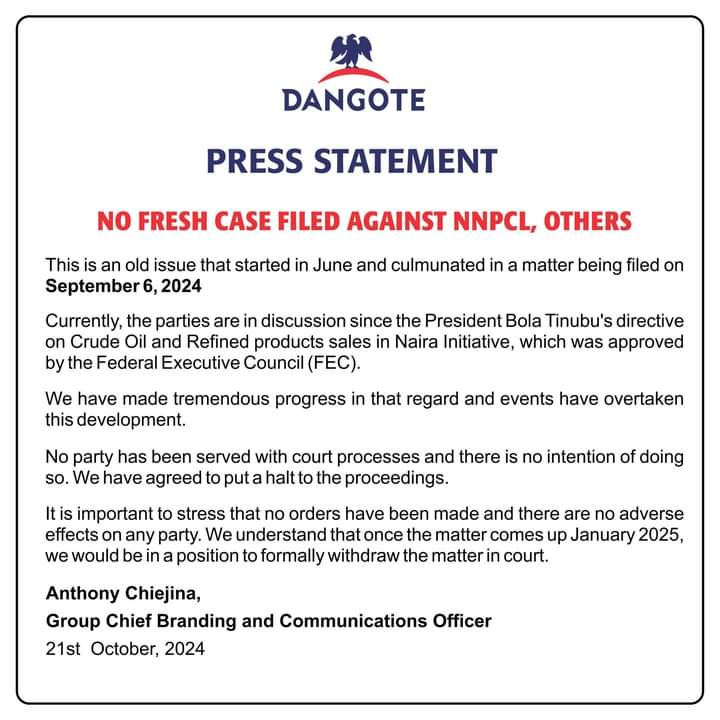
Dangote Refinery Sues NNPCL, Other Petrol Importers, Seeking to Invalidate Their Import Licenses [updated]

0

Dangote Petroleum Refinery and Petrochemicals FZE has filed a legal suit at the Federal High Court in Abuja, seeking to invalidate import licenses granted to the Nigerian National Petroleum Corporation Limited (NNPCL), Matrix Petroleum Services Limited, A. A. Rano Limited, and four other companies.

The refinery argues that these licenses, which allow the importation of refined petroleum products, are unnecessary since Dangote Refinery is already producing sufficient quantities to meet Nigeria’s demand. Additionally, Dangote is demanding N100 billion in damages from the Nigeria Midstream and Downstream Petroleum Regulatory Authority (NMDPRA) for allegedly issuing import licenses in contravention of regulations that stipulate imports should only be allowed when there is a shortfall in local supply.

The lawsuit, marked as suit number FHC/ABJ/CS/1324/2024, alleges that NMDPRA has breached Sections 317(8) and (9) of the Petroleum Industry Act (PIA) by issuing import permits for products such as Automotive Gas Oil (AGO) and Jet Fuel, which the Dangote Refinery claims to produce in quantities exceeding Nigeria’s daily consumption needs. The refinery asserts that the issuance of these licenses undermines local refining efforts and cripples its business by reducing demand for its products.

According to an affidavit from Ahmed Hashem, Dangote Refinery’s Group General Manager of Government and Strategic Relations, the facility has invested billions of dollars in refining capacity, only to face reduced patronage due to these allegedly unjustified imports.

The plaintiff’s legal team also contends that NMDPRA is neglecting its statutory duty to promote the interests of local refineries, such as Dangote’s, in favor of other entities, including major international oil companies and domestic marketers, which continue to import refined products. Furthermore, Dangote Refinery claims that NMDPRA has sought to impose financial levies on transactions within Free Zones, including a 0.5% levy on wholesales and an additional 0.5% levy for the Midstream and Downstream Gas Infrastructure Fund (MDGIF), actions which the plaintiff argues are inconsistent with Free Zone regulations.

The refinery’s legal representatives are seeking several declarations and orders from the court. Among these, Dangote is requesting an injunction to prevent NMDPRA from issuing or renewing import licenses for petroleum products to the other companies involved in the case. The refinery also wants the court to mandate the withdrawal of all import licenses issued to these companies and others for importing refined petroleum products, contending that such licenses should be exclusive to local producers when domestic capacity meets or exceeds market requirements.

In addition to demanding the withdrawal of import licenses, Dangote seeks to halt the collection of any levies by NMDPRA that apply to the Free Zone, citing the Nigerian Export Processing Zone Act (NEPZA) and the Companies Income Tax Act as grounds for the refinery’s exemption from federal and state taxes and levies. The refinery argues that the imposition of levies contravenes legislative intent and jeopardizes the Free Zone’s goals of fostering competition and attracting foreign investment.

Claims of Conspiracy and Market Manipulation

Dangote Refinery’s court filing also alludes to a “grand conspiracy” orchestrated by international oil companies, regulatory authorities, and other vested interests that allegedly aim to suppress the refinery’s potential to alleviate Nigeria’s persistent energy challenges. The refinery claims this opposition is partly driven by discontent over the emergence of a local, privately owned refinery capable of solving the country’s fuel import dependency and boosting the economy. The refinery asserts that the alleged collusion is detrimental not only to its business interests but also to Nigeria’s broader economic aspirations, as the country remains heavily reliant on fuel imports despite possessing local refining capacity.

Settlement Talks in Court

During the court session, Justice Inyang Ekwo adjourned the case until January 20, 2025, after the plaintiff’s counsel, George Ibrahim SAN, disclosed that the parties involved were exploring the possibility of settling the dispute outside court. Ibrahim indicated that discussions had commenced between Dangote Refinery and the defendants following an attempt to serve the originating summons. The next court session is expected to provide updates on whether the matter will be settled amicably or continue to litigation.

Background to The Ongoing Dispute

This lawsuit is the latest development in a series of confrontations between Dangote Refinery and regulatory authorities over Nigeria’s petroleum market dynamics. Recently, Africa’s wealthiest man, Aliko Dangote, expressed frustration with regulatory challenges and hinted at selling the refinery to the state-owned NNPCL, a move that many interpreted as a response to escalating tensions and disputes over compliance and market practices.

The refinery has previously voiced concerns about the importation of substandard fuel products by other companies, arguing that such practices undermine local refining efforts and expose consumers to quality risks. Earlier, the federal government announced that marketers are now permitted to source petroleum products directly from the Dangote Refinery, following NNPCL’s withdrawal from its intermediary role, signaling attempts to balance market interests and resolve ongoing disputes.

What This Means for Nigeria’s Energy Sector

The lawsuit highlights longstanding issues in Nigeria’s energy sector, particularly regarding the regulation and promotion of local refining capacity. While Nigeria is Africa’s largest crude oil producer, its dependence on imported refined petroleum products has persisted for decades, primarily due to inadequate local refining infrastructure.

Thus, Dangote Refinery, with its large-scale investment in refining and petrochemicals, was seen as a potential game-changer that could significantly reduce the country’s reliance on imports. However, regulatory disputes and unexpected market conflicts have posed substantial hurdles.

Energy experts believe that the case has broader implications for Nigeria’s energy policies under the Petroleum Industry Act (PIA), which was enacted to reform the sector by encouraging private investment in local refining while also ensuring fair market competition. According to them, the outcome of this legal battle could influence future decisions regarding import licensing, local content policies, and the role of private players in Nigeria’s downstream petroleum market.

However, a large section of observers believe that this lawsuit by Dangote Refinery is part of the group’s attempt to monopolize the oil sector as it has done in the many other sectors in which it operates.

Editor’s Note: This has been debunked

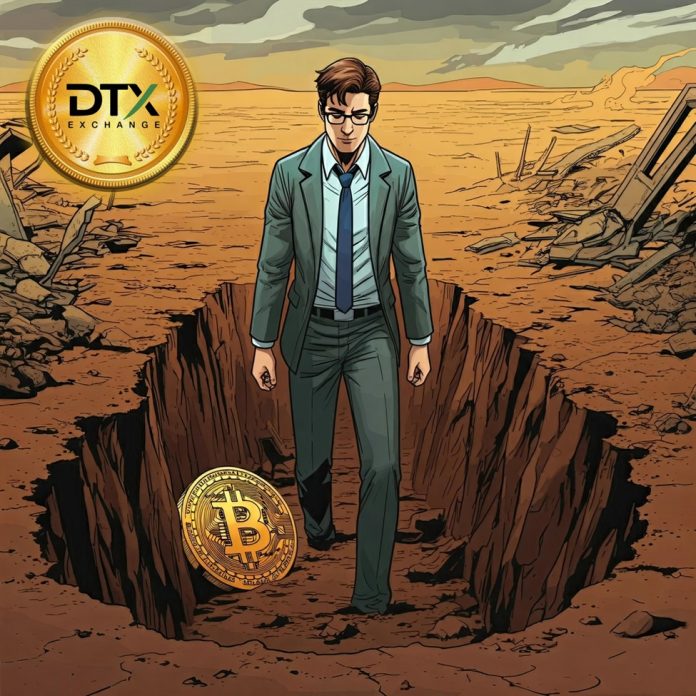
Near Protocol Is “Far” From Being The Best Coin In The Market as DTX Exchange Surpasses Bittensor With $5.3M Presale

0

After crashing in 2022, Near Protocol (NEAR) has never been able to cross the $10 mark. Despite the bullish momentum in the market, it is trading 13% below the recent swing high. Meanwhile, DTX Exchange (DTX) is preparing to lead the exchange space after the listing in December. Its testnet has shaken crypto enthusiasts with record-breaking speed.

While Bittensor (TAO) is trading near its high, DTX Exchange is expected to surpass it with its unique offerings and real-world utilities. As we approach the bull market, institutional investors increase their positions in potential coins like DTX Exchange.

Near Protocol (NEAR) Hovering Near 200-Days Moving Average

Over the last 24 hours, Near Protocol (NEAR) has risen 3.37%, now trading at $4.94. This builds on a 2.14% gain over the past week, moving from $4.75 to its current price. After the recent rally Near Protocol (NEAR) is trading around the major moving average which shows the lacking momentum in the coin. The coin also forms a symmetrical triangle pattern, signaling a potential breakout that could push the price toward $6.

If Near Protocol (NEAR) fails to sustain the current level and breaks below the symmetrical triangle pattern, $4.4 and $3.8 are the two influential support levels.

Bittensor (TAO) Gains Momentum After Breakout

The prolonged correction in the market has also affected Bittensor (TAO); it decreased around 70% from the March high. However, the recent breakout from the $365 level has given great momentum to the TAO price, increasing 88% from the breakout level. Currently, it is consolidating in a range breakout that can push Bittensor (TAO) price higher.

Bittensor (TAO) powers a decentralized machine learning network where users can train and share AI models without depending on centralized systems. TAO is the native token that rewards users for contributing computing power and data to the network. Bittensor (TAO) may be earned and users may get involved in the AI model optimization process by doing the supply part.

DTX Exchange (DTX) Leads The Market Potential For Epic Profits

In the first week of the fourth stage, DTX Exchange has achieved a significant milestone raising $5.3 million in record time. It has broken the previous records and become the top market presale. According to expert traders, DTX has the potential to rise 6,300% after the launch in the various exchanges. $100 invested at the current level could turn into $6,400 in a few months.

DTX Exchange is set to revolutionize how trade is done on the Internet by fusing the power of centralized and decentralized exchanges. It will blend the two, offering access to more than 120,000 different classes of assets, including stocks, CFDs, and cryptocurrencies, as well as a complete privacy guarantee—no sign-up KYC checks are needed.

Users can improve their trading success by copying top traders, using trading bots, and receiving trading signals. The platform’s native token, DTX, built on Ethereum, grants access to the trading platform and includes voting power.

DTX Exchange also provides exclusive trade opportunities through its Real-World Applications (RWA) segment, where users can earn passive income. Additionally, DTX holders can stake their tokens to support liquidity and earn up to 15% APY.

According to industry experts, DTX Exchange is a golden opportunity for those who want low risk investment opportunity with high growth potential.

Learn more:

Buy Presale

Visit DTX Website

Join The DTX Community

Nigeria Proposes Bill to Impose 5% Excise Duty on Telecom, Gaming & Betting Services

0

The Nigerian government has taken steps towards increasing revenue collection by introducing a new bill that proposes a 5% excise duty on telecommunications, gaming, and betting services.

The measure is part of a broader initiative aimed at overhauling Nigeria’s tax framework, as outlined in the proposed “Nigeria Tax Act.” The bill, obtained from the National Assembly and dated October 4, 2024, seeks to consolidate and revise existing tax laws, targeting income, transactions, and various financial instruments across the nation.

According to the provisions of the bill, the excise duty will be applied to both postpaid and prepaid telecommunications services regulated by the Nigerian Communications Commission (NCC). This duty will extend to other sectors, including gaming, gambling, lotteries, and betting activities, which have grown significantly in Nigeria over the years.

The bill stipulates that all transactions within these services will attract the excise duty, as prescribed under the Tenth Schedule of the Act.

The text of the document clearly states, “Services, including telecommunications, gaming, gambling, betting, and lotteries however described, provided in Nigeria shall be charged with duties of excise at the rates specified under the Tenth Schedule to this Act in a manner as may be prescribed by the Service.”

This means that once the bill is passed into law, all services in the aforementioned categories will be subject to the excise duty, potentially leading to higher costs for consumers in sectors that are widely used across the country.

Currency Transactions and Exchange Regulations

The new bill also aims to regulate currency transactions by introducing a mechanism where any disparity between the Central Bank of Nigeria’s (CBN) official exchange rate and the actual rate used in transactions would attract excise duty. Under the proposed legislation, if the exchange rate in a currency transaction exceeds the CBN’s official rate, the excess amount will be considered an excise duty liability to be paid on a self-assessment basis.

The bill specifies: “Where an exchange of currency transaction involving the Naira is conducted within or outside Nigeria – (a) the transaction shall be conducted at an exchange rate not exceeding the prevailing exchange rate at the official market authorized by the Central Bank of Nigeria; and (b) where the exchange rate of the transaction exceeds the prevailing exchange rate at the official market authorized by the Central Bank of Nigeria, the excess shall be payable as excise duty by the seller on a self-assessment basis as provided in the Nigeria Tax Administration Act.”

Cultivating A New Tax Regime

As oil revenues continue to fluctuate, Nigeria has been seeking to expand its non-oil revenue sources to stabilize the economy. The government anticipates that implementing excise duties on sectors such as telecommunications and betting, which have shown rapid growth, will help increase the country’s tax revenue and strengthen the regulatory framework for currency transactions.

The decision to target these sectors is particularly significant given the expanding user base of telecommunications services and the rising popularity of gaming and betting. The telecom industry has experienced substantial growth in recent years, with millions of Nigerians relying on mobile networks for communication and internet access.

Similarly, the betting industry has seen increased participation, driven by digital platforms offering online gambling and lottery services. Reports indicate that approximately 60 million Nigerians aged 18-40 actively engage in sports betting, driving an industry that generates an estimated annual revenue of N730 billion.

By imposing a 5% excise duty on these popular services, the government aims to capitalize on their widespread usage to boost tax revenue. But this move is expected to significantly affect the cost of telecom services and betting activities, potentially leading to price hikes for consumers.

However, authorities remain optimistic that the revenue generated from these excise duties will help mitigate budgetary constraints and provide a more sustainable approach to fiscal management.

Concerns Over Potential Impact on Consumers

While the proposed tax reforms are aimed at increasing government revenue, there are concerns about the potential impact on consumers and businesses. Telecom services are essential for daily activities in Nigeria, from communication to mobile banking, and any increase in service costs could place additional financial burdens on citizens.

The telecom operators have made several attempts in recent times to increase internet and call tariffs, citing the rising cost of operation. The moves, though have been rejected by the NCC, underline the intense pressure the current economic downturn has placed on the telecom sector.

Many have argued that imposing additional taxes on essential services during a period of economic hardship may exacerbate existing financial pressures on consumers. With inflation remaining high and disposable income constrained, critics believe the excise duty could make telecommunications and internet services less affordable for many Nigerians, potentially widening the digital divide in the country.

While many see excise duties on betting and gaming services as a way to curb the growing gambling culture in the country, others warn that it could affect the revenue of companies in the sector, potentially leading to job losses in the industry.

The government’s broader strategy to enhance non-oil revenue collection comes at a time when fiscal pressures are mounting, with the country’s debt levels rising and public sector funding needs expanding. The new excise duty regime is expected to complement other tax measures, such as Value Added Tax (VAT) and corporate income tax.

The legislation also seeks to curb currency speculation and illicit financial flows by aligning currency exchange practices with the CBN’s official rates.

Crypto Forex Brokers Trade Both Cryptocurrencies and Forex with One Platform

1

Many traders are searching for platforms that could merge the worlds of forex and crypto trading as both markets evolve. By allowing traders to trade both fiat currencies and digital assets on one platform, Crypto forex brokers present a solution. From classic forex pairs to new cryptocurrencies like Bitcoin, Ethereum, and Litecoin, these brokers offer access to a spectrum of tradable instruments. For individuals engaged in crypto forex trading, this mix creates interesting prospects.

What Are Crypto Forex Brokers?

Basically, a crypto forex broker is a tool that lets traders engage in the forex as well as the crypto markets. Acting as financial middlemen, these brokers provide access to a broad range of digital assets with traditional forex trading tools. For traders wishing to diversify their portfolios by investing in both currencies and cryptocurrencies, these are, therefore, perfect.

A trader might decide, for instance, to trade the EUR/USD currency pair alongside Ethereum or Bitcoin. Certain brokers also provide exotic cryptocurrency pairs, which let traders gamble on the price swings of less-known virtual currencies. 

Why Choose a Crypto Forex Broker?

One advantage of crypto forex brokers is that they are not found in regular brokers. First of all, they accept crypto payments since traders who wish to deposit and withdraw money using cryptocurrency absolutely depend on this ability. Moreover, these brokers provide a wider spectrum of trading tools, mixing digital assets with forex on one platform. 

Portfolio management can become easier if one can trade across both marketplaces using the same open account. Traders may complete all of their activities in one location rather than need different brokers for FX and crypto trading. This streamlines trading and lowers the fees connected with moving money between several platforms.

Top Crypto Forex Brokers

Below are some of the leading crypto forex brokers in 2024:

1. Octa

With its flawless user interface and wide range of traded assets—including cryptocurrencies—Octa is well-known. Along with many other assets, including equities and commodities, the site allows crypto forex trading. 

Octa is easy for newcomers since its minimum deposit is merely $5. Furthermore, customer support is well-regulated on the site to help traders at all levels. Octa is a competitive option for traders trying to lower their capital risk since it is especially appreciated for its low commission fees and close spreads.

2. eToro

In the sphere of social trading, eToro is a well-known name. Its special platform lets people follow and replicate the deals of seasoned investors. For newbies in crypto forex trading, this function is quite useful. With affordable spreads and no commission costs on cryptocurrency trades, eToro also distinguishes itself for its open fee structure.

On eToro, the minimum deposit is $50; the platform provides access to digital currencies as well as conventional financial assets. For traders trying to diversify their portfolios, eToro is, therefore a perfect fit.

3. XTB

XTB is known for its strong trading system and extensive set of instructional resources. It provides access to prominent currencies, including Bitcoin and Ethereum as well as currency pairs. Thanks to its easy-to-use interface and strong charting capabilities, XTB is fit for both amateur and experienced traders.

XTB is a flexible choice for people who want to start trading with little funds since it does not call for a particular minimum deposit. Moreover, the broker gives traders quick customer support, so helping them.

4. HFM (formerly HotForex)

A leading participant in the forex market, HFM now offers trading of cryptocurrencies among its offerings. For traders with different degrees of expertise, HFM is an excellent option without a necessary minimum deposit and spreads beginning from 0.0 pips.

HFM stands out mostly for its extensive training materials, which enable traders to grasp the complexity of the crypto and FX markets. The broker additionally guarantees multilingual customer support so that users may get assistance in their chosen language.

5. FBS

Prominent worldwide broker FBS allows trading of FX as well as cryptocurrencies. With a low minimum deposit of $5, the broker is easily reachable to a large audience and under strict oversight by many financial agencies, including CySEC and the IFSC.

FBS presents a simple platform with competitive rates and limited spreads. Using a range of tools, including advanced charting capabilities and real-time market data, traders in crypto forex can engage. Furthermore, stressing risk control, the broker gives traders instruments to reduce their exposure to erratic market conditions.

6. Tickmill

Designed for professionals, Tickmill provides a range of account options, including an Islamic account for individuals needing Sharia-compliant trading. For individuals wishing to diversify their assets, the broker’s platform allows both FX and crypto trading, therefore providing a flexible solution.

Tickmill lets traders lower their capital risk by using a minimum deposit of just $5 and competitive spreads, so accessing a large selection of tradable tools. Tickmill is also renowned for its exceptional customer support, which offers around-the-clock help.

How to Get Started with a Crypto Forex Broker

Starting with crypto forex trading is not difficult. Initially, you need to open an account with a broker who supports trading FX and cryptocurrencies. Many brokers have demo accounts, which let you become acquainted with the platform before making any actual investments.

Usually, once you have selected an account and a broker, you will have to make a minimum deposit. Different brokers have different amounts; hence, it is crucial to find one that meets your financial situation. Most brokers accept crypto payments, so enabling you to fund your account with digital currencies such as Bitcoin or Ethereum.

Additionally, it is important to familiarize yourself with the trading interface and any related expenses of the broker. Although many brokers provide minimal commissions and competitive spreads, it is advisable to check these expenses to reduce your capital risk.

Managing Risks in Crypto Forex Trading

Although crypto forex trading has interesting prospects, one should be aware of the associated hazards. Both the forex and cryptocurrency markets are somewhat erratic; thus, price swings in any direction could be random. 

A professional crypto analyst at 55Brokers states that George R.

“Setting stop-loss orders and restricting the funds allocated to every trade are two techniques of solid risk management every trader must apply.”

Furthermore, crypto markets run around-the-clock, and traders have to be ready for price adjustments at any moment of the day. Additionally, it is important to keep current with geopolitical events and market trends that might affect the value of currencies and cryptocurrencies.

Conclusion

Using one platform, crypto forex brokers offer a unique opportunity for traders to access both forex and coin markets. These brokers meet the rising need for varied trading options by providing tradable instruments and taking crypto payments. Platforms like Octa, eToro, and HFM give the tools and resources needed to negotiate the fascinating world of crypto forex trading regardless of your level of expertise trading.