DD
MM
YYYY

PAGES

DD
MM
YYYY

spot_img

PAGES

Home Blog Page 3026

How The United Nations Can Fix Healthcare Workers’ Emigration from Africa to Europe, Australia, etc

1

What a nation as Nigeria adds something new in the rule book: “Mr President has officially signed into law the National Policy on Health Workforce Migration, a landmark legislation aimed at curbing the mass emigration of healthcare professionals from Nigeria. This policy, which has been a subject of significant debate, among other things, legally binds healthcare personnel to remain and work in Nigeria after completing their education, a response to the growing brain drain that has severely impacted the country’s health sector.“

I am not qualified to comment on this since I am also part of the problem – we all received subsidized or free education only to leave the nation. So, you should understand my pains. Yet, the action Nigeria has taken is what the  global health activists would have championed at the United Nations level: find a protocol to pay the most important professionals in the world – healthcare workers – to remain and work where they are most needed.

“This policy is more than just a response to the ongoing exodus of healthcare professionals; it’s a comprehensive strategy to manage, harness, and reverse health worker migration. It envisions a thriving workforce that is well-supported, adequately rewarded, and optimally utilized to meet the healthcare needs of all Nigerians,” Pate stated.

Pate further elaborated on the policy’s ambitious goals, emphasizing the importance of the Nigeria Human Health Resource Program. This program sets a framework for regular reviews of working conditions, ensuring that health workers, particularly those in rural and underserved areas, receive the recognition and rewards they deserve.

So, when Australia comes to Nigeria to ransack our clinics, luring the nurses and doctors away, and tomorrow publishes papers saying that the Nigerian healthcare system is weak, I feel bad. But to those doctors and nurses, no hard feelings – this world is a market, the Igbo Nation says.

Personally, there needs to be a global fund where the developed economies must drop money so that the developing ones can use it to bring parity on required nurses, doctors, etc. It could be $1 billion, and Nigeria gets $50m to train say 20,000 doctors. Australia can come and pick 1000 when Nigeria knows it needs just 10,000. But it would be immoral for Australia to come for those amazing doctors whose education has been subsidized  by Ovim citizens, via their small rates and taxes.

The United Nations – this is your moment; if you are truly serious on quality healthcare delivery for all, set up that fund, so that the Nigerian people can retain these miracle workers in Nigeria or UK, Australia, etc can fund their education in Nigeria, enabling Nigeria to scale the production to accommodate their needs!

Why Doctors Are Leaving Nigeria

Why is the healthcare system in Nigeria collapsing? Nigeria is severely poor even though most of us think the nation is rich. The healthcare budget of South Africa is larger than Nigeria’s national budget. But understand that Nigeria is 3 times the population of South Africa. 

The fundamental challenge in Nigeria is the illusion of wealth and prosperity where everyone thinks the nation is RICH. The Harvard University annual budget is many times more than the national education budget of Nigeria.

In the Igbo Nation, we say “uwa bu ahia” which means that everyone has a right to trade and do business anywhere in the world, including the healthcare sector as I noted: “But to those doctors and nurses, no hard feelings – this world is a market, the Igbo Nation says.” Indeed, Nigeria should not restrict the ability to trade talent and skill because that violates the International Labour Organization charter.

However, it gets complicated because Nigeria is a state, neither a person nor a company. The state has declared a war, and is conscripting healthcare workers, just as any nation does when there is an actual war. 

On this healthcare matter, I have laid out my suggestion. The Nigerian government should consider it, and urgently talk to the governments where the professionals are going. The UK can drop $20 million even as Nigeria gives them a pass to recruit doctors, with Nigeria knowing that it has the financial support to replace 3x they have taken as well as provide better support to those in Nigeria.

(On restricting policy makers from traveling abroad for health-related issues, that is not worth discussing because that type of leadership will not win elections in Nigeria because anyone who campaigns on that will be seen as “strange”!)

Nigeria Signs Policy to Curb Emigration of Nigerian Healthcare Workers Into Law

Emergence of Green IT and Climate Tech Startups

0

In recent years, the world has witnessed a significant shift towards sustainability and environmental responsibility. The technology sector, often criticized for its carbon footprint, has seen a burgeoning movement of ‘Green IT’ and climate tech startups. These innovative companies are not only redefining the landscape of technology but are also playing a crucial role in the global fight against climate change.

Green IT refers to environmentally sustainable computing or IT. It is a broad domain that encompasses energy-efficient computing, reduction of hazardous materials, and promoting recyclability or biodegradability of defunct products and factory waste. Climate tech startups, on the other hand, are businesses that specifically focus on reducing greenhouse gas emissions or addressing climate change. This can include renewable energy technologies, carbon capture and storage, and climate data analysis, among others.

The rise of these startups is a response to the urgent need for solutions that can mitigate the impacts of global warming and environmental degradation. According to Seedtable, a platform that tracks and ranks companies using a dynamic scoring system, there are numerous climate tech and green tech startups to watch in 2024. These startups are not only innovative but are also gaining significant traction in terms of funding and growth.

For instance, companies like CIRCTEC, which specializes in tyre pyrolysis recycling technology, and Greenly, a carbon accounting platform, have raised substantial funds to further their mission of a greener future. Similarly, Cloover, a renewable energy subscription service, and HysetCo, a developer of hydrogen-powered transportation solutions, are making waves in the energy sector.

The diversity of these startups is impressive, ranging from digital banking services like Doconomy, which offers financial solutions with a sustainability angle, to H2 Green Steel, a producer of green and sustainable steel. This indicates a broad spectrum of innovation where technology intersects with environmental consciousness.

Bloomberg has also highlighted climate tech companies that are building a net-zero world, showcasing startups that are innovating in areas such as battery recycling, green hydrogen, and carbon-free concrete. These companies are not only focused on creating sustainable solutions but are also working towards making them economically viable.

ZeroAvia is a pioneering force in the aviation sector, aiming to revolutionize air travel with hydrogen-electric powertrains. Their technology promises to scale sustainable flights, offering a greener alternative to traditional aviation, which is a significant source of greenhouse gas emissions.

Pachama is harnessing the power of remote sensing and AI to enhance carbon capture. By protecting forests and natural habitats, Pachama provides brands with the opportunity to purchase carbon credits, aiding them in their sustainability goals.

AMP Robotics is addressing the waste management issue with AI and robotics. Their technology improves the speed and precision of recycling processes, which is crucial for reducing the environmental impact of waste.

Northvolt1 is making strides in the energy storage market with its sustainable lithium-ion batteries. Their approach includes the recovery and recycling of used batteries, contributing to a circular economy.

The climate tech market size is expected to reach $182.5 billion by 2033, and every year, several new companies join this ever-expanding sector. This growth is indicative of a larger trend where sustainability is becoming a core component of business models, and investors are increasingly drawn to ventures that promise environmental as well as economic returns.

Green IT and climate tech startups represent a hopeful and proactive approach to tackling environmental challenges. They are at the forefront of innovation, driving the transition to a more sustainable future. As these startups continue to grow and attract investment, they not only contribute to the global economy but also play a critical role in ensuring the well-being of our planet for generations to come.

Nigeria Signs Policy to Curb Emigration of Nigerian Healthcare Workers Into Law

1

President Bola Tinubu has officially signed into law the National Policy on Health Workforce Migration, a landmark legislation aimed at curbing the mass emigration of healthcare professionals from Nigeria.

This policy, which has been a subject of significant debate, among other things, legally binds healthcare personnel to remain and work in Nigeria after completing their education, a response to the growing brain drain that has severely impacted the country’s health sector.

The new law is seen as a crucial step towards addressing the critical challenges facing Nigeria’s health and human resources. Muhammad Ali Pate, the Coordinating Minister of Health & Social Welfare, described the policy as a transformative measure designed to overhaul healthcare human resource management in Nigeria.

“This policy is more than just a response to the ongoing exodus of healthcare professionals; it’s a comprehensive strategy to manage, harness, and reverse health worker migration. It envisions a thriving workforce that is well-supported, adequately rewarded, and optimally utilized to meet the healthcare needs of all Nigerians,” Pate stated.

Pate further elaborated on the policy’s ambitious goals, emphasizing the importance of the Nigeria Human Health Resource Program. This program sets a framework for regular reviews of working conditions, ensuring that health workers, particularly those in rural and underserved areas, receive the recognition and rewards they deserve.

He said by fostering a conducive environment for professional growth and stability, the policy aims to retain top talent within Nigeria’s borders.

The policy also places a strong emphasis on integrating advanced health technologies to enhance the efficiency and equity of healthcare delivery across Nigeria. This includes the implementation of digital health infrastructure such as Electronic Medical Records (EMR), telehealth services, and a comprehensive Health Workforce Registry.

According to Pate, these innovations are crucial for streamlining healthcare delivery and ensuring the equitable distribution of health workers.

“Capacity building is at the heart of this policy,” Pate continued. “It recognizes the importance of continuous professional development, with strategic partnerships and opportunities for international training to equip our healthcare professionals with cutting-edge skills. This investment in human capital underscores our commitment to retaining and empowering our healthcare workforce.”

Reversing the Brain Drain

One of the most critical aspects of the policy is its approach to reversing the brain drain by facilitating the return and reintegration of Nigerian health professionals from the diaspora. The policy establishes streamlined registration processes and offers attractive incentives to encourage these professionals to return home and contribute to the Nigerian health system.

Pate noted that this approach leverages the expertise of diaspora professionals to fill gaps within the sector.

Additionally, the policy champions reciprocal agreements with other nations to ensure that the exchange of health workers benefits Nigeria. These bilateral and multilateral agreements are designed to protect national interests while respecting the rights and aspirations of Nigerian healthcare professionals.

“We call on recipient countries to implement a 1:1 match—training one worker to replace every publicly trained Nigerian worker they receive,” the Minister said.

The move to curb the exodus of Nigerian professionals has been controversial. In 2023, the House of Representatives debated an amendment to the Medical and Dental Practitioners Act, which sought to mandate that Nigerian-trained medical professionals work in the country for five years before being granted full licenses.

This proposal, which passed its second reading with intense debate, highlighted the deep divisions on how best to address the healthcare crisis.

Proponents argued that such measures were necessary to ensure that Nigeria retains its trained professionals and improves the availability of quality healthcare within the country. Opponents, however, contended that the focus should be on addressing the root causes of the brain drain, such as poor working conditions and inadequate pay, rather than restricting the rights of medical professionals.

Nigeria’s healthcare system currently faces a severe shortage of medical professionals. It is estimated that Nigeria has only one doctor for every 10,000 patients, a far cry from the World Health Organization’s (WHO) recommendation of one doctor for every 600 people. Pate revealed in March that about 16,000 doctors have left the country in the past five years, leaving only 55,000 licensed doctors to serve a population of over 200 million.

However, the minister said with the signing of the National Policy on Health Workforce Migration into law, President Tinubu’s administration has taken a decisive step towards securing the future of Nigeria’s healthcare system.

While the policy aims to address the immediate challenges posed by the mass emigration of healthcare professionals, its success will ultimately depend on its implementation and the broader efforts to improve working conditions and professional opportunities for Nigerian healthcare workers.

Besides catalyzing the transformation of the Nigerian health sector, and ensuring access to quality healthcare for all Nigerians, Pate said of the new policy: “Recognizing the importance of work-life balance, the policy includes provisions for routine health checks, mental well-being support, and reasonable working hours, especially for younger doctors. These measures aim to create a supportive work environment, reducing burnout and enhancing job satisfaction.”

Could NFTs Lead to New Ways to Distribute Music?

0

NFTs were the hottest craze of the 2021 crypto bull market and managed to gain widespread attention thanks to various celebrity endorsements. Along with that, it was clear that many people could see that these items could potentially be valuable in the future, especially when virtual worlds become the norm and people want to own things within them.

One of the primary uses of NFTs is to distribute creative content, with artists and musicians able to sell original works as NFTs. There’s a chance that this distribution model could affect the current market and disrupt services like Spotify.

NFTs Quickly Entered Mainstream in 2021

Crypto enthusiasts have known about NFTs for some time, but news of them also spread to the mainstream market. The online casino industry is a good way to assess if something has permeated popular culture, and the emergence of NFT-themed games highlighted that these tokens had. NFT Megaways was released during the NFT craze and aimed to capitalize on the growing interest surrounding them.

When NFTs first emerged, they had the backing of many major names as well. This helped them reach a much wider audience quickly. It was clear that musicians liked the concept of releasing music in this way, with the likes of Kings of Leon jumping on board early on. The Sex on Fire artists dropped When You See Yourself as an NFT, and gave purchasers of the album the chance to win special perks such as front row seats to future concerts.

A New Way for Artists to Distribute Music

When Kings of Leon released their 2021 record, it came out as part of the NFT Yourself collection at the same time as it dropped on streaming platforms. This was a great strategy, as it gave loyal fans a way to connect more deeply with the band and get access to added benefits that others couldn’t avail.

Back in the days before MP3s took the world by storm, listeners had to purchase singles and albums if they wanted to listen to them. NFTs could bring about a resurgence in that form of marketing, with fans potentially enjoying the fact that they have real ownership of material. If this comes with special features and extra content, it could catch on and become a hot trend in the industry.

A Potential Threat to Services Like Spotify

Spotify has taken the music industry by storm over the last decade, giving listeners access to almost any track ever recorded. However, it has made it more difficult for artists to profit from their work. Therefore, many musicians may find it preferable to sell their records as NFTs as it may allow them to make more money.

The beauty of NFTs is that smart contracts can be embedded in them as well. This means that artists would be able to receive royalties if their music was resold on secondary markets.

NFTs have already shown their potential as a new outlet for musicians to release music. This marketing strategy might not usurp established services like Spotify, but it could provide competition and please both fans and artists.

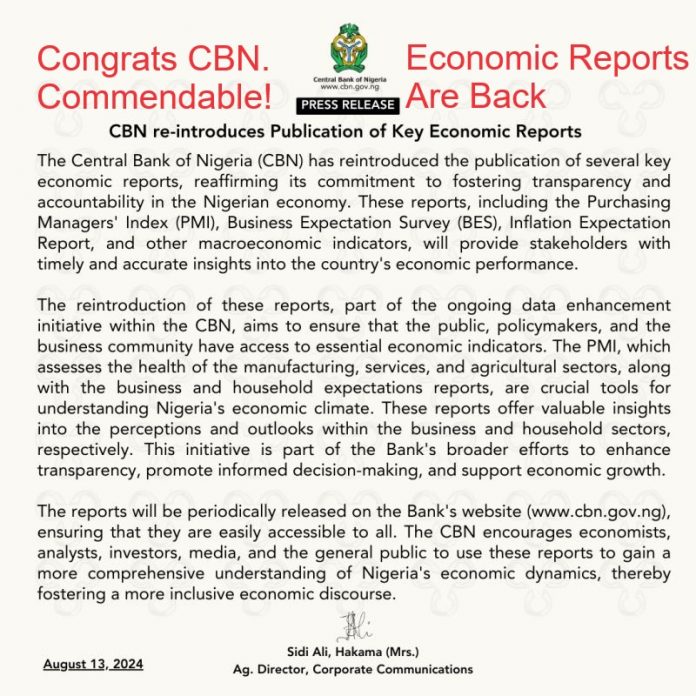
Central Bank of Nigeria (CBN) Re-Introduces Publication of Economic Reports

1

Let me commend the Central Bank of Nigeria (CBN) for re-introducing the publication of key economic reports. When the apex bank abandoned this tradition in 2016, I was against it. You do not balance your bank account by asking for a thinner chequebook.

So, there was just no reason why the CBN stopped those publications. Why? If you do not have the data, everything becomes a guesswork. But with data, you will even know what is working and not working. I commend the central bank for restoring this tradition.

As a junior banker in Lagos, I relied on CBN working papers during my  doctoral program in banking and finance. We were at the nascent phase of the Internet, but CBN was kind enough to push reports on its website.

Now to the professors, analysts, citizens, etc, this is the moment we have been asking for: with the veil lifted, we can get insights on how the apex bank is thinking over things, and possibly, we can constructively offer suggestions. Study those reports, and test CBN policies on welfare gains and losses,  assessing how projections turn out at the end of the policy implementations.

CBN: there are many economics professors in our universities: task them to assist. In other words, do not make it wholly internal where only CBN workers will churn out the publications. We want a balanced viewpoint, devoid of any political agenda, and supported by data.