DD
MM
YYYY

PAGES

DD
MM
YYYY

spot_img

PAGES

Home Blog Page 3041

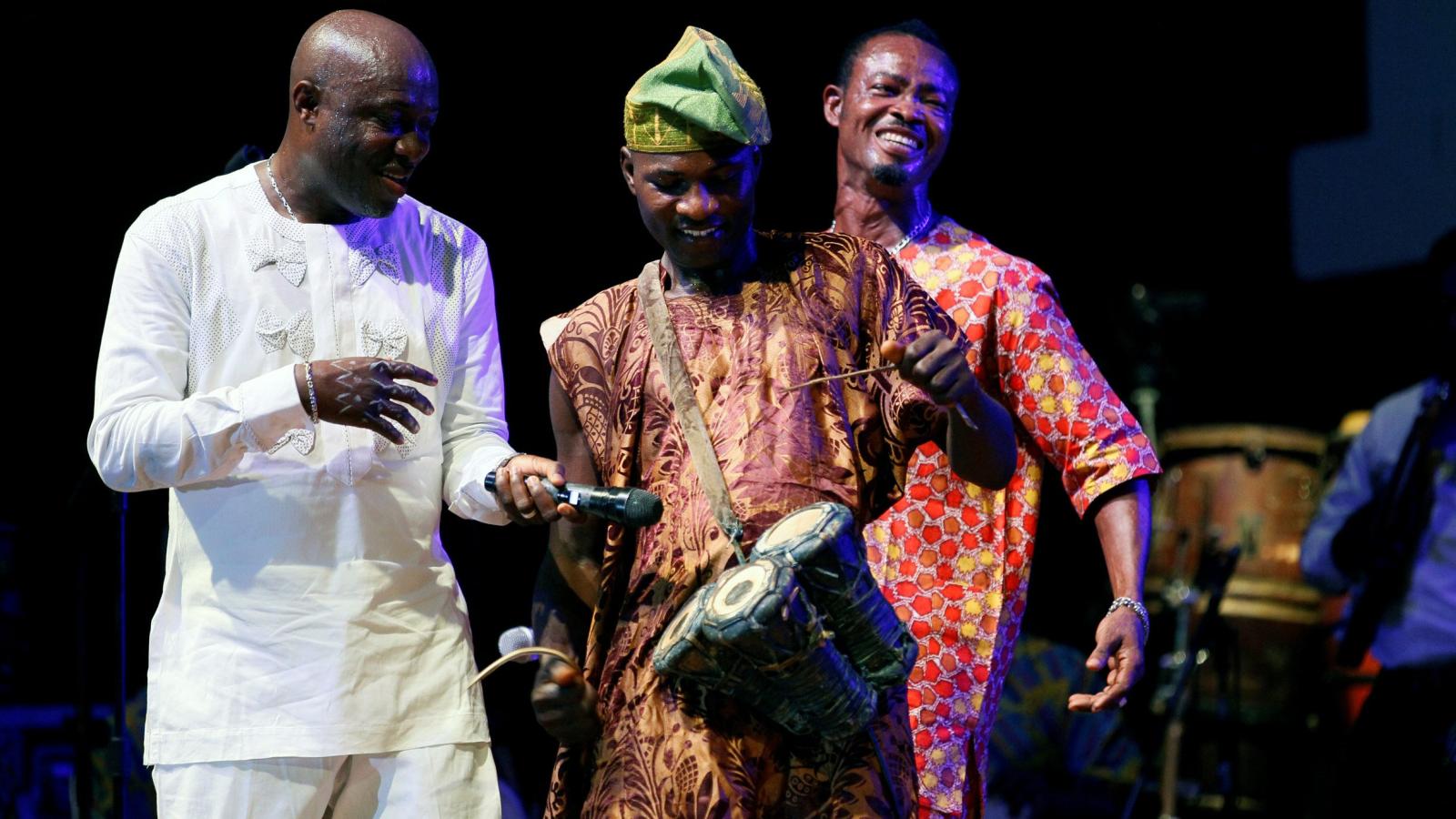
Nigeria Announces Plan to Generate $100bn from Creative Industry

0

The Nigerian government has set its sights on transforming the nation’s creative industry into a major economic powerhouse, unveiling an ambitious plan to generate $100 billion annually and create over two million jobs.

The blueprint, spearheaded by the Minister of Art, Culture, and the Creative Economy, Hannatu Musa Musawa, was presented to a gathering of local and international investors, signaling a bold new chapter for Nigeria’s creative economy.

Musawa’s plan, presented at a roundtable discussion on Wednesday, outlines a roadmap for harnessing the immense potential of Nigeria’s creative sector. Despite its vast cultural wealth, the industry currently contributes a modest $5 billion to the economy, a figure Musawa sees as only scratching the surface of what could be achieved. With the right mix of investment, technology, and policy reforms, the Minister envisions the sector driving significant economic growth.

Musawa’s confidence in the creative industry is backed by her belief in the sector’s untapped potential.

“If implemented to its fullest, this plan has the potential to generate over $100 billion and create more than two million jobs every year,she said.

The Current State of Nigeria’s Creative Industry

At present, Nigeria’s creative economy spans several sub-sectors, including music, visual media, arts and crafts, heritage and museums, fashion, culinary arts, publishing, and video gaming. These sub-sectors are at various stages of development, contributing to an uneven performance across the industry. The $5 billion contribution to the economy is relatively small, given Nigeria’s position as a cultural leader in Africa, and Musawa believes it is time to unlock the full potential of these sectors.

Strategic Initiatives for Growth

Musawa’s plan is centered around 14 pivotal initiatives grouped under four main pillars: Technology, Infrastructure and Funding, International Culture Promotion, and Intellectual Property Monetization. Each pillar is designed to address specific challenges facing the creative industry, with the aim of making it more globally competitive.

Technology

One of the core components of the strategy is leveraging technology to empower creatives. The Ministry plans to launch a Digital Content Creation Tool Accessibility Program, providing affordable and improved digital tools for Nigerian creatives. This initiative is expected to democratize content creation, giving more people access to the resources they need to produce high-quality work.

Another important element under this pillar is the Nigeria Content Distribution Initiative, which aims to increase nationwide adoption of digital tools for content distribution. This initiative could help creators reach a wider audience, not just within Nigeria but internationally, tapping into the global digital economy.

Additionally, a study to estimate the size of the creative industry will be launched, providing critical data to understand the market and chart a path forward. This data-driven approach will be complemented by efforts to expand internet accessibility in underserved regions, ensuring that digital initiatives have a broader reach.

Infrastructure and Funding

The Infrastructure and Funding pillar focuses on addressing the physical and financial needs of the creative industry. The Ministry will catalog existing infrastructure for the sector, assess its current state, and identify gaps that need to be filled. Through public-private partnerships, the government hopes to develop the necessary infrastructure to support the industry’s growth.

Incentives will also be provided to stakeholders in the creative economy to boost investment, while a Creative Accelerator Program will be launched to provide capital and capacity building for creative businesses. These initiatives are designed to tackle the funding challenges that have traditionally hindered the growth of creative enterprises in Nigeria.

International Culture Promotion

Nigeria’s rich cultural heritage and creative output have long been underutilized on the global stage. The plan aims to change that by establishing a Culture Promotion Office in collaboration with Nigerian embassies abroad. This office will work to promote Nigerian arts, culture, and creative products in international markets, leveraging initiatives like the African Continental Free Trade Area (AfCFTA) to boost exports.

Intellectual Property Monetization

One of the key challenges for Nigeria’s creatives has been the lack of a robust intellectual property (IP) framework. To address this, Musawa’s plan includes the establishment of globally standardized Collection Management Organizations (CMOs) and a Copyright Oversight Initiative in partnership with the Nigerian Communications Commission (NCC). This initiative aims to enhance tracking, monitoring, and enforcement of copyright standards, ensuring that creators are adequately compensated for their work.

Partnering for Success

To support the ambitious job creation target, the Ministry has partnered with BigWin Philanthropy, an international development organization, to deliver a transformative capacity-building strategy. This partnership is aimed at equipping Nigerian creatives with the skills they need to thrive in a rapidly changing global marketplace.

Nigeria’s creative industry has immense potential, but it also faces significant hurdles. According to the National Bureau of Statistics, the sector contributes just 1.2% to Nigeria’s GDP, compared to other African countries like Egypt (4.3%), South Africa (3.0%), and Morocco (2.7%). Moreover, the industry’s contribution to government revenue is a mere 1.0%, far below South Africa’s 12.5%.

Despite these challenges, Musawa’s plan represents a bold step towards realizing the full potential of Nigeria’s creative economy. By focusing on technology, infrastructure, international promotion, and intellectual property, the government is laying the groundwork for a sector that could be a key driver of economic growth in the coming years.

However, many have questioned the feasibility of the plan, arguing that the road to $100 billion and two million jobs is very long for Nigeria to attain now.

Bitcoin ETFs Record Huge Net Inflows; Bullish News For Solana (SOL) and Uniswap (UNI)? Traders Shift to This New ICO Primed for Adoption

0
  • Solana might retest $200 before the end of Q3.
  • Analysts tip Uniswap for a climb above $10.
  • IntelMarkets, a novel AI-powered exchange protocol, is set to disrupt the broader crypto trading landscape.

Bitcoin ETFs mark the first positive inflows in two weeks, recording a net inflow of $28.6 million on September 9. With sentiment turning bullish, investors anticipate an overall market rally. Long positions are being considered for top altcoins like Solana (SOL) and Uniswap (UNI), putting them in the spotlight.

At the same time, traders are paying keen attention to this new ICO: IntelMarkets (INTL). Its unique offering centers around integrating AI into DeFi trading, poised to reshape the wider crypto trading scene. With adoption imminent, traders betting big on the ongoing presale comes as no surprise.

IntelMarkets (INTL): Set to Reshape the Crypto Trading Scene

IntelMarkets (INTL), the latest on investors’ radars, is an emerging altcoin at the intersection between DeFi, blockchain and AI. It prepares to transform the $36 billion global crypto trading market by integrating AI into DeFi trading. Additionally, it will become the first modern trading platform to embed self-learning trading robots into trading.

It further stands out from conventional trading platforms with its dual-chain architecture. The AI-powered trading protocol supports and runs on the Ethereum and Solana blockchains, offering users the flexibility to choose their preferred option. With a multichannel analysis that performs rigorous technical calculations from multiple markets in seconds, traders can maximize opportunities from different asset classes.

The above explains why traders are shifting to this new ICO—adoption is just around the corner. Meanwhile, over $250,000 has been raised since recently making its debut, priced at $0.009 in the first stage. With an opportunity to become an early adopter of the next big thing, it is a more compelling bet than Solana (SOL) and Uniswap (UNI).

Solana (SOL): Poised to Retest $200

Solana (SOL), a DeFi giant and one of the leading cryptocurrencies, is undoubtedly one of the most popular names in the crypto space. Despite lingering bearish pressure, it shows resilience. On a longer timeframe, the past month to be specific, it tumbled by over 9%.

Nevertheless, the $120 price level has proven to be a strong support for Solana (SOL). With a bullish reversal on the horizon, to be sparked by rising interest and confidence, a climb toward the annual peak of $200 is anticipated before the end of Q3. But here is a caveat: this Solana price prediction will likely play out if Bitcoin breaks out above $65,000.

In other news, SOL reached a historic milestone: 5.4 million daily active wallets on September 9th. This marks the highest number of daily active addresses in blockchain history, boosting hopes of a Solana price rally.

Uniswap (UNI): Potential Climb Above $10 Before Month’s End

Uniswap (UNI), a popular DEX that facilitates the automated trading of DeFi tokens, is one of the top cryptos, ranking among the top 25. While the market trades sideways, it has gained considerable strength, trading on the upside.

The past week was eventful for the Uniswap coin, up by 8% on the monthly chart. It retails above $6, inching closer to the next key resistance. According to experts, we might see the Uniswap price above $10 before the month’s end.

Rising DEX activity and Bitcoin’s resurgence will be crucial to the next leg of its bull run. The anticipated interest rate cut later this month is another catalyst for price appreciation. Amidst this, Uniswap (UNI) is one of the altcoins to watch out for.

Conclusion

Amidst Bitcoin ETF net inflow and market excitement, Solana (SO) and Uniswap (UNI) are primed for further upsides. Meanwhile, IntelMarkets, a novel AI-powered exchange protocol, has captured traders’ attention. Given its impending adoption, it is a new DeFi project to bet on.

Discover More About Intel Markets:

Presale: https://intelmarketspresale.com/

Telegram: https://t.me/IntelMarketsOfficial

Twitter: https://x.com/intel_markets

The Equations of Market [video]

0

Join us at Tekedia Mini-MBA to master the equations of market.

Pick your seat if you have not; we will solve 4 equations of market:

  1. Innovation =: invention + commercialization
  2. Great Company =: Awesome Products + Superior Execution
  3. Products =: Integrate(factors of production) d(people, processes & tools)
  4. Differentiate(great products)/d(time) = good life

Why Reason Why Petroleum Product Marketers in Nigeria Do Not Want Cheaper Dangote Products

1

“Petroleum product marketers in Nigeria have written to President Bola Tinubu to complain that the refinery local prices which have dropped from N1,200 to N1,000 and now N900 per litre are impacting their businesses negatively.” – Devakumar Edwin, the Vice President of Dangote Industries Limited

“Over 95% of petroleum product importers in Nigeria are not buying from the Dangote Refinery.” ~ Dangote Refinery

Nigeria’s core challenge today is not the actual price or rate of petrol (or USD), but the volatility in the system. We always focus on the forward volatility which affects the end consumers. But the backward volatility is also dangerous because that affects lenders and bankers. So, if the price does not stabilize, no bank will provide credit to lift those assets. Yes, if you fund at N1,200/litre and the merchant will sell at N900/litre, wahala dey.

That is the reason why you cannot make an inelastic product to run on “free market” principle, at distribution, when the supply remains bounded, constrained and restricted,  because doing that will mean that price movement will keep shifting due to lack of parity between supply and demand.

What Dangote Group and the marketers are experiencing is expected, and I warned about that here a few days ago: “So, a village boy from Ovim posits that Nigeria cannot run a market-driven regime on petrol when its supply of petrol remains regulated, restricted and controlled, if we hope to attain parity, without welfare losses, in the market system.”

To attain equilibrium in that system will mean someone must compensate with some fudge factors (here, via Naira). Dangote Refinery, government, banks or marketers must decide who “loses” in the short term. The marketers and banks do not want to lose, and the government is out of it. So, what happens? Do not lift Dangote’s asset so that it does not enter the local market, to avoid a shift in the equilibrium. That is what is happening right now, and that is unfortunate!

The Intersection of Cryptocurrency, Fairness, Freedom, and Decentralization

0

Cryptocurrency has emerged as a revolutionary force in the financial world, embodying the principles of fairness, freedom, and decentralization. These core values resonate with a growing global community that seeks an alternative to traditional financial systems, which are often seen as centralized and opaque. Cryptocurrency is not just a technological innovation; it is a movement towards a more just and open society. As we look to the future, the principles of fairness, freedom, and decentralization will undoubtedly continue to shape the evolution of finance and the broader socio-economic fabric of our world.

Fairness in the context of cryptocurrency is closely tied to the concept of decentralization. By design, decentralized systems aim to distribute power away from central authorities, thereby offering a level playing field for all participants. In blockchain gaming, for instance, fairness is a critical requirement, and decentralized randomness plays a crucial role in ensuring that all players have an equal chance of winning, free from manipulation by miners or other parties.

Freedom in the crypto space is about the autonomy of managing one’s assets without reliance on intermediaries. This trustless environment, where transactions occur directly between parties, was a foundational goal of Satoshi Nakamoto, the creator of Bitcoin. Nakamoto envisioned a system where “any two willing parties to transact directly with each other without the need for a trusted third party,” especially in the wake of the 2008 financial crisis.

Decentralization is arguably the most defining characteristic of cryptocurrency. It removes the need for centralized authorities, enhancing privacy and protection for investors. Most cryptocurrencies leverage blockchain technology to achieve this, creating a peer-to-peer network that is maintained by a collective rather than a single entity. This structure not only bolsters security but also fosters a sense of community among users who contribute to the network’s integrity.

Furthermore, decentralized finance (DeFi) has been a beacon of hope for the unbanked population, offering access to financial services through mobile technology. With a significant portion of the world’s population lacking access to traditional banking, DeFi presents an opportunity for financial inclusion and empowerment.

The debate around decentralization is ongoing, with discussions on its advantages and challenges. While decentralization offers increased security and fairness, it also presents difficulties in achieving consensus and maintaining efficiency. Despite these challenges, the pursuit of a decentralized financial system continues to drive innovation in the crypto space.

As we look to the future, the principles of fairness, freedom, and decentralization will likely remain at the heart of cryptocurrency’s appeal. These ideals offer a vision of a financial system that is more inclusive, transparent, and resilient—a vision that continues to inspire and attract a diverse array of individuals and institutions around the world.

In conclusion, cryptocurrency is more than just a digital asset; it represents a movement towards a financial paradigm that aligns with the values of fairness, freedom, and decentralization. As the technology matures and the community grows, these principles will continue to shape the evolution of finance, challenging the status quo and offering new possibilities for economic empowerment and innovation.