DD
MM
YYYY

PAGES

DD
MM
YYYY

spot_img

PAGES

Home Blog Page 3042

Incoming Q4 Market Rally: Avalanche (AVAX), Cardano (ADA), and DTX Exchange (DTX) Are the Top Coins Whales Are Buying for an Explosive Rally

0

In the last few weeks, the crypto market has been steadily gaining positive momentum, confirming a bull run for the fourth quarter. Ahead of this bull run, Avalanche (AVAX), Cardano (ADA), and DTX Exchange (DTX) are three altcoins that have caught the attention of whales.

The growing positive trends and whale activity shown by these altcoins suggest that they are ready for a massive price increase. Captain Fabik suggests that AVAX could increase by 183%, ADA could rally to $0.70, and DTX could peak above $1 in the coming bull market.

Avalanche (AVAX) Could Skyrocket To $70 After Bullish Breakout

Avalanche (AVAX) has been among the best altcoins that have been driving the crypto market recovery. Crypto investments data from CoinMarketCap reveals the Avalanche crypto has risen by more than 17% on the weekly chart to break above the $27 support level. The recent price rise is supported by the upturn in the social attitude toward AVAX in the past few days.

And also, data shows all the market indicators for Avalanche (AVAX) are also bullish. The Avalanche price has bounced on its 50-SMA and 100-SMA, suggesting the possibility of an upswing in the near future. Based on Captain Faibik’s tweet, AVAX has formed a bullish falling wedge pattern and is currently trading above it. According to him, the Avalanche token could increase by as much as 183% to trade above $71 soon.

Experts Foresee Major Price Growth for DTX Exchange (DTX)

Another altcoin that has grabbed the attention of whales in recent weeks is DTX Exchange (DTX), a next-generation trading platform. In its ongoing presale, DTX Exchange has raised over $2.7 million and could be on track to hit $3 million as interest from whales increases. There has been a lot of attention on DTX Exchange because it brings the best features of centralized and decentralized exchanges under one umbrella.

DTX Exchange provides the advantages of extremely low fees, high trading efficiency, increased asset tradability, and an effortless trading experience due to its status as a hybrid exchange. The platform integrates advanced AI technology for automated trading, better analytics and risk management tools. It holds more than 120,000 digital assets up for trade, which is more than any other regular exchange currently has.

As an exchange built for the future, crypto industry experts are backing DTX Exchange to become one of the top trading platforms in the near future. The DTX coin would benefit from this growth, and that is why experts are sure it could skyrocket in the coming bull run. While it now trades at $0.06 in the third stage of its presale, a fair price target of $1 has been set for DTX, making it one of the top altcoins to buy ahead of the bull run.

Whale Activity Rises Ahead of Potential 100% Surge for Cardano (ADA)

There has been a rekindled interest in Cardano (ADA) over the last few weeks. According to data from IntoTheBlock, there has been an increase in Cardano (ADA) whale activity, with transaction volumes crossing $6 billion. In addition, there is also an increase in institutional investment for ADA, which suggests that the Cardano coin might be preparing for a bullish breakout.

The technical charts of the Cardano crypto show a falling wedge pattern. If this pattern plays out, the price of Cardano (ADA) could rise to $0.70 in the fourth quarter. An event that can fuel this bull run is the just announced Leios Upgrade. According to Charles Hoskinson, the founder of Cardano (ADA), the upcoming upgrade could significantly increase the performance and scalability of the Cardano network and put it ahead of rivals like Solana.

Which Coin Will Have the Biggest Returns Between Avalanche (AVAX), DTX Exchange (DTX), and Cardano (ADA)?

Based on what we have seen so far, the price of Avalanche could increase by more than 180%, while ADA could see a 100% price increase in the coming bull run. However, the DTX Exchange coin could skyrocket by more than 15x because of its innovative platform that many are backing to be the future of crypto exchanges, this makes it the best crypto to buy ahead of the coming bull run.

Learn more:
Buy Presale

Visit DTX Website 

Join The DTX Community


“The Society You Are Helping To Destroy Today Will Eventually Take Its Revenge On You,” Obi, Yiaga Africa Decry the Conduct of Edo Governorship Election

0

Peter Obi, a chieftain of the Labour Party and former presidential candidate, has strongly condemned the recent governorship election in Edo State, labeling it a “blatant example of state capture” and raising serious concerns about Nigeria’s democratic process.

In a post on his X handle (formerly Twitter) on Monday, Obi criticized the election, which saw the emergence of Monday Okpebholo from the ruling All Progressives Congress (APC) as the governor-elect. Obi argued that the outcome of the election did not reflect the principles of democracy, suggesting that the exercise was marred by rigging and manipulation.

“This election does not in any way represent the democratic ideals we have chosen for selecting our leaders,” Obi said. “Instead, it was a blatant example of state capture and continued gross undermining of our democratic process and values.”

Obi’s comments came amid a flurry of accusations against the Independent National Electoral Commission (INEC), which has been accused of rigging the election in favor of the ruling APC. Several political observers and opposition groups claim that the electoral body failed to conduct a free and fair election, raising doubts about the transparency of the process.

Critics argue that INEC’s role in overseeing the election was compromised, with allegations of vote buying, intimidation, and tampering with results during the collation process.

Obi voiced his concerns about the implications of such an election on Nigeria’s future, noting that any nation with a flawed leadership recruitment process is bound for failure.

“We are already witnessing the effects of this deeply flawed system in our country,” he added. Obi’s frustration reflects a growing sentiment among many Nigerians who have lost faith in the electoral system, especially with the repeated use of state power to manipulate outcomes.

The former Anambra State governor also urged those in positions of authority to rectify the situation rather than rely on a rigged process to remain in power. He pointed to the investments made in electoral technologies like the Integrated Real-time Election Viewing (IReV) platform and the Bimodal Voter Accreditation System (BVAS), which he said should have guaranteed a credible election.

“We have invested significantly in IReV and BVAS, and they must be allowed to function properly to free our electoral process from the massive falsifications that have plagued it,” Obi asserted.

In a stern rebuke to those involved in the alleged manipulation, Obi addressed officials and individuals who are accused of undermining democracy, cautioning them about the future repercussions of their actions.

“Remember, your time in office is not eternal, and the society you are helping to destroy today will eventually take its revenge on you,” Obi said in a warning that the damage being done to the nation’s democratic fabric would affect future generations, including the children of those complicit.

The Labour Party chieftain also had strong words for lecturers and other public servants allegedly involved in the process.

“To the lecturers and others complicit in perpetuating this charade, you must reflect deeply on the roles you are playing in damaging the very foundation of our democracy,” Obi urged, noting that such actions would inevitably have a lasting negative impact.

In a pointed reminder, Obi called on the Independent National Electoral Commission (INEC) to uphold democratic principles, noting that the manipulation of elections has no place in a true democracy.

“This kind of action has no place in a true democracy. That is why I have always maintained that today’s politics is not about capturing power, but about saving the country and making it work for everyone, regardless of their background,” he said.

Yiaga Africa’s Report

Supporting Obi’s concerns, civil society organization Yiaga Africa released a damning report, calling the Edo governorship election a failure in terms of integrity. The organization, which deployed a comprehensive observation mission to monitor the election, noted several inconsistencies in the collation process and suggested that the results had been tampered with at various levels.

In a statement co-signed by Samson Itodo, Yiaga Africa’s executive director, and Aisha Abdullahi, chairperson of the 2024 Edo election mission, the group revealed that discrepancies were found between the official results announced by INEC and the Parallel Vote Tabulation (PVT) estimates provided by their observers.

“Based on reports from 287 of 300 (96%) sampled polling units, Yiaga Africa’s statistical analysis shows inconsistencies in the official results announced by INEC,” the statement read.

In particular, Yiaga highlighted irregularities in the results from Oredo, Egor, and Esan West Local Government Areas (LGAs), suggesting that the figures for both the APC and other parties fell outside the predicted estimates, indicating possible manipulation.

Yiaga Africa also condemned the actions of certain INEC officials and security personnel, accusing them of interfering with the collation process. The organization pointed to disruptions in Ikpoba/Okha, Etsako West, Egor, and Oredo LGAs, which it said created opportunities for electoral manipulation, raising significant doubts about the credibility of the final results.

““Yiaga Africa strongly condemns the actions of some biased INEC officials who altered figures during collation including the actions of some security officials who interfered with the collation process,” the statement read.

Yiaga also Africa noted that INEC’s estimates for voter turnout and rejected ballots were consistent with their own observations. However, the overall turnout, at 22.4%, was significantly lower than the 27% recorded in the 2020 election, reflecting declining voter confidence in the electoral process.

In response to the findings, Yiaga Africa called for an immediate investigation into the actions of polling officials and collation officers involved in manipulating results. The group also urged INEC to clarify the discrepancies in the results, particularly those from Oredo, Egor, and Esan West LGAs, to restore public trust in the electoral process.

The credibility of Nigeria’s electoral system has remained under scrutiny since 2015 when the ruling APC came to power. With accusations of rigging, manipulation, and the undermining of democratic institutions, the Edo governorship election is believed to have once again, brought to the fore the critical need for electoral reforms in the country.

Political observers and civil society groups have continued to call for a more transparent and accountable process to restore public trust in Nigeria’s democracy.

Cardano (ADA), Ripple (XRP), or DTX Exchange (DTX)? Which Altcoin Will Hit $1 First?

0

The market’s love for psychological levels, like $1 or round figures simplified to the nearest whole number—$10, $20, or $50—is unmatched. These levels are typically support or resistance. In the race to $1 are Cardano (ADA), Ripple (XRP) and DTX Exchange (DTX).

While ADA and XRP are top altcoins, the years-long bear cycle has pushed them below their all-time highs. Meanwhile, as an emerging cryptocurrency, DTX is expected to go on price discoveries upon its launch, with many betting on the top ICO ahead of established players.

DTX Exchange (DTX): Significant Upside Potential More Than ADA and XRP

DTX Exchange (DTX), a new altcoin with no bull market history, is gearing up for an exciting ride. Its appeal centers around novelty and growth prospects, pushing the presale past $2.7 million in the third round. This suggests confidence in its potential; it will be crucial to its ascent post-launch.

A token is priced at $0.06, providing a good and low entry point ahead of Cardano (ADA) and Ripple (XRP). This explains why investors are betting on DTX ahead of top cryptos. Meanwhile, given its significant growth prospects, analysts anticipate a 50x upswing after its debut, rocketing past $1.

Another layer of its appeal is its impending transformation of the $3.2 billion global trading market. By standing at the crossroads between TradFi and DeFi, DTX will represent a one-stop platform where asset classes like stocks, cryptos, bonds and ETFs can be traded. Other key aspects of the protocols are smart contracts, an on-chain order book and distributed liquidity pools.

Cardano (ADA): A Retest of Levels Last Seen in 2022?

Cardano (ADA), a DeFi protocol, is a top 15 cryptocurrency—its strengths and weaknesses. Per the former, it boasts market dominance as one of the top crypto coins, attracting the attention of institutional players. On the flip side, it has limited room for growth as a top altcoin.

In the past 30 days, the Cardano price nosedived 10%, exchanging hands at $0.35. Since the March high of $0.77, there has been a notable decline, with many fearing it might not retest the $1 mark.

The last time Cardano (ADA) traded above this level was in April 2022. But will there be a repeat of these price actions? While many are pessimistic, a bullish Cardano price prediction hints at a jump above $1 at the peak of this bull run. While this might seem like a long shot, ADA remains a good crypto to buy.

Ripple (XRP): An Altcoin to Watch

After the initial market bounce, Ripple (XRP) has returned to the downside. It trades 2% below its daily high, hovering around the $0.58 mark. In the past 30 days, the XRP price tumbled 4%, retesting old supports.

Amid this, the question on the minds of many is, “Will XRP trade at $1?” It last traded at this level in May 2021. Following the lengthy legal battle with the US SEC, it nosedived and lost critical price levels.

However, with a final judgment given—a $125 million fine—XRP is back on a bullish track. An XRP price prediction suggests a jump past $1 before the curtain closes on the year or in the first quarter of 2025. Given its anticipated rally, it is among the best coins to invest in.

Conclusion

In the race to $1, DTX Exchange (DTX) is more positioned to cross this mask first ahead of Cardano (ADA) and Ripple (XRP) considering its novelty. Investors are typically drawn to new and shiny altcoins and a solid one like DTX is set for massive growth and adoption. To become an early adopter of the hybrid exchange protocol, check out the presale.

Learn more:

Buy Presale

Visit DTX Website

Join The DTX Community

OpenAI Launches Academy to Empower AI Innovation in Emerging Markets

0

OpenAI, the company behind ChatGPT, has announced the launch of OpenAI Academy, a new initiative that will fuel innovation by investing in developers and organizations leveraging AI, starting in low and middle-income countries.

The Academy will ensure that the transformative potential of Artificial Intelligence is accessible and beneficial to diverse communities worldwide. It will empower local developers and mission-driven organizations to address challenges within their communities.

By providing access to advanced AI technologies, the initiative aims to enhance efforts in sectors critical to sustainable development, such as healthcare, education, and agriculture. Despite the rapid growth of tech sectors in emerging markets, access to advanced training and resources remains unlimited. The OpenAI Academy aims to close this gap by investing in local talent and infrastructure, potentially driving significant economic advancements.

The Academy program will provide the following;

Training and Technical Guidance: Support from OpenAl experts for developers and mission-driven organizations leveraging Al.

• API Credits: Distributing an initial $1 million in API credits to expand access to OpenAl models, enabling participants to build and deploy innovative applications.

Community Building: Fostering a global  network of developers to collaborate, share knowledge, and drive collective innovation.

Contests and Incubators: Partnering with philanthropists to invest inorganizations solving challenges at the front lines of their communities.

OpenAI is building on its long-standing support for AI developers and organizations tackling global challenges with the launch of OpenAI academy. Previous successes highlight its potential impact, which saw the winner of the OpenAI prize at The Tools Competition, KOBI, which developed Al tools to assist students with dyslexia, and I-Stem, which improved access to educational resources for visually impaired individuals in India.

Notably, OpenAI has also provided API credits and technical support to these and many other organizations working on transformative projects across the globe. In addition to launching the Academy, OpenAl has taken steps to make Al’s knowledge more accessible by translating key benchmarks into multiple languages, including Yoruba and Swahili, ensuring Al technologies are relevant and effective in diverse cultural and economic contexts.

To further empower developers worldwide, OpenAl also funded and published a professional translation of the Massive Multitask Language Understanding (MMLU) benchmark into 14 languages, including Arabic, Bengali, Chinese, French, German, Hindi, Indonesian, Italian, Japanese, Korean, Portuguese, Spanish, Swahili, and Yoruba. The MMLU benchmark, which measures general Al intelligence is now accessible to a more diverse audience.

By supporting developers and organizations that understand the unique cultures, economies, and social dynamics of their communities, OpenAl ensures that Al applications are better tailored to meet local needs. These innovators are key to making Al accessible and empowering people across the globe regardless of their location or language to leverage technology to solve complex problems.

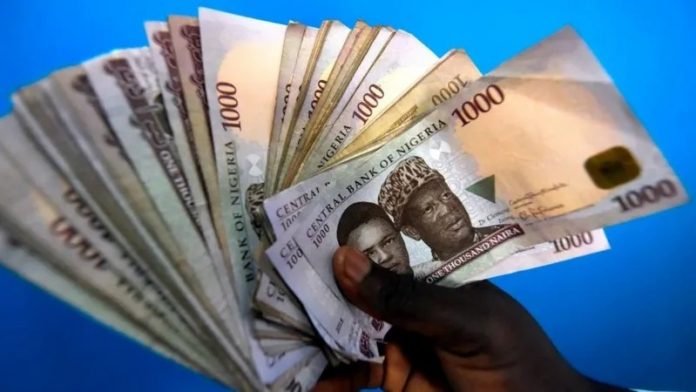
The Effect of the End of Fuel Subsidy on the Naira

0

Nigeria’s fuel subsidy program has been a topic of heated debate for years, seen by some as essential for supporting the populace, while others argue it places a heavy burden on the economy. Recently, Aliko Dangote, Africa’s richest man and head of the Dangote Group, called for the end of Nigeria’s fuel subsidies, emphasizing that doing so could stabilize the Naira and improve the country’s forex reserves. This article explores the implications of ending fuel subsidies on the Naira, inflation, and Nigeria’s economic landscape.

Understanding the Fuel Subsidy and Its Economic Impact

Fuel subsidies were introduced to make petroleum products more affordable, especially as Nigeria remains heavily reliant on petrol for transportation and daily activities. The government has historically shouldered the cost difference between international oil prices and local retail prices, keeping fuel prices low. However, these subsidies have come at a significant financial cost. In 2022, the Nigerian government spent over ?4 trillion on fuel subsidies, draining resources that could be allocated to critical infrastructure and social programs. Critics argue that the subsidy disproportionately benefits wealthier individuals, while many Nigerians struggle to meet basic needs. As global oil prices continue to rise, the sustainability of these subsidies is increasingly questioned. Dangote’s call to remove them highlights the need for reform and the potential benefits for the Naira and the economy.

The Argument for Ending Fuel Subsidies

Aliko Dangote argues that removing fuel subsidies would free up resources for more productive investments, which could help stabilize the Naira and reduce pressure on Nigeria’s forex reserves. When the Naira depreciates, it leads to a higher cost of imports, including fuel. With Nigeria importing refined petroleum despite being a major oil exporter, the government spends billions from its forex reserves to maintain this subsidy. This depletion of reserves puts additional strain on the Naira. Ending the fuel subsidy would lessen the government’s reliance on forex reserves to stabilize fuel prices, allowing these reserves to be used for essential economic activities. A stronger Naira would ultimately benefit both consumers and businesses, as it would lead to lower import costs and reduced inflation.

Reducing the Fiscal Deficit

The fuel subsidy contributes significantly to Nigeria’s fiscal deficit, which reached ?10.8 trillion in 2022. By eliminating this subsidy, the government could redirect funds toward critical areas such as infrastructure, healthcare, and education, fostering economic growth. A healthier fiscal position would reduce borrowing needs, lower debt servicing costs, and make Nigeria more attractive to foreign investors. This could lead to greater capital inflows and further strengthen the Naira.

Short-term Challenges: Inflation and Public Discontent

While the long-term benefits of removing fuel subsidies could be substantial, the immediate consequences are likely to be painful, especially for Nigerian citizens. The removal of fuel subsidies will likely result in a sharp increase in fuel prices, leading to higher transportation costs. This increase will ripple through the economy, driving up prices for goods and services and exacerbating inflation, which is already over 22%. The immediate effect on consumer purchasing power could lead to public unrest, as many Nigerians may find it challenging to cope with rising living costs. The fuel subsidy has long been viewed as a form of social support. Ending it could lead to widespread protests and discontent, as seen in 2012 when similar measures were attempted. However, proponents argue that the short-term pain will ultimately be outweighed by the long-term economic benefits.

Boosting Local Refining Capacity: A Crucial Next Step

For the removal of fuel subsidies to truly benefit the Nigerian economy and the Naira, it is essential to improve local refining capacity. Dangote’s own refinery, set to become the largest single-train refinery in the world, could transform Nigeria’s petroleum landscape. Once operational, it could reduce the country’s reliance on imported fuel and lessen the strain on forex reserves. By refining its crude oil locally, Nigeria could save billions and create thousands of jobs, boosting GDP and providing a buffer against price fluctuations. This local capacity would help ensure that the end of fuel subsidies does not lead to excessively high fuel prices, easing the transition for consumers.

Long-term Gains for the Naira and Nigeria’s Economy

In the long run, removing the fuel subsidy could have several positive effects on the Naira and Nigeria’s economy: reduced reliance on imports would help preserve forex reserves, supporting a stronger Naira and decreasing the need for interventions by the Central Bank of Nigeria (CBN). The government would have more resources for investment in critical infrastructure and social services, boosting economic growth. A stronger Naira, combined with a healthier fiscal position, would attract more foreign direct investment (FDI), further bolstering the economy.

Additionally, for Nigerian traders and investors, the ongoing depreciation of the Naira poses challenges in managing forex trades. Using forex brokers with Naira as an account base currency allows traders to deposit, trade, and withdraw in Naira, reducing the risk of currency conversion costs that can erode profits. These brokers also enable traders to hedge against fluctuations in the exchange rate more effectively. With the potential for a stronger Naira following the end of fuel subsidies, engaging with such brokers could help Nigerian traders capitalize on market opportunities while mitigating risks.

Conclusion

The debate over Nigeria’s fuel subsidy extends beyond mere fuel prices; it is about the country’s economic future. Ending the subsidy, as suggested by Aliko Dangote, could stabilize the Naira and strengthen the economy in the long term. While the immediate effects may be painful, especially in terms of inflation and public backlash, the potential benefits are significant. For the Nigerian economy to thrive, the government must also focus on enhancing local refining capacity and ensuring that resources are redirected to productive investments. If managed wisely, the removal of fuel subsidies could play a crucial role in fortifying the Naira and setting Nigeria on a path toward sustainable economic growth.

For more insights, resources like NNPC and BusinessDay offer updated economic data and analyses on the impact of fuel subsidies and their implications for Nigeria’s economy.