DD
MM
YYYY

PAGES

DD
MM
YYYY

spot_img

PAGES

Home Blog Page 3055

US Judge Rules Google “A Monopolist” – Potentially Breaking Its Dominance, with Wider Impact on Apple and Mozilla  

0

In a groundbreaking decision that could dramatically alter the digital landscape, U.S. District Judge Amit Mehta declared that Google had violated U.S. antitrust laws with its search business. This pivotal ruling marks a substantial challenge to Google’s market dominance and opens the door to significant changes in how internet users access information.

“After having carefully considered and weighed the witness testimony and evidence, the court reaches the following conclusion: Google is a monopolist, and it has acted as one to maintain its monopoly,” Judge Mehta stated. “It has violated Section 2 of the Sherman Act.”

The ruling’s implications are profound, not only for Google but also for its partners who benefit from the tech giant’s market position. Speculation quickly arose regarding the impact on Apple, which reportedly receives up to $20 billion annually from Google to prioritize its search engine on iPhones through the Apple Safari web browser.

While Apple might feel the pinch, the company’s vast and diversified revenue streams provide some cushion against the financial blow.

However, the scenario is starkly different for Mozilla, the non-profit organization behind the Firefox web browser. Mozilla relies heavily on its search deal with Google, which directs user queries to Google’s search engine. According to Mozilla’s latest financial statement, Google’s payments constituted a staggering $510 million out of the foundation’s $593 million revenue. The potential loss of this revenue poses an existential threat to Mozilla.

In response to the ruling, Mozilla struck a resolute tone.

“Mozilla has always championed competition and choice online, particularly in search,” a spokesperson told Fortune. “We’re closely reviewing the court’s decision, considering its potential impact on Mozilla and how we can positively influence the next steps…Firefox continues to offer a range of search options, and we remain committed to serving our users’ preferences while fostering a competitive market.”

Mozilla’s predicament underscores the broader consequences of the ruling. Originally rising to prominence in the late 1990s as a community-driven project to challenge Microsoft’s Internet Explorer, Mozilla now struggles to stay relevant in a market dominated by Big Tech. The organization has already faced significant challenges this year, including layoffs of about 60 staffers and the resignation of its CEO.

Critics of the judge’s ruling are likely to highlight Mozilla’s potential downfall as an unintended consequence of the antitrust decision, arguing that it could harm smaller tech players more than the giants it aims to regulate. Some might contend that Mozilla has not sufficiently leveraged its financial support from Google to innovate and differentiate its Firefox browser and could potentially seek alternative partnerships, such as with Microsoft’s Bing.

The ruling’s immediate future involves Google’s expected appeal, indicating a protracted legal battle. Moreover, the judge’s upcoming decision on the remedies to impose on Google will be crucial. These remedies could range from forbidding Google’s payments to partners altogether, capping the fees for distribution agreements, pushing for the implementation of a “choice screen” on devices, or other measures.

According to Evercore ISI research analyst Mark Mahoney, it could take another six months to a year, or even longer if the judge decides to stay the remedies phase pending Google’s appeal, before the exact penalties are determined.

“This victory against Google is a historic win for the American people,” Attorney General Merrick Garland said, emphasizing the ruling’s significance. “No company — no matter how large or influential — is above the law.”

White House Press Secretary Karine Jean-Pierre echoed this sentiment, stating, “As President Biden and Vice President Harris have long said, Americans deserve an internet that is free, fair, and open for competition.”

The decision also touches on broader antitrust efforts targeting Big Tech, with potential implications for other giants like Apple and Amazon, both of whom are embroiled in their own antitrust battles. Additionally, the ruling could influence the Justice Department’s case against Live Nation, given the centrality of exclusivity deals in that lawsuit.

Moreover, the ruling raises critical considerations regarding the future of artificial intelligence (AI). Critics argue that Google’s search monopoly, driven by its exclusive agreements, provides it with an unparalleled data advantage, which is crucial for developing superior AI models. Microsoft CEO Satya Nadella highlighted this concern during the trial, suggesting that Google’s dominance in search could translate into a formidable lead in AI, potentially stifling innovation from other tech firms.

However, the ruling against Google is more than a legal rebuke; it signals a potential seismic shift in the tech industry, challenging the established order and aiming to foster a more competitive digital marketplace.

Fitch Ratings Downgrades Dangote Industries Limited

2

Unbelievable for Aliko Dangote and his business:

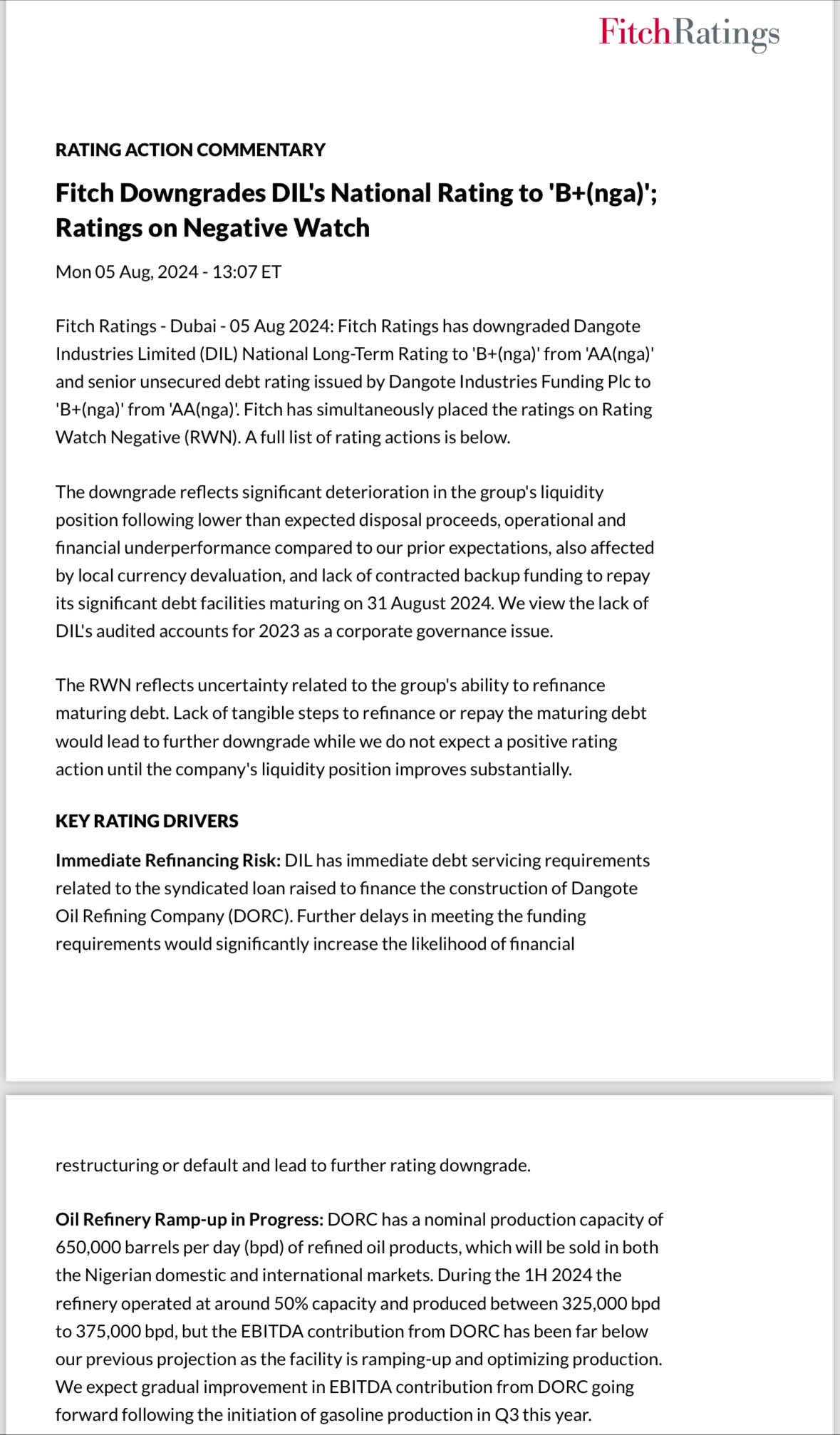
“Fitch Ratings has downgraded Dangote Industries Limited’s (DIL) credit rating to B+ and placed it on ratings watch negative, citing concerns about its liquidity and ability to raise money. The downgrade reflects significant deterioration in the group’s liquidity position following lower than expected disposal proceeds, operational and financial underperformance compared to prior expectations. This development is particularly concerning given that DIL operates what will be Africa’s largest oil refinery once fully operational, a 650,000 barrel per day facility in Nigeria. The downgrade has sparked discussions about the broader implications for Nigeria’s business environment and the challenges faced by the country’s oil industry.” – X summary.

According to  Fitch Ratings, Dangote Group plans to divest 12.75% stake in Dangote Petroleum Refinery over liquidity concerns. In a statement on Monday, Fitch said Dangote Group plans to use the proceeds from the stake sold to service a sizable syndicated loan that matures on August 31, 2024.

Good People, this is a partial downgrade of Nigeria’s manufacturing sector. Do not imagine the possibility of Dangote Industries defaulting on these loans. That will mean your salt, your cement, your … will now be made by your village native doctor (he can turn the sand in the village square to salt, etc), as many have wished for ages. But for most of us, it would be REALLY bad.

Someone needs to help Dangote, not because he is a businessman, but because if the world abandons him, because  Nigeria is throwing him under the bus, most things will crash.

Jumia Has A Future in JumiaPay

1

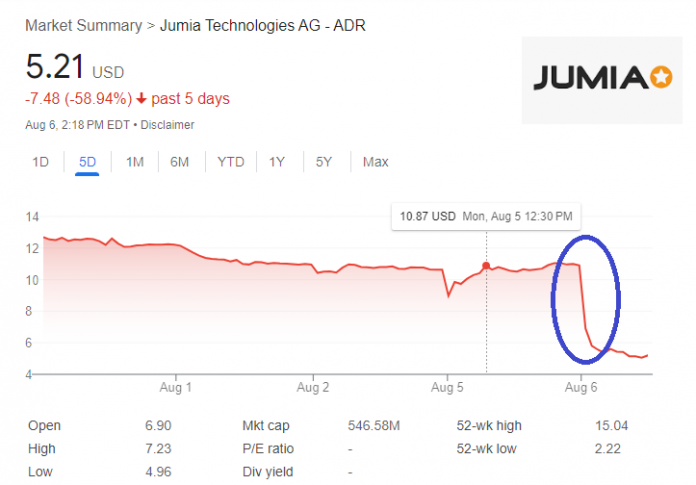
Jumia has done well and the new CEO has executed a solid business playbook, exiting markets and focusing on areas of potential growth.  Within quarters, they have reduced operating loss from about $50 million to $22.1 million per quarter. 

However, by cutting out some units like Jumia Foods, revenue has dropped, from $44m (in Q2 2023) to now $36.5 million. The GMV also dropped, 5% year-over-year to $170.1 million.

But interestingly, Jumia has a great future and that future is in JumiaPay. Yes, Jumia needs to execute the double play strategy where Jumia ecommerce will be used to feed customers to JumiaPay, and if that happens, JumiaPay becomes the core product, while Jumia ecommerce is a supporting component. B2C commerce is challenging in Africa due to lack of postal systems, increasing marginal cost with growth.

JumiaPay has solid numbers, and if that company was the one being reported, the business would have done better at least on the valuation: “JumiaPay Transactions reached 1.9 million, an increase of 31% year-over-year mainly driven by increased penetration of JumiaPay on delivery as well as the implementation of cashback campaigns and incentives conducted in the second quarter of 2024. Ongoing efforts to streamline the user experience and the continued rollout of JumiaPay on delivery to increase cashless orders positions JumiaPay as a strong enabler of the Company’s e-commerce platform.”

In other words, if the focus is JumiaPay and it is open for all ecosystems, the market cap of JumiaPay should be more than about $530 million Jumia is trading today.

China Launches First Batch of Satellite Internet Constellation, A New Rival to Musk SpaceX

0

China has successfully launched the first batch of its satellite internet constellation as it aims to deploy a vast network of satellites to enhance global communications.

The satellite internet which was launched on Tuesday, at the Taiyuan Satellite Launch Centre, by Shangai Spacecom Satellite Technology (SSST), a state-owned company in China, deployed 18 low Earth orbit (LEO) satellites, is poised to become a major competitor to SpaceX’s Starlink.

Known as “Thousand Sails”, the constellation is a low-Earth orbit set of more than 15,000 satellites that China has said will create global Internet coverage. Domestic media have widely described the project as the Chinese version of Starlink which runs about 6,000 satellites.

By 2025, China is aiming to deploy 648 satellites in the first phase of the constellation’s buildout, in order to create an internet network with global coverage, according to state media CCTV.

China’s recent launch of a Satellite Internet Constellation represents a significant milestone in its initiative to establish a satellite broadband network similar to that of Starlink, enhancing China’s capabilities in space communications.

The network currently comprises approximately 5,500 satellites in orbit and serves the needs of consumers, businesses, and government entities. While Starlink aims to provide comprehensive global internet coverage through its respective satellite networks, with Musk stating to send up to 42,000 satellites into space, China’s satellite could offer similar, if not enhanced coverage and capacity compared to Starlink.

This could impact Starlink’s market dominance, especially in regions where China’s constellation establishes a strong presence. Notably, the deployment of a large satellite network by China could significantly bolster its geopolitical influence. The “Thousand Sails Constellation” may provide internet access in underserved or strategically important regions, potentially challenging Starlink’s current market position and expanding China’s global reach.

In a bid to shake off SpaceX market dominance, cost and pricing strategies will be crucial in determining the impact of China’s satellite network on the market. Competitive pricing and improved accessibility could lure customers away from Starlink, particularly in regions where China’s constellation offers a more attractive alternative.

The launch of China’s Internet constellation highlights the nation’s ambitious space goals and Beijing’s efforts to challenge the U.S. dominance in the sector. China which often seeks to develop its technology and infrastructure hopes to reduce dependence on foreign technology, in a bid to make its industries self-reliant and hedge against possible foreign influence or pressure.

Also, developing its technologies enables the Asian country to exert greater influence globally, enabling the country to set standards, expand geopolitical reach, and most importantly control data.

The Future of Online Gambling in Virginia: Trends and Predictions

0

As the dawn of digital transformation continues to unfurl its petals, Virginia finds itself at the cusp of a significant evolution in online gambling. With recent legislative changes opening the doors to this dynamic industry, the Old Dominion is poised to become a hotspot for digital bettors. This article will navigate the trends shaping the future of online gambling in Virginia and offer predictions about where things are headed. Whether you’re a casual player, a serious gambler, or just curious about the digital hustle, buckle up—Virginia’s online gambling scene is about to get very interesting.

Regulatory Changes and Their Implications

Virginia has historically maintained a conservative stance on gambling, but the winds of change are blowing. Recent legislative shifts have paved the way for legalized sports betting and the potential expansion of online gambling. This regulatory relaxation reflects a broader national trend toward accepting online gambling, driven by its potential to generate substantial tax revenue and boost the economy.

The implications of these changes are manifold. Firstly, introducing regulated online platforms offers a safer environment for gamblers, reducing the allure of offshore betting sites that often lack consumer protections. It’s akin to moving from a back-alley craps game to a well-policed casino floor.

Moreover, the state can harness a significant revenue stream from licensing fees, taxes on winnings, and other related income. This money could be funneled into public services, such as education and infrastructure, thereby gambling revenue doing double duty—entertaining and enriching.

However, with great power comes great responsibility. The expansion of online gambling in Virginia will necessitate robust regulatory frameworks to prevent issues such as gambling addiction, underage betting, and other potential social harms. Effective regulations must be as dynamic as the technology they govern, adapting to new trends and technologies.

Technological Innovations Driving the Market

The future of online gambling in Virginia is being shaped by changes in law and rapid technological advancements. Mobile platforms are at the forefront of this revolution, with smartphones transforming into portable casinos. This shift means that gambling services are now available anytime and anywhere, making it easier—and more tempting—than ever to place a bet.

Another trend set to impact the online gambling landscape in Virginia is the integration of blockchain technology. Blockchain can offer unprecedented security and transparency for online transactions, assuring players of the fairness and reliability of the gaming process. It’s like having a digital ledger that everyone can trust, but no one can tamper with.

Additionally, virtual reality (VR) and augmented reality (AR) are beginning to make inroads into the industry. These technologies promise to enhance user experience by creating more immersive and interactive gambling environments. Imagine donning a VR headset, walking around a virtual casino, and interacting with other players and live dealers from the comfort of your home. 

These technological trends will attract a younger, tech-savvy demographic and create new niches and opportunities within the gambling market. However, they also raise questions about digital security and the potential for tech-induced gambling problems, which will need addressing as these technologies evolve.

Consumer Behavior and Market Dynamics

Understanding consumer behavior is crucial in predicting future online gambling trends in Virginia. As the market opens up, a surge in first-time online gamblers will likely be curious to try digital betting. This influx will drive initial growth, but sustainable success will depend on operators’ ability to engage these users over the long term.

Operators must offer diverse gambling products, from classic casino games to innovative sports betting options, to cater to a broad audience. They’ll also need to invest in marketing strategies that promote responsible gambling while highlighting the fun and excitement of the game. It’s about balancing enticing new players and ensuring they gamble responsibly.

The demographic profile of online gamblers is also shifting. Younger players drawn to video game-like experiences might prefer platforms that offer interactive and skill-based gambling rather than traditional games of chance. This shift could lead to a more engaged and tech-savvy gambling populace that demands constant innovation to keep their interest piqued.

The future of online gambling in Virginia promises to be as vibrant as it is challenging. With the right blend of technological innovation, regulatory foresight, and an understanding of consumer behavior, the state could well become a model for managing and growing the online gambling sector responsibly. As stakeholders navigate this new landscape, they must play their cards right, maximizing economic benefits while minimizing social costs. The stakes are high, but so are the potential rewards. Welcome to the future of gambling in Virginia—it’s time to place your bets.