DD
MM
YYYY

PAGES

DD
MM
YYYY

spot_img

PAGES

Home Blog Page 3059

Despite Toncoin’s $100 Price Target, TON and AVAX Holders Have Been Allocating Profits To This New Altcoin Superstar

0

Over the past 24 hours, established altcoins like Toncoin and Avalanche have dug deeper into the crypto depths. Meanwhile, newcomer Rollblock (RBLK) is attracting new investors by offering an ingenious revenue-share scheme.

Toncoin (TON) Fails to Escape the Reds

Although Toncoin (TON) showed huge potential to excel in the Layer1 Blockchain sector, its days of glory are a distant memory now. Over the past 30 days, Toncoin has plunged nearly 18%, bringing the current trading price to $6.61.

Analysts suggest that Toncoin needs to devise a better strategy than simply onboarding new games. For now, industry experts believe that Toncoin will continue to hit lower lows throughout August.

Avalanche (AVAX) Bulls and Bears Stuck in a Fierce Battle

Over the last seven days, Avalanche (AVAX) saw a huge price decline of nearly 11%. According to Coinmarketcap, Avalanche is currently trading at $24.77 after an intra-day decline of 1.7%. These constant declines might be hinting toward a bearish thesis, but some Avalanche analysts are expecting a price reversal soon.

Technical indicators reveal that Avalanche bulls and bears are stuck in a tug-of-war right now. If the bulls take over, then Avalanche may see a massive surge in price in the next few weeks.

Rollblock (RBLK) Gains 7K Investors in Stage 4 of Presale

Rollblock (RBLK) is making investors abandon old tokens like Toncoin and Avalanche to jump on the trending GambleFi narrative. Rollblock is pioneering this narrative. Right now, Rollblock is wrapping up stage 4 of its presale and tokens are selling at a low price of $0.018. During the past 14 days, Rollblock’s value has surged by 75%, and analysts are predicting more rallies in the following weeks.

Rollblock combines state-of-the-art blockchain technology with online gambling to give players the best casino experience in the market. Fully audited and licensed by Curucao Gaming, Rollblock’s casino is ready to take over the $450 billion-a-year global gambling industry. Each financial transaction and bet placed on Rollblock is also backed on the Ethereum blockchain, making the platform immune to third-party manipulation.

Rollblock’s most innovative strategy is its revenue-sharing scheme. Each week, up to 30% of casino revenue is used for open market buybacks of the $RBLK token. These tokens are then split into two equal categories: one is burned to keep supply low, and the second is given to investors as staking rewards with huge APYs.

If Rollblock can keep up this momentum, then analysts believe that this new GambleFi token has the potential to disrupt the entire $450 billion gambling industry. In fact, analysts believe that Rollblock is already on its way to becoming the biggest DeFi token of 2024. Get involved now at just $0.018 and take part in Rollblock’s daily Olympic giveaways!


Discover the Exciting Opportunities of the Rollblock (RBLK) Presale Today!

Website: https://rollblockpresale.io/

Socials: https://linktr.ee/rollblockcasino
Echoes of Discontent: President Tinubu’s Response to Hunger Protests

0

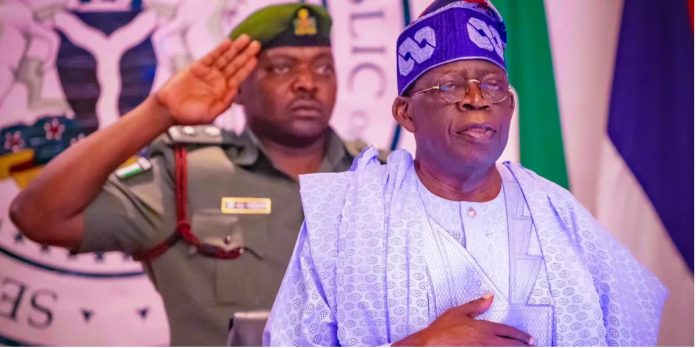
President Bola Ahmed Tinubu’s recent address in reaction to widespread protests against hunger and bad governance demonstrates a complex interplay of articulatory discourses that are relevant to Nigeria’s current socioeconomic reality. The protests, which erupted in response to growing living costs and broad dissatisfaction with government policies, forced Tinubu to accept the people’s problems while asking for a stop to demonstrations and a shift to discussion.

Acknowledgment of Grievances

Tinubu’s address prominently acknowledges the demonstrators’ concerns. He said, “I heard your voices loud and clear.” I comprehend the anguish and fury that drive these protests.” This recognition is an attempt to acknowledge citizens’ anger, particularly among youth, who are disproportionately affected by economic challenges.

Call for Unity and Dialogue

The President stressed the importance of Nigerian unity, calling all citizens to work together to transform the country’s future: “Nigeria requires all hands on deck”. This call to collective action is a strategic rhetoric aimed at instilling a sense of national cohesion amid escalating tensions. Tinubu hopes that by facilitating conversation, he can build a platform for resolving protesters’ concerns while reducing the possibility of future upheaval.

Emphasis on Law and Order

Tinubu’s emphasis on keeping peace and order is another key component of his message. He warned against using the protests for violent ends, saying, “The law will catch up with you”. This claim emphasizes the government’s commitment to law enforcement while also showing a defensive posture in response to accusations that security agents used excessive force during the protests.

Economic Measures and Future Vision

Tinubu’s speech detailed his administration’s economic objectives, such as infrastructure development and student loan schemes. However, critics believe that these initiatives fail to address the demonstrators’ immediate concerns, such as the resumption of fuel subsidies and the critical need for relief from inflation, which has reached catastrophic levels. This disparity between declared government policies and the pressing demands of the population demonstrates a fundamental governance difficulty.

Comparison to Previous Responses

Acknowledgment of Grievances

Tinubu’s Approach: In his speech, Tinubu acknowledged the existence of grievances among the protesters, stating, “I have heard your voices loud and clear” and urging for dialogue to address these issues. This marks a shift from previous administrations that often dismissed protests or labeled them as politically motivated.

Previous Responses: Historically, responses from Nigerian leaders, such as during the EndSARS protests, often involved outright denial of the issues raised or attempts to discredit the protesters. For instance, former President Muhammadu Buhari faced significant backlash for his perceived indifference to the demands of young Nigerians during the EndSARS movement.

Call for Dialogue

Tinubu’s Emphasis: Tinubu called for the suspension of protests to create room for dialogue, stating, “Under the circumstances, I enjoin protesters and the organisers to suspend any further protest and create room for dialogue”. This attempt at fostering communication contrasts with previous tactics that relied more on the forceful dispersal of protests rather than engagement.

Historical Context: Previous leaders often resorted to heavy-handed tactics, including police brutality, to quell protests, which further escalated tensions. The EndSARS protests are a notable example where the government’s failure to engage led to violent confrontations.

Content of the Speech

Economic Measures: Tinubu outlined various economic initiatives and reforms his administration has undertaken, yet critics argue that these do not directly address the immediate concerns of the protesters, such as the reinstatement of fuel subsidies and urgent economic relief. This lack of specificity in addressing protesters’ demands has been a common critique of governmental speeches in the past.

Previous Leaders’ Speeches: Similar to Tinubu, past leaders often highlighted achievements without addressing the pressing issues at hand. For example, Buhari’s speeches during protests frequently focused on security and economic stability without acknowledging the specific grievances of the youth.

Specific Reactions to the Speech

Protest leaders and analysts have expressed displeasure, claiming that Tinubu’s speech lacked sincerity and failed to address the citizens’ immediate demands. Deji Adeyanju, a renowned protest leader, highlighted that the government must first listen to the people’s views and address their demands before engaging in conversation. Human rights lawyer Femi Falana also attacked the address, urging swift action on the protestors’ demands and condemning the government’s treatment of the protests.

The Biggest Illusion In Nigeria Is That Reduction of Imports Will Help Naira

0

Yes, Nigeria’s problem is that we do not import a lot. And that means our solution will not come by restricting imports or controlling people’s dorm bank accounts. For Naira to improve, Nigeria needs to import more – and importantly import the RIGHT things.

In 2022, South Korea’s total imports were $808.09 billion while Nigeria did about $60.35 billion for goods; South Korea is about 25% of Nigeria’s population. But if you check, South Korea imports were largely machinery, equipment, etc for production, while Nigeria’s were for finished goods. Also, in 2022, goods worth around $136.21 billion were imported to South Africa, with many of those industrial equipment. Check – more imports have not destroyed South Africa and South Korea’s currencies!

We need to import more and if we do, we will likely become a hub to serve West Africa with finished goods, and that means export more. Push the nation through policy to redesign the architecture of our economy, out of the SAP mindset of the late 1980s, where we created finance houses and banks, over building and running factories.

Good People, I do not like when I read our political leaders making a case that Nigeria must reduce imports. Which imports? The $100, $200, etc virtual wallets from young people? Someone must rethink Nigeria from the ground up.

Why Nations Remain Poor and the Power of Capital

A Nuanced Pershpective on President Tinubu’s Address to the Nation

0

Nigerian President Bola Ahmed Tinubu’s recent address to the nation has sparked intense debate and discussion. Amidst the ongoing protests and unrest, the president’s speech has been criticized for not addressing the protesters’ concerns directly. However, it is essential to consider the context and dynamics at play.

The Campaign Promise Conundrum:

Unlike his predecessors, President Tinubu did not make explicit promises during his campaign. Instead, he focused on his past achievements and vision. Therefore, it is unrealistic to expect him to make promises during his protest speech.

The Alarming State of Unemployment and Poverty:

The stark reality is that over 60% of Nigeria’s population is unemployed, living from hand to mouth. The recent minimum wage increase, touted by the president, is woefully inadequate. It cannot even purchase basic staples like a bag of maize, rice, or garri, let alone cover essential expenses like healthcare and education. This dire situation demands urgent attention, lest it escalate into a full-blown crisis.

Dialogue and Compromise:

The president’s call for dialogue presents an opportunity for protest leaders to capitalize on. By synchronizing their demands and presenting a unified front, they may be able to negotiate more effectively with the government. Compromise is often the key to resolving conflicts, and both parties may need to make concessions to find a mutually acceptable solution.

Conclusion:

In conclusion, understanding the context and dynamics of President Tinubu’s address is crucial. The alarming state of unemployment and poverty demands immediate action. By approaching the issue with a nuanced perspective, we can better appreciate the challenges and opportunities that lie ahead. Let us hope that the government and protest leaders can engage in constructive dialogue and find a path forward that addresses the concerns of all Nigerians, lest the situation deteriorates into chaos and conflict.

Nigeria Must Solve Southeast Sit-At-Home And Nationwide Protests To Advance Opportunities

0

A few days ago, I put out words on the nationwide protests in Nigeria. Notwithstanding, I have not written much on the protests considering that a part of Nigeria has been protesting for years, and no one paid attention. Yes, the sit-at-home in the Southeast which takes out a day or two days in a week is also a protest, and it is hitting close to 6 years or so. But magically, Nigeria did not bother.

Consequently, over the last few years, the Southeast Nigeria has moved from #2 on per capita on tax to about #4. In other words, productivity has dropped, revenue went down, and economic opportunities severely diminished. That is a huge cost to Nigeria, and the implications have compounded our national economic challenges.

Our national leaders thought that losing two days in a week in one of its regions is a regional matter. They did not know that the Southeast people will still eat, which means even as demand stays constant, supply has reduced, pushing inflationary pressure in the nation. If Nigeria saves the two lost days in sit-at-home in the Southeast, we will reduce inflation within weeks. But if those protests remain, EVERYONE in Nigeria will continue to pay the prices.

The current nationwide protests in Nigeria could be traced partly to the years-long sit-at-home protests in the Southeast which has cost Nigeria at least more than its national budget. Why? You cannot close Aba, Enugu, Onitsha, etc some days of the week for years without Yobe, Kano, Akure, Jos, Ibadan, etc paying the prices economically.

If you doubt me, check the latest VAT numbers per region; Southeast is way down and that is affecting everyone: “The debt service to revenue ratio has increased significantly, from 33.8% in 2017 to a projected 110.4% in 2024, signaling potential difficulties in meeting debt servicing obligations relative to revenue generation” – Afreximbank. Southeast used to provide tons of VAT revenue.

So, Mr. President, as you work to fix the nationwide protest, do not forget the sit-at-home protest. I challenge you to solve that problem because since that protest started, Nigeria’s economic position has deteriorated. I can provide you hard numbers to show how we are losing 4% of national economic output for more than half a decade!

I am compelled to comment because in your speech this morning, you omitted that sit-at-home protest. But you cannot fix the nationwide one sustainably without fixing that, as Nigeria cannot attain economic equilibrium without SE operating at full capacity!

Comment on LinkedIn Feed

Comment: Good to know! But the Governors of the Southeast region needs to do more has anyone ask them what they are doing with the humongous monthly FAAC coming from Abuja to that region?

My Response: Your comment is the current mindset we have in the nation now: it is a Southeast problem. But if people are hungry in Kaduna, it is a nationwide problem. But the day you understand that what affects SE affects the whole of Nigeria, we will be better. Check the data, Nigeria has been going down economically since these sit-at-home protests started. But you are fixated that it is a regional issue under the control of governors as though those protecting for hunger do not have governors with “humongous monthly FAAC” allocations.