DD
MM
YYYY

PAGES

DD
MM
YYYY

spot_img

PAGES

Home Blog Page 3061

Investors Continue To Desert RNDR and NEAR; Many Are Looking Toward Rollblock’s With 100x Potential

0

While AI coins will have their time in the limelight this bull cycle, reputable cryptos such as Render and Near Protocol are struggling amidst a minor market crash. In the meantime, cryptos in trendy sectors that implement AI as a tool, such as Rollblock, are mooning.

Rollblock is set to become the next big DeFi gaming of the forthcoming bull run. Leveraging state-of-the-art security and combining decentralized and centralized gaming on its Ethereum-based casino platform, experts are predicting an 800% surge after Rollblock’s official launch.

Render’s Stock Keeps Declining In August

Render’s dismal July continues in August, with a 15% seven-day decline that has seen Render’s stock deteriorate in value.

However, the old adage of ‘buy low sell high’ certainly applies to Render today, as some crypto analysts are predicting an imminent breakthrough for Render. Courageous investors that accumulate RNDR tokens today could be rewarded with a 2x shortly.

Other crypto experts believe that bullish momentum could persevere for Render in as soon as two weeks. While Render’s future remains in the balance, Render may present a buying opportunity for investors with a moderate risk tolerance.

Near Protocol Suffers The Brunt Of Market Capitulation

Near Protocol has suffered a sharp decline of 7% this week as Near Protocol caves into the bearish sentiment permeating the market. Near Protocol’s decline is linked with increasing levels of liquidation for NEAR, totaling over $300,000.

While Near Protocol’s concern is worrying, many experts are optimistic about Near Protocol’s future prospects. For instance, some purport that Near Protocol’s inclusion in Grayscale’s AI fund could be reflective of Near Protocol’s validity as an AI layer-1 asset.

Investors Turn To New Shiny Gem Rollblock: A New Crypto Poised For Monumental Growth

Rollblock is a new DeFi gaming crypto that implements AI technology in its easily accessible GambleFi casino. With no KYC requirements, users can get involved immediately without bothersome delays. Rollblock sports a unique interface seldom seen with competing GambleFi projects, further improving the platform’s accessibility and encouraging sustained growth.

Rollblock’s tokenomics are crafted to maximize value and incentivize holding. The RBLK token serves various purposes, including rewarding player activity, offering staking rewards, and enabling participation in profit-sharing.

Rollblock features a pioneering revenue-sharing model. Under this system, Rollblock will use up to 30% of its revenue to repurchase RBLK tokens. These tokens will be distributed as rewards, with half being burned to create a deflationary effect.

Looking ahead, Rollblock plans to expand its platform with the introduction of sports betting on top of its already large selection of over 150 unique gaming titles and other innovative features. These developments aim to drastically improve the platform’s appeal, driving further user adoption and boosting the value of RBLK tokens in the process

Currently priced at $0.0175, Rollblock has immense potential to surpass the ballpark of 100x gains in Q4. At the current price point, Rollblock is a no-brainer for any investor looking for substantial returns.

Discover the Exciting Opportunities of the Rollblock (RBLK) Presale Today!

Website: https://presale.rollblock.io/

Socials: https://linktr.ee/rollblockcasino

What is Apple Intelligence?

0

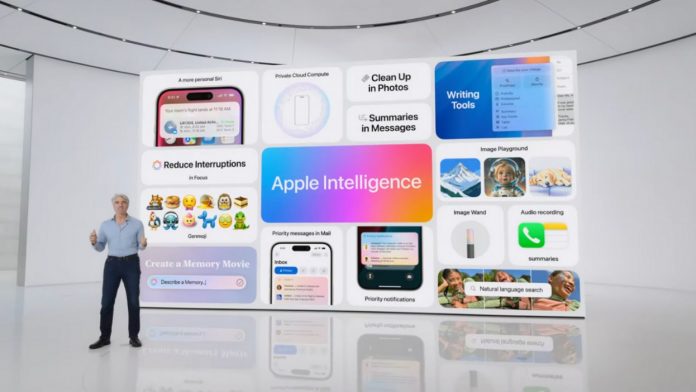
At Apple’s annual Worldwide Developer Conference keynote, the tech giant unveiled a groundbreaking initiative known as “Apple Intelligence,” marking a significant leap in the integration of artificial intelligence (AI) into its products and services. This move underscores Apple’s strategic focus on advancing AI capabilities while upholding its longstanding commitment to user privacy and security.

With a historical emphasis on user experience, Apple has gradually incorporated AI features like Siri into its devices over the years, positioning itself as a key player in the evolving AI landscape. The announcement of “Apple Intelligence” not only highlights the company’s dedication to enhancing AI across its operating systems but also showcases strategic partnerships with entities like OpenAI, emphasizing high-performance hardware for AI tasks.

The introduction of “Apple Intelligence” at the conference keynote signals Apple’s proactive stance in leveraging AI technologies to enrich user experiences and maintain competitiveness in an increasingly AI-mediated world. By balancing on-device and cloud processing for AI tasks and fostering a robust app ecosystem, Apple aims to navigate potential threats from competitors such as Google and Microsoft while capitalizing on opportunities for innovation.

Looking ahead, ethical considerations surrounding widespread AI adoption, societal impacts of advanced technology deployment, regulatory frameworks governing AI development, and possibilities for enhanced user experiences through ethical data practices are critical areas warranting further exploration within this dynamic landscape of technological evolution driven by artificial intelligence.

Things To Note:

  • Apple’s annual Worldwide Developer Conference keynote introduced “Apple Intelligence,” featuring generative AI features across its operating systems and for developers.
  • Despite concerns of Apple falling behind in AI, the company’s partnership with OpenAI and focus on high-performance hardware positions them as a strong player in the AI space.
  • Apple’s business model, rooted in hardware sales, aligns well with the future need for devices in an AI-mediated world.
  • The integration of AI features, branded as “Apple Intelligence,” will require the latest Apple devices due to processing requirements.
  • The app ecosystem, particularly on smartphones, plays a crucial role in AI adoption, with Apple expected to enhance Siri and offer new AI capabilities for developers.
  • Apple’s infrastructure strategy includes partnerships with OpenAI for chatbot capabilities and the use of in-house processors in data centers to support AI tasks on devices.
  • Apple’s control over device interfaces and AI processing locations positions them favorably to provide a platform for future AI applications.
  • The company’s approach to AI emphasizes a balance between on-device and cloud processing, leveraging its technology and tools alongside OpenAI’s resources.
  • Apple faces the threat of potential obsolescence if a future AGI renders smartphones unnecessary, highlighting the importance of maintaining a strong app ecosystem.
  • Google poses a significant threat to Apple due to its potential to develop differentiated AI capabilities for Android, potentially shifting market dynamics.
  • Apple’s partnership with OpenAI for chatbot functionality instead of Google may be a strategic move to avoid dependency on a competitor and protect user experience.
  • Microsoft is leveraging AI to compete with Apple’s Mac lineup, with features like Recall aiming to enhance user experience but facing challenges around data security.
  • Microsoft’s approach highlights the balance between pushing AI innovation and ensuring user trust and data security, a factor that could benefit Apple’s user-centric approach.
  • Apple’s focus on user privacy and security aligns with its strategy of integrating AI features in a timely and trustworthy manner, positioning the company well in the evolving AI landscape.

Apple devices for the integration of AI features may inadvertently create barriers to widespread adoption, potentially alienating users who are unable or unwilling to upgrade frequently. Moreover, while Apple’s partnership with OpenAI and focus on high-performance hardware are notable strengths, fierce competition from tech giants like Google and Microsoft in the AI space poses a significant threat to Apple’s market position. These competitors boast robust AI capabilities and ecosystems that could challenge Apple’s dominance and innovation in the field.

Furthermore, as Apple emphasizes user privacy and security in its approach to AI integration, concerns persist regarding data privacy practices and potential misuse of user data for AI algorithms. Balancing the need for innovation with maintaining user trust presents a delicate challenge for Apple, especially as advancements in AI technologies continue to reshape industry norms.

Additionally, the risk of potential disruption by future technologies like advanced general artificial intelligence (AGI) underscores the importance for Apple to diversify its offerings beyond smartphones and hardware-centric models to stay relevant in an increasingly dynamic technological landscape. Addressing these challenges will be crucial for Apple to navigate competition, foster innovation, and sustain its position as a key player in the evolving AI ecosystem.

Nigeria’s Best Option To Revitalize Its Currency and Grow the Economy

0

Good People,  when Nigeria floated its currency, I wrote, in June 2023, that “Nigeria’s floating of its currency, while progressive, will cause severe perturbations in the economy – and a stable state may not come as most experts have predicted”. A few days later, I noted that  “Nigeria will either pause the full floating of its currency or return back to fuel subsidy” because using basic economics, Nigeria cannot handle both at the same time. My positions were attacked by many because IMF to Wall Street banks had postulated that a floated Naira would liberate Nigeria! 

Simply, using basic economics, Nigeria does not have the capacity to float its currency because it does not have the life jackets (yes, production) to save it if it begins to struggle in the high seas of global currencies. I did note that floating the currency will weaken Nigeria’s productivity and if this is not managed, the fabrics of Nigeria’s economic architecture will collapse in 2027. How?

If 5 people, each has $100, to sell when 20 people, each wants to buy $100, the Naira will lose value because of the lack of parity in supply and demand of US dollars. The removal of the information asymmetry (i.e. the floating mechanism) does not change the fundamental structure of demand and supply. The problem, unfortunately, is that that floating will cause severe perturbations in the economy that over time, instead of 5 people having $100, only 3 will do, and later just one person, if any. What is happening is lack of productivity and that will keep pushing Naira to continue to lose value against US global currencies.

The floating of Naira is leading to lower productivity which is making Nigeria to produce “lesser US dollars”, thereby weakening the Naira in the global market where it has lost 10x against Togo’s CFA Franc, 10x against Kenya’s shillings, and 6x against South Africa’s rand. In my piece, I warned that Nigeria will experience pockets of crises which could become constant over time; decelerating productivity will have an asymptotic relationship with time.

How can this be fixed? Nigeria needs to return to a fixed exchange rate regime. The biggest challenge today is that boardrooms cannot plan since there is no number to enter business contracts on. When your currency is changing weekly, planning can only happen in days, not years, and that means investments will stall. More so, the strategic reason the government noted while it went into this mistake – closing the official and black market rates – was not a real issue; the instability of the forex is more injurious than the actual rate. 

We can pick N1,200/$ and put an executive and enforceable order that any person who sells and buys above N1,203 has broken the law. In China, rates are uniform, from bank halls to hotels; we can do that and enforce that system, under a fixed rate. If that is done, Nigeria will return to stability and opportunities will open up again. 

But if we do not, Nigeria will continue to struggle, since it is IMPOSSIBLE for Naira to attain any equilibrium on a floated regime without the enabling production pillars to hold it. And without that stability, growth will not happen.

In July 2023, I wrote that we could see pockets of crises which could become a constant due to asymmetric imbalance a floated Naira will introduce in the economy. The lost N1.7 trillion revenue from more than 3,000 collapsed manufacturing companies represents families and communities.

US Stocks, Cryptos Tumble on Disappointing Job Report

0

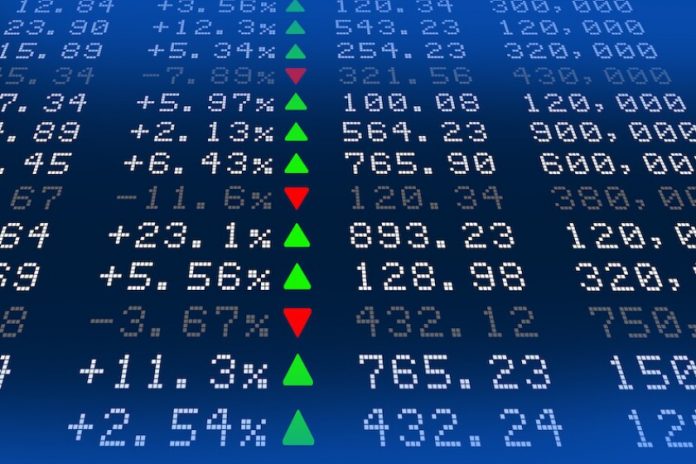
The latest jobs report from the United States has sent ripples through the financial markets, with both US stocks and cryptocurrencies experiencing a significant tumble. The report, which revealed slower growth and a rise in unemployment, exceeded the projections set by the Federal Reserve, leading to a drop in investor confidence.

The S&P 500 and Nasdaq saw declines of over 2%, while major cryptocurrencies such as Bitcoin and Ether fell by 2.8% and 1.7%, respectively. This downturn in the crypto market coincides with disappointing tech earnings, adding further pressure to an already volatile market environment.

Understanding the Sahm Rule as a Recession Indicator

The Sahm Rule, named after economist Claudia Sahm, is a tool used to predict the onset of a recession. It operates on a relatively simple principle: a recession is likely underway when the three-month moving average of the national unemployment rate rises by at least 0.5 percentage points above its lowest point in the previous 12 months.

The recent unemployment report has indeed triggered the Sahm Rule, which has historically been a reliable indicator of a recession. The rule has gained attention for its ability to provide a real-time signal of economic downturns, relying on the unemployment rate data from the Bureau of Labor Statistics (BLS). The Sahm Rule’s reliability stems from its foundation on the premise that rising unemployment typically follows a spike in layoffs, which in turn affects consumer spending and business profits, potentially leading to further layoffs and a contracting economy.

However, it’s important to note that while the Sahm Rule has been a consistent predictor of past recessions, it is not infallible. Economic conditions, especially those unprecedented, such as the ones experienced during the COVID-19 pandemic, can present new variables that may affect the rule’s applicability. For instance, the labor market has seen significant disruptions due to the pandemic, which have led to unusual employment trends and challenges in interpreting traditional economic indicators.

Moreover, the Federal Reserve Bank of St. Louis provides a real-time Sahm Rule Recession Indicator, which as of June 2024, stood at 0.43 percentage points. This suggests that while the indicator is close to signaling a recession, it has not yet crossed the threshold defined by the rule. Additionally, some economists argue that the current labor market conditions, including labor shortages and the effects of the pandemic, might distort the traditional signals of the Sahm Rule.

While the Sahm Rule has been triggered, suggesting the possibility of a recession, it is crucial to consider the broader economic context and other indicators before drawing definitive conclusions. The rule is a valuable tool, but it should be used in conjunction with a comprehensive analysis of all economic data and trends to understand the full picture of the economy’s health.

The unemployment rates rise to 4.3% signals potential economic challenges ahead. This has prompted discussions around the Sahm rule recession indicator, which some analysts believe is signaling a looming economic downturn. However, the reliability of this indicator in the post-pandemic economy remains a topic of debate.

Market uncertainty is further compounded by complex labor market factors and the presence of inverted yield curves. These economic indicators often precede a recession, causing concern among investors and policymakers alike.

The global sell-off that has followed the weak jobs data underscores the interconnectedness of modern financial markets. As US employers reported hiring numbers that fell short of economists’ expectations, fear spread across markets, leading to a sharp drop in both stocks and bond yields.

In the tech sector, Nasdaq futures were trending down, influenced by fears of a US slowdown and less-than-stellar quarterly results from industry giants such as Intel and Amazon. The focus is now shifting to the highly anticipated US payrolls reading, which could provide further insights into the state of the economy.

Cryptocurrencies as the New Age Currency

The financial landscape is undergoing a significant transformation with the advent of cryptocurrencies, which are increasingly being hailed as the currency of the new age. This digital form of currency has seen a meteoric rise in popularity and acceptance, challenging traditional financial systems and prompting a global conversation about the future of money.

Cryptocurrencies operate on the principle of decentralization, a stark contrast to the centralized nature of traditional banking. This means that they are not controlled by any single entity, such as a government or financial institution, but rather by a distributed network of computers. The most well-known cryptocurrency, Bitcoin, was introduced in 2008 and has since paved the way for thousands of others, including Ethereum, Ripple, and Litecoin, each with its unique features and uses.

One of the most compelling aspects of cryptocurrencies is their underlying technology—blockchain. Blockchain is a distributed ledger that records all transactions across a network of computers. This technology ensures security and transparency, as the ledger is immutable and publicly accessible. It’s this technology that has not only fueled the rise of cryptocurrencies but also has potential applications in various other sectors such as healthcare, real estate, and logistics.

The investment perception towards cryptocurrencies has shifted dramatically over the years. Initially met with skepticism, digital currencies are now being embraced by a broader audience, including institutional investors and the working-age population. The allure of high returns, despite the volatility, has drawn many to invest in cryptocurrencies as a means of diversifying their portfolio.

However, the rise of cryptocurrencies has not been without its challenges. Concerns over regulatory oversight, market volatility, and the environmental impact of mining digital currencies have sparked debates among policymakers, economists, and environmentalists. Despite these concerns, the trend towards digital currencies seems unstoppable, with some countries even considering the launch of their own central bank digital currencies (CBDCs) to complement or compete with the likes of Bitcoin and Ethereum.

As we look to the future, it’s clear that cryptocurrencies are more than just a passing trend. They represent a paradigm shift in how we think about and use money. With their ability to facilitate secure, transparent, and efficient transactions, cryptocurrencies are well-positioned to play a pivotal role in the new age of digital finance.

The journey of cryptocurrencies is still in its early stages, and the full extent of their impact on the global financial system remains to be seen. What is certain, however, is that they have already begun to reshape our understanding of currency and value, heralding a new era of financial innovation and inclusion.

Nurturing Your Webinality for Professional Advancement – Ndubuisi Ekekwe

0

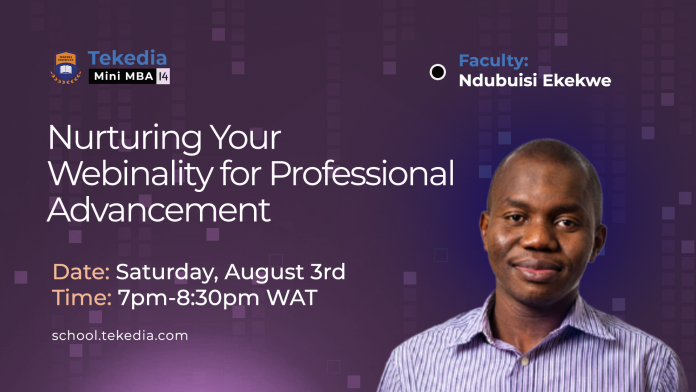
Join us today at Tekedia Mini-MBA as we examine how to build a professional webinality (web+personality). Yes, in this social media age, to ascend professionally, you need to find a creative way for people to know what you think you know. If you know it and keep it to yourself, you stall.

But if you make it possible for others to know, wings will emerge to carry you up, because the zenith of all careers happens when people could recommend you in your absence.

From Google AI: Tekedia has discussed webinality, which is a combination of the words “web” and “personality”, on their website and social media. Webinality refers to who someone is in the digital space and how they can use it to play a key role in the digital era. Tekedia has also discussed how to improve webinality and build a professional online persona. For example, Ndubuisi Ekekwe has discussed webinality during Tekedia Mini-MBA sessions, including how it can help people unlock opportunities in the digital age.

Tekedia Mini-MBA >> our product is KNOWLEDGE