DD
MM
YYYY

PAGES

DD
MM
YYYY

spot_img

PAGES

Home Blog Page 3068

Can Dogecoin (DOGE) Hit $1 By 2025? DTX Exchange’s (DTX) 100X Upside Potential Dwarfs Declining DOGE and Cardano (ADA)

0

Making the most of this year’s bull run can be as easy as investing in new tokens instead of top altcoins. Historically, novel cryptocurrencies usually outperform established players, with a solid one like DTX Exchange (DTX) primed to soar past OGs like Dogecoin (DOGE) and Cardano (ADA).

Given its blend of the best elements of CEX and DEX, DTX is primed for massive gains. It also intends to bridge the gap between TradFi and DeFi via a unified Layer-1 hybrid blockchain, hailed by industry experts as revolutionary.

DTX Exchange (DTX): Primed for a 100x Rally After Listing

DTX Exchange (DTX) has been hailed as the best crypto to invest in for several reasons. For one, presale tokens have plenty of room for growth than top cryptos and it doesn’t get any better than DTX. Standing at the intersection of TradFi and DeFi, it is on course to reshape the idea around trading.

Considering several key challenges like financial exclusion and global inaccessibility to markets and assets, DTX will build a one-stop platform that combines the best elements of CEX and DEX. This allows for a seamless and intuitive user experience while maintaining the security and privacy benefits of decentralization.

Equally important, users will be able to trade thousands of assets across TradFi and DeFi, rightfully hailed by experts as the future of the $10 billion global trading market. Meanwhile, with a 100x upside potential after listing, it is a more promising bet than Dogecoin (DOGE) and Cardano (ADA). This makes it one of the best coins to invest in, priced at $0.06 in the third round of the ICO.

Dogecoin (DOGE): Tipped to Hit $1

Dogecoin (DOGE), popularly called the OG of memes, is one of the top crypto coins. Despite its humble beginnings, it ranks among the top 10 cryptocurrencies. As the first meme-inspired digital asset, it is an investor favorite—but not for life-changing gains.

The dog-themed cryptocurrency launched in 2013 and has been on several price discoveries. According to CoinMarketCap data, Dogecoin (DOGE) has exploded over 120,000% since its all-time low in 2015. However, the downside is that it has limited upside potential at the current market size, fueling a shift to new ICOs with potential.

Meanwhile, in the crypto market, the Dogecoin price is in the red. It tumbled by over 5% in the past 7 days and a 4% downside has been recorded on the daily charts. Nevertheless, a reversal is on the cards. But according to a Dogecoin price prediction, it might hit $1 by 2025.

Cardano (ADA): Price Takes a Downturn but a Comeback Is Near

Cardano (ADA) was founded in 2017—one of the crypto OGs. The proof-of-stake (PoS) blockchain facilitates the creation of decentralized applications (dApps). With ADA holders having the right to vote on the platform’s future direction, there are several incentives for holding.

However, like the rest of the crypto market, the Cardano price nosedived. In the last 7 days, it tumbled over 6%, exchanging hands at $0.35. The past 24 hours aren’t any better either: over 2% downturn.

Taking the positive, Cardano (ADA) is one of the best coins to buy at the current price, considering the huge discounts. On the other hand, investors’ portfolios are down, enough to spark concerns and raise questions. Nevertheless, given Q4’s historical bullishness, a comeback and significant growth aren’t out of the question.

Conclusion

As it prepares to reshape the global trading scene, DTX Exchange (DTX) is on course to skyrocket in value and adoption. Its upside potential as a new and novel altcoin dwarfs Dogecoin (DOGE) and Cardano (ADA), making it a must-have ahead of a full-blown bull market.

Learn more:
Buy Presale

Visit DTX Website

Join The DTX Community


As Oando Plans to Buy A Refinery in Trinidad and Tobago, Nigerian Firms Need To Go Global

0

With its performance in the Nigerian stock exchange where it has accelerated value creation for its believers, Oando is now going global, and the first major stopover is Trinidad and Tobago: “Oando Plc, a leading Nigerian energy company, has been shortlisted by the Trinidad and Tobago government as one of the three final contenders to take over operations of the country’s state-owned Pointe-a-Pierre refinery, previously operated by the defunct Petrotrin.”

I hope it wins the bid because Nigeria needs multinational companies to confront the paralysis of economic stagnation and a lost economic decade. Yes, when a country celebrates the formation of many SMEs, notice a country that is scaling poverty. In other words, a country where most people employ themselves is a poor one.

That means Nigeria needs BIG companies because those have capabilities to compound growth leverageable factors to drive value creation for the good of all. Big firms solve big frictions in markets, and you need them to balance your budget at scale. When they go global, great things happen in economies.

If we can have our companies go global, we can overcome the evolving challenges in capital importation where the numbers are crashing: “Nigeria’s capital importation in the second quarter of 2024 fell by 22.85%, from $3.37 billion in the first quarter to $2.60 billion.” In short, the foreign direct investment dropped to $29.83 million in Q2 2024, the lowest number ever recorded in Nigerian history.

So, we need these firms to go abroad and make money.

Nigeria’s Foreign Direct Investment (FDI) for the second quarter of 2024 has dropped to $29.83 million, marking the lowest level recorded based on available data up to 2013.

This is according to data from the latest capital importation report by National Bureau of Statistics (NBS).

The FDI figure represents a steep decline of 65.33% compared to the $86.03 million recorded in Q2 2023.

Oando Plc Shortlisted for Takeover of Trinidad & Tobago Pointe-a-Pierre Refinery

BlockDAG’s $1M Giveaway Gains Traction Amid Litecoin Surge – Explore Hedera’s Latest Price Predictions

0

Today, the cryptocurrency realm buzzes with activity as stalwarts like Litecoin (LTC) and newcomers such as Hedera (HBAR) master the turbulent seas of the market. Litecoin’s recent 6% uptick underscores its robust nature, securing its status as a top choice for secure and rapid transactions. Meanwhile, Hedera is accelerating its pace with groundbreaking hashgraph technology and dynamic partnerships that set the stage for a thrilling future.

In the midst of these exciting developments, BlockDAG remains a hot topic, thanks to its staggering $1 million giveaway. This colossal event has enraptured the crypto community, promising 50 lucky winners a whopping $20,000 each in BDAG coins.

As enthusiasm for the giveaway swells, participants have tapped into the power of referrals, discovering that it’s a brilliant tactic to multiply their chances of victory. But what’s the secret behind this strategy? Let’s dive in!

Litecoin’s Price on an Upward Spiral

As a pioneer in the cryptocurrency space, Litecoin continues to build momentum, with its value climbing more than 6% in just the past week, now trading north of $65. Despite its robust performance, the community’s gaze is drifting towards fresh, more accessible currencies. Yet, with its solid foundation and a track record of reliability, Litecoin remains a heavyweight contender in the cryptocurrency arena.

Forecast for Hedera: Skyrocketing or Slumping?

Hedera is capturing the spotlight with its state-of-the-art hashgraph technology that promises transactions at breakneck speeds and lower costs than traditional blockchains. Fresh off its integration with MetaMask and a successful trial in stablecoin remittance, Hedera’s stance in the market is stronger than ever.

Currently trading at around $0.05697 and positioned as the 43rd largest by market cap, Hedera is poised for an explosive 2024. Market analysts are eyeing resistance levels at $0.0895, $0.1348, and potentially soaring to $0.2292. On an optimistic note, Hedera might climb to $0.1407 by the end of this year, with some forecasts daring to envision a peak of $0.3. With anticipated upgrades on the horizon, Hedera might just eclipse its record high of $0.5701. However, should the tides turn, prices could retract to as low as $0.0198.

Unlock the Thrill of BlockDAG’s $1M Giveaway—Boost Your Odds Now!

Cryptocurrency aficionados, here’s your chance to strike it big with BlockDAG’s exhilarating $1 million giveaway! By harnessing the potent strategy of friend referrals, participants can dramatically increase their likelihood of being among the 50 fortunate victors, each pocketing a cool $20,000 in BDAG coins.

Each referral not only pads your entry count but also cultivates a vibrant community, propelling more enthusiasts to join the burgeoning BlockDAG ecosystem. It’s a spectacular win-win!

The action heats up with the requirement to hold at least $100 in BDAG coins, fueling the ongoing presale and drawing a wave of new participants. As the demand for BDAG coins spikes, the presale is pushing the coin’s value upward, rewarding early holders with astonishing returns—over 1960% since the first batch! BlockDAG now flaunts over 140,000 unique traders who have snapped up more than 13.9 billion BDAG coins. With a staggering $91.5 million gathered in the current presale, there’s never been a better moment to jump in and supercharge your crypto portfolio. Leveraging referrals could catapult your chances of snagging that win, bringing the $20,000 prize tantalizingly close.

What’s the Hottest Crypto on the Market?

Litecoin (LTC) continues its ascent, securing its spot as a go-to for safe and swift transactions. For those craving stability amidst market whirlwinds, Litecoin stands as a pillar of reliability. On the flip side, Hedera dazzles with its trailblazing hashgraph technology and buoyant growth prospects, setting sights on ambitious price goals for 2024.

Remember, in BlockDAG’s $1 million giveaway, more is definitely merrier! By multiplying referrals and diving deep into the community, your chances of landing $20,000 in BDAG coins skyrocket. With just a $100 entry ticket, the potential for a monumental payoff is within your grasp—don’t miss out on this crypto extravaganza!


Discover More About BlockDAG:

Website: https://blockdag.network

Presale: https://purchase.blockdag.network

Telegram: https://t.me/blockDAGnetworkOfficial

Discord: https://discord.gg/Q7BxghMVyu

Nigeria’s Capital Importation Fell by 22.85% to $2.60bn in Q2 2024

0

Nigeria’s capital importation in the second quarter of 2024 fell by 22.85%, from $3.37 billion in the first quarter to $2.60 billion, belying President Bola Tinubu’s claim that his administration attracted $30 billion in foreign investments in its first year.

This assertion was a central part of Tinubu’s Independence Day address, where he boasted about the positive impact his administration has had on the economy and foreign investment inflows.

However, the National Bureau of Statistics (NBS) Capital Importation report for Q2 2024 paints a different picture, highlighting challenges in sustaining investment growth. The NBS report indicates that the capital inflows recorded in Q2 2024 tell a more nuanced story that includes the lackluster performance of FDIs, which contrasts sharply with Tinubu’s narrative of a $30 billion foreign investment influx.

Year-on-Year Improvement but Quarterly Decline

Although capital importation in Q2 2024 rose by 152.8% year-on-year, from $1.03 billion in the same period in 2023 to $2.60 billion, the 22.85% drop compared to Q1 of 2024 suggests that sustaining momentum is proving difficult.

In terms of the composition of capital imports, Portfolio Investment was the leading category in Q2 2024, contributing $1.40 billion or 53.93% of the total inflows. This is followed by Other Investments, which accounted for $1.17 billion or 44.92%. Meanwhile, Foreign Direct Investment (FDI), which is considered a more stable and long-term form of capital, remained low at $29.83 million, representing just 1.15% of total capital importation.

The dominance of Portfolio Investments highlights the fact that investors continue to prioritize short-term, lower-risk financial instruments, such as money market securities and bonds, over long-term commitments to the Nigerian economy. This trend raises concerns about the sustainability of foreign capital inflows and the real economic impact of these investments.

Breakdown of Portfolio Investments

Money market instruments attracted the largest share of Portfolio Investments in Q2 2024, with inflows of $1.07 billion, accounting for 76.6% of the total portfolio investments. Equities received just $149.93 million, making up 10.67% of the total. Investments in bonds contributed $177.79 million or 12.6% of the total.

However, the report also highlights a quarter-on-quarter decline in capital imports into both bonds and money market instruments. Foreign capital inflows into bonds decreased by 57.75%, while investments in money market instruments dropped by 32.92% compared to Q1 2024. This decline reflects the cautious approach that investors have adopted, likely in response to market volatility and concerns about the macroeconomic environment.

FDIs have struggled in recent quarters due to Nigeria’s elevated Monetary Policy Rate (MPR), which has siphoned capital into safer, short-term financial instruments, rather than promoting investment in the real economy.

Analysts describe the low FDI figures as ‘particularly concerning,’ as this form of investment is crucial for long-term economic growth and job creation. FDI tends to be more stable and reflects a commitment to building physical assets, such as factories or infrastructure, which have lasting benefits for the economy.

Capital Importation by Sector

In Q2 2024, the banking sector recorded the highest capital importation, attracting $1.12 billion or 43.15% of total inflows. The sector has consistently led in foreign capital inflows in recent quarters, as investors have shown confidence in Nigeria’s financial institutions.

The Production/Manufacturing sector followed with $624.71 million or 23.99% of total capital importation, while the Trading sector attracted $569.22 million or 21.86%. These sectors reflect areas where foreign investors still see potential despite the broader economic challenges facing Nigeria.

Sources of Foreign Capital

The United Kingdom remained the largest source of capital imports into Nigeria in Q2 2024, contributing $1.12 billion or 43.01% of total inflows. This was followed by the Netherlands with $577.82 million or 22.19%, and South Africa with $255.98 million or 9.83%. The dominance of the UK and the Netherlands underscores Nigeria’s strong investment ties with European countries, particularly in sectors such as banking and manufacturing.

A Reality Check for Tinubu’s Economic Claims

During his Independence Day speech on October 1, 2024, President Tinubu praised his administration for attracting $30 billion in foreign investments within one year. He pointed to policy reforms, including the unification of exchange rates, subsidy removal, and incentives for foreign investors as key reasons for this surge.

While Tinubu’s reforms may have contributed to some level of investor confidence, the substantial drop in FDI for the period under review indicates that the economic environment remains volatile.

The modest year-on-year increase in capital importation is overshadowed by the quarterly drop, suggesting that the administration’s policies have not yet translated into a sustained influx of foreign capital. Analysts say that investors are being cautious, particularly with concerns about inflation, interest rates, and Nigeria’s broader economic stability.

Oando Plc Shortlisted for Takeover of Trinidad & Tobago Pointe-a-Pierre Refinery

0

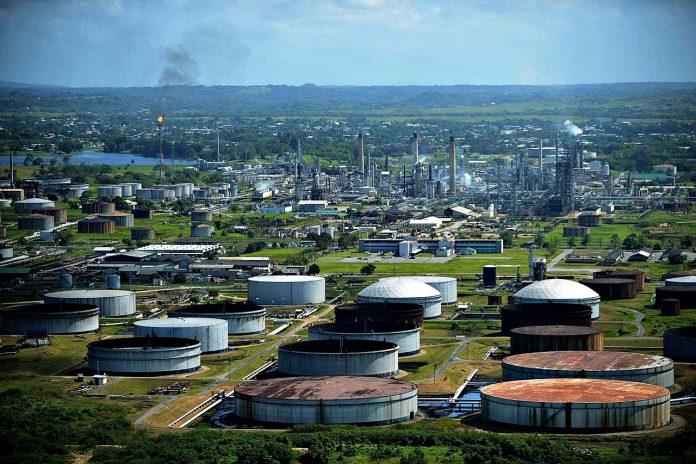
Oando Plc, a leading Nigerian energy company, has been shortlisted by the Trinidad and Tobago government as one of the three final contenders to take over operations of the country’s state-owned Pointe-a-Pierre refinery, previously operated by the defunct Petrotrin.

This is part of the country’s efforts to restart the refinery, which has been closed since 2018 due to heavy financial losses.

During a budget presentation on September 30, Trinidad and Tobago’s Finance Minister, Colm Imbert, announced that Oando was among the top three companies selected from an initial pool of 10 proposals. The other two companies shortlisted include the CRO Consortium, a group of three Trinidadian firms, and INCA Energy, an American company.

These contenders will now enter a formal selective Request for Proposals (RFP) process, aimed at determining which company will take over the refinery’s operations.

Refinery Evaluation Criteria

The bidding process for the refinery, managed by U.S.-based Scotia Capital, began in February 2024. Proposals were evaluated based on key criteria, which include the following:

  • Clear Restart Plan: Each bidder was required to provide a detailed plan and timeline for restarting the refinery, including an asset integrity assessment and utility requirements such as power, natural gas, and water.
  • Financing Plan: Bidders had to present a viable financing plan that covers working capital and includes assurances to safeguard Trinidad’s fuel security, particularly through agreements with the state oil company, Paria.
  • Crude Supply Management: A key aspect was the ability to collaborate with Heritage Petroleum, another state entity, on crude supply management, ensuring national energy security.
  • Transparency and Openness: The bidders were required to demonstrate transparency throughout the bidding process, ensuring open communication and smooth information-sharing with Trinidad and Tobago authorities.

The Pointe-a-Pierre refinery, built in 1917, has played a pivotal role in the Caribbean oil market, supplying petroleum products to the region. However, in recent years, it became a financial burden, prompting its closure in 2018.

The facility was losing up to $2 billion annually, and by the time of its closure, the accumulated losses had reached $15 billion. The Trinidadian government currently carries a public debt of $3 billion related to the refinery’s operations.

Similar to Nigeria, Trinidad and Tobago is an oil-producing nation but has had to rely on imported petroleum products for its energy needs. The reopening of the refinery could help reverse this trend, improving both fuel security and the country’s fiscal health.

Oando’s Adding to Recent Milestones

In addition to being shortlisted for the Trinidadian refinery project, Oando has recently achieved several significant milestones. The company has reached a market capitalization of N1 trillion, placing it among an exclusive group of Nigerian firms in the “Stocks Worth Over One Trillion” (SWOOTS) club. Other members of this prestigious group include Zenith Bank, SEPLAT, BUA Cement, and Dangote Cement.

This achievement follows a remarkable surge in Oando’s stock price, which rose by 207.6% in August 2024 alone, making it the best-performing stock that month. The company’s shares traded at a volume of 547 million, contributing to its market capitalization boost. As of September 3, 2024, Oando’s stock had climbed over 700% year-to-date.

This stock performance and recent growth have been driven in part by Oando’s strategic moves, including its $783 million acquisition of Nigerian Agip Oil Company (NAOC) in August 2024. This acquisition significantly increased Oando’s interest in various joint venture assets, giving the company control over 40 oil and gas fields, 24 of which are currently producing. The NAOC deal has enhanced Oando’s capacity and solidified its position as a key player in both the Nigerian and global energy markets.

Call for Nigerian Refinery Privatization

As Oando vies for the Trinidadian refinery, industry experts have pointed to this development as a model for Nigeria, which has long struggled with its own refinery issues. Despite being Africa’s largest oil producer, Nigeria has been unable to operate its state-owned refineries effectively.

Former president Olusegun Obasanjo’s decision to sell the refineries was reversed by his successor, Musa Yar’dua. Since then, billions of dollars have been spent on rehabilitating the country’s refineries, including the Port Harcourt and Warri refineries, but these facilities have consistently failed to restart operations.

Experts in the oil and gas sector have long advocated for the privatization of Nigeria’s refineries, arguing that government ownership has led to inefficiencies, mismanagement, and waste. These experts believe that privatizing the refineries, as Trinidad and Tobago is doing with its Pointe-a-Pierre refinery, would attract the necessary investment and technical expertise needed to make the facilities operational.

It is also believed that privatization would also eliminate the financial burden of continued rehabilitation efforts, which have shown little result over the years.

In contrast to the wastage associated with the rehabilitation of these refineries, the Dangote Refinery, which is privately owned, has been cited as a successful model of refinery operations in Nigeria, proving that private-sector-led initiatives can be more effective in addressing the country’s energy demands.