DD
MM
YYYY

PAGES

DD
MM
YYYY

spot_img

PAGES

Home Blog Page 307

Goldman Sachs Warns of Rising Global Risks from China’s Rare Earth Dominance as U.S. and Australia Strike Minerals Pact

0
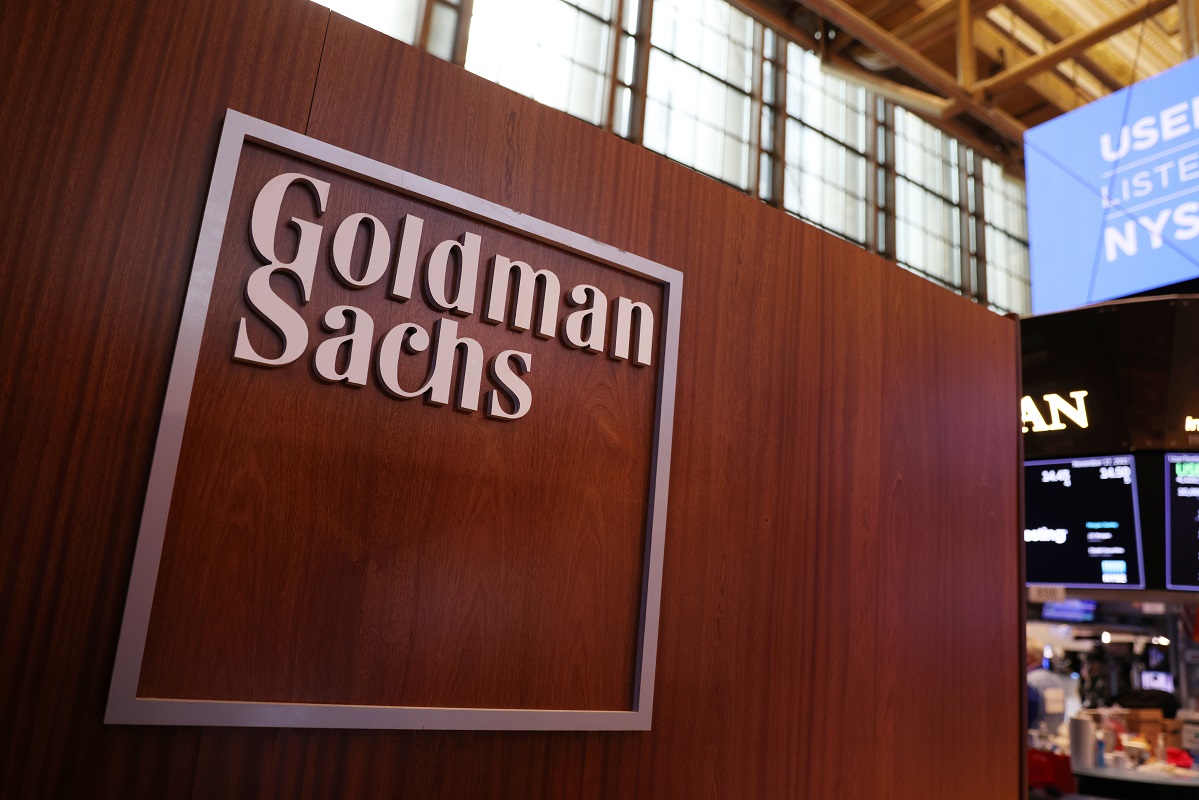
The logo for Goldman Sachs is seen on the trading floor at the New York Stock Exchange (NYSE) in New York City, New York, U.S., November 17, 2021. REUTERS/Andrew Kelly/Files

Goldman Sachs has warned that global supply chains for rare earths and other critical minerals are facing mounting risks as China tightens export controls and extends its dominance over key stages of mining, refining, and manufacturing.

The bank’s latest note came at the heels of growing challenges confronting nations and industries seeking to build independent supply chains in the face of what it called China’s entrenched leverage in the critical minerals market.

The caution comes after Beijing expanded its export curbs on October 9, adding five new rare earth elements to its restricted list and imposing tighter scrutiny on semiconductor-related users. The move, announced just weeks ahead of an expected summit between U.S. President Donald Trump and Chinese President Xi Jinping, reinforced fears that China could increasingly weaponize its control of strategic materials in response to escalating trade tensions.

China’s Supply Chain Leverage

Goldman Sachs said China now controls about 69% of global rare earth mining, 92% of refining capacity, and 98% of magnet manufacturing, giving it an unrivaled grip on the supply chains that power modern technologies. Rare earth elements (REEs), though produced in relatively small volumes, are essential for high-tech industries and strategic applications — from electric vehicle batteries and computer chips to artificial intelligence systems, advanced robotics, and defense equipment.

While the global rare earth market was valued at $6 billion last year — a fraction of the copper market, which is 33 times larger — Goldman warned that a 10% disruption in industries reliant on REEs could wipe out $150 billion in global economic output. Such a disruption, the bank noted, could also trigger inflationary pressures as shortages ripple through manufacturing, energy, and defense sectors.

Goldman Sachs identified samarium, graphite, lutetium, and terbium as particularly vulnerable to Chinese export restrictions. Samarium, used in heat-resistant samarium-cobalt magnets, plays a critical role in aerospace and defense systems. Lutetium and terbium, which are used in semiconductors, sensors, and lasers, are also at risk, with potential GDP losses if supplies are disrupted.

The bank further noted that light rare earths — such as cerium and lanthanum — could become future targets for export curbs, given China’s dominant role in both refining and mining. These elements are widely used in catalysts, glass polishing, and hybrid vehicle components.

While Western producers such as Lynas Rare Earths (LYC.AX) in Australia and Solvay in Europe could help ease shortages, Goldman said global reliance on China remains substantial. Even companies with domestic refining capacity still depend on Chinese feedstock or intermediate processing.

Barriers to Building Independent Supply Chains

Countries have accelerated efforts to develop independent rare earth and magnet supply chains, but Goldman Sachs highlighted deep structural and environmental barriers that make near-term independence unlikely.

The bank said heavy rare earth elements (HREEs), which include terbium, dysprosium, and lutetium, are especially scarce outside China and Myanmar. Known deposits elsewhere tend to be small, lower-grade, or radioactive, making them economically and environmentally challenging to develop. It typically takes eight to ten years to bring a new rare earth mine into production.

Refining capacity poses another hurdle. Goldman said building and optimizing a new refinery takes at least five years, requiring advanced expertise and specialized infrastructure to separate and purify elements with extremely similar chemical properties. Few countries have the necessary facilities or environmental tolerance to process these materials at scale.

Even as magnet manufacturing expands in the United States, Japan, and Germany, Goldman noted that production remains constrained by China’s control of key inputs such as samarium and neodymium.

Investment and Commodity Risks

Goldman Sachs recommended equities as a potential hedge against rare earth supply disruptions, highlighting Iluka Resources (ILU.AX), Lynas Rare Earths (LYC.AX), and MP Materials Corp (MP.N) as key players positioned to benefit from investment flows into alternative supply chains. The bank forecast a deficit in supplies of Neodymium-Praseodymium Oxide (NdPrO) — a compound crucial for high-strength permanent magnets used in electric vehicles, wind turbines, and smartphones.

The report also extended its caution beyond rare earths. Goldman Sachs warned that other commodities — including cobalt, oil, and natural gas — face rising risks of supply disruptions amid intensifying geopolitical tensions and growing resource nationalism. It cited recent developments in the Middle East and Africa, where instability has already affected exports of strategic materials essential for clean energy technologies.

U.S. and Australia Move to Counter China’s Grip

Amid growing concern about China’s dominance, President Donald Trump and Australian Prime Minister Anthony Albanese on Monday signed an agreement at the White House intended to boost supplies of rare earths and other critical minerals. The pact will see the U.S. and Australia jointly contribute $3 billion to a pipeline of projects worth $8.5 billion over the next six months, according to both governments.

As part of the agreement, the U.S. Department of Defense will invest in a gallium refinery in Western Australia capable of producing 100 tons per year. The U.S. currently imports roughly 21 tons of gallium, representing 100% of its domestic consumption, according to the U.S. Geological Survey. Gallium is used in microwave circuits, blue and violet LEDs, and other advanced electronics that are vital for defense and high-tech industries.

The deal reflects a concerted push by Washington and Canberra to counter China’s control of critical minerals markets — particularly after Beijing’s recent tightening of export controls. It also builds on previous U.S.-Australia cooperation under the Critical Minerals Partnership, which seeks to diversify sources of essential materials for defense, clean energy, and semiconductors.

China responded on Tuesday to the U.S.-Australia critical minerals agreement by calling on resource-rich countries to help maintain supply chain stability. Speaking in Beijing, Guo Jiakun, a spokesperson for China’s Ministry of Foreign Affairs, was asked about the deal, which has been widely viewed as an effort to counter Beijing’s dominance.

“The formation of global production and supply chains is the result of market and corporate choices,” Guo said, according to NBC. “Resource-rich nations with critical minerals should play a proactive role in safeguarding the security and stability of the industrial and supply chains, and ensure normal economic and trade cooperation,” he added.

While Guo did not directly criticize the U.S.-Australia agreement, the statement signaled Beijing’s intention to frame its dominance as market-driven and legitimate, even as Western nations increase efforts to reduce dependency on Chinese raw materials.
Coca-Cola Lifts Earnings Above Estimates but Admits Soft Global Demand

0

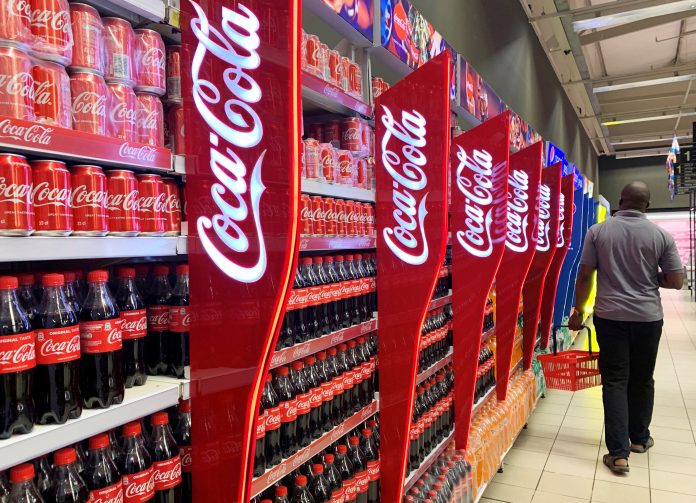
Coca-Cola posted third-quarter results that exceeded Wall Street expectations on both earnings and revenue, but the beverage giant acknowledged that demand for its drinks remains soft across several key markets, particularly among lower-income consumers in the United States and parts of Latin America.

The company reported adjusted earnings per share of 82 cents, topping the 78 cents analysts expected, according to estimates from LSEG. Adjusted revenue came in at $12.41 billion, slightly above the $12.39 billion anticipated.

For the quarter ended September, net income attributable to shareholders rose to $3.7 billion, or 86 cents per share, up from $2.85 billion, or 66 cents per share, a year earlier. Excluding restructuring charges and other items, earnings stood at the same 82 cents per share that outpaced projections.

Net sales rose 5% year over year to $12.46 billion, while organic revenue — which excludes currency fluctuations, acquisitions, and divestitures — increased 6%, reflecting modest underlying growth even as volumes remained largely stagnant in several regions.

Shares climbed nearly 3% in premarket trading, signaling investor optimism about the company’s ability to maintain profitability despite global economic pressures that continue to weigh on household spending.

Volume growth still fragile

Coca-Cola’s unit case volume, a key indicator of consumer demand that strips out the effects of pricing and currency, rose 1%, reversing a decline seen in the previous quarter. However, the rebound was uneven.

Volume in both North America and Latin America — traditionally strong revenue bases — was flat. Executives have previously acknowledged that lower-income consumers in the U.S. have been cutting back on beverage purchases as higher living costs erode disposable income. The company has responded by expanding its portfolio of “affordable options” to retain price-sensitive customers.

While volumes in some segments improved, others remained pressured. The company’s sparkling soft drinks, which include its flagship Coca-Cola brand, were flat, while its juice, value-added dairy, and plant-based beverages segment saw a 3% contraction in global volume.

In contrast, Coca-Cola’s water, sports, coffee, and tea category showed the most promising growth. Bottled water and sports drinks each rose 3%, and coffee and tea products recorded 2% volume growth. The performance underscores the shift in consumer preferences toward hydration and wellness-focused products, a trend that has been reshaping the global beverage industry.

Mixed results across regions

Coca-Cola’s flat performance in the Americas points to both consumer fatigue and the effect of tighter spending patterns in developing markets. Inflation has squeezed purchasing power across Latin America, while in the United States, discount retailers and private-label beverage brands continue to chip away at the company’s lower-end market.

Still, the 1% global volume increase marks a modest improvement from the prior quarter, when higher prices led to a dip in sales volumes. The company has relied heavily on pricing power in recent years to offset cost pressures from commodities and logistics, but with inflation moderating in several markets, analysts have warned that Coca-Cola’s ability to raise prices further may be limited.

Steady outlook amid macro headwinds

Coca-Cola reaffirmed its full-year forecast, projecting comparable earnings per share to rise 3% and organic revenue to increase between 5% and 6%. The company said it expects “a slight tailwind” to both revenue and earnings from currency fluctuations in 2026, but it will provide a detailed forecast for the coming year with its fourth-quarter results.

For now, management appears focused on balancing pricing discipline with innovation across its product lines. In addition to expanding its range of smaller, affordable packages, Coca-Cola has continued investing in digital marketing and localized distribution to reach cost-conscious consumers.

The company has also emphasized premiumization in select markets — pushing higher-margin drinks such as Coca-Cola Zero Sugar and flavored sparkling waters — to sustain revenue growth even where overall volumes remain flat.

Shifting consumption patterns

Coca-Cola’s report comes amid broader signs that the global beverage industry is navigating a transitional phase. Soft drink consumption has slowed in mature markets, while emerging economies face uneven recoveries from the pandemic and inflation-driven slowdowns.

Analysts say the company’s performance reflects this global rebalancing. The solid top-line figures underscore Coca-Cola’s resilience, but the muted volume gains highlight the challenges of sustaining growth when price increases are no longer the primary driver.

Even as Coca-Cola pushes toward healthier and diversified offerings, the flat demand for its core sparkling beverages denotes the enduring challenge of modernizing a century-old brand for shifting consumer preferences.

The near-term question for investors is whether Coca-Cola can reignite demand without eroding its margins.  Some analysts believe that while affordability campaigns can stabilize volumes, they risk squeezing profitability if not offset by efficiency gains.

Coca-Cola’s management has not announced any significant restructuring or cost-cutting measures this quarter, but the company’s past filings suggest ongoing efforts to streamline operations and leverage its global bottling partnerships for efficiency.

With currency volatility easing and input costs stabilizing, analysts expect Coca-Cola to deliver steady, if unspectacular, growth in the coming quarters. The company’s ability to maintain a strong pricing mix, they say, will determine whether the modest rebound in volume can translate into sustainable long-term momentum.

The Swadeshi Campaign and African Textile Heritage [GIN Therapy Part 1]

0

This article ‘weaves’ – literally – a narrative to present Ghana first, then India, then Nigeria in what I dub the “GIN (Ghana, India, Nigeria) Therapy.”

Highlights

  • Heritage Textiles in Ghana: Kente as a Model of Cultural and Economic Revival.
  • The Swadeshi Campaign in India:  Weaving Cultural Identity, Economic Growth, and Sustainability.
  • Nigeria Aso-oke Remains Unprotected: Indigenous Textiles, Craft, and Cultural Identity.

Heritage Textiles in Ghana: Kente as a Model of Cultural and Economic Revival

Across Africa, traditional textiles serve as powerful tools of cultural diplomacy and economic transformation. Ghana’s Kente cloth, recently inscribed by UNESCO on the Representative List of the Intangible Cultural Heritage of Humanity, exemplifies this transformation. Kente functions as a means of communication and identity construction, reflecting the social histories of Ghanaian communities and operating both as a cultural archive and an economic commodity. It supports livelihoods through craftsmanship, entrepreneurship, and cultural exports. Designers like Aristide Loua of Kente Gentleman have modernized these traditions, merging local weaving with contemporary fashion sensibilities. UNESCO’s broader recognition of African cultural practices – from Ghana’s Kente to Botswana’s Wosana rainmaking ritual – highlights how heritage crafts, when properly supported, can drive economic resilience, tourism, and cultural continuity.

India: The Swadeshi Campaign and Revitalization of Textile Heritage

The Indian textile and clothing industry, valued at USD 179 billion in 2024, remains a cornerstone of the nation’s economy, expanding at an annual rate of over 7 percent. Household consumption accounts for 58 percent of the domestic market and is growing at 8.19 percent, while non-household consumption makes up 21 percent, with a 6.79 percent annual growth rate — as reported in the Times of India. With supportive policies and the newly introduced Swadeshi Campaign, the sector is projected to grow at a compound annual growth rate (CAGR) of 9–10 percent, potentially reaching USD 250 billion by 2030. Reforms in the Goods and Services Tax (GST) framework are expected to enhance consumption, bolstering both domestic and institutional markets. The Ministry of Textiles launched the Swadeshi Campaign, a national initiative spanning six to nine months, promoting domestic consumption of handloom, handicrafts, and indigenous textile products while repositioning Indian textiles as symbols of national pride and cultural continuity, especially among younger generations — according to the Times of India. The campaign’s goals include:

  • Stimulating domestic demand for Indian-made textiles.
  • Empowering weavers, artisans, and MSMEs within the textile ecosystem.
  • Aligning with initiatives such as the Production Linked Incentive (PLI) Scheme for TextilesPM MITRA Parks, and One District One Product (ODOP) (Times of India, 2025).
  • Encouraging institutional procurement of Indian fabrics for uniforms, décor, and furnishings across ministries, PSUs, and educational institutions.

These efforts are supported by exhibitions, cultural festivals, and digital storytelling under the slogan:

“Swadeshi kapda desh ki shaan — yahi hai Bharat ki pehchaan.” (Swadeshi fabric is the pride of the nation — this is India’s identity.) (Times of India, 2025)

Cotton, central to India’s textile value chain, lags in productivity compared to global peers. The government’s Mission for Cotton Productivity, introduced in the FY26 Budget, promotes higher yields, sustainability, and extra-long staple cotton varieties. This aligns with India’s 5F visionFarm to Fibre to Factory to Fashion to Foreign – connecting farmers, manufacturers, and exporters.

Nigeria Aso-oke Remains Unprotected: Indigenous Textiles and Cultural Identity Nigeria boasts a rich textile heritage, with fabrics such as Akwete, Ukara, Aso-Oke, and Adire representing centuries of artistry, symbolism, and community life. These textiles are continuously enriched through creativity and innovation, passed down via families, apprenticeships, and formal education. Learning also occurs at museums, exhibitions, festivals, and workshops. Both men and women participate actively — women typically weave and produce yarn, while men build looms and tools. Chief weavers oversee quality standards, mediate disputes, and establish trade networks. These textiles serve as vehicles of identity and social communication, conveying status, history, and belonging. This mirrors Ghana’s Kente, where craftsmanship embodies cultural, social, and communicative meaning.

Closing Thoughts

In this first part of my “GIN (Ghana, India, Nigeria) Therapy” Chronicles — textiles have been explored — showcasing opportunities and challenges — From Ghana’s Kente to India’s Swadeshi Campaign and Nigeria’s indigenous textiles, heritage fabrics operate as symbols of identity, innovation, and economic resilience. The revival of traditional textiles demonstrates a global trend — aligning cultural preservation with modern economic development. However, while Kente has now secured Geographical Indication (GI) status, neighbouring Nigeria still leaves its textiles (Aso-oke, Adire, Akwete etc.) unprotected and largely exposed. As for India, the Swadeshi Campaign offers a blueprint for inclusive, sustainable growth, while African textile heritage exemplifies how culture-driven industries can generate employment, entrepreneurship, and global influence. Together, these examples highlight the potential of heritage textiles to weave a future where culture, commerce, and sustainability coexist.

Ghana has officially obtained Geographical Indication (GI) status for Kente Cloth, securing its recognition and protection as an authentic Ghanaian heritage. This designation ensures that only Kente woven in Ghana can be labelled and sold as ‘Kente.’ In contrast, while Aso-oke – a handwoven textile deeply rooted in Yoruba culture – remains a symbol of artistry and tradition, it lacks formal protection under intellectual property (IP) laws such as copyright or patents. This absence of legal safeguarding has sparked growing concerns over cultural appropriation and commercial misuse of Aso-oke by foreign entities.

Top Crypto Gainers: BlockDAG’s $430M+ Presale Shocks Market While Monero, BNB & Sui Aim for Growth

0

The crypto market has shown signs of life again, with a few standout projects pulling ahead while others stay flat. These top crypto gainers are getting attention for solid reasons: technological strength, credible teams, and powerful community support.

What’s interesting is how each of them comes from a completely different angle: one from privacy, another from exchange utility, one from next-gen scaling, and one from new-age ecosystem growth. Together, they reflect what’s exciting about crypto right now, innovation that actually performs.

In this roundup, we look at four projects that have become the talk of the season: BlockDAG, Monero, Binance Coin, and Sui. Each one represents a different story of growth, resilience, and vision. And while the market has its share of uncertainty, these names continue to pull in buyer curiosity and build real use cases. Let’s dive into why they’re being listed among the top crypto gainers of the week.

1. BlockDAG: The $430M+ Presale Powerhouse Redefining Performance

BlockDAG has been the headline project this month for all the right reasons. With over $430 million raised in its presale and more than 27 billion BDAG coins sold, it’s showing market confidence that few early-stage projects can match. The presale is now in its 31st batch, offering a final chance to access the coin at $0.0015 special price, ahead of its planned launch price of $0.05 once the presale ends. That price gap alone has drawn attention from those watching for high-potential early-entry projects.

The strength of BlockDAG lies in its hybrid technology. It combines Proof-of-Work security, the same system used by Bitcoin, with a Directed Acyclic Graph (DAG) structure that allows for multiple transactions to be processed simultaneously. This design lets the network handle between 2,000 and 15,000 transactions per second, solving the usual trade-off between speed and decentralization. Its Awakening Testnet is already live and EVM-compatible, meaning developers can build right away.

Led by CEO Antony Turner and advised by distributed computing pioneer Dr. Maurice Herlihy, BlockDAG has built a reputation for transparency and credibility. Security audits from CertiK and Halborn further reinforce its reliability.

Add to that a new partnership with BWT Alpine Formula 1® Team, and you have a project that’s merging innovation with strong global visibility. For many, it’s the standout among the top crypto gainers, combining real technology with measurable growth.

2. Monero: Privacy’s Strong Comeback

Monero (XMR) has long been known for its privacy-first design, and it’s making headlines again thanks to recent upgrades. Trading around $308.62, Monero has moved between a low of $284.43 and a high of $314.24 this week, showing strong recovery and renewed buying pressure. The release of its “Fluorine Fermi” update has been a key driver, improving peer-to-peer security and helping protect against network surveillance.

This update directly strengthens what Monero stands for: true transactional privacy. With roughly 14.7% of nodes previously showing suspicious behavior, these fixes have been welcomed by its global user base. Analysts expect resistance near $320 and possible upward movement toward $350 if the market holds steady. While privacy coins face ongoing regulatory questions, Monero’s commitment to security and decentralization keeps it in conversations about the top crypto gainers of October.

3. Binance Coin: Market Resilience Amid Volatility

Binance Coin (BNB) continues to show resilience despite volatile market moves. Currently priced near $1,099.53, it has traded as high as $1,129.59 and as low as $1,049.42 in recent sessions. Earlier this month, BNB briefly hit a record high of $1,370 before a quick correction. That kind of movement highlights both its strength and the market’s sensitivity to regulatory and macroeconomic shifts.

BNB’s performance is tightly linked to the Binance ecosystem, which includes the BNB Chain and the world’s largest crypto exchange. Despite global scrutiny of exchange compliance, BNB’s core use cases, transaction fee reductions, staking, and network utility keep it relevant.

The token’s price stability at four-figure levels suggests solid community backing. As one of the top crypto gainers, BNB continues to demonstrate that large-cap tokens can still deliver movement backed by real-world utility rather than speculation alone.

4. Sui: Growth and Testing Moments

Sui (SUI) is another project drawing attention for both its growth metrics and its challenges. Currently trading around $2.49, it has moved within a daily range of $2.36 to $2.50. The Sui network recently faced a $3 million exploit affecting Typus Finance, but the ecosystem has continued to expand despite that setback. Over the last year, Sui’s total value locked (TVL) grew by more than 1,200%, a sign of strong developer and user activity.

Analysts note that Sui is competing head-to-head with larger ecosystems on developer engagement. It’s even surpassed some established networks like BNB in growth metrics. Resistance levels sit near $3.33, with key support around $2.55.

The team’s consistent updates and new integrations show that the project is actively building through market challenges. Its community believes the fundamentals are intact, making Sui one of the smaller yet determined contenders among the top crypto gainers right now.

Summing Up

Each of these projects, BlockDAG, Monero, Binance Coin, and Sui, reflects a different growth path. From privacy and performance to utility and developer momentum, they show that innovation still drives crypto’s momentum even during uncertain markets. BlockDAG stands out for its hybrid design and massive presale success, Monero for its continued privacy leadership, Binance Coin for stability in scale, and Sui for proving that new ecosystems can grow fast despite setbacks.

These top crypto gainers highlight a key point for the broader market: investor interest follows tangible progress. Whether it’s through speed, security, or usability, each of these projects brings something real to the table. Their next few months will show whether they can sustain that growth, but for now, they’re the names keeping crypto conversations alive.

BlockDAG’s $430M Presale Ignites Frenzy as Cardano’s Hydra Upgrade & NEAR’s AI Tech Struggle to Keep Up

0

As 2025 unfolds, the search for the next big crypto intensifies. Cardano (ADA), NEAR Protocol (NEAR), and newcomer BlockDAG are capturing the spotlight, each offering a unique blend of scalability, technology, and growth potential. Cardano is seeing signs of a rebound with major upgrades underway, NEAR is advancing through AI and cross-chain integrations, and BlockDAG (BDAG) is turning presale success into measurable progress.

Among these three, BlockDAG’s focused execution and $430 million presale achievements are making it one of the most talked-about projects of 2025. As the market shifts from hype-driven speculation toward practical delivery, investors are beginning to prioritize utility, community, and performance. Here’s a closer look at how each project stands in the race to define the next big crypto.

Cardano: Building Momentum with Hydra & Mithril

Cardano (ADA) is trading near $0.245 and has recently found strong double-bottom support, hinting at a potential rally toward $1.30. Its Hydra and Mithril upgrades are central to this optimism, designed to enhance scalability and enable faster off-chain processing. These updates aim to boost efficiency and position Cardano as a sustainable blockchain solution capable of handling real-world demand.

However, Cardano’s cautious and research-first approach has sparked mixed reactions. While its governance model and academic foundation inspire trust, critics argue the platform’s slow rollout could limit its short-term competitiveness. Despite these challenges, ADA’s community-driven structure and clear upgrade path continue to make it a long-term contender.

For Cardano, the next phase will be defined by how well its upgrades translate into active adoption. If Hydra delivers as promised, ADA could reassert itself as a top player and a leading candidate for the next big crypto.

NEAR: Technical Progress Meets Market Hesitation

NEAR Protocol (NEAR) is steadily advancing around the $1.20 mark, supported by the rollout of AI tooling and enhanced cross-chain connectivity. These developments have reinforced NEAR’s reputation for technical innovation, but market enthusiasm has yet to fully match its engineering achievements.

While the project’s roadmap shows promise, NEAR faces an uphill battle in building the kind of grassroots momentum seen in larger ecosystems. Unlike Cardano’s established following or BlockDAG’s record-breaking presale engagement, NEAR’s growth has been more restrained.

Still, its focus on AI integration and cross-chain scalability sets a strong foundation for long-term expansion. To compete effectively in 2025, NEAR will need to balance its technical leadership with stronger community engagement and consistent ecosystem expansion. With the right execution, NEAR could evolve from a quiet performer to one of the year’s breakout successes.

BlockDAG: Delivering on Vision Through Action

BlockDAG has become one of the year’s most promising stories, showing how precise execution can transform early promise into measurable success. The project’s presale has reached $430 million, selling over 27 billion coins. Its current Batch 31 price stands at $0.0304, while a limited entry remains available at $0.0015 via the “TGE” code, a remarkable value considering the 2,940% ROI from its first batch.

The project’s roadmap outlines clear and achievable milestones: finalizing its mainnet, completing miner shipments across the X1 to X100 series, reaching the $600 million funding target, and securing multiple Tier-1 exchange listings. The Awakening Testnet is already operational, equipped with EVM compatibility, real-time explorer functionality, and Stratum mining integration, all signs of a network ready for deployment.

Under CEO Antony Turner’s leadership, BlockDAG continues to strengthen investor confidence through verified audits, multi-sig treasury control, and MiCA-compliant documentation. Its approach prioritizes transparency and technical readiness over speculation, making it one of the most credible contenders for the next big crypto title in 2025.

Final Thoughts

The competition between Cardano, NEAR, and BlockDAG illustrates the growing divide between speculative tokens and execution-driven blockchains. Cardano’s upgrades are slowly unlocking its potential, NEAR’s AI-driven development highlights innovation, and BlockDAG’s hands-on delivery proves results matter more than hype.

Cardano and NEAR each bring value through persistence and technical advancement, yet BlockDAG’s momentum, from its $430 million presale to its live testnet, demonstrates measurable progress toward full-scale adoption. With tangible steps, active delivery, and verified compliance, BlockDAG is setting a benchmark for how modern blockchain projects should grow.

For investors seeking the next big crypto, these three projects each offer opportunity, but BlockDAG’s transparent roadmap, technological execution, and proven community backing position it at the forefront of 2025’s blockchain evolution.

Presale: https://purchase.blockdag.network

Website: https://blockdag.network

Telegram: https://t.me/blockDAGnetworkOfficial

Discord: https://discord.gg/Q7BxghMVyu