DD
MM
YYYY

PAGES

DD
MM
YYYY

spot_img

PAGES

Home Blog Page 3070

Protests and The Youth of Nigeria

0

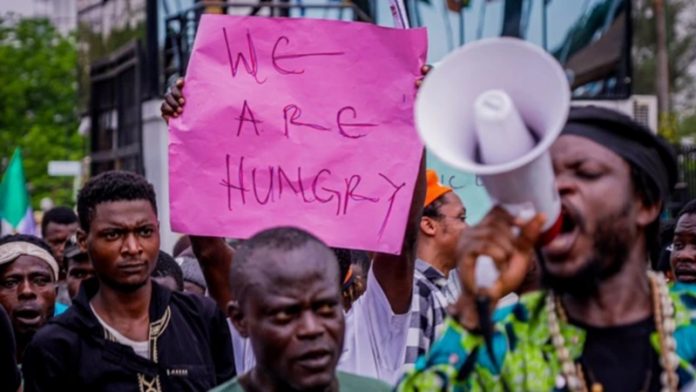
The phrase “Kegs of Gun Powder” metaphorically represents the potential energy and power of youth movements, particularly in the context of protests. In Nigeria, the youth have been a significant force in advocating for change and reform. The metaphor suggests that the youth, with their numbers, energy, and potential for impact, are a potent force that can lead to explosive change when ignited by collective action and common goals.

The youth in Nigeria have historically been at the forefront of major social movements, seeking to address various issues such as police brutality, corruption, and the need for good governance. The #EndSARS protests in 2020 were a notable example, where young Nigerians mobilized en masse against the Special Anti-Robbery Squad (SARS) due to allegations of human rights abuses. The protests demonstrated the power of youth-led movements and the potential for societal transformation.

As Nigeria faces a myriad of challenges, including economic hardship, insecurity, and inadequate infrastructure, the youth continue to play a crucial role in the country’s socio-political landscape. The planned peaceful protests from August 1 to 10, 2024, reflect the youth’s defiance and their quest for an equitable society and effective leadership. These movements underscore the urgency with which Nigerian youth are demanding action from the government to address pressing issues that affect their lives and future.

Here are some notable youth-led movements that have made significant impacts in Nigeria

Not Too Young to Run: Aimed at reducing the age limit for running for elected office, this movement successfully influenced the passing of a bill that was signed into law in 2018, opening the political arena to younger candidates.

Bring Back Our Girls: Following the abduction of 276 schoolgirls from Chibok in 2014, this campaign mobilized global awareness and called for the return of the kidnapped girls, highlighting the issue of terrorism and its impact on education.

Occupy Nigeria: In 2012, Nigerian youth organized mass protests against the removal of fuel subsidies, which they saw as essential for the economic stability of the average Nigerian. The movement brought together citizens from various socio-economic backgrounds to demand government accountability and transparency.

These movements reflect the dynamism and resilience of Nigerian youth, demonstrating their commitment to advocating for policy changes, social justice, and democratic governance. As Nigeria continues to navigate complex challenges, the active participation of its youth remains crucial for driving sustainable change and development.

The metaphor of “Kegs of Gun Powder” is a powerful reminder of the transformative potential that lies within the youth of Nigeria. It is a call to recognize their voices, harness their energy, and engage them in meaningful dialogue and action towards building a better society. The youth are not just the future; they are the present, and their active participation in the democratic process is essential for the nation’s progress.

The youth of Nigeria, akin to “Kegs of Gun Powder,” represent a dynamic and vital force in the nation’s journey towards reform and development. Their continued activism and engagement are pivotal in shaping a Nigeria that reflects their aspirations and values. It is incumbent upon all stakeholders, including the government, civil society, and the international community, to support and empower the youth as they strive to create positive change in their country.
Nigeria’s House of Reps Committee Calls for Halt on NNPCL’s Planned $2 Billion Crude Oil-Backed Loan Amidst Ongoing Investigation

0

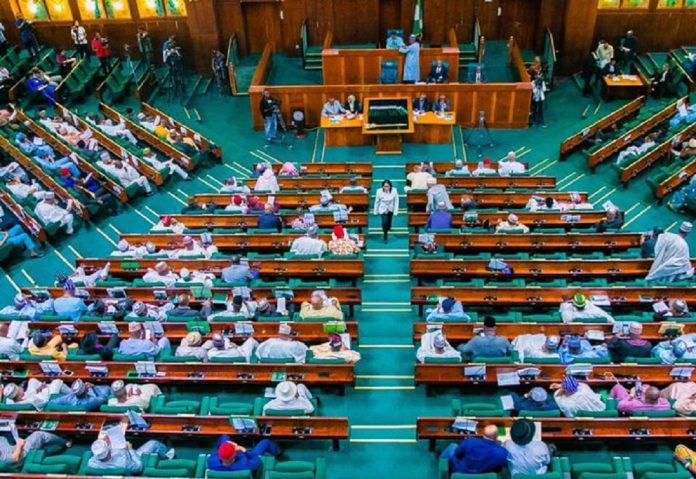
In a decisive intervention, the House of Representatives Special Joint Committee investigating the factors undermining Nigeria’s petroleum sector has directed the Nigerian National Petroleum Company Limited (NNPCL) to halt its plans to secure a new $2 billion loan backed by future crude oil revenues.

This move comes amid mounting concerns over the nation’s deepening revenue crisis, exacerbated by both low oil production and the extensive use of crude oil as collateral for loans.

The committee, chaired by Ikenga Ugochinyere, representing Ideato South/Ideato North Federal Constituency in Imo State, initiated its probe into potentially illicit dealings within the petroleum sector, with a specific focus on the financial maneuvers of the NNPCL. The investigation has brought to light troubling practices, including the mortgaging of future crude oil outputs to secure loans, a strategy that critics argue is shortsighted and detrimental to the country’s long-term economic health.

The NNPCL’s plan to borrow an additional $2 billion using crude oil as collateral is the latest in a series of financial strategies that have raised red flags among lawmakers and economic analysts. According to the committee, the NNPCL, led by Group Chief Executive Officer Mele Kyari, is in discussions with international creditors to arrange this oil-backed credit facility.

The company’s financial woes, including a $6 billion debt owed to international oil traders, have been compounded by the recent removal of fuel subsidies and the resultant economic pressures.

In a statement released by Ugochinyere on Wednesday, the committee expressed deep concern over the NNPCL’s proposed loan, highlighting the potential negative consequences for Nigeria’s economic stability and resource management.

“We are calling on NNPCL to halt further plans to borrow more loans with crude oil, as the move will sabotage the President’s deal for domestic crude supply,” the statement read.

The statement noted that any further mortgaging of crude oil revenues could undermine the ongoing forensic investigation and worsen the nation’s financial crisis.

“The citizens were excited on the recent news of President Tinubu’s intervention for crude supply to local refineries in naira,” Ugochinyere stated. “We have received intel of plans to mortgage future crude revenue and oil for another loan at a time the nation is struggling. This is preemptive of the committee’s work, and we want to announce the halt of this fresh move and for the state oil company to brief the parliament. The revenue being mortgaged is the sovereign wealth of the people, and the parliament has a duty as the watchdog of the commonwealth to step in.”

The committee’s directive is not just a caution against incurring new debt but also a critical commentary on the broader implications of Nigeria’s reliance on crude oil-backed loans. The practice of leveraging future oil outputs to secure loans has been identified as a significant factor in the country’s deepening revenue crisis. With oil production levels lower than expected, the revenue generated from crude oil exports has been insufficient to meet the country’s financial obligations, including the servicing of these loans.

This issue is compounded by the global fluctuations in oil prices and Nigeria’s ongoing challenges in maintaining stable oil production levels. The country’s oil output has been hampered by several factors, including infrastructure issues, security challenges in oil-producing regions, and oil theft. As a result, Nigeria has struggled to meet its production quotas, further diminishing its export revenues.

Compounding the situation is the fact that a significant portion of the country’s crude oil production is tied up in these loan agreements, reducing the volume available for sale on the international market. This arrangement not only limits Nigeria’s immediate revenue generation capabilities but also jeopardizes future financial stability, as more of the country’s oil revenue is diverted to servicing debt rather than being reinvested in critical areas such as infrastructure, healthcare, and education.

The committee’s concerns are heightened by the recent $3.3 billion loan secured by the NNPCL from the African Export-Import Bank (Afrexim Bank) in August 2023. This loan, intended to shore up Nigeria’s foreign exchange reserves and address liquidity challenges, is to be repaid with crude oil priced at $65 per barrel.

The terms of this agreement have raised questions about the sustainability of using crude oil as collateral, particularly given the volatility of global oil prices and the uncertainties surrounding Nigeria’s production capacity.

Mele Kyari has defended the NNPCL’s strategy, arguing that such loans are necessary to address immediate fiscal challenges and support the country’s economic stability. However, the committee’s investigation aims to scrutinize these justifications and assess whether the benefits of these loans outweigh the long-term risks to Nigeria’s economic sovereignty and resource management.

The House of Representatives Special Joint Committee’s directive also reflects broader concerns about the need for greater transparency and accountability in the management of Nigeria’s natural resources. Ugochinyere emphasized the parliament’s role as the “watchdog of the commonwealth,” tasked with protecting the interests of the Nigerian people and ensuring that the country’s resources are managed responsibly and sustainably.

The committee stressed that such loans could undermine efforts to strengthen domestic refinery capacities and reduce Nigeria’s dependency on imported petroleum products. The push for domestic refineries to be supplied with crude oil priced in naira is seen as a crucial step towards achieving energy self-sufficiency and stabilizing the local economy.

World Bank Restructures $350 Million Loan for Nigeria’s Electrification Project, Extends Deadline to 2024

0

In a development aimed at bolstering Nigeria’s energy infrastructure, the World Bank has restructured a $350 million loan to the country. This restructuring is specifically focused on ensuring the completion of seven critical power plants within educational institutions, a key component of the Nigeria Electrification Project (NEP).

The project, which has faced various delays, has now been granted an extension, with the new deadline set for December 31, 2024. The development comes when Nigerian universities are grappling with high electricity bills, due to the newly-introduced high tariff for Band A consumers.

The Nigeria Electrification Project (NEP) was initially approved on June 27, 2018, with a broad mandate to increase access to electricity services for households, public institutions, and underserved micro, small, and medium enterprises (MSMEs). The project’s overarching goal is to address Nigeria’s significant energy access gap, which has been a major bottleneck for economic growth and development.

Project Challenges and Restructuring

Despite significant progress, the NEP has encountered several challenges that have delayed the completion of the seven power plants, which are integral to the project’s success. These challenges include geotechnical issues, community disturbances, and disruptions caused by the COVID-19 pandemic.

The restructuring document states: “To ensure the delivery of all 7 power plants as per the original scope of work, including unforeseen but necessary additional tasks, the project closing date would need to be extended by an additional 5 months to December 31, 2024.”

The new timeline anticipates the completion of all seven plants by the end of the third quarter of 2024, with specific focus areas including Maiduguri and Calabar, where sub-projects are expected to be finalized by the end of September 2024.

The final quarter of the year will focus on site handover and the implementation of a sustainability plan, during which Engineering, Procurement, and Construction (EPC) contractors are expected to provide performance guarantees to cover operational and maintenance periods.

Project Overview and Achievements

The NEP is structured around several key components, including the development of private-sector mini-grids, the expansion of standalone solar systems for vulnerable households, and the provision of sustainable power to public universities and associated teaching hospitals. As of June 2024, the project had successfully connected nearly 59,000 households and MSMEs through mini-grid grants and approximately 1.09 million households and MSMEs via standalone solar systems.

However, Component 3 of the project, which involves the Energizing Education Program Phase II (EEP II), has lagged, with completion levels ranging from 35% to 80% across various sites. This component aims to provide reliable electricity to universities and teaching hospitals, which are critical for the nation’s educational and healthcare infrastructure.

The total commitment for the NEP is $350 million, with $265.32 million already disbursed and an undisbursed balance of $84.68 million remaining. This funding is crucial for addressing the existing challenges and completing the planned infrastructure.

Progress and Challenges at Each Power Plant

  1. University of Abuja: The power plant project here is 65% completed. Challenges include rocky ground requiring alternate anchorage methods, uneven surfaces causing inter-row shading, and deteriorated access roads. Additional work involves drilling and casting footings for anchorage, building retaining walls, and constructing a 1.4 km access road.
  2. Michael Okpara University of Agriculture, Umudike: This project is 85% completed, but has faced issues with the materials used for the transmission line, which did not comply with regulatory standards. The necessary work includes replacing 12.6 km of aluminum conductor with an aluminum conductor steel-reinforced line.
  3. University of Calabar & Teaching Hospital: With 65% completion, this site has challenges such as a collapsed drainage network causing flooding, debris collection areas from floodwaters, and unsuitable soil for pile-driving. Additional work includes constructing new drainage channels, reclaiming flood-affected areas, and casting footings for anchorage.
  4. University of Maiduguri & Teaching Hospital: This project is at 79% completion. Challenges include a refuse dump site, a military-grade trench, unsuitable soil for civil structures, and the takeover of an 11 kV line. Additional work involves reclaiming and backfilling the refuse dump area, backfilling the military trench, and constructing a double-circuit transmission line.
  5. Federal University of Agriculture, Abeokuta: With 90% completion, challenges include the removal of basement igneous rock formation, an extended drainage discharge point, and right-of-way encroachment. Additional work requires extending the drainage channel and underground cabling of the transmission line.
  6. Federal University, Gashua: The downstream distribution network is fully completed. However, rapid university expansion and increased electricity demand necessitate constructing an additional 8.7 km of the 11 kV distribution network.
  7. Nigeria Defence Academy, Kaduna: At only 15% completion for the upstream distribution network, challenges include a vandalized transmission line and the need for additional single-circuit infrastructure. The project requires replacing the vandalized 33 kV double circuit and constructing a 16 km 33 kV single circuit transmission line.

Impact on Nigeria’s Energy Infrastructure

The restructuring and extension of the NEP are crucial steps towards overcoming these challenges and ensuring the project’s successful completion. The completion of these power plants is expected to significantly enhance the reliability and availability of electricity in the respective educational institutions, supporting the academic and healthcare needs of thousands of students and staff.

Moreover, the successful implementation of the NEP will contribute to Nigeria’s broader energy infrastructure goals, including increasing access to electricity for underserved populations and supporting economic growth through improved energy services. The project’s focus on sustainable energy solutions, such as mini-grids and standalone solar systems, aligns with global efforts to transition towards cleaner and more resilient energy systems.

UK Regulator Proposes a New Approach to Crypto Assets As the DTX Exchange Presale Heats Up With 100x the Potential Returns

0

The Law Commission of England and Wales recently proposed creating a new category for cryptocurrencies as personal property. Its goal is to establish legal protection and recognition for these digital assets, which have become increasingly significant in today’s economy.

Simultaneously, much talk has been about the DTX Exchange (DTX) presale, which has already soared by 100%. Some analysts believe this Stage 2 presale star could be 100x more profitable than any other established cryptocurrency, such as Chainlink (LINK), Optimism (OP), NEAR Protocol (NEAR), or Kaspa (KAS) in 2024.

DTX Exchange (DTX): The Rising Crypto Star

As the legal landscape changes, traders become more interested in the DTX Exchange (DTX) presale. This is because of how well it has been doing and the huge returns it could bring. DTX Exchange has raised over $1.1M so far and is projected to reach $2M before August 31, 2024. Even major influencers like CryptoDexWorld have taken note of it.

This platform could dominate the billion-dollar online trading market as it brings elements from both CEX and DEX into a single hybrid model. Up to 120K asset classes can be accessed through it, such as gold, bonds or cryptocurrencies, while remaining completely private thanks to no sign-up KYC checks.

The centerpiece of DTX Exchange is the DTX utility token. Holding it will give you access to advanced analytics tools and reduced trading fees. Additionally, buying $100 of DTX during its presale will be added to a $1M giveaway. Ten people will walk away with $100K each in this giveaway – a great incentive to buy this crypto.

One DTX costs $0.04 in Stage 2 at the moment. Those who bought it early on are enjoying a 100% ROI. Moreover, this price will see another 50% jump to $0.06 once Stage 3 begins. Market analysts even forecast a jump to $1 for DTX once it hits Tier-1 exchanges in Q3 of 2024 – making it the best crypto to watch this summer.

Chainlink (LINK): New ATH Incoming

Chainlink (LINK) has been riding a bullish wave recently. Over the past year alone, the Chainlink price surged nearly 75%, as per CoinMarketCap data. Major analyst AMCrypto also remains bullish. According to his X post, LINK consolidation is still ongoing and a potential breakout above $21 may come – triggering a rally to a new ATH.

The technical analysis of the Chainlink crypto supports this statement. For instance, LINK trades above its 100 and 200-day EMAs while having four technical indicators in the buy zone. As a result, other market analysts have also made a bullish Chainlink price prediction. They forecast a rise to $17 before the end of Q3 2024 for LINK.

Optimism (OP): Continues Generating Revenue

Optimism (OP) is another crypto making headlines in the crypto market. Recently, Ryan Wyatt of the Optimism collective revealed that it has generated 14.3K ETH in revenue from the sequencer fees that OP Stack chains. Not only that, there are now 26 OP Stack chains in the Optimism Superchain sharing revenue and more are coming.

This promising Optimism news could trigger a rally for this crypto. Speaking of which, the OP value jumped around 1% in the past 12 months. Additionally, seven technical indicators are currently showing green signals for OP. Thus, experts predict a potential surge to $3 within Q3 of 2024 for Optimism.

NEAR Protocol (NEAR): May See an Upward Move

NEAR Protocol (NEAR) has been showing bullish signs. According to CoinMarketCap data, the NEAR Protocol price jumped over 270% on the YTD chart. Crypto analyst Market Watcher also made a bullish statement for this crypto. In his X post, he claims that NEAR should go up from its current level to the $7 level.

This NEAR Protocol price prediction has some merit from a technical analysis perspective. For instance, NEAR trades above its 50 and 100-day EMAs while having seven green technical indicators. As a result, other experts also foresee the NEAR Protocol crypto trading at $6.80 before the end of Q3 2024.

Kaspa (KAS): New ATH Achieved

Another crypto that has been making waves in the market is Kaspa (KAS). CoinMarketCap data shows that the Kaspa price increased nearly 450% in the past year alone. Recently, KAS even hit a new ATH—$0.20. Crypto analyst Max claims KAS is set to get a Tier 1 listing and may soar like Solana did last cycle.

The technical analysis for the Kaspa coin also shows some bullish signs. Notably, KAS is trading above its 50 and 100-day EMAs while having 26 green technical indicators. Due to all these reasons, market analysts predict a surge to $0.28 within Q3 of 2024 in their Kaspa price prediction.

Will DTX Exchange Outshine Chainlink, Optimism, NEAR Protocol and Kaspa?

DTX Exchange is quickly picking up steam with the changing crypto regulatory landscape. This rookie has some advantages over Chainlink, Optimism, NEAR Protocol and Kaspa. For instance, DTX has connections to many flourishing trillion-dollar financial markets like the $133T bonds market as well as a lower market cap than its peers.

To clarify, this rookie will need far fewer new funds for its price to surge while remaining more stable in the long term. Sign up for the DTX Exchange presale to buy this game-changing coin.

Visit DTX Presale

Read Whitepaper

Join the DTX Community

MATIC and Bitcoin Cash (BCH) Holders Have Been Doubling Down On This New Altcoin Set For 200x Gains

0

It is always important for investors to keep up with the latest trends in the cryptocurrency markets which move quickly and can be a roller coaster ride. Holders of Polygon (MATIC) and Bitcoin Cash have been rotating profits recently into a new coin, Rollblock ($RBLK), currently in pre-sale and set to revolutionize the crypto gambling space. Find out why experts are tipping Rollblock for 200X gains in 2024!

Polygon (MATIC) Falls Out Of Crypto Top 20

Polygon (MATIC) holders have watched their portfolios shrink by nearly 6% over the last month, as Polygon’s price has remained in its continued downtrend. Polygon’s market cap has now fallen to just over $5 billion, meaning that Polygon has fallen out of the crypto top 20 coins.

Despite over 1.8 million new Polygon users being detected using on-chain metrics over the last month, Polygon’s price is still facing huge selling and the 100-day moving average in the low $0.60s is bound to present a challenge in the short term.

Bitcoin Cash (BCH) Rallies Above $450

Bitcoin Cash (BCH) has had a bullish month and surprised the market with a show of strength, pumping over 20% over the last 30 days to hit above $450. Bitcoin Cash has since corrected as sellers took the opportunity to take some profit at these levels.

Concerns over the distribution of Mount Gox bankruptcy coins seem to have come to nothing, and Bitcoin Cash traders are turning decidedly bullish here. The Bitcoin Cash uptrend should continue and support lies just below at the 100-day moving average, currently at $426.1. This should act as a springboard to launch Bitcoin Cash back to the April highs above $700 in due course.

Rollblock (RBLK) Olympic Giveaways Entice Investors

Rollblock ($RBLK) has recently seen a huge influx of new investors as over 7000 buyers have now flocked to its pre-sale offering. The stage four coins are currently selling out fast and the RBLK price has recently increased to make yet another new high this month.

Rollblock brings the best of web3 Innovation to the $450 billion online gambling industry. By using the Ethereum blockchain to encrypt and inscribe all financial transactions, Rollblock can vouch for the sanctity of all transactions and remove the risk of that fixing from the platform. Entirely crypto native and so free of invasive KYC checks, new users can sign up by connecting a crypto wallet and depositing major cryptocurrencies such as Bitcoin and Tether USDT.

Over 150 AI-powered games, from poker to slot machines, are on the platform. In-game payouts are made using the native RBLK token. This token is set to explode in price thanks to an innovative revenue share scheme that will see the casino buy back and burn potentially millions of dollars of tokens each week.

This will support price and reinvest in the Rollblock community, as stakers can earn a generous yield of up to 30% risk-free. Nearly $2 million has been pledged so far to this presale, with huge potential for 200x gains this year.

Investors who get on board today can buy tokens for just $0.0175 and can take part in daily Olympic giveaways!

Discover the Exciting Opportunities of the Rollblock (RBLK) Presale Today!

Website: https://presale.rollblock.io/

Socials: https://linktr.ee/rollblockcasino