DD
MM
YYYY

PAGES

DD
MM
YYYY

spot_img

PAGES

Home Blog Page 3097

Nigeria’s Strategy for Defending Naira Must Not Rely Solely on Using Foreign Reserves

1

In the Igbo Nation, the elders will say that “a bird which flew from the ground only to perch on an ant-hill is still very much on the ground.”  That takes me to the revelation that Nigeria is burning foreign reserves at an unprecedented rate just to defend the Naira: “Nigeria’s Central Bank is facing scrutiny as its foreign-exchange reserves rapidly deplete, marking the fastest decline in four years. Bloomberg reports …This alarming rate is attributed to the CBN’s efforts to support the naira, raising concerns about the future stability of Nigeria’s economy.”

As I have noted, Nigeria has the tools and resources to win the battles for Naira against US dollars, Euro, etc. The real issue is finding a way to win the war. Yes, six months ago, I wrote: “Sure, Nigeria has tools which can bring Naira back to sub-N800/$ … And the government can actually get Naira back to whatever number it wants with the US dollars. The real challenge is a long-term playbook. Yes, how do you keep Naira stable over a long-term view via endogenous policies which support Naira from inside to outside?”

Draining foreign reserves to boost Naira is part of the game. But we must also think about what happens if the reserves finish. Indeed, it is beyond financial engineering because defending Naira must go through factories and warehouses (old and new) if we hope to win this war, and not engage in the battles of currencies every year.

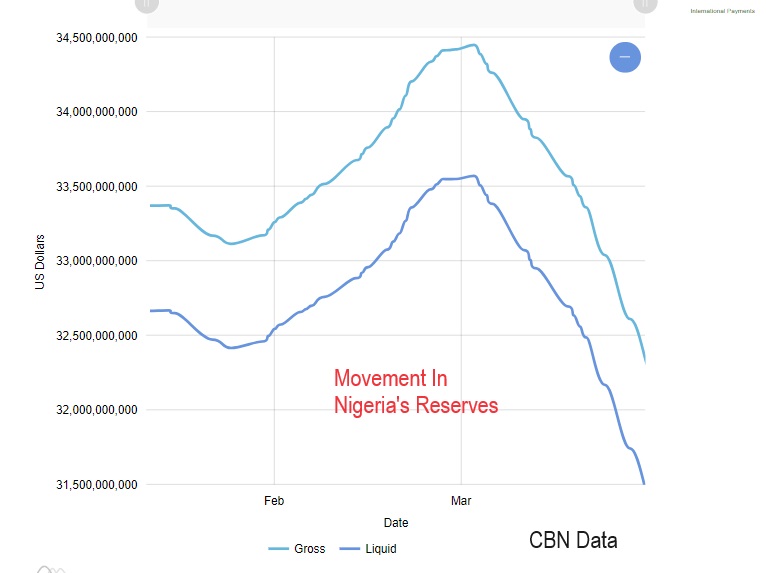
Nigeria is burning through foreign-exchange reserves at a rate not seen in four years, raising concerns that the central bank is depleting its dollar holdings to support the naira after pledging it would allow the currency to float more freely. Liquid reserves declined 5.6% since March 18, when the naira started its rebound from record-low levels against the dollar, to $31.7 billion as of April 12, according to Bloomberg’s calculations based on the latest available data from the Central Bank of Nigeria. That’s the biggest decline in a similar period since April 2020, according to data compiled by Bloomberg.

The Central Bank of Nigeria has two strategic jobs – strengthen the currency through management of inflation, and deepen employment through interest rate management. Over the last 15 years, we largely neglected the second part and that is why youth unemployment is high. That must change!

The reserves data and it correlates with the movement of Naira/USD. Largely, we are fighting with the reserves to defend Naira in Nigeria.

The reserves data and it correlates with the movement of Naira/USD. Largely, we are fighting with the reserves to defend Naira in Nigeria https://www.tekedia.com/nigerias-strategy-for-defending-naira-must-not-rely-solely-on-using-foreign-reserves/
Source: CBN data


Slot Machine RTP (Return to Player) Rates: What Players Need to Know

0

In the world of gambling, slot machines have become a mainstay, providing individuals with the opportunity to win simply by pulling down a lever or pressing buttons. However, beneath the glamour and glitter of these bright machines lies one crucial aspect that every gambler must be wary of: The Return to Player (RTP). This blog post will look into RTP rates, why they are important, and what players should know about them before spinning those reels.

RTP Rates

The RTP rate, at its heart, is a measure in percentage terms of how much money or chips put into a machine over time is returned to players. It is simply a reverse house edge. If you have a higher RTP, then you have more chances of winning overtime. For example, if there is an RTP rate of 95% in a slot machine, it means for every hundred dollars in play, players can expect $95 in winnings.

Importance of RTP Rates

Determining the profitability of the slot machine is crucial, as it directly relates to the fairness of the game. Even though individual gaming sessions often rely on luck, analyzing the odds can provide insights into the overall potential of these games, even at esteemed Polish casinos such as GG.bet.

When you are knowledgeable about this RTP rate, you can make decisions about which slots are worth playing. When you pick games with a high return percentage, you get to win more and the possibility of getting back home with more money is high.

Apart from capitalizing on the winnings, you get to make sure you get fair play. Every casino would have regulatory authorities who insist RTP is closed to gamers. So, as a gambler, you get full honesty regarding what you are getting into.

If you have these numbers, you will know what budget you can play with, and you can make calculator steps to make sure you’re placing the right kind of bet. This way, you cannot only make money but also play for a long period of time.

Factors Affecting RTP Rates

The RTP rates provide so much info information for gamblers, but this data is not static. A good number of factors are responsible for determining the level of RTP on a slot machine, and they include:

  • Game Design: The format and design adopted by a game can also affect its return rate. Other characteristics, such as bonus games, multipliers, or jackpots, all influence the payout percentage.
  • Volatility: When it comes to slots, volatility refers to various aspects. Some slots are highly volatile, offering fewer payouts but with enormous rewards. On the other hand, there are low-volatility games that offer more frequent payouts, although in smaller sizes.
  • Regulatory Requirements: There are different minimum RTPs for slot machines in various jurisdictions where casinos operate. Some countries have very strict rules about this, while others do not even bother.

Making Wise Decisions

Knowledge is power when it comes to playing slot machines. Knowing what RTP rates mean enables you to make better choices about how you invest your time and money in them. If you want to get the most out of your experience, follow these tips:

Research Games: Before trying your luck on a slot machine, do an analysis of its RTP and other relevant attributes. Find games with a high RTP and preferred features that you enjoy when gambling.

Set Limits: Prior to commencing gaming, it is prudent to set stringent budget limits for oneself in order to reduce any possibility of spending too much money or chasing losses. Adhere to what you have planned for yourself, and do not allow the urge to surpass the limit because of the amount you could win.

Play Responsibly: When it comes to playing slot machines responsibly, remember there are several tips that can assist you in doing so. Remember that gambling is supposed to be fun and never put at risk your money, which one cannot afford to lose. In many sites, you can play free spades card game online.

A Strategic Approach to Choosing the Game

When choosing which slot machines to play, look for slot games with higher return-to-player rates. With slots with good percentages as their payout rate, bettors can increase their chances of winning more money and prolong their bankroll. igh RTP games offer better risk-reward ratios that are more likely to result in steady payouts over time. Additionally, these games often feature engaging gameplay mechanics and exciting bonus rounds, ensuring an entertaining experience for players. Whether you’re an experienced or just a beginner player at the casino, going for high RTP games will be a wise move as this will lead to more fruitful sessions from the casino floor. So before you start spinning those reels, do your research and choose games that offer the best chances of success.

Understanding the Return To Player (RTP) percentage when playing slots is super important if one wants to maximize wins while still enjoying fair wagering conditions. By researching games, setting limits, and playing responsibly, players can make the most of their time at the slots and increase their chances of success. Then, next time you sit down at a slot machine game, keep those RTP numbers in mind.

How to Achieve Remission in Crohn’s Disease with Integrated Care Approaches

0

Living with Crohn’s Disease requires strength, patience, and an informed approach to treatment. This long-term condition not only impacts health but also takes a toll on emotional well-being. The main objective for individuals dealing with this condition is often to achieve remission, which is best pursued through a strategy. Integrated care, blending interventions with lifestyle and dietary changes, emerges as a route to managing Crohn’s Disease effectively. Let’s explore how such an approach can truly make a difference.

Understanding the Complexities of Crohn’s Disease

Crohn’s Disease, known for its debilitating symptoms, calls for a nuanced comprehension. It involves inflammation in the digestive system, leading to pain, diarrhea, and nutritional deficiencies. The precise causes remain intricate, involving a mix of genetic predisposition, environmental factors, and immune responses. Early and accurate symptom recognition is vital for the management of the condition. Due to the nature of Crohn’s Disease, patients often navigate through varying degrees of symptom severity. Educating oneself about the manifestations of the disease empowers individuals to advocate for their needs in medical settings. Therefore, research and patient education play significant roles in combating Crohn’s Disease effectively. A thorough understanding of the condition sets the stage for developing efficient treatment strategies.

Medical Treatments for Crohn’s Disease

The realm of interventions for Crohn’s Disease is diverse and specialized, aiming to address both the symptoms of the disease and its underlying inflammatory processes. Treatments typically involve medications like corticosteroids and immunosuppressants to alleviate inflammation and control symptoms. Some individuals may benefit from therapies that target immune system responses. However, these treatment options can lead to side effects, such as an increased susceptibility to infections. In cases of significant damage to the digestive tract, surgery might be recommended for relief, although it comes with its own set of risks. Regular check-ups are crucial for monitoring the progression of the disease and assessing the effectiveness of treatment plans. Personalized medication regimens are essential since what works for one patient may not necessarily work for another. Patients are advised to maintain communication with their healthcare providers regarding their treatment journey, facilitating adjustments as necessary.

Nutritional Management

Diet plays a crucial role in managing Crohn’s Disease, as certain foods can potentially worsen symptoms. Embracing anti-inflammatory diets that emphasize fruits, vegetables, and whole grains can help control flare-ups and maintain proper nutrition levels. However, individual reactions to foods vary widely, highlighting the importance of tailoring diets based on responses. Steering clear of irritants, like dairy products, refined sugars, and high-fat foods, may also offer relief. Discussions with a nutritionist can assist individuals in managing their dietary requirements and making well-informed decisions. Maintaining a food journal proves valuable in pinpointing triggers and customizing the diet for better results. In some cases, supplements may be needed to address deficiencies seen in individuals with Crohn’s Disease. It’s crucial to approach dietary modifications with adaptability and patience, as effectiveness varies greatly from person to person.

Dealing with Stress and Mental Well-being

The relationship between stress and Crohn’s Disease is widely acknowledged, as stress can potentially lead to flare-ups. Practices like meditation, yoga, and deep breathing techniques are effective in managing stress levels and reducing the severity of symptoms. Building a support network through therapy or support groups offers emotional relief and practical coping mechanisms. Individuals must tackle the mental health challenges that accompany living with a chronic illness. Emotional strength plays a significant role in the management of Crohn’s Disease; hence, routine mental health evaluations should be integrated into the treatment regimen. Encouraging patients to prioritize self-care and seek assistance during tough times can have a significant impact on their well-being. Identifying and addressing anxiety or depression can enhance treatment outcomes.

Physical Activity and Exercise

Engaging in physical activity is advantageous for individuals dealing with Crohn’s Disease, as it can enhance overall well-being and potentially alleviate symptoms. Exercise has the potential to improve digestion, reduce stress levels, and uplift one’s mood. Opting for activities that do not strain the body, especially during flare-ups, is crucial. Consistency in workout routines can yield lasting benefits. It’s important to listen to your body and adjust activities based on your current health status. Walking, swimming, and practicing yoga are excellent options for staying active without pushing too hard. Setting realistic fitness goals can help you stay motivated without feeling disheartened. Exercising with friends or family members can also provide an element of encouragement to stick to a regular exercise schedule. Consulting a healthcare provider before embarking on any new exercise regimen is essential.

Holistic and Alternative Therapies

For those interested in exploring additional avenues of relief, holistic and alternative therapies can complement traditional treatments effectively. Acupuncture, for example, has been found helpful for some patients in managing pain and stress related to Crohn’s Disease. Herbal supplements may provide added support under the supervision of a healthcare provider; however, caution should be exercised due to potential interactions with medications. Massage therapy can also serve as a tool for reducing stress and managing pain. It is crucial for individuals to conduct research and seek advice from healthcare professionals before incorporating these treatments into their healthcare plans. Having a grasp of the supporting evidence for these treatments can empower individuals to make informed choices. Personal experiences with therapies can differ, underscoring the importance of tailoring the approach to each individual’s needs. Prioritizing safety and effectiveness is key when contemplating new treatment options.

Utilizing Medical Cannabis for Managing Crohn’s Disease

Recently, medical cannabis has gained attention as a potential treatment for symptoms linked to Crohn’s Disease, such as inflammation and pain. With the legalization of cannabis for medical conditions like Crohn’s Disease in Mississippi, patients now have the chance to consider this option with the assistance of Mississippi medical marijuana doctors. These qualified professionals are equipped to evaluate patients’ conditions and, if appropriate, authorize a marijuana permit. This authorization enables patients to access cannabis products tailored to lessen their symptoms. It’s crucial for individuals to understand both the medical and legal implications of utilizing cannabis, including any potential side effects and how it may interact with other medications. Engaging in open dialogue with healthcare providers about the interest in and use of medical cannabis is imperative. As research continues to explore the role of cannabis in treating Crohn’s Disease, it presents the potential for new therapeutic paths. Residents of Mississippi seeking to use medical cannabis should consult with Mississippi medical marijuana doctors to ensure they are receiving the utmost care and guidance.

Implementing an Integrated Care Approach

Embarking on the journey towards recovery from Crohn’s Disease calls for a coordinated approach to care that involves a team of specialists. This team, comprising gastroenterologists, dietitians, mental health professionals, and even medical experts in Mississippi who may recommend marijuana, collaborates to meet the needs of individuals with Crohn’s. Effective communication within the team and with patients is crucial for tailoring treatment plans. Patients are encouraged to participate actively in their care by sharing their preferences and concerns. Educating patients about aspects of managing Crohn’s empowers them to make informed choices about their well-being. Regular check-ins and adjustments to the care regimen can address the evolving nature of the disease, aiming to enhance patients’ quality of life.

Conclusion

In summary, managing Crohn’s Disease involves an individualized strategy that integrates medical interventions, dietary guidance, stress management techniques, physical activity, and potentially medical cannabis use. Each element of this holistic care approach contributes uniquely to supporting the health of individuals dealing with Crohn’s. Having empathy, being patient, and staying persistent are qualities for both individuals dealing with Crohn’s Disease and those caring for them. Despite the obstacles along the way, there is a chance for a life full of fulfillment despite the challenges posed by the condition. It’s important to know that you have companions on this path and, by receiving support and treatment, reaching remission is indeed possible and attainable.

Elon Musk Proposes a Posting Fee For New X Users to Tackle Bots

0

Elon Musk is reportedly planning to charge new X users a small fee to post on the platform, a move he believes would combat the proliferation of bots.

In a reply to a post on X, Musk tweeted that charging new users a small fee is the only way to mitigate the onslaught of bots on the platform.

He wrote,

“Unfortunately, a small fee for new user write access is the only way to curb the relentless onslaught of bots. Current AI (and troll farms) can pass “are you a bot” with ease”.

He added that the onslaught of fake accounts also uses up the available namespace, which sees so many good handles taken as a result.

This statement by Musk suggests that X might be expanding its policy to charge new users to post on the platform.

In response to Musk’s proposition to charge new users a small fee, several users on the platform have faulted such a plan, with some stating that it is going kill the platform’s user base.

@Kinocopter wrote,

“This is stupid just require a phone number for new account signups. You already block VOIP numbers for Premium, so block them for new accounts too.”

@TweetyPS3 wrote,

“Again there are so much better ways than just saying “they have to pay” It’ll eventually be exploited, do new account restrictions and ban AI bot creators from getting a blue checkmark or have to pay for a gold checkmark and API access.”

@mirrorinspace wrote,

“Just charging the countries with the highest number of online scammers/spammers, first, will be the most efficient method. And again, effective AI to moderate X in the future would be a game changer for moderation all over the net.”

It is interesting to note that Musk has been battling with bots on X, since he acquired the microblogging platform (formerly Twitter) in October 2022 for a $44 billion deal.

Months after Elon Musk made a move to acquire X, the Tesla chief executive said that he was terminating the deal over the social media firm’s inability to provide him with accurate information about the number of fake accounts on the platform.

Musk stated that Twitter’s refusal to provide all the information he requested violated part of the deal’s agreement, as it is necessary for the company’s business performance.

After going ahead to acquire the company, Musk disclosed via a post that he would do everything possible to defeat the presence of spam bots or die trying.

Ever since, he has implemented several strategies to address the presence of Bots on the platform. In April 2023, Musk announced that only verified accounts would be eligible to be in “For You” recommendations.

This according to him is the only realistic way to address advanced AI bot swarms taking over. He added that voting in polls will require verification for the same reason.

Tesla Plans to Layoff 10% of Its Global Workforce Amid Sales Decline

0

American multinational automotive and clean energy company Tesla has announced plans to lay off 10% of its workforce as it grapples with declining sales and an intensifying price war for electric vehicles (EVs).

In a company-wide memo, Tesla CEO Elon Musk noted that the layoffs could affect about 14,000 of the 140,473 workers employed by the Austin, Texas, company at the end of last year.

Musk further disclosed that as the company prepares for its next phase, it was crucial to examine areas where it could cut costs and increase productivity.

Part of the memo reads,

“Over the years, we have grown rapidly with multiple factories scaling around the globe. With this rapid growth, there has been duplication of roles and job functions in certain areas. As we prepare the company for our next phase of growth, it is extremely important to look at every aspect of the company for cost reductions and increasing productivity. As part of this effort, we have done a thorough review of the organization and made the difficult decision to reduce our headcount by more than 10% globally”.

Musk last announced a round of job cuts in 2022, after telling executives he had a “super bad feeling” about the economy. Still, Tesla’s headcount has risen from around 100,000 in late 2021 to over 140,000 in late 2023, according to filings with U.S. regulators.

Amidst Tesla’s recent layoff plans, two key executives at the company announced on X their departure from the company. Andrew Baglino, senior vice president of powertrain and energy engineering, wrote that he had made the decision to leave after 18 years with the company.

On the other hand, Rohan Patel, senior global director of public policy and business development, also wrote on X that he was leaving Tesla, after eight years.

Lately, Tesla has been facing a decline in sales, amidst a competitive EV market. The company shares have plunged significantly, down 31% year-to-date. In a report by Tekedia, Tesla reported worse-than-expected first-quarter earnings.

The company delivered about 387,000 vehicles over the first three months of the year, falling short of analysts expectation of 457,000. This marked a 9% decline compared to 423,000 deliveries recorded in Q1 2023, which happens to be the first worse-than-expected Q1 earnings since 2020.

This forced Tesla to slash the prices of its vehicles in a bid to boost sales. The EV giant recently trimmed the subscription price of its premium driver assistance system, marketed as its Full Self-Driving or FSD option, for U.S customers.

Also, several developments in China one of Tesla’s big markets, have negatively impacted the revenue of the automaker this year. The company announced steep price cuts in the Asian country in early January amid stiff competition, but it has however failed to see a sales boost. In February this year, deliveries in the country fell almost 20% year over year.