DD
MM
YYYY

PAGES

DD
MM
YYYY

spot_img

PAGES

Home Blog Page 31

Inside Dell’s One-Day Reset: How an AI Push Is Forcing the Biggest Internal Overhaul in the Company’s History

0

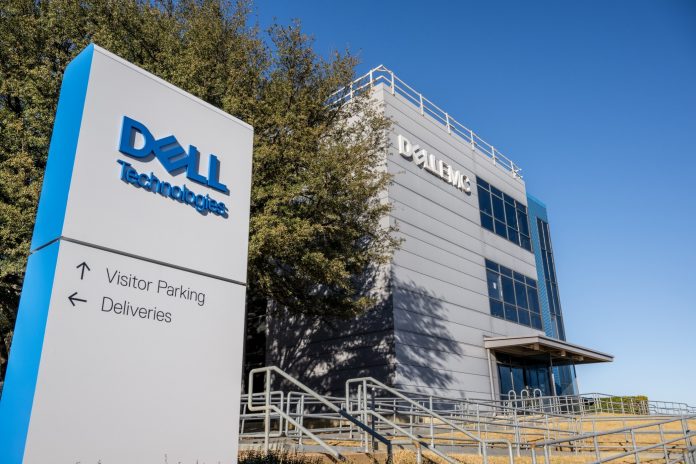
Dell employees have been warned to brace for a moment that will redraw how the 42-year-old company actually works. On May 3, large parts of the business will switch, all at once, to a single enterprise operating platform, ending decades of fragmented systems, duplicated tools, and function-by-function autonomy.

Jeff Clarke, Dell’s chief operating officer and vice chairman, told staff in an internal memo that the shift represents the “biggest transformation in company history,” a sharper claim than anything associated with Dell’s past milestones, including its $67 billion acquisition of EMC or its journey off and back onto public markets.

At its core, the overhaul, branded One Dell Way, is less about flashy artificial intelligence products and more about the plumbing underneath the company. Dell is betting that without a unified data backbone, its ambitions in AI infrastructure, cloud systems, and enterprise services will stall, no matter how much it spends on cutting-edge technology.

For years, Dell allowed its businesses to grow with a high degree of independence. Different teams built their own tools for selling, marketing, servicing customers, and managing supply chains. That flexibility helped the company scale globally, but it also created a maze of applications, servers, and databases that no longer talk to each other cleanly.

Clarke made clear that the approach is no longer viable. In an AI-driven market, speed depends on clean, connected data and standardized processes. Multiple ways of doing the same basic tasks slow decisions, introduce errors, and limit the ability to automate at scale.

The change is deliberately abrupt. Rather than rolling out the new system gradually, Dell will flip the switch on a single crossover date for its Client Solutions Group, which includes its PC business, as well as finance, supply chain, marketing, sales, revenue operations, services, and HR. Its Infrastructure Solutions Group, which houses servers, storage, and AI hardware, will follow in August.

That decision signals urgency, but also risk. Clarke acknowledged that some teams will experience significant disruption in how they work day to day. Others may see fewer changes, but no one is exempt from learning the new system. Training, which opens on February 3, is mandatory, with no exceptions.

Behind the scenes, this effort has been years in the making. Business Insider has previously reported on a secretive internal program, codenamed Maverick, where employees signed non-disclosure agreements to help design the new operating model. Initially slated for parts of the company in early 2026, the launch was delayed, underscoring the complexity of replacing systems that underpin nearly every business function.

What stands out in Clarke’s memo is not just the technical ambition, but the cultural reset he is pushing. He told employees to shift from a “function-first” mindset to a “company-first” one, even when that means making choices that are less optimal for individual teams. The trade-off, he said, is faster decision-making and higher quality outcomes for Dell as a whole.

That message hints at internal tension. Standardization often means giving up local control, custom workflows, and familiar tools. It can also expose inefficiencies that were previously hidden inside silos. Clarke framed that discomfort as unavoidable, telling staff bluntly that there will be no return to old ways of working once the system goes live.

Dell is positioning itself as a central supplier of AI infrastructure, selling servers and systems that power data centers for some of the world’s largest technology companies. Yet internally, it has struggled with the same data fragmentation that plagues many large enterprises trying to operationalize AI.

Industry analysts often note that AI initiatives fail not because of weak algorithms, but because companies lack clean, unified data. Dell’s leadership is effectively applying that lesson inward, betting that simplification and automation are prerequisites for competing in a market moving at machine speed.

The symbolism is hard to miss. A company founded in a dorm room in 1984, built through customization and operational flexibility, is now imposing a single way of working across its global workforce. Clarke described the move as foundational, not optional, and urged employees to “disrupt yourself” and embrace urgency.

We will have to wait till May to see whether One Dell Way delivers the promised gains in speed and efficiency. What is already clear is that Dell is treating internal transformation as seriously as any product launch.

The Smartest Bet Among the Best Cryptocurrencies to Invest In: ZKP Spent $100M Before Selling a Single Token

0

When most new crypto projects launch, the story is the same: raise millions on a whitepaper, then try to build the thing that was promised. Often, it takes years. Sometimes, it never happens. Zero Knowledge Proof (ZKP) didn’t follow that script. It built the entire foundation before ever opening its token auction.

By the time ZKP launched its Initial Coin Auction (ICA), it had already spent $100 million of its own money. That included $20 million in live infrastructure and another $17 million to manufacture and deploy physical Proof Pods plug-and-play devices that handle AI validation across the network. This isn’t future funding. This has already been built, tested, and launched.

ZKP didn’t ask investors to fund a dream. It put the money first and let the market decide what that was worth. That changes the risk profile completely. Instead of speculating on whether a roadmap will get delivered, early participants are walking into a system that’s already up and running. And they’re getting in at early-stage prices not because the tech isn’t real, but because the price discovery phase is just beginning.

This disconnect between product readiness and token valuation is what makes ZKP unique. If the market later prices it like a working platform rather than a presale idea the early ROI could stretch into the 100x to 10,000x range. Not because of hype. But because the value is already there, the price hasn’t caught up yet.

Why This Timing Window Creates Real Asymmetry

Right now, ZKP is in an active auction. The ICA is live. Tokens are being distributed daily. Price discovery happens in real time. And yet, the core system is already operational — a full 4-layer blockchain built on Substrate, with Proof Pods shipping globally and on-chain validation already live.

This is a big deal. Investors aren’t buying into a vision. They’re buying into something that already exists at a time when it’s still priced like it doesn’t.

Most early crypto buyers take on two risks: technology and timing. ZKP has taken the tech risk off the table. Everything is live. The infrastructure is deployed. That leaves timing as the key variable. And with the auction designed to run on a fixed 450-day schedule, supply isn’t unlimited. There’s no chance of whales flooding in to grab 90% of the tokens on Day 1. There’s a hard limit of $50,000 per wallet per day. Price rises daily, based on actual market demand.

In other words, early buyers aren’t just getting in at lower prices. They’re getting in before the rest of the market has fully processed that ZKP isn’t a future promise. It’s a functioning platform. The pricing is temporary. The product isn’t.

That’s where potential ROI multiples start to make sense, not because the project is trying to go viral, but because it’s structurally underpriced for what it’s already delivering.

ZKP Didn’t Need Capital. It Needed a Price.

Crypto is full of startups chasing capital. ZKP didn’t go that route. It didn’t ask for VC backing. It didn’t hand out discounts to private investors. It didn’t sell a roadmap. It spent $100 million out of pocket, then opened the doors to the public.

That changes the psychology completely. The question isn’t “will they build it?” It’s “what is this worth now that it’s built?”

In most token sales, buyers take the biggest risk: they fund development, wait for features, and hope the team delivers. In ZKP’s case, that risk is gone. Buyers step into a system that’s already in motion. The auction is live. The rewards are active. The infrastructure is paid for.

This is where the opportunity lives. If a project like this had gone through typical funding routes, by the time it hit public markets, the price would be 50x higher and locked behind vesting schedules. Instead, ZKP’s pricing is being discovered in public at the same time the platform is running.

That mismatch won’t last forever. And for investors searching for the best cryptocurrencies to invest in while prices still reflect early-stage conditions, ZKP is already ahead of the curve, just not yet priced like it.

Price Is Temporary. Infrastructure Is Permanent.

Zero Knowledge Proof (ZKP) didn’t build hype. It built infrastructure. That’s what makes its auction different. The system is live. The Proof Pods are in circulation. The blockchain is running. It’s not a theory. It’s not a testnet. It’s real.

What isn’t real yet is the price recognition. That’s still forming, block by block, through the daily ICA. But once the wider market starts pricing ZKP based on what it is rather than what it might be, the entry window could close fast.

This isn’t about catching a trend. It’s about seeing a structure that doesn’t exist anywhere else in crypto right now. When something is already working, but still priced like a presale, the upside math isn’t a dream; it’s a delay. And that’s exactly the gap ZKP buyers are stepping into.

Find Out More about Zero Knowledge Proof:

Website: https://zkp.com/

Auction: https://auction.zkp.com/

X: https://x.com/ZKPofficial

Telegram: https://t.me/ZKPofficial

Pentagon Takes Equity Stake in Missile Supply Chain as U.S. Bets $1bn on L3Harris Rocket Motors

0

The U.S. government is taking an unusually direct role in shoring up its weapons supply chain, committing $1 billion to L3Harris Technologies’ expanding rocket motor business.

The decision is part of a broader and increasingly explicit policy shift in Washington, which has seen the federal government move from being merely a regulator and customer to becoming a direct investor in strategically important domestic companies.

At the center of the deal is a pressing military reality. Solid rocket motors are essential components for a wide range of U.S. weapons systems, including Tomahawk cruise missiles, Patriot and THAAD interceptors, and the Standard Missile family. Years of consolidation in the defense sector, coupled with surging global demand driven by wars in Ukraine and the Middle East and rising tensions with China, have left the Pentagon worried about supply bottlenecks and production speed.

“This is a fundamental shift in how we secure our munitions supply chain,” said Michael Duffey, the Pentagon’s under secretary of defense for acquisition and sustainment. “By investing directly in suppliers we are building the resilient industrial base needed for the Arsenal of Freedom.”

Under the agreement, L3Harris will spin off its Missile Solutions unit into a new company focused on rocket motors and missile propulsion. The U.S. government will inject $1 billion through a convertible security that will automatically convert into equity when the new entity goes public, an IPO targeted for the second half of 2026. L3Harris will retain majority ownership and operational control, while effectively locking in long-term Pentagon demand for the new business.

Chief executive Chris Kubasik said the missile unit is expected to grow at a mid-to-high teens annual rate, reflecting what he described as sustained and rising demand for missile systems. Shares of L3Harris rose about 1% following the announcement, a sign that investors view the deal as a strong endorsement of the company’s role in U.S. defense planning.

The transaction, however, sits within a much larger policy context. The Trump administration has been openly critical of what it sees as high costs, slow delivery timelines, and excessive consolidation in the defense industry. Last week, President Donald Trump signed an executive order tying share buybacks, dividends, and executive compensation at defense contractors to weapons delivery schedules, sharply escalating pressure on the sector.

Direct equity investment is now emerging as another lever. The L3Harris deal follows the U.S. government’s decision to take a 10% stake in chipmaker Intel, a move aimed at rebuilding domestic semiconductor manufacturing capacity viewed as vital to economic and national security. Intel’s shares more than doubled after that investment was announced, reinforcing the administration’s argument that strategic government capital can stabilize and revive critical industries.

Commerce Secretary Howard Lutnick had previously signaled this direction, saying the administration was weighing equity stakes in major defense contractors, including Lockheed Martin. The L3Harris investment now makes clear that this is no longer theoretical. Washington is willing to put taxpayer money directly into companies it deems essential to national security, from chips to missiles.

For the Pentagon, the rationale is straightforward. By becoming a financial partner rather than just a buyer, it believes it can secure predictable production, negotiate multi-year procurement agreements, and ultimately lower costs. The Defense Department said the deal will allow it to pursue long-term frameworks for solid rocket motors, pending congressional approval, reducing uncertainty that has historically discouraged capacity expansion.

However, once converted, the government’s stake would make it a part-owner of a company that competes for Pentagon contracts, raising questions about conflicts of interest and fair competition. Northrop Grumman, which owns rocket motor maker Orbital ATK, is the only other major U.S. producer in this space. Analysts warn that rivals could be placed at a disadvantage if one supplier enjoys both guaranteed demand and government backing.

Duffey has pushed back on that concern, saying the Pentagon remains committed to open competition and will not factor its investment into procurement decisions. He also stressed that the department does not dictate which rocket motors are used in specific missile systems.

Still, the structure of the deal is highly unusual for the defense sector. Combining a government-backed convertible security with a planned IPO, while allowing the parent company to retain control, is likely to attract scrutiny from lawmakers and regulators concerned about market distortion and governance.

Supporters argue that extraordinary times justify extraordinary measures. Demand for interceptors and long-range weapons has surged far faster than the industrial base can respond, exposing weaknesses created by decades of outsourcing, consolidation, and just-in-time manufacturing. The administration sees direct investment as a way to reverse that trend quickly.

Kubasik framed the move as part of a broader reset. “Recent Trump administration actions have placed renewed emphasis on strengthening the defense industrial base and reinvigorating competition following a 30-year wave of consolidation,” he said, adding that the new rocket motor company will become a key long-term partner to the Pentagon.

If the IPO proceeds as planned in 2026, the government could ultimately profit financially from the investment, mirroring its experience with Intel. For now, however, the priority is strategic rather than monetary: ensuring that the United States can produce critical weapons at scale and speed in an increasingly volatile world.

Ozak AI’s Projected Launch Price Could Set the Stage for One of the Strongest New-Token Rallies in 2026

0

As 2026 begins, the anticipation surrounding Ozak AI is intensifying across the crypto sector. While most new tokens struggle to gain market attention before listing, Ozak AI is doing the opposite — capturing significant momentum months ahead of launch. With its presale funding climbing over $5.63 million and analysts aligning around a $1 projected listing price, traders are preparing for what could become one of the most powerful new-token rallies of the year.

This isn’t just a speculative hype wave — the groundwork is being built through partnerships, AI infrastructure, and real-world technical integrations that strengthen Ozak AI’s credibility long before its market debut.

A Launch Price Positioned for Rapid Price Discovery

Analysts agree on one thing: A $1 listing price doesn’t reflect the true value of Ozak AI’s ecosystem.

Because the project is entering the market with:

  • A complete AI Agent Suite powered by Prediction Agents (PAs)
  • The Ozak Stream Network (OSN) for real-time data execution
  • Security and performance backed by EigenLayer AVS
  • High-speed scalability through Arbitrum Orbit
  • Encrypted storage and compliance-ready data through Ozak Data Vaults

…it becomes clear that the listing valuation will act more like a launchpad than a fair evaluation.

In the current market environment, tokens with a fraction of Ozak AI’s scope have listed above $1 and rallied aggressively. This is why analysts see a strong probability that Ozak AI’s early price action will compress months of growth into a short window after listing.

A Presale That Reflects Confidence, Not Hype

While markets have been choppy, Ozak AI has surged ahead with:

  • Over $5.63 million raised
  • Strong community participation
  • Over 08B tokens sold
  • Increasing exchange interest behind the scenes

What’s notable is that the presale momentum didn’t slow down even during Bitcoin and Ethereum pullbacks. Instead, it accelerated — a signal analysts interpret as early conviction from informed investors.

Additionally, partnerships with SINT, HIVE Intel, Weblume, and Pyth Network expand Ozak AI’s technological reach beyond typical AI-token promises, making its infrastructure usable, scalable, and data-rich from day one.

Why a Major Rally Is Expected Immediately After Listing

Analyst models show a strong overlap with the conditions that triggered early rallies for previous AI tokens:

  1. Low Initial Valuation, High Utility

When a project launches below its technological worth, price discovery is swift. Ozak AI falls directly into this category.

  1. High Initial Token Demand

Prediction Agents and Data Vaults require $OZ tokens for execution — guaranteeing immediate ecosystem activity.

  1. Limited Early Liquidity

Thin liquidity pools during early trading often amplify upside moves.

  1. Presale Momentum Converts Into Market FOMO

With thousands of buyers already holding positions, early trading activity is expected to spike within the first 48–72 hours.

  1. Rising Exchange Interest

Multiple trading communities have already speculated that Ozak AI is being monitored by Tier-1 exchanges. Fast exchange onboarding historically enhances rally potential.

Taken together, these factors build the framework for a strong, fast-moving listing rally, similar to the first explosive months of projects like RNDR, TAO, and AGIX during the AI-token boom.

What the Early Price Path Could Look Like

Forecasts built around liquidity flow, utility demand, and historical AI-token behavior suggest a realistic path:

  • Listing at ~$1
  • Moving to $3–$4 shortly after launch
  • Breaking into $6–$8 during the first strong wave of volume
  • Testing double digits if broader AI sentiment strengthens

The Bottom Line: A Rare Pre-Listing Setup

Ozak AI’s positioning heading into 2026 resembles a combination of strong fundamentals, rapid growth, and early market conviction — conditions that usually precede breakout rallies rather than follow them.

If the project lists at or near the expected $1 level, analysts believe it will create one of the most compelling setups for aggressive buyers, early adopters, and high-growth investors looking for a strategic position before the market rotates into the next major AI-driven surge.

For more information about Ozak AI, visit the links below:

Website: https://ozak.ai/

Twitter/X: https://x.com/OzakAGI

Telegram: https://t.me/OzakAGI

Why Bitcoin Adoption Is Growing Across Digital Industries

0

Bitcoin began as a small idea in 2009, shared by a few coders online. Now the orange coin shows up in games, song sites, art shops, and many web hubs. Stores that once took only cards now add a clear “Pay with Bitcoin” mark. The shift can look sharp when you scroll fast. Yet it grew in steps, more like a path than a leap. Web fun gave it a shove early on, since people spend money there with less thought. Casino fans read on what to play before they risk real cash on spins. Those same fans saw Bitcoin move funds fast across lands, with less bank fuss and lower costs. After that ease, they asked for the same pay on stream sites, chat apps, and work sites. Soon, web firms saw that this ask came from tech-wise users with cash to spend. The pull did not come from hype alone, since users also liked the feel of full control. The next parts dig into why that pull keeps growing in daily web life.

The Appeal of Decentralized Payments in Gaming and Beyond

In games, time feels loud. Players hate slow bars and late prize pays after a hard win. Bitcoin fits that urge since the net runs day and night, even when banks shut. A teen in Brazil can send coins to a dev in Sweden in under an hour. No bank desk steps in, and no clerk asks why you pay. The game ships a skin or code, and no one can pull the payback. That same speed helps stream sites send small pay to indie acts with less fee loss. Many sites send cash in small bits, and card rails can chew up each bit. Coders also like the clear trail on the chain. Each Satoshi leaves a public mark that acts like a shop log you can check. Bad go-betweens find it harder to skim funds when all moves leave marks. This mix of speed and clear logs suits web play, since it feels as quick as a click.

Lower Fees and Stronger Security for Online Shops

Small web shops live on thin gains. Each card swipe can take three to five percent in fees. For a niche shop, that bite can block new stock or force a close. Bitcoin can cut that cost for many sales. Net fees move up and down, yet they often sit well under one per cent. Some shops group many sales into one send, so each sale costs less. Fraud adds more harm, and the pain lands on the shop, not the thief. With Bitcoin, a buyer can not force a payback after the shop sends a file or key. Buyers win too, since they do not hand out card data that can leak later. They pay with a one-time code, and they keep their key at home. These cuts and gains help small shops take on big ones in art, class files, and fan goods. Each saved cent can fund new work, so more shops give that orange mark a top spot.

Empowering Creators and Gig Workers

Gig work runs on quick swaps of worth. A design pro sends a logo file. A host drops a bonus show, or a gamer streams a speed run. Big pay sites tend to pay in lumps, and they can make folks wait days. If you live far from the Northlands, bank fees can feel like a fine on your own time. Bitcoin gives a self-run path that cuts out that wait. A singer can place a QR code under a clip and take tips right from fans. A writer can lock a paid post, then open it when a small coin sum lands. The net has no border, so a fan in Kenya can pay a coder in Poland. This kind of peer pay makes tiny tips make sense again. One tip may seem small, yet many tips can pay rent or gear in the end. The chain also lets a donor check the pay code, so fans know the right person got it.

Looking Ahead: Obstacles and Opportunities

No wave moves in a clean line, and Bitcoin has rough spots. Big price swings scare new folks who fear a ten-dollar pay may drop to eight by night. Power use draws loud talk, even as many miners chase cheap green power. Some tap spare hydro in far hills, while some burn waste gas that firms once flared. Law rules add drag too, since some lands back the tech and some set tight bans. Yet each snag can spark a fix and lift trust over time for most users. Price risk pushes more sites to swap coins for local cash at the sale time. Many firms use fast swap tools, so a sale ends in local cash at once. Mixed law rules push devs and law folk to talk, not fight. Most users like that calm, direct flow. To sum up, Bitcoin has entered web life since it saves time, cuts fees, and fits world trade. If these fixes keep pace, the coin may feel like a plain choice online.