DD
MM
YYYY

PAGES

DD
MM
YYYY

spot_img

PAGES

Home Blog Page 31

MiniMax’s M2.1: Frontier-Level Open-Source Model Excels in Multi-Language Coding, Mobile Dev, Agentic Workflows

0

MiniMax, the fast-rising Chinese AI startup often dubbed one of the “AI Tigers,” has launched MiniMax M2.1, a significant upgrade to its sparse Mixture-of-Experts (MoE) model series.

The release, announced December 22, emphasizes real-world complex tasks, positioning M2.1 as a state-of-the-art open-source contender for coding, agent scaffolding, and enterprise automation—delivering performance that rivals or exceeds closed-source leaders like Claude Sonnet 4.5 and Gemini 3 Pro in key areas.

Founded in December 2021 by alumni from computer vision giant SenseTime (including CEO Yan Junjie), MiniMax has grown explosively, raising over $850 million across rounds, with a $600 million infusion in March 2024 led by Alibaba, pushing its valuation to $2.5-3 billion. Additional backers include Tencent, HongShan (formerly Sequoia China), and MiHoYo.

The company, which confidentially filed for a Hong Kong IPO targeting up to $700 million at an over $4 billion valuation, boasts 27.6 million monthly active users (as of September 2025) across consumer apps like Hailuo AI (text-to-video), Talkie (AI companions), and its Open Platform API. M2.1 builds on the October-launched M2—a 230B total / 10B active parameter MoE that topped open-source rankings on Artificial Analysis composites—by prioritizing usability in multilingual programming, native mobile development, office scenarios, and agent generalization.

Retaining the efficient architecture for low-latency inference (~100+ tokens/second on optimized setups), M2.1 offers API pricing at roughly 8-10% of Claude Sonnet while claiming 2x speed. Benchmark Highlights (independent and MiniMax-reported):Multi-SWE-Bench: 49.4% — industry-leading for multilingual tasks.

  • SWE-Bench Multilingual: 72.5% — outperforming Claude Sonnet 4.5.
  • SWE-Bench Verified: Up to 74.0% in agent frameworks (edging DeepSeek V3.2’s 73.1%).
  • VIBE (Visual & Interactive Benchmark for Execution): Aggregate 88.6% (new open-sourced benchmark using Agent-as-Verifier); standout 91.5% on VIBE-Web and 89.7% on VIBE-Android, surpassing Claude Opus/Sonnet in full-stack app generation with aesthetic and functional excellence.

Other gains include refined interleaved thinking for composite instructions, concise Chain-of-Thought outputs reducing token usage, and stable integration with tools like Claude Code, Droid, Cline, Kilo Code, Roo Code, BlackBox, plus context mechanisms (Skill.md, agent.md, Slash Commands). Beyond coding, M2.1 elevates general dialogue, technical writing, and non-technical responses with more structured, detailed outputs.

The model is immediately accessible via MiniMax’s API (text generation endpoint), integrated platforms (Kilo Code, Vercel AI Gateway, Ollama), and open weights on Hugging Face (MiniMaxAI/MiniMax-M2.1).

Recommended inference: vLLM/SGLang with temperature=1.0, top_p=0.95.

Community response has been electric: On X and Reddit’s r/LocalLLaMA, developers hailed M2.1 as a “beast at UI/UX design” with “clean” app prototypes in a few interactions, faster tool calling, and superior “vibe coding.”

Early tests show strong long-horizon reasoning and reduced bugs versus M2. Comparisons position it ahead of DeepSeek V3.2 and GLM 4.7 in aesthetics/mobile, while closing gaps with proprietary frontiers. MiniMax frames M2.1 as the “brain” for the agentic era, powering its MiniMax Agent platform for end-to-end tasks (administration, data science, finance, HR, software dev).

M2.1 accelerates democratization—offering elite coding/agent capabilities at an accessible scale as open-source Chinese labs (MiniMax, DeepSeek, Zhipu) dominate 2025 releases, challenging global incumbents and fueling AI-native workflows worldwide.


Gold Hits Record $4,525 While Bitcoin Lags – Peter Schiff Calls End of BTC Bull Run

0

Gold has surged to a historic high of $4,525, reaffirming its status as a safe-haven asset at a time of mounting global uncertainty, while Bitcoin continues to struggle to regain bullish momentum.

The divergence between the two assets has reignited the long-running debate over Bitcoin’s role as “digital gold,” with longtime crypto critic Peter Schiff seizing the moment to declare that the Bitcoin bull run is over.

As investors reassess risk amid tightening financial conditions and volatile markets, Schiff argues that capital is flowing back to traditional stores of value leaving Bitcoin lagging behind in gold’s shadow.

He argues that Bitcoin’s failure to rise alongside surging tech stocks (S&P 500 up 0.5% to a record) and gold (hitting $4,525 per ounce) indicates the end of its bull run, forecasting a crash as all buyers are exhausted.

In a post on X, he wrote,

“If Bitcoin won’t go up when tech stocks rise, and it won’t go up when gold and silver rise, when will it go up? The answer is: it won’t. The Bitcoin trade is over. The suckers are all in. If Bitcoin won’t go up, it can only go down. If HODLers are lucky it won’t be a slow death.”

The post reflects Schiff’s consistent bearishness on Bitcoin since 2010, with recent December 2025 tweets predicting its collapse before a dollar crisis, despite BTC trading near $87,000 after peaking at $93,000 earlier in the month.

Schiff argues that Bitcoin remains tied to risk assets like stocks, rallying less during upswings and falling harder in downturns, dismissing it as “digital gold” since it won’t track gold’s rises.

Meanwhile, Binance CEO Changpeng Zhao “CZ”, in a response under the post, mocked Schiff’s prediction that Bitcoin’s bull run is over, urging followers to “save the tweet” as a future reminder of his repeated forecasting errors on BTC’s demise.

It is understood that Schiff has issued similar Bitcoin bearish calls for over a decade, including a 2019 claim that BTC would “never” reach $100,000, which it surpassed in 2021 and a 2018 warning that even $750 per BTC would remain “expensive.”

In line with Schiff’s prediction of the end of Bitcoin bull run, Fidelity’s global macro director, Jurien Timmer, has called the end of the latest bitcoin bull run, while highlighting gold’s continued bull market strength.

The October all-time high near $125,000, reached after roughly 145 months of cumulative rallying, fits well within the framework. Bitcoin bear markets, often referred to as winters, typically last about a year, Timmer says. As a result, he sees 2026 as a potential “year off” for bitcoin following the conclusion of the latest halving driven cycle.

“While I remain a secular bull on bitcoin, my concern is that bitcoin may well have ended another four year cycle halving phase, both in price and time,” Timmer wrote on X.

Timmer also highlights gold’s strong performance in 2025, contrasting it with bitcoin’s negative year, and does not expect a near term mean reversion between the two assets.

Gold is firmly in a bull market, up roughly 65% year to date, outperforming global money supply growth, Timmer noted. He adds that during the recent correction, gold has held onto most of its gains, which he views as characteristic behavior of a bull market.

Notably, in a counter statement, Jamie Coutts, Chief Crypto Analyst at Realvision, believes the Bitcoin bull market isn’t over yet despite substantial falls. Coutts told the Tapping Into Crypto podcast that the weakness in crypto is due to macro conditions creating a risk-off environment but he believes Trump is likely to “goose” the US economy before next year’s midterm election creating better conditions for crypto.

Coutts also said crypto is now at a “major inflection point” where institutional adoption will see the importance of the four-year cycle decline.

The flagship crypto aseet price slipped today below $87,000, falling nearly 1%, as multiple pressures hit the market at the same time. After weeks of moving sideways between $85,000 and $90,000, Bitcoin is struggling to find strong support, leaving traders cautious. BTC is currently trading at $87,183 at the time of writing this report.

Outlook

The contrasting performances of gold and Bitcoin in 2025 underscore a broader market shift. Gold’s record highs suggest continued investor preference for stability amid global uncertainty, while Bitcoin faces headwinds from macroeconomic factors and profit-taking pressures.

Analysts remain divided as some foresee a near-term consolidation or bear phase for Bitcoin, while others anticipate that institutional adoption and policy-driven economic growth could reignite bullish momentum.

OpenAI Admits Prompt Injection Risks in Atlas Browser Are Here to Stay, Unveils AI-Powered “Attacker” Defense

0

OpenAI has openly acknowledged that prompt injection attacks—a sophisticated vulnerability where malicious instructions are concealed in web content, emails, or documents to manipulate AI agents—pose an intractable, long-term security threat to its ChatGPT Atlas browser, with no prospect of complete elimination.

In a comprehensive blog post published Monday titled “Continuously hardening ChatGPT Atlas against prompt injection attacks,” the company likened the issue to “ever-evolving online scams that target humans,” stating unequivocally: “Prompt injection, much like scams and social engineering on the web, is unlikely to ever be fully ‘solved.’”

The admission underscores fundamental challenges in securing “agentic” AI systems that autonomously interact with the open web. Launched on October 21, 2025, for macOS (with Windows, iOS, and Android versions forthcoming), Atlas integrates ChatGPT directly into browsing via a persistent sidebar for contextual queries, summarization, and analysis. Its standout “agent mode”—available in preview for Plus, Pro, Business, and select Enterprise/Edu users—allows the AI to perform multi-step tasks, such as navigating sites, clicking links, filling forms, managing emails, or automating workflows like meal planning and grocery ordering.

However, this autonomy dramatically “expands the security threat surface,” OpenAI noted.

Indirect prompt injections exploit the agent’s need to process untrusted content: attackers embed hidden commands (e.g., in invisible text on webpages or crafted emails) that override user intent, potentially leading to data exfiltration, unauthorized actions, or privacy breaches. Vulnerabilities surfaced immediately post-launch. Security researchers demonstrated exploits, including one where hidden text in a Google Doc altered browser behavior, and another via the Omnibox (combined address/search bar), treating malicious URLs as trusted prompts. Brave’s contemporaneous analysis deemed indirect prompt injection a “systematic challenge” for all AI browsers, citing Perplexity’s Comet as similarly affected.

Additional reports highlighted issues like “ChatGPT Tainted Memories” (a CSRF flaw that injects persistent instructions) and low phishing detection rates (Atlas blocking only ~5.8% of malicious sites versus Chrome’s 47%). Aligning with broader concerns, the U.K.’s National Cyber Security Centre (NCSC) warned earlier in December that prompt injections “may never be totally mitigated,” advising focus on risk reduction rather than eradication—echoing OpenAI’s stance. To counter this “Sisyphean” challenge, OpenAI detailed a proactive defense framework:

  • LLM-based Automated Attacker: A reinforcement learning-trained bot simulates advanced hackers, iteratively crafting multi-step (tens to hundreds) attack chains in simulated environments. Leveraging access to the target’s internal reasoning traces—unavailable to external attackers—it uncovers novel exploits missed by human red teams.
  • Rapid Response Loop: Discoveries feed into adversarial training for updated models, system-level safeguards, and monitoring enhancements. A recent update, triggered by automated red teaming, rolled out an adversarially trained checkpoint to all users.
  • A demo illustrated the attacker’s prowess: It seeded a user’s inbox with a malicious email containing injected instructions. When the agent scanned for an out-of-office reply, it instead drafted a resignation to the CEO. Post-update, Atlas detected and flagged the attempt.

OpenAI has collaborated with third-party experts pre-launch and emphasizes user mitigations: mandatory confirmations for sensitive actions (e.g., emails, payments), “logged-out” mode to avoid credential exposure, narrow task instructions, and optional features like Browser Memories (opt-in, deletable, no training use for paid users).

Industry parallels abound. Anthropic employs similar red-teaming for Claude, while Google prioritizes architectural controls in agentic tools. Yet, experts remain cautious. Rami McCarthy, principal security researcher at Wiz, framed risk as “autonomy multiplied by access,” noting agentic browsers occupy a “challenging” high-access space.

“For most everyday use cases, agentic browsers don’t yet deliver enough value to justify their current risk profile,” McCarthy told TechCrunch, citing exposure to emails and payments.

As agentic AI proliferates, spanning OpenAI’s Atlas, Perplexity Comet, and emerging tools from Google/Anthropic, the prompt injection conundrum highlights systemic hurdles in trusting autonomous agents on the unfiltered internet.

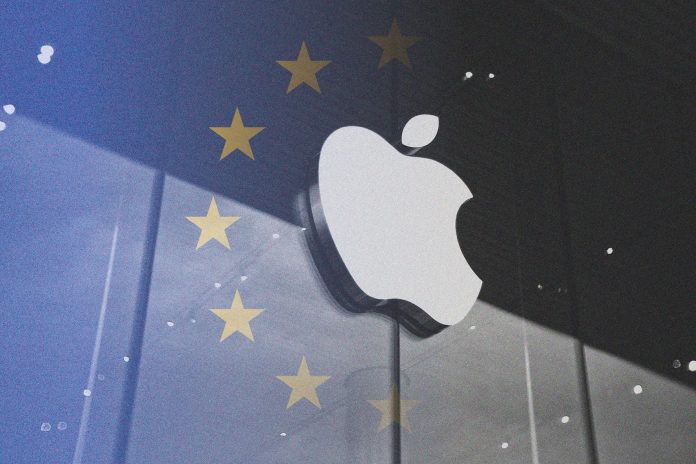
EU Praises Apple’s iOS 26.3 Interoperability Updates, Crediting DMA for Enhanced Third-Party Accessory Support

0

The European Commission has welcomed Apple’s latest interoperability enhancements in the upcoming iOS 26.3 update, attributing them directly to the Digital Markets Act (DMA).

The commission described the changes as delivering “new opportunities” for European users and developers while fostering “a more inter-connected digital ecosystem to the benefit of all EU citizens.”

In a statement released Monday, the Commission highlighted two key features now available for testing in the iOS 26.3 beta, with full rollout expected across Europe in 2026. These updates are designed to level the playing field for third-party hardware manufacturers, allowing their devices to integrate more seamlessly with Apple’s ecosystem—capabilities previously reserved for Apple’s own products like AirPods and Apple Watch.

Proximity Pairing: Third-party accessories, such as wireless earbuds, headphones, or other Bluetooth-enabled devices, can now pair with an iPhone or iPad in a seamless, AirPods-like manner. Users simply bring the device close to their iOS device, triggering a one-tap setup process—no multi-step Bluetooth navigation required. This eliminates the cumbersome manual pairing often associated with non-Apple products, potentially boosting adoption of competitors like Sony’s WF-1000XM series or Bose QuietComfort earbuds.

Notification Forwarding: Non-Apple wearables, including smartwatches and fitness trackers, can receive and display iPhone notifications, allowing users to view messages, alerts, and even interact with them directly on the accessory. This mirrors functionality previously exclusive to the Apple Watch. However, notifications can only be routed to one connected device at a time: enabling it for a third-party accessory automatically disables forwarding to any paired Apple Watch. Users retain control, with privacy settings allowing selective forwarding, but this limitation ensures no overlap in ecosystem experiences.

These capabilities are currently in developer beta testing for third-party TVs, smartwatches, headphones, and other connected devices, with Apple providing APIs and documentation to facilitate integration.

The features are exclusive to the European Union, applying only to device manufacturers and iPhone/iPad users within the bloc, in direct compliance with DMA mandates that classify Apple as a “gatekeeper” and prohibit anti-competitive practices favoring its own hardware.

The DMA, enacted by the EU in 2022 and fully effective since March 2024, aims to curb the dominance of tech giants by promoting fair competition and consumer choice. It requires gatekeepers like Apple, Google, Amazon, Meta, Microsoft, and ByteDance to open their platforms, with fines up to 10% of global turnover for non-compliance—potentially $38 billion for Apple based on 2024 revenues.

This iOS 26.3 update stems from ongoing specification proceedings launched in September 2024, where the Commission outlined requirements for features like notifications, device pairing, and connectivity to prevent “self-preferencing.”

Apple’s compliance journey has been incremental and contentious. Previous DMA-driven changes include allowing alternative app stores and sideloading in iOS 17.4 (March 2024), opening NFC chip access for third-party payment apps in iOS 17.5 (May 2024), and enabling browser choice prompts. The company has repeatedly argued that such mandates compromise user privacy and security, warning of increased risks from malware or data breaches.

In a 2024 white paper, Apple estimated DMA compliance costs at over $1 billion annually, including engineering resources and lost ecosystem revenue. Despite this, EU regulators have imposed preliminary fines, such as a €1.8 billion penalty in March 2024 for App Store music streaming restrictions, currently under appeal.

Analysts have predicted a more competitive EU market, with third-party devices gaining up to 15-20% more adoption by 2027, per IDC estimates, reducing Apple’s ecosystem lock-in. For consumers, it means greater choice and potentially lower prices, though Apple warns of fragmented experiences.

Globally, similar regulations—like the U.S. Department of Justice’s antitrust case against Apple (ongoing since 2024)—could inspire broader changes, though Apple maintains these EU tweaks won’t extend outside the bloc without mandates. iOS 26.3 is anticipated for public release by late January 2026, following the beta cycle.

While these interoperability tweaks dominate EU-specific headlines, the update may include broader improvements like enhanced privacy tools or bug fixes, though details remain limited. Apple has consistently framed DMA compliance as challenging privacy and security standards, but has proceeded with implementations under regulatory pressure, avoiding fines thus far in this domain.

The company did not immediately comment on the Commission’s praise. However, the DMA scrutiny is forcing potential expansions to additional features like AirDrop, Wi-Fi sharing, or even iMessage integration. These updates signal growing openness in Apple’s iOS ecosystem for European consumers, even as debates persist over innovation versus regulation. With the EU’s digital single market valued at over €1 trillion, such shifts could reshape tech competition for years to come.

Bitcoin Heads Toward Second-Worst Q4 on Record as Demand Weakens and Whale Selling Intensifies

0

Bitcoin is on track to record its second-worst fourth quarter (Q4) in history, highlighting a sharp reversal in what is traditionally the cryptocurrency’s strongest period of the year.

The worst Q4 on record occurred in 2018, during the depths of the crypto winter, when Bitcoin plunged roughly 42% amid collapsing investor confidence and widespread market capitulation. While the current downturn is less severe, Q4 2025 decline of about 23% still places it firmly among Bitcoin’s darkest quarters.

Notably, the gap between the worst year (2018) and the second-worst (2025) is significant. However, 2025 stands out sharply from other weak years such as 2014, 2019, and 2022, pushing it beyond what many would consider a mild correction and firmly into crash territory.

Price Pressure Mounts as Bitcoin Slips 

Bitcoin’s price slipped below $87,000, falling nearly 1% in the latest session as multiple pressures converged. After weeks of trading sideways within the $85,000–$90,000 range, the flagship crypto asset is struggling to establish strong support, leaving traders increasingly cautious.

At the time of writing, BTC is trading at $87,183, reflecting persistent uncertainty and muted risk appetite across the market.

Q4 Underperformance Breaks a Longstanding Pattern

Historically, Q4 has been Bitcoin’s strongest quarter, with an average return of approximately 77%. Investors often rely on year-end rallies to salvage annual performance. However, the current –23% decline represents an underperformance of nearly 100 percentage points relative to historical expectations.

The year itself has been emotionally taxing for investors. After a weak start, mid-year gains particularly in Q2 have largely been erased by Q4 losses. Ending the year with a sharp drawdown has amplified pessimism and investor fatigue.

Bitcoin began Q4 on a strong footing, surging to a new all-time high of around $126,000 in early October. The optimism, however, faded quickly. Prices reversed sharply, catching many market participants off guard.

According to a December 2025 CryptoQuant report, the primary driver of the downturn is “demand exhaustion.” Key groups that fueled the 2024–2025 rally such as spot ETF buyers and corporate treasury allocators, have largely paused their accumulation, removing a major source of buying pressure.

Whale Selling Adds to Downside Pressure

Onchain data suggests that large holders have been actively reducing exposure. Reports indicate that Bitcoin whale holdings declined by 161,294 BTC over the past 12 months, a pattern that analysts say typically appears before or during deeper market corrections, not after prices have bottomed.

In total, whales are estimated to have sold approximately 161,294 BTC in 2025, worth nearly $15 billion, according to a Zycrypto report. Much of this distribution occurred during critical market phases, weighing heavily on bullish sentiment. Analysts warn that if whale selling continues into 2026, achieving a sustained recovery could prove challenging.

Despite heavy whale selling, not all large investors are exiting. Medium-sized holders often referred to as “sharks,” holding between 100 and 1,000 BTC—have been net buyers throughout the year.

Their steady accumulation has helped absorb some of the selling pressure and has sparked speculation that market influence may be gradually shifting away from legacy whales toward a broader base of participants.

Bitcoin continues to hover near $87,000, while onchain activity and exchange liquidity metrics indicate a low-participation environment, limiting the asset’s ability to break convincingly above $90,000.

Technically, BTC remains range-bound between $85,000 and $90,000, repeatedly failing to sustain upside momentum. The price is currently trading below the monthly volume-weighted average price (VWAP), reinforcing a neutral-to-cautious outlook.

However, some constructive signals persist. Bitcoin has printed multiple golden crosses this month, and historically, the asset rarely closes two consecutive years in the red.

Outlook

Despite weak sentiment, analysts stress that the current downturn does not resemble a structural collapse. According to CryptoQuant, if selling pressure persists, Bitcoin could retest the $70,000 to $56,000 range in the coming months before establishing a stronger base for recovery.

For now, Bitcoin’s decline appears driven by policy shocks, institutional portfolio rotation, and market mechanics, rather than a breakdown in long-term demand.