DD
MM
YYYY

PAGES

DD
MM
YYYY

spot_img

PAGES

Home Blog Page 31

Gold Plunges to Four-Month Low as War-Driven Rate Fears Trigger Historic Selloff, but Bulls Urge Calm

0

Gold prices tumbled sharply on Monday, extending a historic rout as investors recalibrated expectations for global interest rates amid an escalating conflict involving Iran and its regional rivals.

Spot gold fell as much as 8% intraday to $4,097.99 per ounce, its lowest level since November, before trimming losses to trade around $4,203.21. The decline marks a ninth consecutive session of losses and follows a drop of more than 10% last week, the steepest weekly fall since 1983. From its January peak of $5,594.82, bullion has now shed roughly a quarter of its value.

U.S. gold futures mirrored the selloff, falling more than 8% to $4,205.10, as the market rapidly unwound positions built during months of strong safe-haven demand.

The reversal has been driven less by a collapse in risk and more by a shift in the macroeconomic outlook. Oil prices, held above $100 a barrel by disruptions linked to the conflict and the effective shutdown of the Strait of Hormuz, have intensified inflation concerns. That, in turn, has pushed investors to reassess the path of monetary policy.

“With the Iranian conflict into its fourth week, and oil prices hanging around the $100 level, expectations have pivoted from rate cuts to potential rate hikes, which have tarnished gold’s appeal from a yield point of view,” said Tim Waterer, chief market analyst at KCM Trade.

Gold, which does not offer interest income, typically benefits from lower rates. The prospect of tighter policy has reversed that dynamic, strengthening the U.S. dollar and increasing the opportunity cost of holding bullion.

Market pricing now suggests a growing belief that the Federal Reserve could raise rates rather than cut them by the end of 2026, according to futures data tracked by CME’s FedWatch tool. That shift has become the dominant force in gold markets, overshadowing its traditional role as a hedge against geopolitical instability.

Market mechanics have also amplified the selloff. As equities declined across Asia and other regions, investors moved to liquidate gold holdings to meet margin calls elsewhere.

“Gold’s high liquidity appears to be hurting it during this risk-off period. Downturns in stock markets are leading to gold portions being closed to cover margin calls on other assets,” Waterer said.

Other precious metals followed gold lower. Silver dropped 6.1% to $63.66 per ounce, platinum fell 6.4% to $1,799.25, and palladium declined 3.6% to $1,352.75, with all three touching multi-month lows during the session.

The sharp correction has raised questions about gold’s safe-haven status, but some market participants argue the current downturn is consistent with past crisis cycles rather than a structural breakdown.

Peter Schiff, chief economist at Euro Pacific, said the market reaction is misaligned with underlying risks.

“If you were bullish on gold before the war, you should be more bullish now. The war means soaring U.S. budget deficits, skyrocketing food & energy prices, recession, rising unemployment, collapsing stock, bond, & real estate prices, increased terrorism, and a financial crisis,” he said.

Schiff pointed to historical precedent. “In the early months of the 2008 GFC, gold crashed 32%, about 40% of its prior bull-market gain. After gold bottomed, it surged 178% over the next three years. Gold nearly hit $4,100 today, down 27%, about 40% of its gain since $2K. A 178% surge from that low puts gold at $11,400.”

He added, “Falling real rates are bullish for gold. It’s the stock market that needs rate cuts. That’s why it makes no sense that stocks are down so little.”

For now, the market is trading on immediate pressures rather than longer-term narratives. Elevated oil prices, driven by supply disruptions and threats to Gulf infrastructure, are feeding inflation expectations. That has forced a repricing of interest rate trajectories, weakening gold even as geopolitical risks intensify.

The result is a reversal of the pattern that typically defines periods of crisis. Instead of rising alongside uncertainty, gold is being pulled lower by the same forces, higher energy costs, and tighter financial conditions that are unsettling broader markets.

However, market analysts believe that if the conflict continues to push inflation higher and central banks maintain a hawkish stance, gold could remain under pressure. But if growth weakens sharply and rate expectations reverse, the metal may find support again, as it has in previous cycles.

Ome na Unwu: Finding Greatness in Seasons of Scarcity

0

The future is abundant. What constrains it is not possibility, but the limits of today’s knowledge. When you fill your mind with optimism, you unlock the energy required to achieve. Greatness begins with awareness, the discipline to observe, learn, and act.

But a mind held captive by hopelessness will see darkness even in broad daylight. I challenge you to LIVE, to live your own life, not a borrowed script from friends, classmates, or society. And that life must be purpose-driven, not drifting aimlessly like a feather on a river.

Your path is not invalidated because someone else chose a different one. That your classmate raised venture capital does not diminish your journey toward leadership in public service. That another became a bank CEO does not reduce the value of your calling as a teacher. Purpose is not a competition, it is alignment.

In Igbo tradition, there is a title: “Ome na unwu”, one who achieves greatness even in times of scarcity. In pre-modern Igbo society, before food preservation systems, yam was central to survival. Between planting and harvest came a difficult period known as unwu, a season of scarcity when food was limited and hunger widespread. The New Yam Festival exists to celebrate survival through that famine.

Yet even during that season, individuals earned the title Ome na unwu. It is a powerful reminder: greatness is not suspended by scarcity. Opportunity exists even in the hardest conditions, and meaningful accomplishments can still emerge.

No excuses. The abundance is with us, but it must be unlocked through disciplined action, persistence, and clarity of purpose.

Musk Unveils ‘Terafab’ Chip Plan in Texas, Betting on Vertical Integration to Power AI, Robots, and Space

0

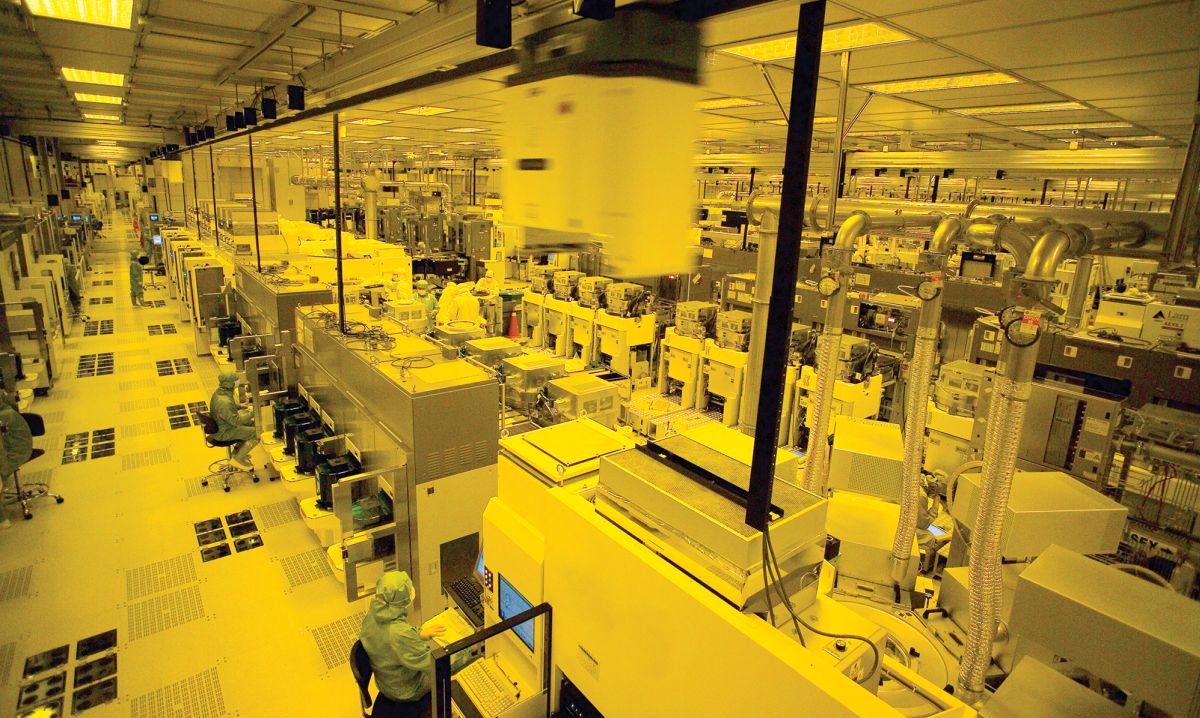
Elon Musk has taken his most direct step yet toward controlling the supply of computing power that underpins his expanding empire, outlining plans for a semiconductor facility in Austin that would be jointly run by Tesla and SpaceX, per Bloomberg.

The project, dubbed “Terafab,” is being pitched as a response to what Musk sees as a looming shortage of advanced chips as demand accelerates across artificial intelligence, robotics, and space systems.

“We either build the Terafab or we don’t have the chips, and we need the chips, so we build the Terafab,” he said, reducing a complex industrial undertaking to a blunt supply constraint.

At its core, the plan is an attempt to do in semiconductors what Musk has done in electric vehicles and rockets: compress supply chains, internalize critical components, and move faster than incumbents. The difference is that chipmaking is far less forgiving.

Musk said the initial phase would involve an “advanced technology fab” capable of producing and testing a wide range of chips, before scaling into a larger facility. He has previously suggested the plant would target leading-edge nodes, including 2-nanometer chips, though he offered no timeline or cost estimate in his latest remarks.

Building a competitive semiconductor fab typically requires tens of billions of dollars, years of construction, and access to a tightly controlled ecosystem of suppliers, from lithography systems to specialty chemicals. Even established players struggle to bring new capacity online on schedule.

Tesla’s pivot toward autonomy, humanoid robotics, and AI-driven services, alongside SpaceX’s growing data and communications ambitions, is rapidly increasing its need for compute. Musk suggested existing suppliers, including Taiwan Semiconductor Manufacturing Company and Micron Technology, will not be able to meet that demand at the pace he expects.

That concern is widely shared, though few have responded by attempting to build their own fabs. The capital intensity and technical barriers have kept most technology companies reliant on specialist manufacturers. Musk is effectively proposing to collapse that model, bringing design, production, and deployment under one umbrella.

The chips themselves would reflect that integration. One category would be optimized for edge and inference workloads, powering Tesla’s vehicles, robotaxi platform, and its Optimus humanoid robots. The second would be high-performance processors designed for space, feeding into SpaceX’s longer-term plans for orbital computing.

Those plans are becoming more concrete. During the presentation, Musk unveiled a concept for compact AI data center satellites, each capable of around 100 kilowatts of power, with future iterations potentially reaching the megawatt scale.

“We expect future satellites to probably go to the megawatt range,” he said.

The implication is that computing infrastructure could eventually move beyond terrestrial data centers, a shift that would require not just new hardware, but an entirely different approach to power, cooling, and connectivity. Musk’s vision ties that infrastructure directly to his companies, with xAI expected to consume much of the output.

“The future I want to see: I want us to live long enough to see the mass driver on the moon,” Musk said, referring to the contraption that would launch satellites from the lunar surface, “because that’s going to be incredibly epic.”

But there is a financial dimension as well. SpaceX is preparing for a potential initial public offering that could raise tens of billions of dollars, capital that would be needed to fund both launch capacity and the infrastructure required for space-based computing.

Texas, meanwhile, stands to gain from the concentration of these efforts. The proposed fab would sit near Tesla’s existing operations in Austin, reinforcing the state’s growing role in advanced manufacturing. Governor Greg Abbott was present at the announcement, a reminder of how aggressively states are competing to attract semiconductor investment.

Still, the gap between ambition and execution remains wide – meaning the plans are not coming to life anytime soon.

The semiconductor industry is defined by precision and incremental progress, not speed. Leading-edge manufacturing depends on a handful of specialized firms, including ASML for extreme ultraviolet lithography, and a network of suppliers that has taken decades to develop. Entering that ecosystem at scale is a formidable challenge, even with significant capital.

Musk’s track record offers mixed signals. His companies have delivered breakthroughs in areas once thought impractical, particularly in reusable rockets and electric vehicles. At the same time, timelines have often slipped, and projects have required sustained capital injections before reaching viability.

Terafab sits at the intersection of those tendencies. It is both a logical extension of Musk’s push toward vertical integration and one of the most technically demanding bets he has made.

The broader context is an industry under strain. Demand for compute is rising sharply, driven by AI training, inference, and data processing. Supply, while expanding, remains constrained by the complexity of scaling advanced manufacturing. Governments are pouring subsidies into domestic chip production, but results will take years to materialize.

Musk’s conclusion is that waiting is not an option.

“That rate is much less than we’d like,” Musk said.

OpenAI Set to Double Workforce by End of The Year, to Strengthen Position in The Evolving Enterprise AI Market

0

Artificial intelligence start-up OpenAI is reportedly preparing for a significant organizational expansion, with plans to nearly double its workforce to approximately 8,000 employees by the end of 2026, according to a report by the Financial Times.

The hiring push reflects a broader strategic shift as the company accelerates efforts to strengthen its position in the rapidly evolving enterprise AI market.

The expansion will see new hires concentrated across engineering, product development, sales, and research, alongside a growing cohort of specialists dedicated to improving customer engagement. This move underscores OpenAI’s transition from a research-centric organization to one increasingly focused on execution, monetization, and enterprise-scale deployment.

OpenAI’s hiring spree is part of a larger restructuring effort aimed at aligning its operations with enterprise demand. Internally, the company is targeting a revenue mix in which business customers account for roughly 50%, up from about 40% today. This shift highlights a deliberate move toward higher-quality, more predictable revenue streams.

Central to this transformation is a revamped go-to-market strategy. OpenAI is reportedly recruiting “technical ambassadors” and specialized personnel embedded within client organizations to drive adoption, integration, and long-term value creation.

At the same time, the company is consolidating its product offerings, integrating tools like ChatGPT and Codex into a unified productivity platform designed for enterprise workflows.

The broader strategy mirrors elements of companies such as Palantir Technologies, where value is derived not merely from software access but from deep customization, deployment, and integration within organizations.

Competitive Pressure from Anthropic

OpenAI’s strategic pivot comes amid intensifying competition from Anthropic, which has been gaining traction among enterprise customers. Often described as a “Cold War” between two San Francisco-based AI leaders, the rivalry between both companies reflects both technological competition and philosophical divergence.

While OpenAI has leaned into rapid productization, bringing AI tools like ChatGPT into mainstream use, Anthropic has positioned itself as a more cautious, research-driven alternative. Its flagship model, Claude, emphasizes safety, longer context windows, and predictable outputs, making it particularly appealing to organizations prioritizing reliability and risk management.

In contrast, OpenAI continues to benefit from first-mover advantage, global brand recognition, and a broad user base spanning individuals and enterprises. However, the growing demand for trustworthy, controllable AI systems has enabled Anthropic to carve out a strong foothold in the enterprise segment.

The competition is also extending into capital markets. According to Reuters, both companies are courting private equity firms to form joint ventures aimed at accelerating enterprise AI adoption. OpenAI, in particular, is reportedly offering attractive financial incentives, including a guaranteed minimum return of 17.5%, a figure notably higher than typical preferred investment instruments.

In addition, prospective investors are being offered early access to OpenAI’s latest AI models, a strategic move designed to deepen partnerships and fast-track deployment across enterprise use cases.

A Defining Shift in the AI Industry

Ultimately, OpenAI’s expansion signals more than just workforce growth; it marks a structural transition in the AI industry itself. As costs rise, consumer monetization remains limited, and competition intensifies, leading AI companies are being forced to prioritize revenue quality, enterprise adoption, and scalable deployment.

The evolving rivalry between OpenAI and other artificial intelligence startups is no longer just about model performance; it is increasingly a contest over trust, integration, and long-term value creation. These factors will likely define the next phase of the generative AI revolution.

New Online Casinos for Players from Canada: A Review of Bonus Programs

0

With new platforms entering the market every now and then, the online casino market in Canada has grown tremendously over the years. Because of the sheer number of platforms available, competition has also increased, with every platform looking for a way to draw players to itself.

One common way these casinos attract players is by offering them generous bonuses and promotions. For players, this is a good thing as it gives them the chance to explore new sites while enjoying extra value on their deposits.

But rewards and incentives are not the only thing Canadian players consider when choosing a gambling operator. In fact, they prioritize factors like payout speed. Really, who enjoys waiting for days before they can get their winnings? So, it’s understandable if many of these players prefer fast payout online casinos, where payments are processed much faster than traditional platforms.

In this article, we will consider some new instant withdrawal casinos Canada entering the market, which also promise players juicy welcome bonuses and fast payouts.

What Makes a Bonus Worth Claiming?

A casino bonus might look impressive from the outside. But that doesn’t mean it actually is. Having a welcome incentive run into thousands of dollars in potential rewards doesn’t mean it’s good for you because when it comes to these incentives, things are not usually as they look.

Most times, the real value of those incentives is not in their large percentages but in the little terms and conditions that come with them. So, before you opt to claim one, we recommend you consider the following factors:

  • Wagering requirements: This is how many times you will have to play through the fund before you can withdraw.
  • Minimum deposit: This is the smallest amount required to activate the offer.
  • Eligible games: Not all games can benefit from the offer. Most times, it only applies to certain slots.
  • Withdrawal limits: Maximum winnings allowed from the funds.
  • Free spin conditions: Wagering rules attached to spin winnings.

A large promo is attractive, but if the wagering requirements are extremely high, it may be difficult to convert into real cash. With that in mind, let’s take a look at some new casinos available to Canadian players.

Roby Casino

The operator has quickly gained attention among Canadian players because of its large welcome package. We are talking about a welcome bonus of 250% up to $3,750 + 250 free spins. This offer is aimed at players who enjoy longer playing sessions.

Having a 250% match bonus can be a big deal and can significantly increase the value you get from your first deposit. Plus, the additional free spins give your added advantage of exploring the slot library without worrying too much about your bankroll.

The library consists of exciting titles from popular providers in the space. This means there is no shortage of the amount of game available to you, whether they are slots, table games, or live dealer options.

Strengths of the platform’s offer:

  • Very high deposit match percentage
  • Large number of free spins
  • Wide selection of supported games

If you’re the type of player who enjoys exploring new platforms and maximizing their starting balance, the promotional package here may be worth considering.

Cazeus

Cazeus is another relatively new portal attracting attention from Canadian players. Its welcome incentive focuses more on balance rather than sheer size. The site offers a 100% bonus up to $750 + 200 free spins + 1 Claw Machine bonus.

Even though this package may not be as big as what’s offered by some operators, many players prefer it because it comes with relatively friendlier requirements that’s often easier to manage.

The site also comes with a claw machine feature, which also makes the bonus system a little more interactive compared to other platforms. There are also a wide variety of games available to explore on Cazeus as the site offers a large collection of slot titles that are easy to access whether on the desktop or mobile version of the platform.

Players who prefer straightforward promotions may find Cazeus appealing because the offer focuses more on usability than on extremely large promotional figures.

Avocasino

The site has been gaining popularity thanks to its relatively simple reward structure. Here, you get a 125% bonus up to $1,000 + 40 free spins.

The wagering requirements are one of the most important parts of this offer:

  • 30x wagering on bonus funds
  • 30x wagering on the deposit
  • 50x wagering on free spin winnings

Slot fans are among the demographics that love this site. That’s because of the vast amount of slots it offers in its library, with many of the titles from established providers. Avocasino is absolutely user-friendly, making it a preferred option for beginners looking for a simple and straightforward gaming experience.

Aerobet

Aerobet stands out because of the overall size of its welcome package. We’re talking about a really juicy offer here. Aerobet offers up to 400% match bonus totaling $6,000 + 200 free spins. It is undoubtedly one of the largest you will find in new gaming platforms around today.

Key details of the offer include:

  • Minimum deposit: $30
  • Wagering requirement: 35x on deposit plus bonus
  • Free spin wagering: 40x on winnings

Large promotional packages like this are often designed for high rollers – players who plan to deposit higher amounts and spend more time exploring games.

Aerobet is also not limited to casino games. It features a collection of sports betting options for people who enjoy both forms of entertainment on one platform.

Which Promotional Program Looks Best?

To be able to choose the right reward program, one would always have to consider one’s personal preferences. Some players just naturally like large incentives. On the other hand, some are just looking for a package with easy wagering conditions. And if you’re not sure which of the gaming sites above will best work for you, let’s make things a little easier for you:

  • Best for large bonuses: Aerobet
  • Best for balanced offers: Cazeus
  • Best for simpler wagering: Avocasino
  • Best for extended playtime: Roby Casino

However, before you claim any offer, it’s best to always take your time to go through the terms carefully and be sure you understand the wagering requirements.

As iGaming expert Hunter S. Thompson once said: “There are many harsh lessons to be learned from the gambling experience, but the harshest one of all is the difference between having Fun and being Smart.”

Understanding these terms can make a big difference in whether a promotional package becomes profitable or frustrating.

Conclusion

One of the strategies of new online casinos is offering exciting promotions to Canadian players. And juicy welcome incentives are always a huge draw for new users.

We’ve shown you some of the top platforms you might need to consider now because of their generous bonus programs. Take a careful look at each of them and choose one that best fits your playing style.

FAQs

Are new online gambling portals safe for Canadian players?

Many of these sites are safe because they operate under international licenses and use modern security technology. But before you sign up, take a moment to check their licensing information.

Which casino bonus is best for beginners?

As a beginner, you will want to prioritize offers with lower wagering requirements, even if the total fund is smaller than you’d imagine.

Are instant payout casinos available in Canada?

Yes. All the platforms we’ve featured in this post (Cazeus, Spinempire, and more) offer faster withdrawal options – either through crypto payments or e-wallets.