
DD
MM
YYYY

PAGES

DD
MM
YYYY

spot_img

PAGES

Home Blog Page 3111

NNPC Declares Total Asset Base of N246.8tn, Surpassing Nigeria’s nominal GDP

0

In a year marked by economic challenges for Nigeria, NNPC Limited has stunned the financial world with its 2023 full-year audited results, setting a new benchmark that has significantly eclipsed its past records.

While profit and revenue figures are impressive, it’s the sheer magnitude of the company’s total assets that has captured the most attention.

The state oil company’s 2023 full-year audited results reveal a staggering total asset base of N246.8 trillion, a figure that surpasses Nigeria’s nominal GDP of N229.9 trillion for the same year. This milestone not only marks NNPC as a titan of the oil and gas industry but also as a key pillar of Nigeria’s economic structure.

Breaking Down the Asset Composition

The foundation of NNPC Limited’s financial empire lies in its trade and other receivables, which constitute N162.9 trillion of its total assets. These receivables represent the company’s extensive dealings in crude oil, petroleum products, natural gas, and other services, reflecting the vast scope of its operations within Nigeria and internationally. Fixed assets, including property, plants, and equipment, add another N67.8 trillion to the total, underscoring NNPC’s significant investments in infrastructure and capital assets.

The scale of these figures is magnified when viewed in the context of currency translation. NNPC’s assets are predominantly dollar-denominated, and the depreciation of the naira in 2023 played a significant role in inflating the naira value of these assets. The company’s currency translation rate for fixed assets jumped to N907.1/$1 from N448.4/$1 in 2022, underlining how exchange rate movements can dramatically impact financial statements.

Crude Oil And Petroleum Sales

At the heart of NNPC’s financial success is its crude oil sales, which generated a record N14 trillion in revenue in 2023, up from N3.5 trillion the previous year. This growth was driven by increased sales volumes and higher global oil prices, as well as the company’s strategic focus on maximizing output and optimizing its supply chains. The majority of this revenue was earned domestically, with Nigeria accounting for N12 trillion of the total, while Panama emerged as a significant international market, contributing N2 trillion.

This dominance in crude oil sales is not just a financial triumph; it is also said to be a reflection of NNPC’s critical role in maintaining Nigeria’s energy security and economic stability.

In addition to crude oil, NNPC’s petroleum product sales also saw a significant uptick, reaching N7.1 trillion in 2023, compared to N4.5 trillion the previous year. This increase was largely driven by the removal of fuel subsidies in May 2023, which allowed the company to effect higher prices in its sales. Nigeria once again led the way, accounting for N6.9 trillion of the total revenue, with sales to the Bahamas contributing a modest N151.7 billion.

The removal of the fuel subsidy was a pivotal moment for NNPC, allowing it to capture more value from its petroleum product sales and boosting its overall profitability.

Natural Gas and Services

NNPC’s revenue from natural gas sales also experienced significant growth, rising to N2.3 trillion in 2023 from N683 billion the previous year. Nigeria was again the primary market, contributing N1.9 trillion, while international sales to the Cayman Islands added another N402.7 billion. This expansion in natural gas revenue highlights NNPC’s efforts to diversify its income streams and reduce its reliance on crude oil sales.

Revenue from services, which includes seismic contracts, gas transmission tariffs, and engineering services, also saw a substantial increase, reaching N464 billion in 2023, up from N100.5 billion in 2022. Nigeria was the dominant market for these services, generating N379.2 billion in revenue, a significant jump from zero in the previous year.

Cash Flow and Investments

NNPC Limited’s robust financial performance is further evidenced by its cash flow from operations, which more than doubled to N10 trillion in 2023, compared to N4.6 trillion in 2022. The company’s cash and bank balances also saw a dramatic increase, rising from N2.3 trillion to N7.1 trillion over the same period. This strong cash position provides NNPC with the financial flexibility to invest in new projects, manage its liabilities, and navigate the challenges of the global energy market.

On the investment front, NNPC reported N230.9 billion in proceeds from the sale of property, plants, and equipment, while spending N2.5 trillion on the purchase of new assets. This significant investment in infrastructure and capital assets underscores NNPC’s commitment to maintaining its leadership position in the oil and gas industry, while also preparing for the future by investing in new technologies and exploration activities.
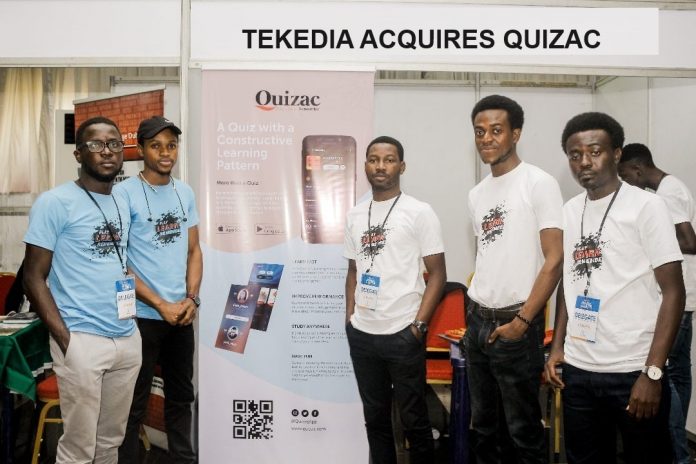
Tekedia Capital Acquires African edtech Startup, Quizac

0

Tekedia Capital has acquired the pioneering gaming-anchored African edtech startup, Quizac. Brilliant young people came together and created an amazing product which won the “Most Innovative Gamification Platform in West Africa”.

Read the founders: “When we launched Quizac, our mission was to infuse learning with the same excitement and engagement that social media brings. Having witnessed the shift from a pre-internet era to a social media-driven world, we recognised the need for an educational platform that could compete for students’ attention in this new age. Quizac was designed to empower students, offering them an engaging alternative… Quizac will be seamlessly integrated into the Tekedia ecosystem, gaining access to Tekedia’s extensive data assets and resources.”

With this acquisition, Tekedia Institute, the home of Tekedia Mini-MBA, and other award-winning business management programs, will experience a massive evolution. We will bake Quizac technology into the core engine of Tekedia, offering learners immersive experience so that the pursuit of entrepreneurial capitalism and the mastering of fixing market frictions, within the pillars of people, processes and tools, powered by knowledge, capital, labour, and risk taking, will be gamified.

So, you want to play the game of 10x Growth in Lagos, launch the solution, and play yourself into success. Or you want to understand the risk vectors associated with that new market entry, click the button, and you will play a game of New Market Risks. With AI technology, the convergence of data, knowledge, and action will be unified, to serve people, communities and nations.

I want to commend the uncommon vision of the Quizac Team. Everyone at Tekedia appreciates Tade Samson, Alayo Hussein, and Oluwatobiloba Awogbemi for this partnership. Our promise is to extend their hypothesis, by nurturing and improving Quizac technology, and in the process advance the liberation of mind, through impactful education.

Previous, current and future Tekedia Institute Learners, we will make sure everyone benefits. A new portal for Tekedia is coming; it will provide business tools (inventory management, project management, invoicing, bookkeeping, etc), legal custodial services, global banking services, marketplace for your digital ware, etc, so that besides education, we will offer other enablers for success. We will be done in weeks and will update all.

Our product is Knowledge; we will continue to deepen how we educate for Knowledge.


Ndubuisi Ekekwe

  • Chairman, Tekedia Capital
  • Lead Faculty, Tekedia Institute

“Nneka” And Why Blocking Nationwide Ban On Noncompete Agreements Is Unfortunate

0

The United States does a u-turn on freeing “Labour” and that is unfortunate: “In a significant legal decision on Tuesday, U.S. District Judge Ada Brown blocked the Federal Trade Commission’s (FTC) nationwide ban on noncompete agreements, which was set to take effect in September. The ruling came as a response to a lawsuit filed by the Dallas-based tax firm Ryan LLC, the U.S. Chamber of Commerce, the Business Roundtable, and other business groups, who argued that the FTC had overstepped its authority with the proposed ban..” 

In the Igbo Nation, girls are named “Nneka” which means “mother is supreme”. There is a reason for that: if everyone fails you, and you have lost in all kingdoms, there is one place that cannot and must not fail you: your mother’s place. Simply, your mother’s place is the last place of abode. 

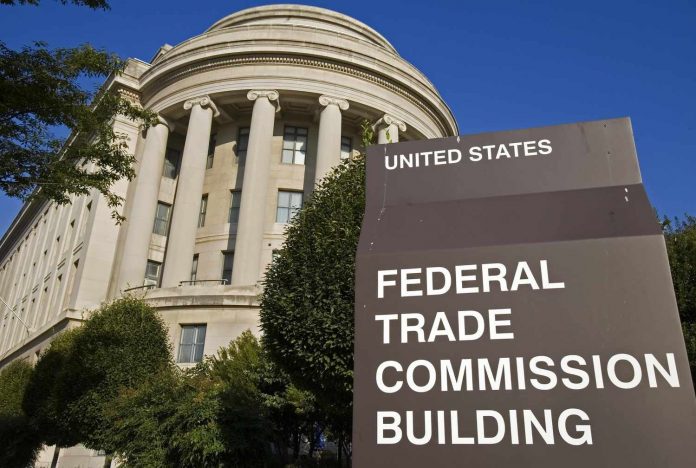
A federal judge in Texas has blocked a proposed rule by the Federal Trade Commission that sought to eliminate noncompete agreements. The rule, which was set to take effect Sept. 4, would have banned agreements that prevent workers from taking jobs with rival employers or starting their own competing ventures for a certain time period. The judge ruled that the FTC does not have the authority to implement such bans, saying the rule is “unreasonably overbroad without a reasonable explanation.” It would have affected about 30 million Americans, the FTC said.

Why this? Labour, our skill, is “Nneka”, supreme in all cases, and  should be free, unbounded and unconstrained,  even as we respect property rights of companies we work for. I think the United States should honour that even as we respect intellectual property rights. It is unfortunate when someone gathers capabilities and cannot utilize the same because of a non-compete clause. You have skills and cannot use the skills to feed yourself because of a document you signed years ago!

Good People, companies should give us certain rights and privileges when we show up at work because WE THE PEOPLE  matter today, and in the future, and not just the “hypothetical competition” which are designed to keep people down. This BLOCK should be reversed!

US Federal Judge Blocks Nationwide Ban on Noncompete Agreements Set to Take Effect in September

0

In a significant legal decision on Tuesday, U.S. District Judge Ada Brown blocked the Federal Trade Commission’s (FTC) nationwide ban on noncompete agreements, which was set to take effect in September.

The ruling came as a response to a lawsuit filed by the Dallas-based tax firm Ryan LLC, the U.S. Chamber of Commerce, the Business Roundtable, and other business groups, who argued that the FTC had overstepped its authority with the proposed ban.

The FTC, in a vote held in April, had moved to prohibit most noncompete agreements, arguing that such clauses prevent tens of millions of employees from leaving their jobs to work for competitors or start their own competing businesses. The ban was seen as a major step toward enhancing worker mobility and economic freedom.

However, the move faced immediate opposition from various business groups that argued the rule would negatively impact their ability to retain talent and protect intellectual property.

Judge Brown’s Ruling

Judge Brown, presiding in Dallas, sided with the plaintiffs, stating that the FTC had indeed overstepped its statutory authority. She labeled the rule as “arbitrary and capricious,” echoing concerns that the agency’s actions extended beyond the limits of its legal mandate.

“This win preserves the validity of millions of employment contracts across the nation that facilitate trust between employers and employees, innovation through the protection of IP, and investment in the training of employees,” said John Smith, Senior Vice President, Chief Legal Officer, and General Counsel for Ryan LLC.

Suzanne P. Clark, President and CEO of the U.S. Chamber of Commerce, hailed the decision as a “significant win” in the Chamber’s ongoing efforts against what she described as government overreach into business practices.

“A sweeping prohibition of noncompete agreements by the FTC was an unlawful extension of power that would have put American workers, businesses, and our economy at a competitive disadvantage,” Clark stated.

The FTC expressed disappointment with the ruling, signaling that the fight is far from over. FTC spokesperson Victoria Graham stated, “We are disappointed by Judge Brown’s decision and will keep fighting to stop noncompetes that restrict the economic liberty of hardworking Americans, hamper economic growth, limit innovation, and depress wages.”

Graham also mentioned that the FTC is seriously considering an appeal of the decision, which would be heard by the Fifth Circuit Court of Appeals if pursued.

In the interim, the FTC remains committed to addressing noncompete agreements through case-by-case enforcement actions. This approach suggests a shift in strategy, as the agency adjusts to the legal challenges that may impede the implementation of a blanket ban.

Contrasting Legal Opinions

The decision in Dallas contrasts with a recent ruling by a federal judge in Philadelphia, who rejected a similar attempt to block the ban. In that case, the judge ruled that the FTC indeed has the authority to “prevent unfair methods of competition in commerce” under the 1914 Federal Trade Commission Act.

This split in judicial opinion highlights the ongoing legal complexities surrounding the FTC’s authority to regulate noncompete agreements.

Josh Robbins, an attorney for ATS Tree Services, a company that previously challenged the ban, expressed satisfaction with Tuesday’s decision.

“This is a great first step and we expect litigation over the ban to continue,” Robbins said, indicating that the legal battles over the FTC’s authority will likely persist.

What’s Next?

If the FTC proceeds with an appeal, the case could set a significant legal precedent regarding the extent of the agency’s regulatory powers. Appeals on district court decisions can be lengthy processes, as evidenced by the still-pending FTC appeal in the Microsoft-Activision Blizzard merger case.

Meanwhile, businesses and employees across the nation remain in a state of uncertainty, as the future of noncompete agreements hangs in the balance.

In the meantime, the FTC is expected to continue challenging noncompete agreements through individual enforcement actions, potentially reshaping the legal status of employment contracts one case at a time.

Kenyan B2B Agritech Logistics Company Twiga Foods Announces Another Round of Layoff, 59 Employees Affected

0

Twiga Foods, a Kenyan B2B Agritech logistics company, has announced another round of layoffs affecting 59 employees. This development is part of a broader strategy under the new CEO, Charles Ballard who took the helm in May 2024.

The company stated that the layoffs are aimed at improving operational efficiencies as it focuses on its path to profitability. The recent reduction of workforce at Twiga is coming only after a year, when the company laid off 283 employees, representing a third or 33% of its 850 workforce as it pushed for a “lean, agile and cost-effective organization.”

Twiga foods cited the decrease in the purchasing power of its users as justification for the most recent round of layoffs and modification in operations. Despite having raised significant capital over the past decade, the company has faced challenges, including financial struggles that led to issues with paying salaries and suppliers, as well as legal battles over unpaid dues.

The company found itself in financial distress, facing a liquidation notice from Incentro Africa Limited over unpaid debts amounting to USD 261,878.75. The recent layoff at Twiga Foods has sparked widespread reactions from Kenyan Netizens as some pointed out that the problem with the company is leadership.

On X, @JengaHustle wrote,

“The issue with Twiga feeds is leadership-based. The company has had significant operational difficulties under previous management, which led to inefficiencies and financial strains. Even after appointing a new CEO and securing additional funding, Twiga Foods continues to face serious challenges, as evidenced by recent layoffs. These redundancies suggest that the company is still struggling to achieve sustainable growth and may be dealing with deeper structural problems”.

Twiga Foods’ failure in Kenya is attributed to several challenges which include overexpansion, financial mismanagement, operational inefficiencies, adverse market conditions, strategic missteps, and legal disputes. While the company’s innovative model showed promise, these critical issues have hindered its ability to sustain growth and profitability.

The former CEO Peter Njonjo had previously noted that the cost of capital for venture-backed startups had risen significantly over the past two years, which has put pressure on companies like Twiga Foods to reassess their business models to remain competitive. 

In March 2024, amidst these growing challenges, Njonjo left his position following a successful $35 million fundraising round through convertible bonds. This development sparked rumors and speculation about the circumstances surrounding his departure, with some insiders suggesting that the former CEO may have been pushed out due to the company’s ongoing difficulties.

Njonjo was replaced by Charles Ballard, an ex-Jumia executive who took over as CEO in May 2024. Ballard in a bid to put the company on a path to profitability stated that the recent layoffs are essential for Twiga to refine its service offerings and build a stronger foundation for long-term growth.

With Ballard joining Twiga Foods, the company aims for continued growth and innovation in the food distribution industry. His diverse background and apt vision make him a highly valuable addition to the company’s leadership team. Ballard’s appointment comes at a time when Twiga Foods targets bolstering Kenya’s agricultural sector.

Notably, despite the recent layoffs, Twiga is also creating 25 new positions within its growth and innovation departments. This move suggests a strategic shift towards areas that the company believes will drive future growth, including stronger partnerships with fast-moving consumer goods (FMCG) manufacturers, logistic efficiencies, and the development of enhanced tech solutions.