DD
MM
YYYY

PAGES

DD
MM
YYYY

spot_img

PAGES

Home Blog Page 3114

Unpacking Polymarket Potential ‘Ban’ in the US

0

The landscape of online prediction markets has been evolving rapidly, and Polymarket has been at the forefront of this innovative frontier. However, recent developments have brought to light the complexities of operating such platforms within the regulatory frameworks. The potential ‘ban’ or regulatory actions against Polymarket have sparked a significant discussion among stakeholders, from traders to legal experts.

Polymarket, a decentralized platform known for its event-based binary options markets, has seen a surge in volumes, especially with the 2024 presidential election markets. This has caught the attention of US lawmakers, who are pushing for a ban on election betting. The concerns stem from the unregulated nature of these markets and the implications they may have on the integrity of the electoral process.

The Commodity Futures Trading Commission (CFTC), which oversees futures and options markets in the United States, has been particularly active in this domain. A recent order required Polymarket to pay a $1.4 million penalty for offering off-exchange event-based binary options contracts and failing to obtain the necessary designations or registrations. This action by the CFTC is a clear indication of the regulatory challenges facing platforms like Polymarket.

In response to the CFTC’s actions, Polymarket has shut out U.S. traders to comply with the settlement, while remaining operational in other jurisdictions. This geo-blocking is a temporary measure as the company works on a regulated product for the U.S. market. The move highlights the delicate balance that must be struck between innovation in financial technologies and adherence to regulatory standards.

Advocates argue that prediction markets have historically been more accurate than traditional polling methods in forecasting election outcomes. They quickly assimilate new information and reflect the collective wisdom of a diverse group of participants, who are financially incentivized to make informed predictions.

Participants in prediction markets are often highly informed and have a vested interest in the outcome, leading to more deliberate and researched predictions. This can include professional bettors, companies looking to hedge risks, or individuals with keen interest in political events.

Supporters believe that prediction markets filter out the noise from pundit opinions and provide a more direct and quantifiable measure of public sentiment. They offer a dynamic and real-time reflection of changes in public opinion as events unfold. There is a risk of market manipulation, where wealthy individuals or groups could place large bets to sway public perception and create a false narrative about a candidate’s chances of winning.

The debate over the regulation of political prediction markets is not just limited to the United States. Crypto and fintech industry leaders worldwide are opposing proposals that could ban such markets, arguing that they provide valuable insights and serve as alternative sources of information. The Winklevoss twins, founders of the Gemini exchange, have joined forces with Coinbase to push back against the CFTC’s rule to ban event contracts, which would impact platforms like Polymarket.

The situation with Polymarket serves as a case study for the broader issues at play in the intersection of technology, finance, and regulation. As decentralized finance (DeFi) continues to grow, the need for clear regulatory frameworks becomes increasingly apparent. The outcome of this situation could set a precedent for how similar platforms operate in the future.

For now, the potential Polymarket ‘ban’ remains a topic of heated debate and speculation. It underscores the importance of proactive engagement with regulatory bodies by market participants to ensure that the markets remain robust, transparent, and protective of customers. As the situation unfolds, it will be crucial to monitor the responses from both the platforms involved and the regulatory agencies to understand the future trajectory of online prediction markets.


A New Era with Prime Minister Paetongtarn Shinawatra in Thailand

0

Thailand has entered a new chapter in its political history with the election of Paetongtarn Shinawatra as the country’s prime minister. At 37, she represents not only a generational shift in leadership but also the continuation of a political legacy that has shaped Thai politics for decades.

Paetongtarn Shinawatra, the youngest daughter of the former Prime Minister Thaksin Shinawatra, was elected by Thailand’s Parliament, marking a significant moment in the nation’s governance. Her election continues the influence of the Shinawatra family, a name synonymous with both popularity and controversy in Thai political circles.

The Pheu Thai Party, which has seen two previous Shinawatras at the helm, now looks to Paetongtarn to guide the country through its complex political landscape. Her appointment comes after a royal endorsement, a crucial step in the Thai political process, which solidifies her position as the head of government.

Paetongtarn’s rise to power is not without its challenges. The legacy of her father, Thaksin Shinawatra, looms large. Thaksin, a polarizing figure, was ousted by a military coup in 2006, leading to years of political unrest. Paetongtarn’s aunt, Yingluck Shinawatra, also served as prime minister before being removed from office. The family’s political saga has been marked by coups, exiles, and a persistent divide in Thai society.

Her key policies reflect a blend of progressive social stances and economic pragmatism. On the economic front, she is determined to stimulate the economy, improve universal healthcare, and leverage Thailand’s cultural “soft power” on the global stage. These policies aim to address the immediate concerns of voters about the high costs of living while also reassuring foreign investors about the stability of Thailand’s political landscape.

Paetongtarn’s approach to governance suggests a commitment to inclusivity and modernization, balancing respect for tradition with the need for reform. As she navigates the complexities of her role, the world watches with interest to see how her policies will shape the future of Thailand. Her leadership comes at a time when the country seeks to break free from cycles of political turbulence and move towards a more stable and prosperous future. With her at the helm, Thailand may well be on the path to realizing these aspirations.

Despite the turbulent history, Paetongtarn’s election signifies a potential shift towards stability and continuity. Her victory was decisive, with a substantial majority in Parliament supporting her candidacy. She has pledged to govern with an open mind and to create opportunities for all Thais to “dare to dream, dare to create, and dare to dictate their own future”.

The international community has taken note of this historic election. Leaders from around the world, including India’s Prime Minister Narendra Modi, have extended congratulations and expressed eagerness to strengthen bilateral ties with Thailand under Paetongtarn’s leadership.

As Thailand navigates the post-pandemic world, the focus will be on how Prime Minister Paetongtarn Shinawatra addresses the pressing issues facing the nation. Economic recovery, political unity, and social progress are likely to be at the forefront of her agenda. With a youthful energy and a name that carries weight, Paetongtarn has the potential to usher in a period of renewal for Thailand.

Her leadership style, policy decisions, and ability to unite a nation marked by historical divisions will be closely watched. The hope is that under her guidance, Thailand can achieve a balance between honoring its traditions and embracing the future.

As Paetongtarn Shinawatra takes on the mantle of leadership, the world watches with anticipation to see how she will shape the destiny of Thailand. It is a moment of great responsibility and opportunity, and the path she charts for the country will have lasting implications for its people and its place in the global community.

South Korean Official Embezzled $400K for Crypto Investments

0

In a striking case of financial misconduct, a South Korean civil servant has been charged with the embezzlement of public funds amounting to approximately 600 million won (around $438,000), which were allegedly used for personal cryptocurrency investments. This incident has sent ripples through the South Korean administrative system, highlighting vulnerabilities and the pressing need for stringent oversight mechanisms.

The accused, a grade six civil servant from Cheongju City Hall, reportedly forged official documents over a seven-year period starting in January 2017 to misappropriate funds designated for government affairs, including student work placements and support projects for North Korean defectors. The prosecution’s indictment suggests a calculated misuse of authority to facilitate personal financial gain through investments in the volatile cryptocurrency market and stock trading, while also settling personal debts.

This case is not an isolated event but part of a series of crypto-related scandals involving South Korean civil servants. Earlier incidents include a Seoul civil servant arrested for crypto-related fraud and voice phishing attacks, and another official who fled abroad after converting a substantial amount of national health insurance funds into cryptocurrency.

The Cheongju District Prosecutors’ Office has taken a firm stance, seizing assets such as apartments and vehicles to recover the proceeds of the crime. The spokesperson for the prosecution emphasized the commitment to a thorough and loophole-free case to ensure a sentence commensurate with the crime’s severity.

Here’s a brief overview of some notable incidents that have made headlines:

The Coinrail Hack (2018): Coinrail, a South Korean crypto exchange, was hacked in June 2018, leading to the loss of approximately $40 million worth of cryptocurrencies. This incident raised serious concerns about the security measures of crypto exchanges.

The Justice Minister’s Trading Ban Proposal (2018): In January 2018, South Korea’s Justice Minister Park Sang-ki proposed a trading ban on cryptocurrencies, leading to a massive public outcry and a significant drop in global crypto markets. The proposal was later softened following public backlash and government discussions.

The Upbit Fraud Case (2019): Executives from Upbit, one of South Korea’s largest cryptocurrency exchanges, were indicted for fraud in April 2019. They were accused of making fake orders to inflate trading volumes and deceive investors.

The Nth Room Case (2020): In one of the most disturbing scandals, the ‘Nth Room’ case involved a crypto-encrypted chat room where users paid in cryptocurrency to access videos of sexual exploitation. The scandal prompted a national debate on digital sex crimes and the role of cryptocurrencies in such illegal activities.

The Terraform Labs Collapse (2022): Terraform Labs, a South Korean blockchain company, faced intense scrutiny after the dramatic collapse of its Terra (LUNA) and TerraUSD (UST) tokens in May 2022, wiping out billions in market value and affecting numerous investors.

The broader implications of these scandala are significant. It underscores the allure and risks associated with cryptocurrency investments, especially when juxtaposed against the backdrop of public service and trust. Moreover, it raises questions about the adequacy of current financial controls within government bodies and the potential for blockchain technology to offer more transparent and tamper-proof systems for managing public funds.

As the legal proceedings unfold, the South Korean public and global observers await the outcome, which will likely influence future policies and preventive measures against such financial crimes. The incident serves as a cautionary tale about the ethical responsibilities of public officials and the critical importance of maintaining integrity within the public sector.

Germany Suspends Financial and Military Aid to Ukraine

0

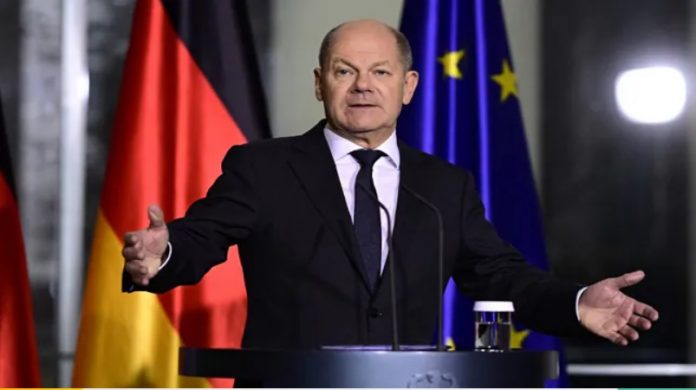
In recent times, the geopolitical landscape has been significantly shaped by the ongoing conflict between Ukraine and Russia. A critical aspect of this conflict has been the support provided by various countries to Ukraine, with Germany playing a notable role. However, recent reports suggest a shift in Germany’s stance, with indications that the country may suspend new financial military aid to Ukraine.

The conflict in Ukraine has prompted a significant international response, with countries around the world stepping up to provide various forms of aid. The United States has been at the forefront, committing approximately $75 billion in total aid, with a substantial portion allocated to military support. This commitment underscores the U.S.’s role in global security and its support for Ukraine’s sovereignty.

Germany and the United Kingdom follow closely, with both nations contributing significant aid, both in terms of military and humanitarian assistance. Germany, in particular, has provided a notable amount of humanitarian aid, reflecting its commitment to addressing the immediate needs of those affected by the conflict.

The European Union has also played a crucial role, with a collective commitment of around $93 billion in aid, demonstrating the bloc’s solidarity and support for a fellow European nation facing aggression. This aid has been vital in supporting Ukraine’s defense and aiding the country’s resilience during these challenging times.

Other countries, including Canada and Poland, have provided substantial support, contributing to the military, financial, and humanitarian efforts to assist Ukraine. The global community’s collective efforts have been coordinated through various platforms, ensuring that aid is delivered effectively and meets the urgent needs of Ukraine.

The decision to halt new aid requests by Germany does not affect previously approved assistance programs, ensuring that existing commitments will continue. However, future support will be subject to new funding mechanisms, potentially involving proceeds from frozen Russian assets. This pivot reflects the complex balancing act countries face in supporting international obligations while addressing internal fiscal pressures.

This development has sparked a range of reactions, and a closer examination reveals a complex situation. According to some sources, Germany will halt new military aid requests as part of a broader plan to reduce spending. This decision is not retroactive and does not affect previously approved aid, but it does mean that new requests for assistance will not be approved. This has been reported amidst budgetary constraints and shifting priorities within the German government.

On the other side of the narrative, Ukraine’s Foreign Ministry has labeled these reports as ‘manipulation’, asserting that the claims of Germany stopping military aid are incorrect. The ministry’s spokesperson emphasized that the German budget for the upcoming year is yet to be finalized and that the actual level of support for Ukraine will only be known once the budget is approved.

The discourse surrounding Germany’s military aid to Ukraine is emblematic of the broader challenges faced by nations in balancing domestic priorities with international responsibilities. It also highlights the intricacies of international diplomacy and the importance of clear communication in times of crisis.

As the situation evolves, it is crucial to stay informed through reliable sources and to understand the multifaceted nature of international aid. The implications of Germany’s decisions will undoubtedly have a significant impact on the dynamics of the conflict and the international response to it.

The Microsoft’s OpenAI ChatGPT Own Goal On Its AI Future

0

As a village boy, I did come to the same conclusion that Microsoft made a mistake investing $billions and making OpenAI relevant. There are three fundamental ways to launch an AI upstream business

Partner with a company with a large user base. OpenAI’s ChatGPT partnered with Microsoft which has millions of users. 

Spend a huge amount of money via promos and advertisements to get data which will improve your AI models as quickly as possible. This is the Temu path; Temu uses AI to power shopping in its ecosystem.

Bake AI into existing in-house data. If you are lucky, and you have the data as Google does, you can launch your Bard equivalent once your code is ready. 

Without Microsoft, OpenAI would not have risen the way it did. It provided money, data and cloud hosting, and yet the same company it did all that is a COMPETITOR.  This was how I put it two weeks ago: “But capitalism does not stop there, as Microsoft tells its shareholders that ChatGPT’s OpenAI, a company which it has supported with $13 billion, is now a competitor. How can you invest $billions in a company and that firm later becomes a competitor? How was that type of agreement a possibility that OpenAI could unveil SearchGPT in a world with Bing? “

Google People, ex-Google CEO agrees: “When Microsoft did the OpenAI deal, I thought that was the stupidest idea I’d ever heard, outsourcing essentially your AI leadership to OpenAI and Sam and his team. And yet, they’re on their way to being the most valuable company,” Eric Schmidt said.

This comment reflects the broader industry debate about the risks and rewards of partnerships in AI. While Microsoft’s investment in OpenAI has yielded significant benefits, such as integrating OpenAI’s advanced models like GPT into its Azure platform and products like Microsoft 365 Copilot, Schmidt’s criticism hints at the underlying tensions in this partnership. It highlights the possibility that Microsoft may have made itself overly dependent on OpenAI for its future in AI, a technology seen as crucial for the next wave of computing innovation.

However, Microsoft’s partnership with OpenAI has so far paid off in many ways. For instance, Microsoft’s early investment in OpenAI gave the company access to state-of-the-art AI technology, which it has been able to integrate into its cloud services, productivity software, and AI-powered tools. This collaboration has helped Microsoft position itself as a major player in AI, competing directly with Google and Amazon in the cloud computing and AI markets.

[…]

Schmidt also pointed out that while Microsoft has invested heavily in OpenAI, it does not have exclusive control over the AI models that OpenAI creates. This could eventually place Microsoft at a disadvantage, especially as other companies and startups gain access to the same technologies that Microsoft helped fund.

Microsoft leadership should pray that no one goes after them as it is indeed possible that ChatGPT was used to write that agreement!