
DD
MM
YYYY

PAGES

DD
MM
YYYY

spot_img

PAGES

Home Blog Page 3143

Google’s Dance with Antitrust: A Tech Giant in the Crosshairs As DOJ Pushes for its Breakup

0

In what feels like a page torn from the tech industry’s most dramatic playbook, the U.S. Justice Department is once again setting its sights on a familiar target: Google. Following a landmark ruling that found the Silicon Valley giant guilty of monopolizing the online search market, Washington is now toying with a possibility as audacious as it is historic—a forced breakup of one of the world’s most powerful companies.

But while the idea of dismantling Google might sound radical, it’s not the first time the behemoth has been at the center of such conversations. The tech giant has, time and again, been a lightning rod for antitrust scrutiny, deftly maneuvering its way around challenges that would have felled lesser companies.

The Justice Department’s Big Gamble

The Justice Department’s latest considerations represent the most serious threat Google has faced since the U.S. government’s failed attempt to break up Microsoft over two decades ago. According to insiders, this time around, the department is pulling no punches. Among the remedies being floated are the divestiture of Google’s Android operating system, its Chrome web browser, and potentially even its crown jewel: the AdWords advertising platform.

The deliberations follow a bombshell ruling by Judge Amit Mehta on August 5, 2024, that Google had illegally cemented its dominance in the online search and search advertising markets. With this ruling in hand, the government is now poised to push for measures that could fundamentally alter Google’s sprawling business empire.

Yet, this isn’t the first time such drastic measures have been considered—or even attempted. Google’s knack for navigating these treacherous waters is well-documented, and history suggests the company may once again find a way to emerge relatively unscathed.

A Familiar Script for a Tech Titan

The narrative of Google facing the prospect of a breakup is almost as old as the company itself. For years, the search giant has been accused of leveraging its dominance to stifle competition, prompting calls from regulators around the world to break it up. But each time, Google has managed to sidestep the guillotine.

In 2020, the European Union slapped Google with a series of antitrust fines totaling billions of dollars for similar accusations of anti-competitive behavior in the Android and search markets. Despite the penalties and the accompanying rhetoric about breaking up the company, Google continued to thrive, tweaking its business practices just enough to appease regulators without ceding its market power.

In the U.S., Google’s tussles with antitrust authorities are even more storied. In 2013, the Federal Trade Commission (FTC) ended a lengthy investigation into Google’s search practices with a settlement that critics lambasted as toothless. Then, in 2020, the Justice Department and a coalition of state attorneys general launched a flurry of lawsuits accusing Google of antitrust violations. The company, as always, braced itself, lawyered up, and continued business as usual.

Why This Time Could Be Different

So, what makes this latest challenge any different from the many that have come before? For starters, the political climate in Washington has shifted significantly. The Biden administration has made no secret of its desire to rein in Big Tech, with President Biden himself frequently voicing concerns about the unchecked power of companies like Google. The Justice Department’s antitrust division, now under the leadership of Lina Khan—a prominent critic of tech giants—has shown a willingness to pursue aggressive action against monopolistic practices.

Moreover, the stakes have never been higher for Google. Judge Mehta’s ruling not only affirmed that the company had abused its dominance in search but also opened the door for the government to seek remedies that could dismantle its business model. The Justice Department’s discussions are said to have intensified in the wake of this ruling, with officials exploring not just traditional antitrust remedies but also more radical options like breaking up the company.

If the Justice Department does move forward with a breakup, the most likely targets would be Android and Chrome—two pillars of Google’s ecosystem that have been instrumental in maintaining its dominance. Android, with its 2.5 billion users worldwide, serves as a gateway for Google’s services, while Chrome’s near-ubiquity on desktop and mobile devices ensures that Google’s search engine remains the default choice for billions of users.

Google’s Antitrust Defense Playbook

Although the stakes are heightened, Google is not without its defenses. The company has proven remarkably adept at weathering antitrust storms, thanks in large part to its vast legal resources and deep pockets. In previous cases, Google has managed to negotiate settlements that allowed it to maintain much of its business model intact, albeit with some modifications.

One strategy Google could deploy is to argue that breaking up the company would ultimately harm consumers by disrupting the seamless integration of its services. The company has long maintained that its dominance is a product of innovation and consumer choice, rather than anti-competitive behavior.

Moreover, Google could push back against the breakup by pointing to the rapid evolution of the tech industry. With the rise of artificial intelligence, cloud computing, and other emerging technologies, Google could argue that competition is thriving in ways that regulators may not fully appreciate. Indeed, the Justice Department’s own deliberations have reportedly touched on concerns that a breakup could inadvertently hamper the development of AI technologies—a field where Google is a leading player.

The AI Frontier: A New Battleground

Artificial intelligence is rapidly becoming the next frontier in Google’s ongoing battle with regulators. Judge Mehta’s ruling highlighted concerns that Google’s dominance in search could give it an unfair advantage in developing AI products, prompting discussions within the Justice Department about potential remedies. These could include preventing Google from using data collected through its search engine to train its AI models or requiring the company to license its data to competitors.

As AI becomes increasingly integrated into the digital economy, the outcome of this case could have far-reaching implications not just for Google, but for the entire tech industry. Google’s ability to navigate these challenges will likely determine whether it remains a dominant force in the years to come or whether it will be forced to cede ground to a new generation of competitors.

Undoubtedly, Google is once again at a crossroads. The company’s track record suggests that it is well-equipped to navigate these challenges, but the stakes have never been higher. A breakup would be a seismic event, not just for Google, but for the entire tech industry, reshaping the digital landscape in ways that are difficult to predict.

For now, all eyes are on Washington as the Justice Department prepares to make its next move. Whether this latest chapter in Google’s long-running antitrust saga ends in a breakup or another deft maneuver by the tech giant, one thing is clear: the battle over the future of Big Tech is far from over.
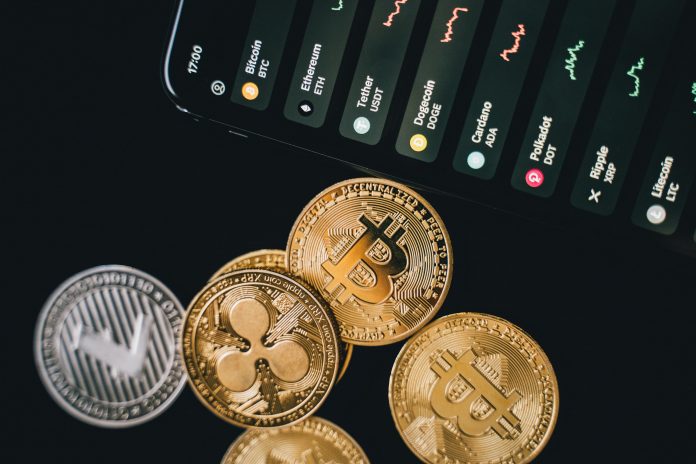

The Role of New Tokens in Diversifying Investment Strategies in the Crypto Market

0

Crypto investors know how important diversifying their investment is, as the industry is volatile. It’s, therefore, understandable that they come up with several strategies to reduce risks and protect their investments. We therefore see investment portfolios with popular cryptocurrencies and tokens. However, new tokens are also springing up every day, and they may just be what investors need to buffer their portfolios. But first things first; what are tokens, and how can new tokens help in diversifying crypto investments? Well, let’s read on to find out.

A Brief Overview of Crypto Tokens 

Coins and tokens are both digital assets, but unlike the former, tokens don’t have their blockchains. Instead, they thrive on an existing blockchain, especially Ethereum, and do several things through smart contracts. Crypto tokens are like coupons or vouchers that can be bought, sold, or traded, but they aren’t a currency. They also prove asset ownership, give people the right to make governance decisions in a Decentralized Autonomous Organization (DAO), or acquire virtual collectables when gaming. Crypto users and investors alike may be familiar with the following; wrapped tokens, utility tokens, non-fungible tokens, security tokens, DeFi tokens and governance tokens.

A Sneak Peek into the Newest Crypto Tokens in the Industry 

Crypto enthusiasts may already be familiar with the BTC Bull Token, which is directly tied to Bitcoin’s social and market value so its “value rises just as the crypto giant becomes more valuable. It’s often used in trading to amplify exposure to Bitcoin’s price movements without having direct ownership of Bitcoin as an asset. The token’s value is typically recalculated and adjusted periodically usually through daily rebalancing to maintain its leverage ratio. To get the token, investors need to have ETH or USDT, a Defi crypto wallet which can be any of Best Wallet, Trut Wallet or MetaMask.

In addition, other tokens also exist. For example, the ZRO token is paired with LayerZero, an omnichain interoperability protocol, permitting different networks to communicate, using oracles and smart contracts. Officially listed on Binance on 20th June 2024, this governance token allows the holders to vote on how the protocol should grow and develop. Its price is currently $3.515456 with a market cap of $ 386.70 million. Regarding its investment potential, ZRO token appears to be bearish short to medium-term. But it shows good prospects for being bullish over time, which is more favourable for long-term investors.

The ALT token is native to AltLayer, a decentralised and open protocol that promotes security and fast finality for rollups. Launched in January and enabled in March 2024, the ALT token’s current price is $0.090094 with a current market cap of $201.13 million. It gives its holders the power to make governance decisions and is also used as payment for services and transactions on the network. ALT token may have the potential to be a good investment, as Polychain Capital, Binance Labs, Sean Neville and other big names are interested in it.

SEI launched in August 2023 alongside the Sei blockchain and is used in governance, staking (security purposes), and trading fees on transactions on the platform. It holds a price of $0.289988 per SEI and a market cap of $920.71 million. Crypto investors may consider giving SEI a place in their portfolios because forecasts show that it may have a bullish trend soon, although it is currently bearish.

How Crypto Tokens Help in the Diversification of Crypto Investments

Crypto tokens can prove themselves a worthy form of investment diversification because they don’t have any business with traditional finance markets and don’t follow their rules. This makes them a unique asset class. That said, reducing risks may be better when people invest in them and traditional commodities. Moreover, anyone can get good returns if the supply and demand are beneficial. People can also change their crypto tokens into fiat currency or cryptocurrency at any time.

Because of tokenization, small-scale investors can also be illiquid asset holders; they only need to buy fractional ownership or shares of their desired shares. Plus, they can escape expensive admin costs because tokens operate with smart contracts which automate and streamline dividend distribution and other processes. People making cryptocurrency investments can also be rest assured that their token investments are safe on their respective blockchains; hackers will have a hard time changing data within the tokens.

However, it is important to note that the crypto market is extremely volatile, and an unfavourable market can mean sudden investment losses, which is not what anyone looks forward to. Due to the lack of regulations, crypto tokens can also be at risk of market manipulation and even financial crimes like fraud. Blockchain isn’t completely foolproof; a minute flaw in the smart contract’s code can bring its security crumbling down, and criminals can do whatever they want with it. These risks may deter some investors from crypto tokens.

To Conclude

New crypto tokens show promise to be great investment diversification options, although they are now building their momentum on the market. But be that as it may, they are still subject to the forces of demand and supply in tandem with market sentiments. Thus, they can go very far if the bullish trends dominate.

We Reduced Our Stake in Dangote Refinery to Invest in CNG – NNPC

2

The Nigerian National Petroleum Company (NNPC) Limited has provided clarification regarding the reduction of its stake in the Dangote Petroleum Refinery, confirming that its interest was scaled down from an initial 20% to 7.2%.

This decision, according to NNPC’s spokesperson Femi Soneye, was motivated by the company’s strategic shift towards investing in compressed natural gas (CNG) as a cleaner, more cost-effective energy source.

The initial acquisition of the 20% stake in the Dangote Refinery was a significant move by NNPC in September 2021, costing the company $2.76 billion. However, on July 14, 2024, Africa’s richest man and owner of the refinery, Aliko Dangote, announced the reduction of NNPC’s stake to 7.2%. This downsizing was not solely a financial maneuver; it was also tied to NNPC’s inability to meet its crude oil supply obligations to the refinery, a commitment that was integral to maintaining its 20% equity in the project.

Soneye, while speaking on the Brekete Family program, elaborated on the rationale behind the shift.

“The reason for reducing our stake in Dangote refinery is because we wanted to invest in CNG. We observed that CNG is very cheap and all over the world, people are investing in clean and cheaper alternative energy,” he said.

He pointed out that CNG is not only an environmentally friendly option but also a cost-effective one for Nigerians.

“If Nigerians use CNG, it will be cost-effective for them. That is why the NNPC is building different CNG stations everywhere. We understand that with N10,000, Nigerians can fill their cars and use it for two weeks,” Soneye explained.

He indicated that the NNPC’s decision to invest heavily in CNG aligns with its broader strategic objectives, particularly in light of the challenges in fulfilling its crude oil supply obligations to the Dangote Refinery. The shift towards CNG is seen as a more viable and sustainable option, given the current state of Nigeria’s energy sector.

Regarding the ongoing speculation and allegations of sabotage surrounding the Dangote Refinery, Soneye was quick to dismiss such claims. Soneye assured that the NNPC remains committed to the success of the refinery, stating, “We want all Nigerians to know that the NNPC does not have any issue with the Dangote Refinery. We are part of the owners of the Dangote refinery, and we don’t want it to collapse.”

He emphasized that the investment of billions of naira by NNPC into the refinery reflects its vested interest in the project’s success.

“As of today, we have a 7.2 percent stake in the refinery. So, why would we want to sabotage such a company?” Soneye questioned.

The NNPC spokesperson also addressed the perceived dispute between the Nigerian Midstream and Downstream Petroleum Regulatory Authority (NMDPRA) and the Dangote Refinery. He clarified that the Petroleum Industry Act (PIA) does not grant NNPC the authority to halt operations at the Dangote Refinery.

“Mr. Farouk Ahmed is the head of Nigeria’s midstream and downstream petroleum regulatory authorities. They have power over all refineries. Anything that has to do with the distribution of petrol, they are in charge. In fact, they are superior to the NNPC in that sector. We don’t have anything to do with them,” Soneye clarified, distancing NNPC from the regulatory tussle.

The tension between NMDPRA and Dangote Refinery escalated on July 18, when Farouk Ahmed, the CEO of NMDPRA, criticized the quality of products from local refineries, including Dangote’s, comparing them unfavorably to imported ones. Ahmed also claimed that Dangote had requested a suspension of all petroleum product importation, directing oil marketers to source their supplies from his refinery. Dangote, however, denied these allegations, further fueling the ongoing controversy.

However, Soneye’s claim that the reduction in NNPC’s stake in Dangote’s Refinery is due to the decision to shift towards CNG investment, has been laughed at by many, especially energy experts who had earlier decried the NNPC’s inability to fulfill its crude oil obligation to the refinery.

Balance Between Governance and Permissionless Nature in Blockchain

0

Decentralization has become a buzzword in the world of technology, especially with the rise of blockchain technology. At its core, decentralization is about the distribution of power away from a central authority. This concept has been applied to various systems, including blockchain networks, which are designed to operate without a central governing body. Two critical factors that play a pivotal role in the success and efficiency of decentralized systems are governance and permissionless participation.

Governance refers to the mechanisms, processes, and relationships that control and direct the operations of a network. In a decentralized context, governance is crucial because it determines how decisions are made, how rules are set and enforced, and how the system adapts to new challenges and opportunities. The governance model of a decentralized system must be robust enough to handle conflicts, ensure compliance with regulations, and maintain the integrity of the network.

Bitcoin, created by the mysterious figure Satoshi Nakamoto, is the original permissionless blockchain. It allows anyone to transact and participate in the network’s consensus process. Ethereum, conceived by Vitalik Buterin, extends this concept to include smart contracts, enabling a vast array of decentralized applications (dApps) to be built on its platform.

Other notable examples include Litecoin, an early Bitcoin spinoff that offers faster transaction times; Cardano, which aims to provide a more secure and scalable infrastructure; and Polkadot, designed to enable different blockchains to interoperate. These platforms embody the permissionless model, providing open, decentralized networks where innovation can flourish without centralized control.

A study by the Federal Reserve on the governance of permissionless blockchain networks highlights the importance of stakeholders such as developers, nodes, and users in the governance process. These stakeholders have different roles and influence within the network, and their interaction and collaboration are essential for the network’s functionality and evolution. The study also emphasizes the need for research into the governance of permissionless networks, particularly in how they establish rules, respond to market competition, and handle strategic decisions.

Permissionless systems are those that allow anyone to participate without requiring authorization from a central authority. This openness is a defining characteristic of many blockchain networks, such as Bitcoin and Ethereum. Permissionless participation fosters innovation and inclusivity, as it enables a diverse group of participants to contribute to the network’s development and security.

However, permissionless systems also face challenges, especially in terms of governance. Without a central authority, it can be difficult to coordinate changes and manage the network effectively. A paper from Vrije Universiteit Amsterdam proposes a decentralized fair governance model for permissionless blockchain systems, suggesting that power should be fairly distributed among all participants to achieve true decentralization.

Finding the right balance between effective governance and maintaining a permissionless nature is one of the biggest challenges for decentralized systems. While permissionless systems promote decentralization, they also require a certain level of governance to ensure that the network operates smoothly and securely. This balance is critical for the long-term sustainability and success of decentralized networks.

Governance and permissionless participation are two critical factors that determine the effectiveness of decentralized systems. As these technologies continue to evolve, it will be important to develop governance models that can accommodate the unique challenges of permissionless networks while still promoting the principles of decentralization.

Top 3 Altcoins to Watch: Unexpected AI Altcoin Set to Lead the 2024 Bull Run With 10,000x Potential?!

0

With the crypto market constantly evolving, a trio of altcoins is catching the spotlight. Among them, an unexpected AI-driven coin is emerging as a potential leader for 2024, promising massive gains. This article delves into which altcoins show promise and could be primed for significant growth, capturing the attention of savvy investors.

CYBRO Presale Advances as Demand for AI-based Tokens Surges

The CYBRO presale has rapidly advanced to its fifth stage, amassing over $1.6 million. This AI-based yield aggregator offers users the potential to enhance their earnings within the Blast ecosystem, delivering unparalleled rewards for staking ETH and stablecoins. Smart investors see great potential in $CYBRO tokens as the Artificial Intelligence (AI) is the hottest trend in crypto nowadays,

Benefits for CYBRO Token Holders:

  • Competitive staking rewards
  • Access to airdrops
  • Reduced trading and lending fees
  • A robust insurance program within the platform

Industry experts forecast a potential return on investment of 1200%, with CYBRO tokens currently available at a presale price of just $0.03 each. This technologically advanced initiative has already garnered attention from prominent crypto whales and influencers, reflecting strong market confidence and interest..

With only 21% of the total token supply allocated for the presale and approximately 80 million tokens already sold, now is an opportune moment to secure a position in this innovative project, which holds significant potential to become a major player in the cryptocurrency space.

>>Join CYBRO and aim for future returns up to 1200%<<

Solana’s Potential Bull Run: 2025 and Beyond

Solana is a fast blockchain platform that competes with Ethereum and Cardano, offering a great base for apps. Its coin, SOL, is crucial for transactions and rewarding participants. The value of SOL is clear as it supports its ecosystem without complicated features. Investors might consider SOL because of its strong network and developer interest. The benefits include quicker transactions and wide project access on Solana’s network. By 2025, SOL could reach $377.70, a substantial increase from current levels. Looking at 2030, prices might rise to $443.70. This suggests potential growth beyond current investments with a chance for several times return in the future.

Dogecoin: What Makes This Coin a Potential Future Star?

Dogecoin started as a joke in 2013, featuring a Shiba Inu meme as its symbol. Unlike Bitcoin, Dogecoin has no limit on supply, adding 10,000 new coins every minute. It gained fame in 2021, reaching a $50 billion market cap, thanks to social media and Elon Musk. You might consider investing in Dogecoin because its active community and viral appeal create interest. The coin’s price could rise significantly. Predictions suggest a high of $0.45 by 2025 and potentially $1.10 by 2029. The power of media and community backing could play a big role in these gains. However, it’s always important to make investment choices that align with your own financial goals.

Conclusion

SOL and DOGE have shown promise, but they hold less short-term potential. CYBRO, a cutting-edge DeFi platform, is the standout in the current bull run. It offers unique AI-powered yield aggregation on the Blast blockchain. Investors can benefit from lucrative staking rewards, exclusive airdrops, and cashback on purchases. CYBRO ensures seamless deposits and withdrawals, providing a superior user experience. Its emphasis on transparency, compliance, and quality has attracted significant interest from crypto whales and influencers. CYBRO represents a significant opportunity for maximizing earnings and stands out among the competition.

Site: https://cybro.io
Twitter: https://twitter.com/Cybro_io
Discord: https://discord.gg/xFMGDQPhrB
Telegram: https://t.me/cybro_io