DD
MM
YYYY

PAGES

DD
MM
YYYY

spot_img

PAGES

Home Blog Page 317

RoboSense Founder Challenges Musk’s Vision-Only Self-Driving Model, Calls LiDAR the Future of Safer Autonomous Driving

0

The long-running debate over how to best achieve full vehicle autonomy—through cameras alone or a combination of multiple sensors—has resurfaced, with RoboSense founder Steven Qiu firmly taking a position against Tesla CEO Elon Musk’s “vision-only” approach.

Speaking to Business Insider on the sidelines of the FutureChina Global Forum in Singapore, Qiu argued that a vision-only system, such as the one Musk champions for Tesla’s Full Self-Driving (FSD) vehicles, cannot guarantee the safety required for higher levels of automation. Instead, he insists that the future of self-driving cars depends on a multi-sensor fusion model that integrates LiDAR, cameras, radar, and other sensing technologies.

“There’s been a lot of debate over whether a vision-only or multi-sensor approach is better when it comes to self-driving vehicles in the past 10 years or so,” Qiu said. “But by now, it is clear that everyone understands that a vision-only approach is not safe enough. There are a lot of corner cases that a vision-only system cannot account for.”

LiDAR—short for Light Detection and Ranging—is a laser-based sensing technology that measures distances by emitting beams of light and calculating the time it takes for the reflections to return. It builds a detailed 3D map of a vehicle’s surroundings, allowing for precise detection of obstacles, vehicles, and pedestrians—even in poor visibility conditions.

Qiu, whose company RoboSense has emerged as a global leader in automotive LiDAR production, explained that without LiDAR and other complementary sensors, autonomous driving systems would struggle to handle complex driving environments and unpredictable real-world conditions.

“Let’s say you are cruising on an expressway. If there is a white car that has stopped in front of you, it would be challenging for a vision-only system to tell if it’s a car or a white cloud in the sky,” he said. “Similarly, if you are driving toward a tunnel, the system may not be able to tell if there’s a black car driving ahead of you.”

According to Qiu, such “corner cases” make it impossible for camera-based systems to achieve higher levels of autonomy beyond Level 2 under SAE International’s standards. Level 2 systems, such as Tesla’s current FSD, require continuous human supervision. To reach Level 3 or Level 4—where vehicles can operate without driver input under certain conditions—manufacturers must integrate LiDAR and radar alongside cameras.

The SAE automation scale ranks vehicles from Level 1 (basic driver assistance, such as lane keeping or adaptive cruise control) to Level 5 (full autonomy in all conditions). Tesla’s FSD remains a Level 2 system, even as Musk repeatedly promises that full autonomy is on the horizon.

Qiu’s criticism comes amid a growing sentiment within the automotive industry that Tesla’s reliance on cameras alone—without radar or LiDAR—could limit its progress toward genuine self-driving capability. While Musk argues that artificial intelligence and vision-based systems will eventually outperform human perception, many engineers and automakers disagree.

RoboSense’s rise underscores this divergence in strategy. Founded in 2014, the company has become the world’s leading supplier of LiDAR sensors for passenger vehicles, according to Yole Group, a market research firm that published its findings in March 2024. RoboSense’s technology is already deployed in a wide range of vehicles and robotics applications—from Waymo’s autonomous taxis to household robot vacuums and even smartphone cameras.

Musk, however, has long maintained his opposition to LiDAR. During Tesla’s “Autonomy Day” event in April 2019, he called the technology “expensive and unnecessary,” insisting that visual recognition powered by neural networks would eventually be enough to safely drive a car.

“In cars, it’s friggin stupid. It’s expensive and unnecessary,” Musk said at the event. “Once you solve vision, it’s worthless. So you have expensive hardware that’s worthless on the car.”

He did acknowledge that SpaceX’s Dragon spacecraft uses LiDAR for docking maneuvers at the International Space Station, but he maintained that the technology had no place in consumer vehicles.

In recent years, Musk has reiterated that view, dismissing LiDAR as an inefficient cost burden. But the economics of LiDAR have changed drastically. Qiu pointed out that prices have fallen from around $70,000 per unit to just a few hundred dollars, while the technology’s performance has improved dramatically.

That cost reduction has made LiDAR systems more accessible to mass-market automakers. Ford, Volvo, Mercedes-Benz, and several Chinese electric vehicle makers have already incorporated LiDAR sensors into their semi-autonomous models.

Earlier this month, the U.S. National Highway Traffic Safety Administration (NHTSA) opened a sweeping federal investigation into potential safety defects in Tesla’s FSD system, after a growing number of crashes and traffic violations allegedly linked to the technology.

According to the NHTSA’s Office of Defects Investigation (ODI), the probe follows 44 reported incidents in which Tesla vehicles using FSD were said to have run red lights, veered into oncoming traffic, or committed other unsafe maneuvers that led to collisions, some resulting in injuries.

Ford CEO Jim Farley has openly contradicted Musk’s stance, calling LiDAR “mission critical” at the Aspen Ideas Festival in June.

“A reflection on the back of a truck or the sun in the camera’s eyes where the camera will be completely blinded—the LiDAR system will see exactly,” Farley said, highlighting how LiDAR provides a fail-safe layer of detection when cameras fail.

Similarly, Li Xiang, CEO of Chinese EV manufacturer Li Auto, emphasized that local driving conditions in China make LiDAR indispensable. At Li Auto’s “AI Talk” event last year, Li argued that Musk’s perspective overlooks the complexities of Chinese roads.

“If you drive in China at night, you will often see trucks with broken taillights, or even trucks without working taillights, just parked on the road,” he said. “Existing camera systems would not be able to detect these trucks from afar. I believe that if Musk were in China, and driving on various highways late in the night, he would choose to include LiDAR as well.”

Rivian CEO RJ Scaringe also made it clear earlier this month that the company’s approach to autonomous driving sharply differs from Tesla’s, emphasizing that LiDAR remains a critical and safer technology in building reliable self-driving systems.

Lyric Video Maker: Create Stunning Music Videos Easily

0

A lyric video producer simplifies the task of music visualization of your favorite songs. Being a musician or a content creator, you can easily synchronize lyrics with music and add a nice animation. Even without any prior editing knowledge, you can produce high-end lyric videos to attract the attention of your viewers and bring in more emotion to the music. This article looks into the ultimate lyric video maker, Filmora.

Part 1. Why Use a Lyric Video Maker Instead of Manual Editing

Before we look into the tool that helps you create lyric videos for music, here are the reasons why you need to opt for a lyric video generator:

  1. Time Saving: Lyric video tools automatically match your lyrics with the music. This helps you save hours of manual labor in attempting to match text and animations.
  2. Simple to Customize: It is very easy to select the ready-made templates, fonts, and visual effects. With the help of such tools, you get to fit the video appearance with your song style with ease.
  3. Professional Results: They are accompanied by transitions and motion effects to create a smooth finish. Your video will appear as professional as those that have been created using high-quality editing.
  4. No Technical Skills: Video editing programs are easy to use, even when you are a beginner in the field of video editing. Their drag-and-drop options provide a simple and fun way of creating videos.
  5. Lyric Placement: Lyric video creators maintain the same images and rhythm throughout your project. This makes sure that your lyrics are always on pitch and appealing every time.

Part 2. The Ultimate Choice – Filmora as the Best Lyric Video Maker

Wondershare Filmora is a simple but powerful AI lyric video maker that can be used to create music and lyric videos. It offers royalty-free access to a massive library of music, sound effects, and visual templates to gain high-quality content. Filmora is an AI-based solution, which simplifies matching audio, generation of lyrics, and text animation.

The creators can give the lyric videos visuals a more beautiful effect with filters, transitions, color correction, and motion effects. Capabilities such as green screen editing, multi-clipping, and real-time beat identifying contribute to creativity even more. Filmora offers the ideal combination of quality and complexity in social media videos, as well as professional editing.

Key Features of Filmora

  1. AI Speech-to-Text: This feature is an automatic transcription of vocals into lyrics displayed on the screen, and it is time-saving and perfectly correct to the song.
  2. Audio Beat Detection: Filmora detects the beat in your song and sets the text animations or transitions to the beat perfectly.
  3. Animated Text Templates: It offers a great variety of animated text designs and can be adjusted to various fonts, colors, and effects to be creative in designing lyrics.
  4. Music Visualizers: Filmora incorporates responsive graphics that appear on the screen and move with the music, adding extra vitality to the video.
  5. AI Lyric and Music Generator: This feature allows users to create original lyrics and background music in Filmora and insert creativity and originality into any project.

Part 3. Best Templates and Effects in Filmora Lyric Video Maker

Here is a quick overview of the templates and effects in Filmora that you can use as you make a lyric video:

Template/Effect Name Why it’s Great For Lyric Videos
Neon Lyrics Template Vibrant neon colors and smooth animations add energy and grab attention for upbeat songs.
Lyric Slideshow Story-driven slides suit emotional or romantic songs, enhancing lyrical storytelling.
Glitch Effect Distorted visuals bring an edgy, modern touch to hip-hop or electronic tracks.
Cartoon Filter Playful comic-style visuals make fun songs or catchy choruses stand out.
Highlight Glow Soft, glowing text makes lyrics pop, perfect for bright or aesthetic videos.
Audio-Driven Text Effects Syncs text perfectly with the beat, making lyrics feel dynamic and alive.


Part 4. How to Make a Lyric Video in Filmora – Complete Guide

Jump into the steps below to get a better understanding of how to make a lyric video using Filmora:

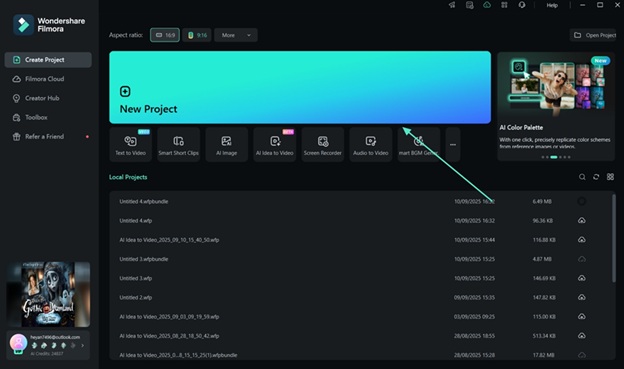
  • Step 1. Access Filmora, Click New Project to Import Music Video. Start the process by accessing Filmora, click on the “New Project” button to import the music video.

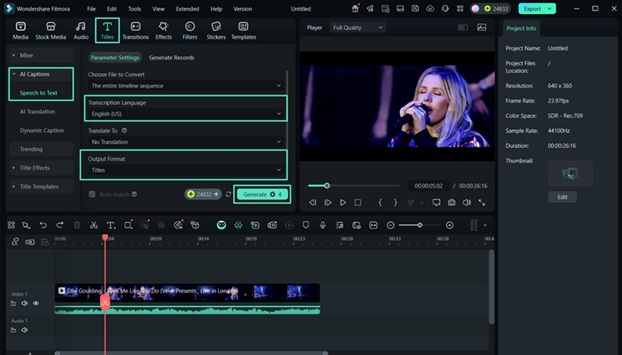
  • Step 2. Navigate Speech to Text Function. At the “Title” section, pick the “AI Captions” tab to choose the “Speech to Text” option. Now, select the “Transcription Language” and choose “Output Format” to hit the “Generate” button.

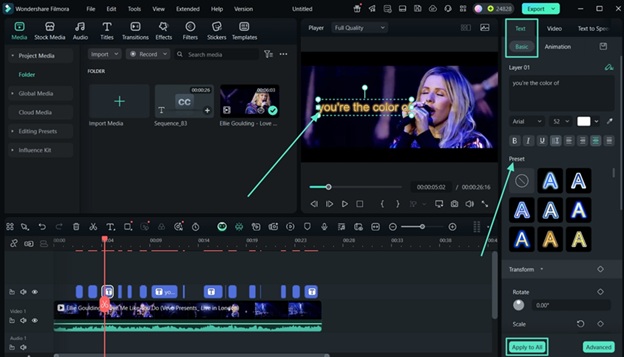
  • Step 3. Edit the Text Properties. Next, click on the AI-generated text and shift to the right “Text” to “Basic” panel to edit the properties.

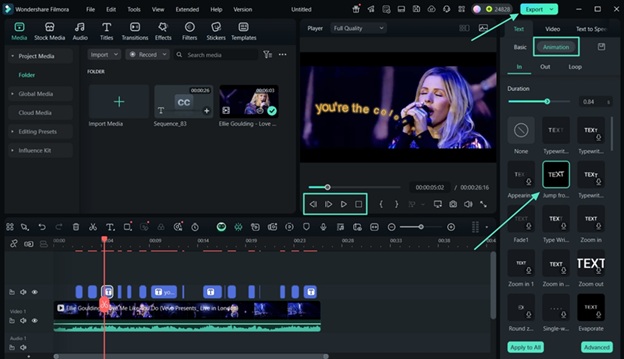
  • Step 4. Apply Animations to the Lyrics and Export the Video. Then, hit the “Animation” panel and apply it to the text. Use the “Playback” icons to preview the video and hit the “Export” button.

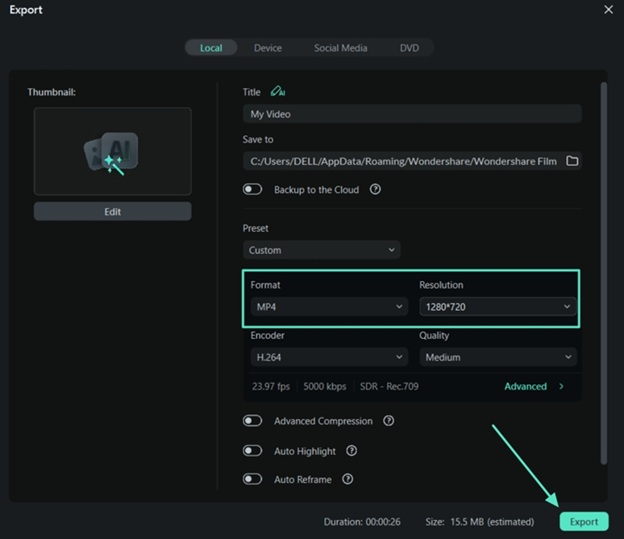
  • Step 5. Choose the Resolution and Format of the Lyric Video. Finally, choose the “Format” and “Resolution” you want for the video and hit the “Export” button to download the video.

Conclusion

In conclusion, this guide discusses the best lyric video maker and how it helps users like content creators, musicians, and more. Along with a detailed explanation of its features, we have also provided you with a guide to help you easily navigate through the video maker software.


Contributed by Shahid Latif: Shahid Latif is an SEO specialist and tech writer with over three years of experience in On-Page, Off-Page, and Technical SEO. He combines his expertise in search optimization with a passion for writing about technology, digital marketing, and online business growth. His work focuses on driving sustainable organic traffic and building authority through guest posting and high-quality content. Connect with him at shahidlatifseo@gmail.com.

Crypto Bulls Roar: 10 Best Crypto Coins with 1000x Potential You’ll Regret Missing This Quarter

0
Blazpay - best crypto ai coins

As 2025 draws to a close, the crypto market is once again lighting up – and this time, it’s fueled by AI-integrated innovation, multichain expansion, and DeFi disruption. Traders are asking one question louder than ever: which crypto will explode in 2025? The latest trend suggests that AI-enhanced ecosystems could dominate the next cycle, turning smart investments into generational wealth.

The top contenders this quarter include a mix of blue-chip giants like Bitcoin, Ethereum, and Solana, alongside rising challengers like Blazpay – an AI-powered DeFi platform that’s rapidly redefining what the best crypto ai coins can deliver. While the market corrects, smart investors are positioning early in presales and utility-driven projects that offer low entry and high scalability.

Below is a closer look at 10 coins every investor should watch closely this quarter – from long-term leaders to emerging innovators primed for exponential returns.

Current Market Overview (as of October 18, 2025)

Coin Current Price Market Cap 24h Change Key Highlight
Blazpay (BLAZ) $0.0075

(Presale)

$735K

raised

+67% sold Multichain AI & DeFi
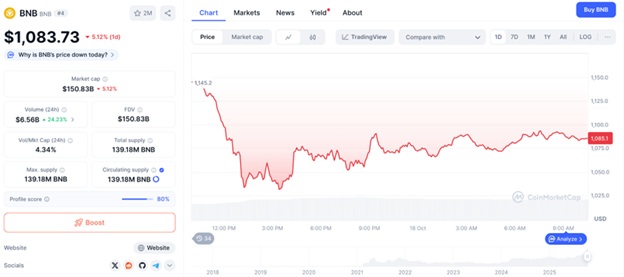
BNB (Binance Coin) $1086.49 $158.3B -5.74% Testing $1,000 support
Solana (SOL) $183.46 $85.5B +0.78% Active trading volume
Bitcoin (BTC) $106,730 $2.13

trillion

+0.24% Near key resistance
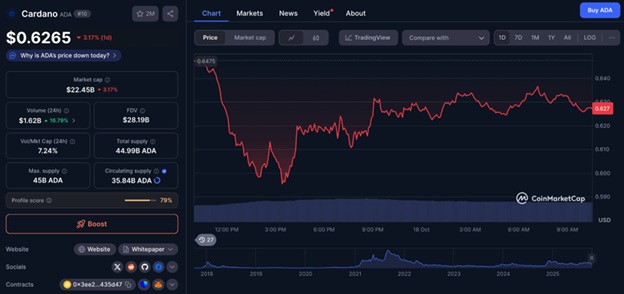
Cardano (ADA) $0.626 $22.3B +0.25% RSI oversold
TRON (TRX) $0.311 $27B +0.76% Stable range
Ethereum (ETH) $3,846.86 $462.8B +0.37% Holding resilience
Polkadot (DOT) $2.91 $4.09B -4.38% Short-term bearish
Sui (SUI) $2.43 $6.3B -0.43% Cooling after rally
XRP (XRP) $2.32 $130.5B -1.57% Consolidating below $2.85


1. Blazpay – The AI-Powered Underdog With Explosive Potential

If there’s one project redefining the best crypto ai coins narrative in 2025, it’s Blazpay. Currently in Phase 2 of its presale, priced at just $0.0075, Blazpay has already raised over $735,000, with 67% of tokens sold. The platform merges AI, Multichain DeFi, and seamless trading infrastructure, offering one of the lowest-risk entry points among new crypto projects this year.

AI SDK and Perpetual Trading: A Unified Future

Blazpay’s integrated AI SDK enables developers to create smart DeFi products that operate across Ethereum, Solana, BSC, and Polygon, eliminating silos that plague traditional crypto ecosystems. Its Perpetual Trading Suite gives users real-time access to leveraged trading and automated market insights – a rare combination at the presale stage.

This convergence positions Blazpay as a frontrunner among the best crypto ai coins to buy in Q4 2025 – a project bridging accessibility, innovation, and yield potential at once.

$2,000 Investment Scenario – The Quiet 1000x Setup

Imagine entering the Blazpay presale at $0.0075 with a $2,000 allocation, securing roughly 266,666 BLAZ tokens. If Blazpay even reaches $0.75 post-listing – a realistic target given AI+DeFi demand – that same investment could surge to $200,000.
That’s a 100x return before listings, making it a potential Best 1000x crypto contender for those entering early.

Blazpay - best crypto AI coins

Price Forecast for 2025–2026: Analysts Turn Bullish

Analysts forecast Blazpay could reach between $0.25 and $0.80 after exchange listings, with further upside toward $1.50+ by mid-2026 if institutional partnerships continue. As one of the best coins to invest in before mass listings, Blazpay’s trajectory mirrors early Solana or Avalanche stages – low entry, massive reward.

How to Buy Blazpay Tokens

  1. Visit the official Blazpay presale website.
  2. Connect your MetaMask or Trust Wallet.
  3. Select ETH, BNB, or USDT as payment.
  4. Enter the desired investment amount (minimum $50).
  5. Confirm and claim tokens after presale closes.

Blazpay’s presale currently ends in 13 days, after which the price rises to $0.009375 – reinforcing urgency for early investors.

2. BNB – Holding the Exchange Powerhouse Line

BNB remains one of the best crypto coins to buy for traders who believe in exchange-based ecosystems. Priced near $1086, it’s battling to stay above its 50-day EMA support at $1046. Analysts note that if BNB can sustain above $1,000, it may retest $1,150–$1,250 levels. Despite pressure, BNB remains a long-term infrastructure asset – a reliable pick even in volatile times.

3. Solana – The Comeback Smart Chain

After retracing from $200, Solana is consolidating near $183.46. It remains a leader in high-throughput blockchain solutions, with rising developer adoption. Solana’s market cap of $85.5B keeps it firmly within the best crypto coins discussions, as its scalable infrastructure supports AI-integrated dApps.

4. Bitcoin – Stability Amid Volatility

At $106,730, Bitcoin remains the benchmark for institutional accumulation. While its growth curve is steadier than smaller projects, BTC’s dominance secures its place among the best coins to invest in during uncertain market conditions. Analysts see resistance near $110,000, with strong buying sentiment near $100,000.

5. Cardano – The Silent Innovator

Cardano (ADA) trades at $0.626 with a market cap of $22.3B. Oversold RSI levels suggest potential reversal toward $0.80 in Q4. With new DeFi partnerships forming, Cardano retains its appeal as one of the best crypto coins, integrating smart contract interoperability and long-term scalability.

6. TRON – The Steady Performer

TRON (TRX) continues to maintain stable returns, trading around $0.31. Its $27B market cap highlights strong network usage and developer retention. TRON’s strategic partnerships and DeFi lending expansions make it a moderate yet steady asset among the best crypto coins to buy for yield-focused investors.

Blazpay - Best 1000x crypto

7. Ethereum – The Institutional Favorite

Ethereum (ETH) is trading near $3,846, holding strong despite volatility. With over $462B in market cap, Ethereum continues to dominate as a base layer for most AI-driven DeFi protocols. As a cornerstone of the best crypto coins, its transition toward scalability upgrades in 2025 ensures ongoing dominance.

8. Polkadot – Undervalued and Oversold

At $2.91, Polkadot faces short-term pressure but remains undervalued given its interoperability features. Long-term projections aim toward $3.74–$4.99 in 2026. For risk-tolerant investors, DOT’s low valuation and ecosystem expansion make it the best coin to invest in at current levels.

9. Sui – The Newcomer Making Waves

Trading at $2.43, Sui continues to attract attention as a next-generation smart contract platform. Despite short-term cooling, its high trading volume ($1.9B) shows active market participation. Its AI-driven developer tools position it firmly among the emerging best crypto coins in 2025.

10. XRP – The Comeback Asset

At $2.32, XRP remains a market heavyweight. With over $130B market cap, it’s rebounding from SEC-era volatility toward renewed institutional confidence. XRP’s global remittance integrations and liquidity utility could reignite its rally toward $3+ if market momentum strengthens in Q4.

Conclusion: Market Cycles Reset, Opportunities Multiply

The final quarter of 2025 is shaping into one of recalibration – where AI-backed ecosystems, multichain innovation, and presales like Blazpay take center stage. Whether you’re chasing stability through Ethereum and Bitcoin or hunting for asymmetric upside with Blazpay and Sui, the current dip could be the defining moment for the next bull cycle.

In a market that rewards timing and innovation, Blazpay’s model may indeed mark it as the Best 1000x crypto this quarter – the best coin to invest in before 2026 turns up the heat.

Blazpay - best crypto coin to buy

Join the Blazpay Community

Website: www.blazpay.com
Twitter: @blazpaylabs
Telegram: t.me/blazpay

Germany Deploys Eurofighter Jets to Poland for Enhanced NATO Air Patrols

0

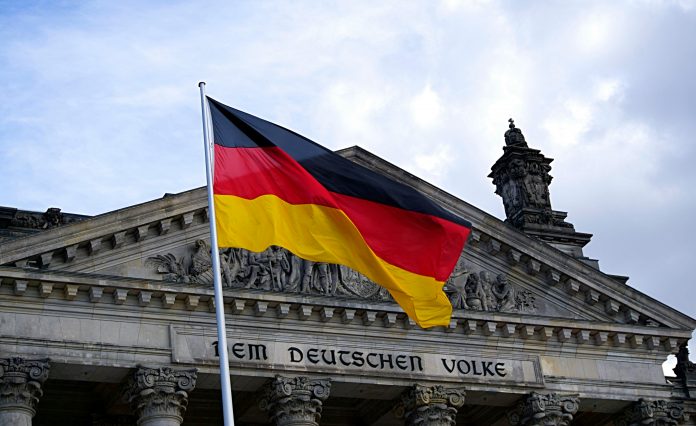
Germany has announced plans to station Eurofighter Typhoon fighter jets at a Polish airbase to bolster NATO’s air defense on the alliance’s eastern flank.

This move, revealed by German Defence Minister Boris Pistorius on October 15, 2025, during a NATO ministers’ meeting in Brussels, aims to increase Germany’s visibility and responsiveness amid rising tensions with Russia. The jets will operate from Malbork Air Base in northern Poland, supporting armed patrol flights under NATO’s Operation Eastern Sentry.

Operation Eastern Sentry was launched in September 2025 following a major incursion where 19 Russian drones entered Polish airspace on September 10, prompting Poland to invoke NATO’s Article 4 consultations for the first time since Russia’s full-scale invasion of Ukraine in 2022.

Some drones were intercepted by NATO assets, including Dutch F-35s, while others crashed into Polish territory, causing minor damage and heightening fears of escalation. This incident marked the most serious Russian airspace violation over a NATO member since the Ukraine war began, prompting a rapid multinational response.

Pistorius emphasized that the deployment would make Germany “even more active, present, and visible” along NATO’s eastern border, focusing on traditional air surveillance, defense against incursions, and countering drone threats.

Prior to this permanent basing, Germany had contributed four Eurofighters from its Rostock-Laage base for temporary patrols over Poland. The Eastern Sentry mission involves a coalition of allies deploying assets to cover airspace from the Arctic to the Black Sea.

Mixed deployments for Baltic and Polish coverage; expanded patrols through December 2025. The mission is set to expand, with additional refueling zones established across the North Sea, Germany, Poland, and the Baltic states to support sustained operations.

NATO has also intercepted Russian MiG-31s over Estonia recently, underscoring the heightened alert level. This deployment occurs against a backdrop of escalating Russian provocations, including fighter jet incursions into Estonian airspace and surveillance flights over German supply routes.

Polish Prime Minister Donald Tusk described the September drone event as “the closest we have been to open conflict since World War Two.” While NATO stresses deterrence over confrontation, figures like U.S. President Donald Trump have advocated for more aggressive responses, such as shooting down intruding jets.

The alliance maintains that these measures strengthen collective defense without provoking direct escalation. Broader discussions tie it to NATO’s Baltic Air Policing enhancements amid multiple incursions.

NATO’s Baltic Air Policing (BAP) mission is a collective defense initiative to secure the airspace of Estonia, Latvia, and Lithuania, which lack sufficient air forces to patrol their skies independently.

Launched in 2004 after the Baltic states joined NATO, the mission ensures the integrity of NATO airspace, particularly along the alliance’s eastern flank near Russia.

It operates under NATO’s Integrated Air and Missile Defence System, with allied nations rotating fighter jet detachments to maintain a constant presence. Protect Baltic airspace, deter incursions, and respond to potential threats, particularly from Russian aircraft operating near or violating NATO borders.

Allies deploy for 4–6 month periods, with 3–4 nations contributing simultaneously. Recent contributors include Germany, France, Italy, Netherlands, Denmark, and Norway.

Operation Eastern Sentry: Initiated in September 2025 following a major Russian drone incursion into Polish airspace 19 drones on September 10, 2025, prompting Poland to invoke NATO’s Article 4. This has expanded BAP’s scope, with enhanced patrols over Poland and the Baltic states through December 2025.

Russian MiG-31s intercepted over Estonia, highlighting ongoing Russian provocations. Unidentified drones and Russian surveillance flights near German supply routes and Baltic borders.

Germany’s decision to station Eurofighters at Malbork, Poland, strengthens BAP’s southern flank, replacing temporary rotations from Rostock-Laage. Netherlands F-35s led drone interceptions in September 2025. France Rafale fighters scrambled for drone intercepts.

Denmark F-16s and a frigate for maritime-air integration. UK Potential for up to 6 Typhoons; already active in Polish patrols. Italy, Poland, Norway: F-35s and F-16s for regional coverage.

QRA jets scramble to intercept unidentified or hostile aircraft, often Russian military planes flying without transponders or flight plans near NATO airspace. Refueling zones across the North Sea, Germany, Poland, and the Baltics ensure sustained operations.

The mission has intensified due to Russia’s war in Ukraine and recent airspace violations, with NATO emphasizing deterrence over escalation. Demonstrates NATO’s unity and rapid response capability. Counters Russian attempts to test alliance resolve, especially after high-profile incidents like the Polish drone incursion.

Reinforces deterrence amid debates over stronger responses, such as calls from figures like Donald Trump to shoot down intruding aircraft. X posts reflect heightened awareness, with outlets like DPA International noting Germany’s deployment as part of BAP’s expansion.

Switzerland’s Gambling Supervisory Authority GESPA Files Criminal Complaint Against FIFA Collect

0

Switzerland’s Gambling Supervisory Authority GESPA, or Geldspielaufsicht, filed a criminal complaint against FIFA over its NFT platform, FIFA Collect. The regulator alleges that certain features of the platform constitute unlicensed gambling services under Swiss law, specifically lotteries and sports betting.

FIFA, headquartered in Zurich, faces potential penalties if prosecutors pursue charges, though the platform remains operational for now. FIFA Collect is a blockchain-based platform launched to offer digital collectibles (NFTs) tied to World Cup moments, allowing users to buy, collect, and trade them.

A key element is the “Right-to-Buy” (RTB) NFTs, which provide holders with priority access to purchase tickets for the 2026 FIFA World Cup hosted across North America. These NFTs are sold for prices starting around $999, with some resold for up to $30,000 based on team performance or rarity.

GESPA initiated a preliminary investigation in early October 2025 after becoming aware of the platform. The probe focused on mechanics involving random draws for prizes or monetary benefits or ticket access in exchange for a “monetary stake”.

Under Switzerland’s Federal Act on Gambling, activities meeting the criteria of chance, stake, and prize require a license—regardless of whether the operator is based abroad, as long as they’re accessible to Swiss users.

Competitions on the platform that reward participants via chance-based selection, such as NFT drops or prize mechanics. The RTB NFTs are seen as akin to betting on tournament outcomes, where value fluctuates based on team advancement.

GESPA confirmed the services are “not licensed in Switzerland and are therefore illegal,” obligating the regulator to report to prosecutors. GESPA Director Manuel Richard emphasized that further details on the complaint are confidential, leaving it to law enforcement to investigate.

The case could disrupt its $11 billion revenue forecast for 2023–2026, where ticketing and digital sales play a major role. It may force enhanced compliance, such as KYC/AML checks, geo-blocks for Swiss users, or redesigned NFT mechanics to avoid “gambling-like” elements. FIFA has not publicly responded yet.

This highlights regulatory scrutiny on NFTs blending collectibles with real-world rewards. Legal experts predict it could set precedents across Europe for classifying chance-based digital assets, affecting blockchain projects in gaming, fan engagement, and tokenization.

Switzerland’s gambling laws are governed primarily by the Federal Act on Gambling (Gambling Act, BGS), enacted in 2019, which regulates both land-based and online gambling activities. Gambling under the BGS includes activities involving a monetary stake, an element of chance, and the possibility of a prize.

This covers lotteries, sports betting, casino games, and certain skill-based games where chance plays a significant role. In the FIFA Collect case, the Swiss Gambling Supervisory Authority (GESPA) views the platform’s “Right-to-Buy” (RTB) NFTs and random-draw mechanics as gambling, as they involve a stake.

All gambling activities accessible to Swiss residents require a license from GESPA, whether the operator is based in Switzerland or abroad. Unlicensed gambling is illegal under Article 130 of the BGS, leading to the criminal complaint against FIFA for operating FIFA Collect without a license.

Only Swiss-based casinos for casino games or lotteries like Swisslos and Loterie Romande for lotteries and sports betting can obtain licenses. Foreign operators are generally excluded unless partnered with a licensed Swiss entity.

The law applies to any gambling service accessible in Switzerland, even if hosted internationally. FIFA, headquartered in Zurich, and its NFT platform accessible at collect.fifa.com fall under this jurisdiction.

Licensed operators must implement measures like Know Your Customer (KYC) checks, age verification 19+ for gambling in Switzerland, and tools to prevent gambling addiction. FIFA’s platform reportedly lacks robust KYC/AML anti-money laundering measures, raising compliance concerns.

Operating unlicensed gambling services accessible in Switzerland is a criminal offense, punishable by fines or imprisonment Article 130, BGS. GESPA’s complaint against FIFA stems from this provision. Advertising unlicensed gambling is also prohibited.

Online gambling is permitted only by licensed Swiss casinos or lottery operators. Foreign websites offering gambling to Swiss users can be blocked by the Swiss Federal Gaming Board (SFGB) or GESPA, and internet service providers may be ordered to restrict access.

Gambling winnings from licensed operators are tax-free for players up to CHF 1 million. Unlicensed platforms don’t benefit from this exemption, and operators face taxes on gross gaming revenue.

NFT drops or prize allocations resemble lotteries due to their chance-based nature. RTB NFTs: These are seen as sports betting, as their value (e.g., ticket access) depends on unpredictable team outcomes.

The platform’s availability to Swiss users without a gambling license violates the BGS. GESPA’s action reflects Switzerland’s strict stance on unregulated gambling-like activities, especially those leveraging new technologies like NFTs.

Switzerland’s laws aim to balance a regulated gambling market with player protection and prevention of illegal activity. The FIFA case highlights how emerging digital assets (NFTs) can fall under gambling regulations if they involve chance, stakes, and rewards.

This could influence how global platforms structure similar offerings to avoid legal risks in Switzerland and beyond. The complaint is now with Swiss prosecutors, who will decide whether to press charges. Updates may emerge as proceedings advance.