DD
MM
YYYY

PAGES

DD
MM
YYYY

spot_img

PAGES

Home Blog Page 318

UAC of Nigeria Launches N45bn Commercial Paper Issuance, Offers up to 19.5% Yield

0

UAC of Nigeria Plc (UACN) has launched a N45 billion Commercial Paper (CP) issuance under its N65 billion CP Issuance Programme, marking another strategic move by one of Nigeria’s oldest conglomerates to tap the domestic debt market for short-term funding.

The offer, which opened on October 16, 2025, will close on October 20, 2025, with settlement scheduled for October 21, 2025.

The issuance comprises two series — a 182-day note and a 268-day note — offering investors effective yields of 18.5% and 19.5%, respectively. UACN is targeting Qualified Institutional Investors and High Net-worth Individuals, in compliance with the Securities and Exchange Commission’s Rule 321 governing commercial paper issuance in Nigeria.

Breakdown of the Offer

The Series 1 CP (182 days) is issued at a 16.94% discount rate, translating to an 18.50% effective yield, and will mature on April 21, 2026. The Series 2 CP (268 days) carries a 17.06% discount rate with a 19.50% effective yield. Investors can participate with a minimum subscription of N10 million, and thereafter in multiples of N1,000.

According to the company, repayment of the notes will be funded from UACN Group’s operating cash flows, underscoring its capacity to meet short-term obligations. The company’s net operating cash flow stood at N10.84 billion in H1 2025, a significant rise from N6.91 billion recorded for the full year 2024. As of June 2025, UACN reported N53.17 billion in retained earnings, supported by a five-year profit compound annual growth rate (CAGR) of 43% and cumulative operating cash flows exceeding N6 billion.

The notes may be quoted on the FMDQ Exchange platform or another recognized exchange to provide investors with secondary market liquidity, a growing consideration for institutions seeking flexibility in Nigeria’s high-yield debt market.

The issuance comes at a time when corporates are increasingly turning to the commercial paper market to meet liquidity needs amid tight credit conditions and rising domestic borrowing costs. UACN’s CP aims to give investors an opportunity for moderate real returns while diversifying away from sovereign instruments by offering yields slightly above inflation and Treasury bill rates.

With Nigeria’s headline inflation rate at 18.02% as of September 2025, the CP’s yields offer a modest 2–3 percentage point premium over recent Treasury Bill stop rates, which ranged between 15% and 15.77%. Analysts say the pricing reflects both market realities and UACN’s strong credit profile, allowing the company to attract institutional liquidity without excessive cost of funds.

The commercial paper market remains one of the few efficient avenues for corporates to raise short-term capital without overreliance on bank loans.

Understanding the Yields

Commercial papers are issued at a discount and redeemed at par value upon maturity. The discount rate represents the markdown applied to the face value at issuance, while the effective yield captures the actual annualized return an investor earns at maturity, factoring in the shorter tenor of the note.

For instance, an 18.5% effective yield over 182 days translates to a more competitive annualized gain than a similar Treasury Bill of the same duration, offering investors a slightly better hedge against inflation and currency volatility.

Strong Credit Profile

The UACN CP is rated A- by Agusto & Co. and A by DataPro, affirming the conglomerate’s good credit quality and moderate risk of default. These ratings reflect the group’s strong brand recognition, diversified portfolio across key sectors — including food and beverages, real estate, paints, and logistics — and an adequate liquidity buffer.

The company has, in recent years, streamlined its operations, divesting non-core assets and optimizing working capital to enhance profitability. Its improved cash generation in 2025, despite macroeconomic headwinds, strengthens investor confidence in its short-term obligations.

Inflation and Real Return Considerations

While the effective yield of up to 19.5% appears attractive, the real return above inflation remains limited, especially given the sustained upward pressure on consumer prices. However, compared with government securities, which continue to see oversubscription at lower yields, the UACN CP presents a moderate yield advantage.

In addition, corporate papers typically appeal to investors seeking to diversify portfolio risk, as they carry corporate credit exposure rather than sovereign risk. UACN’s proven earnings stability and liquidity strength make it a favorable choice within this segment.

Liquidity and Market Accessibility

Another key attraction for investors is the CP’s potential listing on the FMDQ Exchange, which enhances tradability and liquidity. This provides flexibility for institutions that may wish to sell before maturity, a crucial factor in Nigeria’s tight liquidity environment.

The minimum entry requirement of N10 million also underscores that the offer is tailored toward institutional players and high-net-worth individuals, rather than retail investors. The relatively short tenors — six and nine months — offer a balance between yield and liquidity, making the paper suitable for treasury management by pension funds, asset managers, and corporates.

The issuance is part of UACN’s broader funding strategy aimed at strengthening working capital, supporting operations, and refinancing short-term obligations at competitive market rates. The successful launch of the N45 billion tranche also signals investor confidence in the group’s financial stability and market standing.

Given its solid retained earnings, improved operating cash flow, and conservative leverage levels, analysts expect UACN to maintain a strong liquidity position even as it continues to fund strategic business growth.

Looking ahead, Nigeria’s corporate debt market has remained resilient despite inflationary pressures, offering firms like UACN a viable platform to raise affordable capital. As macroeconomic conditions gradually stabilize and inflation edges closer to single digits, yields may normalize, but for now, high-grade corporates are benefiting from investor appetite for safe, short-term, fixed-income instruments.

Kering Nears $4bn Sale of Beauty Division to L’Oréal as New CEO Moves to Cut Debt and Refocus on Core Fashion Brands

0

French luxury group Kering, owner of Gucci, Balenciaga, and Bottega Veneta, is close to finalizing a deal to sell its beauty division to L’Oréal for around $4 billion, according to two people familiar with the matter, who spoke to Reuters.

The move would mark one of the most significant restructurings under newly appointed CEO Luca De Meo, as Kering seeks to streamline operations and reduce mounting debt following a difficult year in the global luxury market.

Sources confirmed the deal’s valuation aligns with an earlier report by The Wall Street Journal, which said that the world’s largest cosmetics group, L’Oréal, would acquire fragrance brand Creed and obtain rights to develop beauty products tied to Kering’s fashion labels, including Bottega Veneta, Balenciaga, and Alexander McQueen. The transaction could be officially announced as early as next week, according to the report.

Kering and L’Oréal declined to comment on the deal, though industry analysts say it reflects a broader realignment in the luxury sector as conglomerates adapt to shifting consumer trends and weakening demand in China — a market that once powered luxury growth but is now grappling with slower spending and economic uncertainty.

The expected sale comes just over a year after Kering launched its Kering Beauté division in 2023, marking its foray into the lucrative global beauty market through the acquisition of Creed, the British high-end fragrance house known for its cult perfume Aventus. That deal, worth 3.5 billion euros ($4 billion) in cash, was seen as a major step toward diversifying Kering’s portfolio beyond fashion and accessories.

However, the move came at a cost. Kering’s net debt rose sharply to 9.5 billion euros by the end of June 2025, fueling concerns among investors about the group’s balance sheet amid falling profits and a struggling Gucci brand.

The sale to L’Oréal, therefore, represents an early and decisive effort by De Meo to refocus Kering’s strategy around its fashion houses while offloading a business that, though promising, required long-term capital investment to compete with established beauty giants.

L’Oréal’s Expansion Drive

For L’Oréal, which has long dominated the global beauty industry, the acquisition would add another prestigious fragrance and fashion-linked portfolio to its already formidable lineup, which includes brands like Lancôme, Yves Saint Laurent Beauté, Armani Beauty, and Valentino Beauty.

The deal would expand L’Oréal’s licensing rights across Kering’s most visible labels, giving it exclusive control over their fragrance and beauty development — an area where the cosmetics group has a long history of success.

Earlier this month, Reuters reported that L’Oréal had also been approached by representatives of Armani Group, following reports that late designer Giorgio Armani’s will named the French conglomerate as a potential buyer for a minority stake in his fashion house. This points to L’Oréal’s ongoing strategy to deepen its ties with top-tier luxury labels while reinforcing its dominance in the global prestige beauty market.

Some believe that the combination of Creed’s luxury cachet and L’Oréal’s scale could create a new growth engine for the French cosmetics giant.

The sale also comes amid a turbulent period for Kering, which has struggled to reignite growth at Gucci, its flagship brand that once accounted for more than 60% of group profits. After years of dominance in the luxury market, Gucci has faced waning consumer enthusiasm, particularly in China, where younger shoppers have turned toward rival brands such as Dior, Louis Vuitton, and Hermès.

The company’s other houses, including Saint Laurent and Bottega Veneta, have provided some stability, but not enough to offset the broader slowdown. The luxury sector as a whole has been pressured by macroeconomic headwinds, including inflation in the U.S. and Europe, slower discretionary spending in Asia, and currency volatility that has squeezed margins.

Since Kering announced Luca De Meo’s appointment as CEO in mid-June, shares in the company have surged about 60%, reflecting investor optimism that the former Renault executive could bring fresh strategic discipline and accelerate a turnaround. Analysts say the pending sale to L’Oréal could further bolster investor confidence by reducing debt and freeing up capital for Kering’s core fashion businesses.

A Redefined Luxury Landscape

The move highlights a broader trend within the luxury industry, where fashion conglomerates are reassessing their exposure to secondary markets like beauty and hospitality. While brands such as Chanel and Dior have leveraged beauty to strengthen their global reach, others like Kering are choosing to narrow their focus on brand exclusivity and creative renewal.

De Meo’s strategy, insiders suggest, will likely center on restoring Gucci’s dominance through tighter brand control, creative reinvention, and selective expansion in high-margin markets. The sale of Kering Beauté to L’Oréal would provide the liquidity to fund those ambitions while signaling a disciplined approach to portfolio management.

If completed, the $4 billion deal would mark one of the largest luxury-to-beauty transactions in recent years and a defining moment for both companies — Kering, in its quest for strategic clarity, and L’Oréal, in its pursuit of ever-expanding dominance across the global beauty industry.

Cardano (ADA) Predicted to Join Solana (SOL) in the $100 Billion Club, But This Crypto Could 50x Before It Happens

0

Cardano is quietly building momentum toward joining Solana in the $100 billion valuation club. But within that trajectory, a newer, faster-moving crypto is showing signs of exploding ahead of ADA’s ascent. This crypto is Little Pepe (LILPEPE), the most viral meme presale of 2025.  While ADA wars for ecosystem dominance and institutional validation, this emerging contender could 50× before ADA even hits the $100 billion mark. This sets the stage for a dramatic shift in protocol leadership.

Cardano (ADA): On Course Toward the $100 Billion Club

Cardano is showing signs of life again as whales continue to accumulate coins. Recent data from the blockchain shows that wallets with 10 million to 100 million ADA added more than 200 million ADA to their balances in one go. This indicates growing confidence among large players.

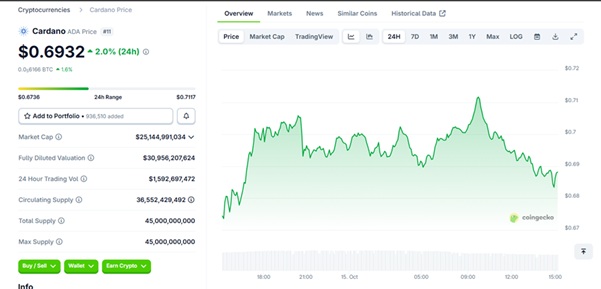
ADA/USD 1D Price Chart|Source: CoinGecko

Additionally, the Spent Coins Age Band (SCAB) indicates that the total volume of spent coins has decreased to 87.33 million ADA from 179.06 million ADA. This 51% decline means that on-chain selling is decreasing.  Strategically, Cardano’s push toward ETF inclusion may unlock institutional flows. Grayscale and other issuers are on track for major ADA ETF decisions this October, potentially unlocking billions in capital. If ADA can maintain this rebuilding momentum, it may position itself to break into the $100 billion market capitalization realm. But that race may already have a challenger ahead in the wings.

Little Pepe (LILPEPE): The 50× Contender Outpacing Cardano’s Climb

While Cardano builds toward a $100 billion valuation, Little Pepe (LILPEPE) is quickly becoming the fastest-growing meme + infrastructure token of 2025, and it’s doing so before even launching on exchanges.  What makes it stand out is its emphasis on utility. It doesn’t just rely on hype. Little Pepe is introducing Pepe Chain, a Layer-2 chain purpose-built for meme economies. The chain’s primary focus is to address key problems that meme coins have faced. This includes high fees and slow transaction speeds.  The project’s fundamentals are as impressive as its virality.

As of today, the presale has raised over $27 million, with more than 16.48 billion tokens sold across 13 stages. Each stage has sold out faster than the previous one.  This reflects a surge in demand from both whales and retail investors. The token’s zero-tax structure, sniper-bot resistance, and ultra-low fees make it one of the most accessible and fair launches in recent memory. At the heart of the ecosystem lies the Pepe Pump Pad, a launchpad for new meme tokens that feeds ongoing demand for LILPEPE. Each new launch increases on-chain activity and liquidity. This creates a self-reinforcing growth cycle similar to how Uniswap boosted Ethereum’s early utility. A CertiK audit, as well as listings on CoinMarketCap and CoinGecko, support the project’s credibility. It has also confirmed Tier-1 exchange listings at launch, along with a viral $777,000 community giveaway and mega-campaigns that are driving global attention.  Analysts suggest its hybrid of real utility, audit transparency, and meme-driven engagement gives it explosive upside potential. Speculative estimates suggest up to 50× returns from presale levels once listings go live.

Why Little Pepe (LILPEPE) Could Reach Its Peak Before Cardano Hits $100 Billion

Cardano’s growth has often been gradual. By contrast, Little Pepe thrives on momentum, virality, and adoption speed. These are the very qualities that drive parabolic gains in early bull cycles. Several factors suggest LILPEPE could peak before ADA joins the $100 billion club. First, its market cap base is much smaller, leaving enormous room for exponential growth.  Second, its Layer-2 architecture isn’t just narrative fluff. It’s an actual functional network designed for meme token deployment and trading efficiency. Thus, it presents a meme-native framework that resonates with online culture. This alone could drive adoption.  Third, social and community metrics are growing faster than any other presale in 2025. Its Telegram and X channels have gained thousands of investors. Meanwhile, participation in the new giveaway has gone beyond 75,000 people.  Finally, Little Pepe’s narrative timing aligns perfectly with the broader meme resurgence. LILPEPE’s mix of humor, credibility, and real blockchain innovation gives it a first-mover advantage. Cardano’s market cap could hit $100 billion by 2026. However, LILPEPE could deliver life-changing multiples well before then.

Conclusion

The crypto sector is getting ready for its next growth phase. In the middle of all this, Cardano is still solidifying its place as one of the best smart contract platforms. But the speed and structure of its growth make it a long-term play.  Meanwhile, Little Pepe (LILPEPE) represents the type of agile, high-energy project that often dominates early bull market cycles. With its presale surging past expectations and Layer-2 technology ready for deployment, Little Pepe could emerge as 2025’s breakout success.  Projections suggest it could be 50 times better before Cardano crosses the $100 billion mark. The presale is now in Stage 13, with four stages remaining. Visit littlepepe.com for more information on how to join the presale.

For more information about Little Pepe (LILPEPE) visit the links below:

Website: https://littlepepe.com

Whitepaper: https://littlepepe.com/whitepaper.pdf

Telegram: https://t.me/littlepepetoken

Twitter/X: https://x.com/littlepepetoken

Lesson for Business Founders on Christ’s Call to Mission

0

I was in Kos Island, Greece, a place kissed by the Mediterranean, an hour by air from Athens and sixteen long hours on the road. As we drove out of Athens, a signpost pointed to Thessaloniki, the same city Apostle Paul had addressed in his letters. I paused in thought; the Bible came alive in geography. Standing by the water, I retraced in my mind Paul’s missionary journeys. The sea breeze whispered of purpose, and the more I reflected, the more the phrase Call to Mission filled my spirit.

Jesus recruited twelve men, not CEOs or kings, but fishermen, tax collectors, and ordinary men with extraordinary destinies. He trained them, equipped them, and then left. On the Day of Pentecost, they were equipped again, not with swords or ships, but with fire and conviction. There was no manual, no template. Yet, when Jerusalem fell in AD 69 under Titus and Emperor Vespasian, the mission truly began.

What looked like destruction became dispersion. Jeremiah had seen it centuries before: God would send fishers and hunters to draw His people out of caves, hills, and nations (Jeremiah 16:16). History later confirmed it, Theodor Herzl baited with hope, Hitler hunted with horror, and by 1948, Israel was reborn as prophecy unfolded.

The disciples scattered across continents to execute their divine assignment. Matthew was slain in Ethiopia, Mark dragged to death in Alexandria, Luke hanged in Greece, and Peter crucified upside down. Thomas carried the gospel to India and fell to the spear. John survived boiling oil, was exiled to Patmos, wrote Revelation, and later died peacefully, the lone natural death among them. Paul, not among the twelve but essential to the mission, met his end under Nero’s blade in AD 67. They did not just believe the mission; they became the mission in the Spirit.

That is the story of transformation, where conviction meets execution. Nations rise on missions. Companies endure when they rally people behind a purpose greater than profits. The greatest leaders, like Christ, recruit, train, equip, and release others to extend their work. Every great organization must find its disciples. Yes, those who can believe, persist, and even suffer for a purpose. Missions are not for the faint-hearted; they demand sacrifice and conviction. Recruit men and women who can become the mission in your company: train those your apostles, equip them with clarity and resources, and be confident they will go forth and conquer the markets.

Ndubuisi Ekekwe, an ex-Scripture Union cell lead in Secondary Technical School Ovim, ex-Sunday school Bible teacher in All Saints Chapter FUT Owerri, uses Bible to develop business cases.

Ethereum Targets $10K, Solana $500—Ozak AI Price Prediction Could Eclipse Them Both

0

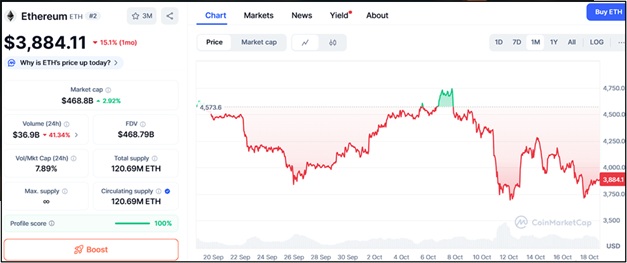
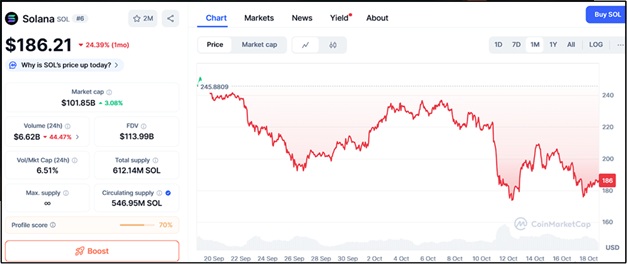
Ethereum and Solana are once again front and center in the 2025 bull market. Trading at $3,884 and $186, respectively, both assets are showing strong bullish momentum backed by institutional inflows, ecosystem expansion, and renewed retail enthusiasm. Analysts are setting ambitious targets—$10,000 for ETH and $500 for SOL—and their charts are aligning with those projections.

But while Ethereum and Solana are expected to deliver solid gains, they may not be where the biggest multiples are made this cycle. Increasingly, trader attention is turning toward Ozak AI—an early-stage project that could eclipse the ROI potential of both blue-chip assets.

Ozak AI Gains Momentum as Ethereum and Solana Build Strength

Ethereum currently holds support levels at $3,500, $3,200, and $2,800, with resistance at $4,300, $6,800, and $10,000. A breakout above $4,300 could pave the way for a sharp rally as staking demand surges and Layer-2 expansion accelerates.

Solana has support at $160, $140, and $115, and resistance at $230, $320, and $500. With institutional capital flowing in and DeFi and NFT activity rising, SOL has emerged as one of the strongest Layer-1 performers of this cycle.

Both ETH and SOL have powerful narratives and bullish structures—but they’re also large-cap assets, meaning their upside, while strong, is measured. For traders chasing the 100x plays, early-stage projects like Ozak AI are becoming the focal point.

Ozak AI’s $1 Price Prediction Is Fueling Early Buzz

Ozak AI is priced at $0.0012 in its 6th OZ presale stage. It has already raised over $3.9 million and sold more than 960 million tokens, a clear sign of early accumulation. If Ozak AI reaches its $1 price target, early investors could be looking at close to 100x returns—something neither ETH nor SOL is likely to offer at their current valuations.

This kind of asymmetric upside is what whales and sharp retail traders look for during bull runs. By entering before listings and mass retail attention, they position themselves for potentially outsized gains as liquidity rotates down from the majors.

Real Utility Gives Ozak AI the Edge

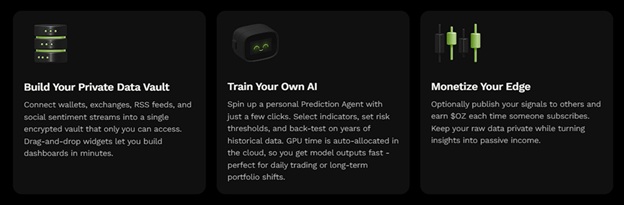
Unlike hype-only presales, Ozak AI is rooted in real AI-driven utility. The project merges artificial intelligence with blockchain intelligence to offer predictive insights for traders, protocols, and DeFi platforms.

Its partnerships with Perceptron Network and HIVE give it access to 700,000+ active nodes and ultra-fast 30 ms signal speeds, powering AI prediction agents that can process real-time on-chain and off-chain data. This functional layer makes Ozak AI far more than just another token—it’s positioning itself as a critical data intelligence tool in crypto.

Ozak AI Listings and Audit Boost Investor Confidence

Credibility is key in early-stage investing, and Ozak AI has already taken the right steps. It has been audited by CertiK, one of the top blockchain security firms. The token is listed on CoinMarketCap and CoinGecko, giving it early visibility and transparency for investors ahead of its eventual exchange launch.

Ozak AI Could Eclipse Ethereum and Solana in ROI

Ethereum at $10K and Solana at $500 would be huge wins for investors—but they’re incremental gains for large-cap assets. Ozak AI, on the other hand, offers the kind of early-stage entry that can turn small allocations into potentially life-changing flips.

With its ultra-low presale price, strong AI narrative, real utility, trusted audit, and growing investor attention, Ozak AI is positioning itself as a top ROI projects of this bull run. ETH and SOL may lead the rally—but Ozak AI could outpace them both in percentage gains, making it one of the most-watched tokens heading into the next explosive phase of the market.

 About Ozak AI

Ozak AI is a blockchain-based crypto project that provides a technology platform that specializes in predictive AI and advanced data analytics for financial markets. Through machine learning algorithms and decentralized network technologies, Ozak AI enables real-time, accurate, and actionable insights to help crypto enthusiasts and businesses make the correct decisions.


For more, visit:

Website: https://ozak.ai/

Telegram: https://t.me/OzakAGI

Twitter: https://x.com/ozakagi