DD
MM
YYYY

PAGES

DD
MM
YYYY

spot_img

PAGES

Home Blog Page 3182

Nigeria’s Path to Privatize Federal Universities and Teaching Hospitals

1

“If Nigeria does not change, by 2027, most of our federal universities will be quasi-privatized. And when that happens, economic mobility will freeze for many, since the poor folks will not have access to university education which typically unlocks the future.” – Ndubuisi Ekekwe, repeated in Sept 2022.

“A member of the House of Representatives says the House will support the campaign for the privatisation and commercialisation of the federal teaching hospitals, to enhance efficiency and better healthcare delivery.” News Agency of Nigeria, June 2024.

Yes, expect many federal agencies and institutions to go, because by 2025, our debt servicing will overtake our revenue, breaking the equilibrium. When that happens, one by one, the private sector will be asked to take over many things in the nation.

Of course, if the teaching hospitals are privatized, the medical schools in universities will be affected. I expect many new federal universities to collapse into major first generation universities.

In Rwanda, they have ONE university as they merged all public universities under one, University of Rwanda, turning those non-surviving universities into colleges. Nigeria may not go to that level, but there would be changes!

Discover the Future at Tekedia Mini-MBA

0
You are here – and the future is there. Tekedia Mini-MBA is the bridge. Pick your seat today as registration has started for the next edition. We’re introducing more courses including Career in the AI Era, How To Build Your First ChatGPT tool, and more.
 
More SMEs attend Tekedia Institute yearly than any university in Africa. Why not? We’re the only school with a full funding sister company, Tekedia Capital, investing $millions in dozens of companies. That means, the knowledge here is coming from Oriendu Market Ovim, Idumota Market Lagos, Terminus Market Jos, bank HQs, business centers, and more.
 
Discover the Future; register here 


Why OPay, Flutterwave Are Valued More Than Interswitch: Positioning on Smiling Curve

0

“Interswitch: unfortunately now takes too long to innovate, when you look at history: you will discover that the likes of Flutterwave, Paystack and basically all fintech have ridden on the infrastructure including market systems created by INTERSWITCH,…By the way both Flutterwave and Opay are more valuable by billions of dollars than interswitch which is the father and mother of them all” – a member commented on this piece on Interswitch Verve. 

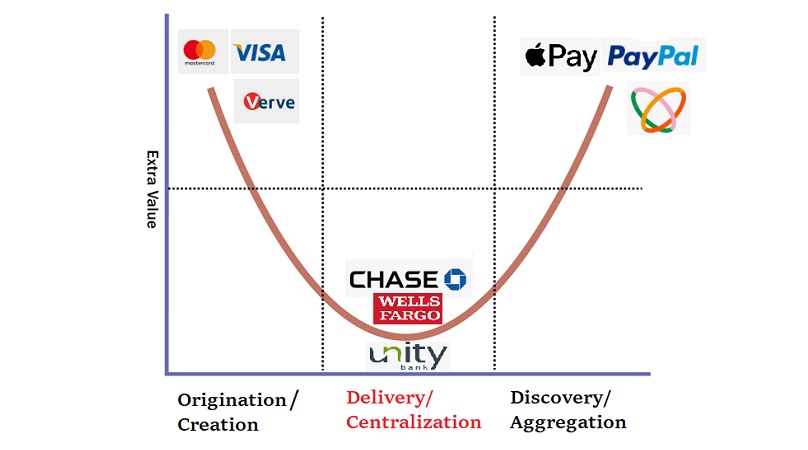
My Response: It is beyond innovation. In this world, where you operate is more important, in most cases, than your efforts and innovation capacities. I will use this curve – the Smiling Curve – to explain. (see image).

When you receive $100 in your US bank account, the bank does not take any fee. But when you receive the same in your PayPal wallet, as payment, you will be off by at last $3. While someone can argue that the money kept in the bank can be used by the bank to do lending, we can also posit that the funds in the PayPal wallet can also be deployed by PayPal into many other profit-making activities. My point is clear: the banks do not capture a lot of value while PayPal and others like it do.

You can explain what is happening in a curve: the smiling curve. The companies which are at the center capture least value, and most times, there are the ones which support the ecosystem the most.  But those at the edges capture the most value even though they do not provide a lot of catalytic support in the ecosystem.

PayPal and Apple Pay operate at the edges and extract tons of value while the US banks remain lost in the center capturing just a small value. Indeed, where you operate on that curve determines the value you can create and capture, well more than the efforts you are putting in. You can be working really hard as a bank by handling the delivery and centralization of customer assets while those firms at the origination/creation and discovery/ aggregation positions smile. Interswitch is a big part of the center, but the Verve is at the edges especially if the credit era should begin …watch this my video

Lesson: seek and desire that your innovation will put you in the appropriate positions on the curve! Otherwise, you can be working for others!

Interswitch Verve Has A Huge Opportunity In Nigeria Right Now

1

Interswitch has a rare opportunity to make Verve an absolute dominant card brand in Nigeria. Yes, the inflation, forex paralysis, etc provide a huge equilibrium shift in the nation that I do not think makes sense for banks and fintechs to continue the issuance of Mastercard and Visa cards at scale.

Simply, why do you need a Visa or Mastercard card when you do not have a Nigerian passport to travel outside the country? And if you do, that card is not likely going to work outside Nigeria due to many controls. So, practically, for a bank or a fintech to be paying Visa and Mastercard hefty fees, shows lack of cost management. I do not see any strategic value in issuing Visa and Mastercard cards in Nigeria right now. You’re just wasting money for really nothing when Verve is there.

Interswitch Verve in my model will gain market share and if the economy continues the way it is, it can reach 70% of market share by 2025 (we hope Nigeria returns to real growth and opportunity of course).

And the last word: Interswith can use this window to go IPO because I expect the Verve growth to accelerate, and if that is the case, it can solidify its position by partnering with companies like Evea to offer Verve credit cards.  This is the Verve decade and it must take it!

(And if Interswitch does not want to IPO, it can unbundle and IPO Verve alone. That business is a category king. Of course, I do see a softening on the card business in Nigeria due to fees. Merchants do not like those fees. That said, the best part of card business is a credit era which is just around the corner with the CrediCorp. It is easier to use a card to issue those credits than using bank accounts; Verve has a promise there).

The Nigeria Consumer Credit Corporation (CrediCorp) is a company owned by the Federal Government of Nigeria. CrediCorp has one mission: to accelerate consumer credit access to 50% of working Nigerians by 2030. CrediCorp achieves this mission by:

A) fixing the structural barriers to accessing consumer credit in Nigeria.

B) catalysing the market with capital, guarantees, and policy.

CrediCorp including its consumer credit guarantee fund, works closely with the Central Bank of Nigeria, the financial sector, identity management, credit registries, fintechs, consumer protection, and policy makers on this mission.

The CrediCorp business is focused on the following:

  1. Strengthening Nigeria’s credit reporting systems, ensuring every economically active citizen has a dependable credit score. This score becomes personal equity they build, facilitating access to consumer credit.

  2. Offering credit guarantees and wholesale lending to financial institutions dedicated to broadening consumer credit access today.

  3. Promoting responsible consumer credit as a pathway to an improved quality of life, fostering a cultural shift towards growth and financial responsibility.

How Great Companies Are Built [video]

0

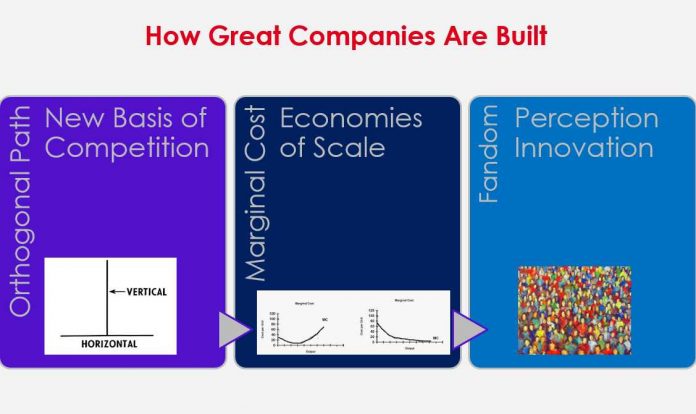
The pillars of the empires of the future. Dominant, category-king companies with impenetrable moats, protecting the castles of profits and market shares. Will expand all the components as we examine the winning Business Models of the 21st century in the program.

Tekedia Mini-MBA >> our product is KNOWLEDGE.