DD
MM
YYYY

PAGES

DD
MM
YYYY

spot_img

PAGES

Home Blog Page 3199

Nvidia Overtakes Microsoft to Become the World’s Most Valuable Public Company

0

Nvidia has soared to become the most valuable public company in the world, about two weeks after beating Apple to become the world’s second most valuable company.

On Tuesday, shares of Nvidia surged by 3.6%, propelling its market capitalization to an unprecedented $3.34 trillion. This surge allowed Nvidia to surpass Microsoft, now valued at $3.32 trillion.

Nvidia, a company once primarily known within the gaming community for its advanced graphics chips, hit a significant milestone by reaching a market cap of $3 trillion for the first time earlier this month, overtaking Apple.

A Phenomenal Year for Nvidia: Thanks to AI

Nvidia’s stock has experienced an extraordinary rise, increasing by over 170% this year alone. This dramatic increase was further fueled by the company’s robust first-quarter earnings reported in May. The stock has multiplied more than ninefold since the end of 2022, a rise that coincided with the rapid advancement and adoption of generative artificial intelligence (AI).

Apple, on the other hand, saw its shares dip by 1.1% on Tuesday, resulting in a market value of $3.29 trillion.

Nvidia has captured approximately 80% of the market for AI chips used in data centers, a sector that has expanded rapidly. Major tech companies such as OpenAI, Microsoft, Alphabet, Amazon, and Meta have been acquiring these processors in large quantities to develop AI models and manage increasingly substantial workloads.

For the most recent quarter, Nvidia’s data center revenue skyrocketed by 427% from the previous year, reaching $22.6 billion. This revenue accounts for about 86% of the company’s total sales, underscoring its dominance in this critical market segment.

From Gaming Hardware to AI Powerhouse

Founded in 1991, Nvidia initially focused on producing hardware, specifically chips for gamers to enhance 3D gaming experiences. The company also explored other ventures such as cryptocurrency mining chips and cloud gaming subscriptions.

However, the last two years have seen Nvidia’s stock soar as the market recognized the company’s critical role in the AI revolution. This surge has significantly boosted the net worth of Nvidia’s co-founder and CEO, Jensen Huang, to approximately $117 billion, positioning him as the 11th wealthiest individual globally, according to Forbes.

Microsoft’s AI Integration

Microsoft has also benefited from the AI boom, with its shares rising by about 20% this year. The software giant has invested heavily in AI, notably by taking a substantial stake in OpenAI and incorporating the startup’s AI models into its flagship products like Office and Windows. Microsoft is one of the largest purchasers of Nvidia’s graphics processing units (GPUs), which are essential for its Azure cloud service. Recently, Microsoft launched a new generation of laptops designed to run its AI models, branded as Copilot+.

Nvidia’s Rapid Ascent

Nvidia’s rapid rise to the top is particularly notable given that it is a newcomer to the title of the most valuable U.S. company. For the past few years, Apple and Microsoft have vied for this position. Nvidia’s swift ascent has been so recent that it has not yet been added to the Dow Jones Industrial Average, a stock index comprising 30 of the most valuable U.S. companies.

Alongside its earnings announcement last month, Nvidia declared a 10-for-1 stock split, effective June 7. This stock split enhances Nvidia’s prospects of being included in the Dow, which is a price-weighted index, meaning companies with higher stock prices have a greater influence on the benchmark.

Broader Market Impact and Potential Challenges

The rapid appreciation of Nvidia’s stock is a reflection of broader market trends, particularly the growing importance of AI in various sectors. The company’s GPUs are not only central to gaming but have become indispensable in fields such as autonomous driving, scientific research, and deep learning. This diverse applicability has positioned Nvidia as a critical supplier in the tech industry’s AI revolution.

Despite its remarkable success, Nvidia faces significant challenges. The AI chip market is becoming increasingly competitive, with companies like AMD and Intel striving to capture market share. Additionally, regulatory scrutiny and geopolitical tensions could impact Nvidia’s global operations, particularly in key markets like China.
X’s Evolution as a Digital Town Square

0

In the ever-evolving landscape of social media, X (formerly Twitter) has emerged as a pivotal platform in shaping public discourse. The concept of X as the “town square” of global conversation is not just a metaphorical stretch but a reflection of its integral role in modern communication. This notion has been reinforced by its owner Elon Musk, who have described Twitter now X as “the digital town square where matters vital to the future of humanity are debated”.

The idea of the digital town square harks back to the traditional public sphere, a place where citizens gather to discuss and deliberate on public matters. X, with its open forum for dialogue, has indeed taken on this role, albeit in a digital format. It’s a space where journalists, academics, and the public converge to share information, coordinate during emergencies, and engage in community building.

However, the ownership and control of such a platform raise critical questions about free speech and democracy. The acquisition of X by billionaires prompts a debate on whether a privately owned platform can truly serve as a public square. This concern is amplified by the fact that Twitter, while being a hub for information sharing, has also been a center for online vitriol, harassment, and misinformation.

Despite these challenges X potential to act as a digital agora remains significant. It’s a unique confluence of personal media use with public debate, where diverse voices can potentially be heard. The platform’s role in society is disproportionate to its size, considering its impact on journalism, academia, and global events.

One of the primary challenges of X is content moderation. Balancing free speech with the need to limit hate speech and misinformation is a delicate act. X‘s approach to moderation has been scrutinized, with some users calling for more stringent measures against toxic behavior, while others advocate for less censorship to uphold free speech.

Another issue is the platform’s reach and user engagement. Despite its influence, Twitter is used by a relatively small percentage of the population compared to other social media platforms. This limited reach means that while X can be a starting point for important conversations and movements, it may not reflect the broader public opinion.

The ownership and governance of X also pose challenges. As a privately owned platform, decisions about content and user bans can significantly impact the nature of discourse. This raises questions about the platform’s ability to serve as a neutral ground for public conversation.

Moreover, the return of users previously banned for toxic speech, following the firing of content moderators, has sparked concerns about the platform’s capacity to support productive civic discourse.

Lastly, user behavior on X reveals that most are passive consumers rather than active participants in the town square, with a small percentage of users responsible for the majority of tweets. This dynamic suggests that the platform may not be as inclusive or representative as a true public square should be.

X‘s aspiration to be the digital town square is challenged by issues of moderation, reach, ownership, and user engagement. How the platform navigates these challenges will determine its future as a space for public discourse and democratic engagement.

As X continues to evolve, with new features like the proposed ‘video town square’, it’s clear that the platform is striving to enhance its capability as a space for open dialogue. The question remains, however, on how it will balance the ideals of free speech with the realities of moderation and governance.

X’s status as the town square of world conversation is a testament to its influence on the digital age. It’s a singular space where the global village converges, reflecting the complexities of public discourse in the 21st century. As we move forward, the stewardship of this digital town square will be crucial in determining its role in shaping the future of democratic engagement and global consciousness.

BlockDAG’s X1 Mining App & $51.5M Presale Dominate Market as Monero Faces Privacy Hurdles and VeChain Navigates Challenges

0

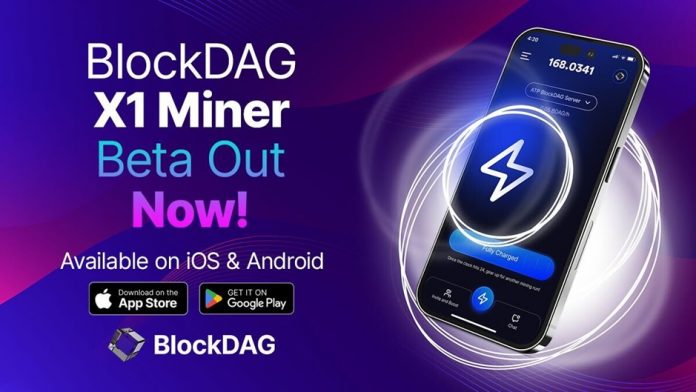
Monero (XMR) transactions are currently under scrutiny due to a newly discovered vulnerability that could expose user details, stirring privacy concerns within the community. Meanwhile, the VeChain (VET) price faces a critical juncture, potentially impacting its market position. Amid these challenges, BlockDAG (BDAG) has introduced the X1 Crypto Miner – one of the best crypto mining app that is revolutionizing mining with a user-friendly platform that not only maximizes efficiency but also fosters significant investor interest as seen in the ongoing presale that has soared to $51.5 million.

Navigating Privacy Challenges in Monero Transactions

Monero (XMR), established in 2014, is renowned for prioritizing user privacy with its advanced cryptographic techniques to ensure that Monero (XMR) transactions remain untraceable and unlinkable. Recently, a significant vulnerability was identified within Monero’s decoy selection algorithm, which could potentially expose user transactions. This algorithm typically conceals user outputs amidst ten decoys to safeguard privacy.

The discovery of this bug by developer Justin Berman highlights a rare risk in Monero transactions where, under certain conditions, transactions could be identifiable amongst their decoys. Monero’s team is actively addressing this issue and has recommended a temporary workaround—advising users to delay transactions for at least an hour after receiving XMR.

VeChain at Technical Crossroads

VeChain (VET) finds itself in a delicate phase, as noted by market analyst Crypto Yapper, who recently highlighted the cryptocurrency’s presence within a Falling Wedge pattern. However, the cautious tone adopted by Yapper indicates that the VeChain (VET) price might experience further declines if it does not show decisive bullish behavior soon.

Currently, VeChain is navigating key support levels, particularly around the $0.03 mark. With a recent 3.35% drop in the VeChain (VET) price and an overall 10% decline over the past week, the crypto community is keenly watching to see if VeChain can leverage its $53.20 million trading volume or if it will succumb to further downward pressure.

Unleashing Crypto Mining Power of BlockDAG’s X1 App

BlockDAG’s X1 crypto mining app, the beta version of which was recently launched, is redefining the world of cryptocurrency mining by making it accessible right from your smartphone. Users can now mine up to 20 BDAG coins each day without the need for costly hardware or high energy costs, thanks to this best crypto app. Optimized for both iOS and Android, the X1 app offers efficient mining that conserves your device’s battery.

The essence of BlockDAG’s platform is its commitment to transparency, which shines through in the X1 app’s features. It includes a transparent ranking system and a progress-tracking tool that allows miners to see their achievements and compare standings within the BlockDAG community. This setup not only motivates miners but also maintains a transparent and competitive environment that’s essential for growth and trust.

BlockDAG’s new moon-themed Keynote 2 also spotlighted the integration of the X1 app with BlockDAG’s mainnet, emphasizing the app’s role in fostering a decentralized and inclusive mining community. The inclusion of features like the Leaderboard and Community Section turns every user into an active participant.

Such innovative approaches have significantly boosted BlockDAG’s market presence, with presale figures reaching $51.5 million and an impressive valuation surge of 1120% since the initial release. This has led analysts to predict 30,000x ROI for BlockDAG which not only highlights the ambitious market trajectory for this emerging coin but also positions the X1 Crypto Miner app as a cornerstone of this burgeoning financial landscape.

Secure Your Future

As Monero (XMR) transactions grapple with privacy issues and VeChain navigates technical challenges, BlockDAG’s X1 crypto miner emerges as the best crypto app, outshining others with its innovative approach and $51.5 million in its presale. With a promising 30,000x ROI potential and robust platform growth, now is an ideal time to consider BlockDAG’s offerings for those looking to invest in a leading-edge crypto solution.

Invest in the BlockDAG Presale Now:

Presale: https://purchase.blockdag.network

Website: https://blockdag.network

Telegram: https://t.me/blockDAGnetwork

Discord: https://discord.gg/Q7BxghMVyu


The Remaking of nTEL and Why Quality and Affordability Must Be Considered

0

Let me wish nTel the best of luck as a business miracle begins in Nigeria. Yes, a former boss of MTN Nigeria wants to reborn the telecom company: “Ntel, the embattled Nigerian telecom company, is preparing for a major comeback, driven by the strategic leadership of Adrian Wood, the former CEO of MTN Nigeria. Since taking over as CEO in January 2024, Wood has been on a mission to revive Ntel’s fortunes, which have waned over the years owing to many challenges.”

I will leave a note for Mr. Wood: do not be fixated that only improved quality will save nTel. Get this from me: the old Etisalat offered the best quality in Nigeria but its price was at 3x industry average. Etisalat failed and morphed into 9Mobile. So, you cannot just focus on quality without a construct of pricing; I have called this construct Product Minimum Viable Quality:

“The deal is this: the construct of quality has no meaning until the price of the product is put into considerations. I always ask entrepreneurs to build for the Minimum Viable Quality (MVQ) bounded by the product target price which market will respond. You can build rockets to fly around the world: that is an engineering possibility. But does that make a business sense if no one can afford it? Ask the makers of Concorde for answers.”

A product Minimum Viable Quality (MVQ) is that version of a new product which allows a team to sell the maximum amount of products to customers with the least effort and at the best optimized price even when delivering value. That is where you need to build as you launch your product, and even at product maturity, do not deviate from it.

Last words: do not lose focus on affordability in the world of quality as you work to fix nTel!

New Ntel Boss, Adrian Wood, Unveils Plan to Revitalize the Embattled Telco

New Ntel Boss, Adrian Wood, Unveils Plan to Revitalize the Embattled Telco

0

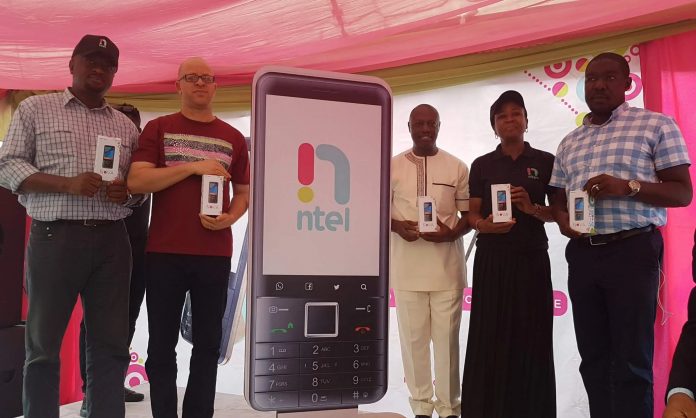
Ntel, the embattled Nigerian telecom company, is preparing for a major comeback, driven by the strategic leadership of Adrian Wood, the former CEO of MTN Nigeria.

Since taking over as CEO in January 2024, Wood has been on a mission to revive Ntel’s fortunes, which have waned over the years owing to many challenges.

The new CEO has been proactive in his new role, engaging with key industry stakeholders and potential investors. In a letter to Ntel’s staff dated June 5, 2024, he outlined his meetings and plans. One significant meeting took place on May 21 with Dr. Aminu Maida, the EVC/CEO of the Nigerian Communications Commission (NCC). This meeting set the stage for discussions on Ntel’s future and the necessary steps to secure funding for a complete overhaul of its network infrastructure.

“We had a very productive session about the forward plan for NatCom, our role in industry building, as well as the prospects for raising equity and debt capital to fund a complete new 4G/5G network design and rollout nationwide,” Wood said.

Raising substantial capital is at the heart of Wood’s strategy to revive Ntel. He disclosed that he has been actively engaging with institutional investors to secure between $500 million and $550 million. This capital will be crucial for restructuring and developing a new 4G/5G network nationwide.

“I have been engaging with potential institutional investors. When the new financial business plan and offering document are ready soon, there will be a roadshow to raise the required funds,” Wood explained.

He added that the initial response has been positive, with interactions with a New York investment fund and the African Capital Alliance (ACA), a notable early-stage investor in MTN Nigeria, marking promising steps forward.

“Already, together with CIO Anthony Adegbola, one New York investment fund visited some of our Lagos facilities. With the visitor, I also had a positive meeting with the African Capital Alliance, one of Nigeria’s (and Africa’s) premier private equity funds groups. ACA was an early-stage investor in MTN Nigeria. They told us it remains their investment with the best returns, ever,” he added.

Securing Interim Funding

Understanding the lengthy process of securing large capital investments, Wood mentioned leveraging a facility from the Asset Management Corporation of Nigeria (AMCON), which holds a 55% stake in NatCom. This interim funding will support crucial phases of project management, capital formation, and network rollout before the full-scale relaunch.

Wood noted, “Before the arrival of new investments, we will leverage a facility from AMCON—55% NatCom shareholder to see us through the crucial project management office planning phase, new capital formation and network rollout, before relaunching the business.”

Wood assured Ntel’s staff of a transformative journey ahead, promising fresh and innovative business strategies.

“There will be a set of business strategies that are fresh, innovative, and new to the market. There will be products and services, and service combinations, which do not exist in Nigeria at present. All technical systems and platforms will be constructed and rolled out nationwide, from the ground up,” he stated, explaining the scale and ambition of the planned transformation.

Ntel’s Backstory

NatCom Development & Investment Ltd (NatCom) made a bold move in 2014 by acquiring the core assets of the former government-owned NITEL/MTel. Ntel, the reborn entity, launched in 2016, generating considerable buzz with the first on-net test data call and Voice-over-LTE (VoLTE) call in Lagos. However, despite these promising starts, the company soon faced significant challenges.

However, the company’s early emphasis on 4G services proved to be a double-edged sword. While forward-thinking, it misaligned with a market not yet prepared for such advanced technology. This strategic misstep left Ntel isolated, struggling to connect with other operators and gain market traction.

Analysts highlight that the decision to launch 4G services in April 2016 was particularly problematic, as the majority of subscribers did not yet possess 4G-compatible handsets.

Despite these hurdles, Ntel pushed forward, launching full VoLTE services, securing a landmark deal with Samsung, and perfecting its self-care recharge system via its website. Their superfast and unlimited data propositions significantly impacted the broadband landscape. Yet, these efforts could not fully overcome the initial misalignment with market readiness.

A New Direction

With Wood at the helm, Ntel is gearing up for a major turnaround. His deep industry experience and strategic vision are expected to tackle past challenges head-on, positioning Ntel for a robust comeback. Investor engagement and a renewed focus on innovation are key elements of this strategy, as Ntel aims to reestablish itself as a formidable player in Nigeria’s telecom industry.

“There will be a set of business strategies that are fresh, innovative, and new to the market. There will be products and services, and service combinations, which do not exist in Nigeria at present. All technical systems and platforms will be constructed and rolled out nationwide, from the ground up. It will be an enormous undertaking – but we will prevail. I am sure of it,” he assured the staff.

Ntel’s push to revive under Wood is not just about one company’s comeback; it is seen as a reflection of a broader effort to rejuvenate Nigeria’s telecommunications industry. By setting ambitious goals and securing substantial investments, the company could inspire other telecom operators to innovate and expand, ultimately benefiting the entire sector and its consumers.