DD
MM
YYYY

PAGES

DD
MM
YYYY

spot_img

PAGES

Home Blog Page 32

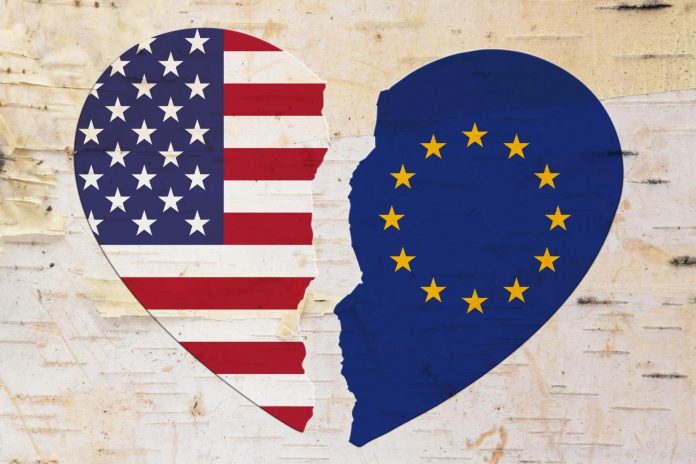
Europe-US Alliance Enters ‘Rupture Phase’ Amid Greenland Tensions and Eroding Trust, Warns Ex-EC Chief Barroso

0

Former European Commission President José Manuel Barroso has issued a stark assessment of transatlantic relations, declaring them at their “lowest moment” since NATO’s founding in 1949.

This comes as President Donald Trump’s disruptive diplomacy—epitomized by his persistent push to acquire Greenland—fuels a profound loss of confidence across the European continent.

In an exclusive interview with CNBC’s “The China Connection” aired Monday, Barroso described the current era as a “rupture phase,” where shared democratic values are giving way to interest-driven interactions, prompting Europe to accelerate its quest for strategic autonomy.

Barroso, who served as EC president from 2004 to 2014 and previously as Portugal’s prime minister, pinpointed Trump’s Greenland ambitions as a catalyst for the erosion of trust. The U.S. president’s threats of military action and escalating tariffs on European goods—initially set at 10% from February 1, rising to 25% by June—have rattled allies, even as Trump partially retreated last week, ruling out force and pausing the levies after talks with NATO Secretary General Mark Rutte.

In a Truth Social post following the meeting, Trump claimed a “framework of a future deal” on Greenland had emerged, though Rutte denied the topic arose, highlighting the opacity and unilateralism that Barroso labeled Trump as “the great disruptor.”

This episode has amplified doubts, extending beyond the EU to the U.K., where public sentiment toward the U.S. has soured markedly. A November 2025 survey by the European Council on Foreign Relations (ECFR), conducted across 12 EU member states and the U.K., revealed that only 16% of Europeans view the U.S. as an ally sharing common values—down from 21% in 2024—with a striking 20% seeing it as a rival or enemy.

In the U.K., the figure plummeted to 25% from 37%, reflecting backlash against Trump’s “America First” policies that Barroso said treat allies more harshly than adversaries.

The poll, part of ECFR’s broader analysis of a “post-Western world,” also showed shifting global perceptions, with many viewing China as ascendant amid U.S. unpredictability.

Barroso emphasized the need for a “more Europeanized NATO,” urging the bloc to bolster its own defense capabilities rather than relying solely on Washington. This call echoes actions at last year’s NATO Summit in The Hague, where members pledged 5% of GDP toward defense and security by 2035, spurred by U.S. demands.

He noted NATO’s strengthening since Russia’s 2022 invasion of Ukraine, including Finland and Sweden’s accession and enhanced eastern flank presence, but warned that the alliance’s future hinges on Europe’s self-reliance.

Outside Europe, a similar conflict has been in play with U.S.-Canada ties at stake. On Saturday, Trump threatened 100% tariffs on Canadian goods if Ottawa pursued a free trade deal with China, prompting Prime Minister Mark Carney to affirm Sunday that Canada has “no intention” of such an agreement.

Carney described recent pacts with Beijing as limited tariff reductions in select sectors, reiterating commitment to the USMCA amid escalating tensions.

This follows Trump’s Thursday withdrawal of Carney’s invitation to the “Board of Peace” for Gaza reconstruction, underscoring the poet Robert Frost’s cautionary lines on walls and offense—often misquoted as endorsing barriers.

Those have triggered market jitters, which were evident Monday, with gold surpassing $5,000 per ounce in Asian trading, while U.S. futures and regional indexes dipped amid geopolitical confluence. Investors brace for a pivotal week: Earnings from Apple, Meta, and Microsoft, plus the Federal Reserve’s rate decision on Wednesday, could sway sentiment.

Barroso, while pessimistic, stopped short of declaring the transatlantic alliance’s end, affirming the U.S.’s enduring role in European security. Yet his warnings resonate as Europe recalibrates, potentially toward greater sovereignty in a multipolar world. However, analysts have noted that Trump’s approach may inadvertently elevate China’s global standing, reshaping alliances in unanticipated ways.

African Startup Funding in 2025: Gender Gap Deepens as Women-Led Startups Attract Less Funding

0

A review of Africa’s 2025 startup funding data through a gender lens once again exposes deep and persistent inequalities. Despite an already weak baseline, the situation has deteriorated further.

According to a report by Africa: The Big Deal, in 2025, startups founded solely by women accounted for less than 1% of total funding, mixed-gender founding teams received 8%, while male-only teams captured a dominant 91%. Although this represents a marginal improvement from 2024 when women-only teams received 1%, mixed teams 6%, and male-only teams 93% the overall picture offers little reason for optimism.

A more positive distribution appears only when grants are isolated from the broader funding pool. In grant funding, women-only teams secured 20% of the total amount, mixed-gender teams 42%, and male-only teams 38%. However, grants made up just 1.5% of all startup funding in 2025, amounting to $46 million out of a total $3.2 billion invested across the continent, limiting their broader impact.

One modest bright spot is the growth in absolute funding volumes. The total amount invested in startups with at least one woman founder nearly doubled year-on-year, rising from $152 million in 2024 to $275 million in 2025, an 81% increase. Even so, a key structural challenge remains: ventures with women co-founders continue to struggle to raise larger funding rounds.

When examining the number of individual startups that raised at least $100,000 in 2025, the gender split is still uneven but less extreme. Women-only teams represented 7% of such startups, mixed-gender teams 17%, and male-only teams 75%. Despite this relative improvement, this marks the lowest share of startups with at least one woman co-founder recorded since 2021.

The situation is equally concerning when funding is analyzed by the gender of the CEO, who is most often a co-founder. In 2025, only 2.2% of total startup funding went to ventures led by women CEOs, with 98% flowing to those led by men. This is the lowest proportion recorded since 2019, following an already historic low of 2.3% in 2024. Looking again at startups that raised at least $100,000, 14% had a woman CEO down from 17% in 2024 and consistent with 2023 levels. When ventures that raised only debt or grants are excluded, this figure falls further to 8%, another all-time low.

Despite these sobering trends, some founders and startups did manage to defy the odds in 2025. Among women CEOs leading women-founded or all-women teams were;

  • Petro Terblanche of Afrigen Biologics ($6.2m grant)

As CEO of Afrigen Biologics, Petro Terblanche led one of the most significant funding wins for a women-led company in 2025. The $6.2 million grant supported Afrigen’s work at the forefront of vaccine research and manufacturing, reinforcing the company’s role in strengthening regional biopharmaceutical capabilities. Beyond the size of the grant, the raise underscored the strategic importance of Afrigen’s mission and the credibility of its leadership in a highly technical, capital-intensive sector that has historically seen limited representation of women founders.

  • Joanna Bichsel of Kasha ($4m equity)

Joanna Bichsel secured $4 million in equity funding for Kasha, a company focused on improving access to health and personal care products. The raise reflected growing investor confidence in Kasha’s business model, traction, and impact, particularly in addressing underserved markets. In a year when women-only founding teams captured less than 1% of total funding, Kasha’s equity round stood out as a rare example of a women-led venture attracting growth capital rather than relying primarily on grants or debt.

  • Ines Serra Baucells of Biosorra ($3.5m pre-Series A)

Biosorra, led by Ines Serra Baucells, raised a $3.5 million pre-Series A round in 2025, marking an important milestone for the company’s progression from early research to commercial validation. Securing a pre-Series A round is especially challenging for women-led deep-tech and life sciences start-ups, where capital requirements are high and timelines are long. This raise signaled strong confidence in both the science underpinning Biosorra and the team’s ability to execute.

  • Claire van Enk of Farm to Feed ($1.5m seed)

Claire van Enk raised a $1.5 million seed round for Farm to Feed, supporting the company’s efforts to address inefficiencies and waste in food systems. At the seed stage—where access to early institutional capital is often a major hurdle for women founders—this round provided critical runway for scaling operations and refining the business model. The raise positioned Farm to Feed for its next phase of growth while highlighting investor belief in both the market opportunity and the founding team.

Women CEOs leading gender-diverse founding teams also secured notable funding, including; Nour Taher of Intella, Emily McAteer of Odyssey Energy Solutions, Miishe Addy of Jetstream, Aune Aunapuu of Yaga, and Rocio Perez Ochoa of Bidhaa Sasa.

While these successes deserve recognition, they remain exceptions in a funding landscape where gender inequality not only persists but, in several key indicators, continues to deepen. Investing in women is not just about gender equity, it is an economic imperative. Research consistently shows that women-led startups generate strong financial returns. A 2018 report by BCG found that for every dollar invested, women-founded businesses return 78 cents, compared to just 31 cents from male-founded startups.

Despite this clear economic opportunity, biases against women-led businesses persist. While it is unrealistic to claim that women founders are inherently safer bets, data consistently shows that when given the right resources and opportunities, women are equally bold disruptors.

Outlook

Looking ahead to 2026, the trajectory of gender inequality in Africa’s startup ecosystem raises urgent questions rather than quiet optimism. If current patterns persist, the continent risks entrenching a funding structure where women founders remain systematically locked out of growth-stage capital, regardless of performance, impact, or capital efficiency.

When Abuse Allegations Surface and Nothing Changes

0

Abuse allegations rarely stay hidden forever. A report is made. Concerns circulate quietly at first, then more openly. Meetings are held. Statements are issued. And then, in many cases, momentum fades. Time passes. Attention shifts. The people most affected are left waiting while familiar systems fall back into place.

When nothing changes after allegations surface, the harm does not stop with the original act. Silence, delay, and partial responses each convey a message. Victims hear it clearly. Their experience becomes something inconvenient, something easier to contain than confront. For families watching closely, it raises uncomfortable questions about trust, safety, and whether accountability truly exists when it matters most.

Communities often believe they will respond differently when faced with serious wrongdoing. But those moments are not defined by intentions or carefully worded statements. They are defined by what happens once discomfort sets in, once consequences feel complicated, once protecting people requires more than acknowledgment. That space, after allegations are known and before real action is taken, is where responsibility either takes hold or quietly slips away.

When Allegations Are Known but Action Is Delayed

Once allegations are out in the open, delay is frequently framed as caution. Leaders talk about gathering information, waiting for clarity, and avoiding rash decisions. On the surface, that can sound reasonable. In practice, delay often becomes a substitute for action. Weeks turn into months. Questions linger. Urgency dissolves.

This is where harm compounds. Victims are asked, directly or indirectly, to be patient while life around them continues as usual. The message may never be spoken, but it lands all the same. The disruption caused by abuse is treated as more uncomfortable than the abuse itself. For those who came forward, that silence can feel like a second injury.

Delay also changes the story. What began as a serious allegation slowly turns into something people hope will fade. Attention shifts away from the conduct itself and toward the inconvenience of dealing with it. Over time, inaction starts to feel normal, even defensible. By the time pressure returns, the moment for a decisive response has often passed, leaving victims isolated and communities unsure how they reached that point.

The Impact of Inaction on Victims and the Community

For victims, inaction registers immediately. Speaking up already carries risk: fear of not being believed, of being blamed, of losing relationships. When time passes without response, those fears harden. Trust erodes. Whatever sense of safety once existed begins to collapse.

Many victims experience inaction as a verdict. It suggests their pain can be absorbed, managed, or quietly endured. Some withdraw entirely, convinced that coming forward only made things worse. Others remain in the same environments where harm occurred, forced to coexist with the knowledge that their well-being ranked below institutional comfort. The emotional cost does not stay contained. It shows up as anxiety, fractured relationships, and a deep reluctance to seek help again.

The wider community absorbs the damage as well. Silence breeds confusion. Rumors fill the gaps left by transparency. Parents question whether safeguards are meaningful or symbolic. Confidence in leadership weakens, replaced by cynicism or resignation. Even those with no direct connection learn something from what they observe: accountability is uncertain, and consequences are negotiable.

Inaction does not preserve stability. It slowly erodes it, leaving behind unresolved harm and unanswered questions about who will be protected when the next allegation surfaces.

Legal Accountability When Internal Responses Fall Short

In close-knit communities, allegations don’t stay abstract for long. In places like Lakewood, Teaneck, Passaic, and Elizabeth, a “story” can quickly turn into a name people recognize, a school people know, a shul people daven in. That closeness can be a strength. It can also create a strong incentive to keep things quiet.

When allegations surface, the first move is often internal. A few phone calls. A meeting behind closed doors. Reassurances that it’s being handled. Sometimes that comes from sincere concern. Sometimes it comes from fear of scandal and fallout. Either way, the result is often familiar: the process slows down, responsibility gets fuzzy, and the person who spoke up is told to wait.

For many readers, New Jersey isn’t a distant example. It’s home. It’s where families built communities, where schools are crowded with children, where reputations travel quickly, and privacy feels fragile. In that kind of environment, pressure doesn’t always look like threats. It can look like hints, awkward silence, and the quiet expectation that everyone should “let it play out.”

That’s when some families decide they need something sturdier than internal assurances. They aren’t looking for drama. They’re looking for a process that doesn’t depend on who feels uncomfortable or who has influence. For some, that means exploring sexual abuse claims and legal options, including civil avenues that can force clarity when an institution seems determined to wait things out.

Civil claims create a record. They require answers. They can also examine whether warnings were missed, complaints were minimized, or safeguards were treated like paperwork instead of protection. For victims who already took the risk of coming forward, that difference matters. It’s the difference between being heard and being quietly absorbed by the system.

Why Delay Becomes a Pattern

Delay often begins with language that sounds responsible. People talk about being careful, about not rushing, about needing more time. But delay has momentum of its own. Once a day passes without consequences, the next day feels easier.

Self-protection plays a role. Institutions worry about liability, donors, reputations, and internal fallout. Individuals worry about their standing, their relationships, their children’s place in a school, and the discomfort of being seen as the person who pushed too hard. In tight communities, those pressures are real even when they are never voiced.

Sometimes people convince themselves that the problem will fade on its own. If they wait long enough, interest will die down. Families will move on. The noise will shift to something else. Time turns into a plan, even if nobody says that out loud. And once “let’s wait” becomes the standard response, reversing course starts to feel harder than taking decisive action ever would have.

The longer it drags on, the easier it becomes for accountability to disappear. Responsibility gets spread out across committees, phone calls, and meetings that no one seems to remember clearly. Victims end up telling the same story again and again, while everyone else takes shelter in uncertainty. That’s how these situations repeat themselves: not always through cruelty, but through fear and inertia that make inaction feel safer than doing the right thing.

Understanding the Real-World Impact of Abuse

The effects of abuse do not end when the abuse ends. For many victims, the impact shows up in ordinary moments: entering a building that once felt safe, interacting with authority figures, hearing a familiar name mentioned casually. It reshapes how people move through communal spaces and how they understand trust.

When allegations surface and nothing changes, the harm becomes visible in a different way. The community moves on. The victim learns a harder lesson. Speaking up does not guarantee protection. It can cost friendships, stability, and even a place within familiar institutions. Others notice. Silence spreads.

That is why mental health fallout is so common. Trauma does not stay neatly contained. It affects sleep, concentration, relationships, and self-worth. Survivors often cycle between coping and unraveling without a clear trigger. Clinicians consistently observe that recovery depends on restoring a sense of control and safety, including access to trauma-informed care such as mental health therapy and support after sexual violence.

The ripple effects extend outward. Families absorb the strain. Parents replay decisions. Siblings learn what happens when serious concerns are raised. The broader community becomes more cautious, not because harm is rare, but because addressing it carries a cost.

What Responsible Action Looks Like

Responsible action does not require flawless judgment. It requires movement. When abuse allegations surface, doing nothing is still a choice, one that prioritizes comfort over clarity. Responsibility begins when people are willing to act despite uncertainty, discomfort, or fear of fallout.

At a minimum, action means taking allegations seriously the first time they are raised. It means removing opportunities for further harm, setting clear boundaries, and ensuring victims are not left to carry the burden alone. It also means resisting the urge to wait for attention to fade. Silence may ease tension in the short term, but it almost always deepens long-term damage.

Responsibility also involves recognizing limits. Not every institution is equipped to investigate itself, and not every internal process is built to handle abuse appropriately. Acknowledging that reality is not failure. It is an understanding that protecting people sometimes requires outside accountability.

Responsible action starts with the people who were hurt. Their safety and their ability to move forward should drive every decision that comes next. When a community proves through what it does, not what it says, that abuse will be confronted instead of quietly swallowed, trust can begin to return.

Accountability as a Path Forward

Accountability isn’t about punishment for its own sake. It’s about drawing a clear line that harm won’t be minimized or waited out. When allegations are met with real consequences, victims see that speaking up mattered, and others see that silence is no longer the safest option.

Communities have faced this reckoning before. Past reporting on the problem of child sexual abuse in the Jewish community shows how easily good intentions can slide into denial, and how damaging that pattern becomes when it repeats. Recognizing that history isn’t self-criticism, but a refusal to let the same failures become precedent.

Accountability creates memory. It keeps allegations from disappearing once attention fades, and it forces future concerns to be measured against a record rather than vague recollections. It puts responsibility where it belongs: on systems and decision-makers, not on victims who already took personal risks by coming forward.

When abuse allegations surface and nothing changes, the message is unmistakable. Accountability changes that message. It tells victims they were right to speak. It tells families that protection requires action. And it tells the community that trust is preserved through responsibility, not patience.

When Innovation Backfires: How PFAS Created Multi-Billion-Dollar Legal and Economic Risks

0

Many industrial breakthroughs appear to be pure progress at launch. They solve stubborn engineering problems, scale quickly, and quietly become the default across sectors. Per- and polyfluoroalkyl substances (PFAS), a large family of fluorinated chemicals, fit that pattern. They offered reliability in high-heat, high-stress environments and spread through manufacturing, consumer goods, and public safety supply chains.

Years later, PFAS are now a case study in how technical success can mature into long-tail exposure for companies, insurers, and governments. The lesson is uncomfortable: when the full lifecycle cost of a chemical is unknown or ignored, the eventual bill tends to arrive through healthcare, cleanup, regulation, and courts.

Why PFAS Became Ubiquitous in High-Risk Industries

PFAS were prized for durability. Their chemistry helps repel water, resist heat, and reduce friction. Those properties made them attractive for applications ranging from coatings and packaging to industrial processes. In public safety, they became closely associated with aqueous film-forming foam (AFFF), which is designed to quickly suppress fuel fires in aviation, refineries, and military settings.

Once a performance advantage becomes embedded in standards and procurement checklists, it is hard to unwind. Buyers rarely have incentives to ask what happens decades later, especially when the downsides are diffuse, delayed, and difficult to measure.

That is how a “best tool for the job” can become a systemic liability shared across manufacturers, distributors, employers, and public institutions.

The Unpriced Cost of “Forever Chemicals”

PFAS are often called “forever chemicals” because many of them persist in the environment and can accumulate over time. Persistence changes the economics of risk. A spill that would normally dissipate becomes a multi-year remediation project. A one-time purchase decision becomes a long-running exposure pathway for workers and communities.

Regulators and researchers continue to refine what is known about health and environmental impacts, but even uncertainty carries a price. It raises compliance costs, expands disclosure obligations, and pushes insurers to reprice coverage or tighten exclusions.

For businesses, the most important point is not the chemistry. It is the externality. When harms land outside the balance sheet at the time of sale, they usually reappear later as legal and economic risk.

Firefighters as a Case Study in Innovation Risk Transfer

Firefighters make the risk-transfer problem visible. AFFF was used in training and response where speed matters and failure is costly. Over time, repeated contact with foams and contaminated environments created a pathway for claims that link occupational exposure to serious illnesses.

This matters beyond the individual stories. Firefighters sit inside public-sector budgets, union negotiations, disability systems, and municipal procurement. When an innovation becomes a suspected exposure driver, it draws in employers, product makers, and public agencies.

In the U.S., that dynamic is playing out through mass tort litigation tied to AFFF and PFAS exposure. For affected individuals and families trying to understand their options, some will choose to hire a PFAS foam cancer attorney to assess eligibility, timelines, and the practical steps involved in pursuing claims.

For executives and policymakers, the takeaway is broader: if the people closest to a product’s real-world use become plaintiffs, the debate shifts from technical merit to accountability, disclosure, and duty of care.

The Legal Fallout: From Product Liability to Public Budgets

PFAS litigation has expanded from individual injury claims into a wider contest over who pays. Product liability arguments focus on what manufacturers knew, what they disclosed, and whether safer alternatives were feasible. Separate disputes target environmental contamination, cleanup costs, and impacts on drinking water systems.

Even when companies settle, the economic effects spread. Legal costs and settlement reserves can affect valuations. Insurers face multi-year uncertainty. Procurement teams get new compliance requirements. Governments must decide whether to absorb costs, pursue reimbursement, or change standards for acceptable materials.

Regulatory Failure and the Cost of Delayed Action

PFAS also illustrate a timing problem in policy. Regulation often trails adoption, partly because agencies lack data early, and partly because industrial ecosystems move faster than rulemaking. The longer the delay, the more entrenched the material becomes, and the harder it is to substitute without disrupting supply chains.

In practical terms, delayed action increases downstream exposure. More users adopt the chemical. More sites become potential contamination points. More people become potential claimants. When regulators later tighten standards, the transition costs hit everyone at once.

A useful reference point is how public agencies describe the challenge. The EPA’s PFAS overview highlights both the breadth of PFAS use and the difficulty of assessing risks across thousands of related compounds.

Lessons for Innovators, Policymakers, and Investors

PFAS should change how innovation risk is priced. Three lessons stand out.

First, lifecycle thinking should be treated as a competitive advantage. Firms that test, disclose, and track downstream effects early tend to face fewer surprises later, even if their short-term costs are higher.

Second, substitution needs governance. Replacing one compound with a close cousin can repeat the same story under a new label. Procurement standards and regulatory frameworks should be designed to prevent “regrettable substitutions” that keep liability alive.

Third, global markets import each other’s problems. African airports, energy facilities, and industrial sites often purchase equipment and materials that conform to U.S. and EU standards. As those regions tighten rules and litigation expands, supply chains and insurance terms shift worldwide.

Our readers have seen related dynamics in debates about hazardous products moving toward weaker enforcement environments, including Tekedia’s forum discussion on toxic chemical exports.

Innovation Without Accountability Is a Balance Sheet Risk

PFAS are a reminder that industrial success can create long-term liabilities that outlive product cycles, executive tenures, and even corporate strategies. The costs show up in areas leaders tend to underestimate: remediation, insurance constraints, procurement disruptions, and years-long litigation.

The next wave of materials science, from advanced polymers to next-generation coatings, will face the same question. Performance will always matter. Accountability, disclosure, and lifecycle risk will increasingly determine whether innovation compounds value or compounds liability.

Trump Administration Deepens State-Backed Push Into Critical Minerals with 10% USA Rare Earth Stake

0

The Trump administration is pressing ahead with an investment strategy that places the U.S. government directly inside industries it considers vital to national security and technological leadership, with a planned 10% stake in USA Rare Earth marking the latest and one of the clearest examples yet of that approach.

Under the deal, Washington will take equity in USA Rare Earth as part of a $1.6 billion debt-and-equity package designed to accelerate the development of a domestic rare earth mine and a magnet manufacturing facility, according to two sources familiar with the transaction, who spoke with Reuters.

A separate $1 billion private investment is also expected to be announced. The package is set to be unveiled on Monday, when the Oklahoma-based company plans to brief investors on a conference call.

The transaction sits squarely within a broader investment plan being sustained by President Donald Trump’s administration on behalf of the U.S. government, one that goes beyond regulation or subsidies and instead relies on direct financial participation, long-term offtake arrangements, and strategic access agreements. Recently, this approach has already seen Washington back major domestic manufacturing efforts, including financial support for Intel to expand advanced chip production in the United States, and secure priority access arrangements linked to exports of Nvidia’s high-end chips, which are central to artificial intelligence and defense applications.

Officials view rare earths as the next critical front. China remains the world’s dominant processor of rare earth elements, a group of 17 minerals essential for smartphones, electric vehicles, wind turbines, advanced weapons systems, and AI-related hardware. The United States produces only limited quantities, leaving supply chains exposed to geopolitical pressure and trade disruptions.

USA Rare Earth is positioned as a potential anchor for rebuilding part of that supply chain domestically. The company is developing a rare earth mine in Sierra Blanca, Texas, in partnership with Texas Mineral Resources, with operations targeted for 2028. It is also preparing to launch a magnet manufacturing facility in Stillwater, Oklahoma, later this year, a key step given that rare earth magnets are among the most strategically sensitive parts of the value chain.

As part of the investment, the U.S. government will receive 16.1 million shares in USA Rare Earth, along with warrants for an additional 17.6 million shares, the sources said. Both are priced at $17.17 per share, close to where the company’s stock traded earlier this month. The Financial Times first reported the government’s planned stake.

Over the past year, the Trump administration has taken equity positions in MP Materials, Lithium Americas, and Trilogy Metals, signaling a willingness to use the federal balance sheet to steer capital toward projects that might otherwise struggle to attract long-term funding in volatile commodity markets. A senior administration official said last month that more large-scale agreements with U.S. miners were being prepared, describing them as “historic deals” aimed at boosting production of lithium, rare earths, and other materials tied to defense systems, artificial intelligence, and advanced manufacturing.

Behind the scenes, USA Rare Earth has enlisted Cantor Fitzgerald to support its fundraising efforts, one of the sources said. The firm is chaired by Brandon Lutnick, the son of U.S. Secretary of Commerce Howard Lutnick.

The logic is consistent across sectors for the administration. By investing directly, securing equity, or locking in supply and access arrangements, Washington is attempting to reduce reliance on foreign producers while ensuring that critical inputs for chips and defense technologies remain available on U.S. terms. The USA Rare Earth deal shows how that strategy is now extending beyond semiconductors into the raw materials that underpin them, embedding the federal government deeper into the industrial economy it sees as essential to long-term national power.