DD
MM
YYYY

PAGES

DD
MM
YYYY

spot_img

PAGES

Home Blog Page 3209

Why Litecoin Investors Search For Bullish Altcoins Like BlockDAG Network; Internet Computer Price Dips 

0

As the cryptocurrency market continues to experience fluctuations, three notable altcoins are making headlines. Litecoin (LTC) is battling to stay above $80, causing concern among its holders. Internet Computer (ICP) has plummeted over 5% in the past 24 hours, continuing a week-long decline. However, BlockDAG (BDAG) stands out as a beacon of optimism in this turbulent market. With an impressive presale raising $53.2 million and its innovative X1 Miner App revolutionizing smartphone mining, BlockDAG is drawing significant investor interest and proving to be a compelling investment opportunity.

Litecoin Holders Concerned Amid Declining Price

After surpassing the $100 mark in March, optimism for Litecoin (LTC) was high. However, the price has since struggled, now battling to maintain support above $80, causing concern among investors about the project’s long-term prospects.

Over the past 30 days, Litecoin’s price has dropped by 3%, with a 7% decline in the past week. Key market indicators, such as trading volume, are also on a downtrend. Despite this, data from Santiment shows a surge in daily active addresses, suggesting a potential rebound. If this trend continues, Litecoin could break the $100 mark again, making it a noteworthy altcoin to watch.

Internet Computer (ICP) Plummets Over 5% in 24 Hours

Internet Computer (ICP) has experienced a significant drop in value, with its price falling 5.26% in the past 24 hours to $8.78. This decline extends a week-long negative trend, with ICP losing 21% of its value, down from $11.06.

The accompanying chart shows ICP’s price movement and volatility over the past 24 hours and the past week, with wider Bollinger Bands indicating increased volatility.

Trading volume for ICP has decreased by 32% over the past week, contrasting with a 0.17% increase in its circulating supply, now at 465.32 million. Currently, ICP holds a market cap ranking of #27, valued at $4.12 billion.

BlockDAG’s $53.2M Presale: A Game Changer in the Crypto World

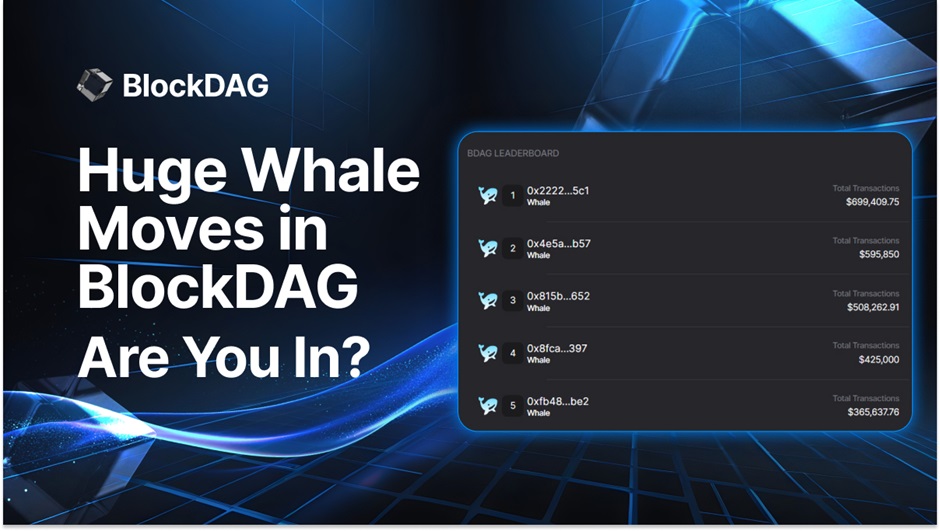
BlockDAG is rapidly gaining traction in the crypto market, attracting a surge of investors eager to join this expanding network. High-profile crypto investors are particularly drawn by BlockDAG’s impressive daily earnings, recently hitting $3 million and aiming for $5 million. Analysts forecast a potential coin price surge to $10 by 2025, underscoring the network’s robust growth and promising returns.

BlockDAG’s success stems from its ambitious global strategy, establishing a presence in major cities and hosting notable events like the display at Piccadilly Circus in London and a celebration at the Sphere in Las Vegas. A pivotal moment was the Moon-based Keynote 2, which captivated the global crypto community and solidified BlockDAG’s market presence.

BlockDAG’s platform is distinguished by its Low Code/No Code approach for developing decentralized applications (dApps), simplifying the process for non-developers. This strategy accelerates prototyping and reduces development times, making it easier to create and deploy applications.

The presale has gained impressive momentum, raising $3 million in just 12 hours, with projections to hit $5 million daily becoming increasingly likely. To date, BlockDAG has raised $53.2 million, distributed over 11.6 billion BDAG coins, and generated $3.3 million from miner sales. With more than 8000 miners sold, BlockDAG presents a compelling investment opportunity for those looking to capitalize on its innovative technology and growth potential.
Takeaway

In a market fraught with volatility, BlockDAG emerges as a standout choice among altcoins. While Litecoin struggles to regain its former glory and Internet Computer faces significant losses, BlockDAG’s innovative technology and robust presale success position it as a frontrunner for substantial returns. Its Low Code/No Code approach for developing decentralized applications and ambitious global strategy underscore its potential for long-term growth. As BlockDAG continues to attract high-profile investors and gain market traction, it offers a promising investment opportunity that sets it apart from its peers. For those seeking high returns in the crypto space, BlockDAG is the clear winner.

Invest in the BlockDAG Presale Now:

Presale: https://purchase.blockdag.network

Website: https://blockdag.network

Telegram: https://t.me/blockDAGnetwork

Discord: https://discord.gg/Q7BxghMVyu
Japanese Investment Managers plan to Invest in Crypto

0

The landscape of investment is ever evolving, and a significant shift is on the horizon in Japan. A recent survey conducted by Nomura Holdings and its digital asset subsidiary Laser Digital has revealed a growing interest among Japanese investment managers in the realm of cryptocurrencies. According to the survey, a substantial 54% of the investment managers polled are considering an allocation to digital assets within the next three years.

This interest is not just a fleeting trend but a strategic move to diversify investment portfolios. With the preferred allocation to cryptocurrencies being between 2%-5% of assets under management (AUM), these managers are looking at digital assets as a complement to traditional investments such as cash, stocks, bonds, and commodities.

The survey, which included responses from institutional investors, family offices, and public-service corporations, indicates a positive impression of digital assets by 25% of the firms. Moreover, 62% view cryptocurrencies as a diversification opportunity, highlighting the potential of digital assets to enhance investment strategies.

The development of new products in the crypto space, such as exchange-traded funds (ETFs), investment trusts, and staking and lending offerings, is seen as a key driver for future investment. Approximately half of the respondents also expressed interest in investing directly in Web3 projects or through venture capital funds, signaling a broader acceptance and understanding of the technological advancements within the blockchain ecosystem.

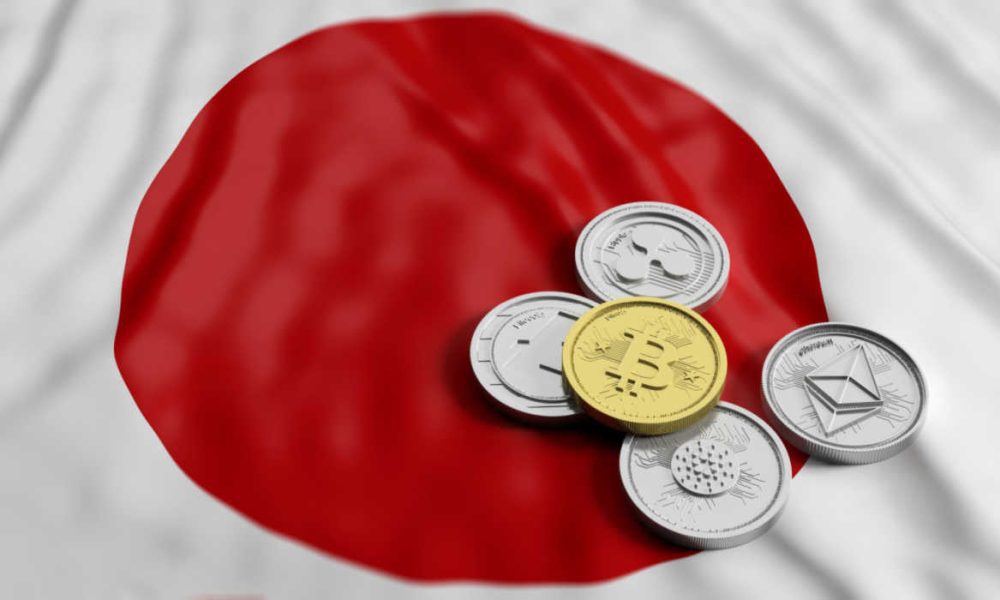
The Japanese cryptocurrency market has shown a keen interest in a variety of digital assets. As of the latest data, Bitcoin remains the dominant cryptocurrency in Japan, with the highest spot trading value reaching nearly 549 billion Japanese yen. Ethereum follows as the second most traded cryptocurrency, with a trading value of around 76 billion yen.

Other cryptocurrencies that have captured the attention of the Japanese market include Ripple’s XRP, Cardano’s ADA, and Dogecoin. These digital assets are not only popular for trading but also for their potential use cases and community support. For instance, XRP is known for its fast transaction speeds and is used in cross-border payments, while Cardano offers a platform for building decentralized applications with a focus on security and sustainability.

The interest in cryptocurrencies in Japan extends beyond these top contenders. The market has also shown curiosity in newer and less established cryptocurrencies, reflecting a diverse and dynamic environment for digital assets. With Japan’s progressive stance on technology and regulation, the cryptocurrency landscape continues to evolve, offering a glimpse into the future of finance and investment in the country.

However, the journey into the crypto market is not without its challenges. The survey identified barriers to entry, including concerns about counterparty risk, high volatility, and regulatory requirements. These factors are critical considerations for investment managers as they navigate the complexities of the digital asset space.

As Japan continues to position itself as a hub for digital asset innovation, the findings of this survey are a testament to the shifting sentiments towards cryptocurrencies in the traditional financial sector. With regulatory changes aimed at fostering growth while maintaining investor protections, the next three years could see a significant influx of institutional money into the crypto market, potentially leading to greater stability and maturity of this emerging asset class.

The proactive stance of Japanese investment managers towards cryptocurrencies could serve as a bellwether for other markets globally. As the digital asset landscape evolves, the strategic integration of cryptocurrencies into investment portfolios may become a standard practice, offering a new frontier for growth and diversification in the global financial ecosystem.

Ethereum Gas Fees drop below 3 GWEI for the first time since 2020

0

The Ethereum Network has witnessed a significant milestone as gas fees have plummeted to below 3 GWEI for the first time since 2020, marking a historic low in transaction costs. This remarkable decrease in gas fees is a boon for users and developers alike, fostering an environment conducive to increased activity and innovation on the blockchain.

Gas fees on Ethereum are a measure of the computational effort required to execute transactions and smart contracts. These fees are denominated in GWEI, with one GWEI equating to one-billionth of an ETH. The recent drop in gas fees is attributed to a combination of factors, including improvements in network efficiency and the adoption of layer 2 scaling solutions.

The implementation of EIP-1559, which introduced a base fee and a priority fee system, has played a pivotal role in making gas fees more predictable and fairer. Moreover, the surge in layer 2 protocol usage has effectively distributed the transaction load, resulting in a more efficient fee market. The integration of “blob” transactions through protocols like Base has further reduced costs, making operations like token swaps and NFT trades remarkably cheaper.

Despite the lower fees, network activity has soared to new heights, disproving the notion that reduced costs would lead to decreased usage. On the contrary, Ethereum’s daily transaction volume remains robust, indicating a healthy and active ecosystem. The efficient fee market, bolstered by layer 2 volumes and enhancements such as EIP-4844, has allowed the mainnet to maintain high throughput while keeping gas costs at bay.

One of the primary features of EIP-1559 is the introduction of a base fee for transactions, which fluctuates with network congestion and is burned, permanently removing it from circulation. This base fee replaces the previous first-price auction model, which often led to unpredictable and high transaction fees. The new model aims to provide more predictability and stability in transaction costs.

For miners, EIP-1559 has altered their revenue model. Previously, miners would receive the entire transaction fee; however, with the new system, they now receive only the priority fee (tip) set by users, while the base fee is burned. This change has raised concerns among miners about potential reductions in their income.

Despite initial worries, data following the activation of EIP-1559 indicated that miners’ revenue did not significantly decline. In fact, reports showed a slight increase in daily miner revenue by 7.1%, suggesting that the impact of EIP-1559 on miners’ earnings was not as detrimental as feared.

The dip in gas fees also has implications for Ethereum’s tokenomics, particularly concerning the burn rate introduced by EIP-1559. With fewer fees to burn, the supply dynamics of ETH have shifted slightly, leading to a marginal inflationary trend. Nonetheless, the network’s growth rate remains low, and the overall impact on Ethereum’s economy is yet to be fully understood.

This development is a testament to Ethereum’s ongoing evolution and its community’s commitment to improving user experience. As gas fees reach new lows, the potential for increased adoption and development on the Ethereum blockchain is boundless. The future looks promising for Ethereum as it continues to solidify its position as a leading platform for decentralized applications and financial innovation.

BlockDAG’s Bullish Outlook: Analysts Forecast $5M Daily Sales—Where do Solana and Filecoin Stand?

0

Solana faces a challenging market, with recent performance indicating a downturn, reflecting investor caution and broader market instability. Meanwhile, Filecoin showcases a contrasting scenario, securing investor interest with its robust institutional support despite recent fluctuations.

Entering this dynamic arena, BlockDAG captures the spotlight with its innovative use of Directed Acyclic Graph (DAG) technologies, enhancing transaction efficiency and scalability. Industry experts are optimistic about BlockDAG’s future, projecting that its innovative strategies could drive its presale’s daily earnings to an impressive $5 million. This potential surge in sales positions BlockDAG as a likely leader in the cryptocurrency market by 2024.

Solana Price Prediction: Bullish or Bearish?

Solana’s market downturn affects its price prediction, falling from a March high of $202 to $138.39. This decrease reflects a wider investor caution, evidenced by a 14% drop in 24-hour trading volume and an 8.57% decrease over the past week.

Analysts suggest a potential rebound if Solana surpasses the $157 resistance mark. However, bearish indicators dominate, such as a low RSI of 37.26 and negative MACD. The possibility of a decline to $102 persists if these conditions continue, making the immediate Solana price prediction cautiously pessimistic.

Filecoin News: The Highs and Lows

Filecoin (FIL) news highlighted a recent rally, driven by Grayscale Investments, pushing FIL close to its all-time high of $273.57 before facing a downturn. The cryptocurrency briefly hit $239.94 but dropped by 2.82%, stabilising near $180. Protocol Labs holds around 600 million FIL tokens, supporting Filecoin’s ecosystem, which trades excess digital storage on its blockchain.

Despite market swings, Filecoin (FIL) News indicates sustained investor confidence buoyed by institutional interest. This support highlights Filecoin’s critical role in decentralised storage across the blockchain sector.

BlockDAG Eyes $5M in Daily Presale Earnings 

BlockDAG is revolutionising the blockchain landscape with its innovative Directed Acyclic Graph (DAG) architecture. Unlike conventional blockchains that process transactions in a linear sequence, BlockDAG’s DAG structure enables each block to refer to multiple predecessors. This pivotal modification significantly increases transaction capacity and enhances network throughput, effectively addressing scalability issues and boosting overall efficiency.

In addition to its structural advantages, BlockDAG’s low code/no code platform democratises blockchain development. Simplifying the process of creating blockchain applications encourages wider participation and fosters innovation without requiring deep technical expertise. This approach will likely accelerate the adoption of blockchain technology across various sectors.

BlockDAG’s ongoing presale is notably successful, with the coin price escalating from $0.001 to $0.0122 across 18 batches. The presale has raised a staggering $53.2 million by selling over 11.7 billion BDAG coins. Such impressive results have fueled optimism among analysts, who anticipate that daily sales could soar from $500K to $5 million in the near future.

This projection is underpinned by BlockDAG’s cutting-edge technology and robust presale performance. The distinctive features and strong market presence position BlockDAG to potentially surpass its competitors and emerge as a leading cryptocurrency by 2024.

Final Scoop

Against Solana’s struggles and Filecoin’s steady performance, BlockDAG’s ascent in the crypto world is particularly noteworthy. Its innovative DAG technology and accessible blockchain platforms set new industry standards, paving the way for significant growth.

Analysts’ predictions of daily sales reaching $5 million underscore the potential of BlockDAG to outshine its competitors and dominate as a leading cryptocurrency in 2024. As BlockDAG continues to evolve, it promises to reshape the blockchain technology landscape.

Join BlockDAG Presale Now:

Website: https://blockdag.network

Presale: https://purchase.blockdag.network

Telegram: https://t.me/blockDAGnetworkOfficial

Discord: https://discord.gg/Q7BxghMVyu
 

Mt. Gox Distribution and Its Impact on Cryptocurrency Markets

0

The cryptocurrency world has been abuzz with the latest developments surrounding the defunct exchange Mt. Gox, which has begun the process of distributing assets to creditors affected by the infamous 2014 hack. This event has been closely watched by investors and enthusiasts alike, as the distribution involves a significant amount of Bitcoin (BTC) and Bitcoin Cash (BCH), leading to varied speculations on its potential impact on market prices.

Mt. Gox, once a dominant player in the crypto exchange arena, handling over 70% of Bitcoin transactions, faced a catastrophic hack that led to the loss of approximately 740,000 BTC. The long-awaited compensation plan is set to return over 140,000 BTC to the victims of the hack, a move that has stirred the market due to the sheer volume of assets involved.

The distribution process, slated to end in July 2024, has raised concerns about the potential selling pressure it could introduce to the market. As the repayments will be made in BTC and BCH, there is a possibility that early investors, who acquired these assets at much lower values, may be inclined to sell a portion of their holdings, thus increasing the supply and potentially driving prices down. This was reflected when Bitcoin prices dropped slightly following the announcement of the distribution schedule.

However, opinions on the matter vary. Some experts believe that the distribution of Mt. Gox’s assets is unlikely to have a lasting negative impact on BTC prices or the overall sentiment in the crypto market. They argue that the market has matured significantly since the days of Mt. Gox and is more resilient to such events. Moreover, the anticipation of this distribution has been part of the market narrative for years, possibly leading to its effects being already priced in.

Here’s a brief overview of some of the most notable hacks that have shaken the crypto world:

Ronin Network Hack ($625 Million): In March 2022, the Ronin Network, which supports the popular blockchain game Axie Infinity, suffered a massive breach resulting in the theft of around $625 million worth of Ethereum and USDC stablecoin. This hack was attributed to the Lazarus Group, a North Korean state-backed hacking collective.

Poly Network Hack ($611 Million): August 2021 saw the Poly Network, a decentralized finance platform, fall victim to a hacker who exploited a vulnerability and stole over $600 million. Remarkably, after an appeal from the developers, the hacker began returning the funds, with approximately $300 million recovered within two days.

FTX Hack ($600 Million): In November 2022, the crypto exchange FTX declared bankruptcy, and on the same day, over $600 million was stolen from its wallets. This led to many users reporting zero balances in their accounts. The exchange confirmed the hack and advised users to delete any FTX apps and avoid the website due to potential malware risks.

Binance BNB Bridge Hack ($586 Million): The Binance BNB Bridge also faced a significant security breach, with hackers stealing a substantial amount of funds. The exact details and repercussions of this hack are part of ongoing investigations and efforts to secure the assets.

These situations present a complex scenario where the interplay of supply and demand, investor sentiment, and market dynamics all converge. It serves as a reminder of the inherent volatility and unpredictability of the cryptocurrency markets. For investors, it underscores the importance of staying informed and prepared for sudden market movements.

As the distribution commences, the crypto community will be watching closely to see the actual impact on the market. Will there be a massive sell-off, or will the market absorb the additional supply with minimal disruption? Only time will tell. What is certain is that the resolution of the Mt. Gox case marks a significant milestone in the history of cryptocurrency and provides valuable lessons for the security and governance of digital assets.