DD
MM
YYYY

PAGES

DD
MM
YYYY

spot_img

PAGES

Home Blog Page 3222

Dangote Ventures into Gabon, Explores Investment Opportunities Amid Spat with Nigeria

0

Alhaji Aliko Dangote, renowned as Africa’s richest man and the driving force behind Dangote Industries Limited, is setting his sights on Gabon amid a recent spat with Nigerian regulatory authorities.

The investment interest in Gabon is coming at the invitation of Gabon’s President, Brice Oligui Nguema, and signals a potential expansion of Dangote’s industrial empire into new territories.

Dangote is currently grappling with several challenges in his home country Nigeria, including the supply of crude oil to his state-of-the-art refinery and concerns regarding product quality standards.

The Dangote Group, well-known for its extensive investments in cement and fertilizer production across Africa, announced its chairman’s visit to Gabon on their official social media platforms. The announcement highlighted Dangote’s exploration of opportunities in cement and fertilizer production in the Central African country. This initiative aligns with the group’s broader strategy to diversify and expand its industrial footprint across the continent.

A Continental Footprint in Cement and Fertilizer

The Dangote Group’s foray into Gabon is part of a larger narrative of continental expansion. Beyond Nigeria, the conglomerate has established a significant presence in various African countries, including Cameroon, Congo, South Africa, Tanzania, Sierra Leone, Ethiopia, Ghana, and Zambia.

These operations have not only bolstered the group’s standing as a leading player in the cement industry but have also played a crucial role in infrastructure development across these regions.

The group’s cement plants are renowned for their scale and efficiency, often setting benchmarks in production capacity and technological innovation. These facilities have been instrumental in meeting the growing demand for cement, a critical component in construction and development projects across Africa.

In addition to cement, the Dangote Group has made substantial investments in fertilizer production. The Dangote Fertilizer Plant, located in Lagos, Nigeria, stands as one of the largest in Africa, with a production capacity of 3 million metric tons of Urea annually. This plant is a critical asset in addressing the continent’s agricultural needs, particularly as African nations strive to enhance food security amidst global supply chain disruptions.

Africa’s Challenge with Fertilizer and Food Security

Africa’s reliance on imported fertilizers, particularly from Europe, has long been a point of concern, especially as it impacts farming and food security in the continent. The recent geopolitical tensions, notably the war between Russia and Ukraine, have compounded these vulnerabilities, highlighting the urgent need for local production capabilities.

Data from 2020 reveals that Africa’s average usage of synthetic fertilizers was a mere 26 kilograms per hectare of cropland. This figure pales in comparison to the European Union’s average of over 135 kilograms per hectare, and the even higher averages in North and South America and Asia, which stand above 150 and 187 kilograms per hectare, respectively. This disparity in fertilizer usage significantly impacts crop yields and, by extension, food security across the continent.

The Dangote Group’s investment in fertilizer production is, therefore, not just a business venture but a strategic intervention aimed at addressing these critical challenges. By producing fertilizers locally, the group hopes to reduce dependency on imports, lower costs for farmers, and ultimately enhance agricultural productivity.

Dangote’s Troubles Back Home

While Aliko Dangote’s visit to Gabon represents a forward-looking expansion, it has been overshadowed by the challenges back home. The company’s flagship oil refinery, with a massive capacity of 650,000 barrels per day, has been at the center of disputes with Nigerian regulatory bodies. These disputes primarily revolve around the supply of crude oil to the refinery and concerns about the quality of the products being produced.

The Nigerian oil sector, known for its complex market dynamics, has posed various challenges for the Dangote Group. These issues are part of broader regulatory challenges in Nigeria, which has been a focal point for discussions on industry standards, compliance, and market reforms.

The Dangote Group continues to push forward with its ambitious projects amid the challenges. The refinery, once fully operational, is expected to transform Nigeria’s oil and gas sector, significantly reducing the country’s reliance on imported petroleum products and creating numerous jobs.

While Dangote’s exploration of new investment opportunities in Gabon is seen as part of his broader vision of industrializing Africa, diversifying the group’s portfolio, and tapping into new markets, many believe that he is sending a warning message to the Nigerian government on his investment choices.
CAC Nigeria Issues 90-day Ultimatum to 91,000 Dormant Companies to File Tax Returns or Get Deregistered

0
CAC

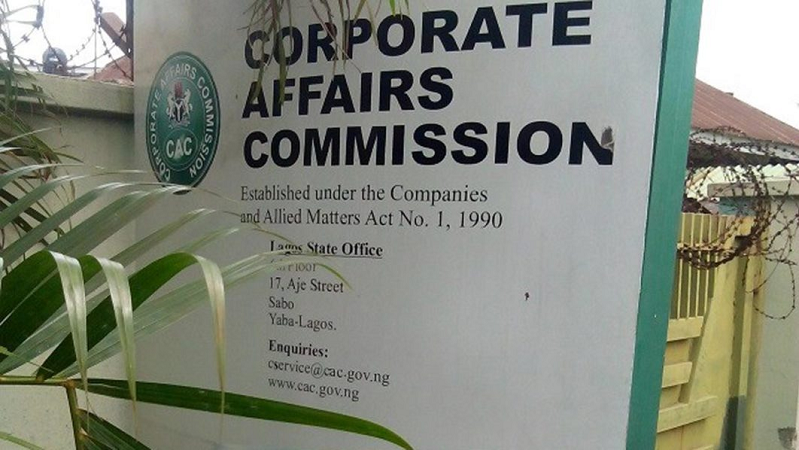
The Corporate Affairs Commission (CAC) has issued a 90-day ultimatum to over 91,000 dormant companies, demanding that they file their outstanding annual returns or face the ultimate penalty: being struck off the register.

This mandate, anchored in Section 692 (3) (4) of the Companies and Allied Matters Act No. 3 of 2020 (CAMA), aims to cleanse the corporate register of inactive entities that have not complied with statutory filing requirements for the past decade.

The announcement, made through a notice titled “NOTICE OF INTENTION TO STRIKE OFF COMPANIES FROM THE REGISTER” on the CAC’s official website, has sent ripples through the business community. According to the CAC, these companies have failed to file their annual returns for ten years, making them eligible for delisting under the law.

The Commission’s directive calls for these companies to submit all overdue returns within 90 days to avoid being struck off.

Annual returns are crucial documents that every registered company, including Non-Governmental Organizations (NGOs), must submit to the CAC annually. These returns are required regardless of whether the company has been actively trading.

The CAC has published a comprehensive list of defaulting companies on its website, providing a transparent mechanism for affected companies to verify their status. Companies that have complied with the filing requirements but still appear on the list are advised to email compliance@cac.gov.ng with proof of compliance to ensure their names are not wrongly struck off.

“Companies who filed complete annual returns in response to the earlier publication are advised to confirm removal from the list of Companies to be struck off. The updated list for publication is available on the Commission’s website,” the agency said.

Why Some Companies Default

While the CAC’s move is legally justified, it has sparked concerns among various stakeholders. Many argue that the decision does not fully consider the broader economic context that may have contributed to the inactivity of many of these companies. Over the past decade, Nigeria has faced significant economic challenges, including a recession and the impacts of the COVID-19 pandemic. These factors have led to a harsh business environment, forcing many companies into dormancy or closure.

For some businesses, the inability to file annual returns may not be a matter of negligence but rather a reflection of financial hardship. Many believe the cost of compliance, coupled with dwindling revenues, may have made it difficult for some companies to meet their obligations.

This situation has led to a growing discourse on whether the CAC should take a more nuanced approach, perhaps offering amnesty or more flexible terms for companies that can demonstrate genuine hardship.

Implications for the Business Environment

The CAC’s ultimatum has broader implications for Nigeria’s business environment. On one hand, cleaning up the corporate registry is a positive step towards improving corporate governance and transparency. It ensures that the registry reflects only active and compliant companies, which is crucial for accurate data collection, policy formulation, and investor confidence.

On the other hand, the potential delisting of over 91,000 companies could have unintended negative consequences. Analysts believe that it may signal to potential investors that the Nigerian business environment is unstable or unfriendly to businesses. They noted that for companies that are genuinely struggling but still hope to revive their operations, being struck off could close the door on potential recovery efforts.

The CAC’s decision comes at a time when the Nigerian government is striving to improve the ease of doing business and attract foreign investment. The World Bank’s Ease of Doing Business index has shown some improvement for Nigeria, but challenges remain.

Against this backdrop, economists  said regulatory predictability and support for struggling businesses are critical components of a healthy business ecosystem. As such, the current scenario calls for a balance between enforcing compliance and providing support to businesses navigating tough economic conditions.

Move Over TRON and TIA, The AI Sector Is Set To Explode With Raboo Primed For Success

0

The crypto market is currently experiencing a dynamic shift as AI-driven cryptocurrencies continue to boom, leaving regular tokens with no solid fundamentals in the dust.

As a result, experts have been rallying behind the AI-powered platform,  Raboo ahead of top altcoins like Tron and Celestia, as an asset more likely to excel in the market. Let’s explore some reasons why $RABT has an edge over TRX and TIA.

Justin Sun’s fee-free initiative fails to ignite Tron rally

After witnessing a very high trading volume, which was said to have surpassed the average daily volume of the payments company, Visa, Tron has once again made another significant step towards, maintaining its position at the forefront of the advancement of the blockchain technology,

Just recently, Justin Sun Tron’s co-founder, revealed an initiative which aims to eliminate the fees for transferring stablecoins. Although this initiative is expected to drive widespread adoption of Tron, the TRX token price still stagnates around $0.133, which represents a slight increase of 0.04% on the weekly chart.

TIA slides, analysts see recovery back to ATH unlikely

Celestia is the  DeFi crypto popular for providing a modular data platform used by all types of developers in the industry. However, the platform’s native token, TIA, has been in a downward trend, dropping as low as $4.4 earlier this month despite having traded at an all-time high (ATH) of $20.91 earlier this year.

Although top cryptocurrency analysis platforms like Changelly hold a bullish outlook for TIA, they do not see the altcoin climbing back to its all-time high this year. While TIA trades at a current price of $6.28, they forecast the coin to potentially surge to $14 before the end of the year.

Early adopters rejoice as $RABT excels in presale, promises big returns

As AI cryptocurrencies continue to gain widespread adoption Raboo continues to maintain its pace among other DeFi crypto platforms, with its AI features which  has the ability to identify and amplify the most engaging and high-quality memes. However, this is just one of the several factors that gives it its growth potential.

Raboo’s ongoing presale plan is currently experiencing a surge in investor interest as it has already raised a staggering $2 million by Stage 4 of its presale. With tokens selling at just $0.0048, Raboo positions early adopters of $RABT tokens to witness up to 233% returns on their initial investments by the conclusion of the presale.

Raboo’s ambitious plans to succeed are also not limited to its presale. The platform’s team has  set its sights on securing prominent exchange listings, recognizing that widespread accessibility is key to driving adoption and liquidity. Moreover, the platform plans to leverage the raging popularity of memes and the Raboo brand to introduce a line of branded merchandise, ranging from apparel to collectibles.

Conclusion

Experts believe as AI-driven cryptocurrencies continued to gain significant traction, Raboo is expected to keep standing out, potentially outperforming top altcoins like Tron (TRX) and Celestia (TIA)

While Tron’s fee-free initiative and Celestia’s modular data platform have failed to ignite lasting rallies, the presale token Raboo ($RABT) appears poised to capitalize on the growing demand for AI-driven cryptocurrencies to eventually emerges as one of the best altcoins to invest in ever in the crypto world.


You can participate in the Raboo presale here:

Telegram: https://t.me/RabootokenPortal

Twitter: https://twitter.com/Raboo_Official

Tekedia Capital Portfolio Firm, Cinderbuild, Is Growing Rapidly in Nigeria – 5X for 2024

0

Good People, join me to thank our Team in CinderBuild Inc for executing the playbook amazingly. Cinderbuild, Africa’s largest and most dominant building and construction materials marketplace, will grow by 5x in 2024 compared with 2023 numbers. Yes, businesses are still growing in 3 digit-percentages in Nigeria!

Yes, we are experiencing huge growth because we have brought in a high level of efficiency in the sector. From nowhere, we are #1 brand now, and some of the leading construction projects in Nigeria now depend on Cinderbuild to source and deliver construction materials. Our goal is to simplify the building of Africa, one step at a time.

Our vision is to list on the Nigerian Stock Exchange, and become the “Google and Amazon of Building Materials” in Africa. That is not a tough dream for a village boy! It was like yesterday when I wrote the Business Brief, and a brilliant Team took it, and they have done a supremely great execution job.

We have different products, depending on the structure of your project: CinderBuild for Buyers; CinderBuild for Corporates, CinderBuild for Estate Developers, CinderBuild for Estate Investors, etc.

5X growth; we can even do better with your support.

Ndubuisi Ekekwe

Co-Founder & Member of Board of Directors

Cinderbuild Inc, USA

The Integration of Artificial Intelligence in Chinese Workplaces

0

The landscape of Chinese workplaces is undergoing a transformative shift with the integration of Artificial Intelligence (AI). This technological advancement is driving efficiency and productivity to new heights, but it also brings forth significant challenges that need to be addressed with a nuanced understanding and strategic approach.

China’s rapid development and deployment of AI in the workplace are largely market-driven, with minimal regulatory oversight. This has led to a surge in AI applications across various industries, particularly in sectors with lower profit margins where AI tools are aggressively used for workforce management. The country’s political economy has facilitated this accelerated progress, making China a valuable case study for AI’s implications in the workplace on a global scale.

While AI technologies have the potential to dramatically boost productivity, they also pose a risk of exacerbating worker exploitation. The balance of power is tilting further towards employers who control data and algorithms, leaving employees with diminished bargaining power. This is especially true for low-skilled jobs, where workers face increased workloads, stress, and job insecurity due to the pressure to meet both human supervisors’ expectations and algorithmic metrics.

Here’s how AI is making an impact:

Automation of Routine Tasks: AI-powered robots and machines are taking over repetitive and labor-intensive tasks, allowing human workers to focus on more complex and creative aspects of production.

Quality Control: Intelligent systems equipped with machine learning algorithms are being used to detect defects and ensure product quality, reducing the reliance on human inspection and minimizing errors.

Predictive Maintenance: AI is used to predict equipment failures before they occur, ensuring uninterrupted production and reducing downtime in factories.

Supply Chain Optimization: AI algorithms analyze vast amounts of data to optimize supply chains, making them more efficient and responsive to changes in demand.

Energy Management: AI is helping factories to reduce energy consumption by optimizing the use of machinery and predicting peak energy usage times.

Worker Safety: AI-driven monitoring systems are being deployed to enhance worker safety by identifying potential hazards and preventing accidents.

The integration of AI in Chinese factories is not just about technological advancement; it’s about building a sustainable and competitive manufacturing sector that can thrive in the global market. As AI continues to evolve, it will undoubtedly unlock new potentials and opportunities for innovation in the manufacturing industry.

The McKinsey Global Institute study highlights that half of all work activities in China could be automated, presenting the nation with the world’s largest automation potential. However, this also means that the workforce must rapidly adapt to these changes or risk being left behind.

The swift integration of AI in Chinese workplaces underscores the need for comprehensive policy evaluation to mitigate negative consequences. International policymakers can draw important lessons from China’s experience to ensure that the development of AI in workplaces globally is balanced and beneficial for all stakeholders involved.

The use of AI in Chinese workplaces is a testament to the country’s ability to harness technology for economic growth. However, it also serves as a cautionary tale of the potential pitfalls of unchecked AI deployment. As AI continues to evolve, it is imperative that its integration into the workforce is accompanied by thoughtful regulation and consideration for the well-being of employees. The future of work depends on our ability to strike a balance between embracing innovation and protecting the rights and interests of workers.