DD
MM
YYYY

PAGES

DD
MM
YYYY

spot_img

PAGES

Home Blog Page 3222

Dangote Refinery Received Only $2.7bn from CBN in 10 Years – Dangote

0

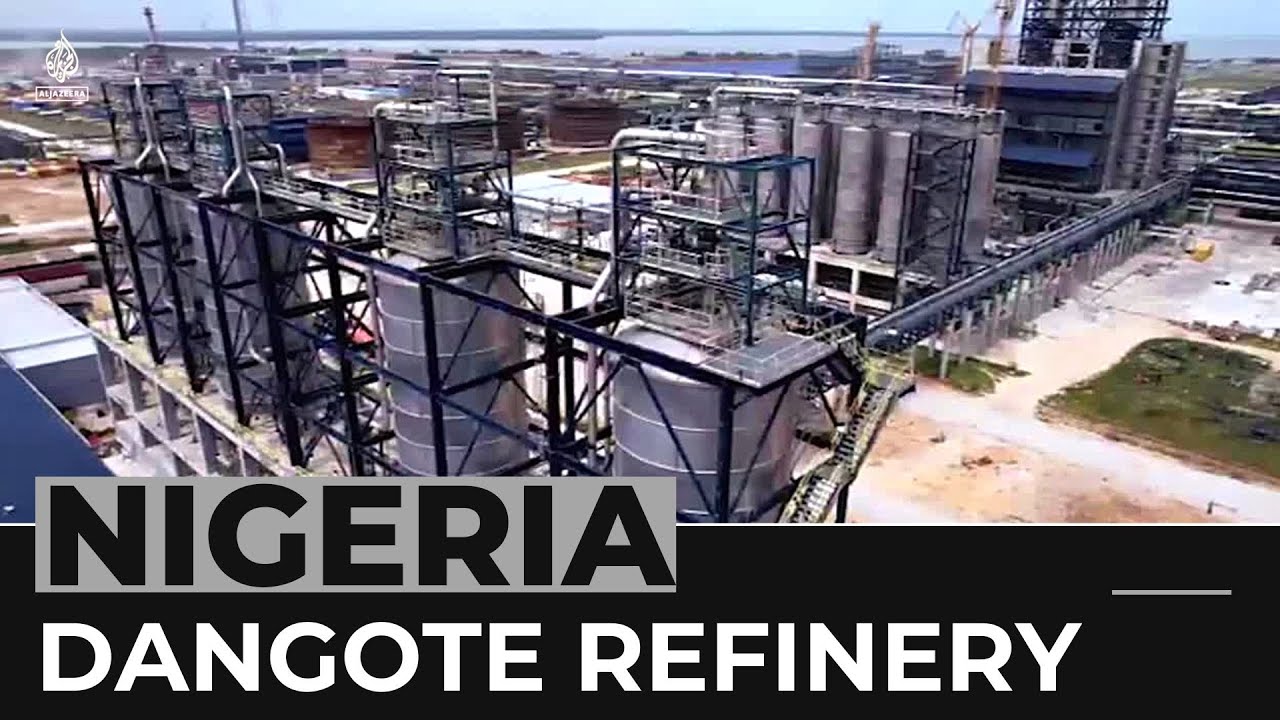
Aliko Dangote has revealed that he secured only $2.7 billion in loans from the Central Bank of Nigeria (CBN) for the Dangote Refinery, amid growing insinuation that the ambitious project may have played a role in exacerbating Nigeria’s current foreign exchange (forex) crisis.

As the country navigates through economic turbulence marked by a significant forex scarcity, the Dangote Refinery, a landmark infrastructure initiative, has found itself at the center of a heated debate about its impact on the nation’s financial stability.

Nigeria, Africa’s fourth-largest economy, has been grappling with a severe shortage of foreign exchange, a problem that has been attributed to several factors including declining oil revenues, reduced foreign investment, and a high demand for dollars to support imports. Against this backdrop, critics have pointed fingers at the Dangote Refinery’s substantial forex requirements as a potential drain on the country’s already stressed reserves.

In an attempt to address these concerns, Aliko Dangote, the billionaire industrialist behind the refinery, issued a detailed statement clarifying the financial structure of the project. According to him, the $2.7 billion obtained from the CBN over a decade was a modest portion of the total investment required for the refinery.

He explained that the project was primarily funded through the company’s own resources, with the CBN’s contribution being relatively minimal in the broader scheme.

“On the loan that we got, part of the loan was taken by Dangote Industries, which is a local company. Dangote Industries got allocation from Central Bank and the total allocation that we got, including the money that we lost in terms of interest, was about $2.7 billion from 2013 to 2023.

“Out of the $2.7 billion we still have more than $200 million of forwards that we’re yet to collect from the CBN. So, it’s the total of $2.5 billion we got from the CBN in real cash which was paid in terms of interest and principal payment,” he said.

Dangote’s statement seemed aimed at dispelling the growing narrative that his refinery project has been a significant burden on Nigeria’s forex reserves.

He further clarified that the funds received from the CBN would eventually be reinvested into the Nigerian economy through dividends and other financial returns once the refinery begins to generate profits.

“Dangote Industries as soon as they get their dividends are bringing that money back to sell in the local market. They’re bringing that money back into Nigeria.

“There’s no money we’ve taken away from Nigeria. And the one that we took, we’ll return it. So it’s better for people to understand.

“It’s better for people to understand that what we took from CBN, we’re bringing it back. The thinking of people is that the majority of the Central Bank’s money was depleted by the Dangote’s major projects. We got $2.5 billion cash from Central Bank and that money will come back as soon as we start making money. Once we start making money, we’ll start paying the loans that we have,” Dangote added.

In an earlier statement, Aliko Dangote revealed that his company has already repaid $2.5 billion of the $5.5 billion loan secured from various banks to finance the construction of the Dangote Refinery. Additionally, the former Governor of the Central Bank of Nigeria (CBN) noted that as of 2023, Dangote had repaid 70% of the loan obtained from the apex bank.

Dangote recent clarifications on the refinery are deemed necessary given the recent spat between him and the Nigerian government regarding his refinery.

The Dangote Refinery, once fully operational, promises to be a game-changer for Nigeria. It is expected to significantly reduce the country’s dependence on imported refined petroleum products, conserving foreign exchange that would otherwise be spent on imports.

While the refinery’s long-term benefits for Nigeria’s economy are widely acknowledged, its role in the current forex crisis has become a subject that refuses to go away. Dangote’s clarifications aim to reassure both the public and financial stakeholders that the project is not unduly straining the country’s forex resources and that the benefits, once realized, will outweigh the initial costs.

NAMA Increases ENC Charges by 800%, Paving Way for Fresh Fee Hikes for Flights in Nigeria

0

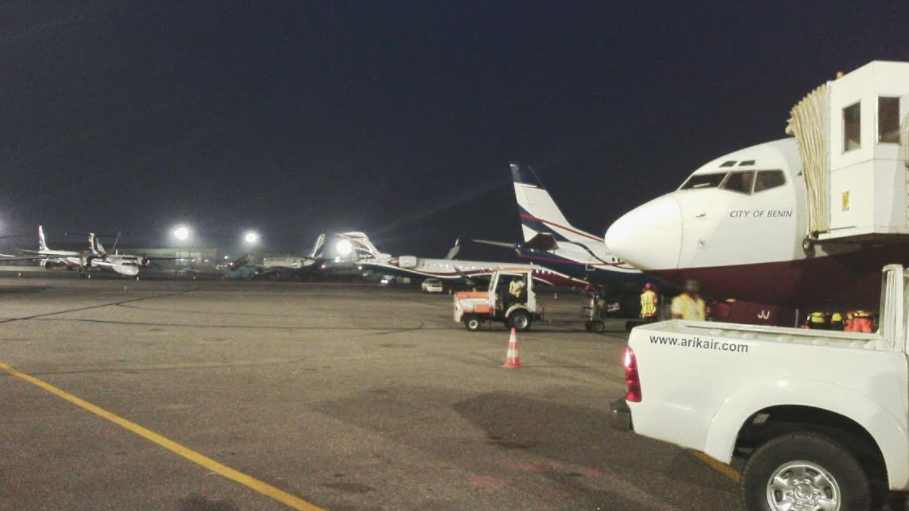
In a move that is likely going to stir the waters of Nigeria’s aviation industry, the Nigerian Airspace Management Agency (NAMA) has announced a substantial increase in en-route navigational charges. The new fees, which see domestic flight charges rise from N2,000 to N18,000 and international charges soar from N6,000 to N54,000 per flight, represent a significant shift in the cost structure for airlines operating in and out of Nigeria.

This change, revealed by NAMA’s Managing Director, Umar Ahmed Farouk, at the League of Airports and Aviation Correspondents (LAAC) conference in Lagos, aims to address the rising operational costs and the need for improved airspace management.

He said, “NAMA relies on statutory fees for the management of the airspace (remember that aviation takes place only in the air). These funds are generated from services we provide to the flying community, without these funds NAMA can’t discharge its responsibility of ensuring the safety of our airspace effectively. We majorly generate these funds through the airline companies.”

Additionally, NAMA has adjusted the fees for extending operational hours at sunset airports, raising the cost from N50,000 to a staggering N450,000 per extension. This increase, intended to cover the rising costs of diesel and other logistical needs, has sparked concerns among travelers and industry stakeholders. The fear is that these hikes could translate into even higher ticket prices for both domestic and international flights, compounding an already steep increase in airfare costs.

Since 2015, the cost of flights within Nigeria has increased significantly, with some reports indicating a rise of about 1150%. International flight prices have also surged, with the same percent increase over the same period. This trend has been driven by various factors, including currency devaluation, rising fuel prices, and increased operational costs.

Earlier this year, NAMA, in collaboration with the Nigerian Civil Aviation Authority (NCAA) and representatives from the Airline Operators of Nigeria (AON), reviewed the outdated N16,000 Terminal Enroute Navigational Charges (TNS). This review, held in Abuja, aimed to update the charges to reflect the current economic realities. Airlines have acknowledged how necessary these changes are, citing the need for the fees to match the services provided and the costs incurred by NAMA.

In defense of the new charges, Farouk highlighted the critical role of efficient pricing in the aviation sector. He emphasized that NAMA’s operations are primarily funded through these fees, as the agency does not receive financial allocations from the federal government.

In 2023 alone, NAMA faced expenditures of N21 billion for personnel, over N12 billion in capital costs, and more than N10 billion in overhead costs. Farouk said despite these rising expenses, NAMA’s charges had remained unchanged since June 2008, even as ticket prices for one-way domestic flights soared to between N150,000 and N200,000.

The Many Challenges of the Nigerian Aviation Industry

The increase in en-route navigational charges comes amid other challenges that the aviation industry is grappling with.

Dr. Thomas Ogungbangbe, Chairman of the conference and CEO of CITA Aviation Fueling Ltd., outlined several challenges facing the sector. These include high fuel costs, limited access to foreign exchange, a weakening naira, and the need for continuous maintenance and infrastructure upgrades.

However, Ogungbangbe argued that while these challenges are significant, they also present an opportunity for innovation and growth within the industry.

He criticized the current focus on developing new airport projects at the expense of essential infrastructure like roads, which are crucial for improving access to airports and making air travel more accessible. Improved road networks would facilitate easier access to airports, potentially increasing air travel demand and supporting the sector’s growth.

In response to these challenges, the Minister of Aviation and Aerospace Development, Mr. Festus Keyamo (SAN), assured that the federal government is committed to supporting local airline operators. Keyamo highlighted the importance of developing Maintenance Repair Organization (MRO) facilities across the country, which he believes will significantly boost the aviation sector.

Discussions are already underway with international investors from Europe, Asia, America, and the Middle East to attract investment into Nigeria’s MRO facilities.

Keyamo also addressed issues related to bilateral air services agreements, noting that they often do not favor Nigerian airlines. He pointed out that while international carriers such as Lufthansa, Delta, and United Airlines have extensive operations in Nigeria, Nigerian airlines are often relegated to secondary routes in these carriers’ home countries.

“Lufthansa is coming here but we are not going to Frankfurt.  Delta, and United are coming from America but we are not going there. South Africa is coming here with no reciprocity,” he said.

Apple Drops Out of Top Five Smartphone Vendors in China

0

Apple has slipped out of the top five smartphone vendors in China for the second quarter of 2024, a clear indication of the increasing dominance of domestic brands in the world’s largest smartphone market.

According to a recent report by Canalys, Apple’s market share in China dropped to 14%, down from 15% in the first quarter and 16% during the same period last year. This decline saw the Cupertino giant, once the third-largest vendor in China, fall to the sixth spot with approximately 9.7 million units shipped.

The Canalys report highlights that this is the first time in history that local Chinese brands have occupied all the top five positions.

“It is the first quarter in history that domestic vendors dominate all the top five positions,” Lucas Zhong, a research analyst at Canalys, said.

This notable change underscores a broader trend where Chinese manufacturers are not only growing but are also increasingly capturing the high-end segment of the market traditionally dominated by international brands like Apple.

Leading the charge, Vivo reclaimed the top spot with a 19% market share, shipping 13.1 million units. This success was largely driven by strong sales during the “618” e-commerce festival, a significant shopping event in China. Oppo followed closely in second place, shipping 11.3 million units, buoyed by the launch of its new Reno 12 series.

Honor, a former subsidiary of Huawei, came in third with 10.7 million units, showing a 4% year-on-year growth. Huawei itself made a notable comeback, taking the fourth spot with a 15% market share and 10.6 million units shipped. This resurgence is attributed to the strong performance of its Mate 60 smartphone, which has helped the company regain ground in the competitive landscape.

Xiaomi rounded out the top five, boosted by the excitement surrounding its first electric vehicle, the SU7, alongside solid sales of its K70 and flagship 14 series smartphones.

The overall smartphone market in China saw a 10% growth year-on-year in the second quarter, with total shipments exceeding 70 million units. This growth has been propelled by the innovative strategies of Chinese brands, including a strong focus on high-end devices and the integration of cutting-edge technologies like generative AI, as seen in Honor’s latest offerings.

This trend is reshaping the competitive market, putting significant pressure on international players like Apple.

In an effort to counteract this pressure, Apple launched a substantial discount campaign in May, offering significant price cuts of up to 2,300 yuan ($318) on select iPhone models via its official Tmall store. This move was part of a broader strategy to solidify its position in the high-end market, where it faces increasing competition from local brands.

Apple has also been working to enhance its connection with Chinese consumers by tailoring marketing campaigns to local cultural events and festivals, building a stronger brand presence.

Additionally, the iPhone maker has been expanding its retail footprint in China, opening new stores in key cities to enhance visibility and provide more touchpoints for consumers. The company is also investing in its after-sales service network, offering extended warranties and faster repair services to improve customer satisfaction and loyalty.

Moreover, Apple is collaborating with local developers to create apps and services that cater specifically to the Chinese market, thereby enriching the user experience and fostering a loyal customer base.

Despite these efforts, Apple’s position in the Chinese market remains challenged. The company’s shipments have been declining since the first quarter, where they fell by 25% year-on-year to 10 million units. The second quarter’s sales decline suggests that even aggressive discounting and strategic market adaptations may not be enough to stem the tide against the rising tide of Chinese brands.

Apple has dropped out of the top five smartphone vendors in China as homegrown brands explode in popularity, The Wall Street Journal reports, citing new industry tracking data. Though overall smartphone sales are up 6% in the world’s largest smartphone market, Apple’s market share there has declined to 15.5%, from 17.4% a year ago. iPhone sales in China have been slipping since the turn of the year, thanks in part to government restrictions. Many of the Chinese brands have also been quick to incorporate AI into their phones — something Apple is still working on. (LinkedIn News)

BlockDAGCEO & Team Reveal News Sparks Excitement, Boosts $61.3M Presale; Are Dogwifhat & Toncoin Rising Again?

0

With Dogwifhat and Toncoin rebounding, bullish trends and optimistic predictions are emerging. Dogwifhat forecasts a potential upswing, while Toncoin targets new highs. Amid these dynamics, BlockDAG presale shines brightly. With the revelation of its CEO, team, and advisory board, investor confidence is soaring. The presale has now eclipsed $61.3 million, underscoring rising investor interest and positioning BlockDAG as today’s top crypto investment.

Dogwifhat Price Forecast: Bullish Signals Emerge

Recently, Dogwifhat (WIF) climbed past a downward trendline, signaling a bullish shift. It’s currently up 1% at $2.171. The price showcases a double bottom pattern, hinting at an upcoming reversal. After a rebound from $1.547, Dogwifhat reached a peak of $2.361 in June. A breakout above $2.361 could propel it to $2.644, the peak on June 17.

The Relative Strength Index (RSI) is above 50, and the Awesome Oscillator (AO) aligns, suggesting growth. Surpassing $2.644 could trigger a 16% ascent to $3.087, the 61.8% Fibonacci level. However, a drop below $1.482 would mark a downtrend, possibly leading to a 33% fall to the March 5 low of $1. Monitoring these levels is crucial for precise Dogwifhat forecasts.

Toncoin Reaches for New Peaks

Toncoin (TON) exhibits breakout signs with rising investor optimism. Despite falling from its all-time high of $8.28, the optimism among TON holders persists. Recently, 4% of TON shifted from short-term to mid-term holdings, reflecting long-term confidence. Trading at $7.30, TON aims to surpass the critical $7.53 level to sustain bullish momentum.

TON’s active addresses match those during its peak, indicating robust network involvement. Increased liquidity from this activity promotes smoother trades and reduces volatility. If TON breaches $7.53, it could exceed its previous high of $8.28, potentially offering significant returns. However, failure to hold above $7.53 could see it dip to the $7.07 support, dampening bullish sentiment. Key levels should be watched closely for insights into Toncoin’s potential.

BlockDAG: Today’s Premier Crypto Investment

While Dogwifhat and Toncoin have their merits, BlockDAG (BDAG) is rapidly becoming the preferred choice for crypto investors. With an impressive presale that raised over $61.3 million, it has attracted substantial attention and trust. In its 20th presale batch at $0.015 per coin, over 12.3 billion BDAG coins have been sold.

The recent unveiling of its CEO, team, and advisory board boosted confidence, propelling the presale. BlockDAG is anticipated to reach a coin value of $30 by 2030, showing great growth potential. As the foremost advanced layer-1 blockchain, it employs Proof of Work for greater efficiency and speed. Its Ethereum Virtual Machine (EVM) compatibility facilitates quick Ethereum-based contract implementations, leveraging Ethereum community resources.

BlockDAG also offers innovative mining solutions, including the user-friendly X1 mobile app and powerful machines like X10, X30, and X100, offering diverse mining bonuses. Analysts foresee a potential 30,000x ROI for BlockDAG investors, supported by strategic marketing and integration into major DeFi exchanges.

Final Take

BlockDAG distinguishes itself as the optimal crypto purchase today, despite the potential rallies of Dogwifhat and Toncoin. The presale has soared to over $61.3million, with a dramatic 1400% price surge from the initial $0.001 to $0.015 in the current batch. The announcement of its leadership on July 29, followed by an AMA session, has fortified investor trust. BlockDAG’s cutting-edge technology and robust growth forecasts render it an unrivaled investment opportunity, surpassing Dogwifhat and Toncoin prospects.


Join BlockDAG Presale Now:

Website: https://blockdag.network

Presale: https://purchase.blockdag.network

Telegram: https://t.me/blockDAGnetworkOfficial

Discord: https://discord.gg/Q7BxghMVyu

Watch Out, SHIB! MOONHOP Kicks Off Stage 2: $1M Raised as KAMA Meme Coin Surges 

0

Ever seen a bunny binky dancing? This heart-meltingly adorbs dance includes a series of sudden jumps, twists, and spins in the air. That’s exactly what stage 1 MOONHOP investors are doing right now. This bunny has raised over $1 million in presale revenue and is hopping onto stage 2 with a big yayy! Its adorable community, The Fluffle, includes the happiest investors on planet Memecoin. Whereas stage 1 MHOP-backers stand to gain an ROI of 4900%, stage 2 will receive a 3471% ROI.

Before analyzing this next big meme coin, let’s see how much the KAMA meme coin surges and understand the details of the current SHIB price forecast.

KAMA Meme Coin Surges as Biden Drops Out of Election

In a twist of political fate, the KAMA meme coin, inspired by Vice President Kamala Harris, surged to an all-time high following Joe Biden’s exit from the presidential race. KAMA’s value jumped 37.4% to $0.01528, outpacing its counterpart BODEN, which plummeted by 50%.

This sudden spike underscores the volatile nature of coins susceptible to political events. Launched on Pump.fun, a platform known for promoting meme coins on the Solana blockchain, KAMA benefited from Solana’s low transaction costs and scalability. However, despite the recent hype, the future of KAMA remains uncertain.

How Solid is the SHIB Price Forecast of $0.0001?

Shiba Inu (SHIB) is poised to hit $0.0001 soon—at least according to meme coin trader Oscar Ramos. In his ever-optimistic YouTube forecast, Ramos attributes SHIB’s potential surge to Bitcoin’s influence and, somewhat hilariously, the political climate. He suggests that Bitcoin could skyrocket to $200K by 2024, sparking a ripple effect on SHIB and other cryptocurrencies.

Yet, despite the bullish macroeconomic factors and buzz from influencers like Elon Musk, SHIB’s performance has been notably underwhelming. With no significant gains since March, the promise of a breakthrough feels more like wishful thinking.

MOONHOP’s Presale Stage 2 Brings a 40% Surge!

When the whimsical memecoin bunny, MOONHOP, hopped into the market, no one quite expected the magnitude of its leap. This adorable bunny has stolen not just hearts but also wallets. Stage 1 of the presale was a roaring success, raising a whopping $1 million in just a few days. Now, the bunny is ready for another big hop forward with the launch of stage 2, where the coin is valued at $0.014.

MOONHOP’s charm lies in its incredible system and its supportive community, fondly known as The Fluffle. In this warm, cuddly ecosystem, everyone is cherished and encouraged to hop together towards financial freedom. The MOONHOP Whitepaper beautifully captures this sentiment: “Just like a group of bunnies, we stick together, support each other, and grow as one. Whether you’re a seasoned crypto enthusiast or a curious newcomer, there’s a place for you in The Fluffle. We believe in the power of collectively bouncing to reach new heights.”

Now, let’s talk numbers—because even the cutest bunnies have a head for figures. Stage 1 investors saw their $0.01 per coin investment promise a massive 4900% ROI by launch. With stage 2 now live, the price per coin has hopped up to $0.014, marking a delightful 40% increase already. If this trend continues, stage 2 investors could enjoy an impressive 3471% ROI by the time MOONHOP officially launches.

The message this next big meme coin is trying to send is clear: the earlier one joins The Fluffle, the bigger the returns!

Fuzzy Farewell

Although the KAMA meme coin surges as Biden decides not to run for re-election, its heavy reliance on political matters raises concerns. Simultaneously, the SHIB price prediction of $0.0001 lacks a practical backstory.

This is when the bunny takes matters into his own hands. After securing a YUMMY $1M in presale revenue, MOONHOP has already achieved a 40% price surge. Now priced at $0.014 in stage 2, this bunny is projected to hit $0.50 by launch. Stage 1 MOONHOP investors will see a 4900% ROI, while stage 2 investors can expect a 3471% ROI.


Join MOONHOP Presale Now:

Website: MOONHOP.io

Presale: https://MOONHOP.io/buy

Twitter: https://twitter.com/MOONHOPcoin

Telegram: https://t.me/MOONHOPcoin