DD
MM
YYYY

PAGES

DD
MM
YYYY

spot_img

PAGES

Home Blog Page 3236

BlockDAG Secures #1 On Spot on CoinSniper With 1120% Surge As Polkadot Weakens And Cosmos Faces Challenges

0

As the cryptocurrency landscape deals with potential declines in Cosmos (ATOM) and worrying signals from Polkadot, BlockDAG emerges as a beacon of achievement with its striking 1120% increase in market value. This remarkable growth has established it as a new titan within the crypto sphere, igniting widespread investment into BDAG coins. This presale success is closely tied to the rollout of the Moon Keynote, which secured its top spot on CoinSniper, coupled with the innovative insights revealed in DAGPaperV2.

Polkadot’s Prospects Clouded by Uncertainty

In the latest developments, Polkadot (DOT) contends with enduring bearish forces, though there are slight signs of a possible upturn. Hovering below its 200-period moving average, the platform might see a lift from the recent uptick in trading volumes. Despite the excitement surrounding ETFs and market rallies this year, DOT has witnessed a notable drop in value. Nonetheless, a ray of hope shines through as RSI indicators suggest a potential, albeit slight, rebound in a market engulfed by ‘Extreme Fear.’

Cosmos Wrestles with Fierce Competition

Positioned at $11.19, Cosmos is under investor scrutiny after its ecosystem took a severe blow in 2022 due to Terra (UST)’s downfall, which significantly impacted Osmosis’s principal DEX. Once praised for its PoS and interchain security breakthroughs, Cosmos now struggles to maintain relevance as newer projects pose threats, and the waning interest of investors slows its ecosystem’s growth.

BlockDAG Dominates on CoinSniper and Introduces Whitepaper Enhancements

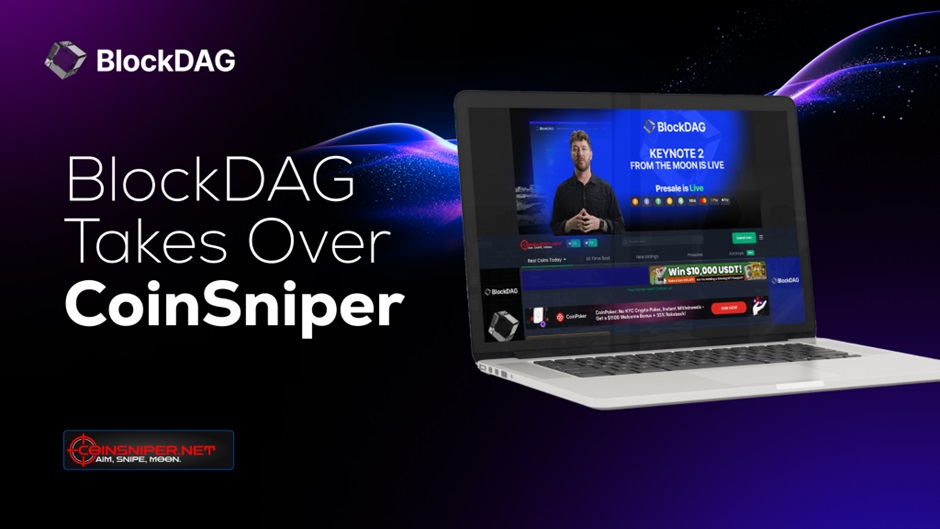
BlockDAG, redefining the limits of traditional blockchain, has recorded the highest presale price escalation in the history of cryptocurrency, with BDAG coin prices soaring 1120%, from merely $0.001 in the first batch to $0.122 in the eighteenth. This achievement is grounded in the sophisticated technologies outlined in its whitepaper, the impactful Moon Keynote, and its prestigious placement on CoinSniper. The Moon Keynote mesmerized the global audience, delving deeply into BlockDAG’s ecosystem, strategic marketing, and pivotal blockchain innovations, securing the highest position on CoinSniper—a platform that has historically propelled tokens such as Shiba Inu and Doge to fame. Subsequently, the platform experienced substantial investments from whales, accumulating $3 million overnight and swiftly depleting the most recent presale batch.

BlockDAG’s rise in the cryptocurrency sector is underscored by an astounding 1120% increase in the price of its BDAG coins, demonstrating its formidable market presence and innovative technology. Beginning at just $0.001 per coin in the first batch, the price escalated to $0.122 in the eighteenth batch, reflecting robust investor confidence and a bullish outlook. This significant increase was fueled by the Moon Keynote, which highlighted BlockDAG’s advanced DAG-based blockchain technology and broad-reaching marketing initiatives, captivating a global audience.
In Conclusion

BlockDAG’s significant 1120% increase has overshadowed the challenges faced by Polkadot and the uncertain outlook for Cosmos’ ATOM. Its number one ranking on CoinSniper, following the significant Moon Keynote, showcased critical blockchain updates and broadened payment options. The updated technical whitepaper also presents new features and improvements, making BDAG coins highly desirable in the ongoing presale, currently priced at $0.0122 in batch 18.


Join BlockDAG Presale Now:

Website: https://blockdag.network

Presale: https://purchase.blockdag.network

Telegram: https://t.me/blockDAGnetworkOfficial

Discord: https://discord.gg/Q7BxghMVyu
BlockDAG Presale Achieves $50.8M With Influencer Support Amid Market Fluctuations For Solana And TRON

0

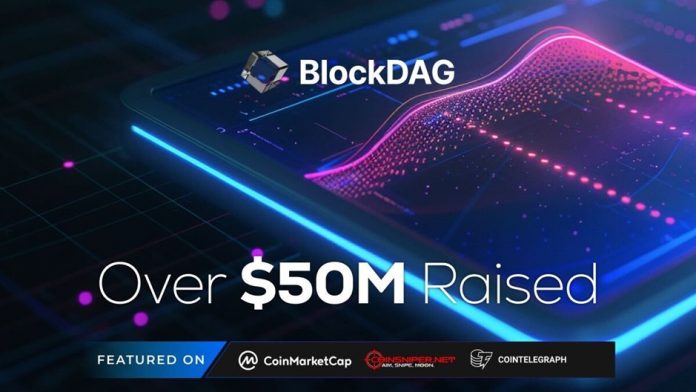
In the volatile cryptocurrency market, Solana (SOL) faces a downturn with a 28% drop from its March highs, while TRON (TRX) records phenomenal growth with unprecedented user engagement and revenue. Amid these variances, BlockDAG (BDAG) has experienced a significant boost in its presale, reaching $50.8 million thanks to an endorsement from a leading crypto influencer. This surge establishes BlockDAG as a prime investment opportunity with promising returns.

Challenges in the Bear Market for Solana

Solana has recently seen a notable decline, dropping 28% from a March peak of $210, amid widespread market challenges. The future of Solana may hinge on developments like the potential approval of Ethereum ETFs, which might open the door for similar products for Solana, potentially attracting substantial institutional investment. Despite the downturn, driven by a broader market slowdown, Solana’s strong infrastructure and community support keep it a key player in the cryptocurrency field.

TRON Sets New Records in Engagement and Revenue

TRON has shattered previous records in the cryptocurrency market by achieving the highest number of daily active users and securing $31.3 million in weekly revenue. This strong performance underscores TRON’s solid market position and potential for ongoing growth, fueled by strategic initiatives like its deflationary token burn mechanism.

Influencer Boosts BlockDAG’s Market Visibility

BlockDAG has dramatically increased its market presence, achieving a remarkable $50.8 million in presale revenue, significantly propelled by the endorsement of a well-known crypto influencer. This notable support has fueled a surge in investment, with BlockDAG’s value skyrocketing by 1120% since the launch of its first batch. Currently, with 11.4 billion coins sold and presale prices reaching $0.0122 per coin, BlockDAG showcases not only strong market demand but also the robust confidence investors place in its potential.

The influencer’s glowing review highlighted BlockDAG’s innovative approach, especially praising the recent Keynote 2 presentation and the beta release of the X1 mining app. This app allows users to mine up to 20 BDAG coins daily, enhancing the accessibility and efficiency of crypto mining from smartphones. The influencer’s spotlight on BlockDAG’s technological advancements and strategic vision has significantly amplified the project’s appeal, drawing even more attention and investment.

BlockDAG’s rapid presale achievements are a testament to its compelling technology and the effective community engagement strategies it employs. As the project continues to unveil new developments and batch releases, it solidifies its position as a leading contender in the cryptocurrency market, promising substantial returns and ongoing growth for its investors.

Conclusion: BlockDAG’s Prospects for Reaching $30

BlockDAG’s presale success, with nearly $50 million raised and 11.4 billion coins sold, underscores its strong growth and market potential. While Solana navigates its price challenges and TRON continues to set performance records, BlockDAG stands out as an exceptional investment opportunity. Supported by continuous technological advancements and influential endorsements, BlockDAG is well-positioned to reach the projected $30 price point by 2030, offering lucrative prospects for investors in the ever-evolving crypto market.


Join BlockDAG Presale Now:

Website: https://blockdag.network

Presale: https://purchase.blockdag.network

Telegram: https://t.me/blockDAGnetworkOfficial

Discord: https://discord.gg/Q7BxghMVyu
Re-energizing the Buckled Resourceful Nation

0

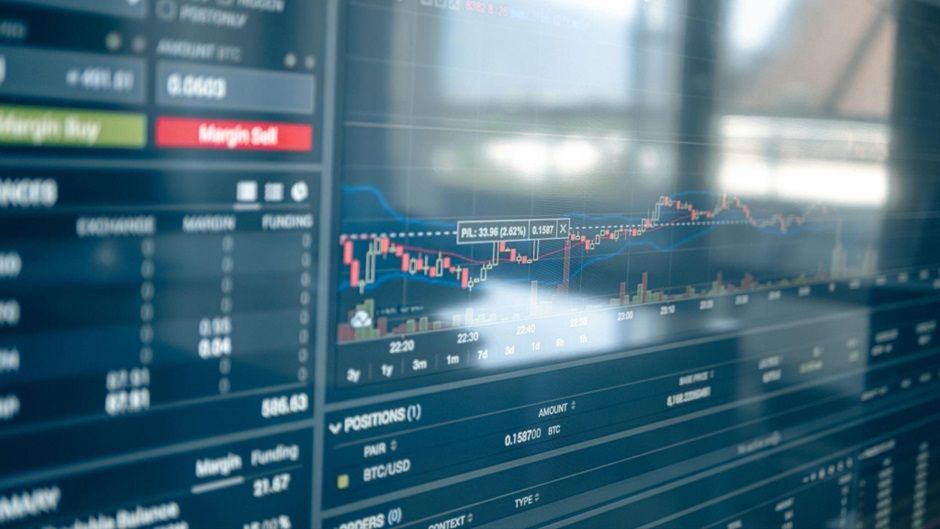
It was very painful reading the New York Times which ran a cover piece on Nigeria, titled “A resourceful nation buckles”. This section is tough for a nation:

“The pain is widespread. Unions strike to protest salaries of around $20 a month. People die in stampedes, desperate for free sacks of rice. Hospitals are overrun with women wracked by spasms from calcium deficiencies. The crisis is largely believed to be rooted in two major changes implemented by a president elected 15 months ago: the partial removal of fuel subsidies and the floating of the currency, which together have caused major price rises.”

Good People, there is no need to fight the press. We need to respond with a better outcome, and that means improving the state of the economy. That said, Nigeria can stop this bleeding tomorrow by announcing that the Naira is now pegged at N1,000/$1 and once that is done, you attain equilibrium making it possible for companies to operate. What we have now is too stochastic that no meaningful business modeling can happen, and that is why this bleeding is escalating.

Focusing on the two factors the Times noted, I have provided suggestions in the past:

Reverse Naira Floating: The biggest challenge today is not that the Naira is exchanging at N1,500 or N1,400 to US$1, the issue is that the volatility will make it impossible for companies to plan and investors to invest. The exchange rate stresses the traders and speculators, but for investors, volatility kills their plans. So, pegging Naira will deal with that volatility immediately.

Stabilize Energy Cost. Nigeria must bring full subsidy for industrial customers even as it allows commercial and residential to pay the full rates. Understand that if we do no deepen the industrial base, the vicious cycle will continue. So, to tame inflation and help companies make things, we need to assist them on energy costs which have gone up significantly. But do not give them money, use rebates so that only REAL industrial customers will benefit. 

Comment on Feed

Comment: We can’t afford to subsidize the dollars. Nigerians wasted the opportunity to spend dollars on everything except productivity. We cannot go back to bleeding our treasury without productivity. If we had exports today we would be here. You failed to mention how to fund $ subsidy.

My Response: The black market rate was about N700/$ before the floating.  Largely, the government was not funding the black market rate. Today, the “official nafem” rate is about N1,300 while the new black market rate is at N1,500. Does it occur to you that Nigeria was better at that N700/$ which was “unofficial” instead of the official which is now N1,300. In other words, if the equilibrium was not disturbed, you would have saved N600/$ compared to the official rate today.

Now, by moving the equilibrium, billions of corporate tax vapourised. Using MTN Nigeria; it paid about N100 billion in tax in 2022 (see the PBT and PAT). After the float, MTN Nigeria lost (pre tax) N575.69 billion in 3 months! (Q1 2024). So, if you run the numbers, since the floating is not stabilizing the economy, Nigeria has lost those tax revenues. What does it mean? Nigeria has to find money to cover what those tax revenues would have done. The number is massive with 800 companies under.

Simply, you may not be funding and defending Naira (as you noted)  but now you have to find money to cover corporate tax  losses the policy triggered. I do not even concede that Naira had to be defended (in the past) because there was no reason for that.

Remember: a bird which leaves the ground and perches on the ant-hill is still on the ground. Nigeria may not be defending Naira but today is defending inflation, corporate tax loss, minimum wage, etc which might NOT have happened (at scale) without the policies.

A Look at China’s Armed Robot Dogs [video]

0

In recent years, the intersection of robotics and military technology has led to significant advancements in unmanned systems. One of the latest developments in this field is the introduction of armed robotic dogs by China’s military. These machines represent a new era in the technology-driven arms race, showcasing the potential for robotics to play a crucial role in future combat scenarios.

The robotic dogs, unveiled during a joint military exercise with Cambodia, are equipped with machine guns and are designed to perform various military tasks, including reconnaissance and combat support. The robots’ design and capabilities are reminiscent of science fiction, yet they are very much a reality in today’s rapidly evolving military landscape.

China’s display of these robots is not just a demonstration of technological prowess but also a strategic move in the global competition for military dominance. The United States and other nations have also been exploring similar technologies, indicating a trend towards increased automation in warfare.

The use of such robots raises important questions about the future of warfare and the ethical implications of autonomous weapon systems. As these machines become more sophisticated and capable of making decisions, the line between human and machine control in combat situations becomes increasingly blurred. This shift necessitates a discussion on the rules of engagement and the legal frameworks governing the use of autonomous weapons.

The technical specifications of these robotic dogs reveal their sophistication and potential on the battlefield. One model is equipped with an assault rifle and weighs approximately 50 kg, designed primarily for direct combat roles. Another lighter variant, weighing around 15 kg, is tailored for reconnaissance missions. Both models are outfitted with a 4D wide-angle perception system, enabling them to navigate and respond to their surroundings effectively.

These robotic dogs are capable of mimicking the movements of real dogs, including walking, hopping, lying down, and moving backward. This agility allows them to be versatile participants in various military scenarios, from leading infantry units in urban assault simulations to performing complex drills.

The integration of off-the-shelf technology with standard military equipment, such as the QBZ-95 assault rifle, indicates a strategic approach to leveraging existing technologies for rapid deployment and scalability. The robotic dogs’ ability to carry out tasks autonomously or under remote control by an operator adds a layer of tactical flexibility to military operations.

Moreover, the deployment of robotic dogs in military operations could potentially change the dynamics of combat, offering advantages such as reduced risk to human soldiers and increased operational efficiency. However, it also poses challenges in terms of command and control, as well as the potential for unforeseen consequences in complex combat environments.

As the world watches these developments unfold, it is clear that the integration of robotics into military strategy is not a question of if but when. The armed robotic dogs are a testament to the changing face of warfare and the ongoing innovation in military technology. As nations continue to invest in and develop these systems, it is imperative to consider the broader implications for international security and the rules of war.

The conversation around armed robotic dogs is just beginning, and it will undoubtedly continue to evolve as these technologies advance. It is a topic that not only concerns military strategists and technologists but also policymakers, ethicists, and the general public. The future of warfare is being shaped by these innovations, and it is crucial to engage in thoughtful discourse on how to navigate this new terrain responsibly.

Investments in Africa is Taking a New Shape

0

Investments in Africa are indeed taking a new shape, reflecting a dynamic and evolving landscape that promises to redefine the continent’s economic future. The year 2023 marked a significant surge in foreign direct investment (FDI), with Africa attracting $194 billion and creating 154,000 jobs. Leading the investment influx were the UAE, France, the UK, India, and the US, with Egypt and South Africa emerging as top recipients.

The investment trends shaping Africa’s future are diverse and transformative. Artificial Intelligence (AI) is one such trend, offering opportunities for rapid advances across various industries. While direct investment in AI technology may not be the focus, its indirect impact on technology-driven companies is undeniable. AI’s potential to optimize agricultural processes, enhance healthcare delivery, and drive financial inclusion is particularly noteworthy.

Connectivity is another key driver, with the expansion of 4G and the advent of 5G networks transforming business operations and daily activities. This technological leap is enabling African businesses to launch new services at unprecedented speeds, fostering ground-breaking innovations that could lead to greater inclusion.

One of the most significant investments is in the realm of solar energy. For instance, the Benban Solar Park in Egypt, one of the largest in the world, is set to provide clean energy to hundreds of thousands of homes. Similarly, Morocco’s Noor Complex is one of the world’s largest concentrated solar power plants, contributing significantly to the country’s goal of 42% renewable energy by 2020.

Wind energy is also a growing sector, with projects like Lake Turkana Wind Power in Kenya, which is the largest wind farm in Africa, providing 310 MW of power to the national grid. South Africa is not far behind, with the Jeffreys Bay Wind Farm and the Gouda Wind Facility contributing to the country’s renewable energy mix.

Africa is witnessing a transformative era in investment, with 2024 marking a significant shift in the landscape. The continent, rich in
2023 was a landmark year for FDI in Africa, with the continent attracting $194 billion, creating numerous job opportunities. Leading investors from the UAE, France, the UK, India, China, Russia and the US have shown confidence in Africa’s growth trajectory, focusing on sectors like renewable energy and digital technology.

The investment landscape in Africa is evolving, with sectors such as telecommunications, consumer products, and industrials receiving significant FDI in the past decade. Now, factors like mobile penetration, the aftermath of COVID-19, and the growing demand for energy are paving the way for new investment avenues.

The U.S. and Russian governments are taking steps to support investors in parts of Africa, recognizing the continent’s potential for mass industrialization and the rapid growth of its young population. Initiatives are in place to bridge the infrastructure gap in parts of Africa.

The last decade has seen investments flow into telecommunications, consumer products, and industrials. However, new dynamics such as mobile penetration, the aftermath of the COVID-19 pandemic, and growing energy demands are paving the way for opportunities in emerging sectors.

The U.S. government’s unprecedented steps to support investors, coupled with Africa’s young and rapidly growing population, rising household incomes, and increasing digital and mobile access, are indicators of a continent primed for mass industrialization.

As Africa continues to evolve, the investment landscape is taking a new shape, driven by technological advancements and a commitment to sustainable growth. The continent’s ability to mobilize sustainable investments will be crucial in fueling its economic transformation and achieving its long-term development goals. With a strategic focus on inclusive and innovative sectors, Africa stands on the cusp of a new era of investment that promises prosperity and progress for its people and investors alike.