DD
MM
YYYY

PAGES

DD
MM
YYYY

spot_img

PAGES

Home Blog Page 3239

Dangote Refinery Saga: House of Representatives Calls for NNPC Shake-Up

0

In the latest episode in Nigeria’s petroleum sector drama, the House of Representatives is stepping into the fray, calling for the immediate removal of key figures at the Nigerian National Petroleum Corporation (NNPC).

This comes after Aliko Dangote, the billionaire industrialist and head of Dangote Group, made explosive allegations that certain NNPC officials are behind a clandestine operation in Malta, importing inferior fuel into Nigeria.

The allegations, which have reverberated across the nation’s political and economic landscape, suggest a deep-seated illegal oil operation within the NNPC, condoned by the Nigerian government. Dangote claims that a cabal within the corporation has established a blending plant in Malta, where they refine and import substandard fuel into Nigeria.

“Some of the NNPC people and some of the traders have opened a blending plant somewhere off Malta. We all know these areas, we know what they’re doing. It’s not that we don’t know…,” Dangote alleged.

In response, Mele Kyari, the NNPC’s CEO, vehemently denied the allegations. In a public statement, he challenged Dangote to name the individuals involved, asserting that neither he nor his colleagues own any blending plant in Malta.

Kyari’s defense, however, has done little to quell the controversy, as calls for transparency and accountability continue to grow. The allegation has not only raised questions about the quality of fuel in the market but also cast a shadow over the NNPC’s integrity.

Against this backdrop, Philip Agbese, Deputy Spokesman of the House of Representatives, has been vocal about the need for accountability. He called on President Bola Tinubu to take decisive action by removing Mele Kyari, the NNPC’s Group Chief Executive Officer, along with other top executives.

Agbese accuses these officials of orchestrating a campaign to de-market the Dangote Refinery, which is one of the country’s most significant industrial projects.

His statements reflect a broader concern within the House of Representatives about the state of Nigeria’s oil industry. He asserts that the NNPC and the Nigerian Midstream and Downstream Petroleum Regulatory Authority (NMDPRA) are behind false reports claiming that the Dangote Refinery is reselling crude oil allocated to it. This, he argues, is part of a concerted effort to undermine the refinery’s credibility and disrupt its operations.

Reuters reported, citing sources, that the refinery has been offering Nigerian Escravos and Forcados crude, as well as U.S. WTI Midland crude, back on the market.

The backstory

The controversy erupted on July 18, when Farouk Ahmed, Chief Executive Officer of the NMDPRA, alleged that local refineries, including the Dangote Refinery, were producing inferior products compared to imports.

This allegation by Ahmed opened a flurry of counter-accusations and rebuttals between Dangote and the oil sector regulating agencies.

The House of Representatives’ intervention adds a new dimension to the saga, suggesting that there may be more at play than just business interests. Agbese’s remarks hint at the possibility of a vested interest in the refinery’s operations by people in the government. This has fueled speculation about the true motives behind the government’s stance on the issue, with some suggesting that the high-stakes battle could be influenced by broader political and economic considerations.

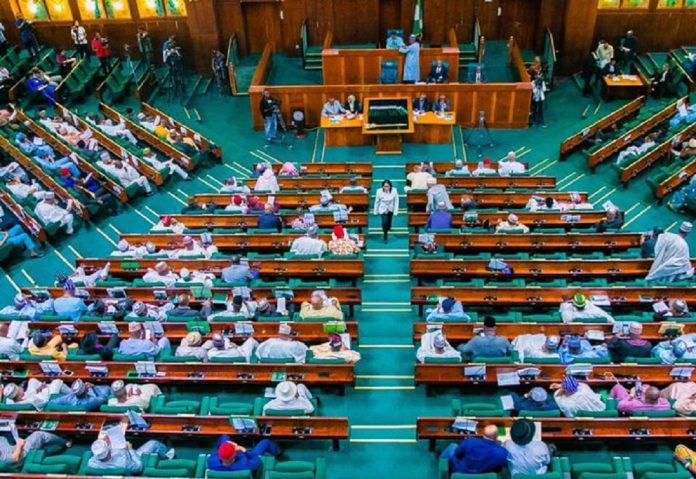
Speaker Tajudeen Abbas recently led a delegation to the Dangote Refinery, where tests were conducted to confirm the quality of oil products refined at Dangote Refinery.

“Our quality is about 600 to 650 ppm and is one of the best in terms of quality at that time when we started. But as at today, we’re at 87 ppm,” Dangote stated.

The 650,000 bpd refinery has been touted as a game changer, not only in the Nigerian oil sector but in Africa as a whole. Thus, the ongoing conflict between the Nigerian government and the oil plant raises important questions about the future of Nigeria’s oil industry.

Although there have been moves to reconcile the parties and put an end to the dispute, the efforts so far appear futile. Prominent Nigerians, including former presidential candidate, Peter Obi, former Vice President Atiku Abubakar, the President of African Development Bank, Akinwunmi Adesina, and business tycoon, Femi Otedola, have called on the Nigerian government to support the refinery.

However, the House of Representatives’ call for action could mark a turning point, setting the stage for either a resolution or further escalation in this high-stakes drama.
Find Out Why the BlockDAG X10 Miner Stands Out as the Choice for Mining, While BNB & XRP Demonstrate Market Resilience

0

Despite regulatory pressures and variable support levels, Binance Coin (BNB) and XRP hold firm. BNB is on the verge of reaching its peak, fueled by substantial growth in market cap and increased transactions on its network. XRP, despite regulatory constraints, remains hopeful due to its role in international payments.

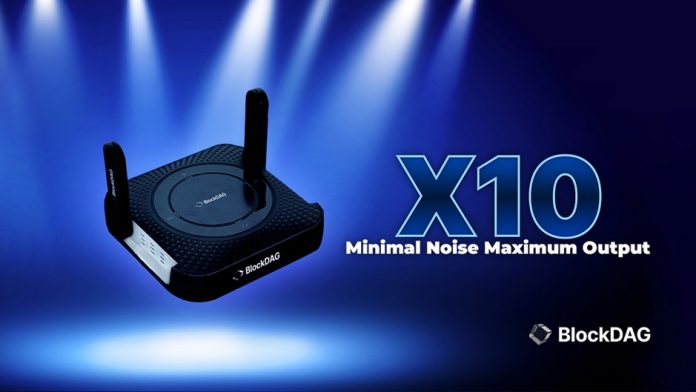
Yet, the BlockDAG X10 Miner distinguishes itself by providing a straightforward and effective approach to crypto mining, achieving significant advances in adoption and profit, thereby redefining industry standards.

BNB’s Path to $100 Billion

Binance Coin (BNB) displays enduring market strength, trading at $640, close to its peak of $690. It also stays above the Ichimoku cloud baseline, signaling positive market sentiment. BNB’s market cap is approaching $100 billion, a landmark that could spark further price gains.

Technical analysis shows BNB overcoming a long-standing downtrend line but facing challenges at the $260 mark. The RSI indicates a possible rise to $315 if it surpasses this barrier. If not, it might fall to between $230 and $225. Additionally, the rising daily transactions on the Binance Smart Chain signify growing network use and a bullish outlook for BNB.

XRP and the 1% BIS Cap

The Bank for International Settlements (BIS) has set a 1% limit on banks’ crypto holdings, affecting XRP. This cap is designed to minimize risks tied to cryptocurrencies, reflecting the BIS’s cautious stance on digital currencies. Despite these limits, the XRP community is optimistic, pointing to its increasing use in global payments.

This cap is part of a broader regulatory framework likely to affect how banks interact with digital currencies. The impact on XRP and similar assets will be keenly observed, highlighting the ongoing struggle between innovation and regulatory safeguards in the crypto sector.

Begin Mining Like a Professional with the BlockDAG X10

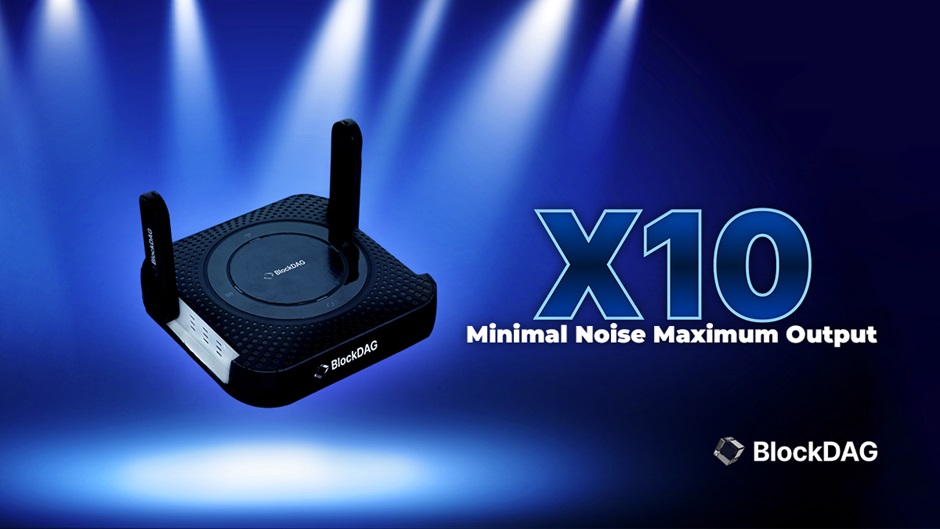
The BlockDAG X10 Miner presents a sleek, efficient, and approachable solution for anyone diving into cryptocurrency mining. Crafted to be as unobtrusive and simple as a Wi-Fi extender, it fits perfectly into your home setting without causing any fuss. Despite its unassuming look, the X10 is a robust machine, equipped with a hash rate of 100 MH/s and consuming merely 40 watts, epitomizing peak energy efficiency.

Additionally, this device streamlines the mining process, enabling even novices to mine up to 200 BDAG coins daily with hardly any setup required. It’s designed for immediate use, swiftly operational through Wi-Fi or an Ethernet connection. Moreover, the X10 excels in both user-friendliness and profitability. Initially, it can produce around $10 daily, yet with expected increases in BDAG’s market value, daily profits could soar to as high as $2,000 by 2025, assuming the coin’s price reaches $10.

The BlockDAG X10 Miner also marks a significant advancement in democratizing cryptocurrency mining, melding cutting-edge technology with ease of use to deliver a satisfying mining endeavor. Promising substantial returns for minimal power use, the X10 is an appealing choice for both beginners and experienced miners alike.

Ultimately, BlockDAG has sold over 10k units from its X Series, amassing impressive sales of over $4 million. This strong sales figure emphasizes the market’s trust in the product and its capacity for high returns, further cementing BlockDAG’s role as a frontrunner in the crypto-mining sector.

Concluding Thoughts

While Binance Coin (BNB) and XRP wade through market dynamics and regulatory frameworks, BlockDAG’s X10 Miner embodies the future of crypto mining with its user-oriented, efficient design. BNB remains robust with increasing transactions, and XRP advances despite regulatory constraints. However, the BlockDAG X10 Miner stands out with its unique simplicity, efficiency, and profitability mix. It is a pivotal innovation in crypto mining, offering viable and sustainable mining solutions for users at all levels.


Join BlockDAG Presale Now:

Website: https://blockdag.network

Presale: https://purchase.blockdag.network

Telegram: https://t.me/blockDAGnetworkOfficial

Discord: https://discord.gg/Q7BxghMVyu

Analysts Rally Behind BlockDAG Network Ditching XLM & Kaspa After X100 Miner Sales Explodes Over $4M

0

The cryptocurrency landscape is rife with many opportunities and challenges for investors. Among the myriad options available, BlockDAG, Stellar, and Kaspa distinguish themselves, each offering unique advantages and potential for significant earnings.

This comprehensive analysis scrutinizes these technologies’ comparative strengths and weaknesses, emphasizing why BlockDAG, especially with its advanced X100 miner, emerges as a superior investment choice. The analysis underscores BlockDAG’s enhanced efficiency and profitability, positioning it as a formidable threat to Kaspa and a leader in the realm of crypto investments, appealing to those who seek to maximize their returns in a competitive market.

BlockDAG: Your Portal to Top Mining Rewards with Minimal Energy Use!

BlockDAG utilizes a cutting-edge consensus mechanism known as Directed Acyclic Graph, enhancing scalability beyond traditional blockchains. It processes transactions in a graph-like structure, enabling the addition of multiple blocks simultaneously, thereby increasing network capacity and decreasing latency. This makes BlockDAG ideal for scenarios demanding high-volume transactions and swift processing.

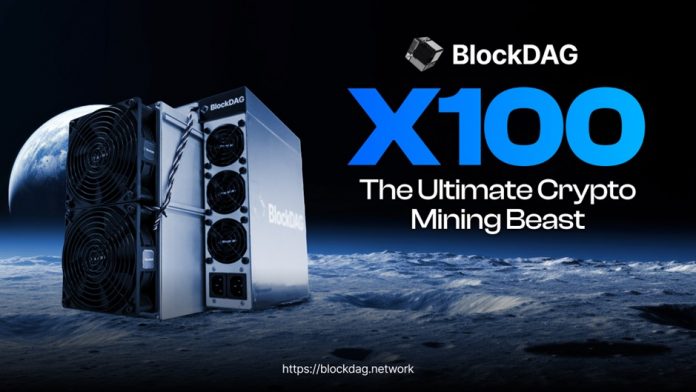
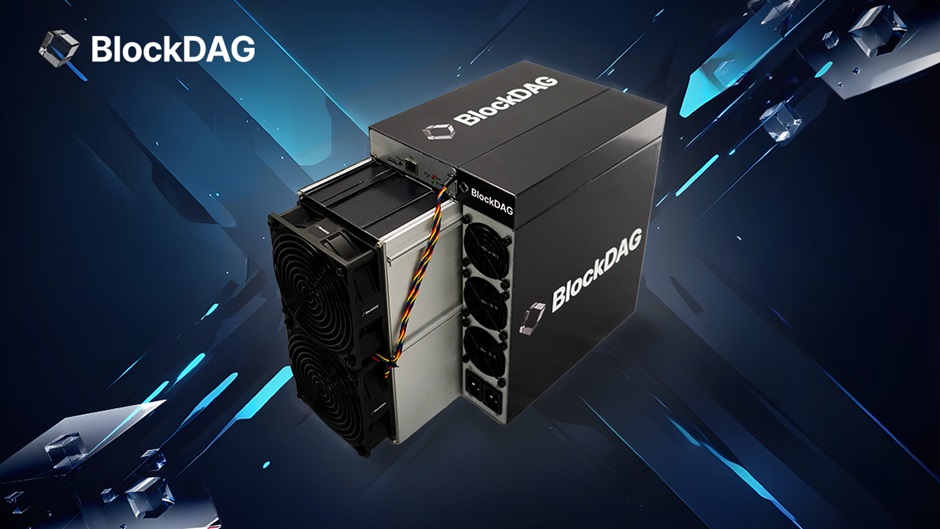
The X Series Miners, and particularly the X100 model, capitalize on these network benefits. The X100 offers a formidable 100 TH/s hash rate and boasts a 30% improvement in energy efficiency over earlier versions, consuming just 2,500W. Its state-of-the-art cooling system and straightforward interface facilitate ease of use and consistent operation under demanding conditions.

Manufactured with superior components, the X100 ensures durability and ongoing efficiency. The device also promises substantial rewards, generating an estimated $30 daily or about $900 monthly, positioning it as a highly profitable mining solution.

Could Stellar’s (XLM) Value Ascend to $0.70?

Stellar is renowned for enabling international transactions and linking financial institutions. Predictions suggest that Stellar could potentially climb to between $0.50 and $0.70 in the next 12 to 18 months, modestly rising from its present valuation.

Though Stellar is poised for growth, its potential returns pale in comparison to the more revolutionary BlockDAG. With superior technology and highly efficient mining equipment, BlockDAG not only challenges but potentially eclipses Stellar’s growth.

Kaspa Mining: Notably Ambitious but Less Efficient

Kaspa has drawn attention in the crypto mining arena due to its novel approach and promising returns. However, compared to BlockDAG’s X100 miner, it falls short in efficiency. Kaspa’s mining tools offer lower hash rates and consume more power, leading to less effective mining and diminished profits.

Moreover, the Kaspa network lacks the sophisticated cooling technology and user-friendly design of the X100, making it less appealing, especially for newcomers. While Kaspa is a considerable option for some, its efficiency and profitability do not compare with BlockDAG’s offerings. The superior scalability and faster transaction capabilities of BlockDAG, paired with the profitable and efficient mining of the X100, make it a formidable competitor to Kaspa.

Why BlockDAG Represents the Best Investment Opportunity

BlockDAG’s innovative graph-structured transaction system enables the addition of multiple blocks at once, greatly boosting scalability and cutting down on confirmation times. This efficiency level is not seen in traditional blockchains or competitors like Kaspa. Equipped with a hash rate of 100 TH/s and 30% better energy efficiency, the X100 miner surpasses Kaspa’s offerings in terms of speed and cost savings.

The X100 miner is further distinguished by its sophisticated cooling system and intuitive interface, making it more attractive. Moreover, it provides impressive mining rewards, with about $30 daily or $900 monthly earnings, greatly surpassing the financial yields from Kaspa mining and establishing BlockDAG as a more profitable option.

Constructed with high-quality materials and built for ongoing use, the X100 miner promises consistent reliability and performance. This robustness is essential for investors looking for dependable, long-term investments. Although Stellar demonstrates consistent growth, it does not offer the high potential returns that BlockDAG does with its revolutionary technology and efficient mining equipment. As a result, BlockDAG stands out as a significant player in the cryptocurrency arena, poised for substantial growth.

Conclusion

BlockDAG not only promises but delivers more lucrative and innovative opportunities compared to the steady yet unspectacular growth of Stellar and the inefficient mining ecosystem of Kaspa. For investors aiming to maximize returns while leveraging advanced technology, BlockDAG stands out as the optimal choice and a formidable challenger to Kaspa.

Join BlockDAG Presale Now:

Website: https://blockdag.network

Presale: https://purchase.blockdag.network

Telegram: https://t.me/blockDAGnetworkOfficial

Discord: https://discord.gg/Q7BxghMVyu

China’s Brilliance on Making Things And The Fall of Apple China!

1

Over time what happened to the Ovim tablet will happen to Apple in China, except that Ovim tablet was on its own when Tecno came to Nigeria and knocked it out. Here, Apple went into the den: “According to a recent report by Canalys, Apple’s market share in China dropped to 14%, down from 15% in the first quarter and 16% during the same period last year. This decline saw the Cupertino giant, once the third-largest vendor in China, fall to the sixth spot with approximately 9.7 million units shipped.”

Who can protect the world from China when it comes to making things? From EU to US, everyone is building “iron-gates” on the fear that Chinese makers are coming. Yet, many here will write that Chinese products are not market-leading even when their home markets are doing everything to protect their market-leading products from China! Lol.

Who can protect the world from China when it comes to making things? From the EU to the US, everyone is building “iron-gates” in the fear that Chinese makers are coming (hello EV vehicles, satellite phones,). Yet, many here will write that Chinese products are not market-leading even when their home markets are doing everything to protect their market-leading products from China! Lol.

Respect China; they inspire on what a people can accomplish if they have a united spirit. That Apple could be taken out this way reminds you while in the last ten centuries, China dominated the world’s economy in at least 6!

Linkedin News: Apple has dropped out of the top five smartphone vendors in China as homegrown brands explode in popularity, The Wall Street Journal reports, citing new industry tracking data. Though overall smartphone sales are up 6% in the world’s largest smartphone market, Apple’s market share there has declined to 15.5%, from 17.4% a year ago. iPhone sales in China have been slipping since the turn of the year, thanks in part to government restrictions. Many of the Chinese brands have also been quick to incorporate AI into their phones — something Apple is still working on. (LinkedIn News)

Apple Drops Out of Top Five Smartphone Vendors in China

Switzerland Requires all Government Software to be Open Source

0

Switzerland has taken a bold step in the realm of digital governance and software transparency. The country has enacted a new law, known as the Federal Law on the Use of Electronic Means for the Fulfillment of Government Tasks (EMBAG), which mandates all public organizations to adopt open-source software (OSS). This pioneering move is not just about embracing the open-source ethos but also about setting a precedent for transparency, security, and efficiency in government operations.

The journey towards this landmark decision began over a decade ago, with the Swiss Federal Supreme Court’s release of its Open Justitia court application under an OSS license. This sparked a series of political and legal debates, culminating in the passing of EMBAG in 2023. The law now requires that unless third-party rights or security concerns are at stake, the source code of software developed by or for the public sector must be disclosed and released under an open-source license.

The implications of this law are far-reaching. For one, it reduces the risk of vendor lock-in, where government agencies become overly dependent on a single supplier for products and services. This move could potentially lead to reduced IT costs and improved services for taxpayers. Moreover, it allows for greater collaboration and innovation within the public sector, as companies and individuals can contribute to and improve upon the software used by the government.

Another significant aspect of the EMBAG is its requirement for the release of non-personal and non-security-sensitive government data as Open Government Data (OGD). This “open by default” approach aligns with the broader European push towards open data and software, although Switzerland has taken it a step further by enshrining it in law.

The implementation of this law is overseen by the Swiss Federal Statistical Office (BFS), which is navigating the organizational and financial aspects of OSS releases. While the transition may present challenges, the potential benefits for digital sovereignty and public sector innovation are substantial.

The adoption of open source software (OSS) policies by governments around the world has been gaining momentum, with several countries recognizing the benefits of such frameworks for their public sector IT strategies. The move towards open source in government software is driven by the desire for increased transparency, cost savings, enhanced security, and the promotion of technological sovereignty.

One of the pioneers in this domain is Brazil, which has actively pursued the implementation of open source solutions within its government operations. The country has recognized the advantages of interoperability, customizability, and the avoidance of vendor lock-in, which align with the principles of open source software.

Denmark and the Netherlands have also been at the forefront, announcing research and development policies that favor open source. These countries have cited the higher security assurance and the potential for innovation as key factors in their decision to adopt OSS policies.

The European Union has been a strong advocate for “public money, public code,” encouraging member states to consider open source solutions for government software. This approach has led to a number of EU countries adopting similar policies, aiming to create a more collaborative and open digital environment for public services.

Switzerland’s commitment to open-source software in government is a testament to the country’s forward-thinking approach to technology and governance. It serves as a model for other nations considering similar measures and underscores the importance of openness and collaboration in the digital age. As the world watches, it will be interesting to see how this decision influences global trends in government software procurement and utilization.