DD
MM
YYYY

PAGES

DD
MM
YYYY

spot_img

PAGES

Home Blog Page 325

Which RICS Survey Level Is Right for Your Property? A Quick Comparison

0

Buying a property is exciting, but it’s also one of the biggest financial commitments you’ll make. You want to feel confident that the home is safe, sound, and worth the price you’re paying. That’s where RICS surveys come in, giving you professional insight into a property’s condition.

Choosing the right level can feel tricky, so let’s break it down and make it easier to understand. Keep reading to see which survey level best fits your needs.

Understanding The Purpose Of RICS Surveys

A RICS survey helps you spot issues before you commit to buying. It checks the condition of the property and highlights potential problems that might not be obvious. These surveys are carried out by RICS-qualified surveyors who use a clear traffic-light rating system. This makes it easier to see what needs urgent attention and what’s less serious.

If you want RICS home survey levels explained in straightforward terms, think of them as options that range from basic to detailed. The right choice depends on the age, type, and condition of the property you’re buying.

RICS Survey Level 1: A Simple Check

Level 1 surveys are the most basic. They’re best for newer homes that look well-maintained. You’ll get a clear overview of the property’s general condition without going into deep detail. While it’s the cheapest option, it won’t give you much insight into hidden issues.

This level is suitable if you’re buying a modern flat or house that hasn’t shown signs of problems. It’s a way of confirming everything looks as expected but it’s not enough for older or unusual homes.

RICS Survey Level 2: A Balanced Choice

Level 2, also called the HomeBuyer Report, is the most popular option. It offers a more detailed look at the property’s condition, including damp checks, structural movement, and urgent repairs. It also includes advice on ongoing maintenance, which can help you budget.

You’ll get a report that explains not just what’s wrong but also what might need fixing in future. Many buyers choose this level because it strikes a balance between cost and detail.

RICS Survey Level 3: A Detailed Review

Level 3, often known as the Building Survey, is the most comprehensive. It’s recommended for older homes, listed buildings, or properties that have been altered. The surveyor examines the structure in detail and reports on potential risks and repair costs.

This level gives you the fullest picture of the property’s condition. It may take longer and cost more, but it can save you from unexpected expenses later. If you’re considering a renovation project, this level provides the insight you’ll need.

Deciding Which Level Suits You

Choosing the right survey depends on how much reassurance you want. If the property is nearly new, Level 1 may be enough. If it’s fairly standard but not brand new, Level 2 usually makes sense. And if you’re buying an older or unique home, Level 3 gives you peace of mind.

Think about how much you’re investing and the risks involved. Spending a bit more upfront on the right survey could save you thousands down the line.

Making A Confident Choice

Understanding RICS survey levels helps you weigh up cost, detail, and reassurance. Level 1 suits simple cases, Level 2 gives balanced protection on modern homes in fairly good condition, and Level 3 is required for in-depth detail on larger or older homes. By matching the survey to your property type, you’ll avoid surprises and feel more secure in your decision.

Africa’s Greatest AI Opportunity And How Business Models Will Drive Value Creation

0

In 1907, U.S. Steel sat on the mountaintop as America’s most capitalized company. Fifty years later, IBM took the crown, when its mainframe computers defined an age where bits began to rival bricks. In the 1980s, Jack Welch’s General Electric ruled, turning conglomerate efficiency into an art form. And today, the race of titans continues with Apple, Microsoft, and Nvidia exchanging relay batons in the global market. Yet, one lesson remains timeless: moments come, and moments go.

Steel built bridges and railways, and those who forged it ruled. Then transistors came from Bell Labs as Shockley’s genius heralded the dawn of automation. When Bill Gates and his Microsoft team democratized computing, they didn’t merely create products; they redefined how business operates. Windows was not just software; it was a gateway to a new business model. And that has always been the difference between a product and a revolution: a product sells; a model transforms.

Jack Welch perfected the conglomerate as a performance machine, optimizing for efficiency, process, and scale. But we have moved into a different era, what I have called the Accelerated Society, an age when computational systems compound value and intelligence faster than human planning cycles. Artificial Intelligence sits at the center of this transformation. Yet, as I have often written, no one eats AI. The value is not in AI itself, but in what AI enables you to do, just as transistors birthed the electronics age and microprocessors powered the digital economy.

Africa’s opportunity is not in chasing the next chatbot or AI language model. It is in rethinking business models using AI as leverage. In the 1990s, Nigeria’s new generation banks did not merely install computers; they rewired the banking model. The Integrated Banking System they deployed made geography irrelevant; you could open an account in Lagos and withdraw in Kano. That was not technology; that was a new model of value creation. Nigeria’s finest banking innovator, Chairman Paschal Dozie (RIP) of Diamond Bank, transformed a nation with DIBS (diamond integrated banking system) and others copied!

Good People, as AI arrives and scales, the call is the same: do not just deploy technology, TRANSFORM with it. Let AI become the transistor of your enterprise, not the toy on your dashboard. Business models, not machines, will define Africa’s next wealth creation frontier. And those business models are Africa’s Greatest AI Opportunity!

Japan’s Megabanks Collaborate on Stablecoin Issuance for Corporate Payments

0

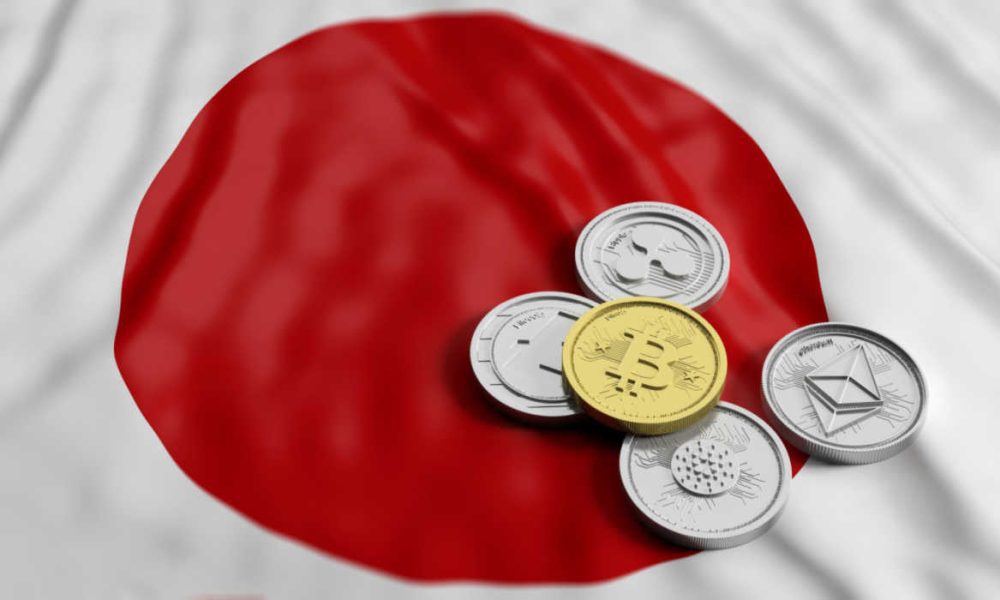
Japan’s three largest banks—Mitsubishi UFJ Financial Group (MUFG), Sumitomo Mitsui Financial Group (SMBC), and Mizuho Financial Group—are teaming up to issue stablecoins pegged to the Japanese yen (JPY) and eventually the U.S. dollar (USD).

This initiative, reported by Nikkei aims to standardize and accelerate corporate payments, settlements, and cross-border transactions using blockchain technology. The move reflects Japan’s accelerating embrace of tokenized assets amid global stablecoin growth, with the market’s total value recently exceeding $300 billion.

Starting with a JPY-pegged stablecoin, the banks will build a shared framework for issuance, transfer, and governance. This will enable seamless interoperability for corporate clients, reducing remittance costs and administrative burdens. A USD-pegged version is slated for later rollout to support international payments.

The first real-world application will be a pilot with Mitsubishi Corporation for internal financial settlements, leveraging MUFG’s Progmat Coin platform—a blockchain-based system for token issuance on public networks.

Collectively, these banks serve over 300,000 corporate clients, providing a massive distribution network to drive adoption. The stablecoins will be designed for business use, functioning as digital tokens backed by fiat reserves to maintain stability.

Following proof-of-concept trials, the JPY stablecoin is expected to be operational by the end of Japan’s fiscal year March 2026, pending regulatory approvals.

This collaboration builds on Japan’s progressive stance toward digital assets. In August 2025, the Financial Services Agency (FSA) signaled readiness to approve domestic yen stablecoins, with fintech firm JPYC already securing a money transfer license.

Other institutions are advancing similar efforts: Japan Post Bank plans to launch DCJPY, a tokenized yen deposit, by fiscal 2026. SMBC is partnering with blockchain firms like Ava Labs and Fireblocks for regulated stablecoin infrastructure.

SBI Holdings aims to distribute Ripple’s USD-pegged stablecoin (RLUSD) in Japan starting Q1 2026. The banks have also enlisted crypto partners, including Bitbank exchange and infrastructure provider Fireblocks, to ensure compliance and security.

This positions Japanese-issued stablecoins as alternatives to dominant USD-backed ones like USDT and USDC, potentially fostering native yen liquidity within Japan’s financial ecosystem.

By integrating stablecoins into corporate workflows, the initiative could slash transaction times from days to near-instantaneous, enhancing efficiency for supply chain payments and trade finance. It aligns with Asia-wide trends.

South Korea is drafting stablecoin legislation, while Hong Kong rolls out licensing regimes. For global markets, this could bolster yen-denominated digital assets, challenging U.S. dollar hegemony in crypto payments.

Stablecoins enable near-instant corporate payments and settlements, cutting days-long delays and reducing costs. Lower remittance and administrative expenses for businesses, especially in cross-border trade.

Shared framework among Japan’s megabanks ensures seamless stablecoin use across 300,000+ corporate clients. JPY-pegged stablecoins could challenge USD-dominated stablecoins, boosting yen’s role in digital finance.

Japan’s FSA approvals signal a model for regulated stablecoin adoption, potentially influencing Asia and beyond. Accelerates integration of blockchain in traditional finance, enhancing efficiency and transparency.

Increased stablecoin adoption by Japan’s megabanks could drive demand for blockchain infrastructure, boosting related crypto assets. JPY-pegged stablecoins may enhance yen’s global digital presence, potentially strengthening its forex market position.

Regulated stablecoin issuance signals institutional trust in crypto, likely attracting investment to Japan’s fintech sector. Success of the initiative could spur broader tokenized asset adoption, lifting blockchain-related stocks and tokens.

Japan’s move may accelerate stablecoin development in Asia, increasing market activity in South Korea and Hong Kong. This development underscores how traditional finance is increasingly converging with blockchain, with Japan’s megabanks leading the charge in regulated innovation.

Tether’s Open-Source Wallet Development Kit (WDK): A Game-Changer for Self-Custodial Finance

0

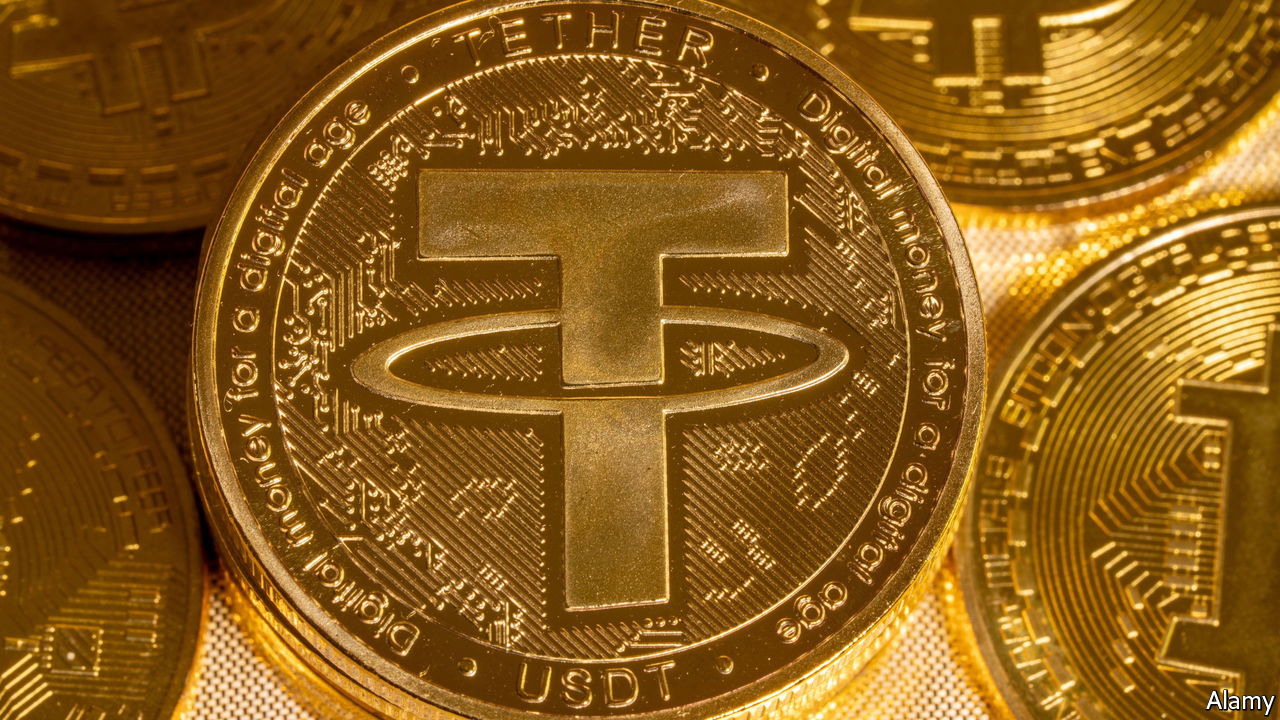
Tether—the world’s largest stablecoin issuer with a market cap exceeding $180 billion—announced the open-sourcing of its Wallet Development Kit (WDK).

This modular toolkit is designed to empower developers, businesses, and even AI agents to build secure, self-custodial wallets that work seamlessly across multiple blockchains, including Bitcoin, Ethereum, and others.

Unlike proprietary frameworks that lock users into specific ecosystems or charge fees, WDK is fully open-source, ecosystem-agnostic, and extensible to any blockchain or digital asset.

Compatible with Bitcoin, Lightning Network, Ethereum, Arbitrum, Polygon, Solana, TON, and other EVM/non-EVM chains. Enables cross-chain transfers, DeFi (swaps, lending), and payments.

Device Agnostic Integrates into any platform—from mobile apps and desktops to embedded hardware, IoT devices, and AI systems.

AI and Machine Integration: Built for “new digital beings” like AI agents and autonomous robots, allowing machine-to-machine transactions without intermediaries.

Modular Architecture: Includes pre-built templates for features like mnemonic backups, peer-to-peer functionality, and asset management. Developers can audit, customize, and contribute to the code freely.

Asset Support: Initially focuses on USDT (USD), Bitcoin (BTC), XAU (gold-backed), with upcoming support for USA and more. The kit’s emphasis on self-custody aligns with Tether’s vision of a “free and resilient monetary infrastructure,” where users retain full control over their funds—no masters, no limits.

Tether’s AI and Infrastructure Push

Tether CEO Paolo Ardoino emphasized the toolkit’s role in democratizing finance: “We imagine a world where humans, autonomous machines, and AI agents have the freedom to control their own finances and transact without boundaries.”

This release builds on Tether’s recent AI initiatives, including: Tether AI launched in May 2025: An open-source runtime for AI agents that can already use WDK for sending/receiving BTC and USDT.

AI-powered tools like a Bitcoin Wallet Assistant for natural language interactions and an AI Translate engine. Ardoino has predicted explosive growth in AI-driven economies, forecasting “one trillion agents” transacting in stablecoins and Bitcoin within 15 years—far outpacing traditional banks’ ability to onboard machines.

Upcoming products like the Rumble Wallet and Tether’s own self-custodial solution will be built on WDK, showcasing its scalability. This move positions Tether beyond stablecoins into core crypto infrastructure, potentially accelerating adoption in DeFi and machine commerce.

KeyNews noted its potential to drive USDT integrations and Ethereum activity, while cautioning on open-source security audits. WDK could lower barriers for wallet innovation, fostering a more inclusive digital economy.

The Tether AI Runtime, launched in May 2025, is an open-source software framework designed to enable AI agents, autonomous systems, and “new digital beings” to interact seamlessly with blockchain-based financial systems, particularly for self-custodial transactions.

It’s a core component of Tether’s broader vision to integrate artificial intelligence with decentralized finance (DeFi), allowing machines to manage and transact digital assets like USDT, Bitcoin (BTC), and others without human intermediaries.

The Tether AI Runtime is a lightweight, modular environment that provides AI agents with the tools to Interact with Blockchains Connect to networks like Bitcoin, Ethereum, Solana, and others to send/receive digital assets.

Manage private keys and wallets securely, ensuring AI agents maintain full control over funds without reliance on centralized custodians.

Perform machine-to-machine (M2M) payments, DeFi operations and other financial actions autonomously. Integrate with Tether’s Wallet Development Kit (WDK). The runtime leverages the open-source WDK to build and manage wallets compatible with multiple blockchains.

Think of it as a bridge between AI systems and crypto infrastructure, enabling machines to participate in the digital economy as independent entities. The runtime provides a standardized interface for AI agents to Generate and Manage Wallets.

Using WDK, agents can create secure wallets with mnemonic backups and multi-chain support. Agents can send/receive USDT or BTC, execute smart contracts, or engage in DeFi protocols.

The runtime supports natural language interactions via tools like Tether’s Bitcoin Wallet Assistant and programmatic APIs for machine-driven workflows. It’s designed to run on diverse platforms, from cloud servers to embedded hardware in IoT or robotic systems.

For example, an AI agent running the Tether AI Runtime could autonomously pay for cloud computing resources in USDT on Ethereum or settle a microtransaction in BTC over the Lightning Network, all without human oversight.

Tether’s CEO, Paolo Ardoino, envisions a future with “one trillion agents” transacting in stablecoins and Bitcoin. The runtime enables this by giving machines direct access to financial rails.

By integrating with DeFi ecosystems, the runtime allows AI to participate in lending, staking, and trading, potentially unlocking new economic models.

However, open-source security remains a discussion point, with calls for rigorous community audits. The Tether AI Runtime is available on Tether’s GitHub repository, alongside the WDK.

Developers and AI researchers can explore the codebase, contribute, or integrate it into their projects. This runtime is a bold step toward a future where AI agents are first-class citizens in a decentralized financial system, potentially reshaping how value flows in the digital age.

Ripple Acquires GTreasury for $1 Billion: A Strategic Leap into Corporate Treasury

0

Ripple has officially announced the $1 billion acquisition of GTreasury, a Chicago-based leader in treasury management systems with over 40 years of experience serving Fortune 500 companies like American Airlines.

The deal was revealed on October 16, 2025, and is pending regulatory approvals. This marks Ripple’s third major acquisition this year, following the $1.25 billion purchase of multi-asset prime broker Hidden Road in April and the $200 million acquisition of stablecoin payments platform Rail in August.

Ripple, best known for its blockchain-based cross-border payment solutions and the XRP Ledger, is aggressively expanding beyond crypto-native services into traditional enterprise finance.

The corporate treasury market is massive—estimated at over $120 trillion globally—and has long been hampered by slow, costly legacy systems. By integrating GTreasury’s expertise in cash forecasting, risk management, FX hedging, and compliance with Ripple’s digital asset infrastructure, the combined entity aims

Access the multi-trillion-dollar repo market through Hidden Road, allowing treasurers to earn yields on short-term assets like stablecoins and tokenized deposits.

Enable instant global payments: Facilitate 24/7/365 real-time cross-border transfers at lower costs, leveraging Ripple’s On-Demand Liquidity (ODL) and XRP for settlement.

Bridge fiat and digital assets: Equip CFOs to manage emerging assets like stablecoins at scale, reducing friction in liquidity optimization and regulatory compliance.

Ripple CEO Brad Garlinghouse called it a solution to “money stuck in slow, outdated payments systems,” emphasizing how blockchain can eliminate delays and barriers to new markets.

GTreasury CEO Renaat Ver Eecke described the move as a “watershed moment,” shifting from merely managing capital to “activating it” in the digital economy.

The news has sparked buzz in crypto circles, with X users highlighting its potential to drive XRP adoption and institutional inflows. Posts show enthusiasm around Ripple’s push into treasury ops, with some speculating on a related $1B SPAC raise for an XRP-focused digital asset treasury—though this appears unconfirmed and tied to broader fundraising rumors.

Overall sentiment is bullish, positioning this as a step toward a “full-stack crypto-powered finance platform.” Enhances repo market access and yield generation for digital assets.

XRP—the native cryptocurrency of the Ripple blockchain (XRP Ledger)—holds a market dominance of approximately 4% in the global cryptocurrency market.

This metric represents XRP’s share of the total crypto market capitalization, positioning it as the fifth-largest cryptocurrency by market cap, behind Bitcoin (BTC), Ethereum (ETH), Tether (USDT), and Binance Coin (BNB).

The total crypto market cap stands at around $3.4–3.7 trillion, with BTC dominance at 52–57.5% and ETH at 12–13%, leaving roughly 30–35% for all altcoins combined, of which XRP claims a notable slice.

A “Uptober” rally could push XRP to $2.50–$2.80 if ETF approvals materialize, potentially lifting dominance to 4.5–5%. Long-term, by 2030, projections range from $5.25 base case to $20+ in bullish scenarios, assuming sustained 4–5% dominance and total market cap growth to $10–40 trillion.

Treasury management system opens $120T corporate treasury market; integrates risk/compliance tools with blockchain. This spree signals Ripple’s vision for an integrated ecosystem where crypto underpins enterprise finance, potentially accelerating XRP’s utility amid growing regulatory clarity with recent BBVA custody partnership.

The resolution of Ripple’s long-standing SEC lawsuit in late 2024 removed a major overhang, boosting confidence. Upcoming SEC decisions on six XRP ETF applications starting October 18 for Grayscale have Polymarket approval odds at 87%, potentially mirroring Bitcoin’s post-ETF surge.