DD
MM
YYYY

PAGES

DD
MM
YYYY

spot_img

PAGES

Home Blog Page 3269

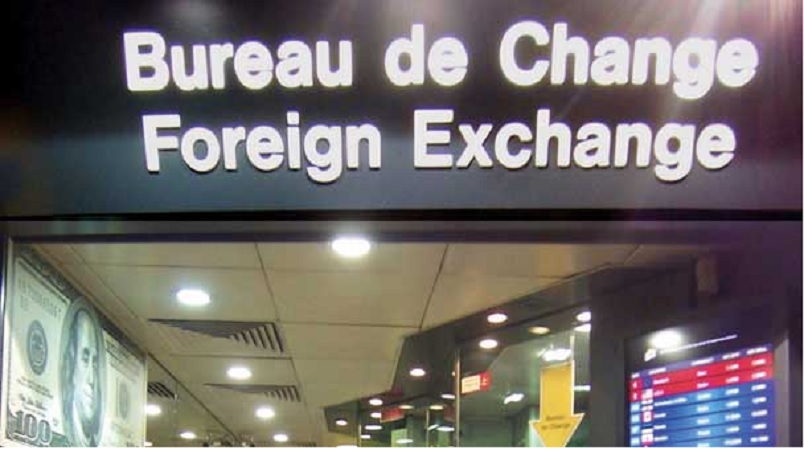
Central Bank of Nigeria Revokes Licenses of 4,173 Bureau de change operators

0

The Central Bank of Nigeria (CBN) has initiated a sweeping regulatory action, revoking the operational licenses of over 4,000 Bureau De Change (BDC) operators across the country. This bold move by the apex bank comes as a response to the failure of these entities to adhere to essential regulatory guidelines.

The decision was disclosed in a statement signed by the Director of Corporate Communications at the CBN, who emphasized the regulatory authority vested in the apex bank under the Bank and Other Financial Institutions Act (BOFIA) 2020, Act No. 5, and the Revised Operational Guidelines for Bureau De Change 2015, to take such actions.

The statement detailed the specific breaches committed by the affected BDCs, including non-payment of required fees within stipulated timelines, failure to render returns as mandated by guidelines, and non-compliance with directives and circulars issued by the CBN, particularly those relating to Anti-Money Laundering (AML), Countering the Financing of Terrorism (CFT), and Counter-Proliferation Financing (CPF) regulations.

“The Central Bank of Nigeria (CBN), in exercise of the powers conferred on it under the Bank and Other Financial Institutions Act (BOFIA) 2020, Act No. 5, and the Revised Operational Guidelines for Bureau De Change 2015 (the Guidelines), has revoked the licenses of 4,173 Bureau De Change Operators,” the statement read.

Furthermore, the CBN has made public the list of the affected BDCs on its official website (www.cbn.gov.ng), urging the public to take cognizance of this development.

In response to inquiries, the CBN provided further clarity on its actions, stating, “The affected institutions failed to observe at least one of the following regulatory provisions: Payment of all necessary fees, including licence renewal, within the stipulated period in line with the Guidelines; Rendition of returns in line with the Guidelines; Compliance with guidelines, directives and circulars of the CBN, particularly Anti-Money Laundering (AML), Countering the Financing of Terrorism (CFT) and Counter-Proliferation Financing (CPF) regulations.”

This regulatory clampdown follows the introduction of a draft guideline by the CBN aimed at strengthening the operations of BDCs nationwide. Key provisions introduced include the imposition of a minimum share capital requirement of N2 billion for Tier-1 BDCs, restrictions on cash transactions (capped at $500), and a $10,000 annual limit for school fee transactions, among others.

Under the new guideline, the CBN approved the sale of foreign exchange to eligible BDCs to cater to the demand for invisible transactions. Each BDC is entitled to purchase $20,000 at a fixed rate of N1,301/$.

“The CBN has approved the sale of foreign exchange to eligible BDCs to meet the demand for invisible transactions. The sum of $20,000 is to be sold to each BDC at the rate of N1,301/$1,” the circular introducing the guideline noted. “All BDCs are allowed to sell to end-users at a margin NOT MORE THAN one percent (1%) above the purchase rate from CBN.”

With the revocation of licenses for 4,173 BDCs, only 1,517 licensed operators remain across the country. This move is expected to streamline operations within the BDC sector and ensure better compliance with regulatory frameworks. Additionally, it will lead to a more efficient allocation of resources by the CBN, as it implements its weekly supply of foreign exchange to BDCs, amounting to $30.34 million based on the approved rate and number of licensed operators.
Mr. President, Mr. Governor, We Want The Light Rail System in Abia State

0

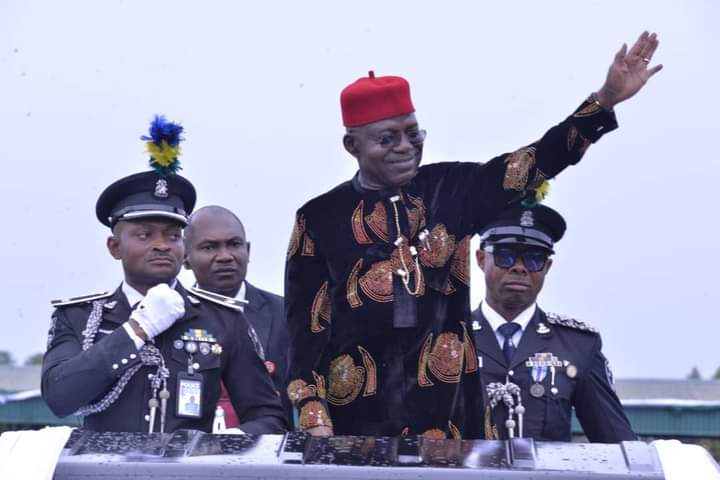
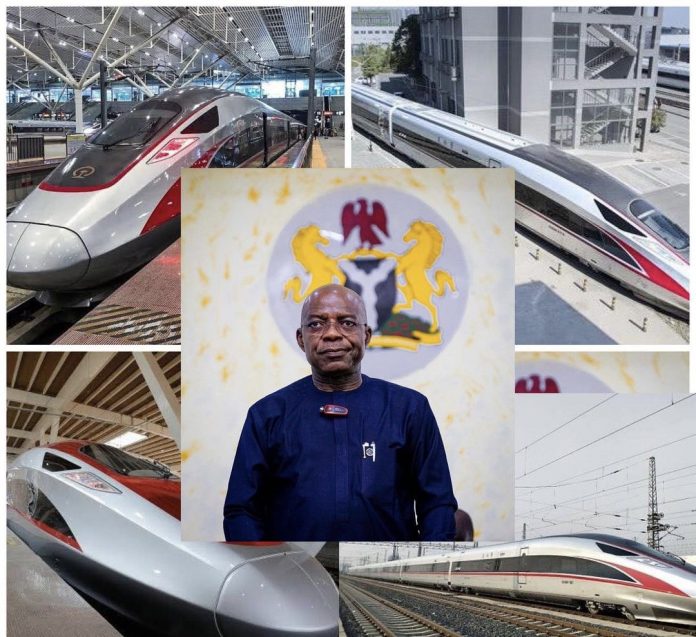
Mr. President. My Governor. It is not going to be an easy task, but we believe. Yes, “Abia State Governor, Alex Otti, has unveiled an ambitious plan to revolutionize transportation infrastructure with the proposal of a groundbreaking light rail construction project spanning the entirety of the state. This significant announcement comes hot on the heels of the inauguration of the 181-megawatt Geometric Power plant in Aba, the bustling commercial hub of Abia State.”

“Currently, the designs for the light rail project are in the process of being developed. We will move from there to address commercial issues, and at the end of the day, we will do it,” Otti asserted with confidence.

The proposed light rail project is poised to usher in a new era of economic development and connectivity for Abia State, which has long grappled with infrastructural deficits under previous administrations.

Meanwhile, Governor Otti has declared an end to the era of chronic power outages in the state following the recent commissioning of the 181-megawatt Geometric Power plant in Aba.

“Power outage will be the exception rather than the rule,” Otti declared emphatically during the interview, underscoring the transformative impact of the power generation milestone on the lives of Abia State residents.

How can these men make this happen in Abia? The power of vision. In January this year, I rode the Isuikwuato -Umuahia road; it was in bad shape. Today, the update now is that the road is being rebuilt, connecting all the way to Arochukwu. But imagine if we use trains as we used to do, from Ovim to Umuahia to Aba?

Let me leave this for Mr. President and Mr. Governor. #NigeriaMustWork. #AbiaMustWork. #believe.

Abia State Governor Proposes Statewide Light Rail Project following Power Generation Milestone

Abia State Governor Proposes Statewide Light Rail Project following Power Generation Milestone

38

Abia State Governor, Alex Otti, has unveiled an ambitious plan to revolutionize transportation infrastructure with the proposal of a groundbreaking light rail construction project spanning the entirety of the state.

This significant announcement comes hot on the heels of the inauguration of the 181-megawatt Geometric Power plant in Aba, the bustling commercial hub of Abia State.

In an exclusive interview on the Thursday edition of “Politics Today” on Channels Television, Governor Otti disclosed his administration’s ongoing discussions with a prominent Chinese company to materialize the ambitious light rail project, demonstrating his unwavering commitment to fulfilling key campaign promises.

“We are discussing with a Chinese company and the discussions are going on well. It is not going to be easy, but it is going to be done. It is not something that you will just start and finish today,” Otti affirmed during the interview.

The revelation was prompted by a question from the program’s anchor regarding Otti’s electoral pledge to initiate the construction of a light rail system if elected as governor of Abia State.

Governor Otti further expounded on the progress of the project, emphasizing that while challenges may arise, his administration is resolute in its determination to see the project through to fruition.

“Currently, the designs for the light rail project are in the process of being developed. We will move from there to address commercial issues, and at the end of the day, we will do it,” Otti asserted with confidence.

The proposed light rail project is poised to usher in a new era of economic development and connectivity for Abia State, which has long grappled with infrastructural deficits under previous administrations.

Meanwhile, Governor Otti has declared an end to the era of chronic power outages in the state following the recent commissioning of the 181-megawatt Geometric Power plant in Aba.

“Power outage will be the exception rather than the rule,” Otti declared emphatically during the interview, underscoring the transformative impact of the power generation milestone on the lives of Abia State residents.

The $800 million power project, spearheaded by Geometric Power Limited, boasts the capacity to generate and distribute sufficient electricity to significantly ameliorate the state’s power supply woes. A critical component of the project is the 27-kilometer natural gas pipeline vital for the plant’s operation.

Governor Otti recounted the project’s tumultuous history, shedding light on his involvement in securing funding for the initiative back in 2010. Despite encountering unforeseen challenges such as the sale of the Aba Invest Island and shifting priorities in gas supply, Otti remained steadfast in his commitment to overcoming obstacles and delivering on his promise of reliable electricity for Abia State.

Since assuming office in May 2023, Otti has prioritized resolving the lingering issues surrounding the power project and fostering collaboration with the Nigeria National Petroleum Company Limited (NNPCL) to ensure a consistent supply of natural gas.

Currently, the Geometric Power plant generates 141 megawatts of electricity, with plans underway to expand capacity to the full 181 megawatts upon the installation of the final turbine. Residents have already begun to experience the tangible benefits, enjoying extended periods of uninterrupted power supply.

This monumental achievement marks a turning point for Abia State, heralding a future characterized by reliable electricity and the potential for economic growth, particularly in Aba, the state’s industrial nerve center. Governor Otti has been lauded for his visionary leadership and unwavering dedication to progress position Abia State on a trajectory towards prosperity and sustainable development.

Elon Musk Sues OpenAI, Alleging Deviation from Non-Profit Mission

0

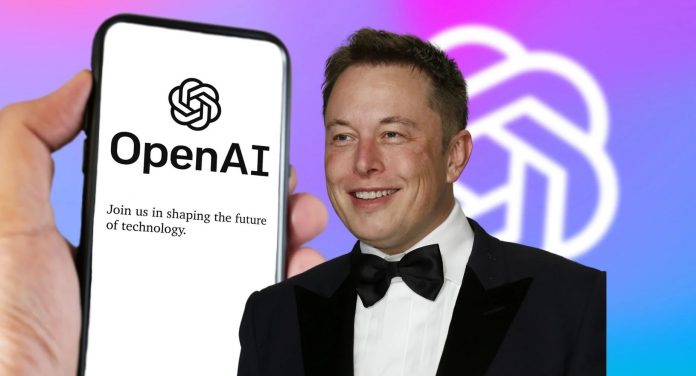
Elon Musk, the billionaire entrepreneur and visionary behind companies like Tesla and SpaceX, has launched a lawsuit against OpenAI, its co-founders Sam Altman and Greg Brockman, and affiliated entities.

Musk’s legal action accuses the renowned AI research organization of straying from its original non-profit mission in favor of profit-driven endeavors, marking a significant escalation in the ongoing debate over the ethical development and deployment of artificial intelligence.

The lawsuit, filed in a San Francisco court, paints a picture of betrayal and contractual breach, alleging that OpenAI has reneged on its founding commitments to Musk and the broader public. Musk, a prominent figure in the AI industry and an early supporter of OpenAI asserts that he was persuaded to contribute to the establishment and funding of the organization in 2015 under the premise that it would operate exclusively as a non-profit entity, dedicated to countering the competitive threat posed by tech giants like Google.

According to legal documents, OpenAI’s founding agreement mandated that its technological advancements be freely accessible to the public, a principle that Musk contends has been disregarded. Instead, he argues, OpenAI has transitioned into a profit-driven enterprise, particularly following its lucrative partnership with Microsoft, the global tech powerhouse that has poured substantial investment into the AI startup.

“In reality, however, OpenAI, Inc. has been transformed into a closed-source de facto subsidiary of the largest technology company in the world: Microsoft,” the lawsuit stated. “Under its new board, it is not just developing but is actually refining an AGI to maximize profits for Microsoft, rather than for the benefit of humanity.”

This shift in focus, Musk argues, constitutes a stark betrayal of the original vision and principles upon which OpenAI was founded. The lawsuit underscores the deep-seated concerns Musk has harbored for the past year regarding OpenAI’s evolving priorities and strategic direction.

“OpenAI, once a beacon of hope for ethical AI development, has strayed from its noble mission,” Musk declared in a statement accompanying the legal filing. “I cannot stand idly by as an organization that I helped nurture and support veers off course, prioritizing profit over the betterment of humanity.”

Musk’s dissatisfaction with OpenAI’s trajectory is palpable, fueled by his significant financial contributions to the organization over the years. According to the lawsuit, Musk donated over $44 million to OpenAI between 2016 and September 2020, making him its largest benefactor during that period.

However, despite his substantial investment and early involvement, Musk distanced himself from OpenAI’s board in 2018, citing fundamental disagreements over its strategic direction.

Sam Altman, one of OpenAI’s co-founders and its current CEO, has previously addressed Musk’s criticisms, defending the organization’s pivot towards commercialization and its close collaboration with Microsoft.

“I like the dude. I think he’s totally wrong about this stuff,” Altman remarked at a conference last year in response to Musk’s concerns. “He can sort of say whatever he wants but I’m like proud of what we’re doing and I think we’re going to make a positive contribution to the world and I try to stay above all that.”

However, Musk’s lawsuit indicates a growing schism between his vision for OpenAI and the direction pursued by its leadership. Central to Musk’s legal challenge is the contention that OpenAI’s transition to a for-profit model, coupled with its partnership with Microsoft, has compromised its ability to fulfill its original mission of advancing AI for the benefit of humanity.

The launch of Grok, a rival to OpenAI’s ChatGPT, by X, the social network owned by Musk, underscores his willingness to challenge OpenAI’s dominance in the AI industry. Grok, which Musk has been promoting – asserting its difference from its woke counterparts, serves as a testament to Musk’s unwavering commitment to ethical AI development and his determination to hold organizations accountable for their actions.

OpenAI’s introduction of ChatGPT in late 2022 triggered an AI arms race, with competitors scrambling to match its human-like conversational capabilities. Microsoft CEO Satya Nadella’s remarks about the superiority of Microsoft’s AI models further underscore the intense competition in the industry.

The legal complaint also draws attention to a recent interview with Nadella, in which he highlighted the close alignment between Microsoft and OpenAI. Nadella stated that if “OpenAI disappeared tomorrow…we have all the IP rights and all the capability. We have the people, we have the compute, we have the data, we have everything. We are below them, above them, around them.”

Nadella’s comments, according to Musk’s lawsuit, serve as compelling evidence of OpenAI’s prioritization of Microsoft’s interests over its original mission.

At the heart of Musk’s lawsuit lies the contention that OpenAI’s latest creation, GPT-4, constitutes Artificial General Intelligence (AGI) – an AI system with capabilities rivaling or surpassing those of humans. Musk alleges that OpenAI and Microsoft have improperly licensed GPT-4, contravening previous agreements that AGI developments would be dedicated to benefiting humanity.

Through the lawsuit, Musk seeks to compel OpenAI to adhere to its original mission as a non-profit organization and prevent it from monetizing technologies developed for the benefit of its executives or partners like Microsoft. He also requests the court to recognize advanced AI systems, including GPT-4, as AGI and enforce restrictions on their use and licensing.

The outcome of the unfolding legal battle could have far-reaching implications for the future of AI research and development, particularly in balancing commercial interests with ethical considerations.

Nigeria Demands $10bn from Binance over “illegal transactions”

0

The Nigerian government appears unrelenting in its crackdown on cryptocurrency exchanges, particularly targeting Binance, one of the world’s largest platforms. Amid these measures, Bayo Onanuga, special adviser on information and strategy to President Bola Tinubu, has revealed that the government is seeking retribution amounting to at least $10 billion from Binance.

This move comes amidst desperate attempts to salvage the value of the nation’s local currency, the naira, fueling the narrative that the government is looking to get as much as it can from Binance to boost its $10 billion forex inflow quest.

In a recent interview with the BBC, Mr. Onanuga claimed that Binance has been making substantial profits from what he termed “illegal transactions” in Nigeria, juxtaposed against the nation’s significant losses. He alleged that Binance, despite lacking registration and physical presence in Nigeria, facilitated practices that adversely affected the Nigerian economy. According to Mr. Onanuga, the platform was utilized for arbitrarily fixing dollar-naira exchange rates, thereby negatively impacting the value of the local currency.

Two senior executives at Binance, one of the world’s largest cryptocurrency exchanges, were reportedly detained in Nigeria after the governor of the central bank Yemi Cardoso alleged that more than $26 billion passed through the exchange in one year.

“We are concerned that certain practices go on that indicate flows, going through a number of these entities and suspicious flows. In the case of Binance, in the last year, $26 billion has passed through Binance Nigeria from sources and users who we cannot identify,” he said.

Addressing the cooperation purportedly initiated by Binance, Mr. Onanuga stated that the platform was already providing useful information to the Nigerian government and had suspended naira-related transactions. Nonetheless, Nigeria remains resolute in its demand for retribution, setting the bar at $10 billion.

Earlier statements by Mr. Onanuga underscored the perceived threat posed by Binance to the Nigerian economy. He warned that failure to curb the platform’s activities could result in catastrophic consequences, with implications for foreign exchange rates and broader economic stability.

Confirmation of the government’s clampdown efforts on Binance and other crypto platforms came from a top official of the Office of the National Security Adviser (ONSA). Zakari Mijinyawa, head of Strategic Communication at ONSA, disclosed that an interagency investigation, in collaboration with the Central Bank of Nigeria (CBN) and other relevant agencies, is underway to scrutinize Binance’s operations.

Sources revealed that Nigerian authorities have demanded extensive transaction data from Binance, spanning the past seven years, specifically about transactions involving the Nigerian Naira. Additionally, requests were made for the deletion of certain data relating to Nigeria from the Binance platform. However, the Binance executives, who are said to be one American and one British-Pakistani, have insisted on diplomatic protocols, asserting their rights to be escorted to their respective countries’ embassies before compliance.

The move may deter FDIs

Economic experts have raised concerns about Cardoso’s approach to the foreign exchange (FX) crisis, noting similarities to the strategy employed by his predecessor, Godwin Emefiele, who opted to crack down on FX rates aggregator AbokiFX and Bureau de Change (BDC) operators. They also express apprehension about the potential consequences of Nigeria imposing a $10 billion penalty on Binance, warning that the ramifications extend beyond immediate financial implications.

These experts caution that such actions could have a significant impact on Foreign Direct Investments (FDIs) into the country. For a country desperately in need of FDIs, they warn that investors may interpret Nigeria’s stringent regulatory measures against cryptocurrency exchanges as a signal of uncertainty and instability, potentially dissuading investment inflows.

Additionally, they say that Nigeria’s regulatory environment could suffer from negative international perception, potentially damaging its reputation in the global financial community. Intensified regulatory scrutiny may convey instability and discourage potential investors, impeding economic growth and development efforts.

Furthermore, they note that the repercussions of Nigeria’s actions on Binance may reverberate throughout the broader cryptocurrency market. Heightened regulatory crackdowns in significant economies might sow uncertainty and volatility, influencing investor sentiment and market dynamics on a global scale.