DD
MM
YYYY

PAGES

DD
MM
YYYY

spot_img

PAGES

Home Blog Page 3271

Nigeria’s Retroactive Tax and the Message from KPMG Nigeria

0

Last November, Tekedia Capital agreed that we could invest up to N10 billion into the Nigerian banking sector: “Tekedia Capital Syndicate can invest N5 billion – N10 billion in your capitalization in any tier-2 bank with certain conditions and terms, focusing on strategy, execution, operations, etc. Principally, a BaaS (banking as a Service) strategy for the African market will be at the heart of the strategy. If you are a bank in Lagos, let us talk. Please note that we will not be passive investors; we will be active.”

Our community prepared for it, and as the process was progressing, a hammer was dropped: that your profit cannot be used by you in certain ways. I wrote an article that it was a bad policy, positing that the government was creating a tier system on capital when it did not give any bank free cash: “I have noted that markets become inefficient where capital is designed to have “tiers” based on many factors. Adam Smith in his invisible hands theory cautioned against that. So, if you structure your recapitalization to prefer people in New York, London, etc to invest in Nigerian banks (they export USD to Nigeria, but have to convert to Naira, to buy the equities which are sold in Naira), you are creating a tiered system.  That is bad.”

We escaped. Why? Nigeria recently applied retroactive tax with the plan to tax banks’ FX gains at a special 50% hit. Now, KPMG Nigeria speaks out and I commend them. We need such loud voices because Nigeria belongs to all of us:

‘KPMG Nigeria has strongly opposed the new tax, highlighting several potential issues. The firm argues that Nigeria’s tax policy does not support retroactive taxation, and implementing this tax on banks after they have settled their tax liabilities for the 2023 financial year could lead to legal disputes and constitutional challenges.

“Nigeria’s tax policy frowns at the retroactive application of tax laws,” the report states. “It is, therefore, surprising that the government has chosen to implement these windfall taxes retroactively. Many of these banks have submitted their tax returns for the 2023 financial years and have settled the resultant liability.”’

KPMG Criticizes Nigeria’s 50% FX Windfall Tax on Banks

KPMG Criticizes Nigeria’s 50% FX Windfall Tax on Banks

0

The Nigerian government’s recent decision to impose a 50% windfall tax on banks’ foreign exchange revaluation gains recorded in 2023 has sparked a variety of responses. This move, aimed at addressing the country’s revenue challenges, has drawn significant criticism from global tax and advisory service firm, KPMG Nigeria, among others.

KPMG Nigeria has strongly opposed the new tax, highlighting several potential issues. The firm argues that Nigeria’s tax policy does not support retroactive taxation, and implementing this tax on banks after they have settled their tax liabilities for the 2023 financial year could lead to legal disputes and constitutional challenges.

“Nigeria’s tax policy frowns at the retroactive application of tax laws,” the report states. “It is, therefore, surprising that the government has chosen to implement these windfall taxes retroactively. Many of these banks have submitted their tax returns for the 2023 financial years and have settled the resultant liability.”

KPMG warns that the retroactive nature of the tax might violate the principle of legitimate expectations and could discourage foreign investment due to the unpredictability of Nigeria’s tax laws. This unpredictability is seen as a significant deterrent to foreign businesses, particularly, as Nigeria is in desperate need of Foreign Direct Investment.

Call for Stakeholder Consultation

The firm also emphasizes the need for proper technical consultation with stakeholders before the bill is enacted into law. Such feedback is crucial to prevent unintended consequences that could arise from the tax.

Additionally, KPMG criticizes the government’s plan to use 50% of the projected N6.2 trillion funds generated from the tax for recurrent expenditure.

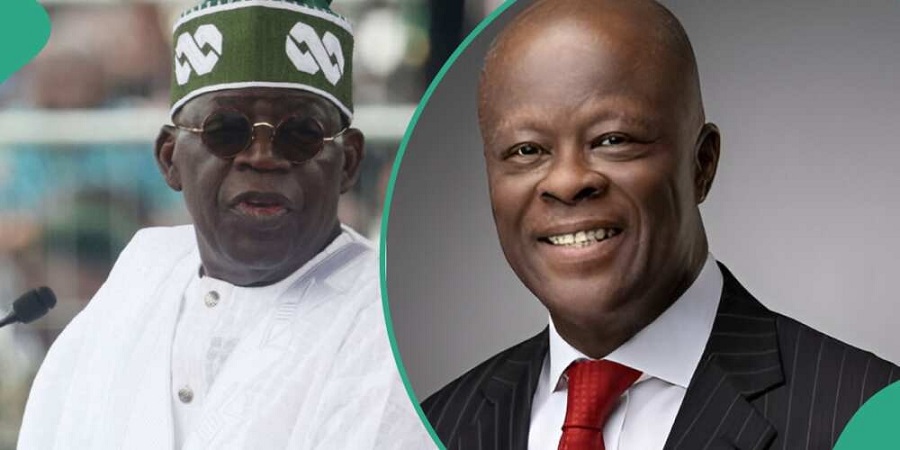
President Bola Tinubu has sought Senate approval to amend certain provisions of the 2023 Finance Act to impose this 50% tax on foreign exchange gains recorded by commercial banks in Nigeria for the full year 2023.

In his letter to the Senate, the President explained that the funds generated from this tax would be used to support capital infrastructure development, education, healthcare access, and public welfare initiatives.

The financial statements of seven listed commercial banks in the country show that around N3.37 trillion was recorded as profit from foreign exchange revaluation in the full year of 2023 and the first quarter of 2024.

KPMG is also questioning the timing of this tax, as commercial banks are currently seeking to raise funds to meet the Central Bank of Nigeria’s (CBN) new capital requirements.

Major banks such as Fidelity, Access Bank, and GTCO are among those approaching the capital markets to raise funds, with an estimated N4 trillion needed in fresh capital over the next 18 months.

Double Taxation Concerns

Another critical point raised by KPMG is the issue of double taxation. Banks already pay 30% of their overall profit, including profits from foreign exchange transactions, as Company Income Tax (CIT). The advisory firm seeks clarification on whether banks would be required to pay an additional 20% on top of their existing 30% tax, or if they would need to pay a fresh 50% on foreign exchange profits.

The absence of any form of tax relief to cushion the effects of such retroactive taxes is also lamented. In other jurisdictions where retroactive taxes are imposed, it is customary to provide some form of tax relief, which is not evident in the amendment to the finance bill.

Why Only Banks?

KPMG questions why banks are being singled out for this tax, suggesting that they are likely not the sole beneficiaries of foreign exchange revaluation gains. The report notes that any business holding foreign currency assets would have profited from transactions settled in 2023.

“Singling out banks contradicts the tenets of the National Tax Policy, which hinges on equity and fairness,” the report asserts.

While the government sees the windfall tax as a necessary measure to boost revenue for critical public projects, growing criticism, especially from major financial organizations such as the KPMG, is signaling that the move will be controversial.

Thus, concerns about retroactive application, potential legal challenges, and the broader impact on the banking sector and foreign investment highlight the need for careful consideration and wider stakeholder engagement before the 2024 Appropriation Act is reviewed to include the FX windfall tax.

The Crowdstrike Lesson – our world, united by bits and bytes

0

A lesson for the decentralized folks who think that this world could be decoupled. For all the decentralization with your coins, you still need an exchange which must be registered by the government to have a bank account. For all the privacy concerns, Airbnb and Uber still need to know your life for that temporary camping or trip to be possible.

And today, for all the noise of resilience and decentralized information systems, we just noticed that everyone is in the same house: “In an unprecedented turn of events, financial services, medical offices, and television broadcasters worldwide faced severe disruptions on Friday due to a significant IT outage. Air travel was particularly affected, with numerous flights grounded, services delayed, and airports scrambling to advise passengers.”

That is our world, united by bits and bytes.

LinkedIn Summary

Airlines, banks, broadcasters and other businesses were struggling to recover from a major tech outage on Friday that disrupted services around the world. The chaos affecting Microsoft Windows devices was attributed to a software update at cybersecurity company CrowdStrike, with CEO George Kurtz writing on LinkedIn that they are “deeply sorry” and “a fix has been deployed.” By midday, more than 2,000 flights within, into and out of the U.S. were canceled, and another 6,100 were delayed; the FAA warned of continued disruptions this weekend. Also impacted: parcel delivery, transit agencies, customers at TD Bank and court systems across the country.

  • LinkedIn parent Microsoft issued an explainer and workaround on Friday, while CEO Satya Nadella wrote on LinkedIn that the company is “working closely with CrowdStrike and across the industry” to provide guidance and support.
  • Most 911 and non-emergency call centers were restoring services after earlier outages, while many global health systems had to cancel non-urgent medical appointments and delay surgeries.

The World Hit By Greatest Cybersecurity Incident – And It’s Not A Cyberattack

The World Hit By Greatest Cybersecurity Incident – And It’s Not A Cyberattack

0

In an unprecedented turn of events, financial services, medical offices, and television broadcasters worldwide faced severe disruptions on Friday due to a significant IT outage. Air travel was particularly affected, with numerous flights grounded, services delayed, and airports scrambling to advise passengers.

The root cause? A faulty software update by cybersecurity giant CrowdStrike, highlighting a striking irony: the greatest cybersecurity issue in history wasn’t a cyberattack but a technological mishap.

The chaos began early Friday when CrowdStrike reported a major disruption following an issue with its latest tech update. This incident quickly escalated, impacting a wide array of sectors globally.

The U.S. National Security Council, aware of the incident, said it is investigating its implications.

German Chancellor Olaf Scholz, currently in Belgrade, stated that German security institutions are working with international partners to resolve the IT outage affecting air travel, banking, and various companies.

CrowdStrike CEO George Kurtz said that the issue was neither a security incident nor a cyberattack.

“This is not a security incident or cyberattack. The issue has been identified, isolated, and a fix has been deployed,” he stated on social media.

Despite the fix, the damage was already extensive, causing widespread disruptions.

The Widespread Impacts

The effects of the IT outage were felt worldwide. Passengers at New York’s John F. Kennedy International Airport faced significant delays as part of the global IT outage. The Federal Aviation Administration reported that several airlines requested assistance with ground stops for their fleets until the issues were resolved.

While American Airlines, Delta Air Lines, and United Airlines resumed some flights, they warned of ongoing delays and issued waivers for customers to change their travel plans.

In South Africa, two major banks, Capitec and Absa Group, reported temporary service disruptions due to the global outage.

Capitec informed customers of nationwide service disruptions caused by an “unexpected issue with an international service provider.” After several hours, both banks announced the restoration of their services.

In the healthcare sector, Britain’s Royal Surrey Hospital in Guildford declared a “critical incident” due to external IT issues affecting its services, particularly the IT system used for radiotherapy treatments. While the hospital managed to deliver radiotherapy services, it had to reschedule appointments, with disruptions potentially extending into the following week.

Cybersecurity researcher Troy Hunt described the ongoing global tech disruption as “the largest IT outage in history.”

The CrowdStrike outage caused cascading failures across multiple industries, including airlines issuing ground stops, broadcast networks going off-air, and critical services scrambling to mitigate the impact.

Satnam Narang, senior staff researcher at cybersecurity firm Tenable, noted the profound impact of the outage, describing it as unprecedented.

“It’s very far-reaching, and we’re still just at the beginning of this right now,” Narang told CNBC.

He explained that security software, due to its privileged access to machines, played a critical role in the failures.

“People may see these as Windows failures with a little blue screen popping up, but it’s related to a faulty or bad update from the security software,” he said.

The Challenge of A Solution

Tom Lysemose Hansen, Chief Technology Officer at Norwegian cybersecurity company Promon, noted that resolving the global IT outage might not be straightforward.

“CrowdStrike’s affected customers will have to effectively break into their own systems to get everything back online by logging into the admin console and booting their systems in safe mode,” he explained.

CrowdStrike’s software is deeply integrated into the operations of many organizations, from point-of-sale systems to ATMs and Microsoft Windows systems.

CrowdStrike CEO George Kurtz has apologized for the disruption caused by the systems update. Kurtz reiterated that it was not a security incident or cyberattack and assured that the company was working diligently with customers to restore services.

“The system was sent an update, and that update had a software bug in it, causing an issue with the Microsoft operating system,” he told NBC’s “Today.”

The Irony and Lessons 

While the tech world remains vigilant against external threats, cybersecurity experts note that this incident serves as a potent reminder of the vulnerabilities that can arise from within. The greatest cybersecurity issue in history, ironically, was not the result of a malicious cyberattack but a software update gone wrong, impacting millions and offering valuable lessons for the future of IT and cybersecurity.

Analysts attribute the incident to the interconnectedness of modern IT infrastructure, where a single point of failure in a critical service provider’s software can cascade into widespread disruptions across multiple sectors and countries.

As businesses and services worldwide work to recover from this unprecedented outage, experts advise that the focus should shift to understanding the root cause of the issue and implementing measures to prevent a recurrence.

For CrowdStrike, the immediate priority is restoring trust and ensuring that its systems and processes are scrutinized to prevent future incidents, they say.

Notcoin Price Prediction: Can NOT Overtake PEPE? Here Is A New Altcoin That Could Be Set To Surpass Both

0

Many crypto investors have been able to change their lives beyond recognition by getting in early on small cap altcoins such as Pepe (PEPE) and Notcoin (NOT). These coins have both delivered massive gains over the last bull cycle and crypto watchers are speculating on which coin has the greatest potential for the next leg up. However, a new coin in the play-to-earn niche looks set to trump both of them.

Rollblock (RBLK) is a major new arrival in the lucrative GambleFi sector and is set to take a massive bite out of this lucrative pie. By bringing the best of Blockchain innovation to the online casino space, Rollblock is aiming to revolutionize the industry and bring about new levels of trust and transparency. Here’s why experts are calling for huge gains of up to 100x in the coming months.

Notcoin (NOT) Holders Taking Profits into Newer Launches

Notcoin (NOT) holders have seen the value of their portfolios rise an incredible 1400% over the last 6 months. However Notcoin has struggled recently to deliver on bullish price action for the wider crypto market and is currently down over 18% in the last month.

The Telegram ‘tap to earn’ coin made a decisive bounce off the 100-day moving average in the recent downturn, but momentum has been lacking since and bulls will need to step in with strength if Notcoin is to overtake PEPE in market cap, which has been another incredibly strong performer in this cycle so far.

Notcoin remains a strong and affordable investment, though having already experienced a huge surge Notcoin could be outperformed by new altcoins.

Pepe (PEPE) Looks Set For New All-Time Highs Soon

Pepe (PEPE) investors have enjoyed an incredible turnaround over the last few days as the price has rallied an incredible 36% in a week to hit $0.00001231. This takes the PEPE market cap to $5.18 billion and places it at number 22 in the total crypto rankings. Volume has been high, signaling a return of retail buyers and bullish sentiment. A surge to PEPE yearly highs of $0.0000167 is surely not far away and it is anyone’s guess how high this meme coin giant can go.

However, Pepe, like all memecoins, is incredibly volatile and investors must be prepared for high volatility in both directions.

Rollblock (RBLK) Already Giving Holders Outsize Gains

Rollblock (RBLK) is on a mission to set new standards of trust and transparency in the world of online gambling.

Using the Ethereum Blockchain to encrypt and verify all bets and transactions, Rollblock can guarantee that bets will remain unchanged once placed and that games are fair for all players. For the first time, the house doesn’t always win, and players have all the information they need at their fingertips.

New users do not need to pass invasive KYC checks upon signing in, all that is needed is an email address and a crypto wallet. Registered users currently sits above 5000. Rollblock accepts deposits in over 20 popular cryptocurrencies such as Bitcoin, Solana, and Tether USDT. New players can also receive a hefty deposit bonus of up to 15% for a limited time, depending on how much is transferred over.

There are over 150 incredible games, from poker and slot machines to new and exclusive games like Zeppelin. These games are fully immersive, can be proven to be fair, and offer better winning odds than more traditional competitors in the space.

The RBLK token will become a long-term hold for many crypto investors, offering a hard cap of a billion coins and deflationary supply mechanics. Rollblock will buy up potentially millions of dollars of RBLK on the open market with their profits each week. These purchases are split between being burned and given to stakers who can earn generous yields on their holdings.

The RBLK presale is gathering pace and has entered stage 4, with a corresponding price pump from $0.0158. Over $1.2 million dollars has been raised so far from eager investors, many of whom have made over 50% already.

There will never be a better time to take a position in Rollblock and experts are calling for 100x gains in 2024!


Discover the Exciting Opportunities of the Rollblock (RBLK) Presale Today!

Website: https://presale.rollblock.io/

Socials: https://linktr.ee/rollblockcasino