DD
MM
YYYY

PAGES

DD
MM
YYYY

spot_img

PAGES

Home Blog Page 3275

eBay to Stop Accepting American Express Payments Amid Rising Fees

0

Starting August 17th, eBay will no longer accept American Express (Amex) payments, citing “unacceptably high fees” associated with Amex credit card transactions.

This decision comes as part of eBay’s broader strategy to manage transaction costs and push for more competition in the credit card market.

In a notice to customers, eBay explained its stance, stating, “Credit card transaction fees continue to rise unabated because of a lack of meaningful competition. There is a need for more robust regulations to drive greater competition to credit card networks and help reduce transaction processing costs.”

Despite this change, eBay will continue to accept other payment methods including Visa, Mastercard, Discover, PayPal, Apple Pay, Google Pay, and Venmo.

However, American Express has disputed eBay’s reasoning, arguing that its fees are in line with those of other credit cards accepted by eBay.

“We find eBay’s decision to drop American Express as a payment choice for consumers to be inconsistent with their stated desire to increase competition at the point of sale,” Amex said on its website.

The payment company also pointed out that eBay transactions represent less than 0.2 percent of its total network volume, minimizing the impact on its overall business.

Retailers and Credit Card Companies Amidst Fintech Evolution

This isn’t the first time a major e-commerce platform has had disputes with credit card companies over transaction fees. For instance, Amazon nearly dropped support for Visa credit cards in the UK in 2022 due to high processing costs.

In an email to customers at the time, Amazon stated, “As a result of Visa’s continued high cost of payments, we regret that Amazon.co.uk will no longer accept UK-issued Visa credit cards as of January 19, 2022.”

However, Amazon continued to accept Visa debit cards and other credit cards, including Mastercard and American Express.

After negotiations, Amazon and Visa reached an agreement in early 2022 to continue their partnership, highlighting the ongoing negotiations and adjustments companies make in response to transaction fee structures.

The Broader Financial Ecosystem

Visa has adapted to changes in the global financial ecosystem, including partnerships with blockchain-powered cross-border payment facilitators to integrate cryptocurrency payments. The cryptocurrency industry, with its decentralized finance (DeFi) system, has simplified and reduced the cost of cross-border payments, creating additional competition in the financial sector.

eBay’s decision to stop accepting Amex is seen as a strategic move to manage its transaction costs more effectively and advocate for regulatory changes to foster competition among credit card networks.

This change may inconvenience some eBay customers who prefer using Amex, but the platform’s acceptance of a wide range of other payment methods provides alternatives.


N62,000 vs N250,000: Nigerian Government and Organized Labour’s Impasse Over Minimum Wage could Result in another nationwide Strike

0

The federal government and organized labour have yet to reach an agreement on the new national minimum wage despite several rounds of negotiations. The government’s latest offer of N62,000 per month falls short of labour’s revised demand of N250,000 per month.

Negotiations began earlier this year with both sides far apart in their demands. The federal government initially proposed N48,000, which was met with labour’s demand of N615,000. After several rounds of discussions, the government increased its offer to N60,000, then N62,000, while labour reduced its demand to N494,000 and eventually to N250,000.

Despite these adjustments, no consensus has been reached.

Government’s Strategy

The new development in negotiations began when President Bola Tinubu directed the Minister of Finance and Coordinating Minister of the Economy, Wale Edun, to present a new minimum wage and its cost implications.

This template was presented to labour leaders during their recent meeting.

The tripartite committee, formed to harmonize decisions, recommended an upward review of the national minimum wage. The committee urged President Bola Tinubu to consider N62,000 per month, as agreed by the government and the Organised Private Sector (OPS), and N250,000 per month as proposed by organized labour.

“Having critically examined the national minimum wage using all necessary parameters and applied the social, economic, and political considerations as well as relevant ILO conventions and international best practices, it is agreed that there is a need for an upward review of the present national minimum wage,” the committee stated.

Labour’s Position

President of the Trade Union Congress (TUC), Comrade Festus Osifo, stressed the importance of wages reflecting the current economic realities and the cost of living. He insisted that the government’s offers have consistently fallen short of what is necessary to ensure a decent standard of living for workers.

Early this month, organized labour went on strike in response to the government’s initial proposal of N60,000, deeming it insufficient given the current economic challenges. The strike, highlighting the urgency and importance of a wage adjustment that reflects the rising cost of living, forced the government to promise new fresh increase.

Governors’ Concerns

The Nigeria Governors’ Forum (NGF) expressed strong reservations about the proposed N60,000 minimum wage, describing it as unsustainable. Many states, according to the NGF, would face financial ruin if forced to allocate such a large portion of their budgets to wages.

“Paying N60,000 minimum wage would exhaust the entire federal allocation received by many states just on personnel costs, leaving zero funds for investments in infrastructure, healthcare, education, and other priorities,” the NGF warned in a statement.

“We appeal that all parties involved, especially the labour unions, consider all the socioeconomic variables and settle for an agreement that is sustainable, durable, and fair to all other segments of the society who have legitimate claim to public resources.”, the governors added.

A governor from the South lamented, “How do I take such huge amounts to pay less than 200,000 civil servants in the state, which does not constitute more than 5 percent of the population?”

However, Labour and other stakeholders have pointed to the increment in the Federation Account Allocation Committee (FAAC) distributions to counter the governors’ claims that a minimum wage above N60,000 is unsustainable. They argue that the increased revenues should enable states to pay higher wages without compromising other fiscal responsibilities.

Impact of dwindling economy

The economic context of these negotiations is crucial. Nigeria has faced severe economic fluctuations in recent years, including a recession in 2016, modest growth until 2019, and a downturn in 2020 due to the COVID-19 pandemic. The removal of fuel subsidies and the implementation of a floated exchange rate market, have led to increased prices of goods and services, a decline in purchasing power, and rising poverty levels.

Inflation rose from 22.4% in May 2023 to 33.69% in May 2024, with petrol prices increasing from N198 to N626 per liter within six months.

Data from the Nigeria Governors’ Forum shows that many states, including Abia, Ekiti, Gombe, Imo, Katsina, Kogi, Oyo, Plateau, Sokoto, Yobe, and Zamfara, have recurrent expenditures that exceed their total revenue, making them financially incapable of paying the proposed N60,000 minimum wage. Zamfara State, for instance, has a negative net revenue of N27.3 billion.

However, the ongoing stalemate could lead to another strike by organized labour, which insists on a minimum wage that reflects the economic realities faced by Nigerian workers. The federal government and organized labour remain at an impasse over the new national minimum wage.

As the tripartite committee forwards its recommendations to Tinubu, the country awaits a resolution that balances the economic realities facing both the government and its workers. The outcome of these negotiations will significantly impact Nigeria’s economic stability and the livelihood of its workforce.

Bitcoin Post-Halving Rally And Spot Ethereum ETFs FOMO: Ethena (ENA), Arbitrum (ARB), And ETFSwap (ETFS) Have The Highest Potential

0

Numerous investors have been FOMO investing as the Bitcoin post-halving rally and Spot Ethereum ETFs trigger a wave of interest and demand among crypto enthusiasts. During this period of heightened interest, ETFSwap (ETFS), Ethena (ENA), and Arbitrum (ARB) have emerged as three crypto projects identified to have exceptional potential in the crypto space.

ETFSwap (ETFS) Has High Potential With Spot Ethereum ETFs And Post-Bitcoin Halving Rally

ETFSwap (ETFS) is an innovative cryptocurrency and ETF decentralized trading platform, which has been gaining widespread popularity recently with the approval of Spot Ethereum ETFs. Numerous investors and market experts have taken notice of its transformative capabilities in the digital asset space and its high potential to generate maximum returns.

As a decentralized exchange (DEX), ETFSwap (ETFS) enables users to buy and trade tokenized institutional ETFs with cryptocurrencies such as Spot Ethereum ETFs. This allows traders to track the real-time market performance of their tokenized ETFs, ensuring they stay informed and updated in their investment plans.

Including the famous cryptocurrency spot and futures ETFs, ETFSwap (ETFS) also provides access to other institutional ETFs such as leveraged ETFs, fixed-income ETFs, commodity ETFs, and crypto ETFs like Spot Ethereum ETFs. This platform offers users 24/7 access to its trading platform from various global regions, comprehensive risk management services, and ETF management assistance.

Additionally, users can benefit from ETFSwap’s lower trading fees, minimized transaction costs, and trade incentives, including an 87% APR yield for token investors, up to 10X leverage on all trades and up to 50X leverage on perpetual futures and options trading.

The DeFi platform has integrated blockchain technology to bolster its operational capabilities, providing users with a transparent and secure trading environment. Moreover, there are no KYC restrictions on this platform, effectively preserving user privacy and simplifying the onboarding process for new users.

To ensure its robust security protocols, ETFSwap (ETFS) has been carefully audited by CyberScope, a prominent cybersecurity and blockchain audit firm. The audit’s result revealed ETFSwap’s flawless underlying infrastructure and its well-fortified security systems which protect users from potential cyber attacks.

In terms of profitability, numerous market experts believe that ETFSwap (ETFS) is on track for a massive bullish surge, spurred on by the approval of Spot Ethereum ETFs and the possibility of a Bitcoin post-halving rally. Its native token, ETFS has already gained immense popularity since the start of its ongoing presale.

Ethena (ENA) Price Surges Amidst Declining Trading Volume

Despite the market volatility, the price of Ethena (ENA) has been on an upward momentum over the past week. According to CoinMarketCap, Ethena (ENA) is currently trading at $0.96, reflecting a yearly increase of 40.02%, being one of the top beneficiaries of the post-Bitcoin halving rally.

Although Ethena (ENA) witnessed a slight uptick of about 10.40% over the past week, the cryptocurrency is still facing major resistance, failing to reach the $1 price threshold. Ethena (ENA) has also seen a slight 1.14% uptick in the last 24 hours. Moreover, the Ethena (ENA) volume has plummeted by 49.47%, emphasizing the need for increased market interest to propel its value upwards.

Analyst Says Arbitrum (ARB) Prints TD Buy Signal

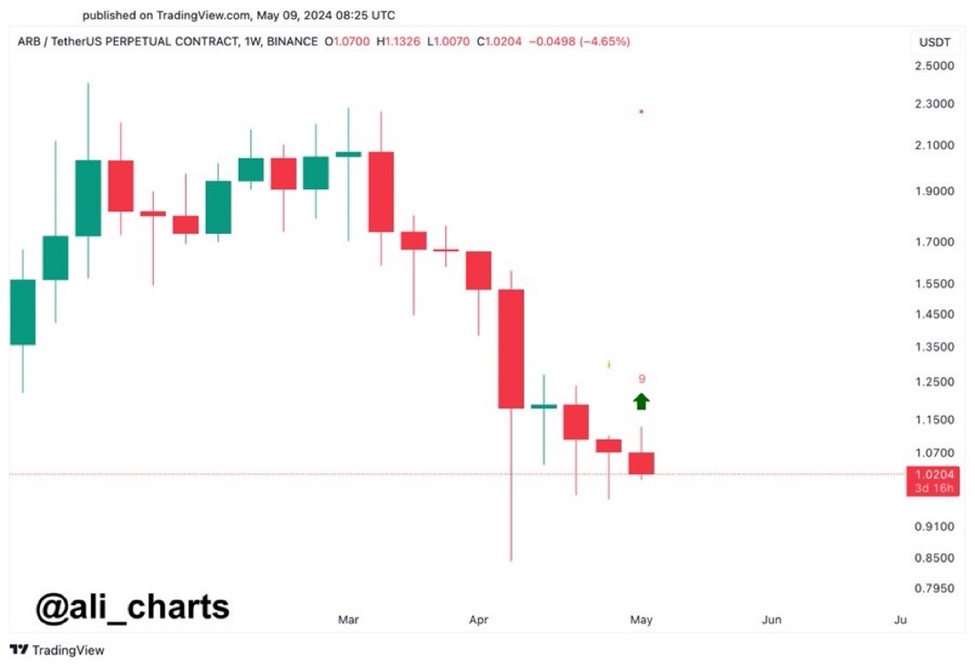
Popular crypto analyst, Ali Martinez has provided valuable insights on Arbitrum’s price actions and future value. According to Martinez, Arbitrum (ARB) TD Sequential is currently presenting a buy signal on its weekly price chart.

The cryptocurrency is displaying a high potential for a rebound ranging between one to four candlesticks. This implies that Arbitrum (ARB) may be getting ready for a major price reversal towards the upside.

As of writing, the price of the Arbitrum (ARB) is trading at $1.11 reflecting a price increase of $1.86% in the last 24 hours despite declining by 5.97% over the past week.

Conclusion On Winning The Post-Bitcoin And Spot Ethereum ETFs Rally

Although Ethena (ENA) and Arbitrum (ARB) have shown considerable momentum lately, ETFSwap (ETFS) remains positioned for substantial rallies as demand for its platform skyrockets. Amidst the approval of Spot Ethereum ETFs and the excitement surrounding Bitcoin’s halving rally, ETFSwap (ETFS) is set to take advantage of the market’s momentum to expand its ecosystem and push the value of its native token to new highs.


For more information about the ETFS Presale:

 Visit ETFSwap Presale

Join The ETFSwap Community

The academic festival begins today

0

The academic festival begins today. The first Live lecture is at 7pm WAT, and I will be teaching on innovation, growth and the mission of companies. Zoom link is in the Board

This is Tekedia Mini-MBA; begin the FUTURE!

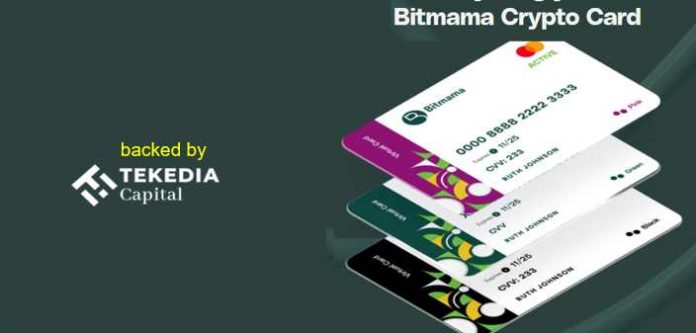
Tekedia Capital takes more positions in Bitmama

0

Tekedia Capital takes more positions in Bitmama and its wholly-owned Changera Business which moves money globally.  Last year, Bitmama acquired PayDay with its close to 1 million users as it accelerates growth in the emerging market. Our confidence in the African market, and specifically Nigeria, is unrivaled as we continue to deploy $millions yearly.

Tekedia Capital >> capital for modern entrepreneurial capitalism.