DD
MM
YYYY

PAGES

DD
MM
YYYY

spot_img

PAGES

Home Blog Page 329

Zenith Bank Targets Côte d’Ivoire and Francophone Africa Expansion After N614.65bn Capital Raise

0

Zenith Bank Plc has announced plans to expand its operations into Côte d’Ivoire and eight other Francophone African countries, marking a major step in its regional growth strategy following the successful completion of its N614.65 billion hybrid capital raise.

At a closing gong ceremony held at the Nigerian Exchange (NGX), the Group Managing Director and Chief Executive Officer, Adaora Umeoji, said the recapitalization has positioned Zenith Bank for accelerated growth and regional scale.

“Since the capital raise exercise, we’ve been able to use part of the money to expand our footprints. We started by opening our Paris branch, and we are going to move from there to Côte d’Ivoire, which we are already processing the license,” Umeoji said.

She explained that the Côte d’Ivoire expansion represents a strategic entry point into Francophone Africa, as securing the license will grant the bank passporting rights into eight additional French-speaking markets across West and Central Africa.

“This expansion strategy is a result of us following our customers’ business and ensuring that we go to countries and economies where we can scale and be able to provide more returns for our shareholders,” Umeoji said, emphasizing that the new phase of growth aligns with Zenith Bank’s broader ambition to become a pan-African financial powerhouse.

The move also reflects a broader shift in the Nigerian banking industry, where institutions are increasingly looking beyond domestic borders to mitigate currency and regulatory pressures while tapping into high-growth regional markets. Francophone West Africa, which includes economies like Senegal, Benin, and Burkina Faso, offers strong growth potential due to rising cross-border trade, expanding financial inclusion, and relatively stable monetary policies under the CFA franc zone.

Zenith Bank’s hybrid capital raise — combining debt and equity instruments — was significantly oversubscribed, lifting its capital base by 160% to N614.65 billion. The successful raise not only fortified the bank’s balance sheet but also expanded its shareholder base.

“This recapitalization exercise has really helped us, positioned us, grown our business, and it has made us have more than 700,000 shareholders since we got listed,” Umeoji said.

The bank’s latest financial performance underscores its readiness for the next phase of growth. For the first half of 2025, Zenith Bank reported a pre-tax profit of N625.63 billion and a post-tax profit of N532.18 billion. Gross earnings rose 19.96% year-on-year to N2.521 trillion, driven mainly by a surge in interest income.

Interest income contributed 73% to gross earnings in H1 2025, up sharply from 55% in the same period last year, with a 60% year-on-year increase to N1.839 trillion. The figure already accounts for 67% of the bank’s full-year 2024 interest income, reflecting strong credit growth and improved yield on assets.

In recognition of its robust performance, Zenith Bank’s Board approved an interim dividend of N1.25 per share, a 25% increase from the N1.00 paid in H1 2024. The dividend hike, Umeoji noted, reaffirms the bank’s commitment to rewarding shareholders while sustaining its expansion agenda.

Zenith’s expansion drive comes amid renewed capital requirements for Nigerian banks following the Central Bank of Nigeria’s recapitalization directive, which aims to strengthen the banking sector ahead of macroeconomic challenges and currency volatility. Analysts say Zenith Bank’s early capital raise gives it a competitive advantage, positioning it ahead of peers in meeting regulatory thresholds while pursuing regional diversification.

With its Paris branch now operational and Côte d’Ivoire next in line, Zenith Bank appears poised to leverage its strengthened capital base to tap into Africa’s fast-growing cross-border banking corridor. The move, analysts say, could transform Zenith into one of the continent’s most influential financial institutions — linking Anglophone and Francophone Africa under a single, integrated banking network.

Figma’s Dylan Field Says AI Won’t Steal Jobs — It’ll Redefine Them

0

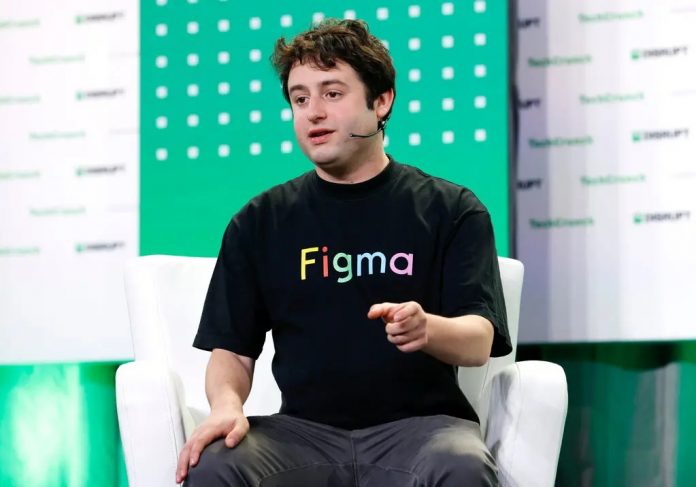
Figma CEO Dylan Field believes the conversation about artificial intelligence and the future of work is missing the point. In his view, AI isn’t coming to take jobs — it’s coming to reshape them.

“I think it’s pretty encouraging that folks understand, viscerally, that this is not coming for you,” Field said during an appearance on Lenny’s Podcast on Thursday.

His remarks come at a time when concerns about AI’s impact on employment continue to dominate public debate. But Field, who has led Figma since co-founding it in 2012 with Evan Wallace, said the company’s latest research paints a more optimistic picture.

A Figma survey published in September examined how AI tools are affecting productivity and creativity among 1,199 professionals, including designers, product managers, developers, researchers, data specialists, and marketers. The findings challenge fears of mass job displacement.

Nearly 60 percent of respondents said AI helps them spend more time on “high-value work” by reducing repetitive tasks. About 70 percent reported feeling “more productive or efficient overall” since integrating AI tools into their workflow.

Field said those results align with what he’s observed across creative and technical industries: that workers are not being replaced but rather assisted by automation that removes the dullest parts of their jobs.

“The drudgery — how do we remove that from the design process? How do we give more access to more people?” he asked, echoing a similar sentiment he shared on the Rapid Response podcast earlier this month.

He believes this shift should empower workers rather than alarm them, and instead of worrying, people should focus on how they’ll adapt as AI tools and models advance.

A Designer’s Perspective on the AI Revolution

Figma, based in San Francisco, has built its reputation on creating collaborative software for designing websites, apps, and digital interfaces. Its tools have become indispensable to product teams around the world, making it one of the most influential companies in design technology.

The company’s July IPO was one of the biggest of the year, valuing Figma at nearly $30 billion. With more than 1,600 employees, Figma continues to expand, even as many tech firms have slowed hiring or cut staff amid automation-driven efficiency pushes.

Field said Figma is exploring how AI can streamline internal operations and lower costs, but he emphasized that its broader strategy centers on using AI to unlock new creative and business opportunities — not on workforce reduction.

Field’s perspective stands in contrast to predictions from economists and technology analysts who warn of potential large-scale job losses as AI becomes more capable. A number of studies have suggested that millions of white-collar jobs could eventually be automated, particularly in industries reliant on writing, coding, and administrative work.

But Field argues that history suggests otherwise. Each technological leap — from the industrial revolution to the internet boom — has ultimately led to new industries and roles that didn’t exist before.

This philosophy is woven into Figma’s approach to product development. The company has integrated generative AI features into its design suite, allowing users to quickly generate design variations, analyze user feedback, and automate parts of the creative process — while leaving the conceptual and emotional aspects firmly in human hands.

“There’s a need for designers to lead the charge, and AI will only get you so far,” Field said.

 A Future of Human-AI Collaboration

For Field, the future of work is not about competing with AI, but collaborating with it. He believes the more we learn to use these systems as partners, the more we’ll be able to focus on what makes us human — our ideas, our empathy, our curiosity.

He sees AI as a force that will democratize creativity and empower non-designers to participate in product building. This could lead to broader innovation across industries, as people who once lacked technical skills gain the ability to create through natural-language interfaces and intuitive AI-driven tools.

“You can see it as a path for you to learn and grow, and explore the world and human consciousness,” he said.

That vision aligns with Figma’s founding mission — to make design accessible and collaborative. AI, in Field’s view, accelerates that mission by removing barriers and expanding access to creative expression.

As one of Silicon Valley’s youngest CEOs to take a company public, Field has become a leading voice in the discussion on how technology reshapes work. His optimism about AI stands out in an industry where automation is often portrayed as a threat to human labor.

Figma’s growth trajectory, combined with its deep integration of AI into design tools, suggests that the company is positioning itself at the center of that transformation — one where technology amplifies human potential rather than replacing it.

Thus, the takeaway for Field is that the future belongs to those who learn to work with AI, not against it.

When the National Anthem Becomes a Mirror of Public Sentiment

0

When the National Orientation Agency (NOA) released its notice reminding Nigerians how to properly sing and recite the national anthem and pledge, the intention seemed straightforward. The directive stated that only the first stanza should be used at official events, the third stanza as the national prayer, and all three stanzas on special national occasions. The message concluded with an appeal to citizens to “uphold the dignity and sanctity of our national symbols.”

The aim was to promote patriotism, respect, and discipline. Yet the reactions that followed on social media revealed that official intentions do not always translate into public approval. Instead of widespread acceptance, the announcement generated laughter, irritation, and political commentary. Beneath the humour was a deeper reflection of how citizens perceive authority, belonging, and national pride in present-day Nigeria.

The Message and Its Intention

The NOA’s announcement was an attempt to restore order and reaffirm the country’s sense of identity. It was built on the idea that shared symbols like the anthem can unify people across ethnic and political divides. The language of the notice was firm and patriotic, suggesting that compliance was a moral and civic duty.

However, this message landed in a society burdened by economic hardship, insecurity, and public distrust in leadership. For many Nigerians, daily survival takes priority over ceremonial observance. As a result, what was meant to be a patriotic reminder was largely received as a symbol of misplaced government priorities. The reaction showed that even well-meaning communication can lose its power when it seems disconnected from people’s lived realities.

What the Public Really Said

A review of twenty public reactions to the notice gives a clear picture of where Nigerians stand. Only two people, representing about ten percent, supported or accepted the message without complaint. Three respondents, or fifteen percent, were neutral, asking genuine questions about how the new directive should apply in schools or public events. The remaining fifteen, making up seventy-five percent, disagreed, mocked, or dismissed the message entirely.

The disagreements took several forms. Some people expressed disbelief, asking whether any country in the world has a three-stanza anthem. Others laughed at the confusion that came with learning the new version, sharing jokes from orientation camps where people mistakenly sang “Arise O Compatriots.” A number of respondents tied their criticism to politics, predicting that the next government would reverse the anthem. For them, the constant changes in national symbols reflect the instability of leadership rather than the strength of tradition.

Another group questioned the timing and relevance of the announcement. They asked why the government was focused on anthem procedures instead of addressing hunger, insecurity, or inflation. One comment captured this frustration vividly: “Okay, how’s this gonna change the price of Garri in the market?” Some also expressed nostalgia for the more recent anthem, describing “Arise O Compatriots” as more modern, inspiring, and inclusive than the colonial-era version brought back earlier this year.

Rethinking How We Communicate National Values

The key lesson for public institutions is that patriotism cannot be imposed through directives. People do not develop national pride by memorising protocols but by feeling included in a national story that values their contributions and concerns. For the NOA and other government agencies, this means moving from instruction to engagement.

Rather than telling citizens how to sing the anthem, officials should focus on showing why it still matters. Communication that connects national values with visible acts of fairness, security, and opportunity will resonate more deeply than bureaucratic reminders.

True national orientation begins with listening. Nigerians are eager to participate in building the nation, but they want to see sincerity, empathy, and accountability from those who lead. The anthem conversation, far from trivial, offers a glimpse into the country’s emotional temperature. It shows that before citizens can sing together with pride, they must first feel that they are part of a nation that sings with them.

Oracle Shares Slide 7% After AI-Fueled Rally as Analysts Question Lofty Growth Targets

0

Oracle’s remarkable two-year rally, powered by its growing role in the artificial intelligence revolution, hit a snag on Friday as the company’s stock fell 7%, marking its sharpest single-day drop since January.

The decline came just a day after the enterprise software giant unveiled a bold long-term financial outlook during its AI World conference in Las Vegas, projecting exponential growth in its cloud and AI businesses through 2030.

On Thursday, Oracle executives told analysts that they expect cloud infrastructure revenue to soar from $18 billion in fiscal 2026 to $166 billion in fiscal 2030 — an eightfold increase — as demand for AI computing continues to surge worldwide. The company also forecast total revenue of $225 billion and adjusted earnings of $21 per share in fiscal 2030, representing a compound annual growth rate of more than 31%.

Initially, investors cheered the ambitious vision. Oracle shares rose more than 3% on Thursday, extending a rally that has lifted its market capitalization by over 160% in the past two years. However, sentiment quickly shifted on Friday, as analysts began to question whether the company could realistically sustain such a pace of expansion in a market that has become increasingly crowded and capital-intensive.

“It feels like the stock may take a bit of a breather here as investors digest those numbers and try to get comfort around the achievability of long-term numbers,” said Rishi Jaluria, senior analyst at RBC Capital Markets, in an email to CNBC’s Seema Mody.

Jaluria maintained a “hold” rating on the stock, signaling confidence in Oracle’s fundamentals but caution over its aggressive targets.

The company’s bullish projections come amid a broader AI infrastructure boom that has transformed Oracle into a key player alongside industry titans such as Amazon Web Services, Google Cloud, and Microsoft Azure. In recent quarters, Oracle has rapidly expanded its cloud division, striking major deals with both corporate and government clients seeking to deploy AI workloads.

In July, Oracle secured a five-year deal with OpenAI — valued at more than $300 billion — to supply high-performance computing resources and access to specialized AI chips. The agreement positioned Oracle as a vital back-end provider to one of the most influential players in the AI space. Following its strong earnings report in September, Oracle’s shares recorded their best single-day gain since 1992, after revealing $455 billion in remaining performance obligations — a staggering 359% increase from a year earlier.

At Thursday’s conference, Oracle executives announced a new partnership with Meta Platforms, the parent company of Facebook and Instagram, to provide cloud infrastructure support for AI development. Clay Magouyrk, who was recently appointed one of Oracle’s two CEOs, told analysts that the company secured $65 billion in new cloud infrastructure commitments this quarter alone.

“It was across seven different contracts from four different customers,” he said, emphasizing that none of those contracts involved OpenAI. “I know some people are questioning sometimes, ‘Hey, is it just OpenAI?’ The reality is, we think OpenAI is a great customer, but we have many customers.”

Oracle also said its adjusted gross margins for AI infrastructure were between 30% and 40%, higher than analysts’ earlier expectations. Those margins, the company noted, reflect the profitability potential of AI workloads even after accounting for steep capital expenditures on land, power, and computing equipment.

Yet some analysts remain unconvinced that Oracle can maintain that momentum indefinitely. Karl Keirstead, an analyst at UBS, raised his price target on Oracle to $380 from $360, arguing that the market has not fully priced in the long-term upside from AI. But he also warned that the company’s rapid buildout carries risks.

More cautious voices will look at the concentration of business with OpenAI and various unforeseen go-live bottlenecks that could come with such an aggressive buildout, Keirstead wrote in a note to clients.

Despite the pullback, Oracle remains one of the largest and fastest-growing enterprise software firms in the world. Its shift from traditional database systems to AI-optimized cloud infrastructure has helped it capture a wave of corporate spending on artificial intelligence applications. The company’s AI infrastructure has become increasingly attractive to clients seeking alternatives to Amazon and Microsoft — both of which have faced capacity bottlenecks amid skyrocketing AI demand.

The broader context of Friday’s sell-off suggests that investors are grappling with a delicate balance between enthusiasm and realism. Oracle’s ambitious revenue targets would require consistent double-digit growth over the next five years and significant global expansion of its data center footprint. Analysts say that even if Oracle delivers half of its forecasted gains, it would still represent one of the most successful corporate transformations in modern tech history.

For now, the market remains divided between believers in Oracle’s AI-driven future and those urging caution after the recent rally. The stock closed Friday at $291.31, down sharply from Thursday’s close, but still more than double its price two years ago.

Whether Oracle can sustain its extraordinary growth momentum will depend on how effectively it scales its infrastructure, diversifies its client base beyond marquee partners like OpenAI, and competes in an industry where hyperscale efficiency and innovation are the ultimate differentiators.

Trump Admits 100% China Tariffs ‘Not Sustainable’ as Trade War Threatens Global Markets

0

U.S. President Donald Trump on Friday acknowledged that his administration’s newly imposed 100% tariff on Chinese goods would not be sustainable in the long term but said Beijing’s latest trade restrictions forced his hand.

In an interview with Fox Business Network, Trump defended the move as a necessary response to China’s decision to expand export controls on rare earth elements — materials critical to the global technology and defense industries.

“It’s not sustainable, but that’s what the number is,” Trump said. “They forced me to do that.”

The announcement, which came a week after Trump reimposed sweeping tariffs on U.S.-bound Chinese exports, represents the sharpest escalation yet in a renewed trade standoff between Washington and Beijing. The tariffs, combined with new export controls on “any and all critical software,” are scheduled to take effect by November 1 — just days before existing tariff relief was due to expire.

Trump’s aggressive move follows Beijing’s tightening of controls on rare earth exports — a strategic resource where China commands over 80% of global supply. These elements are indispensable in manufacturing semiconductors, electric vehicles, and military hardware, and any disruption threatens to send shockwaves through the global technology supply chain.

Despite his tough rhetoric, Trump sought to ease fears of a prolonged confrontation, revealing that he will meet Chinese President Xi Jinping in two weeks in South Korea — a summit he had earlier suggested might not happen.

“I think we’re going to be fine with China,” he said. “But we have to have a fair deal. It’s got to be fair.”

Trump’s remarks, coupled with his confirmation of the upcoming meeting, appeared to calm Wall Street after a volatile week. U.S. stock indexes, which had been rattled by the tariff announcement and renewed concerns about regional bank stability, began to recover in afternoon trading.

As Trump prepared for a separate lunch meeting with Ukrainian President Volodymyr Zelenskiy at the White House — focused on Ukraine’s war with Russia — he signaled a willingness to continue dialogue with Beijing.

“China wants to talk, and we like talking to China,” he said.

U.S. Treasury Secretary Scott Bessent, speaking at the same event, echoed the president’s optimism, revealing that he planned to hold talks with Chinese Vice Premier He Lifeng later on Friday to keep negotiations on track.

“I think that things have de-escalated,” Bessent said. “We hope that China will show the respect that we have shown them, and I am confident that President Trump, because of his relationship with President Xi, will be able to get things back on a good course.”

Global Concern and WTO Warning

The renewed tensions between the world’s two largest economies have triggered concern among global financial institutions. The head of the World Trade Organization (WTO), Ngozi Okonjo-Iweala, told Reuters she’s concerned about the latest escalation of the tension and has urged both sides to ease trade hostilities.

The WTO’s appeal underscores growing anxiety within the international community as fears mount over supply chain disruptions, inflationary pressures, and declining investor confidence. The 100% tariffs, while aimed at pressuring Beijing, also risk raising costs for U.S. manufacturers and consumers already grappling with high borrowing rates and slow global growth.

Despite signals of renewed dialogue, the rift between Washington and Beijing appears to be widening. In a statement to the International Monetary Fund’s steering committee on Friday, Treasury Secretary Bessent accused China of using “state-driven economic practices” that distort global trade. He urged international financial institutions such as the IMF and World Bank to adopt a tougher stance toward Beijing’s industrial and trade policies, which he said have led to “excess manufacturing capacity flooding the world with cheap goods.”

Beijing pushed back strongly. China’s Commerce Ministry accused the United States of undermining the rules-based multilateral trading system since Trump’s return to office in 2025, vowing to intensify its use of WTO dispute settlement mechanisms to challenge U.S. measures it considers discriminatory.

The exchange highlights the growing tension between Trump’s nationalist trade agenda — which aims to bolster domestic manufacturing and reduce reliance on Chinese imports — and Beijing’s insistence on defending its export-driven economic model.

Rare Earths and Economic Stakes

At the heart of the dispute lies China’s dominance of rare earth elements, a sector that has become increasingly weaponized amid geopolitical rivalry. China’s decision to tighten exports of these materials has raised fears among Western manufacturers of potential shortages, particularly in industries such as defense, renewable energy, and electric mobility.

Analysts have warned that if the restrictions persist, they could destabilize key segments of the global economy, as the United States and its allies scramble to diversify supply chains and ramp up domestic production. However, experts also caution that Trump’s 100% tariffs could boomerang by inflating input costs for U.S. firms and slowing industrial investment.

However, Trump’s acknowledgment that the tariff is “not sustainable” reflects the precarious balance between political posturing and economic reality. The president has repeatedly portrayed himself as a dealmaker capable of extracting concessions from Beijing, but his latest move risks entrenching the standoff rather than resolving it.

For now, markets appear cautiously optimistic. The rebound in U.S. equities on Friday indicated that investors are betting on an eventual compromise. Yet the underlying uncertainty remains high, as the world watches to see whether Trump and Xi’s meeting will produce a meaningful breakthrough or merely a temporary pause in an escalating economic rivalry that continues to define global trade.