DD
MM
YYYY

PAGES

DD
MM
YYYY

spot_img

PAGES

Home Blog Page 3307

The Biden’s $10 Billion Intel Subsidy Is A Conglomerate Tax

1
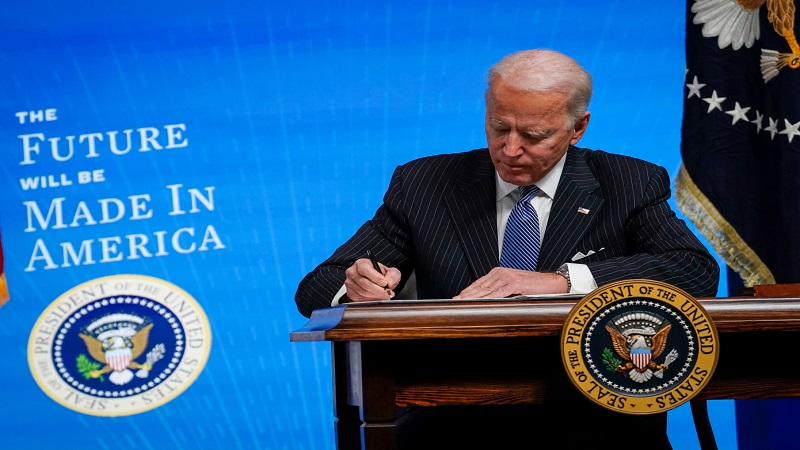
WASHINGTON, DC - JANUARY 25: U.S. President Joe Biden signs an executive order related to American manufacturing in the South Court Auditorium of the White House complex on January 25, 2021 in Washington, DC. President Biden signed an executive order aimed at boosting American manufacturing and strengthening the federal government's Buy American rules. (Photo by Drew Angerer/Getty Images)

Nations rise when they have pioneering entrepreneurs. And when those entrepreneurs become dominant, they demand concessions from governments, and in the process “tax” the citizens, for providing services which are critical and catalytic. I have called that “conglomerate tax”, a tax citizens pay to some of the leading companies in the world to serve them!

As noted in the press release, the Basing Authority will provide the land. That means Dangote Group will not have to pay for it. There is nothing wrong with that. He is investing to provide food security, provide youth employment and also improve the communities. That is what conglomerates do because they are the best creators of jobs, at least in short terms. While the state can plan to sell the land and invest the proceeds in startups, it may take years before those startups can generate the kind of employment and economic activity a conglomerate like Dangote can deliver in a year. For having that capacity, conglomerates tax nations. In other words, you have to subsidize their businesses through government supports for them to help you fix your pain points like unemployment as a government. They operate at the upstream level where the pain points are massive in the operations of governments. Their reward is Conglomerate Tax: the subsidization of their business operations due to their capabilities to help support government initiatives at scale.

Please note that Conglomerate Tax  is a global thing. U.S. government may waive taxes for GE but will not listen to Facebook because GE is a conglomerate. They are treated differently because they technically build nations. Government may have the money but may also need a special plastic for a new warplane. There are few companies that can deliver such products. So, a government may engage a company like GE to research and develop the plastic. The company can ask for concessions to take that risk. Those concessions are taxes to nations since the nations must still buy the plastics if the conglomerate succeeds.

Yes, Conglomerate Tax is global for Dangote Cement, Amazon, GE, etc and it remains “the subsidization of their business operations due to their capabilities to help support government initiatives at scale.”

Today, we are reading that Biden’s government will provide $10 billion to enable Intel to decouple America from the risk of foreign semiconductor products: “In a concerted effort to bolster domestic semiconductor production, the Biden administration is engaged in discussions to allocate over $10 billion in subsidies to Intel Corp, a move motivated by the industry’s escalating significance in powering critical technologies across various sectors.

“This development, reported by Bloomberg News on Friday, reflects a strategic maneuver aimed at fortifying the United States’ semiconductor capabilities amidst global supply chain disruptions and geopolitical tensions.”

From cheap FX dollars to waived import duties to many other things, nations apply special goodies to conglomerates, because they have accumulated and compounded capabilities, to help governments pursue their missions. Yes, Intel is helping Biden’s government on its Made in America initiative and Intel will get $10 billion goodies. And that is why you must not be annoyed when Dangote Cement gets goodies you cannot access in your small Ovim store. It is what it is!

Updated 4 days ago

The federal government is giving the semiconductor chip maker GlobalFoundries $1.5 billion to expand its manufacturing facilities, the Biden Administration announced Monday. The grant is only the third issued under the Chips Act, which was passed in August 2022 with the goal of boosting domestic chip production but has seen little of its $53 billion pot doled out. Delays have become the norm for the industry; Intel recently announced it was pushing back production on a $20 billion Ohio plant, placing part of the blame on the slow rollout of the federal grant money. New York-based GlobalFoundries will also have access to federal loans up to $1.6 billion for the projects in its home state and neighboring Vermont.
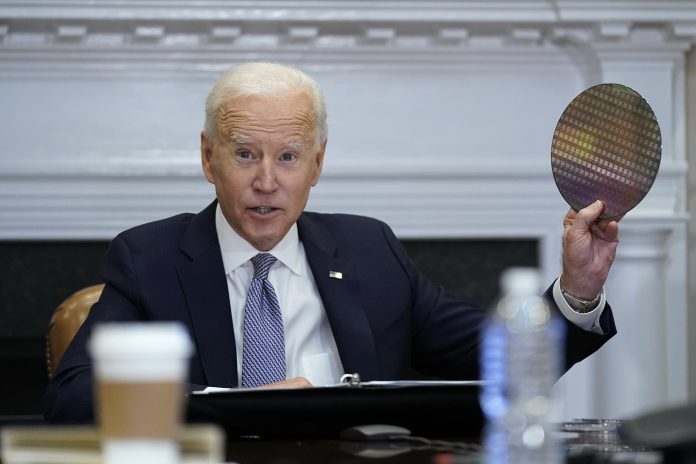

Biden Administration Negotiates $10 Billion Subsidy for Intel to boost domestic Semiconductor production

Biden Administration Negotiates $10 Billion Subsidy for Intel to boost domestic Semiconductor production

0

In a concerted effort to bolster domestic semiconductor production, the Biden administration is engaged in discussions to allocate over $10 billion in subsidies to Intel Corp, a move motivated by the industry’s escalating significance in powering critical technologies across various sectors.

This development, reported by Bloomberg News on Friday, reflects a strategic maneuver aimed at fortifying the United States’ semiconductor capabilities amidst global supply chain disruptions and geopolitical tensions.

Sources familiar with the matter revealed that negotiations are ongoing, with Intel’s award package expected to encompass both loans and direct grants, aimed at revitalizing and expanding the American semiconductor industry.

The US Department of Commerce, entrusted with overseeing the disbursement of funds under the CHIPS Act, has refrained from confirming or denying the reports, maintaining a diplomatic silence amidst the sensitive negotiations. Similarly, Intel has opted to withhold comment on the ongoing developments.

The proposed subsidy to Intel aligns with broader initiatives outlined by the Biden administration to bolster the semiconductor sector, which plays a pivotal role in driving technological innovation, economic growth, and national security. Under the auspices of the $39 billion semiconductor program, the Department of Commerce has already unveiled two smaller grants, signaling a concerted effort to invigorate semiconductor manufacturing capabilities within the country.

Commerce Secretary Gina Raimondo’s earlier announcement regarding the imminent allocation of several funding awards denotes the urgency and commitment of the US government to strengthening domestic semiconductor production.

The semiconductor fund, a cornerstone of the government’s strategy, seeks to catalyze chip production and related supply chain investments, with a particular focus on building new factories and enhancing production capacities.

Intel, a stalwart in the semiconductor industry, has outlined ambitious plans to invest tens of billions of dollars in chip factories across various states, with a notable emphasis on a groundbreaking new site in Ohio, potentially positioned to become the world’s largest chip plant. However, recent reports hint at a potential delay in the completion of the Ohio facility until 2026, citing market dynamics and the gradual influx of federal funding as contributing factors.

Amidst the discussions surrounding federal subsidies, Nvidia has emerged as a key player in the semiconductor industry, reaching a market cap of $1.79 trillion. The California-based company has experienced significant growth and prominence in recent years, driven by its cutting-edge graphics processing units (GPUs) and contributions to artificial intelligence, high-performance computing, and data center technologies.

Further under the CHIPS Act, GlobalFoundries, a pivotal domestic semiconductor manufacturer, is poised to receive a substantial portion of the federal subsidy, as outlined in a preliminary agreement. The funding is earmarked for three projects, including the establishment of a new fabrication facility in Malta, New York, and expansions at existing sites in Malta and Burlington, Vermont.

Lael Brainard, director of the White House’s National Economic Council, emphasized the strategic importance of such investments in bolstering national security and technological prowess, noting the multifaceted significance of semiconductor investments in driving economic resilience and innovation.

“Today’s investment will protect our national security by expanding domestic production of chips used in technology such as satellites and space communications,” Brainard said on a call with reporters.

Senate Majority Leader Chuck Schumer hailed the announcement as a significant milestone for New York State, highlighting the anticipated job creation and economic benefits.

The projects are expected to create thousands of manufacturing and construction jobs over the next decade, contributing to the revitalization of local economies.

As semiconductor manufacturers gear up for a rebound in the industry, GlobalFoundries’ strategic upgrades underscore the anticipation of a future growth trajectory, further corroborated by projections indicating a double-digit growth in semiconductor sales for 2024.

While the negotiations surrounding Intel’s potential subsidy mark a significant step in strengthening domestic semiconductor production, the broader implications extend to reinforcing supply chain resilience, mitigating geopolitical risks, and fostering technological innovation.

The Chips Act was passed by Congress in 2022. The initiative responds to concerns regarding global supply chain vulnerabilities, production expenses, and geopolitical risks, particularly those related to Taiwan. Concurrently, tensions between the United States and China over technology are escalating as the 2024 presidential election approaches.

With ongoing discussions and investments, the semiconductor industry is poised to play a pivotal role in driving economic growth and innovation in the United States. The main goal of Washington is to boost domestic production, covering the edges that China could leverage to beat its sanctions. Analysts expect more companies like Nvidia to emerge in the industry in the near term.

EU Antitrust Act: Apple Faces €500 Million Fine for App Store Policies

0

In a recent development that could have far-reaching implications for American tech companies operating in Europe, the European Union has levied a hefty fine of €500 million (approximately $539 million) against Apple, according to Financial Times.

The fine follows a complaint lodged by Spotify, alleging that Apple’s policies within its App Store hinder competition by restricting apps from informing users about cheaper alternatives to Apple’s own music streaming service.

The crux of the matter lies in Apple’s concerted efforts to maintain control over the payment system within its App Store ecosystem. Spotify’s grievance, dating back to 2019, prompted an extensive investigation by EU regulators the following year. The investigation culminated in objections against Apple’s prohibition on app developers linking to external subscription sign-up pages within their apps—a policy that Apple eventually revised in 2022 under pressure from regulatory authorities in Japan.

While the €500 million fine may appear substantial, it pales in comparison to the potential penalty initially proposed by the EU, which hovered around $40 billion, equivalent to 10 percent of Apple’s annual global turnover. This instance isn’t the first time Apple has found itself at odds with European regulators. In 2020, the company faced charges totaling over a billion dollars, which were subsequently reduced to approximately $366 million by French authorities following an appeal by Apple.

When approached for comment, Apple’s representative, Emma Wilson, declined to address the specifics, stating that the company does not comment on speculation. Instead, she referred to previous statements made by another Apple spokesperson, Hannah Smith, who, in February of the previous year, expressed hope that the Commission would cease pursuing the case, asserting that it lacked merit. Similarly, European Commission spokesperson Lea Zuber opted not to comment on the matter.

This latest fine against Apple underscores the growing regulatory scrutiny faced by dominant tech players, particularly in Europe, where antitrust measures are being rigorously enforced to ensure a level playing field for competition. The EU’s actions against Apple are indicative of a broader trend wherein regulatory bodies are closely monitoring the conduct of tech giants to prevent anti-competitive practices and safeguard consumer interests.

Moreover, the implications of this fine extend beyond Apple, serving as a cautionary tale for other American tech companies operating in Europe. Other American tech companies such as Meta have had to face heavy fines for monopolistic and antitrust practices.

Last May, the EU slapped Meta with a record $1.3 billion privacy fine and ordered it to stop transferring users’ personal information across the Atlantic by October.

The EU’s regulators’ intensified scrutiny and enforcement of antitrust laws have been noted to be in contrast to the “lax” of the American counterparts. Analysts said companies across the tech sector will need to reassess their business practices to ensure compliance with evolving regulatory frameworks.

Failure to do so could result in significant financial penalties and reputational damage, ultimately impacting their fortunes in key markets such as the European Union.

Partech Africa Closes Its Second Africa-Focused Fund at $300M to Invest in Startups

0
Fund, money cash dollar

Partech Africa, a private equity fund launched by Partech, has closed its second Africa-focused fund at $300 million, to invest in African startups from seed to series C.

Following a strong first closing announced last year, Partech Africa II, reached its final closing with all major investors from its predecessor fund, as well as  top-tier investors making their first commitment to the Partech Africa platform and the African VC ecosystem.

Partech’s close comes as funding for Africa fell by 36% last year, and more than half of investors pulled back on funding African startups. The continent witnessed a notable decline in investor activity, with a 50% decrease in 2023 compared to the previous year.

Amidst a backdrop of global VCs and institutional investors pulling back from Africa, Partech Africa’s recent fund closure is crucial.

The global investment platform’s second Africa-focused fund success is acknowledged by the backing of over 40 international investors, which includes South Suez and Bertelsmann, family offices, and prominent Development Finance Institutions (DFIs).

Key among the DFIs are anchor investor KfW (German Development Bank), the European Investment Bank (EIB), the International Finance Corporation (IFC) of the World Bank Group, FMO (Dutch Entrepreneurial Development Bank), Bpifrance Investissement, British International Investment (BII), DEG – Deutsche Investitions – und Entwicklungsgesellschaft mbH, and Proparco

Speaking on the second fund closure, General Partner at Partech Cyril Collon said,

“We are grateful for the support and commitment of our investors: almost all Fund I investors reinvested, and some more than doubled their commitment. We are also honored to get support from a new set of strategic investors from the US, the Middle East, and Africa, and for some of whom, this marks their first commitment in African tech”.

Collon further stressed the increased significance of securing funding at all stages, from Seed to Early Growth, in the current environment. This according to him shows the dedication to supporting the development of tech companies that can drive transformative impact in African economies and contribute to global innovation.

In addition to this, Partech has also announced the establishment of its new office in Lagos, Nigeria, further solidifying its commitment to the African tech landscape. “With our presence in Dakar, Nairobi, Dubai, and now Lagos, we are strengthening our support on the ground for entrepreneurs,” said Tidjane Deme, general partner at Partech.

Partech Africa II will double down on its strategy of investing across Africa with initial tickets ranging from $1M to $15M on Seed to Series C rounds, to support African companies and founders on their growth journey in both local and international markets.

Notably, among the investments from its second fund is Revio, a South African payment orchestration platform, where Partech Africa co-led the seed round with global fintech fund QED. Additionally, the firm has made undisclosed investments in an Egyptian proptech and a Senegalese e-commerce startup.

Partech’s African fund is among several notable funds that have emerged on the continent in the past year, despite challenges for fund managers in raising capital.

Launched in 2018, Partech Africa is a leading VC fund dedicated to technology startups in Africa. The global investment platform invests in equity rounds from Seed to Series C in startups which are changing the way technology is used in education, mobility, finance, healthcare, delivery, energy, etc.

Partech believes in the power of alliance in action, working together and side-by-side with the founders its back, in the shared pursuit of success.

Poll Review – Building on PoW (Proof of Work) Blockchains

0

There have been three years of pump and dumps, shilling and hacks of every species.

While there are signs of a revival, January 2024 has actually been the worst single month in blockchain/web 3 related lay-offs since the decline began around the end of the first quarter of 2022.

Generative AI has been gathering pace, and Bitcoin as a store of value has recovered.  El Salvador and the Central African Republic formally use it as legal tender. It is an individual retailers decision to accept it in payment among many countries without restrictions on how it can be traded.

The Proof of Work (PoW) blockchains are the core anchor for any fully decentralized system. I recently saw Sergey Nazrov, CEO of Chainlink being interviewed.

He said ‘Blockchains, and Cryptographic Systems are the next generation of how trust is going to be generated between counterparties’.

Though, what he fails to include, is that ‘Cryptographic Systems’ have existed for a really long time, in modern traditional finance, and before it. There are many different ‘Cryptographic System’ solutions, from PoS – (Proof of Stake) blockchains to ‘Off-chain’ Networks, which some people include (in somewhat cavalier fashion) when discussing ‘Web3’.

It’s a spectrum, with Proof of Work (PoW) blockchains as the most decentralized, and moving out gradually to continuously more centralized structures, using modern cryptographic techniques as a tool to increase speed and reduce costs, but not necessarily achieve any better security or personal autonomy than the supposed ‘centralized’ traditional systems they are aiming to replace.

More regularly now, posts are appearing on online platforms which are somewhat rhetorically querying the ‘so called’ Web3 solutions we have, and especially lamenting the level of centralization that is at the UI (User Interface).

Many people want to see a real bull run that extends beyond just Bitcoin, but there is also concerns for maintaining product quality, improving personal autonomy/privacy, and keeping identities and assets secure.

Many of the security problems and exploits experienced over the last few years have happened on off-chain centralized networks and on network bridges.

Features they have commonly shared include:

  • Smart Contracts written with Solidity.
  • Deployment of tokens with ERC 20 protocol
  • Centralized key custody (in whole or part)
  • Nominal transaction fees (makes phishing attacks on wallets viable).
  • Increased numbers of commercially owned networks involved due to layering and/or bridging scales risk to ‘last mile’ customers.

PoW (Proof of Work) Blockchains offer potential for full decentralization when built upon, and either have no exposure to the problems listed, reduce risk significantly, or eliminate it altogether.

LinkedIn Poll Analysis

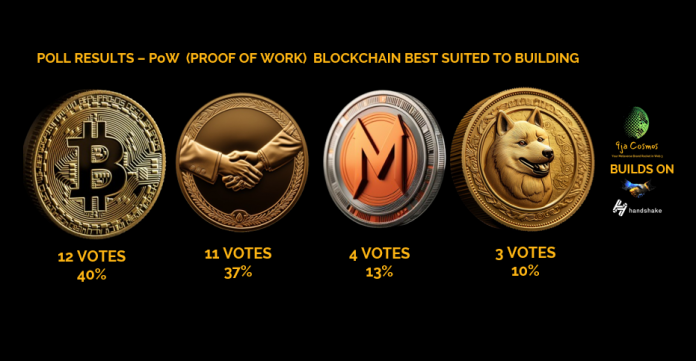
The Candidates: Bitcoin, Handshake, Monero, Dogecoin.

Winner – Bitcoin   12/30 votes; 40% of vote.

PoW (Proof of Work) Blockchain with Nakamoto Consensus – 21m maximum coin supply. Halving about every 4 years. Development Features – Ordinal Protocol, Taproot Upgrade (made other protocols possible – BRC 20; BRC 721; BRC 69).

Pros – Notoriety of the Blockchain as the first ‘crypto-money’ attracts curiosity around any new development. The most easily recognisable brand. – Even folk that never heard of the term ‘Web3’ have heard of ‘Bitcoin’ Deemed the most secure blockchain in existence. Never hacked.

Cons: High Fees. High Market Cap due to transactions from BTC movements aren’t helpful to non-coin related activities. Future build fees uncertain due to ‘institutional’ creation of BTC based investment products (ETFs). ‘Coin Maxi’ community is much bigger than the ‘Building’ community. Many of the ‘Coin Maxi’ community are (at best) disinterested in builders succeeding.

Runner Up – Handshake   11/30 votes; 37% of vote.

PoW (Proof of Work) Blockchain with Nakamoto Consensus – 2.04 bn maximum coin supply. Halving about every 3.25 years. Development Features – Fork with PoB (Proof of Burn) permitted the naming protocol, – tokens as ‘Web3’ rootnames with editable DNS function and embedded editable TXT record. Soft fork released 70k high value ‘Alexa’ names. Esher Upgrade in development but not finished.

Pros: Low Fees. Low Market Cap compared to Bitcoin means a minute low visibility ‘Coin Maxi’ community of no threat to the building community. Of no current interest to institutions. Builder community contains many people with altruistic aims and a vocational disposition and are extremely helpful to each other. Coding is ‘exotic’ and beyond lowest common denominator hacking skills in the wider cryptocommunity. Equally secure with Bitcoin, and never been hacked. Being Bitcoins ‘closest relative’, attention to Handshake may rise if ETFs have some unforeseen undesirable outcomes for Bitcoin builders. The PoB protocol causes coins to be ‘burnt’ as part of the auction process, providing an extra pressure on coin supply.

Cons: Low level of awareness of the blockchain in the wider cryptocommunity.  ‘Coin Maxi’ community of Bitcoin is replaced by a name HODLing community on Handshake. Not unhelpful, but just passively hoarding name assets (Web 3 TLDs) hoping for prices to rise, but not involved with building. They account for at least 80% of the 12 million TLDs registered. The combo of low notoriety and market cap with no ownership, means core functionality is slow to improve and it’s difficult to render development investment proprietary.

3rd – Monero   4/30 votes; 13% of vote.

Monero is a PoW blockchain set up to offer an alternative to Bitcoin as a currency and transaction medium. It’s main goal has been to focus on privacy features. It is based on CryptoNote, a concept described in a 2013 white paper authored by Nicolas van Saberhagen.

It’s rumoured that it attracts illicit interest like money laundering and ransomware payments due to its strong privacy features. It’s a common medium of exchange on darknet markets.

It’s got arguably the 4th highest development community in the crypto-spectrum, but they are solely focused on strengthening and upgrading its privacy features, and are not open builders. It has an unlimited coin supply.

The blockchain is otherwise locked to building (not programable).

Pros/Cons – As the blockchain is locked to building (not programable), it is out of article scope to do Pros/Cons analysis. It is not clear why it got 4 votes. Some people like to participate in polls, even if they don’t understand. Some in a rush may have clicked the wrong option in error. Some may know Monero isn’t an eligible candidate, but it may be a ‘protest’ vote because they didn’t approve of the poll narrative, or because they felt a choice should have been available, which was absent.

4th – Dogecoin   3/30 votes; 10% of vote.

Dogecoin (PoW Blockchain) was created by Billy Markus and Jackson Palmer, making fun of the explosion in ‘meme’ cryptocurrencies at the time. They didn’t expect anyone to take it seriously, but people started buying it.  Dogecoin itself was to later become parodied by tokens such as Shiba Inu and Shiba Saga (ERC 20 tokens) and DogWifHat (a token off Solana).

Dogecoin has an unlimited supply with a fixed rise in the currency of 5 million units a year.

The blockchain is otherwise locked to building (not programable).

For reasons similar to those given about Monero, we will not be adding a Pros/Cons section. We can speculate on why it got 3 votes for the same reasons we also gave for Monero.

Nobody was tagged in the LinkedIn poll, nor was anybody given a LinkedIn Direct Message (DM) to encourage their participation in the poll.

9ja Cosmos is here…

Get your .9jacom and .9javerse Web 3 domains  for $2 at:

.9jacom Domains

.9javerse Domains

Visit 9ja Cosmos LinkedIn Page

Visit 9ja Cosmos Website

Preview our Sino Amazon/Sinosignia releases