DD
MM
YYYY

PAGES

DD
MM
YYYY

spot_img

PAGES

Home Blog Page 331

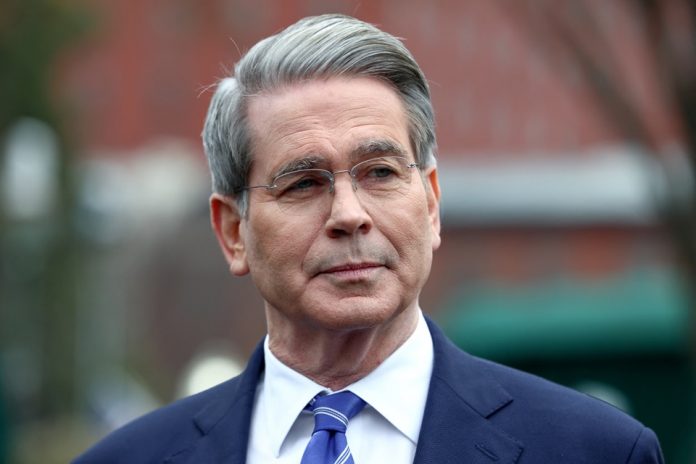
U.S. Treasury Secretary Bessent Warns U.S. Shutdown Costs Economy $15bn a Day, Urges Democrats to End Impasse

0

U.S. Treasury Secretary Scott Bessent on Wednesday warned that the two-week-old federal government shutdown is beginning to inflict serious damage on the U.S. economy, estimating that the standoff is costing the country about $15 billion a day in lost output.

Speaking at a press briefing in Washington, Bessent said the shutdown — which has forced hundreds of thousands of federal workers to stay home and delayed key government services — is no longer just a political inconvenience but a direct economic threat.

“We believe that the shutdown may start costing the U.S. economy up to $15 billion a day,” he told reporters, warning that the disruption was now “cutting into muscle.”

The Treasury Secretary’s remarks come amid growing alarm within financial circles over the scale of the shutdown’s fallout. Economists say the longer the impasse drags on, the greater the risk that business confidence, consumer spending, and capital investment could falter.

Bessent urged Democrats in Congress to “be heroes” and side with Republicans to bring the shutdown to an end, describing the gridlock as the single largest obstacle to sustaining the economic boom triggered under President Donald Trump’s administration.

“There is pent-up demand,” Bessent said during a CNBC event held on the sidelines of the International Monetary Fund and World Bank annual meetings in Washington. “But then President Trump has unleashed this boom with his policies. The only thing slowing us down here is this government shutdown.”

“A Modern Economic Boom Being Stalled by Politics”

The Treasury Secretary’s warning reflects growing concern within the administration that the budget deadlock could undercut one of Trump’s most important economic narratives: the investment-driven expansion that the White House has touted as proof of its fiscal and industrial policies.

Bessent said that the wave of capital inflows into the U.S. economy — particularly in technology, manufacturing, and artificial intelligence — remains robust, but that prolonged political paralysis could begin to weigh on momentum.

The wave of investment into the U.S. economy, including into artificial intelligence, is sustainable and is only getting started, he said, adding that “the federal government shutdown is increasingly an impediment.”

Trump’s administration has positioned AI and advanced manufacturing at the heart of its economic agenda, encouraging domestic and foreign firms to expand operations in the U.S. through targeted incentives and tariffs designed to rebalance trade flows. Bessent credited the Republican tax law and the tariff framework for fueling the current investment cycle, comparing the present moment to earlier transformative eras in American history.

“I think we can be in a period like the late 1800s when railroads came in, like the 1990s when we got the internet and office tech boom,” Bessent said. “The incentives are there. The growth is real. But what we’re seeing now is a preventable slowdown caused by gridlock.”

Fiscal Discipline and Deficit Decline

In a separate development, Bessent said that the U.S. budget deficit for the 2025 fiscal year — which ended on September 30 — had shrunk compared to the prior year’s figure of $1.833 trillion. Although the Treasury Department has not yet released the official data, Bessent suggested that fiscal performance had improved modestly and that the government’s deficit-to-GDP ratio could drop to the 3% range within the next few years.

“The deficit-to-GDP, which is the important number, now has a five in front of it,” Bessent said, referencing the current ratio as roughly in the 5% range. Asked if he wanted to see a “three” at the start of that figure, Bessent responded: “Yes, it’s still possible.” He added that fiscal health could improve if the U.S. manages to “grow more, spend less, and constrain spending.”

His optimism stands in contrast to figures released by the nonpartisan Congressional Budget Office (CBO) last week, which estimated that the fiscal 2025 deficit fell only slightly to $1.817 trillion — a modest improvement despite a $118 billion increase in customs revenue stemming from Trump’s tariff policies.

Economists say the CBO’s projection underscores how tariff collections, while boosting government revenue, have only marginally offset the impact of high spending levels across federal programs. Nonetheless, Bessent suggested that the long-term trajectory remains positive, arguing that the combination of growth-driven tax receipts and spending discipline could gradually restore fiscal balance.

Shutdown Threatens Broader Economic Gains

For now, however, the administration faces an urgent challenge to end the shutdown before it undermines the very gains that officials have championed. Bessent’s warning that the impasse is costing $15 billion a day adds weight to mounting calls from business leaders and lawmakers for swift resolution.

Financial analysts have echoed Bessent’s concerns, saying the shutdown risks eroding investor confidence at a time when markets are already grappling with global trade uncertainty and shifting monetary policies. Federal agencies — including the Internal Revenue Service, Commerce Department, and parts of the Securities and Exchange Commission — have curtailed operations, delaying loan approvals, tax refunds, and regulatory reviews critical to business continuity.

Bessent’s remarks suggest that the Treasury Department views the shutdown not just as a political standoff but as a test of the U.S. government’s ability to sustain its economic expansion. He praised Trump’s policies for igniting a new wave of corporate investment but cautioned that the benefits could be temporary if Washington fails to restore normal operations.

In his remarks, Bessent’s tone combined confidence in the U.S. economy’s fundamentals with frustration at Congress’s inability to act. His appeal for Democrats to “be heroes” by voting with Republicans was as much a political challenge as an economic argument — a call for bipartisanship framed around the broader national interest.

However, aides close to the Treasury Secretary say Bessent has been involved in backchannel discussions with congressional leaders from both parties to identify a short-term solution that could reopen the government without undermining Trump’s fiscal priorities.

The White House, meanwhile, has continued to emphasize its confidence that the U.S. economy remains fundamentally strong. Administration officials argue that private-sector investment, low unemployment, and growing export capacity are evidence that the U.S. can weather short-term disruptions — but that ending the shutdown would restore full momentum.

Nigeria Launches National Job Centre Project to Connect Nigerians to Jobs

0

The Nigerian Government has launched the National Job Centre Project, a nationwide network of employability hubs designed to connect trained Nigerians to real job opportunities and strengthen the country’s labor market infrastructure.

According to a statement by the Federal Ministry of Labour and Employment, the Minister of State for Labour and Employment, Rt. Hon. Nkeiruka Onyejeocha announced the initiative during the Mastercard Foundation Annual Nigeria Partner Convening held in Lagos on Wednesday.

Explaining the purpose of the new initiative, Onyejeocha said the National Job Centres would serve as nationwide employability hubs integrating technology, data, and career support to improve job placement systems across the country.

“The National Job Centers will integrate digital job matching, data tracking, and career advisory services to create a harmonized and inclusive system. They form part of a national labor framework that empowers youth to contribute meaningfully to local industries and compete confidently on the global stage,” the minister said.

The Job Centers will also support employers in identifying qualified candidates, while simultaneously helping job seekers access training, internships, and mentorship opportunities. Officials say each center will be equipped with a digital interface linked to the Federal Government’s labor database, making it easier to match workers’ profiles with available openings across states and industries.

Introducing LEEP — a new employability scheme

In addition to the Job Centre Project, Onyejeocha unveiled the Labor Employment and Empowerment Programme (LEEP) — a flagship scheme designed to enhance the employability of young Nigerians and smooth the transition from training to jobs.

“Through LEEP, we are enhancing the employability of young Nigerians and strengthening the bridge between training and jobs. Our goal is not just to create employment but to build systems that protect workers’ rights, ensure fair wages, and strengthen labour market governance,” she said.

LEEP is expected to work in synergy with the Job Centre Project, with both initiatives feeding into Nigeria’s broader human capital development framework. Under the plan, beneficiaries of training or vocational programs will be connected to the Job Centres for placement and advisory support.

Onyejeocha stressed that sustainable employment creation requires collaboration between the government, private sector, and development partners. She invited local and international organizations to align with the project’s objectives.

“Building an inclusive and sustainable ecosystem for work requires collective effort. We invite partners to collaborate with us in driving job access through these platforms and accelerating economic outcomes across Nigeria’s labor ecosystem,” she said.

She reaffirmed the Ministry’s commitment to partnerships that promote job creation, social inclusion, and economic stability, in line with the government’s national development priorities.

“The Federal Ministry of Labour and Employment stands ready to continue working with the Mastercard Foundation and all stakeholders to build a future where work is dignified, inclusive, and transformative,” she said.

Broader labor market challenges

The launch of the National Job Centre Project comes at a time when Nigeria’s unemployment rate remains a source of concern. According to a recent Lagos State Employment Trust Fund (LSETF) survey, more than 46,000 job seekers competed for openings in 2024, but there were only 22,630 available jobs, averaging just 2,837 vacancies per month.

The findings underscore the deepening pressure in the country’s labor market and the urgent need for effective job-matching and skill development programmes. Out of the total jobseekers surveyed, about 26% (816 individuals) lacked both education and experience, significantly reducing the pool of employable candidates to roughly 2,500 people.

To address this gap, the Lagos State Government has rolled out a series of employment and skill-building programmes in 2025. Among them is the Lagos State Graduate Internship Placement Programme (GIPP), designed to give young graduates hands-on experience in both the public and private sectors.

In addition, the state government disbursed N849.55 million in scholarships and bursaries to 10,066 students in tertiary institutions last year. Out of this, N335.6 million went to 1,591 beneficiaries under the 2022/2023 Scholarship Award and Governor’s Discretionary Awards, while N513.95 million was allocated to 6,884 students as part of the 2022/2023 Bursary Award.

The National Job Centre Project and LEEP represent the government’s latest attempt to reposition the country’s labor infrastructure after years of fragmented programmes and inconsistent policy focus. If implemented effectively, officials say the initiative could help reduce youth unemployment and strengthen Nigeria’s competitiveness under the African Continental Free Trade Area (AfCFTA).

For now, the launch signals the Federal Government’s renewed commitment to tackling joblessness not just through temporary empowerment schemes but by building sustainable, data-driven systems capable of connecting Nigeria’s growing youthful population to meaningful employment opportunities.

U.S. CEOs Warn of China’s Growing Edge, Say AI May Be America’s Best Defense

0

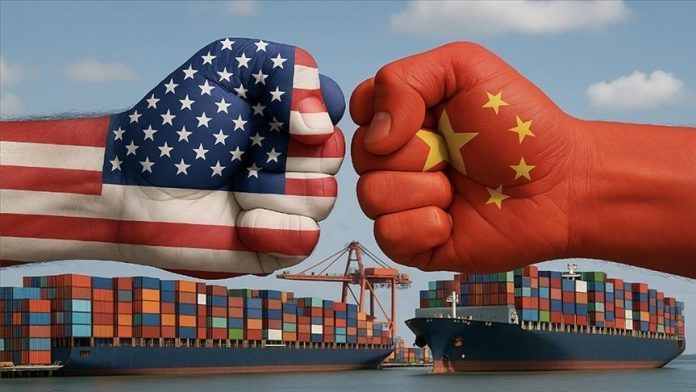
Two of America’s most influential chief executives — Wells Fargo’s Charlie Scharf and Pfizer’s Albert Bourla — have voiced fresh concerns that the United States risks losing its competitive edge to China, warning that inconsistent policy direction and underinvestment are allowing Beijing to catch up fast.

Yet, both believe artificial intelligence could still be the country’s greatest weapon to maintain its global dominance.

Speaking at CNBC’s inaugural Invest in America Forum in Washington, D.C., the pair said that while the U.S. still holds the upper hand across key sectors, the momentum is shifting as China channels massive resources into technology, pharmaceuticals, and high-end manufacturing.

“We will likely have less people, absolutely,” Scharf said, acknowledging that AI will reshape the American labor landscape. “When we look at the tools that we’ve implemented just for people that are coding, you see 20%, 30%, 40% improvement in coders. We haven’t reduced our head count by 20%, 30% or 40%. We’re actually doing more than we otherwise would have been able to do.”

The Wells Fargo CEO noted that artificial intelligence has already begun altering how financial institutions operate. His bank, like others on Wall Street, is using AI to improve coding efficiency and customer analytics — but the changes could come at a cost for workers.

Scharf added that while AI will boost productivity, it also means the industry will have to manage the social and employment consequences that follow.

JPMorgan Chase and Goldman Sachs have already slowed hiring, particularly in operational and back-office roles, as AI-driven tools increasingly automate functions from fraud detection to regulatory compliance.

Scharf, who has overseen Wells Fargo’s sweeping restructuring since taking over in 2019, also hinted at incoming reforms across the financial sector. He said the U.S. banking industry should brace for major regulatory shifts, even amid Washington’s deep political gridlock.

“We ultimately do expect significant changes in capital requirements, liquidity requirements,” Scharf said. “We do expect to see changes which will allow people in the industry, not just big banks and medium-sized banks, but smaller banks as well, to do more in these communities.”

For Scharf, the conversation about America’s competitiveness is as much about regulatory foresight as it is about innovation. He indicated that unpredictable policy swings risk discouraging long-term planning across the financial sector.

Pfizer’s Albert Bourla, who spoke alongside Scharf, directed his warnings toward a different front — biotechnology and pharmaceuticals — where China is closing the gap at an alarming rate. Bourla pointed to China’s growing R&D capabilities and regulatory flexibility, calling it a fundamental shift that the U.S. cannot afford to ignore.

“They [China] filed more patents this year than the U.S.,” Bourla said. “That’s never happened in history. Five years ago, the split was 90%-10%. … The gap is closing, but they probably will become [better than us] unless we get our act together.”

The Pfizer chief described a quiet but dramatic power shift underway, with China’s government prioritizing life sciences as a national development pillar. From gene editing and vaccines to biologics manufacturing, Chinese pharmaceutical firms have accelerated their output with state support, luring top scientists and biotechnology investors from abroad.

Bourla urged American policymakers to focus less on trying to restrain China’s growth and more on revitalizing U.S. innovation.

“We spend more time trying to think about how to slow down China rather than think how we can become better than them,” he said. “We need to have regulatory changes here. We need to have stability. Tariffs and pricing was not helping.”

Pfizer, one of the world’s largest drugmakers, recently signed a drug pricing agreement with the Trump administration aimed at reducing uncertainty around pharmaceutical costs and tariffs. The deal grants Pfizer a three-year exemption from pharma-specific tariffs in exchange for expanded investment in U.S. manufacturing.

“Tariffs and the uncertainty of drastic correction of U.S. pricing — with this deal, we are removing both uncertainties,” Bourla said Wednesday, portraying it as a pragmatic step toward stabilizing long-term research spending.

Beyond trade policy, Bourla views artificial intelligence as the single biggest transformative force in modern medicine. He said AI will help drugmakers compress discovery timelines and find cures that have long eluded scientists.

“We tried for years to find cures,” Bourla said. “AI will make it happen.”

Pharmaceutical research, once constrained by years of trial and error, now has access to algorithms that can simulate molecular interactions in hours. Pfizer and other drugmakers have been quietly building AI models capable of predicting how compounds might behave in the human body. This process could revolutionize the search for treatments for diseases like Alzheimer’s, cancer, and Parkinson’s.

The rise of AI in both finance and healthcare comes as China is making its own major push into generative models, data centers, and quantum computing. Chinese firms like Huawei and Baidu have stepped up their efforts to compete with Western giants like Nvidia and Microsoft in developing foundational AI systems.

For many U.S. executives, that competition has become a proxy for broader technological supremacy. The U.S. pioneered artificial intelligence research and continues to host the world’s largest AI companies — OpenAI, Anthropic, and Google DeepMind — but Beijing’s accelerated policy alignment, cheaper manufacturing base, and domestic data reserves give it an emerging edge.

Bourla’s warning that China is “filing more patents” than the U.S. echoes a wider concern shared across American boardrooms — that Washington’s slow decision-making could squander its innovation lead. The U.S., he argued, needs a more predictable regulatory and fiscal framework to sustain private-sector confidence.

Both CEOs made clear that America’s long-term strength depends on balancing innovation with stability — and on using AI as a catalyst for efficiency rather than a disruptor that deepens inequality.

While Bourla sees AI as a scientific breakthrough that could redefine medicine, Scharf sees it as a structural force reshaping productivity and the labor market. Yet both agree on one central truth: America’s competitiveness in the next decade will hinge not just on its technology, but on how wisely it governs and deploys it.

Binance’s $400M “Together Initiative”: A Response to Recent Crypto Market Turmoil

0

Binance, the world’s largest cryptocurrency exchange by trading volume, has announced the launch of its $400 million “Together Initiative” to support users—particularly retail traders—impacted by extreme market volatility.

This comes amid a sharp crypto sell-off on October 10-11, 2025, triggered by geopolitical tensions, including U.S. tariff announcements on Chinese tech imports that reignited fears of a trade war.

The crash led to over $19 billion in leveraged liquidations across exchanges, with Binance alone accounting for about $7.4 billion of those losses. Major assets like Bitcoin (BTC), Ethereum (ETH), and Binance Coin (BNB) dropped by double digits in hours, echoing the severity of past events like the 2022 Terra Luna collapse.

The program is structured as a two-pronged effort to provide immediate relief and promote long-term stability, without admitting liability for user losses.

$300 million in USDC token vouchers. Individual traders with forced liquidations Losses of at least $50, representing ?30% of net assets during the Oct. 10-11 volatility. Vouchers range from $4 to $6,000, distributed within 96 hours via a dedicated dashboard.

Aims to restore liquidity for everyday users hit hardest by the “liquidation bloodbath.” $100 million in low-interest loans. VIP clients, market makers, and ecosystem partners

Confidential applications through account managers. Focuses on easing liquidity crunches to prevent further market shocks and maintain orderly trading.

Binance emphasized that this is a “user-first” move to rebuild trust, stating: “Without our users’ support, there would be no Binance.” The initiative builds on prior efforts, like a $45 million airdrop for memecoin traders and $283 million in post-crash compensation, bringing total recent support to over $728 million.

The announcement has been hailed by some analysts as a “strategic lifeline” for investor confidence, signaling Binance’s role as a market stabilizer during crises. It coincides with a partial rebound: BNB surged on organic liquidity flows as traders sought “safer” exchange-backed assets.

However, reactions are mixed: Industry experts praise it for addressing structural issues like the $223 million crypto fund outflows earlier in 2025 and reinforcing user protection.

On X (formerly Twitter), users highlighted perceived inequities, such as a reported whale losing $2 million receiving just 0.26 USDT in compensation—possibly a glitch or strict eligibility cutoff.

Others noted the fund’s scale is modest relative to Binance’s $22.85 billion daily volume and 90 million users, questioning if it fully tackles deeper regulatory and governance concerns.

Binance has also rolled out complementary tools, like real-time “smart signal” alerts for volatility tracking and ecosystem trading competitions to boost engagement. Users can check eligibility soon via an upcoming dashboard, with a full system audit promised to improve platform reliability.

This initiative underscores the crypto sector’s ongoing battle with volatility, where exchanges like Binance are increasingly acting as quasi-central banks to cushion blows. As markets recover gradually, it could help stem user exodus to competitors, but long-term success depends on transparent execution and broader regulatory alignment.

Eligibility Criteria for Binance’s $400M “Together Initiative” Compensation

Based on the announcement for Binance’s $300 million Retail Trader Compensation component of the “Together Initiative” launched on October 14, 2025, the eligibility criteria for retail traders seeking compensation in the form of USDC token vouchers are as follows:

Traders must have incurred losses of at least $50 during the market volatility event on October 10-11, 2025. The losses must represent at least 30% of the trader’s net assets on the Binance platform during the specified volatility period.

Compensation is targeted specifically at users who experienced forced liquidations due to the extreme market conditions during the stated period. Eligible users will receive USDC token vouchers ranging from $4 to $6,000, determined based on the extent of losses and other undisclosed factors.

Users can check eligibility and claim vouchers through a dedicated dashboard on the Binance platform, with distribution expected within 96 hours of the announcement by approximately October 18, 2025.

Binance may require account verification to confirm eligibility, though specific requirements were not detailed in the announcement. For precise details or edge cases, users should refer to the official Binance dashboard or contact Binance support, as criteria may be subject to additional terms or platform-specific conditions.

Stripe Launches Stablecoin Payments for Subscriptions

0

Stripe announced a significant expansion of its cryptocurrency offerings by introducing recurring subscription payments using stablecoins.

This feature allows businesses to accept automated, ongoing payments in stablecoins like USDC, settling them as fiat currency in their Stripe balance. It’s particularly aimed at AI companies and other subscription-based models, which represent about 30% of Stripe’s business users.

Currently limited to USDC on the Base and Polygon blockchains. Customers can pay using over 400 compatible wallets, such as Phantom. Stripe developed a custom smart contract that lets users save their crypto wallet as a payment method and authorize recurring charges without manual re-signing for each transaction—solving a major friction point in blockchain payments.

Rolling out in private preview to U.S.-based businesses only. It integrates seamlessly with Stripe’s existing tools, including Stripe Billing, Optimized Checkout Suite, Elements, Payment Intents API, and Payment Links.

Transactions settle near-instantly at roughly half the cost of traditional methods, ideal for global, cross-border payments. Attracts tech-forward users and reaches customers in regions with limited banking access.

Businesses can handle both fiat and stablecoin subscriptions in a single dashboard. AI firm Shadeform reports ~20% of its payment volume shifting to stablecoins for these advantages. Higgsfield’s CEO highlighted reduced revenue costs and broader user reach.

This builds on Stripe’s crypto push, including stablecoin accounts launched in 101 countries earlier in 2025 and general stablecoin payment support (USDC, USDP, USDG) across Ethereum, Solana, Polygon, and Base.

Future plans may include more stablecoins like USDT and additional networks. Refunds are issued back in stablecoins, with transaction limits of $10,000 per charge and $100,000 monthly.

This move positions Stripe as a bridge between traditional finance and Web3, potentially accelerating stablecoin adoption for everyday services like SaaS, memberships, and API billing.

Implications of Stripe’s Stablecoin Payments for Subscriptions

Stripe’s introduction of stablecoin payments for subscriptions, announced on October 14, 2025, carries significant implications for businesses, consumers, and the broader financial ecosystem.

Stablecoin transactions settle at roughly half the cost of traditional payment methods via credit cards, ACH. This is particularly impactful for subscription-based businesses like SaaS platforms and AI companies, which make up ~30% of Stripe’s user base, as lower fees boost profit margins.

Stablecoins enable businesses to serve customers in regions with limited banking infrastructure, expanding market access. This is critical for companies targeting emerging markets or crypto-savvy demographics.

The custom smart contract for recurring payments eliminates the need for customers to manually re-sign transactions, reducing churn and operational friction. Integration with Stripe’s existing tools Billing, Payment Links, simplifies adoption for merchants already on the platform.

Offering stablecoin payments attracts tech-forward customers, particularly in industries like AI, gaming, or DeFi, where crypto adoption is higher. Early adopters like Shadeform with ~20% payment volume in stablecoins demonstrate this shift.

Since payments settle in fiat, businesses avoid exposure to crypto volatility while still catering to customers who prefer stablecoins. Customers in underbanked regions or those without traditional payment methods can now subscribe to services using stablecoins like USDC via 400+ compatible wallets. This democratizes access to digital services.

The smart contract simplifies recurring payments, making crypto subscriptions as seamless as card-based ones. No need to manually approve each charge. Crypto wallets offer users more control over their funds and potentially greater privacy compared to traditional banking systems, appealing to crypto-native users.

Stripe’s move legitimizes stablecoins for everyday transactions, bridging Web3 and traditional finance. Supporting USDC on Base and Polygon with plans for USDT and other networks could accelerate stablecoin use beyond niche crypto markets.

Lower-cost, near-instant stablecoin transactions challenge high-fee, slower legacy systems like credit cards or cross-border bank transfers. This could push competitors (e.g., PayPal, Square) to integrate crypto faster.