DD
MM
YYYY

PAGES

DD
MM
YYYY

spot_img

PAGES

Home Blog Page 333

Oracle Shares Jump as Company Confirms Cloud Deal with Meta, Targets $20bn in AI Database Revenue by 2030

0

Oracle’s stock closed 3% higher on Thursday after the company confirmed a major cloud-computing deal with Meta and outlined ambitious growth targets for its artificial intelligence-driven database and data platform business, projecting $20 billion in revenue by fiscal 2030.

The announcement, made at Oracle’s AI World conference in Las Vegas, underscored how the 47-year-old enterprise software giant is rapidly reinventing itself to meet surging global demand for AI infrastructure. Oracle executives said the company expects AI-related database revenue to grow nearly tenfold from $2.4 billion in fiscal 2025 to $20 billion by the end of the decade, marking one of the most aggressive long-term projections in the industry.

Clay Magouyrk, one of Oracle’s two newly appointed CEOs, said during the event that the company’s cloud pipeline is expanding faster than expected as global companies accelerate their AI investments.

“You see the change in these numbers that it’s a little bit easier for us to find supply, not this year or next year, but in subsequent years,” Magouyrk told analysts. “So as we’re able to find that supply, customers contract for it, we see immense demand, and then we go about delivering that to customers.”

He revealed that in just 30 days during the current quarter, Oracle contracted $65 billion in new cloud infrastructure commitments.

“It was across seven different contracts from four different customers,” Magouyrk said. “None of those customers are OpenAI. I know some people are questioning sometimes, ‘Hey, is it just OpenAI?’ The reality is, we think OpenAI is a great customer, but we have many customers.”

Among those customers, he confirmed, is Meta — the parent company of Facebook and Instagram — which has signed a deal with Oracle as part of its ongoing push to build out AI data centers and computational infrastructure. Bloomberg had earlier reported that Oracle and Meta were in discussions over a potential $20 billion partnership.

The deal with Meta marks a significant win for Oracle in the increasingly competitive AI infrastructure market, where it faces off against tech titans such as Amazon Web Services, Microsoft Azure, and Google Cloud. Each of these companies has been racing to expand capacity for AI workloads amid soaring global demand for graphics processing units (GPUs), data center space, and energy supply.

Meta, for its part, has been ramping up investment in its AI ambitions. The social media giant said in July that it expects to spend between $66 billion and $72 billion in capital expenditures this year, primarily to fund its expanding AI and metaverse initiatives. That figure underscores the unprecedented scale of spending among Big Tech firms as they rush to secure computing power for large-scale AI model training and deployment.

Oracle’s partnership with Meta follows another major win earlier this year, when OpenAI committed more than $300 billion to Oracle Cloud Infrastructure (OCI) in July. That deal positioned Oracle as a key supplier to the artificial intelligence research company whose ChatGPT models have helped trigger the current AI investment wave.

Magouyrk emphasized that Oracle’s growth in AI infrastructure is being built on sustainable financial terms rather than a pursuit of headline-grabbing contracts.

“I’ve read a lot of stories that are speculating that Oracle is chasing revenue for revenue’s sake, but let’s be crystal clear,” said Doug Kehring, Oracle’s principal financial officer. “We only pursue opportunities where we have a clear line of sight to attractive market margins that reward us for intellectual property and the activity we bring to customers.”

According to the company, AI infrastructure carries an adjusted gross margin of 30% to 40% after factoring in the costs of land, data centers, power, and computing equipment. Earlier this month, The Information reported that Oracle achieved a 14% gross margin on renting out Nvidia AI chips in the August quarter, suggesting that profitability is improving as scale increases.

Oracle’s approach of blending high-performance infrastructure with integrated database and analytics capabilities has started to distinguish it from competitors. Unlike Amazon or Google, Oracle is expanding its multi-cloud strategy by making its flagship database software available on other clouds, including Microsoft Azure and Amazon Web Services. The move allows customers to deploy AI workloads across different environments, improving flexibility and reducing vendor lock-in.

As Oracle deepens its role in the AI supply chain, the company’s executives also provided an ambitious financial outlook for the coming years. After market close on Thursday, Oracle said it now targets $21 in adjusted earnings per share on $225 billion in revenue for fiscal 2030 — representing a compound annual growth rate of 31%. Analysts polled by LSEG had projected significantly lower estimates of $18.92 per share on $198.39 billion in revenue.

The company’s bullish guidance initially boosted investor sentiment, though shares slipped 2% in after-hours trading as some analysts questioned the long-term feasibility of sustaining such high growth rates in a capital-intensive industry. Still, Oracle’s near-term stock performance reflects growing confidence among investors that the company’s cloud transformation is gaining real traction.

Over the past three years, Oracle has poured billions into expanding its global network of data centers to support AI workloads. The company’s executives said that as supply chain bottlenecks around GPUs and power infrastructure begin to ease, Oracle will be able to accelerate delivery timelines and meet pent-up demand from enterprise clients.

Oracle’s backlog of contracted commitments is believed to provide a strong foundation for long-term revenue visibility. However, the broader context for Oracle’s momentum lies in the global AI boom that has redrawn the map of corporate investment priorities.

Companies across sectors — from manufacturing and finance to healthcare and entertainment — are racing to deploy AI models, analyze large datasets, and automate complex decision-making processes. That surge in AI adoption has transformed cloud infrastructure into one of the most sought-after assets in the technology world, driving record spending and competition among providers.


U.S. Chamber of Commerce Sues Trump Administration Over $100,000 H-1B Visa Fee

0

The U.S. Chamber of Commerce on Thursday filed a lawsuit challenging the Trump administration’s newly imposed $100,000 annual fee on H-1B worker visas, arguing that the steep charge violates federal law and would cripple American businesses’ ability to hire skilled foreign talent.

The lawsuit comes just weeks after President Donald Trump announced sweeping changes to the H-1B visa program — a move his administration said was aimed at “reworking” how companies bring in foreign professionals in high-skill sectors such as technology, engineering, and finance. The new policy would require U.S. employers to pay $100,000 per year for each H-1B visa, a dramatic increase from previous fees that ranged between $2,000 and $5,000 depending on company size.

In a statement released Thursday, the Chamber said the new fee “overrides provisions of the Immigration and Nationality Act that govern the H-1B program, including the requirement that fees be based on the costs incurred by the government in processing visas.” The lawsuit, filed in federal court, seeks to block the rule from taking effect and declares that the administration lacks the authority to impose such a drastic fee increase without congressional approval.

Neil Bradley, executive vice president and chief policy officer of the U.S. Chamber, said the measure would devastate small and medium-sized businesses that rely on international expertise to compete globally.

“The new $100,000 visa fee will make it cost-prohibitive for U.S. employers, especially start-ups and small and midsize businesses, to utilize the H-1B program, which was created by Congress expressly to ensure that American businesses of all sizes can access the global talent they need to grow their operations here in the U.S.,” Bradley said.

The fee announcement in September triggered alarm across the U.S. technology sector, where foreign workers make up a significant portion of the skilled labor force. Startups and venture-backed firms — already struggling with tight labor markets and rising costs — said the measure could effectively shut them out of the global talent pool. Major technology companies, including those that contributed heavily to Trump’s presidential campaign, have also relied heavily on H-1B visas to recruit software engineers, data scientists, and other specialists from countries such as India and China.

Industry groups said the $100,000 fee represents not just a financial burden but a structural shift in how the government views skilled immigration. The fee is seen not as a cost-recovery measure — it’s a deterrent, as it effectively prices out smaller players and consolidates access to global talent among the wealthiest corporations.

The H-1B visa program, created by Congress in 1990, allows U.S. companies to hire foreign professionals in specialty occupations for an initial period of three years, extendable up to six years. The program is capped at 65,000 visas per year, with an additional 20,000 reserved for applicants holding advanced degrees from U.S. institutions. In recent years, the program has been oversubscribed several times over, forcing the U.S. Citizenship and Immigration Services (USCIS) to run a lottery to allocate visas.

Even before the new fee, the process was already costly and complex. Companies paid thousands of dollars in legal and filing fees, often without any guarantee of approval. Under the new rule, employers would be required to pay $100,000 annually — effectively $300,000 for a standard three-year term — regardless of whether the employee remains with the company.

The Trump administration has also proposed revising the lottery system to prioritize higher-wage earners and restrict eligibility for certain occupations. Supporters of the overhaul argue that the current system has been abused by outsourcing firms that use H-1B workers to undercut U.S. wages, while opponents say the changes are part of a broader anti-immigration agenda that could weaken America’s technological edge.

Trump, who campaigned on reshoring jobs and “putting American workers first,” has made restricting immigration a centerpiece of his economic strategy. The new H-1B policy aligns with his administration’s broader push to favor domestic hiring, limit temporary work programs, and increase scrutiny of employment-based visas.

But business leaders argue that these measures contradict the administration’s stated goals of expanding the economy and maintaining U.S. leadership in innovation.

“President Trump has embarked on an ambitious agenda of securing permanent pro-growth tax reforms, unleashing American energy, and unraveling the overregulation that has stifled growth,” Bradley said in the Chamber’s statement. “The Chamber and our members have actively backed these proposals to attract more investment in America. To support this growth, our economy will require more workers, not fewer.”

Economists warn that limiting access to skilled foreign labor could exacerbate workforce shortages in key industries. According to the National Foundation for American Policy, over 70% of H-1B visa recipients work in STEM fields, with the largest share employed in computer and information technology sectors. U.S. companies have long cited shortages of domestic workers with advanced technical skills, particularly in artificial intelligence, semiconductor design, and cybersecurity — areas the government itself has identified as critical to national security.

For smaller firms, the implications could be particularly severe. Critics of the new fee note that it risks driving innovation offshore at a time when global talent competition is intensifying. Canada, the United Kingdom, and several European Union countries have recently eased visa rules for skilled migrants to attract workers leaving the U.S. market. The Chamber’s lawsuit warns that if the rule is not struck down, it could lead to an immediate and measurable decline in foreign investment and job creation in the United States.

However, the Chamber’s case could hinge on whether the administration overstepped statutory limits set by Congress, according to legal experts. Under the Immigration and Nationality Act, visa fees must correspond to administrative costs rather than serve as policy tools.

The legal challenge adds to a growing list of court battles between the business community and the Trump administration over immigration, trade, and regulatory policy. Despite Trump’s close ties to corporate America, the H-1B overhaul has drawn sharp criticism from sectors that once viewed his economic agenda favorably.

Gold Soars Beyond $4,300 as Investors Flee to Safety Amid U.S.-China Tensions and Government Shutdown

0

Gold surged to a record high for the fourth consecutive session on Thursday, breaking past $4,300 per ounce as investors poured into safe-haven assets amid escalating U.S.-China trade tensions, an ongoing government shutdown in Washington, and mounting expectations of U.S. Federal Reserve rate cuts.

Spot gold climbed 2.6% to $4,316.99 per ounce by 4:07 p.m. ET (2007 GMT), having earlier hit an all-time high of $4,318.75. U.S. gold futures for December delivery settled 2.5% higher at $4,304.60 after briefly touching $4,335. The rally underscores the extent of investor anxiety gripping global markets, pushing bullion to heights once thought implausible.

The yellow metal has gained more than 60% so far this year, propelled by a combination of factors — from geopolitical tensions and de-dollarisation efforts to renewed central bank accumulation and robust inflows into exchange-traded funds (ETFs). Analysts say gold’s unstoppable momentum has now placed the $5,000-per-ounce mark within sight if current conditions persist.

Zain Vawda, analyst at MarketPulse by OANDA, said the trajectory of gold prices will largely depend on two key elements: the path of U.S. interest rates heading into 2026 and the evolving dynamic between Washington and Beijing.

“If no deal is reached between the U.S. and China and the relationship continues to deteriorate, that could be the spark gold needs to cross the $5,000/oz barrier,” Vawda said.

The flight to safety intensified this week after the U.S. sharply criticized Beijing’s latest restrictions on exports of rare earth minerals, describing the move as a threat to global supply chains. China, which dominates the rare earths market, expanded its export controls last week in what many in Washington view as retaliation for recent U.S. trade measures.

Investors fear the dispute could reignite a broader trade conflict between the world’s two largest economies — a prospect that rattled global equities and strengthened demand for assets traditionally viewed as stable stores of value.

The surge in gold also coincides with growing uncertainty in Washington, where a prolonged government shutdown has forced federal agencies to halt scheduled data releases. The U.S. Treasury Secretary Scott Bessent warned the standoff could shave as much as $15 billion a week from U.S. economic output, compounding worries about fiscal instability.

Trump’s Diplomatic Moves Add to Market Crosscurrents

Amid these developments, President Donald Trump said on Thursday that he and Russian President Vladimir Putin had agreed to hold another summit aimed at negotiating an end to the war in Ukraine. The announcement came just a day before Trump was scheduled to speak with Ukrainian President Volodymyr Zelenskiy, signaling renewed U.S. diplomatic efforts even as global markets remain on edge.

While geopolitical optimism could normally cool safe-haven demand, investors appear unconvinced that any immediate breakthroughs are likely, keeping gold’s appeal intact.

Rate Cut Bets Reinforce Bullish Momentum

The rally in bullion is being further supported by expectations that the Federal Reserve will resume monetary easing. Traders are now pricing in near-certainty of a 25-basis-point rate cut in October, followed by another in December, with market-implied probabilities at 98% and 95% respectively.

Gold, which offers no yield, tends to perform strongly in low-interest-rate environments as the opportunity cost of holding the metal diminishes.

“Short-term pullbacks in gold are likely to be temporary,” Vawda added. “Bullish investors are simply waiting for dips to re-enter positions.”

The dovish rate outlook comes amid persistent inflationary pressures and weakening U.S. growth indicators. However, with official data releases frozen by the government shutdown, traders have little clarity on near-term economic conditions — further enhancing gold’s allure as a hedge against policy uncertainty.

Analysts Raise Forecasts as Gold’s Rally Reshapes Markets

HSBC on Wednesday raised its 2025 average gold price forecast to $3,355 an ounce, citing a trifecta of safe-haven demand, global economic uncertainty, and a weaker U.S. dollar. The bank said sustained central bank buying — particularly from emerging markets seeking to diversify reserves away from the greenback — has added a long-term structural tailwind for gold prices.

Several central banks, including those of China, India, and Turkey, have steadily increased gold holdings over the past year as part of what analysts describe as a global trend toward “de-dollarisation.” The move reflects growing caution among emerging economies toward U.S. fiscal policy, sanctions risk, and mounting debt levels.

Silver and Other Precious Metals Follow the Surge

Silver, often seen as gold’s smaller sibling, also joined the rally. Spot silver rose 1.8% to $54.04 per ounce after reaching a record high of $54.15 earlier in the session. Analysts attribute the gains to both gold’s momentum and tightening supply conditions in the spot market.

Platinum climbed 3.2% to $1,706.65, while palladium rose 4.6% to $1,606.00, extending gains driven by investor rotation into hard assets amid fears of a broader economic slowdown.

The surge across the precious metals complex highlights a renewed investor preference for tangible assets in uncertain times. With equities under pressure and bond yields slipping, analysts say the move into gold and its peers is part of a wider realignment of portfolios toward inflation-resistant stores of value.

Outlook: $5,000 in Sight?

While analysts warn that profit-taking could trigger short-term volatility, the consensus remains that gold’s longer-term trajectory points higher. The convergence of geopolitical instability, fiscal strains in the United States, and dovish monetary policy has created what some describe as a “perfect storm” for gold.

With investor sentiment increasingly defensive and the global economy facing fresh fractures, gold’s unprecedented run may be far from over.

Meta to Shut Down Messenger Desktop Apps for Windows and Mac on December 15

0

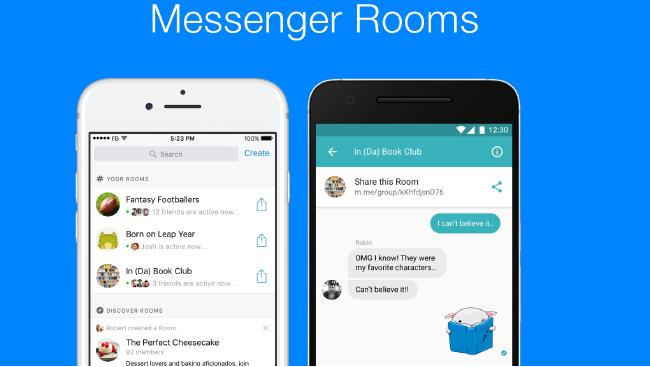
Meta has confirmed it will shut down the standalone Messenger desktop applications for Windows and Mac on December 15, redirecting users to access the messaging service exclusively through the Facebook website.

The company disclosed the decision to TechCrunch on Thursday, marking the end of Messenger’s decade-long run as an independent desktop platform.

Starting from that date, users will no longer be able to log in to the apps and will instead be automatically redirected to Facebook.com, where Messenger remains accessible through the web. A Messenger help page clarified that in-app notifications will begin appearing soon as part of the “deprecation process,” giving users a 60-day window to prepare for the shutdown.

“If you’re using the Messenger desktop apps, you’ll get an in-app notification once the deprecation process begins,” the company stated. “You will have 60 days to use the Mac Messenger app before it is fully deprecated. Once the 60 days are over, you’ll be blocked from using the Mac Messenger app. We encourage you to delete the app since it will no longer be usable.”

Meta’s decision, first reported by AppleInsider, signals a broader shift in how the company is consolidating its ecosystem. It reflects the tech giant’s ongoing strategy to streamline its software offerings and focus more on web-based services, which are easier to update and integrate across multiple platforms.

The shutdown also comes nearly a year after Meta replaced the native desktop apps with a Progressive Web App (PWA) in September 2024. PWAs, which run directly in browsers, mimic app functionality without requiring separate installations or regular updates from app stores. Meta had pitched that move as part of an effort to make Messenger “more lightweight and accessible,” especially as the company ramped up its efforts to unify its communication services across Facebook, Instagram, and WhatsApp.

Transition to Web-Based Messaging

Meta is now encouraging users to make the transition ahead of the December cutoff. For Windows users, the company recommends the Facebook desktop app as an alternative. Both Mac and Windows users can also use the web version of Messenger, which Meta says offers the same secure messaging experience as the native desktop apps.

The company is also advising users to activate Messenger’s secure storage feature and set up a personal identification number (PIN) before migrating to the web version. This feature, introduced in 2023, allows users to back up and retrieve their chat history across devices using end-to-end encryption.

To check whether secure storage is enabled, Meta instructs users to click the settings icon above their profile picture, select Privacy & Safety, and then navigate to End-to-end encrypted chats. From there, users can select Message storage and ensure that the “Turn on secure storage” option is activated. Once the transition to Facebook.com is complete, users’ chat histories will remain accessible on all linked devices.

A Quiet End for a Once-Essential App

Messenger’s standalone desktop applications were introduced to bring a more focused, chat-first experience outside of Facebook’s main platform. For years, it served users who preferred a separate workspace for personal or business messaging without navigating through the main social network.

However, usage of the desktop app had declined as Meta continued integrating Messenger functionality back into Facebook and expanding cross-platform communication tools across its family of apps. Analysts believe the shutdown is part of Meta’s broader restructuring to reduce maintenance costs and focus on web and mobile channels that see the highest engagement.

Still, the decision is likely to face some backlash from loyal users of the desktop apps who valued the convenience of standalone access, particularly those in professional settings. Messenger had become a popular tool for workplace communication and remote collaboration, thanks to its fast desktop notifications and screen-sharing capabilities.

However, Meta’s shift mirrors a broader trend among major tech firms streamlining their app portfolios. Many companies, including Microsoft and Google, have moved toward lightweight web-based experiences in place of resource-heavy desktop apps. The change allows faster updates, cross-platform compatibility, and easier security management.

Messenger’s Future Inside Facebook’s Ecosystem

Meta’s continued integration of Messenger into its broader family of apps suggests the company envisions a more unified messaging experience across its platforms. In recent years, the company has made progress in merging the backend infrastructure of Messenger, Instagram Direct, and WhatsApp, allowing users to communicate seamlessly between apps while maintaining privacy protections.

The Messenger web version has also been upgraded with features once exclusive to the desktop app, including message reactions, voice and video calls, file sharing, and end-to-end encryption. By consolidating development around the web-based interface, Meta can ensure new features reach all users simultaneously — without platform-specific delays.

Meta has yet to say whether it plans to introduce a new, integrated desktop experience for Messenger in the future, but given the company’s current trajectory, the web appears to be the central hub for its messaging ambitions.

Wallchain to Launch Genesis NFT Amid OpenSea Reseting Treasure Chests Ahead of Season 2

0

Wallchain, a Web3 platform focused on AttentionFi blending social influence, AI, and on-chain incentives, is gearing up to launch its Genesis NFT collection as a key entry point into its ecosystem.

This isn’t just a standard drop—it’s positioned as a multi-tiered “access pass” rewarding early adopters and active contributors, tying into upcoming utilities like $QUACK airdrops, exclusive product access, and influence multipliers in their InfoFi framework.

Distribution Tiers based on community badges and activity: Golden Badge Holders: Reserved for the earliest supporters—first in line for minting.

Silver Badge Holders: For consistent builders and contributors. Bronze Early Quackers: Anyone who joined Wallchain before October 15, 2025, by creating an account and binding a wallet qualifies as an “early quacker.”

This is the broadest tier, emphasizing their duck-themed community vibe (gQuack ). Discussions point to spots for the top 1,000–5,000 active users on Wallchain’s leaderboard, based on mindshare (social engagement) and on-chain activity.

3.5% of the total $NOME token supply tied to their Genome Protocol allocated to holders, with 20% unlocking at TGE and a 6-month vesting. Edge multipliers for AI agents in on-chain games like poker battles with personas like Trump or CZ.

Early access to products like Genome Protocol an AI-powered user retention layer and integrations with partners like kloutgg and HeyElsaAI

The drop is imminent—community buzz is peaking today, with users manifesting eligibility and sharing memes about being “pre-rich.” No exact mint date yet, but expect it soon after October 15 to capitalize on the early quacker cutoff.

Supply is expected to be limited, drawing comparisons to high-value drops like Kaito AI’s Genesis NFTs. This launch aligns with Wallchain’s growth: Their Genome Protocol recently hit ~$1M in NFT sales, and mindshare metrics are up 6x.

If you’re eligible, keep “quacking” engaging on their platform to boost your leaderboard spot—it’s all about sustained activity.

OpenSea Resets Treasure Chests Ahead of Season 2

OpenSea, the leading NFT marketplace, has officially reset Treasure Chests for all users as part of its rewards program leading into the $SEA token generation event (TGE).

Wave 1 wrapped on October 15, 2025, locking progress and distributing a massive $9M+ pool 100% of accumulated rewards. Now, Season 2 (Wave 2) kicks off, running until November 15, with a fresh $1M+ prize pool funded by 50% of platform fees—already pulling in hundreds of thousands daily from token trading volume alone.

Your Wave 1 chest is now in “pending open” status—expect to claim contents tokens like $OP/$ARB, NFTs from blue-chips like CryptoPunks, BAYC, or Pudgy Penguins by October 17.

Progress resets to zero for everyone, giving a clean slate. You’ll get a new Starter Treasure Chest (Level 1) automatically upon logging in. Higher levels at season-end mean bigger reward shares.

Earn XP via: Daily/Weekly Voyages: Timed on-chain tasks like swaps, NFT buys/sells across 22 chains like EVM, Solana, and more. Complete within 24 hours for bonuses.

Trade tokens/NFTs on OpenSea—yesterday’s $250M token volume alone fueled the pool. Surprise Shipments of random drops for streaks and engagement.

NFTs and tokens, with OpenSea adding WETH liquidity offers for high-volume collections (11+ buys in Wave 1). Top performers from Wave 1 saw accepted offers turning into Wave 2 prizes.

TGE Tie-In: Chests influence $SEA allocations—higher activity now could boost your drop eligibility. The OpenSea Foundation drops TGE details late next week around October 23.

Quick Start Guide:Head to opensea.io/rewards, connect your wallet link multiples across chains for more XP. Opt-in and grab your Starter Chest. Hit daily Voyages—aim for consistency to hit Level 12 (full 28-day grind). Track progress in the “My Activity” tab.

Community sentiment echoes past hits like Blur’s Season 1 fade turning into Season 2 FOMO—expect volume spikes as TGE nears. With mobile AI trading alpha testing and visual portfolio upgrades shipping, OpenSea’s pushing hard.

These drops signal heating NFT/Web3 momentum—Wallchain for community-driven InfoFi, OpenSea for mainstream rewards.