DD
MM
YYYY

PAGES

DD
MM
YYYY

spot_img

PAGES

Home Blog Page 3330

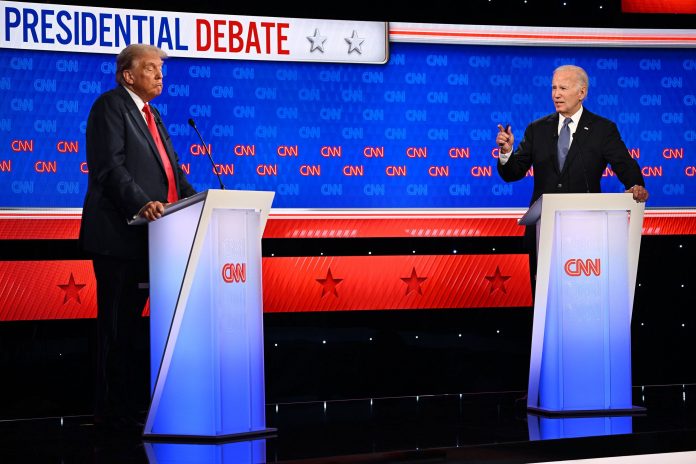
Biden’s Debate Performance Heightens Concerns Over Cognitive Fitness

0

In a political landscape where every debate performance can make or break a campaign, President Joe Biden’s appearance on the Thursday night debate with Donald Trump has left many Americans more concerned than ever about his cognitive fitness for office.

The stakes were high, and Biden’s performance did little to quell the doubts surrounding his ability to lead the nation, according to analysts. They noted that instead, it amplified the doubts, setting off alarm bells within his own party and providing ample ammunition for his opponents.

President Biden’s appearance on the debate stage was marked by noticeable lapses in clarity and coherence, according to analysis by BBC. His responses were frequently rambling, his delivery flat, and his overall demeanor lacked the energy one expects from a sitting president vying for re-election. Midway through the debate, the Biden campaign attempted to explain his raspy voice by attributing it to a cold, but this explanation felt more like an excuse to many viewers.

The most troubling aspects of Biden’s performance were moments of apparent confusion. At one point, he inexplicably concluded a rambling answer with, “We finally beat Medicare,” a baffling statement given the context of the discussion. This was just one of several instances where Biden seemed to lose his train of thought, raising serious questions about his cognitive abilities.

These concerns were not alleviated by Biden’s supporters or campaign officials. Even Kate Bedingfield, his former communications director, admitted on CNN that it was not a good debate for Biden. She said that proving his energy and stamina was critical, and he failed to do so. For a president already under scrutiny for his age and mental sharpness, this debate performance was seen as a significant setback.

The debate’s early focus on critical issues such as the economy and immigration, where polls show Americans trust Trump more, did not help Biden’s case. His inability to articulate clear and coherent responses only intensified the perception that he may not be mentally fit for the presidency. This perception is not just a talking point for his opponents; it is becoming a serious concern for many voters and political analysts.

Trump’s Disciplined Approach

In stark contrast, former President Donald Trump delivered a more disciplined and focused performance, BBC analyst noted. Gone were the interruptions and belligerence that characterized his 2020 debate appearances. Instead, Trump methodically attacked Biden’s record, steering the conversation back to his points whenever possible. Although Trump’s statements often included inaccuracies and outright falsehoods, Biden struggled to counter them effectively.

When the topic turned to abortion, Trump misrepresented Democratic positions by claiming that they support abortions after babies are born. Despite this being a falsehood, Biden’s response did not capitalize on the opportunity to debunk Trump’s claims and assert his own stance effectively. This pattern of missed opportunities was a recurring theme throughout the debate.

Biden on the Defensive

Throughout the debate, Biden found himself on the defensive. He attempted to regain momentum by taking big swings at Trump, but these efforts were inconsistent and often fell flat. Vice-President Kamala Harris later acknowledged that Biden had a “slow start” but claimed he finished strong. This optimistic spin did little to mask the reality that Biden struggled to make a significant impact during the debate.

One of the more memorable exchanges occurred when Biden referenced Trump’s moral failings related to his alleged involvement with Stormy Daniels. Trump’s sharp retort, “I didn’t have sex with a porn star,” was a moment that highlighted Biden’s inability to land a decisive blow. Similarly, when discussing the January 6 Capitol attack, Biden accused Trump of encouraging the rioters and doing nothing to stop the violence. Trump’s evasiveness on whether he would accept the 2024 election results further underscored his contentious stance on democracy, but Biden failed to press the point effectively.

The Aftermath and Polls

The immediate aftermath of the debate saw a significant shift in public opinion. A CNN poll declared Trump the winner of the debate by a staggering 67%. This result is believed to be a clear indicator of how poorly Biden’s performance was received and how it has impacted his chances of winning re-election. While many Democrats continue to publicly support Biden, there is growing unease within the party about his ability to lead effectively.

The debate has intensified discussions within the Democratic camp about whether Biden should remain the party’s flag bearer.

The Challenge of Replacing Biden

However, replacing a sitting president is no small feat. Despite the growing consensus that Biden may not be cognitively fit to serve another term, the process of finding and promoting an alternative candidate is fraught with challenges. Some analysts believe that it would take an open revolt within the Democratic Party for such a change to occur, and so far, no prominent Democratic officials have publicly broken ranks.

However, the whispers of concern are growing louder, and the pressure on Biden to prove his fitness for office is intensifying.

It is believed that one reason the Biden team pushed for an early debate was to shift focus to Trump and give Biden time to recover from any weak performance. However, political analysts believe the debate has had the opposite effect, with more people discussing Biden’s shortcomings than Trump’s.

The Democratic National Convention in August and another debate in September are expected to provide Biden with opportunities to rebound, but concerns remain.

Potential Replacements for Biden

The debate has intensified discussions within the Democratic camp about whether Biden should remain the party’s flag bearer. Against this backdrop, political consultant and polling expert Frank Luntz named five potential Democratic alternatives who might defeat Trump if Biden steps down:

  1. Gavin Newsom – Governor of California
  2. Gretchen Whitmer – Governor of Michigan
  3. Cory Booker – U.S. Senator from New Jersey
  4. Wes Moore – Governor of Maryland
  5. Mitch Landrieu – Senior Advisor to President Biden

Luntz noted that there is a “pretty unanimous” sentiment among Democrats that Vice President Kamala Harris is not a viable candidate to defeat Trump. However, analysts note that the main challenge lies in convincing Biden to step aside, which seems unlikely given his determination to remain in the race.

The Promise of Artificial Superintelligence (ASI) and SoftBank Masayoshi Son’s Vision

0

When he speaks, everyone pays attention. Japan’s SoftBank CEO does not write codes, making his promise to create technology systems which are smarter than humans in multiples fascinating: “Masayoshi Son, the billionaire CEO of SoftBank, is aiming for a new technology adventure called Artificial Superintelligence (ASI)…Over the years, Son has made bold investments in startups poised to revolutionize industries, cementing his reputation as a risk-taker with a keen eye for innovation.”

So, you may ask: which one is more important – the skill or the capital? Son thinks with his money he can assemble the human element to get what he wants. That explains that in the ranking of the factors of production, you need to pay attention to capital. Of course, this is not to posit that capital is ahead of humans, since knowledge, a factor of production, is there, besides labour and the entrepreneur.  Of course, knowledge comes from humans!

Here is the knowledge from Son: “SoftBank was founded for what purpose [ASI]? For what purpose was Masa Son born? It may sound strange, but I think I was born to realize ASI. I am super serious about it,” Son told shareholders at an annual meeting.

So, with his unalloyed boldness and confidence, I will rank the factors of production for the ASI future as follows: Knowledge, Entrepreneur, Capital, Labour and (Land). Good People, a man or a woman with Knowledge is a factor in this world. Upon knowledge will the empires of the future be built upon. And dreaming to create knowledge systems 10,000x better than humans assumes that  humans will even know that such a thing has happened since it is 10000x ahead of us!

SoftBank’s Masayoshi Son Vows to Create Technology 10,000 times Smarter than Humans: Artificial Superintelligence (ASI).

SoftBank’s Masayoshi Son Vows to Create Technology 10,000 times Smarter than Humans: Artificial Superintelligence (ASI).

0

Masayoshi Son, the billionaire CEO of SoftBank, is aiming for a new technology adventure called Artificial Superintelligence (ASI).

He has long been recognized as a visionary in the realm of technology investments. His career trajectory began with the founding of a video game company, showcasing early entrepreneurial flair. Over the years, Son has made bold investments in startups poised to revolutionize industries, cementing his reputation as a risk-taker with a keen eye for innovation.

However, Son’s journey has not been without its ups and downs. His successes include early investments in Alibaba, which turned into one of the most lucrative deals in venture capital history. Conversely, his involvement with WeWork highlighted the volatility of his approach, as SoftBank faced substantial losses following the coworking company’s troubled IPO attempt.

Son’s legacy is defined by his willingness to take high-stakes gambles on companies with transformative potential, underscoring both the rewards and risks inherent in his visionary investment strategy.

SoftBank’s Vision Fund has been at the heart of Son’s investment strategy, targeting high-growth tech startups. The fund’s performance has been notably volatile, reflecting Son’s penchant for bold moves. In the fiscal year 2021, ending March 31, 2022, the Vision Fund reported a record $27 billion loss, driven by the impact of rising interest rates on tech stocks. This downturn prompted Son to adopt a “defense” strategy, aimed at safeguarding SoftBank’s existing investments.

However, the defensive approach did not stave off further losses. By March 31, 2023, the Vision Fund posted an even larger $32 billion loss, with significant setbacks in investments like the Chinese AI company SenseTime and the Indonesian e-commerce giant GoTo.

In response, Son reverted to an “offense” strategy, seeking new growth opportunities.

This shift bore fruit in the following fiscal year. As of March 31, 2024, the Vision Fund reported a $4.6 billion profit, bolstered by successful investments in companies such as U.K. chip designer Arm, TikTok owner ByteDance, and food-delivery service DoorDash.

A New Obsession: Artificial Superintelligence

Despite recent successes, Son’s ambitions have taken a futuristic turn toward artificial superintelligence.

The CEO envisions a future where ASI surpasses not only current AI capabilities but also the hypothetical potential of artificial general intelligence (AGI). He predicts ASIs will be 10,000 times more intelligent than the most brilliant human minds on Earth, suggesting a profound shift in technological advancement and its implications for society and industry.

Son believes that achieving ASI is his true calling, asserting that his entire career has been a prelude to this ultimate endeavor.

“SoftBank was founded for what purpose? For what purpose was Masa Son born? It may sound strange, but I think I was born to realize ASI. I am super serious about it,” Son told shareholders at an annual meeting.

He disclosed that all his previous investments, including those in Uber and Alibaba, were merely a “warm-up” for his AI ventures. “Realizing ASI is my only focus,” he stated.

This focus has been reflected in SoftBank’s recent investment activities. In May, SoftBank pledged to make five large-scale AI investments of at least $1 billion each. Notable AI investments include a $200 million stake in Tempus AI, a medical-data analysis startup, and a significant backing of the AI internet search startup Perplexity AI, valued at $3 billion.

The OpenAI Missed Opportunity

Adding a layer of complexity to Son’s current AI ambitions is his regret over selling SoftBank’s shares in Nvidia. If retained, these shares would have been worth N150 billion today. This missed opportunity weighs heavily on Son, especially as he now aggressively pursues faster and more advanced AI developments. His regret underscores his determination to not miss out on the next big wave in artificial intelligence.

At the shareholder meeting, Son highlighted additional opportunities in autonomous driving, AI robotics, and data centers. These sectors, he believes, hold significant potential for growth and innovation. In a characteristically introspective moment, Son recounted his emotional struggles during SoftBank’s difficult period in 2022.

“Two years ago, I am getting old, rest of my life is limited, but I haven’t done anything yet and I cried so hard,” he shared.

However, Son now feels more certain of his purpose than ever before, as noted in his statement, “This is what I was born to do, to realize ASI.”

His conviction and relentless pursuit of ASI underscore his commitment to positioning SoftBank at the forefront of technological advancement, potentially revolutionizing industries and creating new paradigms in the process.

Masayoshi Son’s journey reflects a blend of visionary ambition and the willingness to learn from failures. As he shifts SoftBank’s focus towards the realization of ASI, he is facing an ambition that could change the world of tech, and make or mar SoftBank’s fortune.

Tinubu Approves National Roads Construction, Household Support Programme, N155bn for Disbursement 

0

President Bola Tinubu has given the green light for the immediate implementation of the National Construction and Household Support Programme across Nigeria’s six geo-political zones. This initiative aims to bolster agricultural productivity, invigorate the economy by creating opportunities in agriculture, manufacturing, and construction sectors, and provide urgent economic relief to Nigerians.

A significant focus of the programme is the development of the Sokoto-Badagry Highway, which will span Sokoto, Kebbi, Niger, Kwara, Oyo, Ogun, and Lagos states. This highway is prioritized due to its strategic importance to agricultural sustainability in Nigeria. The corridor includes 216 agricultural communities, 58 large and medium dams across six states, seven Special Agro-Industrial Processing Zones (SAPZs), 156 local government areas, 39 commercial cities and towns, and over one million hectares of arable land.

Other prioritized infrastructure projects include the Lagos-Calabar Coastal Highway and the Trans-Saharan Highway, connecting Enugu, Abakaliki, Ogoja, Benue, Kogi, Nasarawa, and Abuja.

Railway Projects

The programme also encompasses full counterpart financing for critical railway projects. The Port Harcourt-Maiduguri Railway will traverse Rivers, Abia, Enugu, Benue, Nasarawa, Plateau, Bauchi, Gombe, Yobe, and Borno. Additionally, the Ibadan-Abuja segment of the Lagos-Kano Standard-Gauge Railway will cover Lagos, Ogun, Oyo, Osun, Kwara, Niger, Abuja, Kaduna, and Kano.

Additional Support Measures

The National Construction and Household Support Programme includes several measures to provide immediate relief and boost local economies:

  • A one-off allocation of N10 billion to each state and the Federal Capital Territory for procuring buses and supporting the CNG uplift programme.
  • N50,000 uplift grants to 100,000 families per state for three months.
  • Provisions for labour unions and civil society organizations.
  • Deployment of N155 billion for purchasing and distributing assorted foodstuffs nationwide.

Presidential Address at NEC Meeting

During the National Economic Council (NEC) meeting in Abuja, President Tinubu emphasized the urgency of boosting food production and improving infrastructure. He urged state governors to collaborate effectively to meet citizens’ needs, promising federal support for mechanizing agricultural processes and providing high-quality seedlings and solar-powered irrigation facilities.

“Our states must work together to deliver on the critical reforms required of us to meet the needs of our people. Time is humanity’s most precious asset. You can never have enough of it. It is getting late,” he stated.

He further highlighted the critical role of the Sokoto-Badagry Highway in connecting key agricultural states and facilitating food export through Badagry.

“There is nothing we are doing that is more important than producing high-quality food for our people to consume, buy, and sell. We create jobs in the production of it. And that is before we generate wealth by exporting the excess. It is not beyond us to achieve this for Nigerians,” he said.

Tinubu concluded by calling for immediate action and collaboration, asking governors to report back with their needs within seven days to ensure the swift implementation of the programme.

Economists’ Concerns

Despite the ambitious scope of the programme, economists have raised concerns about the disbursement of funds for food purchase and distribution, in this case, N155 billion. Many believe that this approach could inadvertently exacerbate food insecurity in the country, as it involves mopping up the scarce foods in the markets.

Against this backdrop, economists warn that deploying such a large sum to mop up the limited food supply in markets could further stoke food inflation. With an already insufficient food supply, buying up what little remains could drive prices even higher, making food less affordable for the average Nigerian.

Moreover, the strategy of disbursing money to a select few among many is seen as insufficient to address the deeper economic issues. While short-term relief is necessary, experts contend that it does not tackle the root causes of the country’s economic challenges. They call on the government to address fundamental issues such as insecurity, which severely impacts agricultural productivity and overall economic stability.

Economists suggest that a more sustainable approach would involve comprehensive reforms to improve the security situation, enhance agricultural productivity, and foster a more conducive environment for economic activities. By addressing these underlying issues they said, the government can create lasting solutions that benefit a broader segment of the population.

Re-Introduction of Nigeria’s Old National Anthem; A Powerful Tool for National Unity And Patriotism.

0

National anthems are more than mere songs; they encapsulate a nation’s history, values, and aspirations. In Nigeria, a country rich in cultural diversity but often divided along ethnic and religious lines, the national anthem serves as a poignant reminder of unity and collective identity. The reintroduction of Nigeria’s old national anthem goes beyond having symbolic value but has the potential to foster national cohesion and patriotism.

National anthems play a significant role in nation-building. They are a form of affirmation, akin to a national prayer, that can inspire citizens and remind them of their shared heritage and common goals. The old Nigerian anthem, with its powerful lyrics, speaks directly to the values of unity, justice, and peace, which are crucial for the nation’s progress. It has the potential to strengthen national solidarity and inspire a renewed commitment to Nigeria’s development and prosperity.

Each stanza of this anthem carries a message that resonates deeply with the ideals necessary for national unity. Stanza 1 emphasizes unity in diversity, reminding Nigerians that despite ethnic and linguistic differences, they stand together in brotherhood. Stanza 2 highlights the national flag as a symbol of truth and justice, values that should guide the nation and be passed on to future generations. Stanza 3 is a prayer for divine assistance in building a just and peaceful nation where no one is oppressed, ensuring prosperity and blessings for all.

While some critics argue that reintroducing the old anthem is a misplaced priority, it is essential to recognize the broader context of this move. Reinvigorating national symbols can be a step towards addressing deeper issues of national identity and unity. However, for this initiative to be effective, it must be accompanied by genuine governmental actions that demonstrate a commitment to equity and fairness.

The Nigerian government must address public grievances and ensure that policies are not just rhetoric but are implemented with transparency and accountability. Nepotism and favouritism should be actively discouraged to foster a sense of trust and inclusion among all Nigerians. By aligning the ideals expressed in the national anthem with tangible actions, the government can reinforce the message of unity and justice.

The re-introduction of Nigeria’s old national anthem is a powerful tool for national unity and patriotism. It serves as a reminder of the country’s rich history and the values that can guide it towards a brighter future. For this initiative to succeed, it must be part of a broader strategy that includes genuine governmental commitment to equity, fairness, and addressing the grievances of all Nigerians. Through this holistic approach, Nigeria can build a nation where unity in diversity is not just an ideal but a lived reality.

Author: Kenechukwu Aguolu

Abuja,Nigeria