I estimate that more than $400 billion of funds flow from consumers to businesses in Nigeria yearly. I also estimate that in rural Nigeria, more than 90% of those funds are non-credits (i.e. non-borrowed). In your village market, if $2 million exchanges hands on a big market day, all those funds are non-credits. Yes, we live on money, in its different forms.
Good People, Africa is built on money and Africa still operates on money. When I was home recently, I went to Oriendu Market Ovim to shop (paid for the items, but did not collect from the sellers). Nothing has changed since decades Ndubuisi left the village: it was still pay and carry. In other words, Oriendu Market is years away from bringing credit and capital to work at scale.
That lack of capital is the challenge for Africa. Until African policymakers focus on creating systems for Capital development and evolution over our fixation on money, we will continue to struggle. When I read our policies on land, agriculture, etc, I see policies geared towards money, when what we should focus on is how to stimulate capital, even as we pursue the scaling of money.
Money is a subset of Capital, and companies and nations which allow Money to rule over them underperform. In Africa (excluding South Africa), we’re pursuing so much money, with limited efforts designed to advance Capital, triggering a system where there are many farmlands but no capital market product for farmlands. And without Capital, we scale poverty. When South Africa’s stock (capital) market has close to $1 trillion value, and Nigeria’s is hovering around $50 billion, you can see that we have a lot of money in Nigeria, but limited Capital. That must change.
In the five factors of production – land, labour, Capital, entrepreneur and knowledge – there is no Money listed. Capital represents assets (physical and non-physical encapsulating skills, education, knowledge systems, etc) which are used to make goods and services during the transmutation process of turning ideas, and raw materials, into finished goods. Money does one thing: means to exchange goods and services. In short, the unit of Capital is money (i.e capital is measured in monetary terms).
If Nigeria scales Capital. If Kenya scales Capital. If Ghana scales Capital. They will even pay off their debts and be free, because CAPITAL will unlock wealth which Money is unable to do in Africa. That is going to be the key way to stop the protests of the future in Africa.
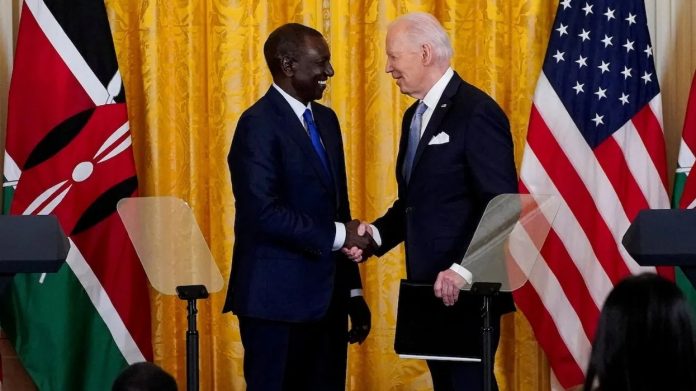
Kenya has largely paused the finance bill which is designed to scale taxes. Great call as it does not need to tax the overtaxed citizens. Rather, it needs to focus on how to transform its economy so that it can grow it, and collect more taxes, from expanded economic activities. That is also a message for Nigeria, Ghana and all African nations. It’s time for CAPITAL.