DD
MM
YYYY

PAGES

DD
MM
YYYY

spot_img

PAGES

Home Blog Page 335

CBN Governor Says Nigeria’s Trade Surplus Has Hit 6% of GDP As Economic Reforms Pay Off

0

Nigeria’s trade surplus has climbed to 6 percent of the country’s Gross Domestic Product (GDP), the highest in years, and is projected to remain stable at that level in the near term, according to Central Bank of Nigeria (CBN) Governor Olayemi Cardoso.

The improvement, Cardoso said, reflects the gains of ongoing economic reforms and tighter macroeconomic discipline aimed at restoring stability and encouraging domestic production.

Cardoso disclosed the figures during the G-24 press briefing on the sidelines of the IMF/World Bank Annual Meetings in Washington, D.C., where he represented the Minister of Finance and Coordinating Minister of the Economy, Wale Edun, who serves as First Vice Chair of the G-24 group of nations. The briefing, attended by top Nigerian officials, including Minister of State for Finance, Dr. Doris Uzoka-Anite, focused on themes such as domestic resource mobilization, inflation control, and the pursuit of sound macroeconomic policies amid a volatile global economy.

In a statement signed by Mohammed Manga, Director of Information and Public Relations at the Ministry of Finance, Cardoso emphasized that Nigeria’s economy has been relatively shielded from global uncertainties due to a mix of monetary and fiscal measures that have started to yield results.

Cardoso said the 6 percent trade surplus reflects Nigeria’s improving external position and growing competitiveness under a restructured economic framework. He noted that the CBN’s reforms — particularly its move toward a more market-reflective exchange rate — have led to a more competitive naira, spurring local production while discouraging over-reliance on imports.

He added that there is a strong correlation between disciplined economic management, sustainable growth, and disinflation — three goals the CBN is pursuing concurrently. According to him, Nigeria’s recent improvements in external trade performance are tied to those policies, which include curbing speculative activity in the foreign exchange market and supporting sectors that contribute to non-oil exports.

Cardoso also revealed that the apex bank is developing a framework for bilateral currency swaps designed to ensure mutual benefits for trading partners. This initiative, he said, aims to strengthen Nigeria’s trade ties while reducing pressure on foreign reserves.

NBS Data Confirms Surplus Growth

The CBN Governor’s statement aligns with recent data from the National Bureau of Statistics (NBS), which showed that Nigeria’s trade surplus surged by 44 percent in the second quarter of 2025.

According to the NBS, total merchandise trade for Q2 2025 stood at N38.04 trillion, representing a 20 percent increase over the N31.68 trillion recorded in the same quarter of 2024, and a 5.6 percent rise compared to the preceding quarter’s N36.02 trillion.

Exports accounted for 59.81 percent of total trade, amounting to N22.75 trillion, up 28.4 percent year-on-year and 10.4 percent from the previous quarter. Crude oil exports contributed N11.97 trillion, representing 52.6 percent of total exports, while non-crude oil exports reached N10.78 trillion or 47.4 percent of the total. Of this, non-oil products alone contributed N3.05 trillion, making up 13.4 percent of overall exports.

Imports, on the other hand, accounted for N15.29 trillion or 40.2 percent of total trade — a 9.4 percent rise from N13.97 trillion in Q2 2024, but a slight 0.9 percent drop compared to N15.43 trillion in Q1 2025.

The growing non-oil export component marks the gradual diversification of Nigeria’s export base, a trend the CBN and Ministry of Finance have repeatedly described as key to achieving sustainable growth.

A Turning Point for Nigeria’s External Balance

Economists say Nigeria’s ability to maintain a trade surplus at 6 percent of GDP represents a major improvement after years of balance-of-trade deficits driven by high import dependency, foreign exchange volatility, and declining oil revenues.

The development also comes amid early signs of easing inflation and modest stabilization in the exchange rate, trends that policymakers hope will translate into stronger real-sector performance and investment inflows.

But the CBN governor’s emphasis on maintaining policy consistency suggests the bank is wary of prematurely easing monetary discipline — especially as the country continues to grapple with imported inflation, high energy costs, and volatile global oil prices.

 Sustaining the Gains

While the CBN is optimistic about sustaining the current trade surplus, there is concern that external shocks — such as falling oil prices, supply chain disruptions, or weakening demand in key export markets — could pose risks.

However, Cardoso expressed confidence that Nigeria’s structural adjustments and focus on production-driven growth will help the economy stay resilient.

“The improved balance of trade reflects sound macroeconomic policies that are beginning to yield positive results,” he said, emphasizing that the current trajectory could strengthen if domestic productivity continues to rise.

Economists believe the challenge now lies in sustaining the momentum — consolidating non-oil export growth, maintaining a stable exchange rate, and ensuring that fiscal and monetary policies remain aligned.

NBC News Cuts 7% of Staff Ahead of Cable Network Spinoff Amid Industry Shift to Streaming

0

NBC News has begun cutting 7% of its workforce — about 150 of its roughly 2,000 employees — as the network prepares to operate independently from its long-standing cable affiliates, according to a person familiar with the matter.

The layoffs, which began on Wednesday, come as NBC News parent company Comcast’s NBCUniversal moves ahead with plans to spin off several of its cable networks, including MSNBC and CNBC, into a new entity called Versant. The decision is believed to be tied to the growing challenges facing the traditional cable television industry as audiences continue their steady migration toward digital and streaming platforms.

In a statement, NBC News attributed the cuts to a “tough business climate” and to the operational restructuring prompted by the spinoff. The company explained that certain roles supporting MSNBC and CNBC would no longer be necessary once those networks begin operating separately under Versant.

Despite the layoffs, NBC News said it currently has about 140 open positions across the organization and is encouraging affected employees to apply.

“We have had to make some difficult decisions, including the elimination of positions across NBC News,” NBCUniversal News Group Chairman Cesar Conde said in a memo to staff. “While these decisions are necessary to remain strong as an industry leader, they are not easy and are never taken lightly.”

Conde acknowledged the emotional toll of the decision, calling Wednesday “a hard day” for the organization.

“We have sought to minimize the number of affected team members,” he wrote, adding that those departing “should not be seen as a reflection on our colleagues who will be leaving. We will miss them and their valuable contributions.”

End of a Shared Era

The separation marks the end of a decades-long relationship between NBC News, MSNBC, and CNBC — one that has often been productive but occasionally strained. For years, the three outlets shared resources, reporters, and production infrastructure, with NBC News providing hard-news credibility and its cable counterparts offering specialized coverage and analysis.

However, MSNBC’s evolution into a more left-leaning, opinion-driven network sometimes complicated its association with the NBC News brand, which positions itself as a straight-news organization. The separation will now allow each outlet to define its editorial direction independently, but it also means MSNBC and CNBC will lose access to NBC News’ vast newsgathering network.

According to people familiar with internal planning, MSNBC is preparing for a full rebranding — adopting the new name “MS NOW” and dropping the iconic NBC peacock logo from its on-air identity. The rebrand is expected to be accompanied by a broader effort to distinguish the network’s political commentary and prime-time opinion programming from NBC’s fact-based reporting.

Building for a Streaming Future

NBC News, meanwhile, is moving aggressively into the streaming space. The network plans to launch a new subscription-based streaming service later this year, featuring select live coverage, original reporting, and premium programming developed exclusively for online audiences.

Conde has said that the service is part of NBC News’ broader plan to “reaffirm its identity as a rigorous, fact-based source of journalism” in an era of eroding public trust in news media. The network is also expanding its sports and investigative reporting portfolios and preparing a major marketing campaign aimed at reinforcing its brand credibility.

While MSNBC and CNBC are still in the early stages of developing their own streaming strategies, both are expected to experiment with digital-first shows and partnerships to attract younger audiences. CNBC, in particular, has been exploring content integration with NBCUniversal’s streaming platform, Peacock, as part of efforts to capture a new generation of business and finance viewers.

Impact on Reporting and Local Collaboration

Internally, some at NBC News have expressed concerns about how the spinoff will affect day-to-day newsgathering operations. For years, the network’s cable and digital divisions relied heavily on resource-sharing — from correspondents and producers to field operations and newsroom technology. The transition to independent management could complicate that synergy.

To counterbalance potential gaps, NBC News has been strengthening its collaboration with local affiliates, a segment of the media industry that has proven more resilient amid declining audience trust in national outlets. Since 2023, NBC News has worked more closely with its network of more than 200 local stations to coordinate coverage on major breaking stories, with both national and local teams promoting each other’s work to build credibility and reach.

That strategy — emphasizing proximity, community reporting, and cross-platform integration — has helped NBC News maintain a steady audience base even as national cable news viewership continues to decline.

Second Round of Cuts

This is the second round of layoffs at NBC News this year. In January, the network cut around 40 roles, or roughly 2% to 3% of its workforce, while simultaneously hiring for new digital positions. The company said at the time that it was reallocating resources to prioritize digital storytelling, data journalism, and audience engagement.

The broader context for the latest layoffs reflects an industry-wide contraction as major U.S. media companies grapple with slowing ad revenues, high production costs, and the ongoing disruption caused by streaming services. Across the sector, from Disney to Warner Bros. Discovery, executives have been restructuring legacy television operations to align with the economics of on-demand viewing.

In NBC’s case, the creation of Versant signals Comcast’s intent to streamline operations and free its digital properties from the constraints of the traditional cable model. Analysts say the move will allow the company to allocate resources more efficiently while giving each network more autonomy to pursue digital expansion at its own pace.

The changes represent both a challenge and an opportunity for NBC News. While the layoffs and separation from its cable siblings mark the end of an era, they also position the network to redefine its role in a fragmented media landscape.

With streaming now dominating how audiences consume news, NBC’s push toward subscription-based journalism and renewed focus on fact-based reporting could help it reclaim ground lost to social media and independent digital outlets.

Arm, Meta Team Up to Strengthen AI Infrastructure in a Multi-year Partnership

0

Semiconductor design giant Arm Holdings has entered into a new multi-year partnership with Meta Platforms, aimed at enhancing the social media company’s artificial intelligence infrastructure during what analysts describe as an unprecedented global AI buildout.

Under the agreement, Meta’s ranking and recommendation systems — key to how the company personalizes feeds across Facebook, Instagram, and Threads — will be migrated to Arm’s Neoverse platform, which was recently optimized for large-scale AI operations in the cloud.

“AI is transforming how people connect and create,” said Santosh Janardhan, Meta’s Head of Infrastructure. “Partnering with Arm enables us to efficiently scale that innovation to the more than 3 billion people who use Meta’s apps and technologies.”

Arm’s power-efficient architecture finds new relevance

While Arm is best known for its mobile CPU designs that dominate smartphones and embedded systems, the company has increasingly turned toward high-performance computing and AI workloads. Its Neoverse platform, specifically built for cloud and data center applications, is engineered to deliver high throughput while consuming less power — a key advantage as AI model sizes and training demands surge.

“AI’s next era will be defined by delivering efficiency at scale,” said Rene Haas, Arm’s Chief Executive Officer. “Partnering with Meta, we’re uniting Arm’s performance-per-watt leadership with Meta’s AI innovation.”

The collaboration underscores Arm’s strategic push into the data center market — an area historically dominated by x86-based chips from Intel and AMD. It also signals that big technology firms are diversifying their chip dependencies amid ongoing supply chain strains and escalating costs of GPUs from Nvidia, which continues to dominate the AI hardware landscape.

The partnership comes at a time when Meta is accelerating its data center expansion to meet soaring AI demand. The company is currently developing two massive infrastructure projects in the United States — both intended to anchor its long-term AI ambitions.

One, code-named “Prometheus,” is under construction in New Albany, Ohio, and will eventually supply multiple gigawatts of power for AI computation. A 200-megawatt natural gas plant is also being built nearby to directly power the facility.

The second project, known as “Hyperion,” is being developed across 2,250 acres in northwest Louisiana, with plans to deliver up to 5 gigawatts of compute capacity when fully operational. Construction is expected to continue through 2030, though some portions are slated to come online earlier.

Some in the industry believe these developments show how Meta is racing to ensure it has the infrastructure needed to support not only its own AI models but also to compete in the broader generative AI ecosystem dominated by OpenAI, Google DeepMind, and Anthropic.

No equity swap — just strategic alignment

Unlike some of the high-profile AI infrastructure partnerships in recent months, Arm and Meta’s deal involves no equity exchange or joint investment in physical infrastructure. Instead, it’s structured as a technical collaboration that leverages Arm’s chip designs and Meta’s in-house AI expertise.

This distinguishes it from deals such as Nvidia’s $100 billion phased investment in OpenAI, which includes funding for hardware, software, and research integration. Nvidia has also extended multi-billion-dollar commitments to Elon Musk’s xAI, Mira Murati’s Thinking Machines Lab, and French AI startup Mistral.

Meanwhile, AMD — Arm’s rival in the server and accelerator market — recently finalized a landmark agreement with OpenAI to supply 6 gigawatts of computing capacity. Under that deal, OpenAI secured AMD stock options worth up to 10% of the company, underscoring how closely tied the AI hardware and software sectors have become.

A pivotal moment for Arm’s strategy

For Arm, the partnership with Meta is a pivotal milestone as it works to expand beyond its traditional licensing model into more strategic, long-term relationships. The company’s Neoverse processors — built to handle AI inference and large-scale data workloads — are already deployed in parts of Amazon Web Services and Microsoft Azure’s infrastructure. However, the Meta deal positions Arm directly within one of the world’s largest social and data-driven ecosystems.

Analysts say the timing is significant. With AI workloads expected to consume an estimated 10% of global electricity by 2030, according to the International Energy Agency, efficiency is becoming as crucial as raw performance. Arm’s architecture, renowned for its energy efficiency, may become increasingly attractive to companies looking to expand AI capacity without proportionally increasing power costs.

What this means for the AI ecosystem

The Arm-Meta collaboration reflects a growing industry trend toward heterogeneous computing, where companies deploy multiple chip architectures optimized for different workloads — GPUs for training, CPUs for orchestration, and specialized accelerators for inference.

By shifting key systems to Arm’s Neoverse, Meta could gain flexibility in cost, power consumption, and supply chain management, while Arm gains a showcase customer capable of validating its performance claims at a massive scale.

Although neither company disclosed the financial terms of the deal, it is believed the partnership could extend to future generations of Arm’s AI-optimized processors, possibly influencing broader adoption among cloud providers and enterprise AI developers.

IMF Warns Global Public Debt to Exceed 100% Global GDP by 2029, Urges Fiscal Buffers

0

The International Monetary Fund has sounded a sharp warning that global public debt is climbing at an alarming rate and could exceed 100 percent of global GDP by 2029, reaching its highest level since 1948.

In what it described as a growing fiscal time bomb, the Fund cautioned that without decisive reforms, the world could face a new era of financial instability reminiscent of past crises.

Vitor Gaspar, director of the IMF’s fiscal affairs department, said the trend is deeply worrying and could worsen under what he called an “adverse but plausible scenario.” By the end of the decade, he said, global debt could surge as high as 123 percent of GDP — a level just short of the 132 percent peak recorded in the aftermath of World War Two.

“From our viewpoint, the most concerning situation would be one in which there would be financial turmoil,” Gaspar said in an interview, echoing a separate IMF report released earlier in the week that warned of a possible “disorderly” market correction. “That could unleash a fiscal-financial ‘doom loop,’ like the one that occurred during the European sovereign debt crisis that began in 2010.”

The warning arrives amid growing volatility in the global economy. Tensions between Washington and Beijing have once again flared, raising fears of another trade war that could rattle markets and weigh on global growth. Although the IMF this week slightly raised its 2025 global growth forecast due to what it described as a more benign near-term impact from tariffs, the new escalation — which followed the forecast’s completion — could sharply reverse that optimism.

Gaspar said the combination of heightened uncertainty, geopolitical risks, and persistent inflationary pressures makes it vital for countries to begin rebuilding their fiscal buffers now rather than later.

“With quite significant risks on the horizon, it’s important to be prepared, and preparation requires having fiscal buffers that allow authorities to respond to severe adverse shocks in the eventuality of a financial crisis,” he said.

The IMF’s latest Fiscal Monitor underscores how heavily indebted many of the world’s largest economies have become. Advanced nations such as the United States, Canada, China, France, Italy, Japan, and Britain already have public debt levels above 100 percent of GDP or are projected to breach that threshold in the coming years.

Despite the staggering numbers, the IMF classifies their risk levels as “low-to-moderate,” largely because these economies have deep bond markets, stable institutions, and access to policy tools that can cushion shocks. Yet, for many emerging and low-income nations, the picture is far more precarious. Even with lower debt-to-GDP ratios, they face significantly higher borrowing costs and fewer options to refinance or restructure.

Gaspar noted that borrowing is now far more expensive than during the period between the 2008–2009 global financial crisis and the 2020 pandemic.

“Rising interest rates are pressuring budgets at a time when demands are high due to geopolitical tensions, increasing natural disasters, disruptive technologies and aging populations,” he said.

The IMF’s message is that fiscal consolidation — though politically difficult — cannot be deferred. “While we do recognize that the fiscal equation is very hard to square politically, the time to prepare is now,” Gaspar wrote in a forward to the Fiscal Monitor.

He argued that rebalancing spending toward productive investment, especially in education and infrastructure, could both strengthen economies and soften the blow of fiscal tightening.

The report highlights that reallocating just one percentage point of GDP from current spending to education or other forms of human capital investment could lift GDP by over 3 percent by 2050 in advanced economies, and by almost twice that in emerging markets and developing economies.

The United States, which already breached its postwar debt record during the COVID-19 pandemic, faces a particularly steep challenge. The IMF projects that U.S. public debt could surpass 140 percent of GDP by the end of the decade. Gaspar confirmed that IMF officials will urge Washington to stabilize its debt trajectory when they begin a formal review of the U.S. economy next month.

Fiscal analysts say that the U.S. fiscal outlook has been complicated by mounting defense spending, persistent deficits, and a political climate that makes major tax or entitlement reforms unlikely. Trump administration officials have said they are committed to stabilizing the fiscal picture through targeted spending cuts, though few details have been disclosed ahead of next year’s budget.

China, meanwhile, is also on an unsustainable debt path. The IMF projects its public debt will rise from 88.3 percent of GDP in 2024 to about 113 percent by 2029, driven by state-backed investments, property market bailouts, and aging demographics. The Fund plans a regular Article IV consultation with Beijing next month, during which officials are expected to urge more transparent debt management and fiscal restraint.

Economists warn that both Washington and Beijing, the world’s two largest economies, now face the dual burden of sustaining growth while managing debt that could constrain fiscal space for years to come.

The Fund’s concerns echo those raised in other recent reports warning of a potential debt-driven drag on global growth. In previous research, the IMF found that countries with larger fiscal buffers were able to mitigate job losses and protect economic activity more effectively during crises — notably during the 2008 meltdown and the pandemic shock of 2020.

What distinguishes the current environment, analysts say, is the simultaneous convergence of multiple stress factors: inflation still above target in major economies, surging defense budgets, climate adaptation costs, and the early signs of another trade rift between the U.S. and China.

If financial markets lose confidence in governments’ ability to manage their fiscal trajectories, the IMF warns, the result could be a self-reinforcing spiral of rising borrowing costs and reduced growth — the very “doom loop” Gaspar referenced.

Still, the Fund insists there is a path forward. It calls for countries to prioritize “smart consolidation” — tightening fiscal policy where possible while maintaining or even increasing investment in sectors that raise productivity over the long term.

U.S. Seeks to Avert Trade War with China as Trump Prepares to Meet Xi in South Korea

0

U.S. Treasury Secretary Scott Bessent said Wednesday that Washington does not want to escalate its trade confrontation with China, describing current diplomatic efforts as a bid to preserve stability in the world’s two largest economies.

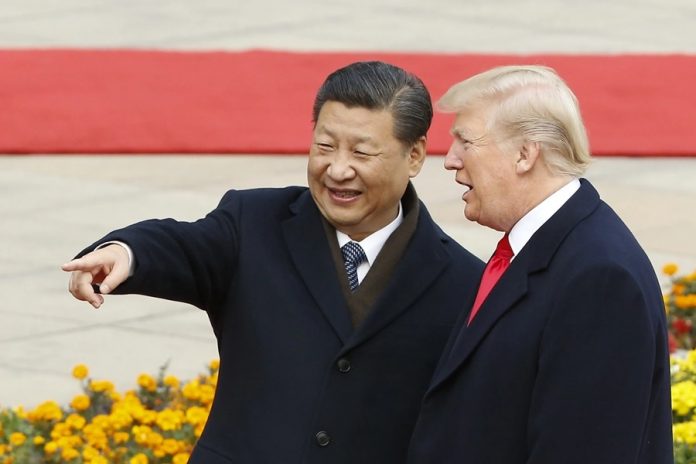
His comments came as officials on both sides raced to prepare for a planned meeting between President Donald Trump and Chinese President Xi Jinping in South Korea later this month.

Speaking at a CNBC event, Bessent said officials from both countries were in “daily contact” to arrange the leaders’ meeting, emphasizing that the Trump administration’s goal was not to sever ties with Beijing but to “find common ground” after months of rising tension.

We are not looking to decouple from the second-largest economy in the world, Bessent said.

Bessent insisted that trust between Trump and Xi had prevented a full-blown trade conflict from reigniting, despite sharp rhetoric and tit-for-tat measures that have rattled global markets in recent weeks.

The U.S. and China appeared headed for another bruising trade war late last week after Beijing announced sweeping new restrictions on rare earths exports — a move widely seen as a direct challenge to Washington’s escalating tariffs and shipping fees. The restrictions, which expand China’s control over the global supply of critical minerals used in electronics, defense systems, and renewable energy, came just a day before Trump threatened to impose “triple-digit” tariffs on Chinese goods. The tit-for-tat moves sent financial markets tumbling and revived memories of the turbulent trade battles that defined much of Trump’s first term in office.

Over the past week, Bessent and other senior administration officials have launched a series of public interventions aimed at calming investors and preventing the situation from spiraling.

Bessent on Wednesday rejected Beijing’s claim that its decision to tighten rare earths export controls was a reaction to U.S. measures, arguing that China had “clearly intended to take action all along.” He cited a prior warning from a mid-level Chinese trade official who, according to Bessent, had issued threats in August suggesting Beijing might seek to “unleash chaos” on the global economic system if Washington proceeded with new docking fees for Chinese ships.

“There was a lower-level trade person who was slightly unhinged here in August,” Bessent said, referring to the episode. “They were saying that China would unleash chaos on the global system if the U.S. went ahead with our docking fees for Chinese ships.”

That fee proposal — introduced by Washington in mid-August — aimed to level the competitive costs faced by U.S. and foreign shipping companies amid what American officials have called “chronic trade imbalances” in logistics and port operations. The move angered Beijing, which accused Washington of “weaponizing maritime policy.”

The exchange has since drawn attention to the fragile balance between the two economies. For Washington, the latest flare-up underscores Trump’s ongoing effort to pressure China into broader trade concessions while still avoiding economic disruption ahead of a critical election year. For Beijing, it signals a willingness to push back more forcefully, particularly through strategic industries like rare earths — resources essential to the global technology and defense sectors.

Trump’s planned meeting with Xi in South Korea is now seen as a pivotal attempt to restore dialogue and avert a deeper rupture. Both leaders have been in communication since Trump returned to the White House, but their relationship has been tested by disagreements over tariffs, technology restrictions, and geopolitical flashpoints from Taiwan to the South China Sea.

Bessent framed the upcoming meeting as an opportunity to “reset expectations” rather than negotiate any new deal.

Behind the scenes, officials say the Treasury Department and China’s Ministry of Commerce have maintained an unusually high level of communication, even as tensions flared.

The Treasury Secretary, a longtime investor and former hedge fund executive, has emerged as one of the administration’s key voices on China, often tempering Trump’s more aggressive trade rhetoric with reassurances to global markets. His latest comments reflect an awareness that even verbal exchanges between Washington and Beijing can quickly ripple through currency markets and commodity prices.

Indeed, the prospect of a renewed trade war has already stirred volatility across sectors. Rare earths prices surged after China’s announcement, while the dollar fell as investors shifted toward safe-haven assets. Wall Street analysts have warned that a full-blown conflict could disrupt global supply chains just as manufacturing output shows signs of recovery.

Yet, some analysts say Trump’s tariff threat may have been designed less as an immediate measure and more as leverage to secure cooperation in other areas — including trade transparency and currency stability. The administration is believed to be using tariffs the way past governments used diplomacy — as a signaling device.

For China, the expansion of rare earths controls fits within a broader strategy of leveraging its dominance in critical minerals to gain a strategic advantage. China currently supplies about 70% of the world’s rare earths, which are vital in producing semiconductors, electric vehicles, and advanced weapons systems. The move could complicate U.S. efforts to expand domestic production and reduce dependence on Chinese materials — goals that have been central to Trump’s economic agenda since his return to office.

Bessent’s emphasis on restraint points to broader anxiety among U.S. businesses that another round of tariffs or export controls could reignite inflationary pressures and disrupt supply chains. Companies across sectors — from automotive to electronics — are still recovering from the shocks of the last major trade war between the two nations, which contributed to years of price instability.