DD
MM
YYYY

PAGES

DD
MM
YYYY

spot_img

PAGES

Home Blog Page 3353

Nigeria’s Currency in Circulation Reaches Historic High at N4.05trn: Economists Finger PoS Operation

0

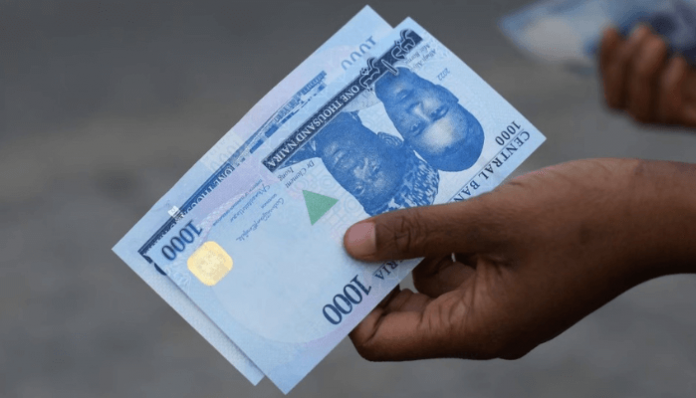
Nigeria’s economy is witnessing an unprecedented surge in the currency in circulation (CIC), which reached an all-time high of N4.05 trillion in June 2024, according to the latest data from the Central Bank of Nigeria (CBN). This represents a significant 56% increase from N2.6 trillion in the same month last year, marking the first time Nigeria’s CIC has exceeded the N4 trillion mark.

The CIC comprises the currency outside the banking system and the vault cash of banks. This surge has been particularly notable, with a month-on-month (MoM) growth rate of 2%, from N3.65 trillion recorded in May 2024. Notably, about 94% of the currency in circulation is reportedly outside the banking system, as cash outside banks hit a new high of N3.79 trillion. The currency outside banks has more than quadrupled over the past year, a situation attributed to the growing PoS operations.

What the Data is Saying

The data from the CBN provides a comprehensive overview of the trend:

In January 2024, Nigeria’s currency in circulation was N3.65 trillion, a 163% increase from N1.39 trillion in January 2023. The currency outside banks similarly increased by 314%, from N792.18 billion in January 2023 to N3.28 trillion in January 2024.

February 2024 saw a continuation of this trend, with currency in circulation climbing by 276% to N3.69 trillion, compared to N982.1 billion in February of the previous year. The currency outside banks reached N3.41 trillion, a 304.7% rise from N843.31 billion in February 2023.

In March 2024, the currency in circulation rose to N3.87 trillion, up from N1.68 trillion in the same month of 2023, indicating a year-on-year growth of 129.8%. The currency outside banks increased to N3.63 trillion from N1.45 trillion in March 2023, a 151.1% rise.

The trend continued into April 2024, with the currency in circulation increasing to N3.92 trillion, a 64.9% year-on-year rise from N2.38 trillion in April 2023. The currency outside banks also saw an increase, reaching N3.61 trillion from N2.08 trillion the previous year, a 73.4% growth.

May 2024 followed suit with the currency in circulation reaching N3.97 trillion, a 56.9% increase from N2.53 trillion in the previous year. The currency outside banks rose to N3.71 trillion from N2.18 trillion in May 2023, marking a 70.4% growth.

June 2024 marked a historic milestone as the currency in circulation surpassed N4 trillion for the first time, reaching N4.05 trillion. The currency outside banks also saw an increase, reaching a new high of N3.79 trillion from N2.26 trillion in the same month of the previous year, representing a 67.5% rise.

These figures highlight the continued expansion in liquidity and a shift in the cash circulation method.

Economists Raise Alarms Over PoS Operations and Cash Hoarding

Financial experts have expressed deep concerns over this rising trend of cash hoarding, which is largely attributed to the proliferation of Point-of-Sale (PoS) services. While these services have made financial transactions more accessible, especially in remote and underserved areas, they have also led to a significant portion of the country’s cash flow being held outside traditional banking systems.

The convenience of PoS transactions has inadvertently contributed to the growing issue of empty ATMs, forcing more people to withdraw cash from these terminals rather than banks.

“POS can’t take over function of cash deposits and withdrawal from licensed commercial and microfinance banks. Come on!! Is this even a debate? Are we so debased in expectations of service that licensed trillion naira banks with billions of naira investment in retail branches and ATMs have no cash but a chap with an umbrella down the street has cash?” Economist, Kalu Aja, lamented.

Compounding The Inflationary Pressures

The implications of this cash hoarding have become concerning especially as Nigeria’s ongoing battle with inflation intensifies. The headline inflation rate soared from 33.95% in May 2024 to 34.19% in June, a stark increase from the 22.79% rate recorded in June 2023. The month-on-month increase of 0.17 percentage points from May 2024’s 2.14% rate to June’s 2.31% highlights the persistent upward pressure on prices.

Against this backdrop, economists warn that the high levels of currency in circulation, particularly outside the banking system, could see inflationary pressures thickening in the coming months. This situation is especially concerning given the current economic conditions, where the Monetary Policy Committee (MPC) has been increasing the MPR as part of measures aimed at controlling inflation.

With inflationary pressures gaining momentum, analysts warn that Nigeria may see a further increase in inflation rates if the growth in money supply is not matched by a corresponding increase in production. This, they warn, will further erode purchasing power and impact the cost of living, particularly for lower-income households.

There are growing calls for strategic policy responses as the economic headwinds escalate. Financial experts suggest that addressing the root causes of cash hoarding and improving the efficiency of cash flow within the economy are crucial steps. This includes enhancing the infrastructure and reliability of traditional banking services, as well as promoting digital financial inclusion to reduce the reliance on physical cash.

Flutterwave Gains Ground in Ghana with Enhanced Payment Service Provider License

0

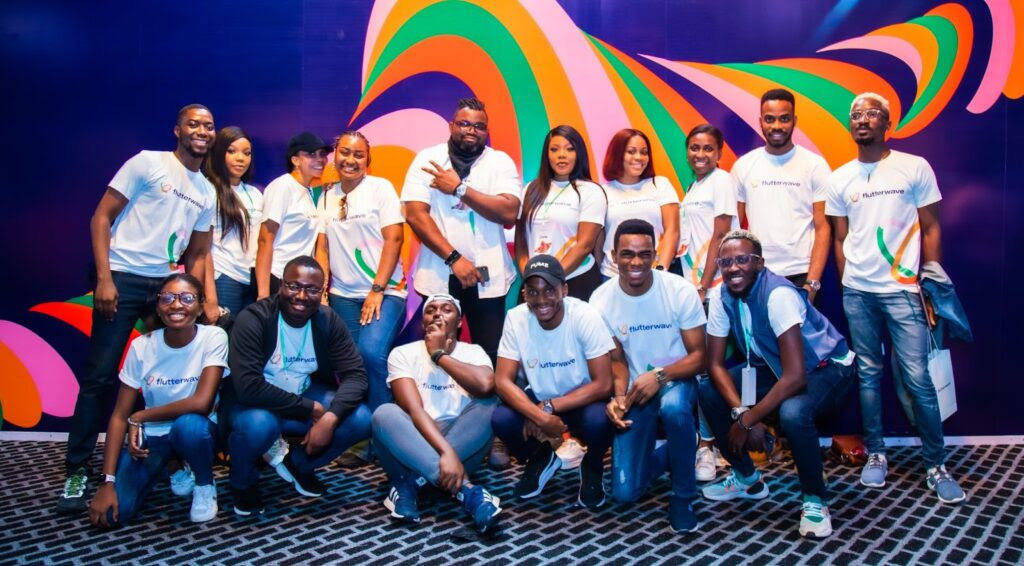
Flutterwave, a leading payments technology company, has recently been granted a Payment Service Provider license (Enhanced Category) by the Bank of Ghana.

The milestone marks a significant expansion of Flutterwave’s operations in Africa, enabling the company to offer a comprehensive suite of payment services directly within, and through Ghana.

Ghana presents an exciting market for Flutterwave’s innovative solutions. With a stable democracy, a tech-savvy youth population, and a high mobile internet penetration rate of 71%, Ghana is well positioned for rapid digital adoption. The country’s digital payments market is projected to reach $7 billion in 2024, with an anticipated growth rate of 15.78%, resulting in a total value of $12.96 billion by 2028.

For potential customers in Ghana, Flutterwave’s license translates to more seamless and secure money transfers across the country. Businesses will benefit from direct collection and payout services, automated invoicing, payment links, and a checkout solution that supports multiple payment methods including cards, mobile money, and bank transfers.

Commenting on the license approval, Olugbenga ‘GB’ Agboola, Founder & CEO of Flutterwave said,

“When we started this journey, our goal was to unite the fragmented payment infrastructure in Africa, and securing this license in Ghana brings us a step closer to achieving that mission. At Flutterwave, we are committed to using our platform to promote economic growth to the nation, while also providing unparalleled service to all our prospective customers in Ghana and in the diaspora “

The Payment Service Provider license (Enhanced Category) allows Flutterwave to operate without the need for third-party services, streamlining payment processes for businesses and customers alike. The Enhanced Category license further empowers Flutterwave to support other licensed fintech companies in Ghana by providing essential payment services, ultimately promoting a more integrated and efficient financial ecosystem.

Oluwabankole Falade, Chief Regulatory Officer at Flutterwave, said,

“We are grateful to the Bank of Ghana for their trust and support in granting us this license. This milestone highlights our commitment to regulatory compliance and delivering secure, reliable payment solutions. We are excited to contribute to Ghana’s dynamic business ecosystem and support the financial inclusion of Ghanaians, both locally and globally.”

About Flutterwave
Flutterwave is the leading payments technology company that enables businesses across the world to expand their operations in Africa and other emerging markets through a platform that enables local and cross-border transactions via one Application Programming Interface (API). Flutterwave has processed over 630M transactions in excess of USD $31B and serves more than 1.5m businesses, including customers like Uber, Air Peace, Bamboo, PiggyVest, and others. The company’s key advantage is connecting businesses to various local and international payment types to enable them to expand globally.

It also enables cross-border transactions from the diaspora to African countries via its SendApp product. Flutterwave processes payments via multiple payment modes, including local and international cards, mobile wallets, bank transfers, and Google Pay. The company has an infrastructure reach in 34 African countries.

Nigeria – On My Mind!

0

Nigeria – you are on my mind. And I want to tell you that I do not forget how kind you have been. You gave me anything a young man would have asked a nation: great secondary school education, solid undergraduate education, and jobs months to graduation. For that education, you even paid for most via University Scholar awards.

Today, from the updates around the nation, I feel a burden. Yes, in the  powerlessness I see myself, I remain confident that our young people will experience abundance in the future. I am an optimist and I vote Yes that Nigeria’s young people will thrive.

I know many things are happening that my generation, and those ahead of me, have  been unable to pass the goodies we enjoyed to the current young people. That is a failure, and something that the future must fix, urgently.

Parents want their children to have a better future. Young People, my heart bleeds on the lack of economic opportunities. But I want all to never lose hope in the promises of the future. Most of us in the diaspora are working to deepen promises in the nation. For example, via Tekedia Capital, we have invested $millions and seeded companies with thousands of people earning quality incomes. And via Tekedia Mini-MBA where thousands have attended, I see young people ready to lead in the future; that will happen!

But get this: I do not like to pass responsibilities with excuses that it is not my fault because I am not a politician. Sure, politicians have roles, but it goes beyond politicians; EVERYONE (lawyers, doctors, professors, etc) must lead. Simply, the real deal is that everyone must work hard to secure the future of Nigeria’s young people. That is our shared obligation to deliver one product: a better future for young people! I am confident that will happen.

Meta Q2 2024 Revenue Surpass Wall Street Estimates, AI Investment Paying Off

0

Meta has exceeded Wall Street’s expectations for second quarter (Q2) 2024 report in revenue and profit, after issuing a better-than-expected forecast for the period.

The tech giant posted a revenue of $39.07 billion, compared to $38.31 billion expected. It posted an earnings per share of $5.16 vs $4.73 per share expected. Capital expenditures were $8.47 billion, below the $9.51 billion analysts estimation.

Meta revenue growth reflects a 22% increase recorded from the previous year earlier which it posted a revenue of $32 billion. Net income jumped 73% to $13.47 billion from $7.79 billion, or $2.98 a share, a year earlier.

The tech giant impressive result, points to continued share gains in the digital ad market, the company’s core business. Advertising revenue, which comes largely from the Facebook and Instagram apps, rose 22% from a year earlier.

Also, it is worth noting that Meta’s financial performance has continued to improve greatly, partly due to the aggressive cost-cutting measures implemented in late 2022. Recall that in February 2023, Meta declared it the “year of efficiency” during the company’s fourth-quarter earnings call.

The company’s CEO Mark Zuckerberg stated that Meta was returning to its roots, advertising, which was followed with massive job cuts that saw about 21,000 jobs lost over multiple round of layoffs. This strategy impacted Meta’s operating income which climbed 58% from a year earlier to $14.9 billion, and Meta’s operating margin expanded to 38% from 29% during the year-earlier period.

While it has continued to operate a lean strategy, the company has shifted its spending to investments in advanced technology like Artificial Intelligence (AI) and the virtual reality and augmented reality tech needed to underpin the metaverse. This has played out positively, as a key factor in Meta’s financial success is its substantial investment in artificial intelligerce (Al). The company’s Al initiatives have significantly enhanced ad targeting and content recommendations, which in turn have boosted user interaction and ad revenues. Notably, Al-recommended posts have become a major driver of engagement on Facebook, leading to a 7% increase in user time spent on the platform.

Additionally, Meta’s Al advancements, such, as the introduction of the Llama 2 large language model, are positioning the company as a significant player in the Al space. These innovations are not only enhancing Meta’s current offerings but also setting the stage for future growth in Al-driven products.

Commenting on this, the company’s CEO Mark Zuckeberg said,

“We had a strong quarter, and Meta Al is on track to be the most used Al assistant in the world by the end of the year. We’ve released the first frontier-level open source AI model, we continue to see good traction with our Ray-Ban Meta Al glasses, and we’re driving good growth across our apps.”

While Meta’s VR-focused Metaverse project has not yet become profitable, Zuckerberg emphasized the company’s continued commitment to this vision, highlighting the upcoming release of the Quest 3 headset.

The company has stated to continue to refine its plans for next year, as it expects significant capital expenditure growth in 2025, while it continues to deepen investment in AI and product development efforts. Like other tech giants, Meta is spending billions of dollars on Nvidia’s graphics processing units (GPUs), which are needed to train AI models and run hefty workloads.

Solana Flip BNB to be Fourth Largest Crypto by Market Value in the World

0

In a remarkable turn of events, Solana (SOL) has surged past Binance Coin (BNB) to claim the title of the fourth-largest cryptocurrency by market capitalization. This shift underscores the dynamic and rapidly evolving nature of the cryptocurrency market, where innovation and investor sentiment can lead to significant changes in the hierarchy of digital assets.

Solana’s recent performance has been nothing short of impressive. With an 11% increase over the last week, SOL has not only surpassed BNB but has also set the stage for further growth and adoption. This leap forward is a testament to the robustness of Solana’s underlying technology and its growing ecosystem, which continues to attract developers and users alike.

The rise of Solana can be attributed to several factors. One of the key drivers has been the approval and launch of spot Ethereum ETFs, which has opened the door for other altcoins to gain similar recognition. Solana, with its high throughput and low transaction costs, has positioned itself as a strong contender in the space, potentially paving the way for its own ETF in the future.

Institutional investors have taken notice of Solana’s potential, with inflows reaching $30 million in July alone. This influx of institutional money signifies a vote of confidence in Solana’s long-term prospects and its ability to compete with established players like Ethereum.

The rise of Solana comes at a time when the entire cryptocurrency market is experiencing a resurgence. Bitcoin (BTC) is nearing the $70,000 mark, and Ethereum (ETH), along with Solana, has seen a 3% increase, indicating a bullish trend across the board. This overall market upswing has undoubtedly played a role in bolstering Solana’s position.

Despite facing a major network outage earlier in February, Solana’s market cap rose to $49.36 billion, surpassing BNB’s $48.5 billion. This resilience in the face of technical challenges highlights the community’s support and belief in Solana’s mission to provide a scalable and user-friendly blockchain platform. However, the swift recovery and subsequent milestones, such as the on-chain approval of the Pyth DAO Constitution, have propelled Solana’s rally. This resilience in the face of technical challenges speaks volumes about the robustness of the Solana network and the community’s trust in its long-term vision.

Scalability remains a critical factor that determines the efficiency and viability of a cryptocurrency platform. Two of the most prominent players in this field are Solana and Ethereum, each with its unique approach to scalability.

Ethereum, the long-standing pioneer of smart contracts, has faced well-documented challenges with scalability. Its current proof-of-work (PoW) consensus mechanism can handle up to 15 transactions per second, which has led to congestion and high gas fees during peak usage times. However, the much-anticipated Ethereum 2.0 upgrade aims to address these issues by transitioning to a proof-of-stake (PoS) model, which is expected to significantly improve transaction throughput and reduce energy consumption.

On the other side of the ring stands Solana, a newer entrant that has quickly gained attention for its impressive scalability. Solana’s hybrid protocol, which combines Proof of History (PoH) with PoS, allows it to process up to 65,000 transactions per second. This high throughput is achieved without compromising on decentralization or security, setting a new benchmark for performance in the blockchain space.

The flip in market cap is not just a numerical victory for Solana; it represents the shifting tides of institutional and retail investment within the crypto ecosystem. With inflows reaching $30 million in July, Solana has captured the interest of institutional investors, a testament to its growing reputation as a solid investment target.

The cryptocurrency market is known for its volatility and unpredictability. However, Solana’s ascent to the fourth-largest crypto by market value is a clear indicator of its growing influence and the shifting tides in the crypto ecosystem. As the market continues to mature, it will be interesting to see how Solana and other cryptocurrencies evolve to meet the changing needs and expectations of investors and users around the world.