DD
MM
YYYY

PAGES

DD
MM
YYYY

spot_img

PAGES

Home Blog Page 3362

As Nigerian Senate Moves to Increase Customs Revenue Target, Experts warn Against Over Fixation on Revenue

0

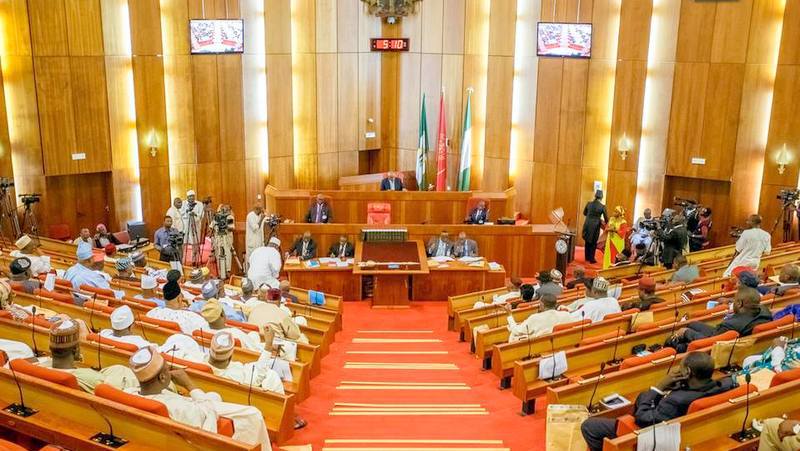
The Nigerian Senate has informed the Nigeria Customs Service (NCS) of a need for a potential upward revision of the agency’s revenue target for 2024.

This move comes amidst growing concerns about the country’s escalating debt and its impact on the cost of living.

In a recent meeting with the House of Representatives Committee on Customs and Excise, Comptroller General Adewale Adeniyi revealed that the NCS generated a total of N3.21 trillion in revenue in 2023, falling short of its targeted sum of N3.67 trillion. This shortfall was attributed to various factors, indicating challenges in meeting ambitious revenue goals.

Chairman of the Senate Committee on Customs, Isah Jibrin, emphasized the need for the NCS to contribute significantly to reducing Nigeria’s debt burden through increased revenue generation. He stated, “Customs is one of the major providers of internally generated revenue, and as it is today, we expect them to play one of the major roles in this drive to reduce our debt burden.”

Jibrin highlighted the importance of customs concessions in sectors such as agriculture and solid minerals to stimulate economic growth. However, he also acknowledged concerns about the high level of unemployment in Nigeria, noting that while the NCS could create some jobs, it cannot address the broader issue of widespread unemployment.

One proposal under consideration is granting waivers to owners of smuggled vehicles to regularize their Customs duties payment. This move aims to provide a window for individuals to comply with regulations, albeit with certain conditions attached.

However, experts and economists are questioning the wisdom of transforming customs into a revenue-generating agency, arguing that such a strategy could have detrimental effects on the economy.

Critics argue that prioritizing customs revenue generation over trade facilitation could have negative consequences for the economy. Economic experts caution that higher customs duties on imported goods could lead to decreased demand, ultimately resulting in lower overall revenue collection for the agency.

Dr. Ifeanyi Okonkwo, an economist, expressed concern over the Senate’s emphasis on revenue generation, stating, “The duty of customs is to facilitate trade, not to generate revenue.” He warned that higher customs duties would inflate prices of imported goods, reducing consumer purchasing power and stifling economic growth.

Furthermore, Okonkwo criticized the lack of foresight among policymakers, describing their approach as “mentally lazy.” He urged the government to focus on policies that promote trade and investment rather than relying solely on customs revenue to address fiscal challenges.

They noted that the impact of higher tariffs on imported goods extends beyond consumer purchasing power. Increased tariffs can also disrupt supply chains and hinder domestic production, particularly in industries reliant on imported raw materials or machinery. Small and medium-sized enterprises (SMEs) may bear the brunt of higher tariffs, as they often lack the resources to absorb increased costs or seek alternative suppliers.

Additionally, higher tariffs can dampen foreign investment by raising the cost of doing business in Nigeria. Foreign companies may reconsider investment plans or seek opportunities in countries with more favorable trade policies, resulting in reduced capital inflows and economic growth.

Addressing the volatility of the naira exchange rate, Adeniyi highlighted the need for coordination between monetary and fiscal authorities to stabilize the currency. He proposed establishing a spot rate for customs duties payment to provide certainty for importers and facilitate better planning.

Stakeholders have emphasized the importance of adopting policies that support long-term economic growth and development. While generating revenue is essential, experts caution against prioritizing short-term gains at the expense of broader economic stability and prosperity.

The debate involves calls to balance fiscal objectives with trade facilitation and economic growth, which requires careful consideration and collaboration between policymakers, industry stakeholders, and experts. Economic experts warned that failure to strike the right balance could have far-reaching implications for Nigeria’s economic prospects and the well-being of its citizens.


Stacks (STX) Bullish Momentum Uncertain, MultiversX (EGLD) Accepted by Liechtenstein Principality, Pullix (PLX) to Introduce Profit Reward Model

0

After the fallout of the Bitcoin ETF, some tokens have begun to recover while many are still in the downtrend. Stacks (STX) trading charts appear to be neutral with the bullish pattern still neutral. However, MultiversX (EGLD) is expanding its reach after its acceptance by the Liechtenstein Principality. The next few days will be an exciting adventure for Pullix (PLX) investors as the token introduces a profit reward model. As one of the best DeFi projects in the market, investors are buying the PLX token massively ahead of launch. More details below.

Pullix (PLX) Introduced a Profit Share Model as Presale Nears End

With Stacks stagnating and MultiversX getting more adoption, Pullix is rounding up its presale with a feature called the profit share model. This feature will reward investors with a percentage of the platform’s daily earnings. Users will earn passive income by providing liquidity to the platform’s automated market makers. After raising close to $5 million in presale, Pullix presale is set to end in 70 days.

Pullix offers crypto investors an alternative trading platform where they are the controller of their assets. To do this, the platform eliminates third-party intervention and allows only investors to hold the key to their wallets. Also, the platform offers high-level security, extra liquidity advantage, and speedy processing of transactions.

Having been listed on CoinGecko, Pullix has sold 80 million tokens and registered 15k participants. Unlike many exchanges that rip Investors through high transaction fees, investors can complete their transactions by paying lower fees on Pullix. The platform ERC20 token PLX is in the last two stages of presale and sold for $0.10.

The token burn feature will ensure that the remaining unpurchased tokens are set for burning at a later date. Pullix is rated one of the best DeFi projects due to its revolutionary solutions to the problems of exchanges. At a time when the bull run is getting closer, an investment in Pullix can trigger a 20x ROI when the project is launched.

Stacks (STX) Fails to Project a Clear Bullish Path

Stack’s (STX) latest trajectory has indicated an unclear bullish pattern. The token witnessed a serious uptrend last year when it traded at around $2 in September 2023. While the bear market continues to hover around, the  Stacks trading charts showed that the token gained slightly 6% in the past month.

Having failed to mount a serious challenge at the resistance zone of $2, the Stacks coin may need the injection of whales to ensure stability. As such, Stacks may struggle to replicate the all-time high of $3.61 it attained in 2021.

MultiversX (EGLD) Given Support by Liechtenstein Principality

MultiversX (EGLD) is one of the top cryptos to be accepted by Liechtenstein. In collaboration with xMoney.com, the European country has approved the trading of BTC, ETH, and MultiversX among others as cryptocurrency global acceptance continues.

The MultiversX coin price witnessed a slight 5% increase in the past 7 days. However, the MultiversX trading volume has been dropping by over 15% daily average for the past week, but the continued global adoption of the EGLD token could trigger a more positive upswing for the token.

For more information regarding Pullix’s presale see links below:

Visit Pullix

Join The Pullix Communities

Investors Secure Early Spot on Algotech (ALGT) Presale as NEAR and LidoDAO (LDO) Dump

0

Drawn in by the impressive $1.1 million secured within a mere two days during the private seed sale, investors are strategically aligning themselves in the Algotech (ALGT) presale, capitalizing on the chance presented by a project gaining ongoing attention and support. Concurrently, other tokens like NEAR Protocol (NEAR) and LidoDAO (LDO) find themselves maneuvering through a phase of a market downturn.

TLDR

  • Algotech’s (ALGT) potential returns attract investors to acquire tokens for $0.04 in Stage 1 of its presale.
  • NEAR Protocol (NEAR) faces challenges in the aftermath of the 100% price surge in December.
  • LidoDAO (LDO) finds itself in turbulent waters amidst a controversial decision to endorse competing bridges from Wormhole and Axelar.

Algotech (ALGT): Revolutionizing Crypto Trading With Innovative Ownership Model

Algotech (ALGT) has emerged as a trailblazer among the DeFi companies with its groundbreaking approach to investor engagement. Positioned among the ERC20 coins, Algotech (ALGT) secures its standing as a leading trading platform, offering a unique value proposition that sets it apart in the market.

Algotech (ALGT) actively conducts research and development to formulate pioneering strategies such as hedging, mean reversion, and trend following.

Beyond being a traditional investment, Algotech (ALGT) provides its holders with a distinctive privilege – partial ownership of its state-of-the-art trading software. This ownership structure, combined with regular payouts from earnings, transforms investors from mere participants into stakeholders in Algotech’s (ALGT) journey.

As Algotech (ALGT) progresses through its presale stages, starting with an altcoin price of $0.04 in Stage 1, the project projects an impressive surge to $0.15 at launch.

This trajectory represents a remarkable 275% increase from Algotech’s initial price, making ALGT the best altcoins on the market.

NEAR Protocol (NEAR): Partnership With KAP Games and Resilient Price Movement

On December 16, KAP Games forged a strategic partnership with NEAR Protocol, establishing NEAR as a co-grant partner. This collaboration underscores the growing synergy between the gaming platform and NEAR Protocol’s (NEAR) blockchain technology.

Subsequent to the announcement, NEAR Protocol’s (NEAR) price surged by almost 100% from $2.19 on December 16 to $4.37 by December 27.

Yet, the surge proved fleeting for NEAR Protocol (NEAR), as the Bears asserted control over NEAR Protocol’s price from the start of the year. As of February 2, Near Protocol (NEAR) is positioned at $2.85, representing a 30% increase from its valuation on December 16.

Analysts maintain an optimistic outlook for Near Protocol’s future trajectory, estimating that NEAR may reach $4.39 by March. This positive projection reflects the market’s confidence in NEAR Protocol’s (NEAR) ability to sustain its upward momentum and solidify its position in the blockchain space.

LayerZero’s Unilateral Move Sparks Tension in the LidoDAO (LDO) Community

Recently, LayerZero took an unconventional step by launching a Lido stETH bridge last October without seeking explicit permission from LidoDAO (LDO).

While blockchain protocols often boast about their “permissionlessness,” the move by LayerZero raised concerns within the LidoDAO (LDO) community. Despite seeking endorsement from LidoDAO (LDO), LayerZero deployed the bridge before receiving official approval, sparking tension among community members.

Critics within LidoDAO (LDO) expressed their dissatisfaction, perceiving LayerZero’s marketing as an attempt to position itself as an official Lido partner without the community’s formal approval.

Amidst this turbulence, LidoDAO (LDO) experienced a price downturn over the past month. Starting at $3.45 in January, LidoDAO (LDO) saw a decrease to $2.81 on February 2, resulting in a loss of 18%.

Analysts, however, remain optimistic about LidoDAO’s (LDO) future. With expectations that the bulls will regain control, there is anticipation of a pushback that could propel LDO back to the $3.5 level.

Visit Algotech Presale

Join The Algotech Community

Niger State Governor’s Ban on Wholesale Food Sales Sparks Fresh Concern As Economic Hardship Bites Harder

0

In the face of Nigeria’s escalating economic challenges and surging inflation rates, Governor Mohammed Bago of Niger State has imposed a ban on the wholesale purchase of food items at local markets by traders from other states.

This move has ignited a wave of concern and criticism, particularly among the state’s residents already reeling from the burdens of rising living costs and economic instability.

Governor Bago attributed the soaring prices of essential commodities, especially food items, to the influx of traders from neighboring states who descend upon local markets with heavy trucks, exacerbating scarcity and driving prices beyond the reach of ordinary citizens. In response to mounting grievances and protests, he announced an executive order aimed at curbing the activities of what he termed “food speculators.”

“I have decided to issue an executive order effective today to stop food speculators from invading our local markets to mop up our farm produce to other states and neighboring countries, thereby making things difficult for people of the state and Nigeria as a whole,” he stated.

Under the new directive, any truck found purchasing food supplies in bulk at rural markets will face confiscation, with the produce subsequently auctioned off. The governor emphasized the necessity of this measure to alleviate the hardships faced by residents and restore stability to the local food market.

The announcement of the ban follows widespread discontent among the populace, culminating in protests across the state capital, Minna. Demonstrators, predominantly comprising youths and women, voiced their frustration over the escalating cost of living and the perceived failure of the government to address their plight adequately.

On Monday, streets in Minna were flooded with protesters blocking trucks suspected of ferrying food items through the state. Their grievances, echoed by many across the nation, reflect the growing disillusionment with the economic policies and governance under President Bola Tinubu’s administration.

Nigeria has been grappling with a myriad of issues, including declining oil revenues, currency devaluation, and persistent inflation, all of which have taken a heavy toll on the populace.

While Governor Bago justified the ban as a measure to safeguard the interests of local consumers, critics argue that it could exacerbate the very issues it seeks to alleviate. Economists warn that such protectionist measures could distort market dynamics, leading to inefficiencies, reduced competition, and ultimately, higher prices for consumers.

Moreover, the ban risks exacerbating tensions between neighboring states and could have ripple effects on regional trade and economic cooperation. With Nigeria already grappling with economic downturns and strained international relations, such unilateral actions may further isolate the country and impede efforts toward broader economic recovery.

Impact on the Masses Amid Economic Hardship

Nigeria’s economy has been severely strained in recent years, with skyrocketing inflation rates and dwindling purchasing power eroding the livelihoods of millions. The ban on wholesale food sales adds another layer of complexity to an already dire situation, further restricting access to affordable food for vulnerable populations.

The plight of ordinary Nigerians, already burdened by the high cost of living, is exacerbated by the imposition of such restrictive measures. Many families are struggling to put food on the table, with basic necessities becoming increasingly out of reach.

The ban threatens to deepen food insecurity and exacerbate social tensions, particularly among marginalized communities already on the brink of destitution.

As Nigerians grapple with the harsh realities of economic hardship and inflation, Governor Bago’s ban on wholesale food sales, while framed as a measure to protect local consumers, comes with potential long-term consequences. Stakeholders and critics said it underlines the critical state economic hardship has brought to bear upon Nigerians presently, calling for urgent action from the government to address it.

Nigerians Are Spending More on Foreign Education Than the Nation’s Education Budget

1

This is a very important observation from the Central Bank of Nigeria: “Another report projects the number of Nigerian students studying abroad to exceed 100,000 by 2022. Given this data, it’s crucial to highlight that between 2010 and 2020, foreign education expenses amounted to a substantial US$28.65 billion, as per the CBNs’ publicly available Balance of Payments Statistics. Similarly, medical treatment abroad has incurred around US$11.01 billion in costs during the same period. Consequently, over the past decade, foreign exchange demand for education and healthcare has totalled nearly US$40 billion.

“Notably, this amount surpasses the total current foreign exchange reserves of the CBN. Mitigating a significant portion of this demand could have resulted in a considerably stronger Naira today,” – Oluyemi Cardoso, Central Bank of Nigeria Governor.

So, if we have great schools and hospitals, Naira will breathe. 

More so, if you focus on the education data, over ten years, close to $30 billion, meaning that we are spending $3 billion yearly on foreign education. This number is more than the total education budget of the federal government which hovers around $2 billion – $2.5 billion yearly. In other words, Nigerians spend more on foreign education than the federal government does in the nation’s educational systems. That is a revelation and shows a total failure in the educational sector in the last decade.