DD
MM
YYYY

PAGES

DD
MM
YYYY

spot_img

PAGES

Home Blog Page 3374

Biden Administration Bans Kaspersky Lab Products in the US, Citing National Security Concerns

0

The Biden administration has banned the sale of Kaspersky Lab products and services in the United States, citing significant national security risks.

Commerce Secretary Gina Raimondo announced the crackdown during a call with reporters, emphasizing the potential threat posed by the Russian cybersecurity firm.

“Russia has shown it has the capacity – and even more than that, the intent – to exploit Russian companies like Kaspersky to collect and weaponize the personal information of Americans,” Raimondo stated.

The prohibition, which takes effect on July 20, will prevent the sale of Kaspersky software to new customers in the US. Furthermore, starting September 29, Kaspersky will be banned from distributing software updates and malware signatures to existing US customers.

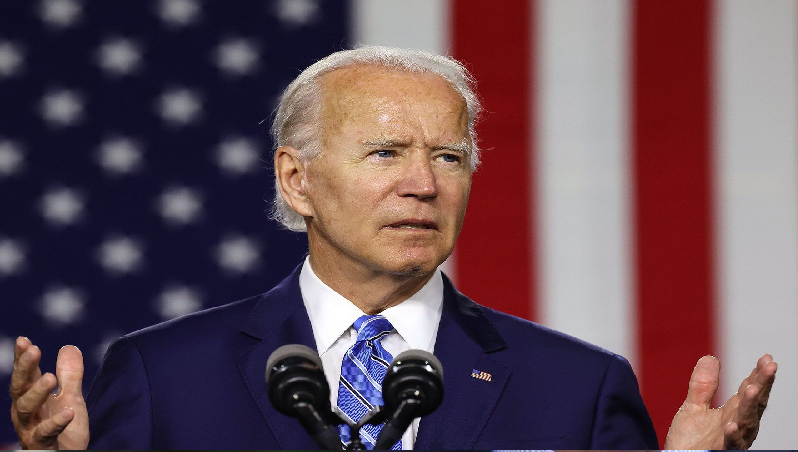
This move, which follows the crackdown on China-based TikTok, is intended to eliminate any ongoing threat posed by the company’s software being used within the United States.

Highlighting the potential dangers of Kaspersky’s operations, Raimondo noted, “Kaspersky, based in Moscow, is basically at the mercy of Putin, and with its tools installed all over American computers, the antivirus maker could – ironically enough – be ordered or forced to act as a conduit into those systems by the Kremlin.”

The US government’s decision follows a thorough investigation that concluded Kaspersky’s operations in the United States posed an unavoidable national security risk. The investigation revealed the Russian government’s capacity to influence or direct Kaspersky’s operations, leveraging the company’s technology for offensive cyber activities.

An official statement from the US government said: “The company’s continued operations in the United States presented a national security risk — due to the Russian Government’s offensive cyber capabilities and capacity to influence or direct Kaspersky’s operations – that could not be addressed through mitigation measures short of a total prohibition.”

In response to the ban, Kaspersky Lab issued a detailed statement asserting that the White House’s decision was driven by geopolitical tensions rather than a fair evaluation of the company’s integrity. Kaspersky denied any involvement in activities threatening US national security and vowed to explore all legal avenues to maintain its operations and relationships within the US.

“Kaspersky does not engage in activities which threaten US national security and, in fact, has made significant contributions with its reporting and protection from a variety of threat actors that targeted US interests and allies,” the company said.

Kaspersky has been there before

The Biden administration’s action against Kaspersky is not an isolated incident. It follows a series of measures aimed at reducing the influence of the Russian cybersecurity firm in the US. In 2017, the Department of Homeland Security (DHS) issued a directive mandating federal agencies to remove and discontinue the use of Kaspersky Lab products on their IT systems. This decision followed reports suggesting that Russian government operatives had exploited Kaspersky antivirus software to steal classified material from a computer belonging to a National Security Agency (NSA) contractor.

In an effort to allay these concerns, Kaspersky Lab offered to open its source code for third-party review. Despite this gesture, the scrutiny over the company’s ties to the Russian government persisted.

The following year, the National Defense Authorization Act (NDAA) for Fiscal Year 2018 was enacted, formally prohibiting the use of Kaspersky products by federal agencies. This legislative move underscored the U.S. government’s ongoing apprehension regarding the potential security risks posed by the software.

Further intensifying the restrictions, in March 2022, the Federal Communications Commission (FCC) added Kaspersky products and services to its list of communications equipment and services deemed to pose a threat to national security. This addition came shortly after Russia’s illegal invasion of Ukraine, reflecting heightened concerns about cybersecurity threats emanating from Russian entities.

Broader Efforts Against Tech Companies from Hostile Nations

This move is part of broader efforts by the US government to contain threats posed by tech companies based in hostile nations. Washington has also targeted Chinese-owned TikTok, citing national security concerns. The Biden administration, like its predecessor, has expressed concerns that the app could be used by the Chinese government to gather sensitive data on American users or to spread misinformation.

TikTok’s parent company, ByteDance, has faced extensive scrutiny and legal challenges in the US. The Trump administration attempted to ban the app in 2020, though the effort was blocked by the courts. Recently, several states have enacted laws prohibiting the use of TikTok on official devices, and US lawmakers have passed a bill, which President Biden signed into law, to further restrict TikTok’s operations.

These stringent measures underscore the significant challenges faced by foreign tech companies operating in the US market, especially those originating from countries considered adversaries.

The bans and restrictions complicate their ability to do business and maintain user bases in one of the world’s largest tech markets. These companies must navigate an increasingly hostile regulatory environment and the potential for sudden policy shifts that can drastically impact their operations.

Kaspersky said “the primary impact of these measures will be the benefit they provide to cyber crime,” adding that “international cooperation between cyber security experts is crucial in the fight against malware, and yet this will restrict those efforts.”

Trump Proposes Automatic Green Cards for International Students Graduating from US Colleges

0

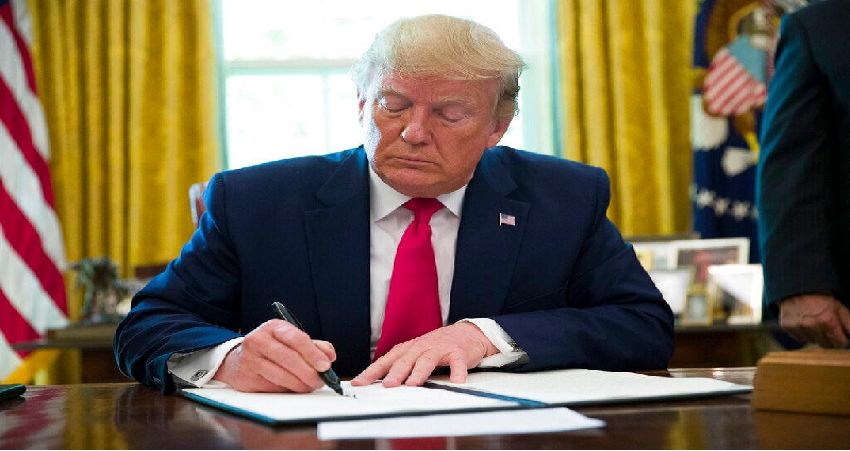
Former United States President Donald Trump recently proposed a significant change to the US immigration system, suggesting that Green Cards should be automatically granted to international students who graduate from US colleges.

This proposal, if implemented, would mark a substantial shift in how the US handles immigration, particularly in retaining international talent.

Presently, the US grants 1.1 million permanent legal resident visas, also known as Green Cards, each year. The majority of these visas are allocated to individuals with family ties to US citizens rather than based on skills or employment.

The Green Card, officially known as a Permanent Resident Card, allows foreign nationals to live and work permanently in the United States. However, obtaining a Green Card is a lengthy and complex process involving various visa categories and often long waiting periods.

Trump’s proposal aims to provide a direct pathway to residency for hundreds of thousands of international students, aligning with efforts to attract and retain top global talent. This could significantly increase the number of skilled immigrants contributing to the US economy and innovation.

Under his new immigration plan, Trump aims to cut the number of family-sponsored visas, increase those he calls merit-based, reduce humanitarian-based visas (such as for asylum seekers and refugees) by half, and stop the diversity visa program, also known as the Green Card lottery.

Trump refers to the new proposal as the “Build America visa,” which would be determined by points including age, English proficiency, education, offer of employment or promise of investment, and passing a test on American history and government.

Regarding the Diversity Visa program, Trump argued that the random selection system used to pick successful applicants is contrary to American values.

“What I would like is a new legal immigration system that protects American wages, promotes American values, and attracts the best and brightest from all around the world,” Trump stated.

He added, “What I will do is you graduate from college, I think you should get automatically as part of your diploma a Green Card to be able to stay in this country.” He emphasized that this policy would apply to graduates from all types of US colleges, including junior colleges and those with doctorate degrees.

A shift from his anti-immigrant stance

This proposal represents a stark contrast to Trump’s previous stances on immigration, which were often marked by strict regulations and anti-immigrant sentiments. So far during his 2024 presidential campaign, Trump has focused heavily on issues related to border security and illegal immigration.

Deportation Plans

One of Trump’s most controversial immigration policies was his approach to deportation. His administration sought to deport millions of undocumented immigrants, prioritizing those with criminal records but also targeting those without.

This policy led to widespread fear and uncertainty among immigrant communities. Trump’s administration increased Immigration and Customs Enforcement (ICE) raids and expanded the categories of deportable offenses.

Travel Ban

Another notable policy was the travel ban, often referred to as the “Muslim Ban.” Initially introduced in January 2017, the executive order banned entry to the US for citizens from several predominantly Muslim countries.

After multiple revisions and legal challenges, the Supreme Court upheld a version of the ban in June 2018. This policy was highly controversial and faced criticism for being discriminatory and for separating families.

Border Wall

Trump also prioritized building a wall along the US-Mexico border to prevent illegal immigration. Although a complete wall was never built, his administration constructed or replaced several hundred miles of barriers. The wall was a central symbol of his immigration policy, aimed at reducing illegal border crossings.

His new proposal suggests a dramatic shift, aiming to streamline the process for skilled immigrants to remain in the US.

Polygon (MATIC), Convex Finance (CVX), And ETFSwap (ETFS) To Surge As Crypto Gets Endorsement From Donald Trump

0

US Presidential Candidate Donald Trump’s endorsement of crypto in his bid for the presidency created a stir among many people, fueling a growing crypto acceptance that may cause ETFSwap (ETFS), along with Polygon (MATIC) and Convex (CVX), to surge in value.

ETFSwap (ETFS) To Enjoy Increased Adoption As Crypto Gets Presidential Endorsement From Donald Trump

Already attracting the majority of crypto investors for its abundant utility and potential market value, the ETFSwap (ETFS) is on the verge of a massive surge as more people buy the ETFS token, which represents the most valuable crypto asset in 2024 after Bitcoin (BTC) and Ethereum (ETH). The recent approval of the Spot Ethereum ETFs and the potential July 2 trading date serve to bolster investor interest in the ETFSwap (ETFS), as the platform already leads in the tokenization of ETFs and other valuable real-world assets.

The ETFSwap (ETFS) now offers the opportunity to trade Spot Ethereum ETFs right from the moment it launches. Investors can also trade other crypto ETFs and ETFs across several real-world industries. Buying the native ETFS tokens opens up the possibility for everyone to earn high yields from ETF staking and generate passive income in annual percentage yields (APY) of up to 87% when they stake the tokens.

Whether you’re new to trading crypto or an experienced trader, AI-enabled investment tools such as ETF Screener and ETF Tracker will be highly useful for reading, analyzing, and processing large volumes of data and making recommendations based on historic data, pattern recognition, market sentiments, and trends.

The ETFSwap (ETFS) integrates blockchain technology with ETFs efficiently because it deals only with investment banks that are MiCa-compliant and regulated to deal in both securities and crypto trading. Additionally, the ETFSwap (ETFS) is audited and verified by CyberScope, the leading blockchain security firm, which guarantees that all smart contracts on the platform are safe and secure.

Only ETFS token holders can access the ETFSwap (ETFS) platform and all its innovative features. So, seize this opportunity to buy the tokens at the current lowest price of $0.01831 in this presale stage before they rise to $0.0384 in the next stage.

Polygon (MATIC) To Lead Layer 2 Crypto Surge

Polygon (MATIC) has sparked bullish sentiment in the market following its strategic $30 million purchase of research company Toposware. Additionally, Polygon (MATIC) has launched a Community Grants Program aimed at supporting blockchain research by distributing 1 billion POL tokens over the next ten years. The program began with an initial distribution of 35 million Polygon (MATIC) tokens for the first season, totaling about $23 million.

This news coming out of the Polygon network has led some analysts to predict that the Polygon (MATIC) price will soon increase from $0.7809 to potentially $0.9803. With the general sentiment around crypto being bullish since the pro-crypto comments by Donald Trump,  many investors are keenly monitoring the Polygon (MATIC) trend as they prepare for a possible correction to the upside for major cryptocurrencies.

Convex Finance (CVX), The DeFi 2.0 Yield Optimizer

Convex Finance (CVX) is a second-generation decentralized finance (DeFi) protocol that provides yield farming services. The platform optimizes yield for the Curve protocol and lets Convex Finance (CVX)  token holders earn boosted Curve (CRV) rewards.

Users of Convex Finance (CVX) are allowed to earn extra trading fees and crypto staking rewards without locking their CRV tokens, which affords them a secondary source of rewards on the tokens they already own from the Curve network. This option for Convex Finance (CVX) users is a major reason for the growth of Convex Finance (CVX).

Since US presidential candidate Donald Trump made his remarkable endorsement of crypto, Convex Finance (CVX) has risen by 100% and is trading at $4.28 at the time of writing.

Conclusion On The Potential Surge Of ETFSwap (ETFS) and Crypto Following Endorsement From Donald Trump

While Donald Trump’s endorsement of crypto has a good impact on the market generally, only the likes of ETFSwap (ETFS), Convex Finance (CVX), and Polygon (MATIC), with their respective utility values, will see increasing demand to cause a price surge.


For more information about the ETFS presale,

Visit ETFSwap Presale

Join The ETFSwap Community

BlockDAG Takes The Lead With $52.5M Presale: A Trailblazer In Crypto Investment Amid Market Fluctuations

0

BlockDAG is commanding the spotlight in the cryptocurrency realm, having secured a massive $52.5 million in its latest presale, which clearly demonstrates the robust confidence of its investors. Currently, the platform’s daily earnings have soared to $3 million, with ambitions to increase to $5 million shortly. This rapid growth trajectory, supported by an aggressive worldwide strategy, solidifies BlockDAG’s status as a premier investment choice.

Market analysts are predicting that BlockDAG’s coin value will surge to $10 by 2025, emphasizing its significant potential for high returns. While Arbitrum (ARB) might encounter potential declines and Arweave (AR) is poised for growth, BlockDAG’s innovative approach and solid presence in the market make it the top choice for investors seeking strong returns and sustainable growth.

Exploring BlockDAG’s Global Influence and Market Reach

BlockDAG has resonated strongly within the cryptocurrency community, drawing in high-profile investors with its rapid earnings increase—currently at $3 million daily, with a target of $5 million. This positive earnings trend is anticipated to boost the coin’s value to $10 by 2025, indicating the network’s expansive growth and the profitable opportunities it offers.

BlockDAG’s ascent is largely driven by its dynamic global strategy. The network has marked its presence in significant global locales, featuring eye-catching promotional activities at London’s Piccadilly Circus and Las Vegas’s Sphere, and hosting a groundbreaking keynote from the Moon. These strategic initiatives have not only captured global interest but also reinforced BlockDAG’s competitive edge in the market.

The success of BlockDAG’s global outreach is directly linked to the remarkable results of its coin presales, which have now sold more than 11.7 billion coins, generating $52.5 million. Currently, in its 18th batch, the presale coins are priced at $0.0122 each, continuously attracting investor interest. These achievements highlight BlockDAG’s formidable market presence and bright future, establishing it as a highly desirable investment option.

Market Dynamics: A Look at Arbitrum and Arweave

Arbitrum is facing challenges, struggling to surpass the $1.26 resistance level and presently trading at $1.13. With a 30-day MVRV ratio at 10%, there’s an increased likelihood that investors may begin taking profits, potentially pushing the price below $1.10. However, if prices stabilize above $1.10, a rebound to $1.26 or potentially higher could be on the horizon, marking important levels for investors to watch.

Conversely, Arweave has transitioned from a macro downtrend to a bullish phase, according to Rekt Capital’s newsletter. Having effectively retested its previous downtrend line as support, Arweave has moved into a bullish flag formation, setting sights on the $43-$59 price range. To anchor itself within this range, it needs to maintain a close above $43, which could present significant upward potential.

Final Thoughts

As investors consider their next strategic moves in the dynamic crypto market, BlockDAG emerges as the standout selection. Its remarkable presale success, combined with a proactive global marketing strategy, underscores its dominant position and potential for extensive growth. Despite Arbitrum’s current volatility and Arweave’s opportunities, BlockDAG’s exceptional performance and strategic initiatives position it as the most attractive investment. For those looking to leverage substantial returns and pioneer crypto innovation, BlockDAG offers the most promising pathway.


Join BlockDAG Presale Now:

Website: https://blockdag.network

Presale: https://purchase.blockdag.network

Telegram: https://t.me/blockDAGnetworkOfficial

Discord: https://discord.gg/Q7BxghMVyu

Bitcoin Price Plummets to $64,000 Amid Market Uncertainty

0

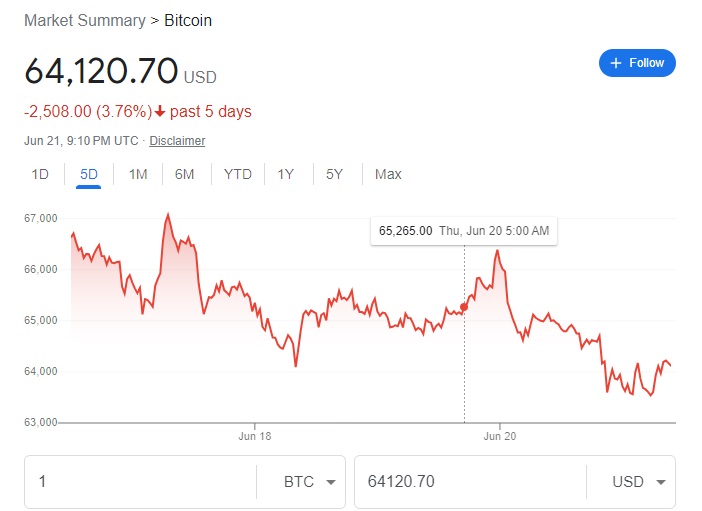
The price of Bitcoin has experienced a notable price decline, plummeting to $64,000 Mark amid heightened market uncertainty. This downturn comes as investors grapple with various factors influencing the crypto market.

This bearish trend in the price of the crypto asset is attributed to the US Federal Reserve’s hawkish stance, which has exerted significant pressure on the crypto market.

Additionally, large outflows from Bitcoin ETFs such as Fidelity’s FBTC and Grayscale’s GBTC indicate a bearish sentiment, further contributing to the downward pressure on Bitcoin’s price.

A report from analytics company CryptoQuant has further spurred market sentiment after it disclosed that Whales have sold over $1.2 billion worth of Bitcoin in the past two weeks. These significant holders of Bitcoin are reportedly showing less signs of renewed buying interest, suggesting a continued lack of upward momentum for the cryptocurrency.

Analysts noted,

“Traders are not increasing their Bitcoin holdings, and demand from large holders remains weak”. Observers suggest that crypto miners might be turning their focus to the rapidly growing AI sector, selling their Bitcoin rewards instead of holding onto them”.

Also, in a different analysis, Glassnode States that despite significant inflows into crypto investment products, Bitcoin price has remained confined within the $64-65k range, attributing it to the increased prevalence of cash and carry trades, where long positions in the U.S Spot ETFs are counterbalanced by shorting futures on the CME Group exchange, thereby mitigating the impact of these inflows on Bitcoin’s spot price.

Recent exits from spot Bitcoin ETFs, notably Fidelity’s FBTC and Grayscale’s GBTC, totaling $152.42 million, have exerted significant downward pressure on Bitcoin and other cryptocurrencies.

Fidelity’s ETF recorded the biggest exit of $83 million, followed by Grayscale with $62 million. This trend, coupled with broader market declines, has raised concerns about a new bearish phase in cryptocurrencies. Altcoins have also experienced significant losses, declining from over $760-billion to $ 603-billion since March.

The substantial exits from spot Bitcoin ETFs have no doubt intensified downward pressure on BTC, raising market sentiments about a potential new bearish phase.

Meanwhile, despite the current downturn, many analysts remain optimistic about Bitcoin’s long-term potential. While short-term uncertainty persists, the long-term outlook for Bitcoin remains bullish for many.

CEO of Binance Richard Teng remains optimistic about Bitcoin’s price in the future, predicting that it will surpass $80,000 by the end of 2024, with even greater gains expected in 2025. He highlighted a unique market cycle where Bitcoin led, followed by meme coins, unlike previous cycles.

Also, Bernstein analysts predict Bitcoin could reach $200,000 in the coming months, driven by increased institutional interest. Notably, MicroStrategy continues to aggressively accumulate Bitcoin recently adding 11,931 BC to its holdings, bringing the total to 226,331 BTC. This underscores strong institutional support amidst the market bearish nature.