DD
MM
YYYY

PAGES

DD
MM
YYYY

spot_img

PAGES

Home Blog Page 3376

BlockDAG’s Worldwide Expansion from Tokyo  to London & $52.2M Presale Success Beats Cosmos & Polygon (MATIC) Price

0

In global financial markets from Tokyo to London, BlockDAG has excelled, gathering a presale fund of $52.2 million and surpassing the market values of Cosmos and Polygon (MATIC). While MATIC recently stabilised at a price point of $0.60, despite a slight 3% fall, it’s still showing potential for recovery thanks to developments across its broader ecosystem. In contrast, Cosmos (ATOM) recorded a 10% drop over the last month, though analysts maintain a positive outlook for its rebound.

Amid these developments, BlockDAG has been capturing global attention by achieving significant technical milestones in major cities like Tokyo, Las Vegas, and London. Its impressive presale success and ongoing development achievements spotlight BlockDAG as the top cryptocurrency for 2024, paving the way for future technological advancements and investor interest.

Recent Trends in Polygon (MATIC) Prices

Polygon’s recent 3% price decrease is part of a broader 13% drop over the week and a 10% monthly decline. However, the network’s user addresses have seen significant growth, suggesting robust development within the ecosystem, which could potentially lead to a price recovery.

Additionally, Polygon has initiated a $1 billion grant programme to promote innovation and growth, which may increase the demand and utility for MATIC tokens. As the market hints at a recovery, MATIC is expected to surpass crucial support levels, fostering optimistic forecasts for its market rebound.

Future of Cosmos: Enhancing Blockchain Interconnectivity
Known for its interoperability and the seamless connection of multiple blockchains, Cosmos (ATOM) has endured a challenging phase, with a 10% decrease in the past month and an additional 6% in the last week.

Despite this downturn, optimism remains regarding a potential bullish trend in the broader cryptocurrency market. Market experts anticipate a comeback for ATOM, backed by increased trading volumes and the network’s inherent strengths. Cosmos continues to focus on interoperability and blockchain connectivity, positioning itself as a central figure in the future of decentralised applications and cross-chain functionalities.

Innovative Achievements and Technical Milestones of BlockDAG

BlockDAG has demonstrated considerable progress with its technical milestones, with notable showcases in iconic locations such as Shibuya Crossing in Japan and The Sphere in Las Vegas. These events have highlighted BlockDAG’s unique Directed Acyclic Graph (DAG) architecture and Proof-of-Work (PoW) consensus mechanism, ensuring scalability and decentralisation. Additionally, a display at Piccadilly Circus in London has further emphasised its dedication to innovation, broadening its international presence.

Recent development updates from BlockDAG, numbering over 45, showcase its commitment to continuous improvement and technological enhancement. These updates outshine major cryptocurrencies like Polygon and Cosmos and ensure BlockDAG remains a leader in blockchain innovation, providing powerful solutions for scalability and decentralisation.

Looking to the future, BlockDAG plans to expand its pioneering innovations to new strategic locations, including major technology centres and emerging markets. These efforts, combined with its successful ongoing development and the remarkable $52.2 million raised in its presale, reinforce BlockDAG’s position as the premier cryptocurrency for 2024.

BlockDAG as a Prominent Investment in the Crypto Market

BlockDAG’s significant global achievements in Tokyo, Las Vegas, and London highlight its commitment to advancing blockchain technology. As the project continues to innovate and grow, it emerges as a promising investment within the rapidly evolving cryptocurrency market.
Focusing on scalability, decentralisation, and a user-friendly mining experience, BlockDAG is poised to redefine the cryptocurrency landscape. Its notable presale success of $52.2 million further establishes its credibility and potential for future growth. For those considering investments in cryptocurrency for 2024, BlockDAG presents a unique opportunity to be part of a transformative digital economy.


Join BlockDAG Presale Now:

Website: https://blockdag.network

Presale: https://purchase.blockdag.network

Telegram: https://t.me/blockDAGnetworkOfficial

Discord: https://discord.gg/Q7BxghMVyu
 

Ogun State-based Aarti Steel Joins Growing List of Multinationals Exiting  Nigeria

0

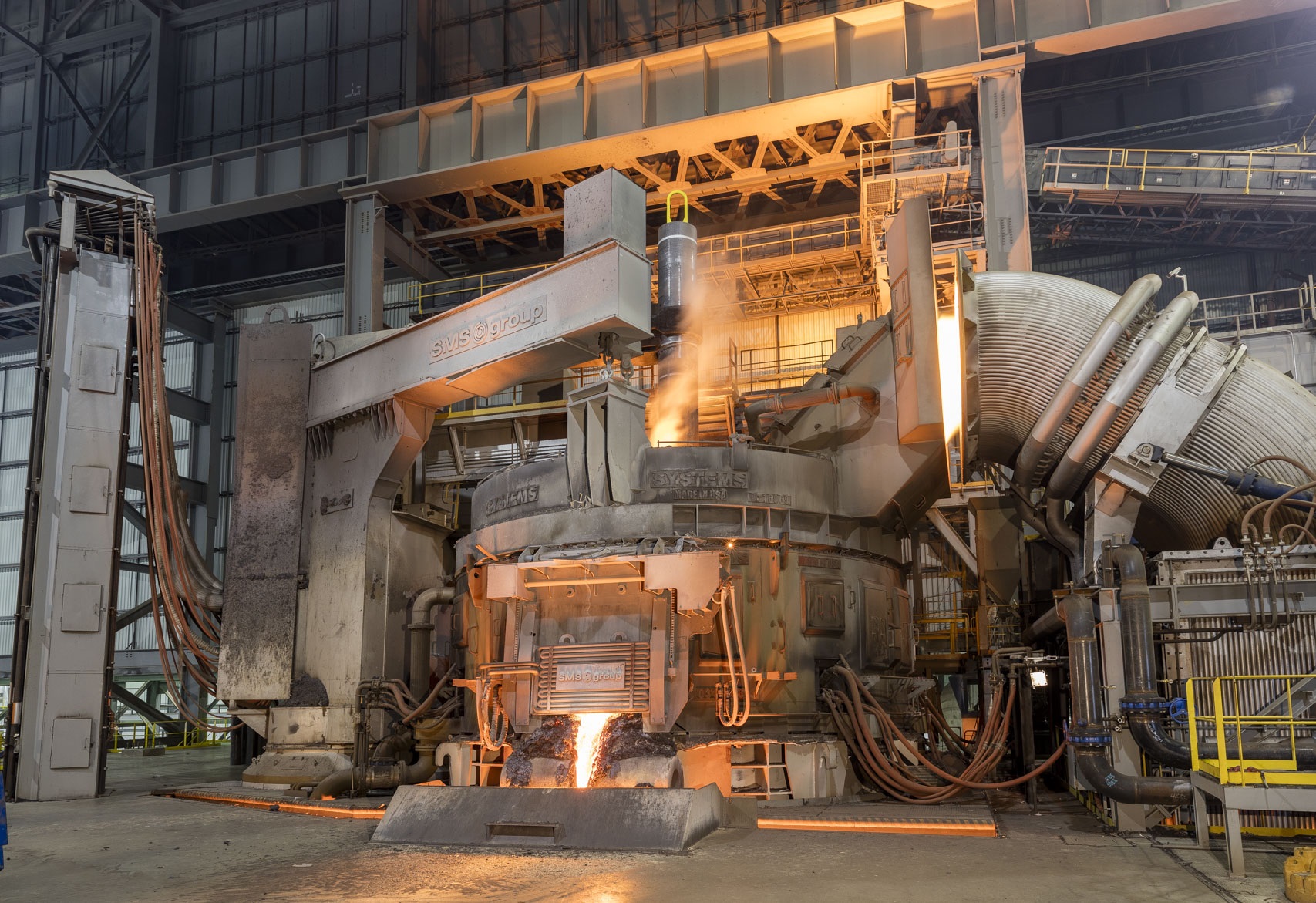
Nigeria’s economy has continued on its downward spiral that has seen a horde of companies shutter or exit the country. Another multinational corporation, Indian steel manufacturer Aarti, announces its departure from the country’s manufacturing sector, BusinessDay has reported.

This exit adds to a growing list of companies that have been forced to abandon their Nigerian operations due to insurmountable economic challenges.

According to BusinessDay the Ota, Ogun State-based steel maker is currently up for sale, with bids ranging from $50 million to $100 million.

The reasons behind Aarti’s exit are multifaceted, involving a high rate of indebtedness, a struggling economy, a depreciating currency, soaring inflation, and escalating energy costs. According to a source, who spoke on the condition of anonymity, these factors have created an untenable business environment for the steel maker.

“We are aware that Aarti Steel Nigeria has been put up for sale but we are yet to make our bid,” revealed a representative from one of the bidding companies, who requested anonymity.

Major players such as African Industries and Bharti are among those bidding to acquire Aarti, with the transaction expected to be finalized in the coming months. Another source indicated that Aarti’s management is looking to hand over the company to a credible investor, inviting potential buyers to submit their profiles.

A Growing Trend of Corporate Exits

Aarti’s decision to leave Nigeria is part of a broader trend of multinational corporations exiting the country. In the first half of 2024 alone, companies like Microsoft Nigeria, Total Energies Nigeria, PZ Cussons Nigeria PLC, Kimberly-Clark Nigeria, and Diageo PLC have all ceased operations in Nigeria. This exodus is alarming for Nigeria’s investment climate and its $1 trillion gross domestic product (GDP) ambitions.

Muda Yusuf, CEO of the Centre for the Promotion of Private Enterprise, expressed deep concern over this trend, highlighting its adverse effects on employment and Nigeria’s reputation as an investment destination.

“The continuous exit of multinationals from the economy is a serious cause for concern,” Yusuf stated. “It negatively impacts employment and the country’s perception as an investment destination.”

Aarti’s Initial Investment and Subsequent Struggles

In 2017, Aarti invested between $20 million and $30 million to establish a 120,000-capacity cold-rolled mill in Ota, Ogun State. This facility was designed to support Nigeria’s downstream industries by producing home appliances, roofing sheets, metal furniture, and more. However, the economic conditions have since deteriorated, diminishing the initial promise of this investment.

G.C. Tripathi, a director at Aarti Steel Nigeria, claimed ignorance of the sale process, noting that strategic decisions are made at the company’s Indian headquarters. Nonetheless, he acknowledged that the business is seeking additional finance and bank commitments to increase production.

A senior management official confirmed to BusinessDay in March 2024 that the company was indeed seeking investors due to high levels of debt and growing concerns from suppliers about missed delivery deadlines.

“We are seeking a lifeline,” the official told BusinessDay.

Sectoral Decline and Broader Economic Challenges
The exit of Aarti is symptomatic of the wider issues plaguing Nigeria’s manufacturing sector. The basic metal, iron, and steel subsector experienced a decline in growth, slowing to 0.57% in the first quarter of 2024 from 1.1% in the fourth quarter of 2023. Year-on-year, the subsector grew by a mere 0.11%, from 0.46% to 0.57%.

Manufacturers attribute this downturn to Nigeria’s increasingly hostile business environment and rising insecurity, which are eroding profits and depleting shareholders’ funds. Segun Ajayi-Kadir, Director General of the Manufacturers Association of Nigeria (MAN), pointed to rising energy costs, foreign exchange volatility, accelerating inflation, and worsening insecurity as primary challenges.

Ajayi-Kadir also highlighted the impact of uncleared forwards by the Central Bank of Nigeria (CBN), which have resulted in significant financial losses for several operators.

“The escalating costs of power, low consumer spending, and limited access to competitive credit, along with high rates of unplanned inventory and the depreciation of the naira, are severely affecting the country’s steel industry,” Ajayi-Kadir explained.

Earlier, Oluyinka Kufile, former chairman of MAN Steel Group and CEO of Qualitec Industries, criticized government policies and the lack of seriousness in addressing the challenges faced by the steel sector.

“Poor policies and lack of seriousness by the government are killing steel companies in Nigeria,” Kufile told BusinessDay.

Nigeria’s Public Debt Soars to N121.67tn As Oil Revenue Tanks

0

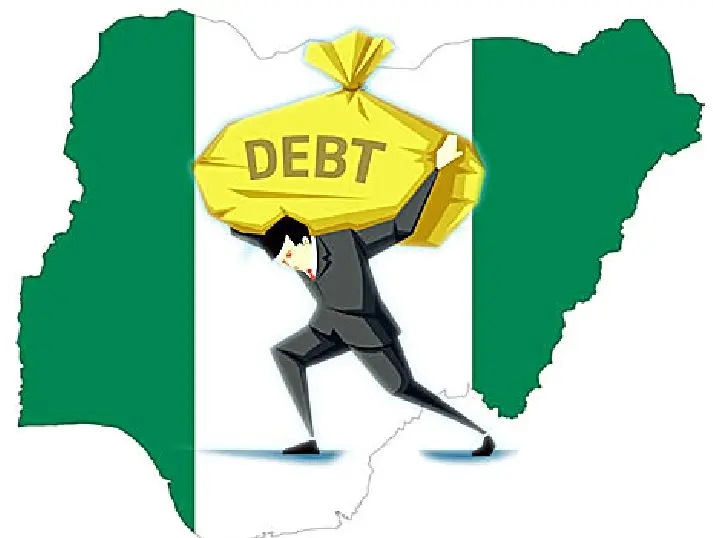
Nigeria’s Debt Management Office (DMO) has announced a substantial increase in the nation’s total public debt, which has surged to N121.67 trillion (approximately $91.46 billion) as of March 31, 2024.

This significant rise comes against a backdrop of declining oil production, the country’s primary revenue source, and escalating economic challenges.

The latest figures reveal a significant increase in the total public debt recorded at the end of 2023, which stood at N97.34 trillion (approximately $108.23 billion). This represents an increase of N24.33 trillion or 24.99% within just three months. The primary driver behind this sharp rise is the devaluation of the naira, which has effectively reduced the debt in dollar terms by $16.77 billion or 18.34%.

Breakdown of Domestic and External Debt

As of March 31, 2024, Nigeria’s domestic debt accounted for 53.96% of the total debt, amounting to N65.65 trillion (approximately $46.29 billion). The external debt component stood at N56.02 trillion (approximately $42.12 billion). Excluding the impact of naira exchange rate movements, domestic debt saw a notable increase from N59.12 trillion at the end of December 2023 to N65.65 trillion in March 2024, an increment of N6.53 trillion or 11.05%.

The DMO attributed the increase in domestic debt to new borrowing aimed at part-financing the 2024 Budget deficit and the securitization of a portion of the N7.3 trillion Ways and Means Advances from the Central Bank of Nigeria (CBN).

The DMO’s statement elaborated: “Excluding Naira exchange rate movements in Q1 2024, only the Domestic Debt component of Total Public Debt grew from N59.12 trillion on December 31, 2023, to N65.65 trillion on March 31, 2024. The increase was from new borrowing to part-finance the 2024 Budget deficit and securitization of a portion of the N7.3 trillion Ways and Means Advances at the Central Bank of Nigeria.”

Declining Oil Production

The burgeoning debt profile comes at a time when Nigeria is grappling with a significant decline in oil production, its major source of revenue. In May 2024, Nigeria’s total oil production saw a slight uptick, rising by 1.45% to reach 1.46 million barrels per day (mbpd), compared to 1.44mbpd in April. Despite this increase, the production level still fell short of the country’s OPEC quota of 1.5mbpd and the 1.7mbpd benchmark set for the 2024 national budget. The drop in oil output has exacerbated the country’s economic vulnerabilities as it limits government revenue.

Bayo Onanuga, a presidential spokesman, highlighted the severity of the situation, noting that the government currently spends an alarming 96% of its revenue on debt servicing. This staggering figure underscores the immense financial strain on the country and raises questions about the sustainability of its debt management strategy.

Recent Borrowings

Nigeria’s public debt has also been fueled by recent borrowings totaling $4.95 billion from the World Bank over the past year. These loans, aimed at addressing critical infrastructure and social issues, include:

  • A $750 million loan was approved on June 9, 2023, to enhance Nigeria’s power sector performance.
  • A $500 million loan was approved on June 27, 2023, to scale up the Nigeria for Women Programme.
  • A $700 million loan was granted in September 2023 for the Adolescent Girls Initiative for Learning and Empowerment project.
  • A $750 million loan was approved on December 14, 2023, to boost electricity access through distributed renewable energy solutions.

The latest funding, totaling $2.25 billion, includes $1.5 billion for economic stabilization reforms and $750 million to enhance non-oil revenues and protect oil and gas revenue. Additionally, the Nigerian government anticipates further loans, including a $500 million loan to improve connectivity and market access, a $750 million loan contingent on the reintroduction of previously suspended taxes, a $500 million loan to address challenges faced by Internally Displaced Persons (IDPs), and a $2.7 billion loan from the African Development Bank (AfDB) for economic and budget support.

While the rising public debt profile has been defended by the government, referring to other countries equally borrowing, critics have argued that there is nothing tangible to show for it. They said most of the loans taken by the Nigerian government have been used to service debt, pay salaries, and fund the extravagant lifestyle of public office holders.

Emirship Tussle: Federal High Court in Kano Overturns State Actions on Kano Emirates Council Law

0

In a landmark ruling that has further complicated the already contentious emirship tussle in Kano State, the Federal High Court in Kano has nullified all actions taken by the Kano state government to repeal the Kano Emirates Council Law.

This decision, which has unleashed far-reaching implications for the state’s traditional leadership structure, has sparked a fresh wave of controversy, shedding light on broader issues of governance, legality, and jurisdiction in Nigeria.

The backstory

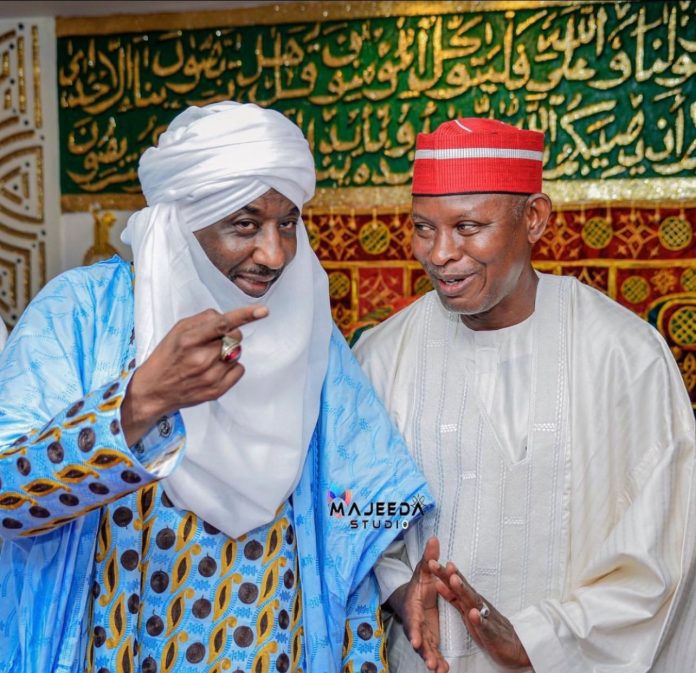
The recent legal battle stems from the Kano House of Assembly’s decision to repeal the Kano Emirates Council Law. Following this legislative action, Governor Abba Kabir Yusuf implemented the repeal by dethroning Alhaji Aminu Ado Bayero as Emir of Kano. Additionally, the governor reversed the creation of four new emirates—Bichi, Rano, Karaye, and Gaya—and sacked the emirs appointed by his predecessor, Dr. Abdullahi Umar Ganduje. The repealed law was also cited to reappoint Muhammadu Sanusi II, who had been dethroned by Ganduje in 2020, as the 16th Emir of Kano.

Aminu Babba Danagundi, the Sarkin Dawaki Babba and a kingmaker in the former Kano emirate challenged the legality of these government actions. Represented by his counsel, Chikaosolu Ojukwu (SAN), Danagundi petitioned the court to declare the government’s actions null and void, arguing that the procedures were flawed and politically motivated.

The Court’s Ruling

On Thursday, Justice Abdullahi Muhammad Liman ruled in favor of Danagundi, setting aside the Kano state government’s actions and ordering all parties to maintain the status quo. Justice Liman criticized the defendants for disregarding an interim court order and emphasized the need for adherence to legal processes.

Justice Liman said the defendants were aware of the interim order granted by the court but chose to ignore it and went ahead with the implementation of the law. He further warned that he would assume his coercive powers to enforce compliance with his order, highlighting the judiciary’s role in upholding the rule of law.

However, due to his recent elevation to the Court of Appeal, Justice Liman transferred the case to Justice Simon Amobeda for continuation.

The Judgment’s Controversy and Jurisdiction Issue

The ruling has ignited significant controversy, with critics labeling it a “black market judgment”, which appears to have cast fresh stench on the Nigerian judiciary.

The issue of jurisdiction has been a central point of contention throughout the legal tussle. Legal experts assert that the Federal High Court lacks jurisdiction over matters related to emirship, traditionally considered outside its purview.

Earlier, rights activist and senior lawyer Femi Falana, SAN, had strongly criticized the Federal High Court’s intervention.

“The intervention of the Federal High Court in the dispute arising from the deposition of Emir Ado Bayero & co as well as the restoration of Emir Sanusi Lamido Sanusi is a brazen repudiation of the decision of the Supreme Court,” Falana said.

Citing the case of Tukur versus the Government of Gongola State (1987), Falana recalled the apex court ruling that “The question raised in this claim is not a fundamental right question” because “the right to be Emir is not guaranteed by the Fundamental Rights provisions of the Constitution and the Federal High Court has no jurisdiction whatever in the matter.”

The Kano state government has accused former Governor Umar Ganduje of using federal influence to manipulate the court’s judgment. This accusation adds another layer of political intrigue to the legal proceedings, suggesting that the battle over the emirship is as much about political power as it is about traditional leadership.

Last week, the Federal High Court in Kano ruled against the Kano State government and others challenging the court’s jurisdiction over the matter. Delivering the ruling on jurisdiction, Justice Abdullahi M. Liman held that the court has jurisdiction to entertain issues concerning the applicant’s fundamental human rights, relying on Section 42 sub-section 1 and Section 315 of the 1999 Constitution as amended.

But Falana further noted that since the apex court has ruled that the right to be an emir is not a fundamental right under Chapter Four of the Constitution, the Federal High Court in Kano should have declined jurisdiction. He argued that the allegation of infringement of fundamental rights was ancillary to the substantive reliefs concerning the deposition and reinstatement of the embattled emirs.

The controversial court ruling is seen as a reflection of broader issues within the Nigerian judiciary. The Kano and Federal High Courts have been issuing conflicting orders on the emirship dispute. The case has highlighted the perception of judicial overreach, prompting critical concerns about the integrity of the Nigerian judiciary.

Legal experts believe the judgment has significant implications for the Nigerian judiciary, particularly as it overrules the precedent set by the Supreme Court.

“Today in Kano, Abdullahi Liman, a judge of the Federal High Court, has overruled longstanding Supreme Court precedent, assumed jurisdiction he does not have to grant reliefs the parties did not ask for in exercise of powers that he lacks. Anyone who does this is a rogue, not a judge,” Human rights activist and lawyer, Chidi Odinkalu, said.

BlockDAD’s Keynote Unveils X1 Miner App, $2M Giveaway Outperforming Ethereum Addresses and Solana Prices

0

Following an awe-inspiring keynote from the moon, BlockDAG‘s market and tech innovations herald new developments. This article explores the resilience of Ethereum addresses, Solana’s market struggles, and BlockDAG’s creation of top-tier mining rigs. It also highlights BlockDAG’s presale exceeding $52.3M from selling over 11.6 billion coins, showing how blockchain technology and digital currencies influence global financial landscapes and investment strategies.

Ethereum’s Price Stability Amid Selling Pressure

Ethereum’s price has remained stable despite recent selling pressure, with on-chain data indicating strong buying interest. Whale addresses holding large amounts of Ether have increased, reflecting rising confidence among big investors. A crypto analyst points to this surge in Ethereum addresses as a sign of a potential price rally. The activity in Ethereum addresses, coupled with positive sentiment from the approval of Ethereum ETFs, suggests a bullish trend, drawing comparisons to Ethereum’s past performance.

Solana Price Bearish Trends – Unable to Break Resistance

Despite market volatility, Solana faces bearish trends, repeatedly failing to breach its resistance zone. Since mid-April’s market correction, Solana has traded within a narrow range, marking a clear liquidation point. The SOL coin’s recent correction shows increased bearish sentiment. Technical indicators like the SMA act as resistance, while the RSI presents mixed signals, hinting at a possible bullish move above the oversold range. If market conditions favor bulls, Solana’s price might regain momentum and test higher resistance levels. Otherwise, it could face further bearish trends.

BlockDAG’s Revolutionary Mining Solutions & Price Surge

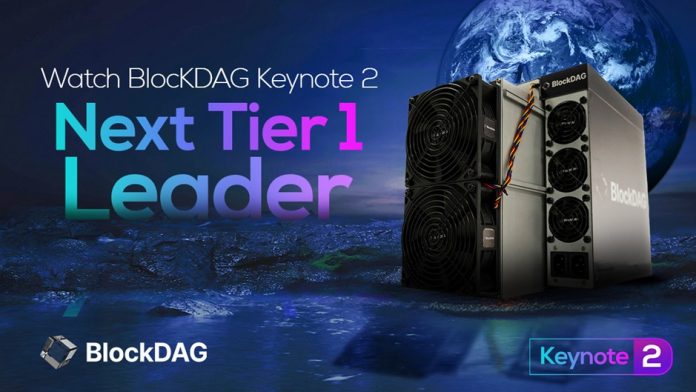
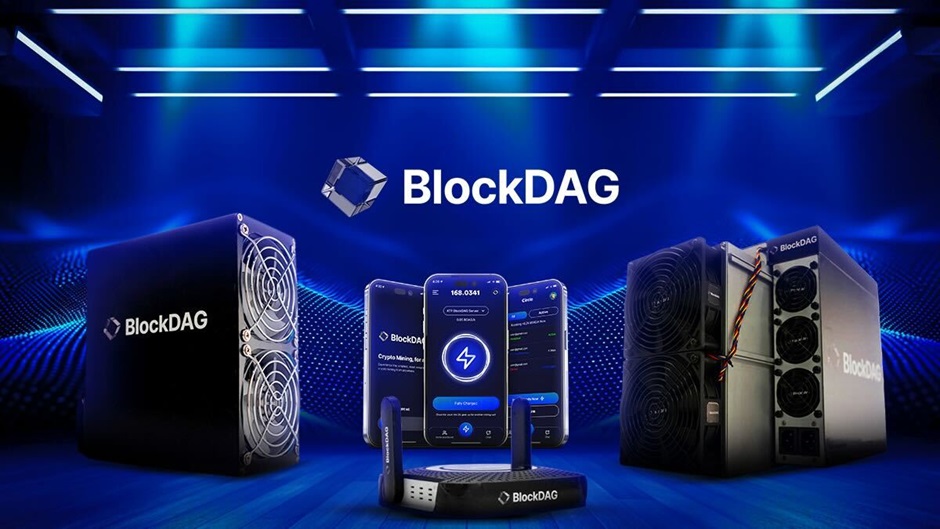
BlockDAG’s Keynote 2 from the Moon introduced its X1 Miner App and X10 Miner, showcasing highly efficient, eco-friendly mining rigs. BlockDAG’s advanced DAG-based hybrid protocol enhances security and speed while reducing power consumption across all rigs. Achieving an unmatched rate of 10 blocks per second, BlockDAG ensures robust mining rewards. For those hesitant to invest in traditional mining hardware, the X1 mobile app offers an alternative, allowing users to mine up to 20 BDAG coins daily from their smartphones.

BlockDAG is testing the X10 miners with key cryptocurrency influencers, with reviews expected soon. Work on refining the Blockchain explorer continues, with features like Smart Contract Transactions and Asset Balances in development. Transparency and trust are central to the BlockDAG community, reinforced by clear policies and no hidden fees. BlockDAG has launched a $2 million giveaway to engage its community, inviting those with at least $100 of BDAG coins to participate in various activities. This initiative, along with a 1120% price surge from Batch 1 to 18, has driven BlockDAG’s rapid market growth and attracted significant investor interest, pushing the presale to $52.3M, with over 11.6 billion coins sold.

Final Thoughts

As we examine Ethereum, Solana, and BlockDAG, it’s evident that BlockDAG is shaping the future of cryptocurrency with its exceptional mining rigs and remarkable 1120% price surge. The active Ethereum addresses indicate a bullish market driven by savvy investments, while Solana’s fluctuating price highlights market volatility. However, BlockDAG stands out with its sustainable and efficient mining rigs. These trends highlight a future where innovation and adaptability drive the cryptocurrency sector forward, with BlockDAG leading the way.


Invest in the BlockDAG Presale Now:

Presale: https://purchase.blockdag.network

Website: https://blockdag.network

Telegram: https://t.me/blockDAGnetwork

Discord: https://discord.gg/Q7BxghMVyu