DD
MM
YYYY

PAGES

DD
MM
YYYY

spot_img

PAGES

Home Blog Page 3395

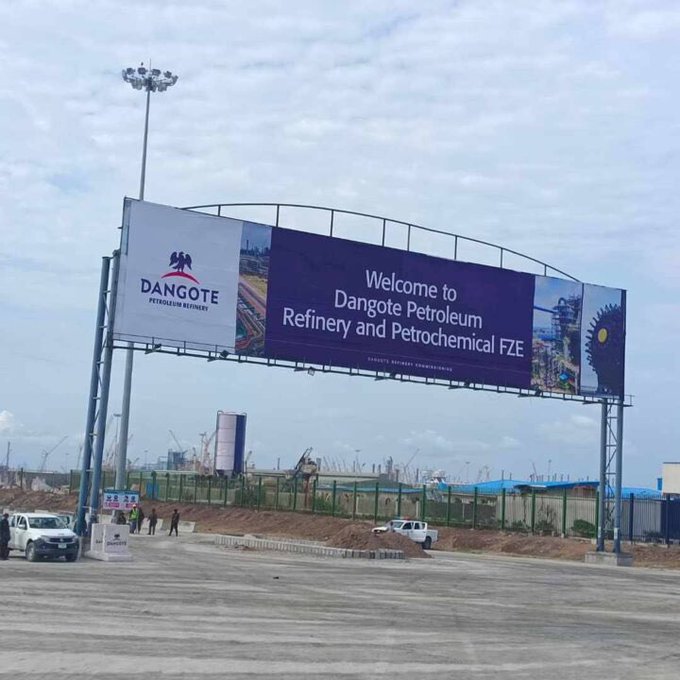
Nigeria Needs To Help Dangote Refinery As It Plans to Import Crude Oil from USA

1

If indeed it is true that Dangote Refinery is sourcing crude oil from outside Nigeria,  it would be a major own-goal for Nigeria: “Dangote Refinery, Africa’s largest refinery, is set to begin crude oil import from the United States in February…According to reports from Bloomberg, Trafigura Group has brokered a deal to supply Dangote Refinery with 2 million barrels of WTI Midland crude expected to be delivered by the end of next month, marking the first instance of the refinery purchasing non-Nigerian crude.”

If that is the case, the whole construct of stabilizing Naira via Dangote Refinery fades. Yes, you cannot expect the company to import with USD dollars, and sell on Naira terms.

Yet, I have made the point here that the forward-selling of crude oil for immediate cash will deliver a victim, and that victim would be our local refineries. Simply, if we subtract crude oil Nigeria ships to those who gave us loans, as part of repayment, and the little we need to run the affairs of the nation, we may not have enough for companies like Dangote Refinery, based on our production capacity, despite the national obligations to supply them feedstuff.

Historically, this has happened many times in the nation in other critical sectors. Our federal contracting system does not have a lot of “memories” as we make contracts forgetting previous obligations. Two cases:

Case 1: A company was given permission to build a power plant, and part of the deal was to use existing electricity grid poles to distribute the power. Years later, Nigeria signed another contract with a DISCO, assigning the rights of the poles to the DISCO, forgetting the pre-existing contract. The DISCO then blocked the power company from access to the poles. They went to court…and court is happening as usual.

Case 2: A company was promised gas to power a city-wide power plant by the federal government from a national gas asset. Later, the government sold the asset, without a clause to the new buyer to honour existing obligations. The new asset owner is not interested in working with the local power plant as you can make more money in the international market. Today, that power firm is not operating.

So, as Dangote Refinery was bragging about the assurance of crude oil from Nigeria, I said “Are you really sure?” Today, the company has learnt small lessons. Good enough that it has found alternatives. Good luck Alhaji, you will succeed!

Dangote Refinery’s Move to Import Crude Oil from the US Raises Questions

0

Dangote Refinery, Africa’s largest refinery, is set to begin crude oil import from the United States in February. This significant shift, which reflects the increasing competitiveness of American barrels on the global stage, also marks a departure for Dangote Refinery, which has traditionally sourced crude exclusively from Nigeria.

According to reports from Bloomberg, Trafigura Group has brokered a deal to supply Dangote Refinery with 2 million barrels of WTI Midland crude expected to be delivered by the end of next month, marking the first instance of the refinery purchasing non-Nigerian crude.

This move, which signals a response to the changing oil industry, where the United States is gradually becoming a major player in the global supply chain, has raised a lot of questions.

The Dangote refinery, boasting a substantial capacity of 650,000 barrels per day, commenced operations earlier this month.

Initially targeting a processing rate of 350,000 barrels per day, the refinery aims to gradually scale up production toward its full capacity. While the facility primarily sourced domestic crude through a supply agreement with the trading arm of the state-owned Nigerian National Petroleum Company Limited (NNPCL), this recent deal with Trafigura showcases a strategic move to diversify crude sources.

About a month ago, the refinery received its first shipment of Nigeria’s Agbami crude, facilitated by a trading unit of Shell, marking a significant step in utilizing domestic resources. Subsequent deliveries included Nigeria’s Amenam, Bonny Light, and CJ Blend streams.

However, this strategic shift towards importing US crude has raised questions about the NNPCL’s ability to meet its contractual obligations with Dangote Refinery. The NNPCL is obligated to supply crude oil worth $1 billion to the refinery as part of its payment for the acquisition of a 20 percent equity stake in the project.

Dangote Refinery’s turn to the US for oil purchase has raised fresh questions about the NNPCL’s capability to fulfill its contractual obligation with the plant.

However, the federal government’s ownership of crude oil has declined over the years, with a daily average share dropping from 414,463 barrels in 2020 to 205,184 barrels in 2023. This means that the Nigerian government owns less than 250,000 barrels out of the 1.3 million barrels produced per day.

For most PSC (production sharing contracts) deep offshore, companies take a larger percentage. In addition, the NNPCL is pledging proceeds of future crude oil production for loans while insecurity and crude oil theft have made onshore production unattractive. The situation has forced the NNPCL to rely on offshore production where Nigeria gets less share due to production costs.

This backdrop, which has raised several questions, has forced the newly-launched Dangote Refinery to source crude oil outside Nigerian shores.

“How can you pledge crude oil to OPEC off takers when you cannot supply a commercial refiner in Nigeria, crude oil?” energy expert, Kelvin Emmanuel asked.

He noted that out of the 510,000 barrels of crude oil obtained by NNPC from Joint Ventures (JV) and Production Sharing Contracts (PSC), approximately 425,000 barrels have already been committed under various Fuel Supply Agreements (FSAs).

“How can you commit to delivering crude to OPEC off takers when you’ve a commercial refiner in Nigeria that is unable to get the 300k barrels of crude oil you exchanged as equity ($1.7bn in feedstock) contribution for shares in the refinery?” he further asked.

Against this backdrop, the prevailing sentiment among many observers is that the prospect of obtaining cheaper petrol from Dangote Refinery has been diminished. The belief is that the cost of the refined products from the refinery will be influenced by international market dynamics rather than being insulated or influenced by local factors.


Editor’s Note: for the two cases noted in the social media summaries, please click here.

Zero-Knowledge is back in the spotlight

0

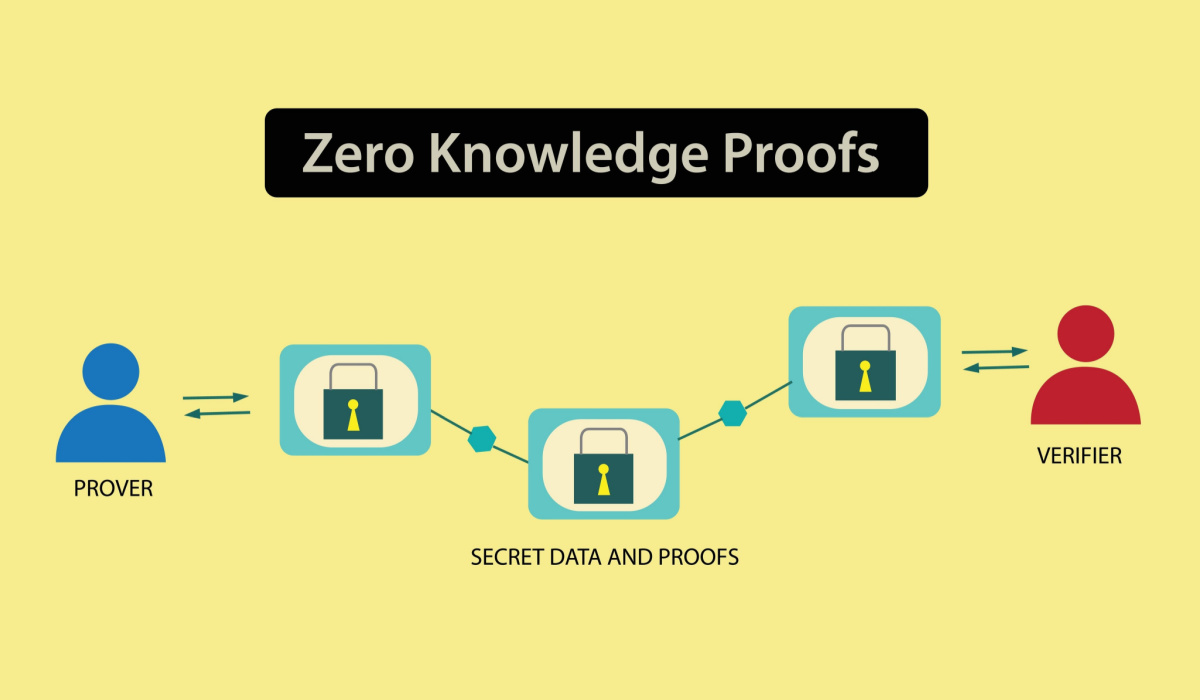
Zero-knowledge proofs (ZKPs) are cryptographic techniques that allow one party to prove to another that a statement is true, without revealing any information beyond the validity of the statement. ZKPs have been around for decades, but they have gained renewed attention in recent years due to their potential applications in blockchain, privacy, and security.

One of the main challenges of ZKPs is their efficiency. ZKPs often require complex computations and large amounts of data, which can make them impractical for real-world scenarios. However, recent advances in ZKP research and development have led to significant improvements in their performance and scalability.

One of these advances is the emergence of zk-SNARKs, which stands for zero-knowledge succinct non-interactive arguments of knowledge. zk-SNARKs are a special type of ZKPs that have two key features: they are succinct, meaning that they require only a small amount of data to verify; and they are non-interactive, meaning that they do not require any communication between the prover and the verifier.

Zero-knowledge projects are attracting more attention and funding from venture capital (VC) firms in recent years. These projects aim to provide solutions for preserving privacy and security in various domains, such as decentralized finance, identity management, data sharing, and more.

zk-SNARKs have been widely adopted in blockchain platforms, such as Zcash and Ethereum, to enable anonymous transactions and smart contracts. zk-SNARKs can also be used for other purposes, such as verifying identity, proving ownership, and enforcing policies.

Another advance is the development of zk-STARKs, which stands for zero-knowledge scalable transparent arguments of knowledge. zk-STARKs are similar to zk-SNARKs, but they have two additional features: they are transparent, meaning that they do not rely on any trusted setup or secret parameters; and they are scalable, meaning that they can handle large-scale computations and data sets.

zk-STARKs have been proposed as a solution for some of the limitations of zk-SNARKs, such as their vulnerability to quantum attacks and their dependence on trusted parties. zk-STARKs can also offer higher security and lower costs than zk-SNARKs.

Zero-knowledge projects are important because they address some of the key challenges and opportunities in the digital era, such as:

Privacy: As more data is generated and collected online, users face increasing risks of data breaches, identity theft, surveillance, and discrimination. Zero-knowledge projects can help users protect their personal and financial data from unauthorized access and misuse.

Security: As more transactions and interactions are conducted online, users face increasing threats of fraud, hacking, censorship, and manipulation. Zero-knowledge projects can help users verify the authenticity and integrity of the information and parties involved, without compromising their security.

Innovation: As more industries and sectors are disrupted and transformed by digital technologies, users face increasing demand for new and better products and services. Zero-knowledge projects can help users access and leverage the benefits of emerging technologies, such as blockchain, artificial intelligence, and cloud computing, while mitigating the risks and challenges.

How are VC firms investing in zero-knowledge projects?

VC firms are investing in zero-knowledge projects because they recognize the potential and value of these projects in creating a more private, secure, and innovative digital world. According to a report by Electric Capital, VC funding for zero-knowledge projects increased by 280% from 2018 to 2019, reaching $112 million. Some of the notable VC firms that have invested in zero-knowledge projects include:

Andreessen Horowitz: The leading VC firm has backed several zero-knowledge projects, such as Celo (a mobile-first platform for financial inclusion), Dapper Labs (a platform for blockchain-based games and collectibles), and NuCypher (a platform for end-to-end encrypted data sharing).

Electric Capital: The crypto-focused VC firm has invested in several zero-knowledge projects, such as StarkWare (a provider of scalable ZKP solutions), Aztec (a protocol for private transactions on Ethereum), and Aleo (a platform for private applications).

Placeholder: The thesis-driven VC firm has supported several zero-knowledge projects, such as Filecoin (a decentralized storage network), Zcash (a privacy-preserving cryptocurrency), and 3Box (a platform for user-centric data management).

The field of ZKPs is rapidly evolving and expanding, with new techniques and applications being discovered and explored. ZKPs have the potential to revolutionize various domains, such as finance, health care, education, and social media, by enabling trustless verification and privacy preservation. Zero-knowledge is back in the spotlight, and it is here to stay.

Ripple, SEC argue to the very end on lawsuits bordering on Security Violations

0

The long-awaited final hearing in the lawsuit between the U.S. Securities and Exchange Commission (SEC) and Ripple Labs took place on January 28, 2024, with both parties presenting their closing arguments before Judge Analisa Torres.

The SEC accused Ripple of violating federal securities laws by selling XRP, its native cryptocurrency, to investors without registering it as a security. The SEC claimed that XRP was an investment contract that gave buyers an expectation of profits based on Ripple’s efforts to develop and promote the XRP ledger, a decentralized network for cross-border payments.

Ripple denied the allegations and argued that XRP was not a security, but a digital asset that served as a medium of exchange and a utility token. Ripple also contended that the SEC lacked jurisdiction and authority to regulate XRP, which was not offered or sold in the U.S., but in foreign markets. Ripple further asserted that the SEC’s lawsuit was arbitrary, capricious and contrary to the public interest, as it created uncertainty and confusion in the crypto industry and harmed millions of XRP holders.

The final hearing lasted for more than three hours, with both sides reiterating their main points and rebutting each other’s arguments. Judge Torres listened attentively and asked several questions to clarify the issues. She did not indicate when she would issue her ruling but said she would do so as soon as possible.

The outcome of the case could have significant implications for the future of crypto regulation in the U.S., as well as for the fate of Ripple and XRP. If the SEC prevails, Ripple could face hefty fines and penalties, and XRP could be delisted from major exchanges and lose most of its value. If Ripple wins, it could set a precedent for other crypto projects facing similar scrutiny from the SEC, and boost XRP’s adoption and price.

Bitcoin ETFs see net outflows for four straight days.

Bitcoin exchange-traded funds (ETFs) have experienced net outflows for four consecutive days, according to data from ETF.com. This indicates that some investors are losing confidence in the cryptocurrency’s rally and are taking profits off the table.

Bitcoin ETFs are funds that track the price of bitcoin and trade on traditional stock exchanges. They offer investors exposure to the digital asset without having to buy or store it directly. Bitcoin ETFs have been in high demand since they launched in the US in October 2021, attracting billions of dollars in inflows and boosting the liquidity and legitimacy of the crypto market.

However, the recent outflows suggest that some investors are cashing out after bitcoin hit a new all-time high of over $69,000 in November 2021. According to ETF.com, the largest bitcoin ETF, the ProShares Bitcoin Strategy ETF (BITO), saw net outflows of $113 million on January 25, 2024, followed by $71 million on January 26, $54 million on January 27, and $28 million on January 28. The total net outflows for the four-day period amounted to $266 million, or about 7% of the fund’s assets under management.

The outflows coincided with a drop in bitcoin’s price, which fell from around $40,000 on January 21 to below $39,000 on January 23, a decline of over 13%. Some analysts attributed the sell-off to regulatory uncertainty, as the US Securities and Exchange Commission (SEC) announced that it would review the approvals of bitcoin futures ETFs and consider whether they should be allowed to continue operating.

The SEC’s move raised concerns that bitcoin ETFs could face stricter rules or even be delisted, which could hurt investor sentiment and demand. The SEC also warned that bitcoin ETFs may not provide investors with adequate protection from fraud, manipulation, and operational risks.

Despite the outflows and the price drop, some experts remain bullish on bitcoin and its ETFs in the long term. They argue that bitcoin ETFs provide a convenient and accessible way for investors to gain exposure to the crypto space, and that they will attract more institutional and retail investors as the market matures and stabilizes. They also point out that bitcoin’s fundamentals are still strong, as it has a limited supply, a growing adoption, and a resilient network.

Bitcoin ETFs may face some volatility and challenges in the short term, but they are likely to recover and grow in the long term, as they reflect the increasing interest and innovation in the crypto industry.

Used Smartphones demand rising – IDC

0

The global market for used smartphones is growing rapidly, according to a new report from the International Data Corporation (IDC). The report estimates that the worldwide shipments of used smartphones will reach 333.2 million units in 2023, with a compound annual growth rate (CAGR) of 13.6% from 2018 to 2023.

The report attributes the growth of the used smartphone market to several factors, such as the increasing quality and durability of smartphones, the rising prices of new devices, the environmental awareness of consumers, and the expansion of trade-in and buy-back programs offered by manufacturers, carriers, and retailers.

The report also identifies some challenges and opportunities for the used smartphone market, such as the lack of standardization and regulation, the potential impact of 5G networks and devices, and the emergence of new business models and channels.

According to Anthony Scarsella, research manager with IDC’s Worldwide Quarterly Mobile Phone Tracker, “The demand for used smartphones is extremely high in both developed and emerging markets. Although drivers such as regulatory compliance and environmental initiatives are still positively impacting the growth in the used market, the importance of cost-saving for new devices will continue to drive growth.

Overall, we feel that the ability to use a previously owned device to fund the purchase of either a new or used device will play the most crucial role in the growth of the refurbished phone market. Trade-in combined with the increase in financing plans (EIP) will ultimately be the two main drivers of the refurbished phone market moving forward.”

The report segments the used smartphone market by region, device type, and operating system. The regions covered are North America, Latin America, Western Europe, Central and Eastern Europe, Middle East and Africa, Asia/Pacific (excluding Japan), and Japan. The device types are premium ($500+), high ($300-$499), mid ($200-$299), low ($100-$199), and ultra-low (<$100). The operating systems are Android, iOS, and others.

Why is Used Smartphone Demand Rising?

The smartphone market is constantly evolving, with new models and features being released every year. However, not everyone can afford or wants to buy a brand-new device every time. That’s why the used smartphone market is booming, with around 309.4 million units sold in 2023, according to IDC. (That’s up almost 10% on the preceding year.)

But what are the factors behind this trend? Why are more and more people opting for second-hand phones instead of new ones? Here are some of the main reasons:

Environmental awareness: Many consumers are becoming more conscious of the environmental impact of their choices, especially when it comes to electronic waste. According to the EPA, Americans generated 3.1 million tons of e-waste in 2019, of which only 17.4% was recycled. By buying a used phone, consumers can reduce their carbon footprint and help conserve natural resources.

Trade-in deals: Major carriers like AT&T, Verizon, T-Mobile and Sprint offer attractive trade-in deals for customers who want to upgrade their phones. These deals allow customers to exchange their old phones for credit towards a new one, or even get a free phone in some cases. This creates a steady supply of used phones that can be refurbished and resold by the carriers or third-party vendors.

Recycling programs: Some smartphone manufacturers also have their own recycling programs that encourage customers to return their old devices for recycling or reuse. For example, Apple has a program called Apple Trade In that lets customers trade in their eligible devices for an Apple Gift Card or credit towards a new purchase.

Apple also has a program called Apple GiveBack that accepts any Apple device for recycling, regardless of its condition or value. These programs help Apple reduce its environmental impact and create a loyal customer base.

Phone insurance: Another source of used phones is phone insurance, which covers accidental damage, theft or loss of a device. Many customers who have phone insurance opt to get a new device when their old one breaks or gets lost, instead of repairing it or finding it. This leaves behind a lot of used phones that can be repaired and resold by the insurance companies or their partners.

Demand in developing countries: Finally, one of the biggest drivers of the used smartphone market is the demand in developing countries, where many people cannot afford or access new phones. According to Deloitte, at least 10% of smartphones purchased in 2016 will still be in use in 2020, by their second or even third owners.

Many of these owners live in emerging markets like India, China, Brazil and Nigeria, where smartphones are essential for communication, education, entertainment and commerce. Used smartphones offer an affordable and convenient way for these consumers to access the benefits of mobile technology.

As you can see, there are many reasons why the used smartphone market is growing and will continue to do so in the future. Whether you are looking for a cheaper alternative to a new phone or Smartphone want to sell your old phone for some extra cash, you can take advantage of this trend and find a suitable option for your needs.